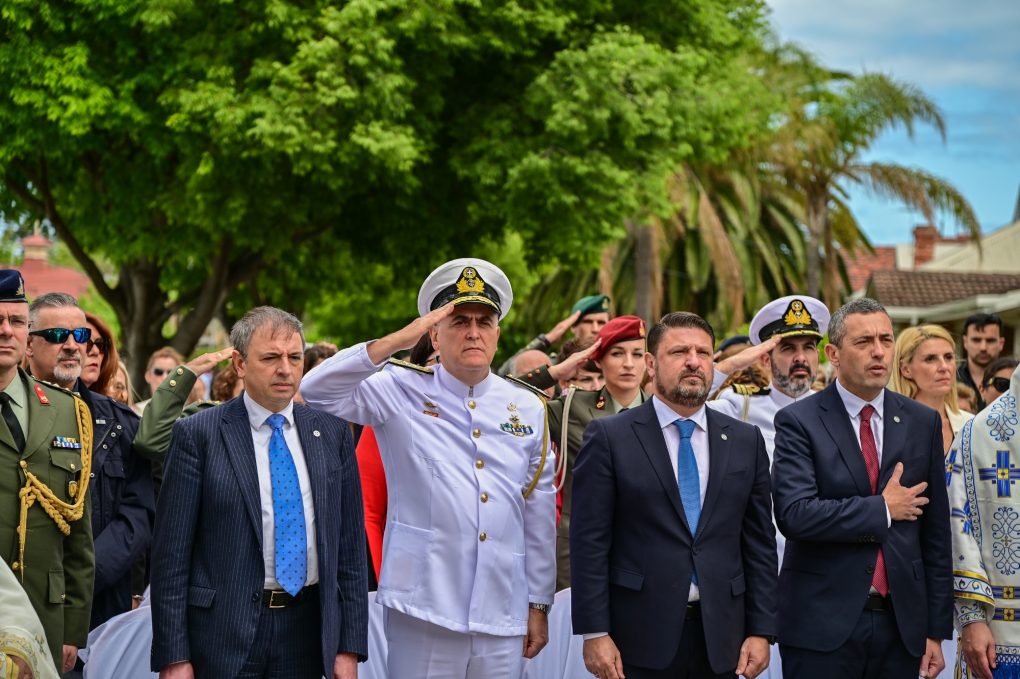
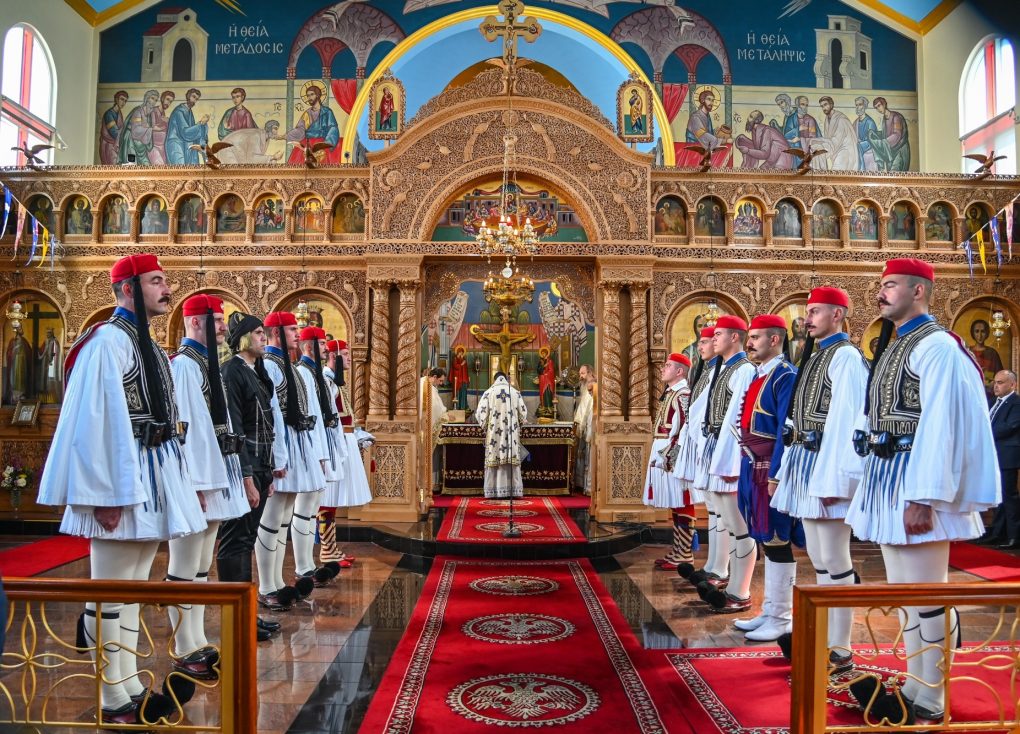
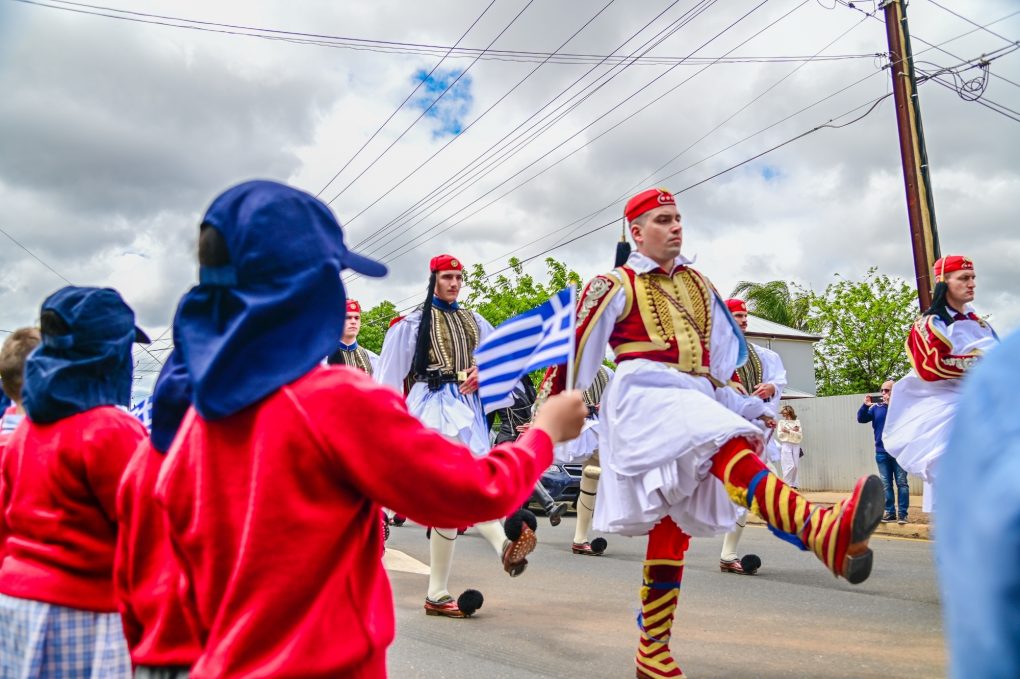
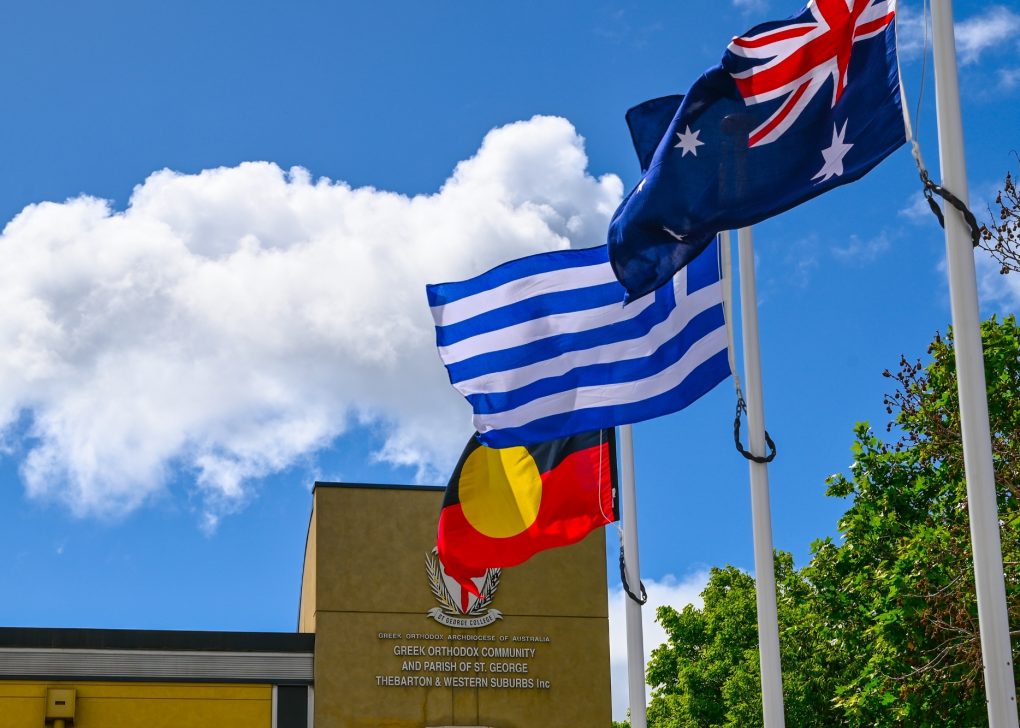
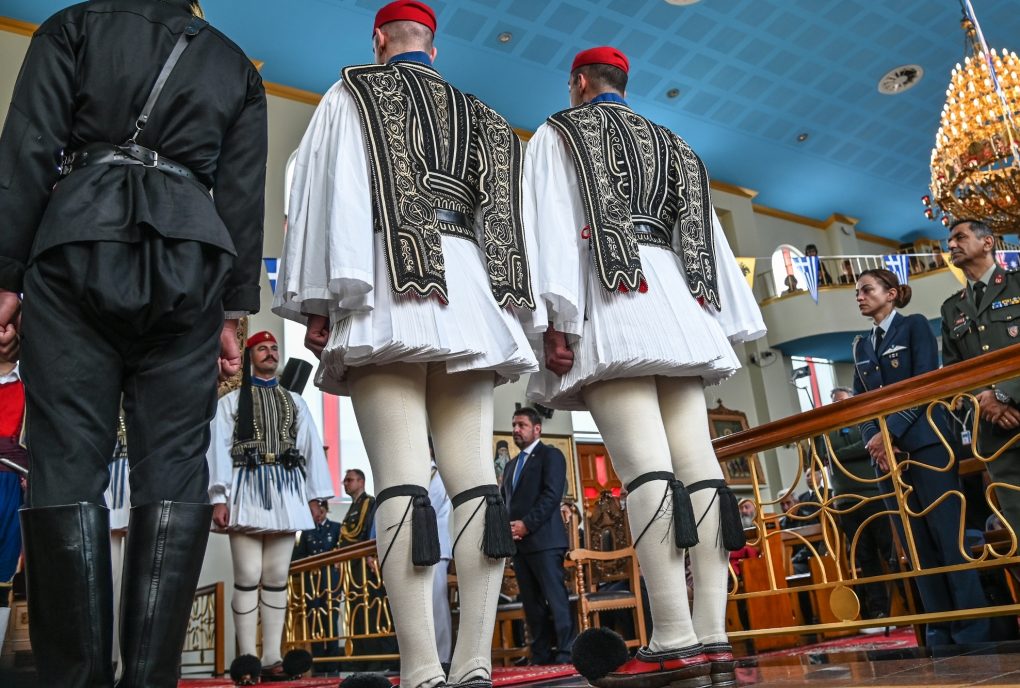
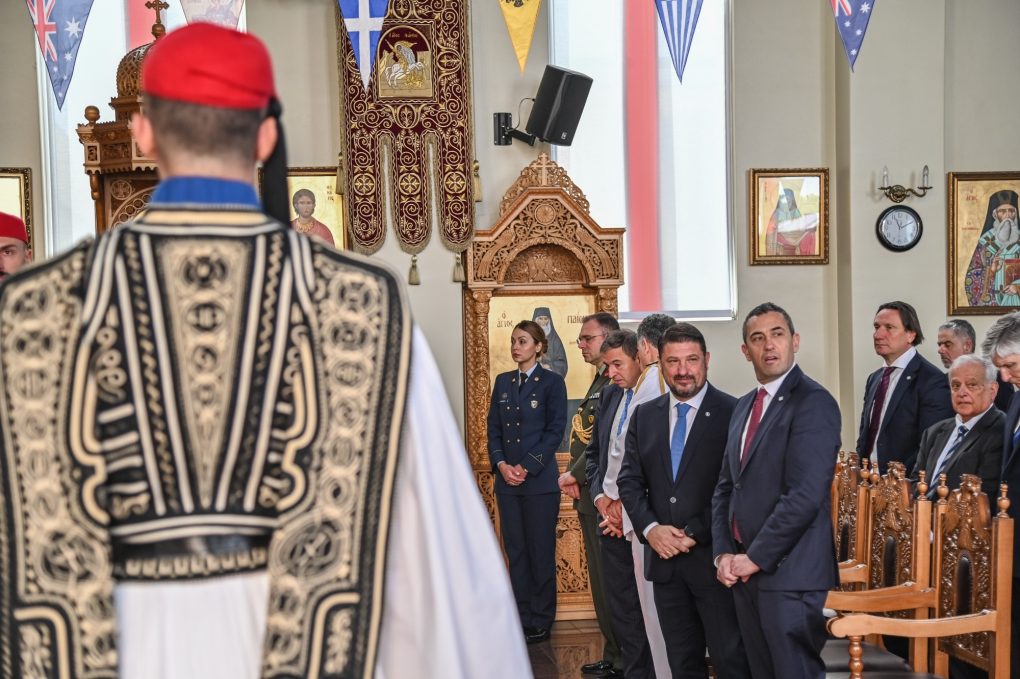
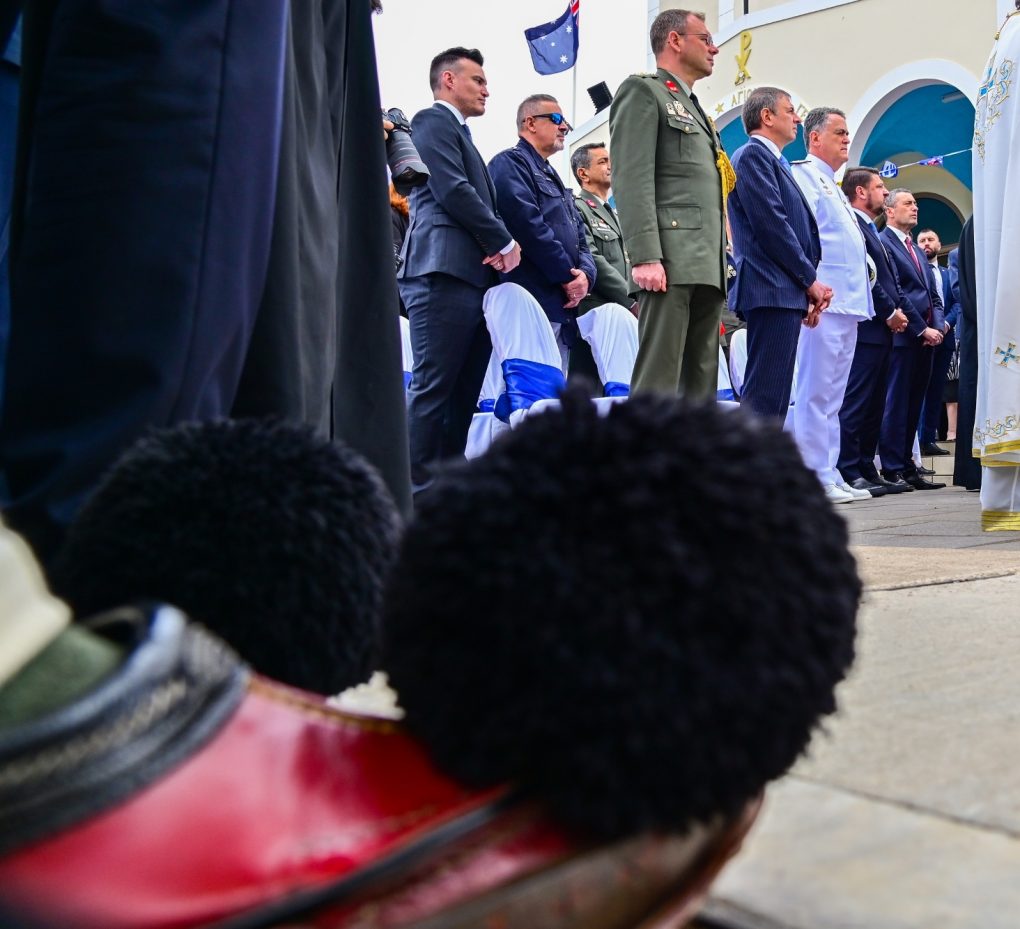
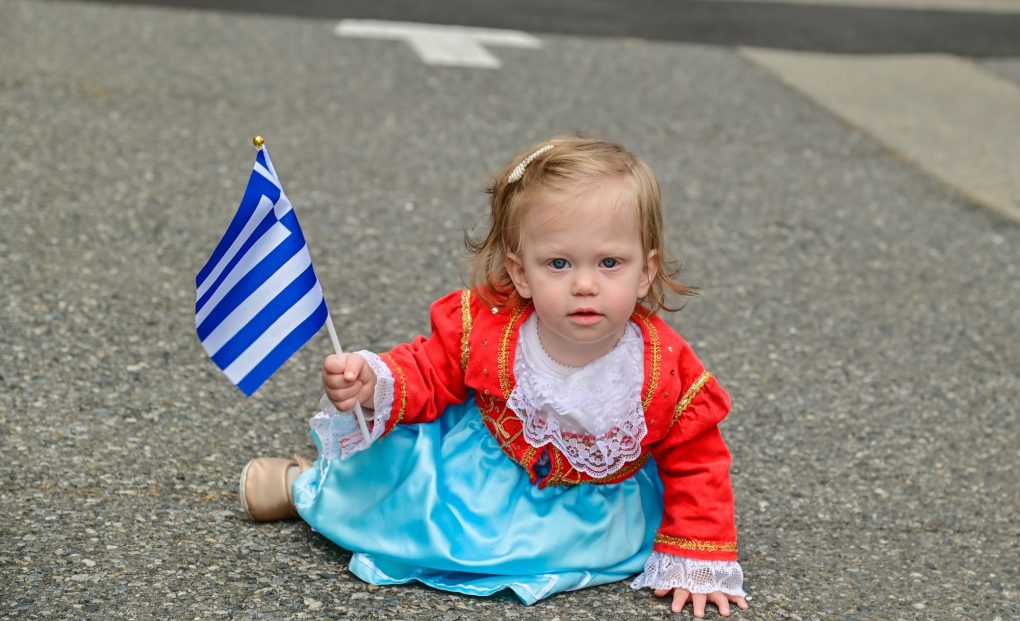
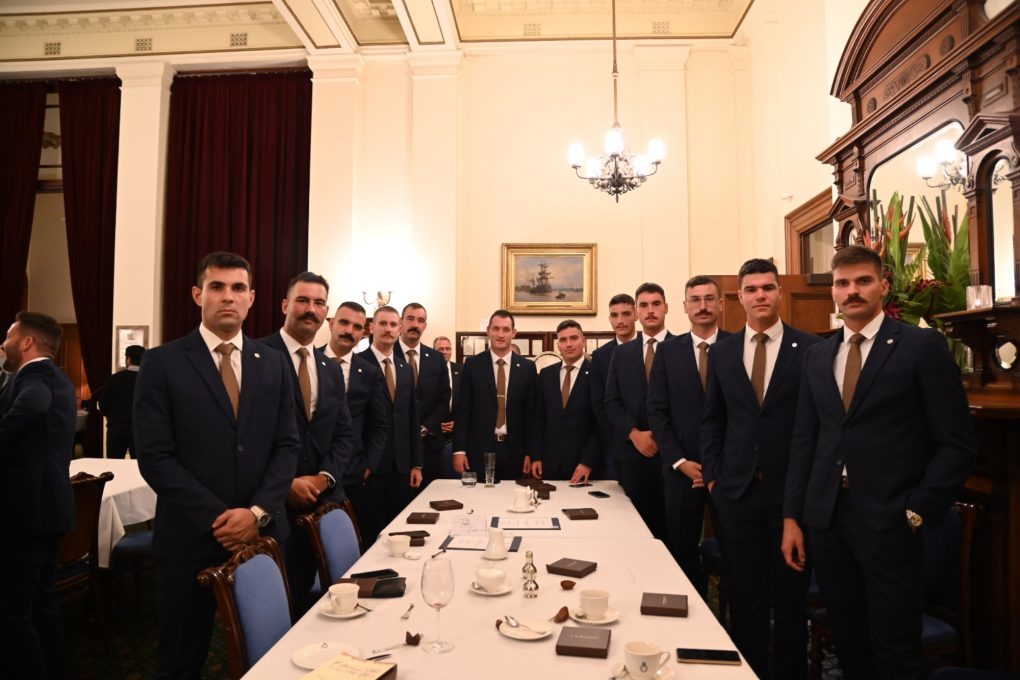
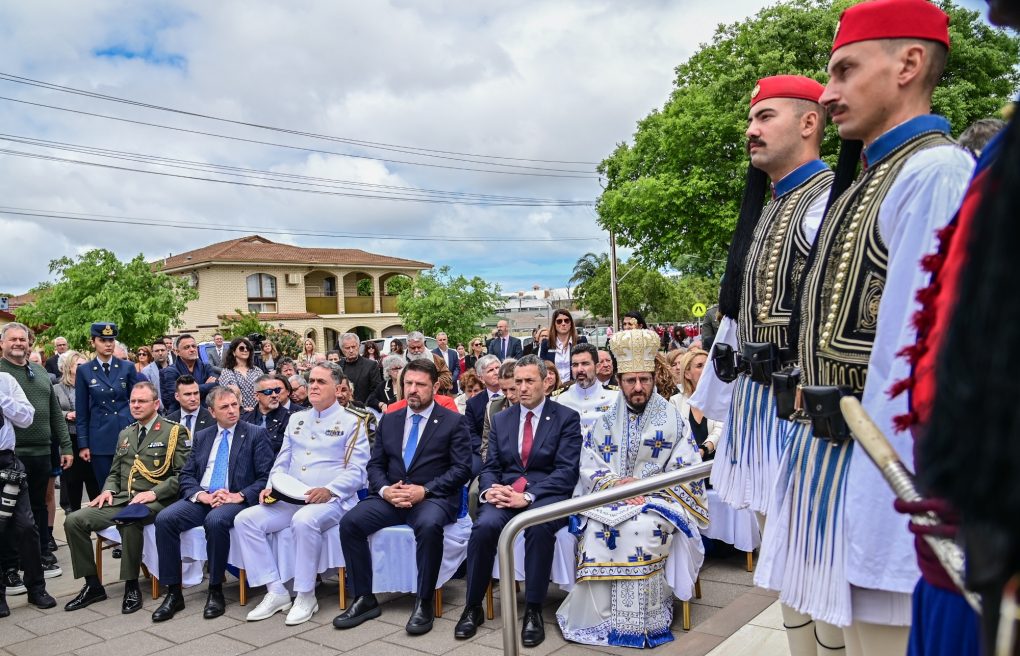
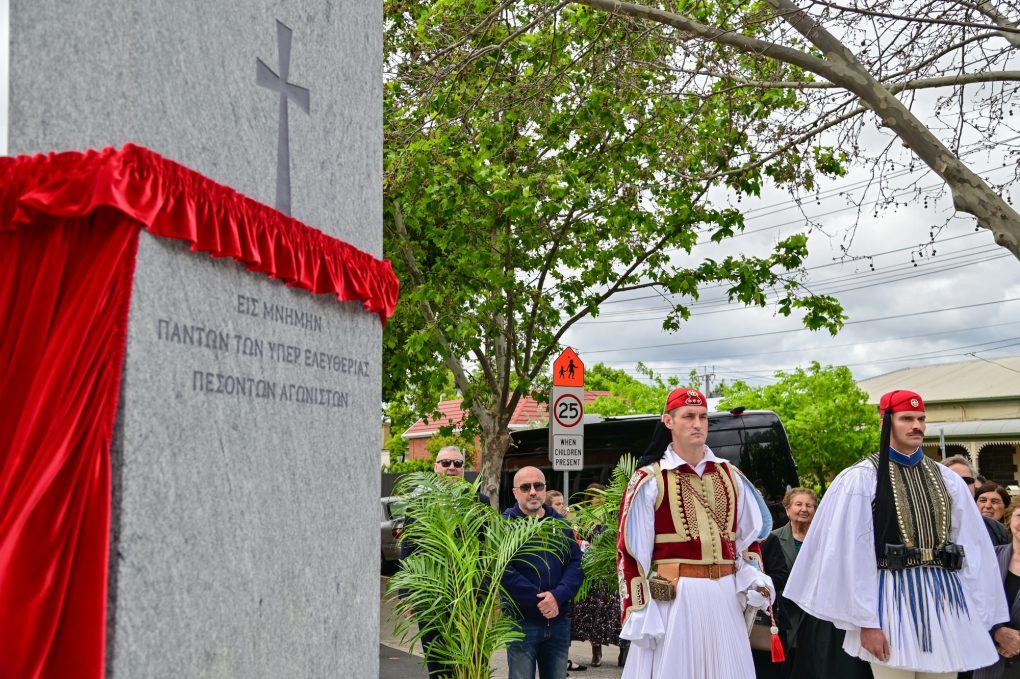
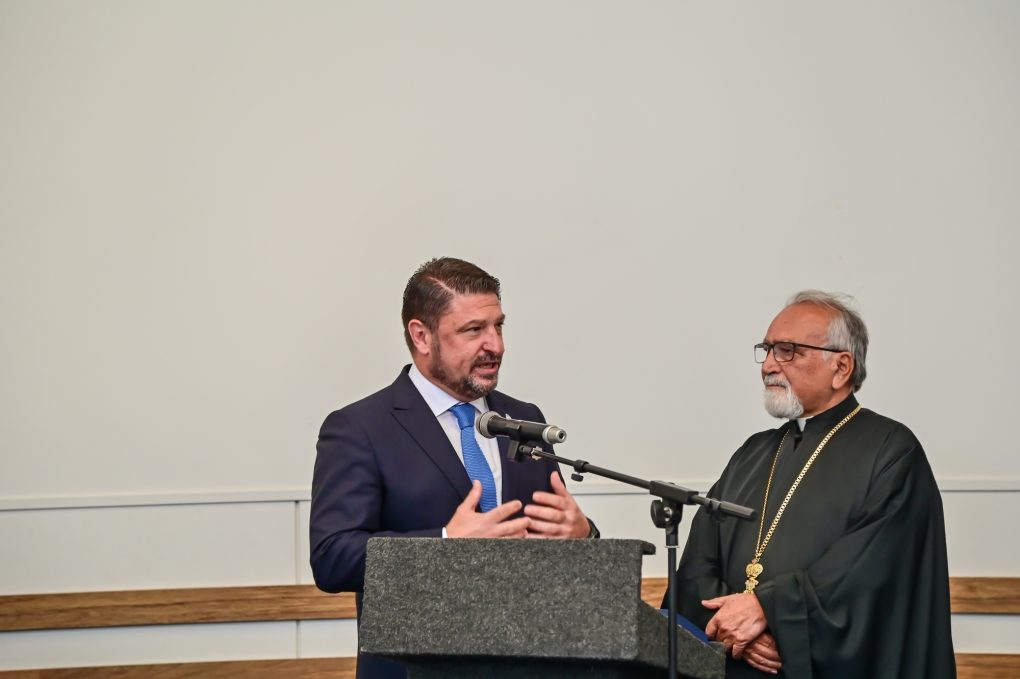
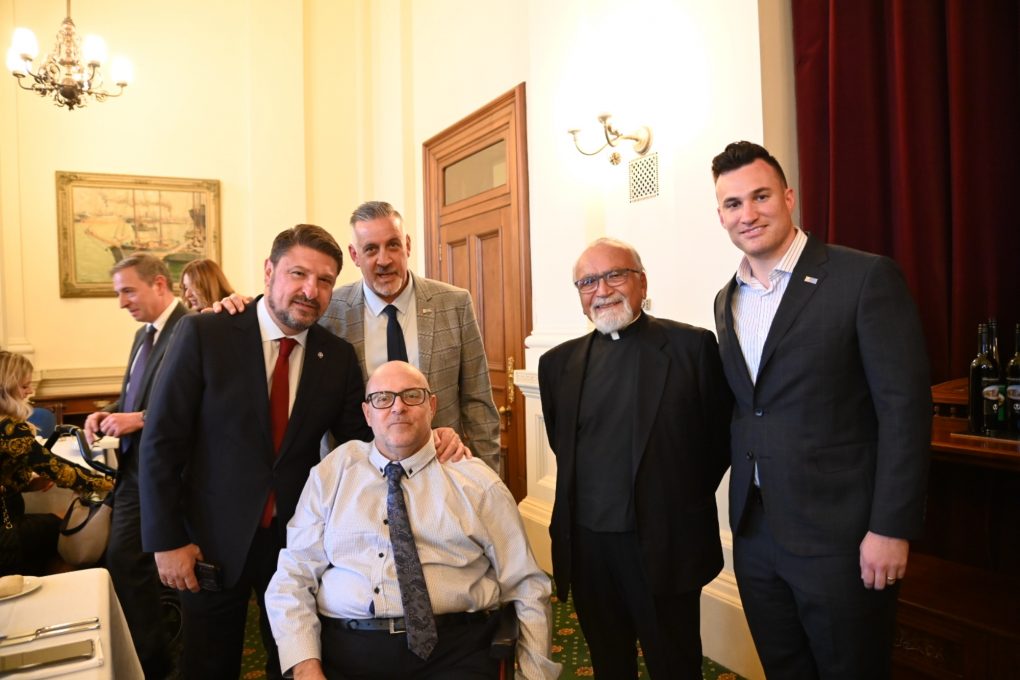
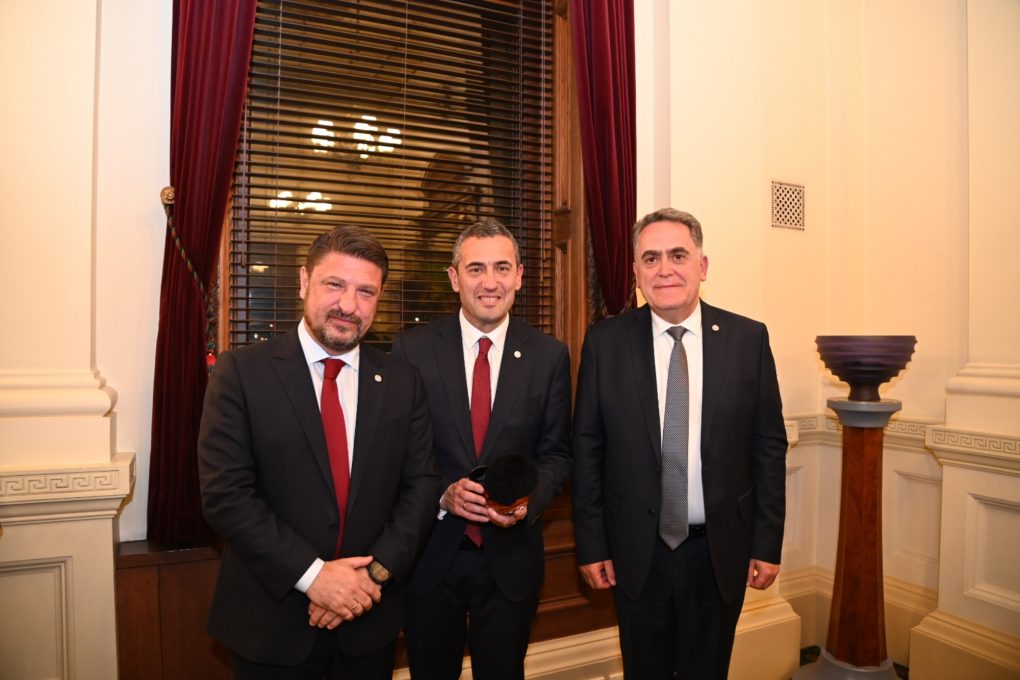
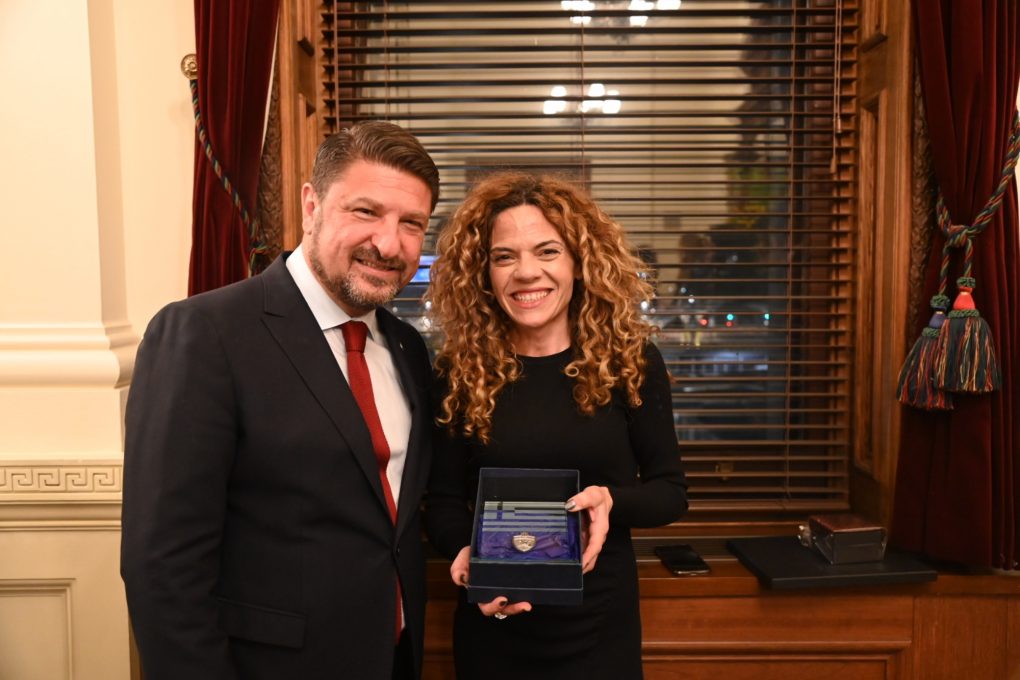
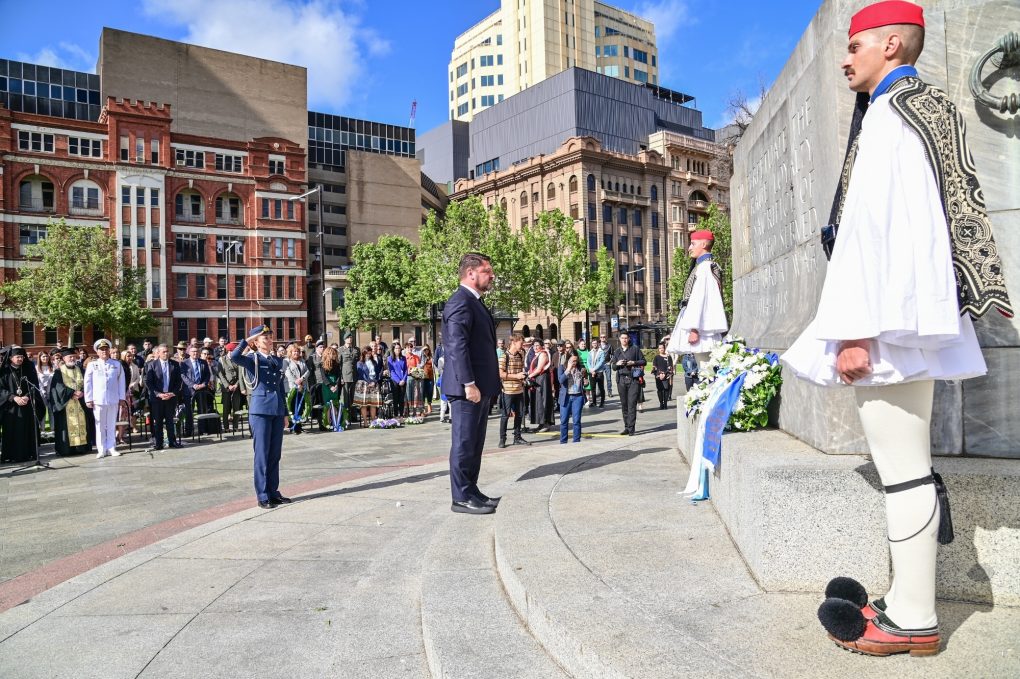
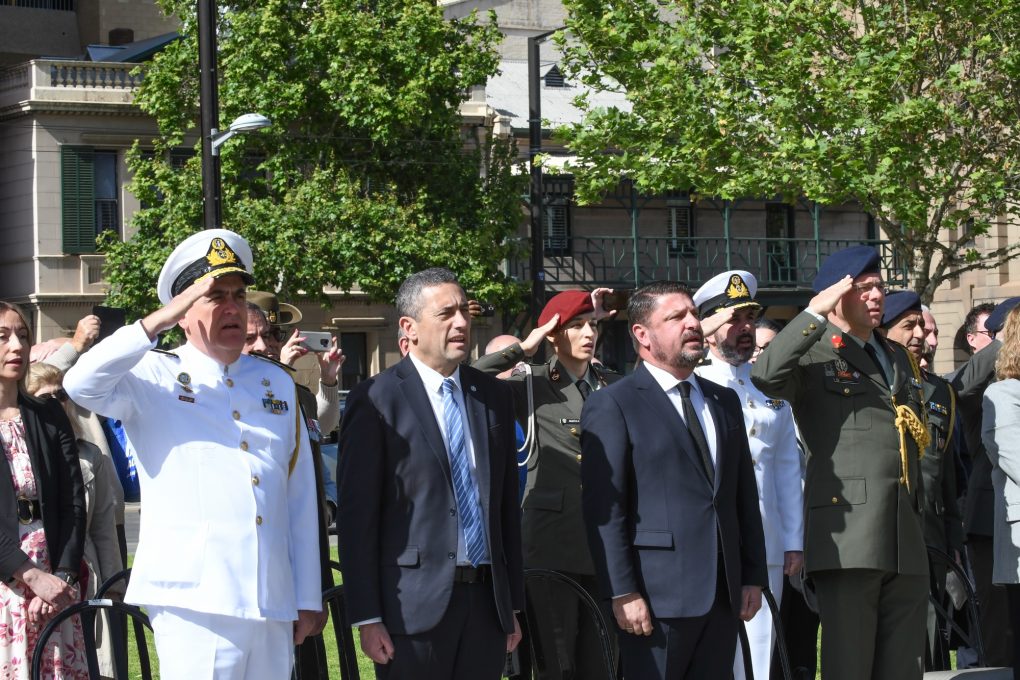
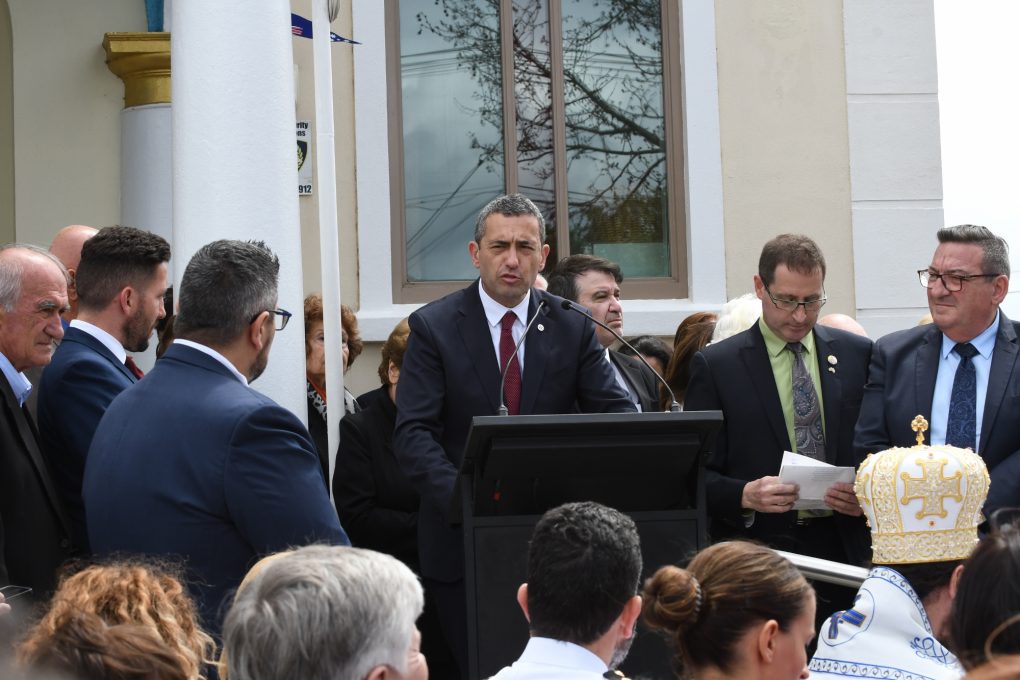
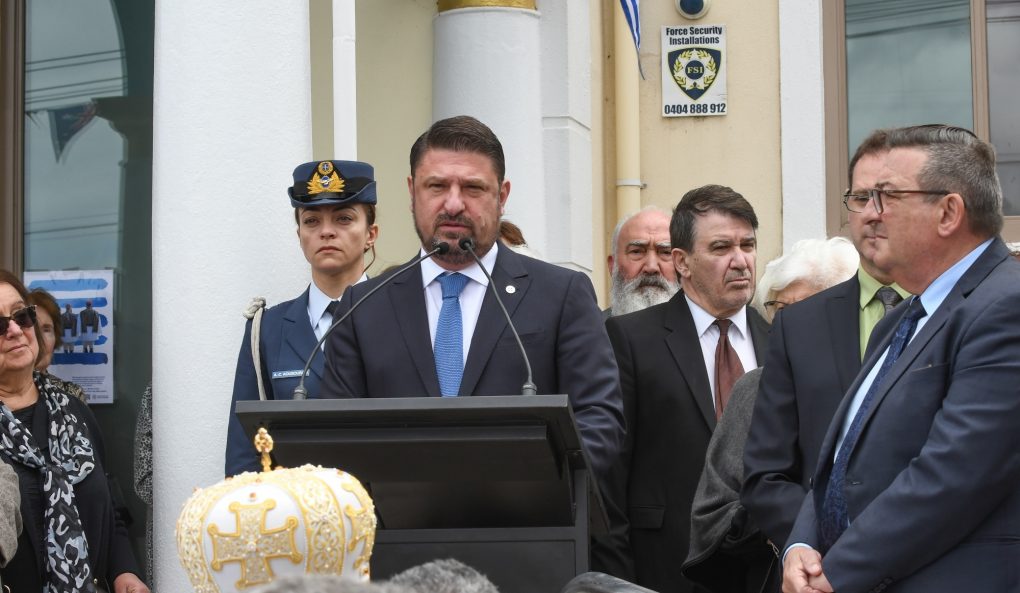
On Friday, 28 October 2022, the Deputy Minister of National Defence Mr. Nikolaos Hardalias, representing the Hellenic Government and the Ministry of National Defence, attended the events for the celebration of the 82nd national anniversary of “OHI” Day, which were organized by the Greek Natives in Australia, Adelaide, with the honorary presence of a detachment of the Presidential Guard Evzones, as follows:
First, he attended the Doxology in Saint George Church in Thembarton, officiated by His Grace Bishop Silouanos of Sinopi.
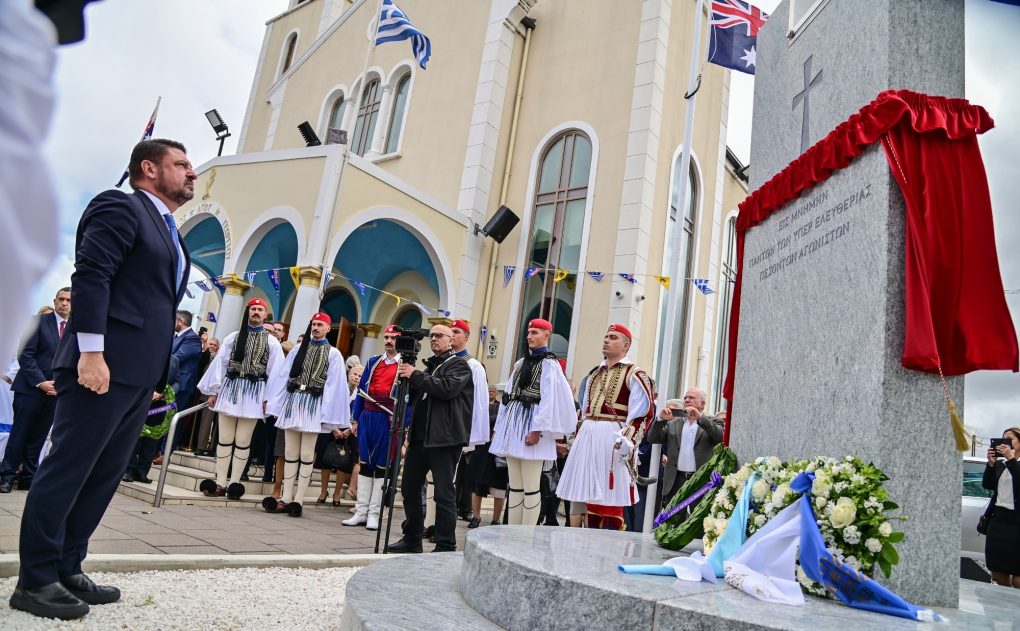
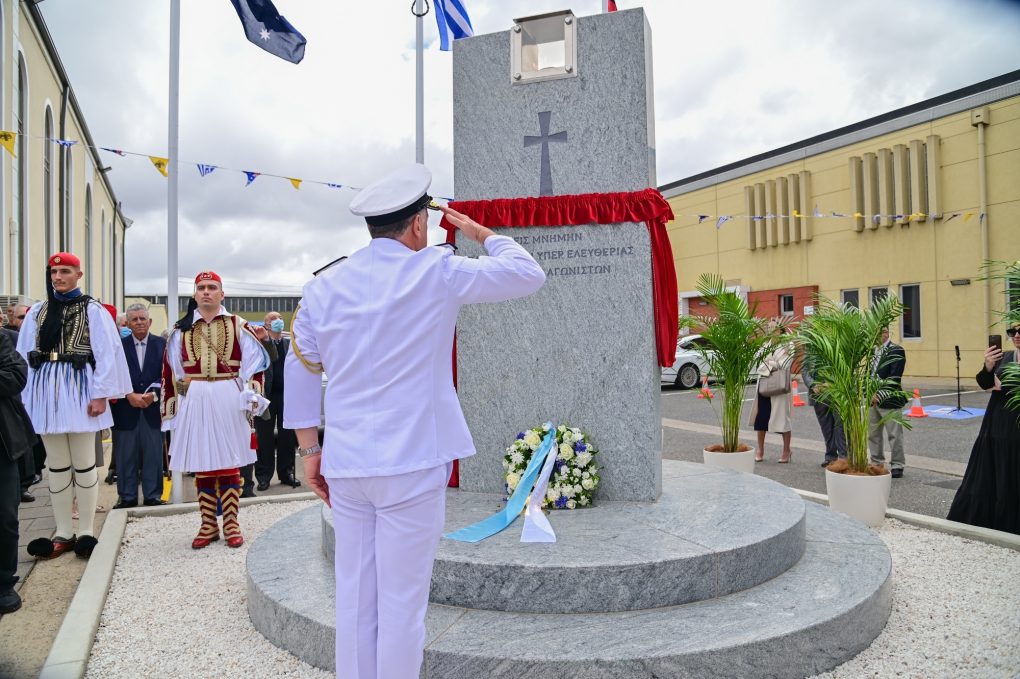
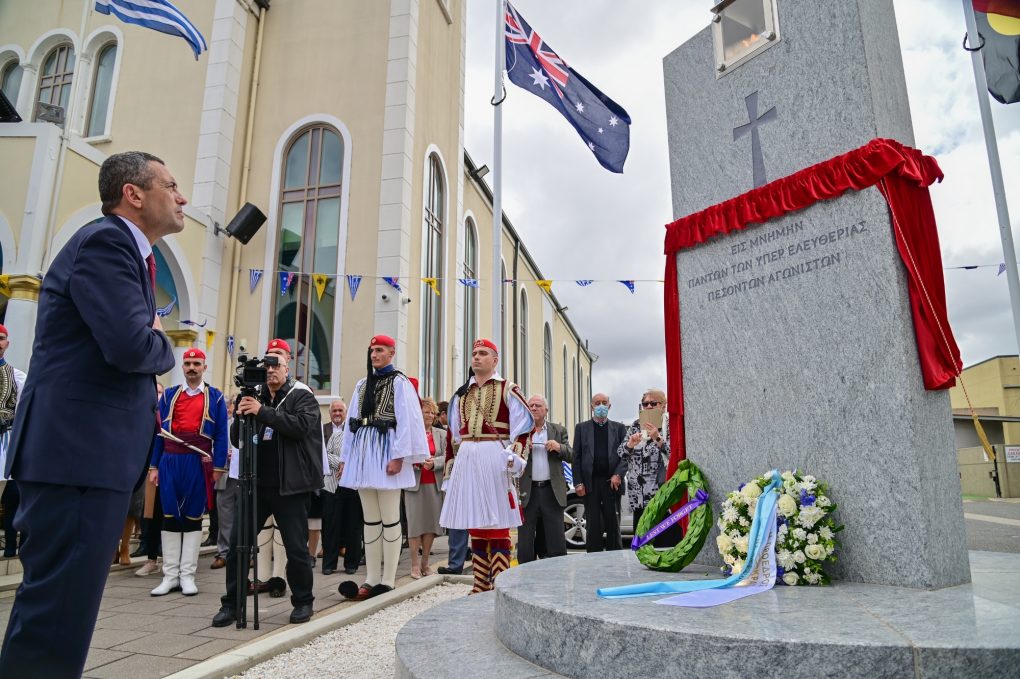
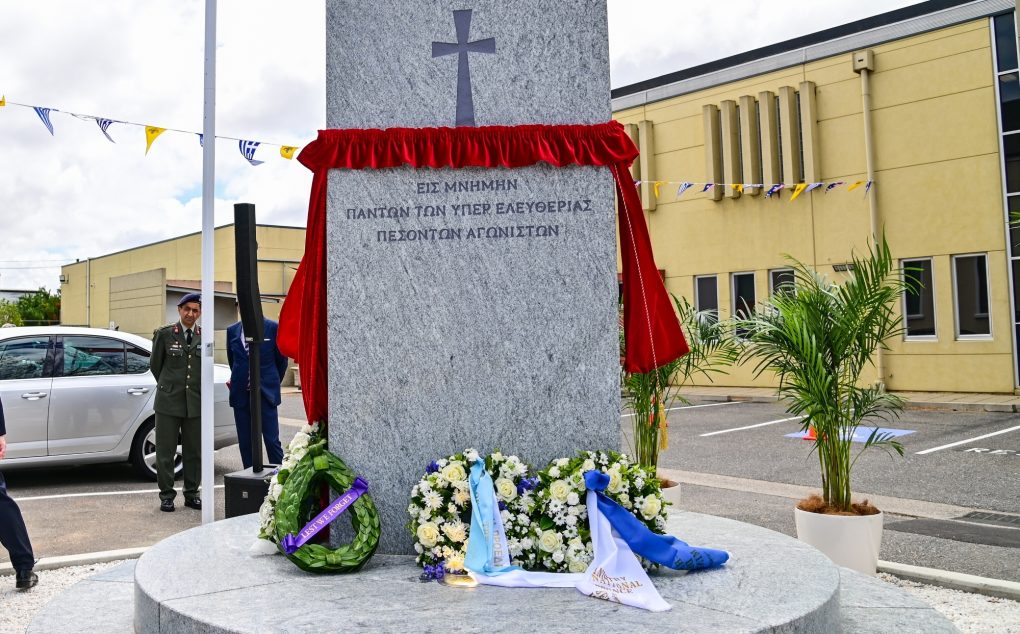
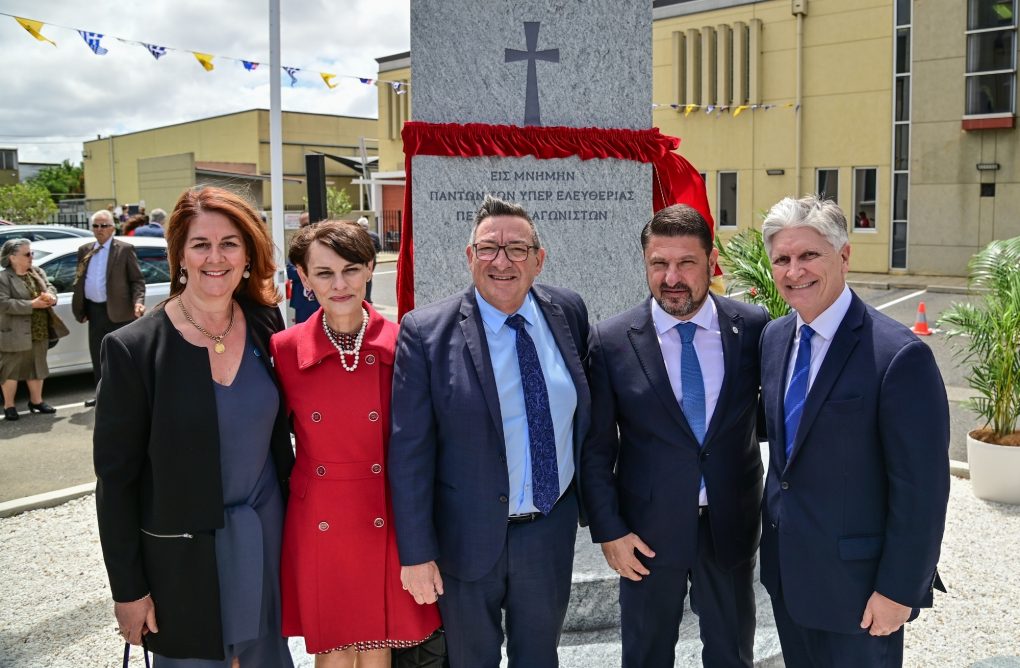
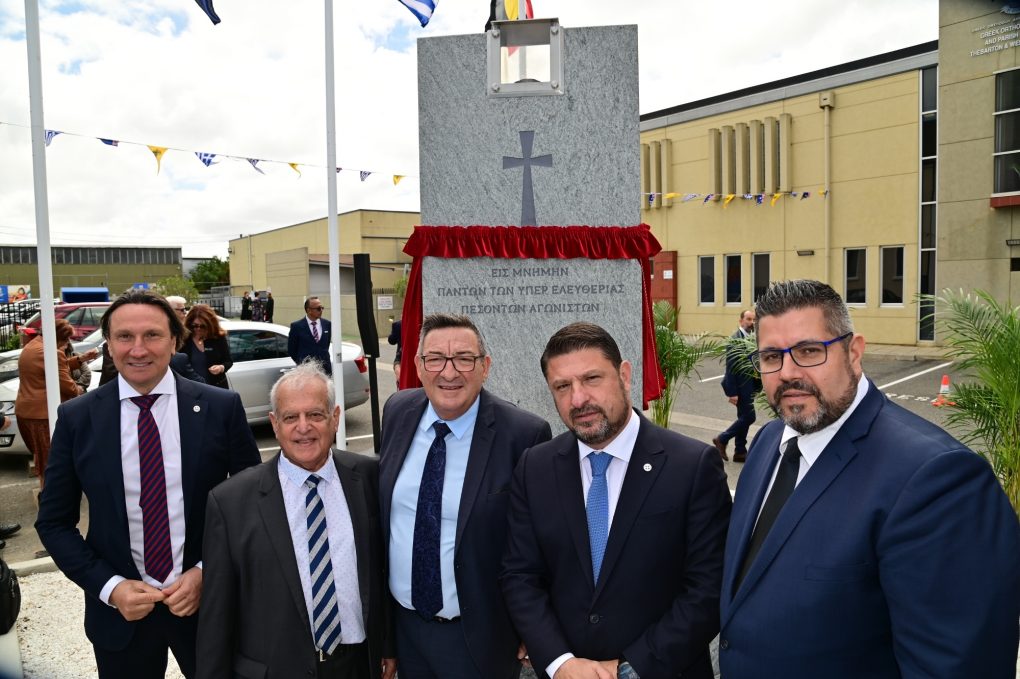
Next, he attended the unveiling of the new Monument to the Fallen Freedom Fighters, performed by the Australian Infrastructure &Transport and (Minister) of Energy and Mining Mr. Tom Koutsantonis, the erection of which took place in the courtyard of Saint George Church, on the occasion of the 200 years since the Greek Revolution.
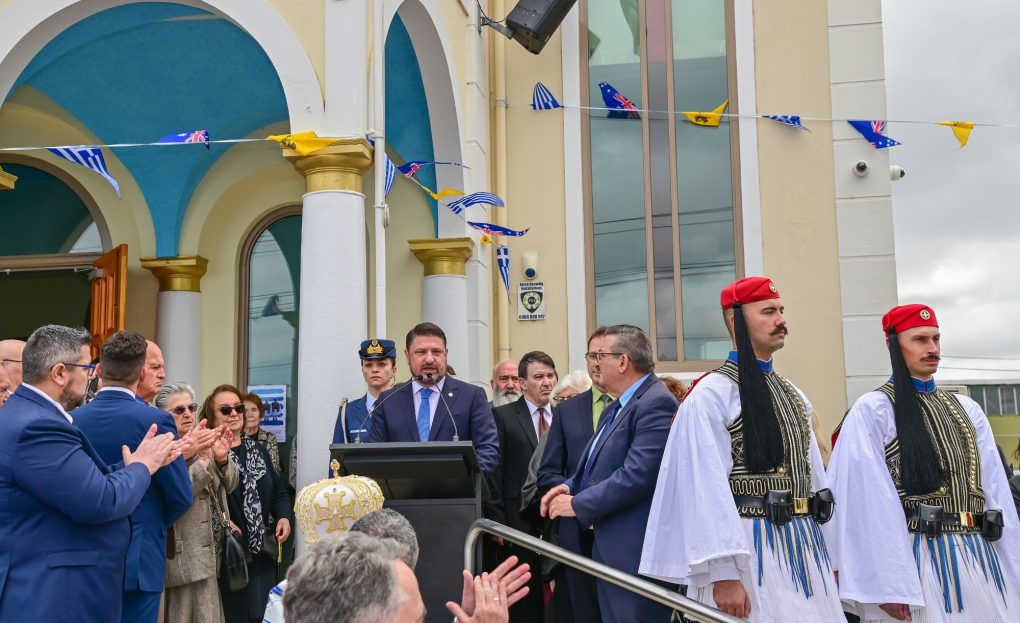
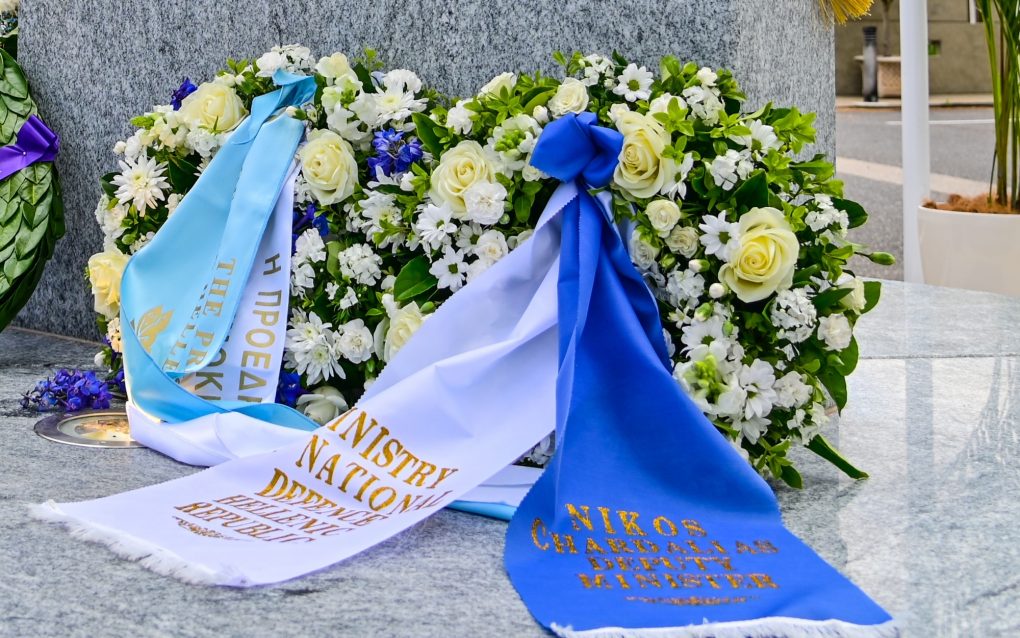
After that, Mr. Hardalias laid a wreath at the new Monument, and made the following address, in the framework of the events:
“This year is 82 years since the morning of 28 October 1940, when fascist Italy demanded that Greece fully surrenders and forfeits national sovereignty.
That unprovoked threat was answered with an uncompromising refusal, expressed at that historical moment with a big “OHI” (NO), shaped by the dignity of the proud Greek people and their vast heritage, matured through time due to numerous heroic refusals of submission.
It was this refusal, combined with the spontaneous people’s impulse that gave the momentum for national uplift and union of hearts against the arrogance of the military superior firepower and immorality of war expansionism.
The “OHI” of 1940 instantaneously became a symbol of denial to authoritarianism and resistance to tyranny, proving the eternal spiritual armour of Hellenism, which is projected in the incomparable fighting spirit, the love for freedom and the wish for a peaceful creation, paramount elements of its long cultural heritage.
This moral parameter of denial to submission depicts the everlasting firm will of the Greeks to honour their vast historic tradition and the sacrifices of their ancestors, so that “show not ourselves inferior to our ancestors”.
In this context, the word “OHI” is no different than the paean of the Salamina warriors, who fought “the mother of all battles”, giving winds to their souls and strengthen their will to defeat the Persians.
It falls to the same spirit as the oath of the Greek warriors in Plataea Battle, “I will not choose life over freedom” when, once again, they were called to stand against the Asian hordes of Medes, fighting “for God and Country”.
It is inspired by the same moral background of “I will never bring reproach upon my hallowed arms”, which is the oath of the Athenian young men, by which they were bound that they will fight with passion not to surrender the Homeland smaller than when it was delivered to them.
It arises from the brief “Come and Get them” of Leonidas and the three hundred Spartans, who remained heroic guardians of Thermopylae, till the last drop of their blood.
It stems from the heroic answer of Constantinople’s last Emperor Constantine Palaiologos to Muhammad the Conqueror “We will all die willingly and we do not spare our lives”, just a few days before Constantinople fell in the hands of the everlasting enemies of Hellenism and Orthodoxy, marking the end of the thousand-year Byzantine Empire.
It comes from the war cry “Freedom or Death”, which gave strength to the souls and hearts of the rebelled Greeks throughout the National Rebirth.
It is spiritually fuelled by the inhuman hanging of Patriarch Gregorios E and the unburied corpse of the slaughtered Chrysostomos of Smyrna.
It is indoctrinated in the uncompromising patriotism of the Macedonia warriors for the liberation of the unredeemed people of the Macedonian land from the Ottoman dictator.
It is reinforced by the firm will for a new life, for the hundreds of thousands refugees of the Asia Minor disaster, forcibly expelled from their everlasting homelands: Ionia, Pontus, Cappadocia and Eastern Thrace.
Hellenism in 1940 would never exclude themselves from this admirable succession of denial to submission and, for this reason, the 28th of October will always have a special moral dimension in our collective memory, since it gathers in a historic moment the memories, experiences and values that always inspired our national and historic life.
In this context, the anniversary of “OHI” will always constitute for the Greeks worldwide an opportunity for historical re-examination and remembrance of the unbreakable unity that connects the past, the present and the future of Hellenism, transforming thoughts and ideas deeply hidden into acts of grandeur, sacrifice and self-denial.
At the same time, today’s anniversary constitutes a day of glory and honour for all those admirable warriors of Pindus, who projected their spiritual strength against the hardships and challenges of the battlefield, and fought hard battles with courage and self-denial, marking the “1940 Epic”, honouring once again the Greek army and holding up the flag of our Homeland’s dignity.
For all these reasons, we pay tribute to the self-sacrifice of our ancestors but, most of all, we praise the legacy they left us, a legacy for unbreakable unity, concord, collective comradeship and national unanimity.
Such glorious moments of our bright historic path promote and exemplify our country globally and constitute an indelible signature of our Western civilization.
Today’s celebration is an opportunity to honour at the same time friends and allies; all those who fought with us against barbarity and intolerance. The Australians have always been friends and our close allies, on the same side of history, who fought by our side in continental Greece and Crete, defending democracy and freedom, against authoritarianism and tyranny. We jointly opened the road for the great victory of the allies during WWII, a victory that inaugurated a long period of peace and put the foundations of modern Europe.
Ladies and Gentlemen, dear native Greeks,
All of you, the native Greeks of Australia, with the genuine love and devotion for Greece, your Homeland, as well as your multi dimensional contribution to the social, economic and cultural life of the country you live in, are the steady base and the bridge for the further development, deepening and strengthening of the bonds of friendship and understanding between the two countries.
Despite our long geographic distance, Greeks and Australians, remain for ever devoted to the same global principles and values, freedom, democracy, justice, human rights, the need to find a peaceful settlement of disputes, the prohibition of war threat or use of force, and of course the respect of International Law, including the Law of the Sea.
For ever warm supporters of the vision and the goals of the UN, we will continue to actively work for the benefit of world peace, security and stability, as well as the social and economic progress and welfare of our peoples.
On behalf of our entire mission that travelled 13,500 kilometres, I would like to express our gratitude. We really thank you for the unique way you embrace us and be sure that we leave with feelings of love, gratitude and, above all, admiration for everything you have achieved all these decades away from home. Be well, many happy returns. Long live Greece, long live Australia”.