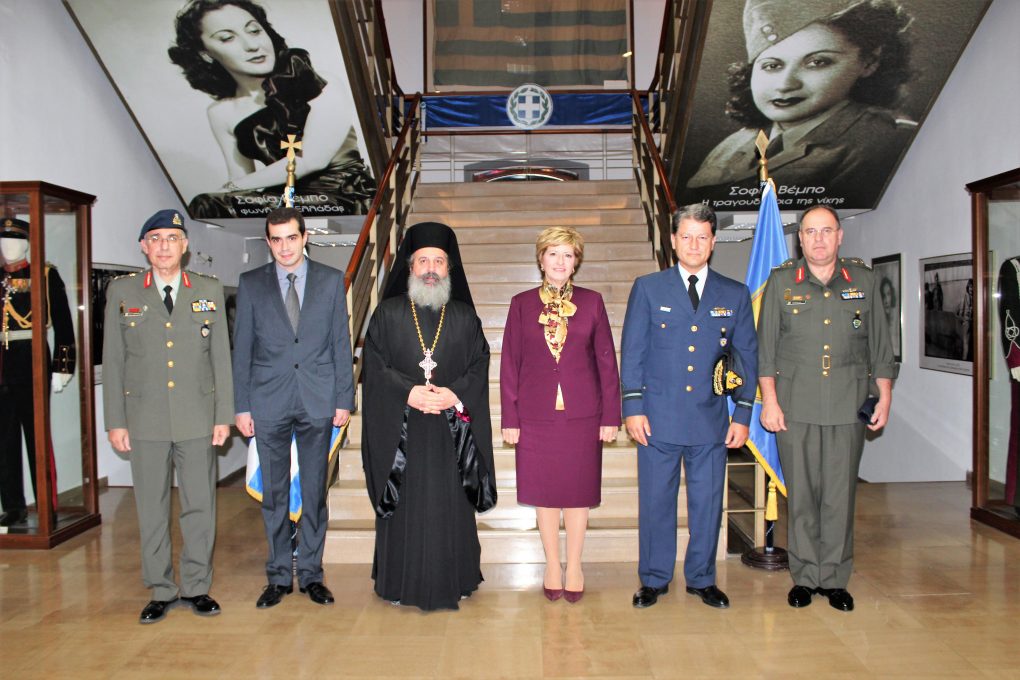
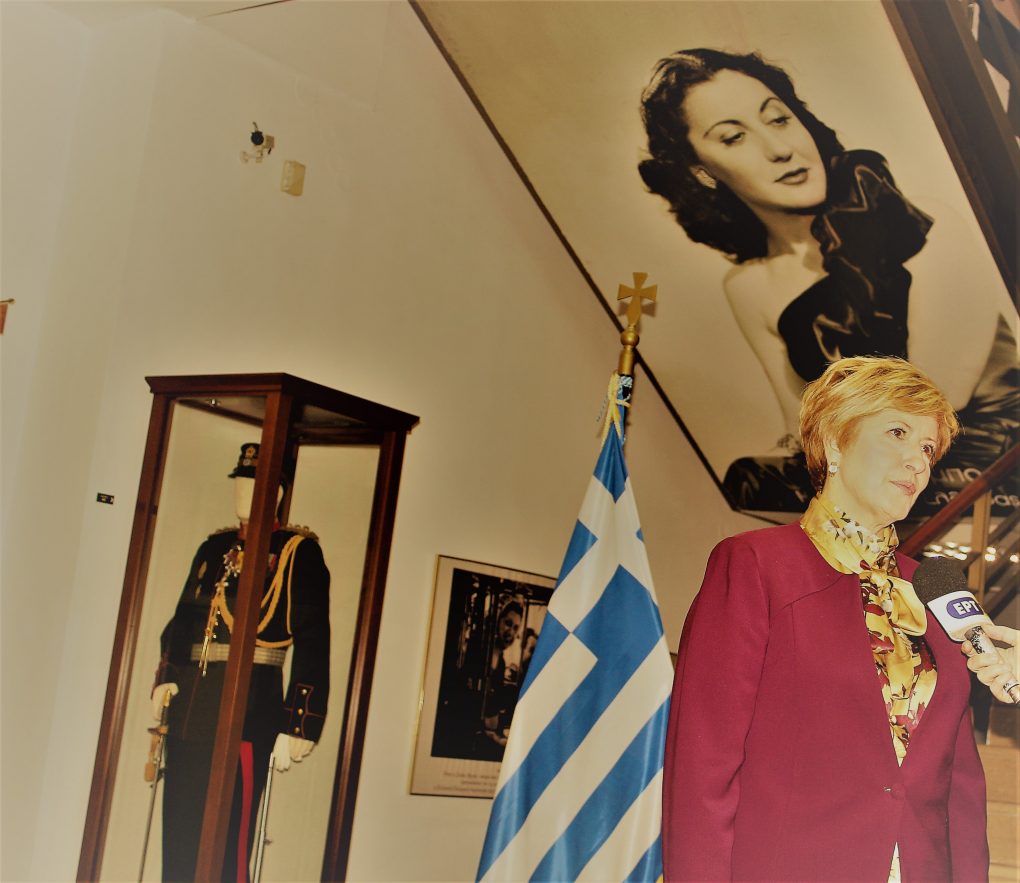
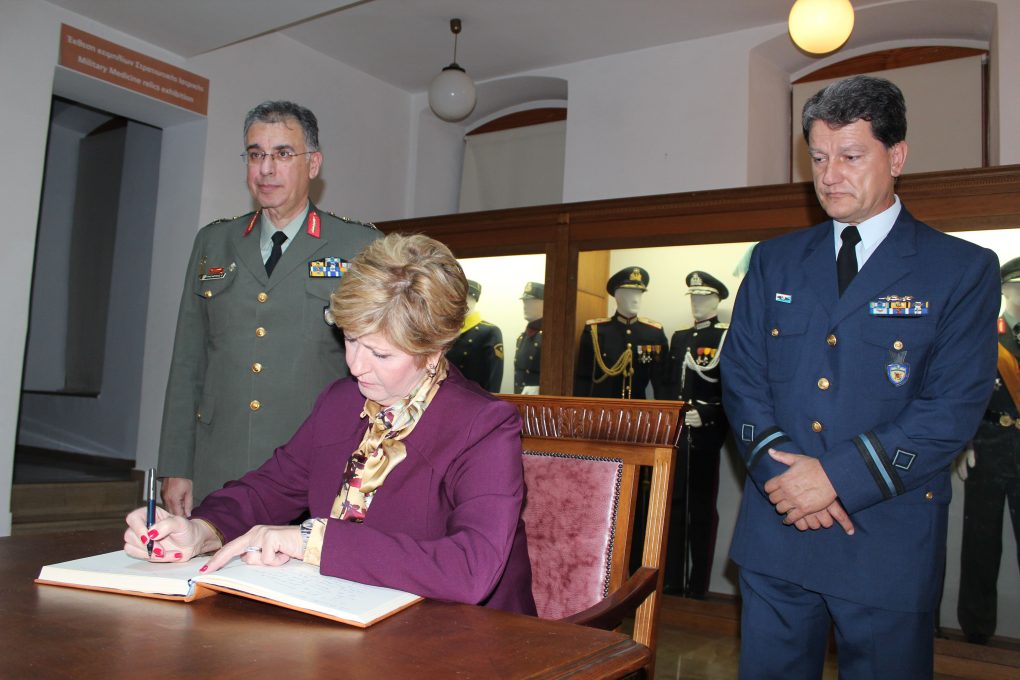
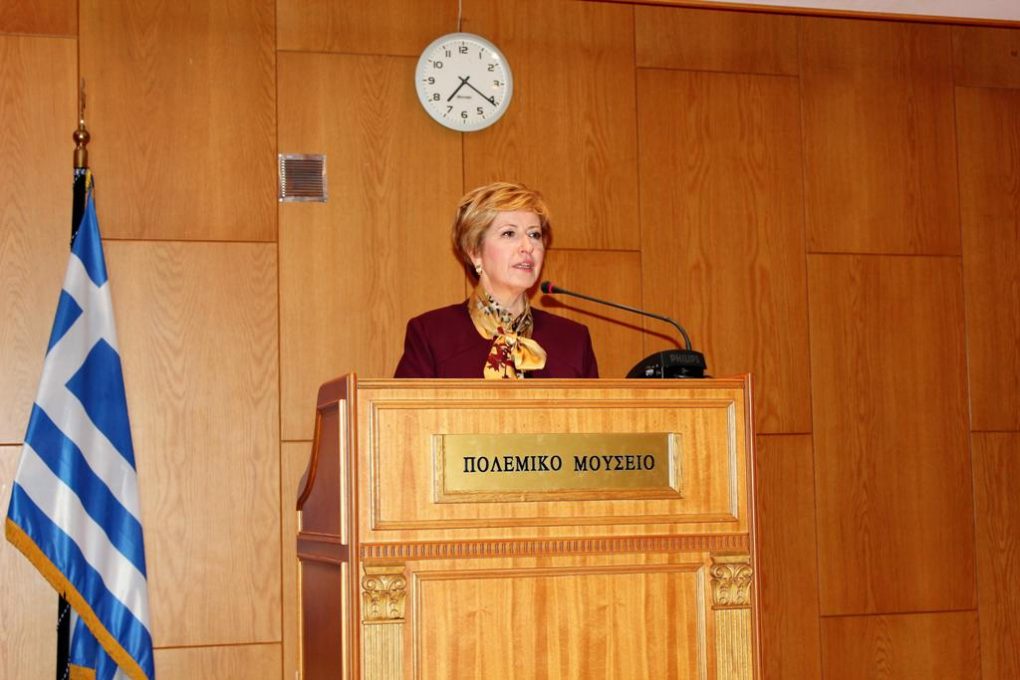
On Sunday, 14 October 2018, the Deputy Minister of National Defence Maria Kollia-Tsaroucha went to the Thessaloniki War Museum, where she gave an address for the opening of the “Macedonian Struggle” exhibition.
In her address, the Deputy Minister stressed, among others, the following:
The armed part of the Macedonian Struggle was only one part of the great fight against the efforts to distort the history and identity of the area. However, all efforts to change the ethnic map failed. Against them stood, as they have always done, the ordinary people of all Greece, who made it clear with their stance that this area has been, is, and will always be Greek.
The goal today for the broader area of the Balkans, as well as for the entire Southeast Mediterranean, is to put the elements that led to conflicts in the past behind us and replace them with cooperation, solidarity, and good neighbourly relations. However, this requires the respect of historical and scientific truth and international agreements.
On our part, we must protect the unity of the Greek people and use all tools provided by democracy to protect our country.
Below is the full text of the Deputy Minister’s address:
“Officers and civilians, Ladies and Gentlemen,
It is a great pleasure for me to be in the War Museum today for the opening of the exhibition on the Macedonian Struggle!
Ι would like to congratulate the organisers who, with this initiative, gave us the opportunity to reacquaint ourselves with the history of this area. I would also like to thank everyone here for honouring the exhibition with your presence, thus carrying and spreading its valuable messages.
My friends, I don’t think I can stress enough how relevant the subject of the exhibition is, because it gives us a good opportunity to improve our knowledge on the critical matter of the national and historical identity of Macedonia which, based on our national sentiment, as well as scientific research, is closely connected to Hellenism.
Macedonia is not just an area of Greece that once shared the grandeur of classical antiquity or a province of the Hellenistic Kingdoms and Byzantium. It has been throughout history and still is a main axis of Hellenism and an integral part of its identity. That’s why the Macedonian Struggle mobilised all Greeks all around the world, in order to realise the great dream of the reunification of Macedonia with the rest of the homeland.
The armed part of the Macedonian Struggle was only one part of this great fight against the efforts to distort the history and identity of the area.
Ιn recent history, we have unfortunately seen conflicts fought using not only weapons, but also information and beliefs. However, all efforts to change the ethnic map of Macedonia failed. Against these efforts stood, as they have always done, the ordinary people of Macedonia, Thrace, and all Greece, who made it clear with their stance that this area has been, is, and will always be Greek.
My friends, these are the thoughts that force some of us to consider important the matter of the name of another state, which attempts to appropriate the historical name of Macedonia without having any right thereon.
Because it is a baseless and unfair extension of plans from other times, which however creates the conditions for similar attempts in the future.
Τhe goal today for the broader area of the Balkans, as well as for the entire Southeast Mediterranean, is to put the factors that led to conflicts in the past behind us and replace them with cooperation, solidarity, and good neighbourly relations. However, this requires the respect of historical and scientific truth and international agreements.
On our part, we must protect the unity of the Greek people and use all tools provided by democracy to protect our country and, without exaggeration or extremity, honour all those who gave their life for the liberation of Macedonia and the Greeks.
Our path remains complex and hard, but allow me to be certain that Greece, the Greeks, and Democracy will prevail.
So, I would like once again to congratulate the organisers for this exhibition which brings forward all these elements, as well as adds to and enhances our knowledge of historical reality.
In conclusion, I wish that we, the modern Greeks, will rise to the level of the heroes of the Macedonian Struggle and, drawing from the ideals of the Greek civilisation and our Orthodox faith, embrace history and truth and send away anything that tries to break and separate us.
Thank you very much and I wish all success to the Exhibition”.