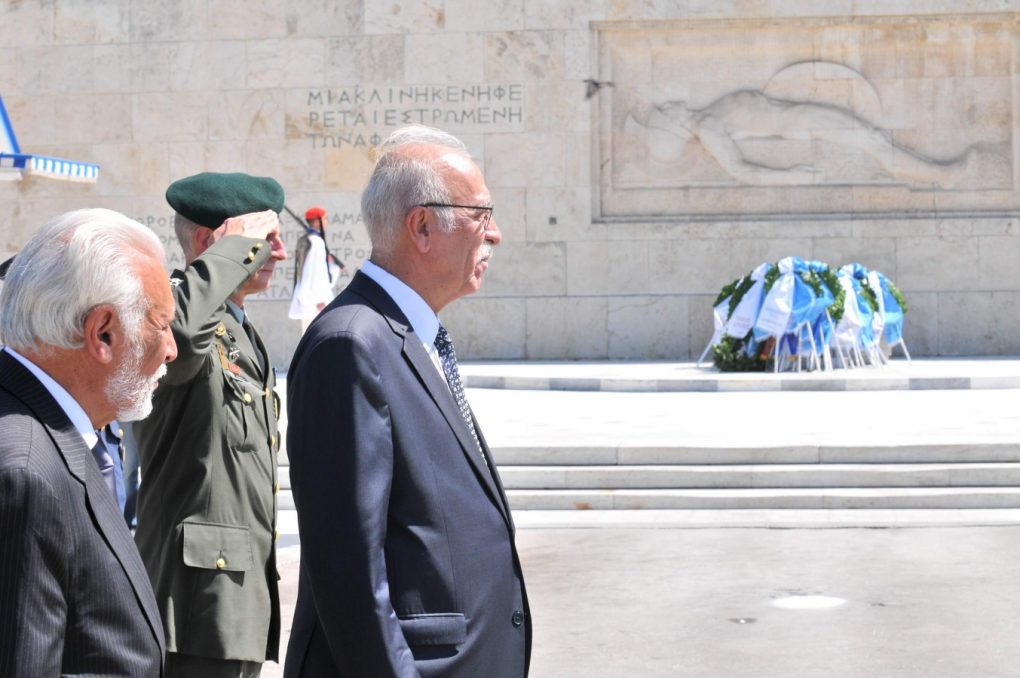
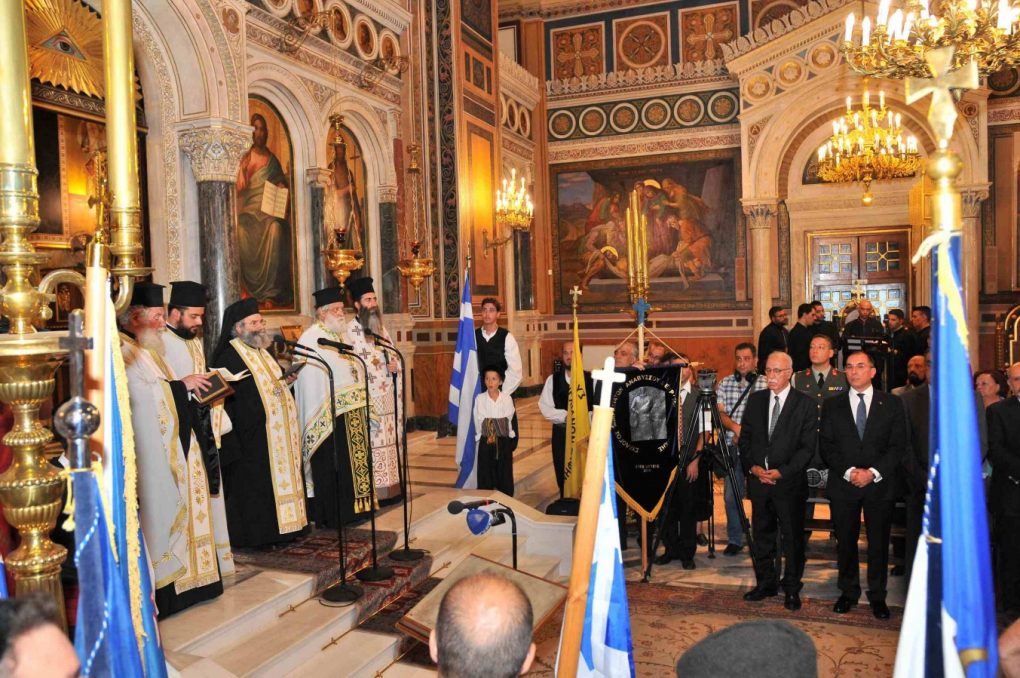
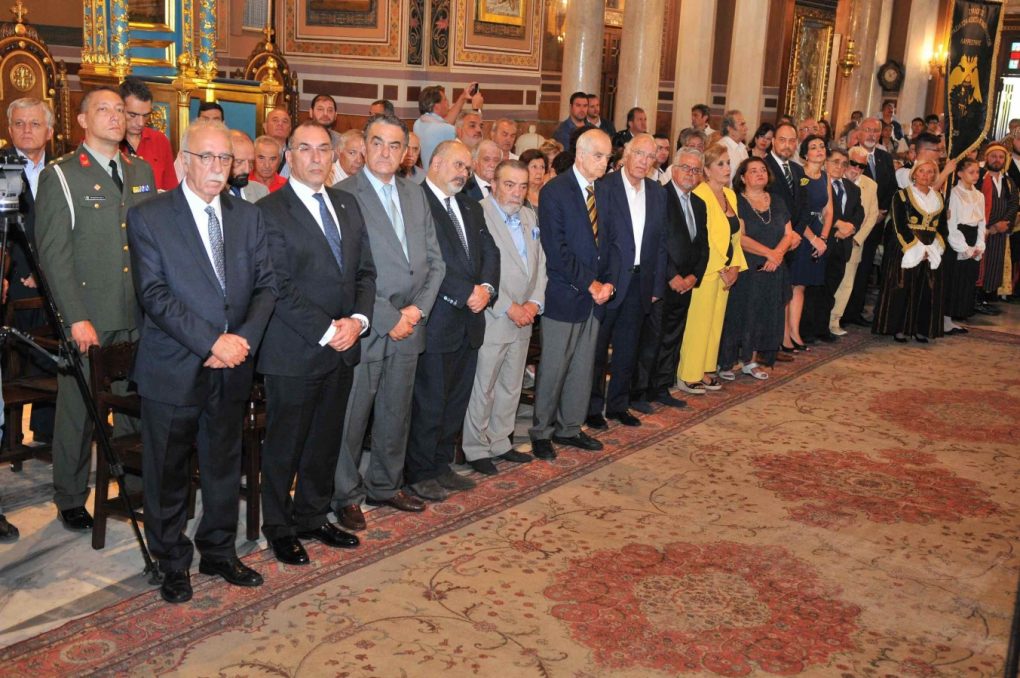
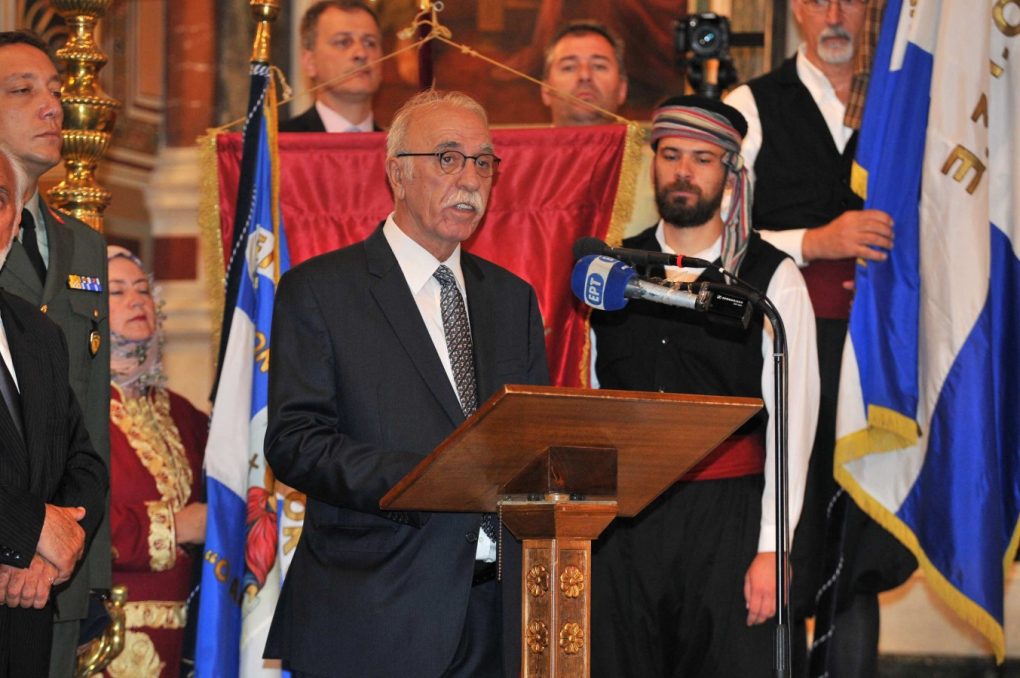
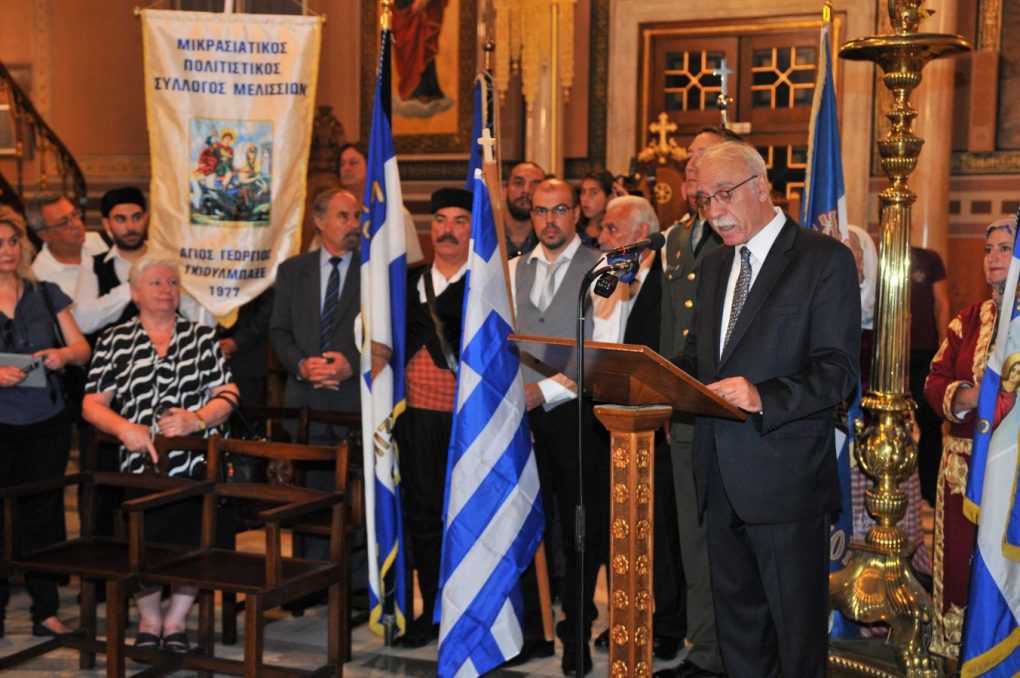
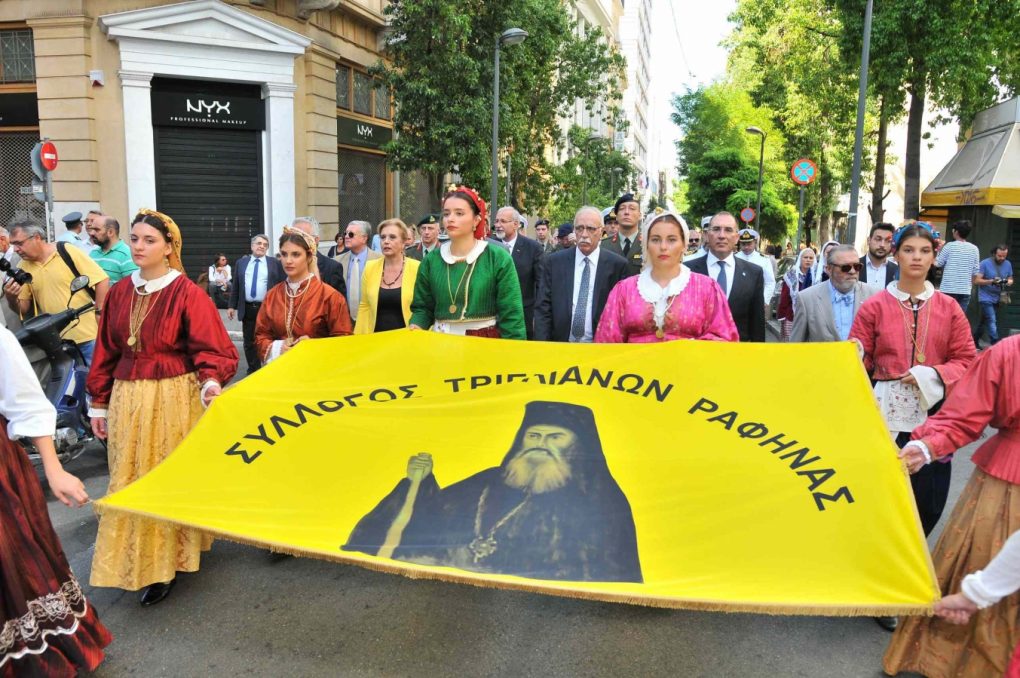
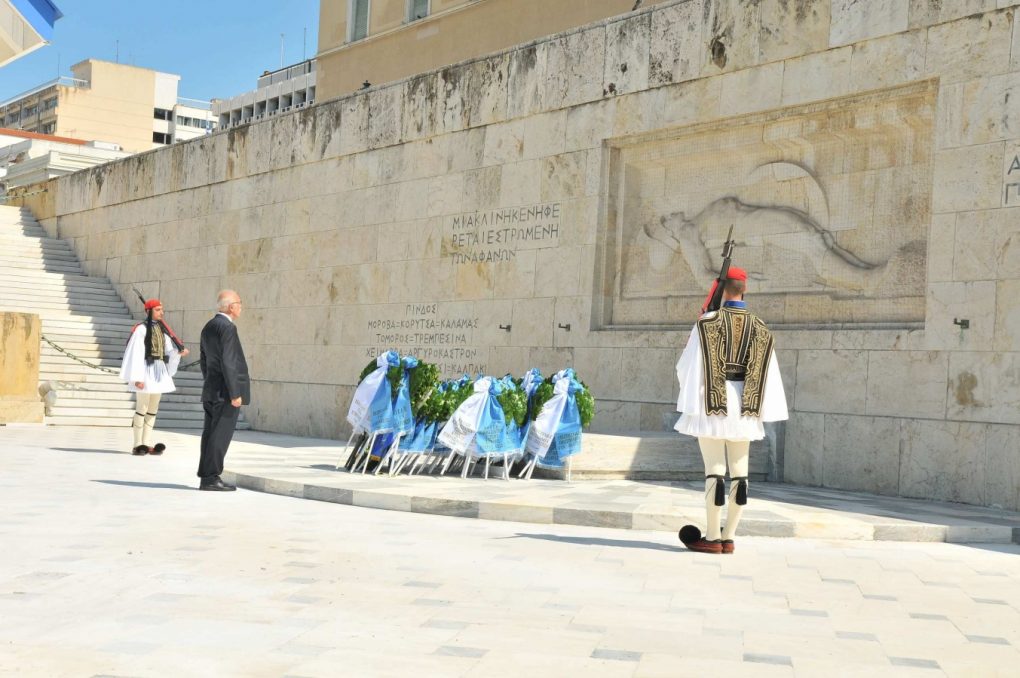
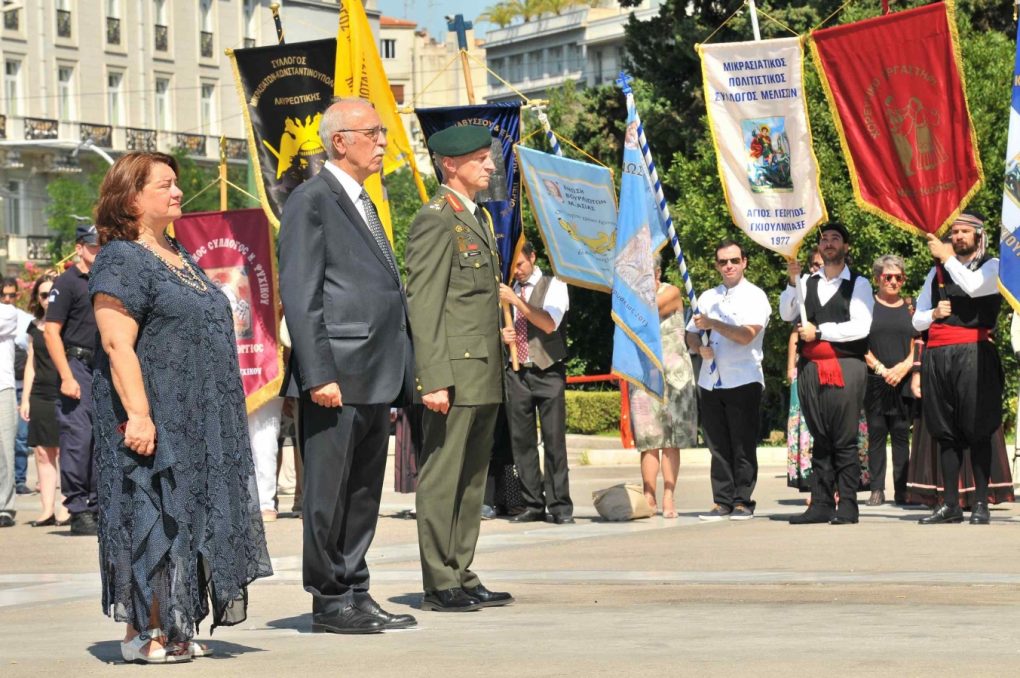
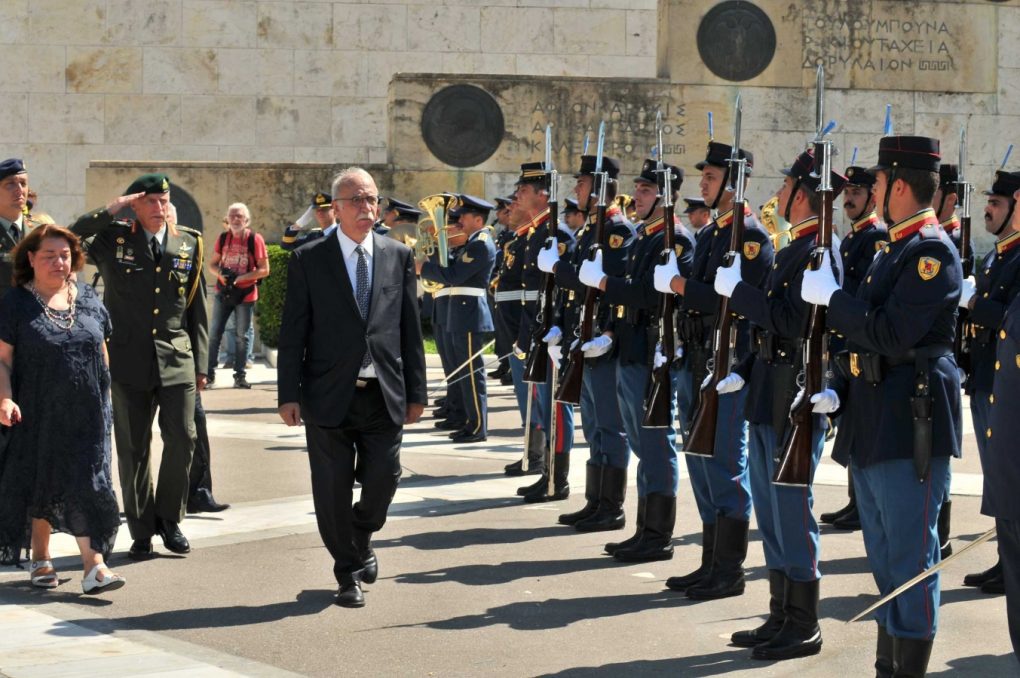
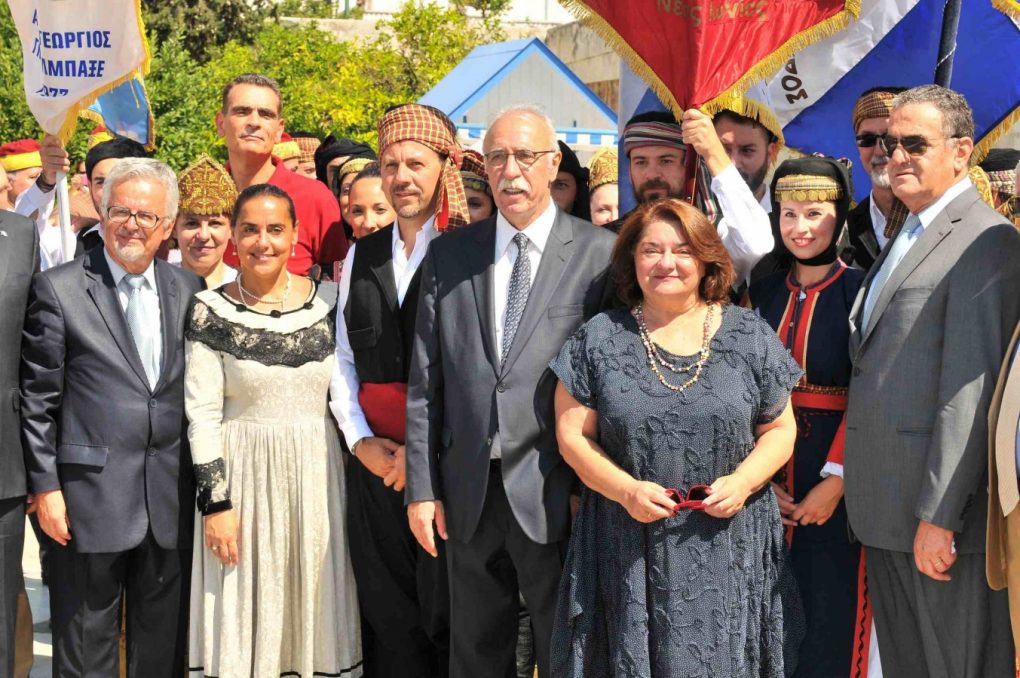
The Alternate Minister of National Defence Dimitris Vitsas represented the government in the commemoration of the Genocide of Asia Minor Greeks, held on Sunday 17 September 2017, in Athens.
The Alternate Minister of National Defence stated the following in his speech:
“‘Memory is the mother of all wisdom’: this is what Aeschylus said 2,500 years ago. And this is true and it will never change. Because without memory, you cannot know yourself, realise your needs, set goals and gain the strength in order to move on.
You already know that the 14th of September has been proclaimed, in the most official manner, as a “Day of National Commemoration of the Genocide of Asia Minor Greeks committed by Turkey”.
This Genocide was perpetrated in parallel with the genocides against other Christian populations, such as Armenians and Assyrians.
The term Asia Minor Disaster which is used, describes also the magnitude of this fact.
It was a disaster which means a definite condition, of a pre-planned devastation of thousands of people and loss of their places of origin.
It meant also the devastation of Greek populations after almost three thousand years of continuous presence and unique contribution to global civilization.
The Disaster of Smyrna seems to be and indeed is the major incident of a biblical tragedy which had begun in 1914.
The diversity of the populations in their places of origin is being assimilated under the policy of nationalist Young Turks, based on the Greek nationality or the religion, with one objective: the obliteration.
In the most criminal manner, the three-thousand-years long presence of people who had made a unique contribution to global civilization was interrupted.
It is other people’s job to examine the historical facts.
To me, however, two things are clear:
1. Asia Minor Disaster was neither necessary, nor inevitable.
2. The consequences of a historical disaster are never one-sided. The refugees that followed were the consequence and the completion of the national tragedy, but, at the same time, through a tormenting procedure, they led to the completion of the Greek state.
The refugees arrived devastated, yet they brought with them memories, customs and culture. They were not willingly welcomed from the very first time, but their presence, their knowledge, their thirst for survival reconstructed this country.
The manner in which, even nowadays, we have formed our social services, key elements of the social state, such as healthcare, education, even urban planning are somehow related to refugees.
Refugee organizations and cultural associations changed the conditions of collective action in Greece, as they also changed the political balance.
A new huge risk caused by Mussolini’s fascists and Hitler’s Nazis was compelled the Greeks to obtain a common attitude.
But the presence itself of 1.5 million Asia Minor refugees encouraged Greece to advance.
95 years have passed. The vast majority of those who were physically present in these facts have passed away. The ones who were born during the first years after fleeing to Greece have grown too old. Yet memories are still alive.
Nowadays, 1 out of 3 Greeks have origin from Asia Minor. There are no argues such as the ones of the interwar period, in Greece nowadays and this pain has been forgotten. Yet the creation remains, the history courses still exist and they give us too many lessons.
It has been cleverly said that “refugees are the great survivors of our history. People who persisted after they had lost everything”.
Unfortunately, people do not always learn and are not well taught. New wars in our region, as well as all over the world, create new flows of refugees. Yes, they may not speak the same language with us, they do not have the same culture roots, yet they were forced to move by the need of survival and freedom.
We, the people of this country, were forced to abandon our places of origin 4 generations ago; we showed the greatest and most generous understanding. We helped and we still help, some times surpassing our own strength; not only out of a humanitarian duty, but for this reason as well; not only because we are democratic and civilized people, but for this as well; at the same time, because we know, from our own experience, that we can help the development and evolution of the whole world in this manner.
And allow me to say one more thing.
On the quai of Smyrna, many conclusions which we must always bear in mind, were written with blood.
As a nation, as people and as a political leadership, we must understand clearly that in international relations, in the relations between states, what plays the most important role in the decisions which are made, is the balance of interests.
The political leadership is judged according to how clearly it understands these correlations and how it uses them to the benefit of the country within a certain strategic attitude it must have adopted. Flexibility and adaptability are of great importance for this and orientation and final objective should not be missed.
The frame in which our country acts today was formed according to the correlation created in 1922. The Treaty of Lausanne is the cornerstone of peace and stability in our region.
Greece does not call into question the sovereignty of other states, however it does not tolerate any dispute against its own national sovereignty in land, sea and air.
The borders of the Greek state with the decisiveness of our people and the significant contribution of our Armed Forces cannot be violated.
There is, however, one more reason: our territory and sovereignty rights over sea and air have not been granted by a treaty but they were earned with battles and blood. The treaties simply came to certify this result.
Nowadays, our country with the strenuous and bloody sacrifices of its people has begun to follow a way towards recovery and exit from the financial crisis. Refugees who came from Asia Minor and Eastern Thrace have many lessons to teach us about how people can stand on their own feet based on their own abilities.
And, above all, we are taught that as people and men, we should:
Remember, fight,
Not to quit,
And still learn from our mistakes”.