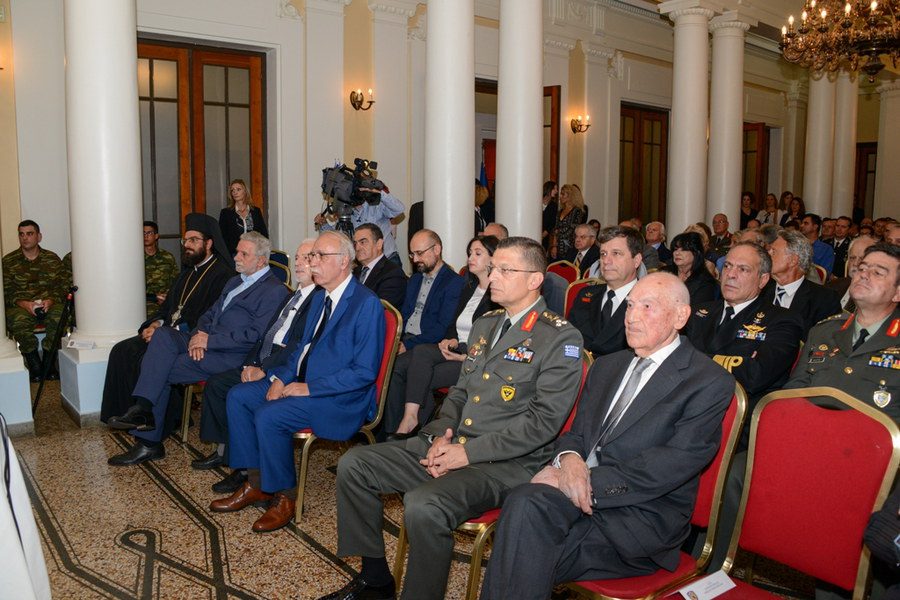
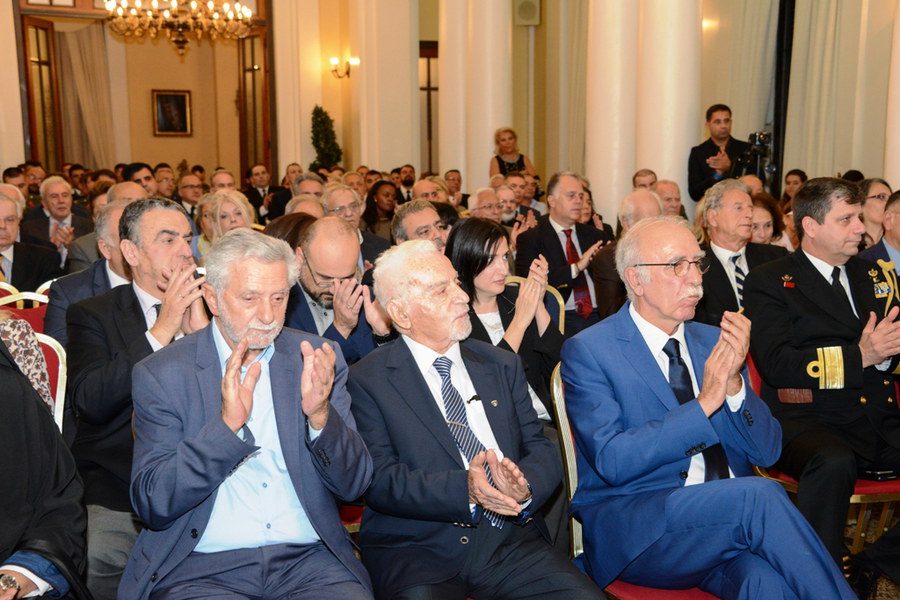
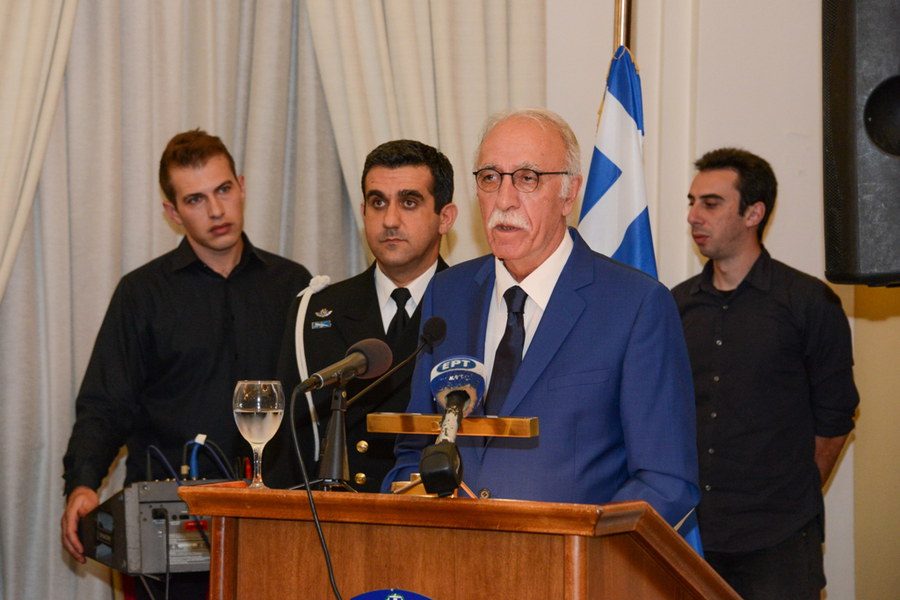
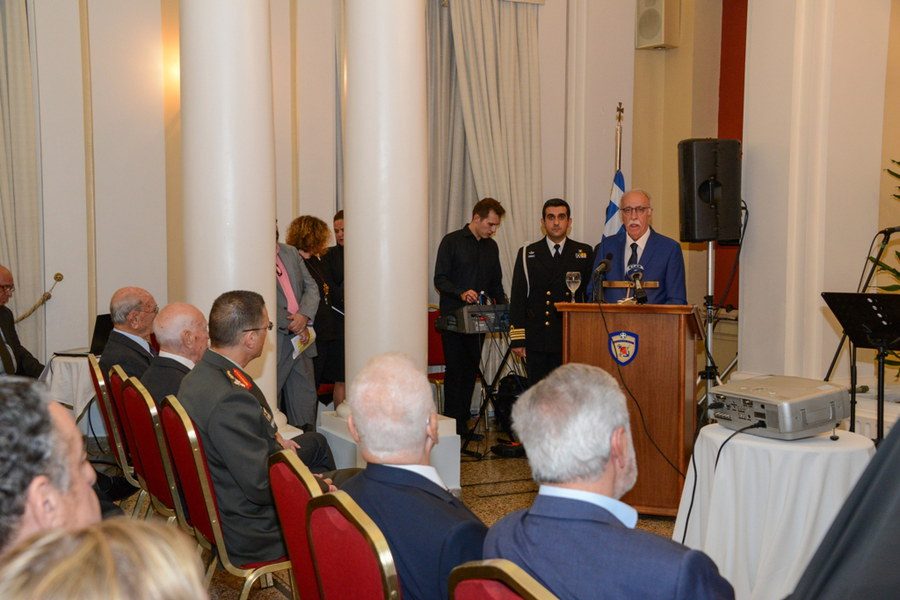
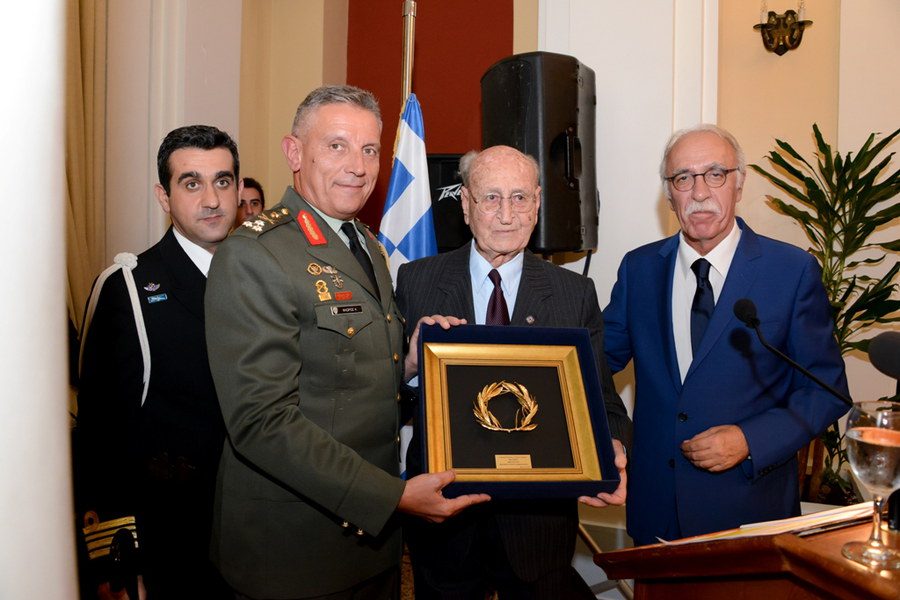
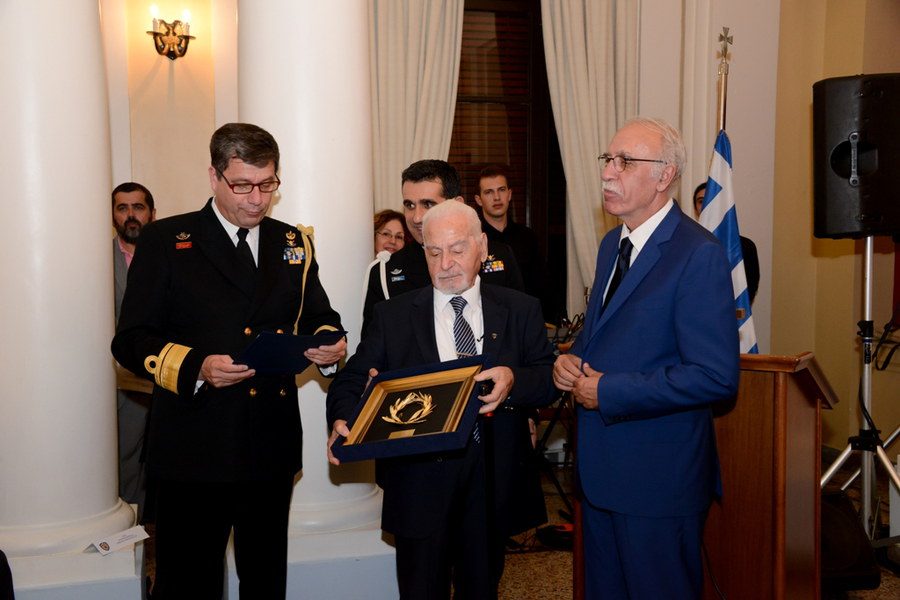
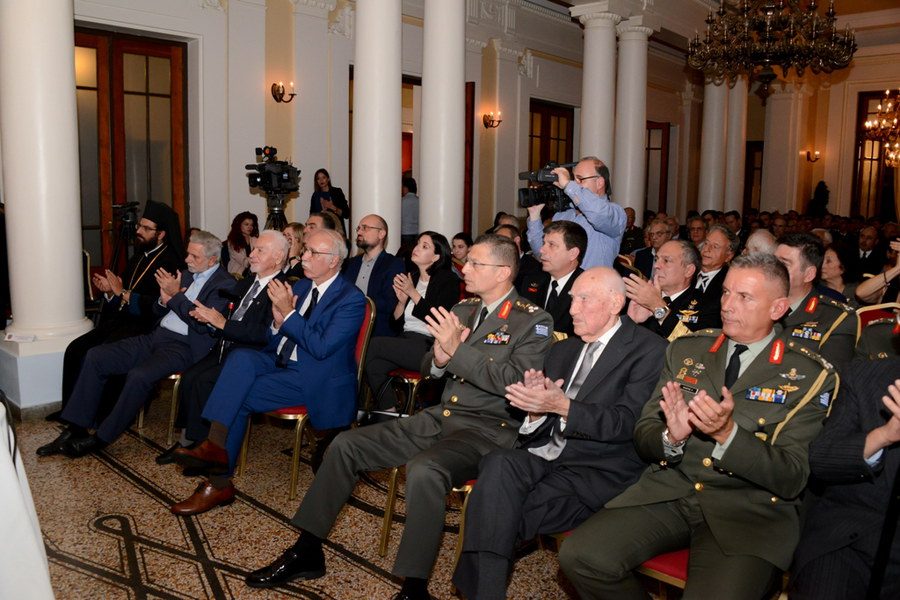
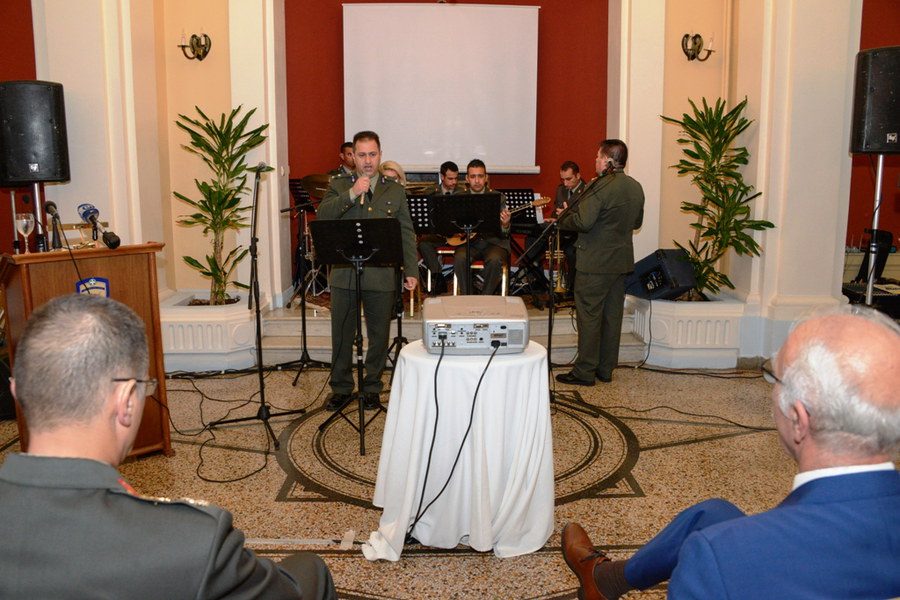
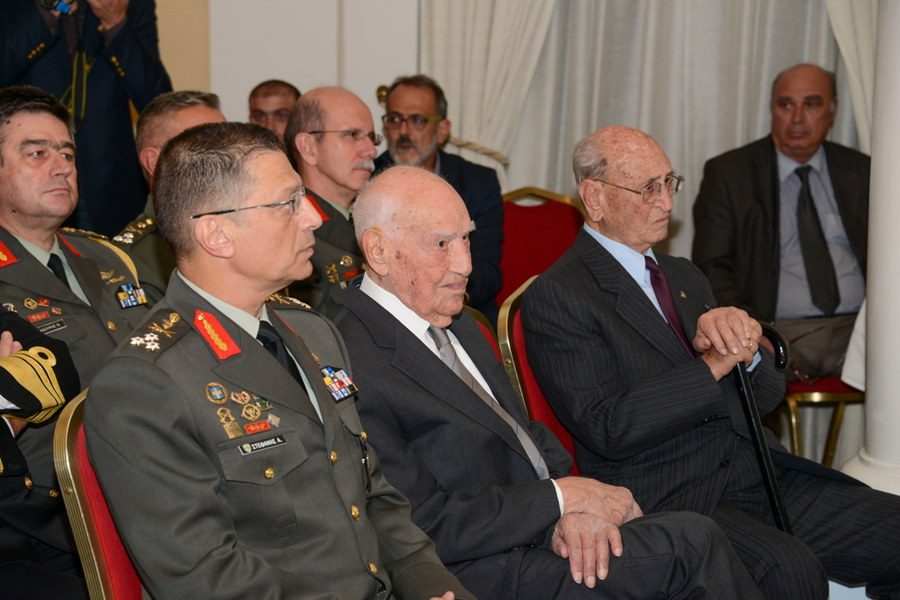
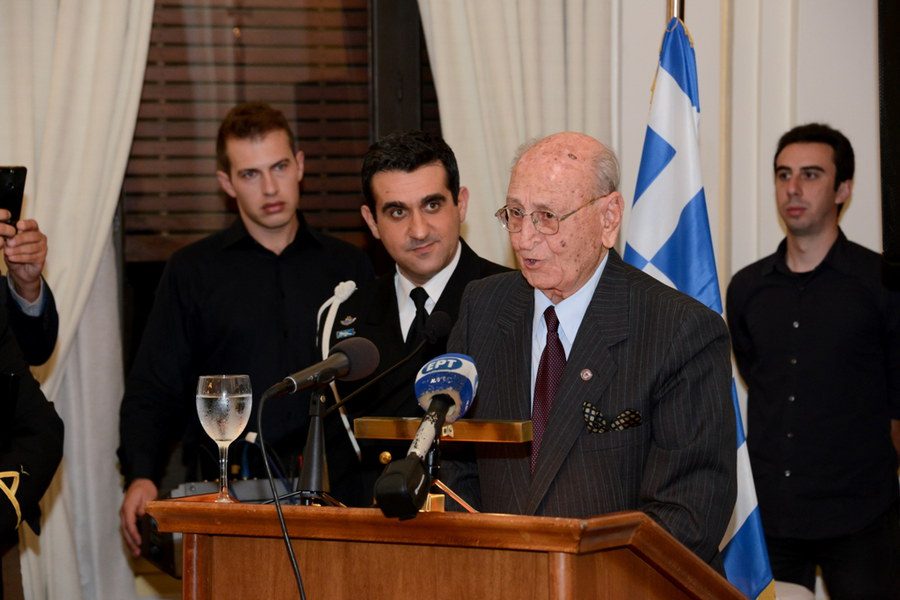
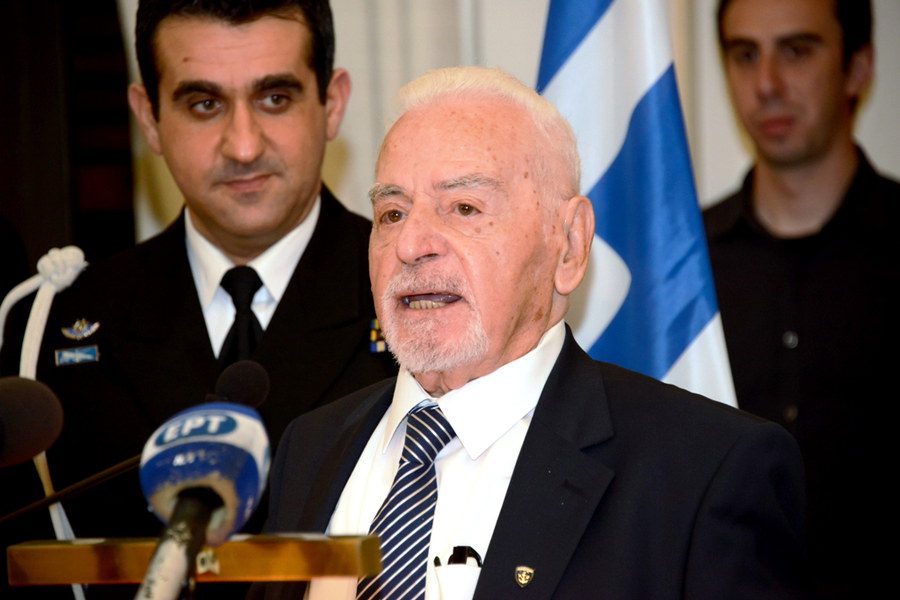
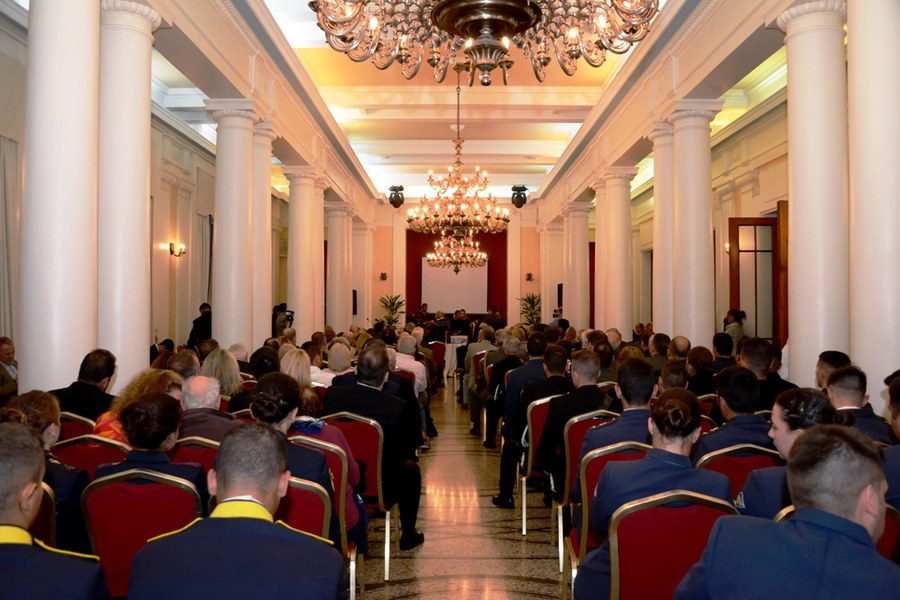
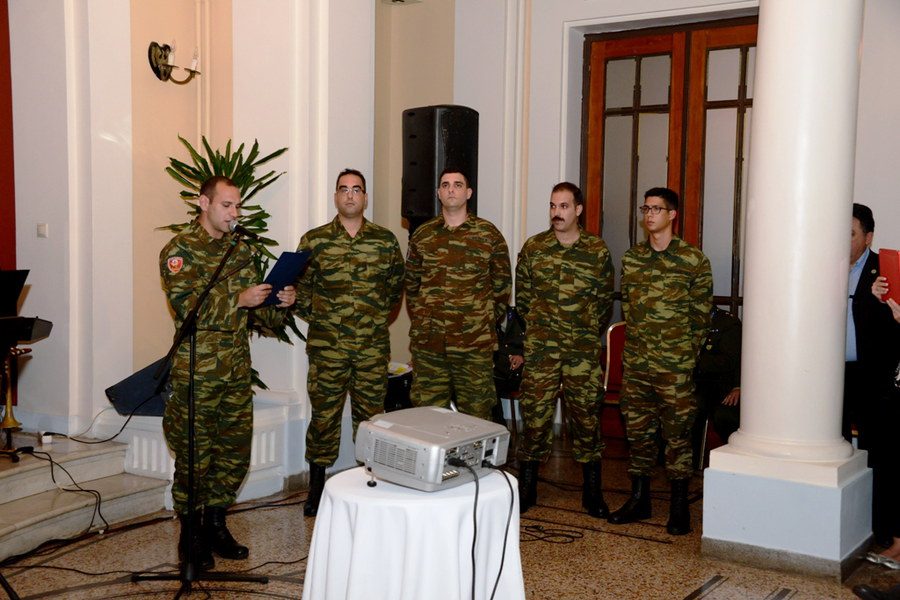
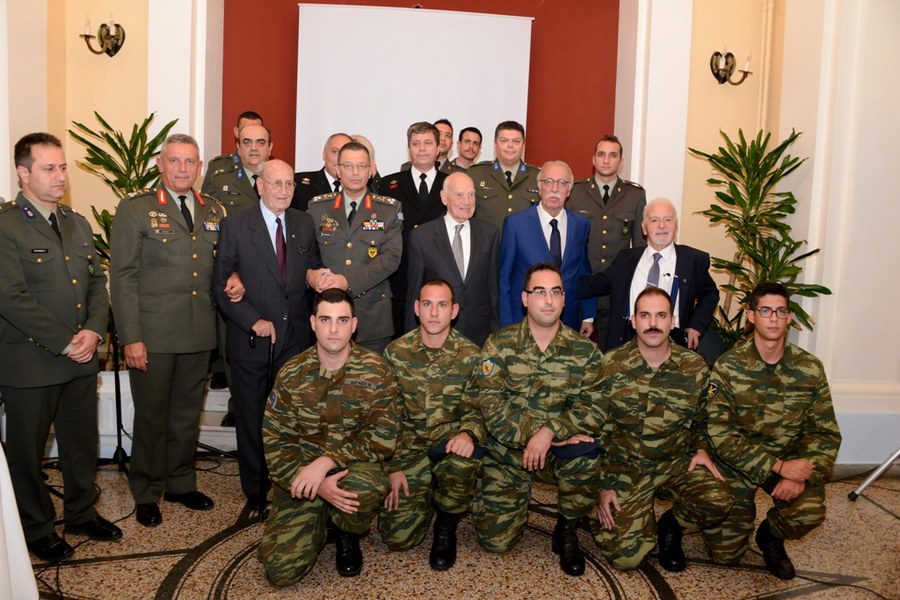
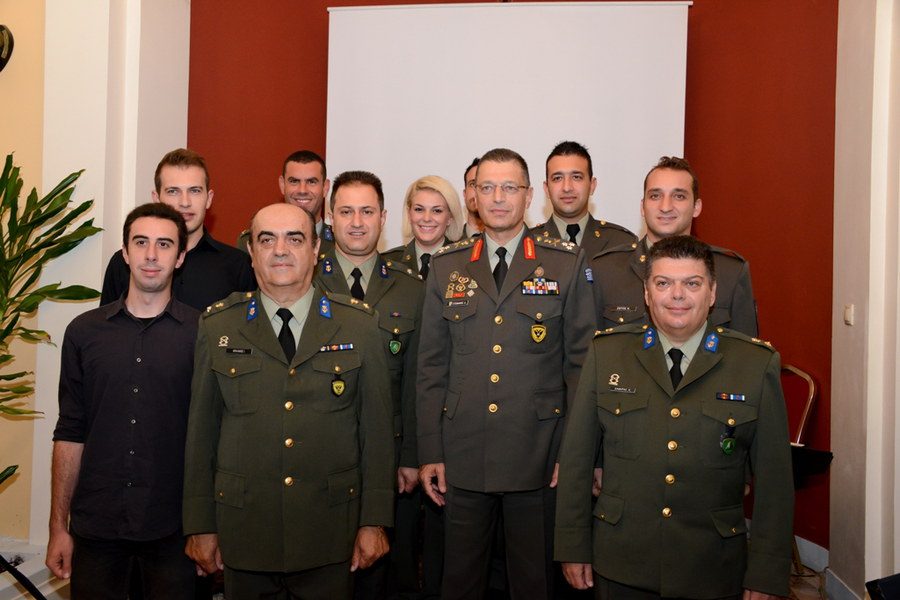
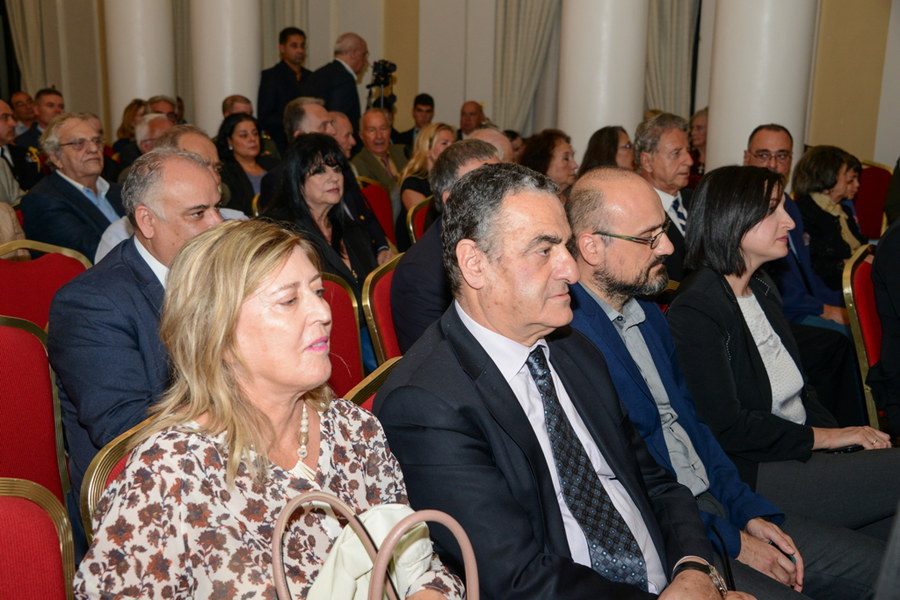
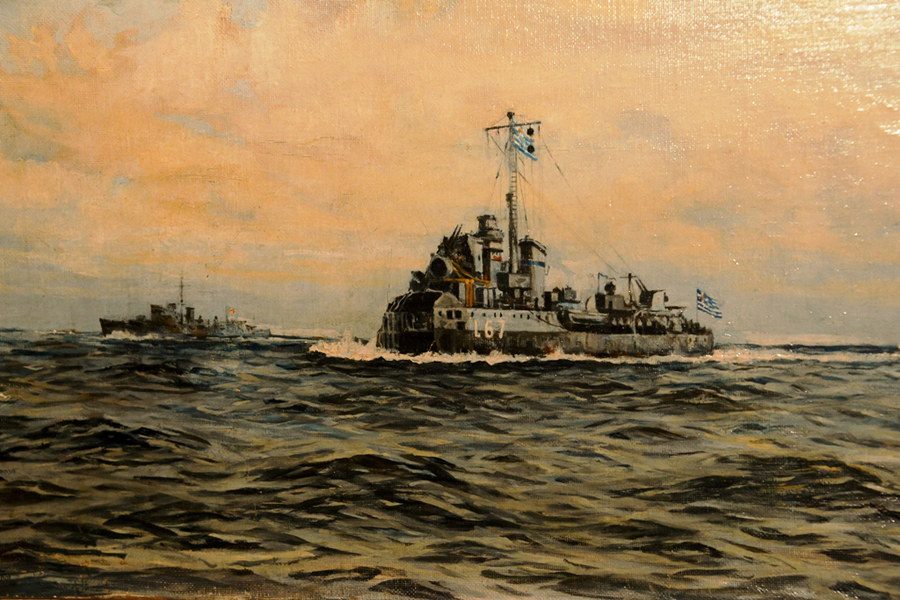
The Ministry of National Defence in the context of the celebration of the national anniversary of 28 October 1940, hosted on Monday 23 October 2017 at the Armed Forces Officers Club an event titled:
“Greece – WWII: Narrations and Accounts”.
It is part of the cycle of events under the general title “Liberated Athens” on the occasion of 12 October 1944 when Athens was liberated from the Nazi occupation troops.
The schedule of the event included:
– An address by the Alternate Minister of National Defence Dimitris Vitsas.
– Projection of a video about the liberation of Athens.
– Awards: of the retired Lieutenant General Georgios Plionis, Greek pilot who participated in the allied operations during WWII, Georgios Tassas member of the heroic crew of the destroyer “ADRIAS” and the retired Rear Admiral Theodoros Lymperakis, crew member of the corvette TOMPAZIS which participated in the allied landing on Normandy.
– Reading of letters from the front, taken from the book of Army History Directorate “Memories of War”.
The Army Band of the Higher Military Command of Army Support performed at the event.
The Alternate Minister of National Defence Dimitris Vitsas mentioned the following during his speech:
“Ladies and gentlemen,
Honourable veterans of WWII,
We have gathered here today to honour, remember and learn from the never-ending source of Greek history but also from particular examples of people who wrote the most glorious chapters of this great book called Greek History.
This is not just an anniversary event. We want, through these initiatives, to place at the agenda what we call “memory and honour”. Not in the form of a memorial service, neither as a lesson but as a living relationship of extracting numerous values from this glorious heritage.
The history and culture of Greece are components of the notion and context of National Defence. In the current conditions of global dissemination of values and notions but also of the procedure of becoming more neutral, National Defence, more than ever, and the function of the Armed Forces itself need references in history.
Bringing into prominence Culture and History of Greece accompanied by scientific knowledge, constitutes an action of National Defence in the real meaning of the word, standing opposite the political and cultural decimation.
It is an act of healthy resistance, I would say “National Resistance”, in the meaning of the historically and politically acclaimed National Resistance during the Nazi occupation.
At the same time it counters the various neo-Nazi and racist political groups rising in Europe and elsewhere, stepping on ignorance and falsification of history.
Let us remember how the Greek history and the Greek culture inspired the fighters of the 1821 rebellion and the Philhellenic Movement but also how the heroic traditions of the 1821 struggle inspired the epic fight of the Greco – Italian War of 1940-41 and then the fighters of the National Resistance.
The cadres who serve in the Hellenic Armed Forces today and the young conscripts serving in the Army must have a living and experiential relationship with this land’s history.
Historic memory constitutes a national asset utilised by the Armed Forces.
A cadre of the Hellenic Armed Forces fulfils his/her mission better, when he/she is aware of the historical continuity in which it includes his/her contribution.
Dear friends,
Today’s event is part of the celebration for the anniversary of the liberation of Athens on 12 October 1944 and is objectively connected to the national anniversary of 28 October.
These two dates signify the beginning of the Greek participation in WWII and the end of the bleak period of our country’s occupation by the Nazi troops.
At this point I would like to answer a question which may have to be addressed:
Why do we celebrate the beginning of the war and not the liberation, as they do in other countries of Europe?
The answer is simple:
The joy of liberation did not last long. What followed was the tragic December of 1944, when Athens, just 50 days after its liberation became a vast battlefield. The country then entered the vicious cycle of civil war and it took many decades before it could recover.
The participation of Greece in WWII constitutes a chapter in history which contains the tactical battles of the Hellenic Armed Forces at the Greco – Italian front in Epirus and the Greco – German front at the Battle of the Forts and the Battle of Crete and also the heroic resistance of the Greek people in the fields and on the mountains of our country.
It also contains the participation of Greek cadres and volunteers on the war’s allied fronts. I would like to mention the contribution of the Greek commercial ships in the allied victory. Over 2.200 Greeks who participated as crew members in convoys for the transport of materiel were lost at sea.
Let us not forget that the main guerrilla organisations the Greek People’s Liberation Army, the National Republican Greek League, the Pan-Hellenic Union of Fighting Youths and others were staffed by cadres of the Hellenic Standing Army.
The guerrillas on the mountains of Greece constituted the continuation of the heroic resistance of the Hellenic Army at the Greco – Italian front. This fight inspired the Greeks who joined the Allied Forces and participated in the great war operations of Northern Africa, Normandy and elsewhere.
Five days before the celebration of the national anniversary of 28 October 1940, we are reminded of the role played by the Hellenic Army, with the participation and undivided support of the people, who opposed the enemy with a proud NO.
We are proud because on this land the forces of Axis suffered their first defeat on the mountains of Epirus.
Greece was the country who firmly resisted the German invasion.
The Greek people through the glorious National Resistance stroke a strategic blow against the conqueror.
The first demonstrations in occupied Europe took place in Athens. By shedding their blood the Greeks managed to prevent the deployment of Greeks at the Eastern Front.
The first large scale strikes in occupied Europe took place in Athens.
Ladies and gentlemen,
WWII ended with the great anti-fascist victory of the people of Europe. However there is an unresolved issue concerning our country.
It pertains to the German war reparations. Our government clearly raised the issue and so did the Prime Minister Alexis Tsipras at a personal level. The same stands for the President of the Hellenic Republic.
The German reparations owed to Greece is a self-existent issue which was raised on the day the occupation forces left our country and continues to exist without allowing any other form of compensation.
It is an outstanding issue and the German government should also be interested in its resolution since it would constitute an element of contribution to a democratic and peaceful Europe.
Because only if Europe is aware of its history and its lessons will it have a future.
Because if Europe ignores the bleak pages of its history then it is doomed to relive them, sooner or later.
Reaching the end of my speech,
I would like to say that our government, holding the link to our history and being fully aware of the situation around us – living in a context of fluidity and geopolitical instability, where Greece constitutes a pillar of security and stability – has as its main priority the financial recovery, by utilising the comparative advantages.
At the same time we decisively secure our sovereign rights, an issue which constitutes a contribution in stability and security in the wider region.
We respond to any dispute with the exercised policy at an international level and the deterrence capabilities of our Armed Forces.
Dear friends,
I consider this venue and this event an opportunity for a personal note. During the political change – over we often see views which consider the field of National Defence a field of scandals. It is true that in the past various scandals have happened because of political leaderships, with the participation of officers who broke their oath.
However the majority of the men and women officers, retired and active, stay true to their oath with their everyday deeds.
I would like to especially mention the retired officers. I have met high-ranking officers who suffered and keep suffering with dignity the same hardships as every Greek citizen and cadet of the three services, with a pride surpassing any material challenge or invitation. That is why we have to honour them and show interest in them in multiple ways!
Ladies and gentlemen,
Supererogation constitutes the force which pushes us forward during our historic course. If some operated with the cold rationale of numbers and individual cost calculation, then the wheel of history would not turn.
The three examples of the people who we honour here today make what I say certain. Despite belonging to the Armed Forces and having completed their typical mission after the collapse of the front, the government being exiled and Greece under occupation, they kept fighting along with thousands of other Greeks.
This supererogation might, at a first glance, seem like a personal choice, however at the same time it is asserted by the duty stemming from history, the sense of our historical continuity and everything all of the above may involve at a personal level.
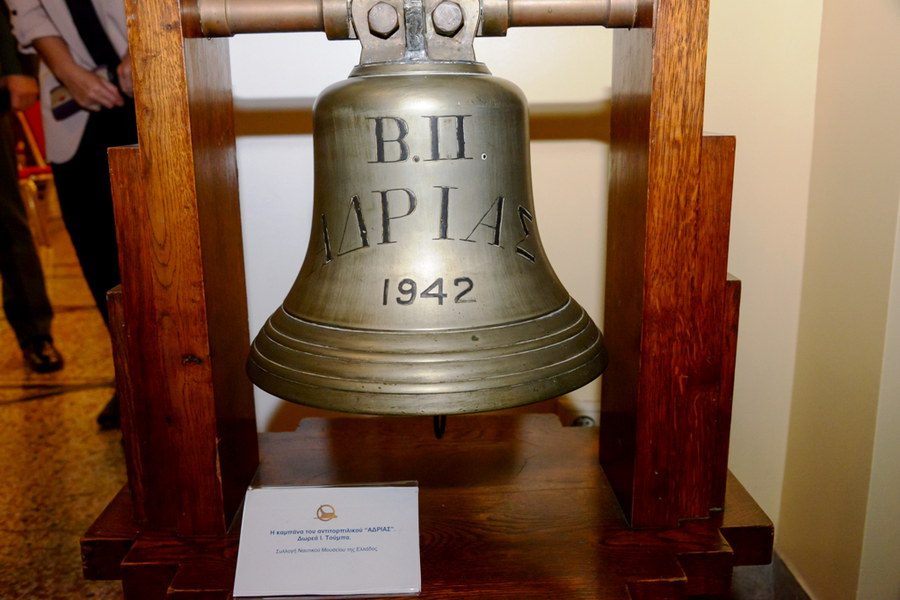
We honour the sailor Georgios Tassas of the legendary Destroyer ADRIAS.
We honour the pilot Georgios Plionis who completed 167 successful missions in WWII.
We honour the ensign of the Greek corvette TOMPAZIS, Theodoros Lymperakis, who participated in the landing on Normandy.
It is an honour to have you with us today.
We honour them here today and we promise them that their example will guide us.
Historic memory and the honouring of these individuals is a living entity. It has momentum and offers a valuable contribution by shedding light on our way ahead, now and in the future.
Thank you”.
RESUMES OF THE THREE HONOURED PERSONALITIES
LIEUTENANT GENERAL GEORGIOS PLEIONIS
Lieutenant General (ret.) Georgios Pleionis was born in Kymi, Evia, in 1920. He spent his childhood in Lavrio and in 1939 he was admitted to the Hellenic Air Force Academy, in the 9th class of officers. The 9th class of Air Force cadets accomplished their flight training at the extemporaneous airport of Argos in March 1941, because of the Greek-Italian war.
On 3 April 1941, he left for Iraq in order to be trained on modern aircraft in the British School of Habbaniya in the airport of Bagdad. He was there when Germany declared the war against Greece on 6 April 1941, and during the occupation that followed.
In March 1941, he left Iraq, together with his fellow trainees, via Gaza, Palestine and Cairo, and went to Rhodesia, where he accomplished his flight training on HARVART aircraft in the British School of Pilots.
In October 1941, he returned to the Middle East and was appointed to the Pursuit Squadron on HURRICANE aircraft at AKIP airport, Palestine.
In early October 1942, he was appointed to the 335th Pursuit/ Bombing Squadron operating at the front of EL ALAMEIN. He flies on HURRICANE aircraft in missions against the Germans and the Italians in the big battle of EL ALAMEIN which began on 23-10-42 and lasted two weeks.
He remained in the same unit and later he started flying on SPITFIRE aircraft of the same squadron in many missions until the end of the war.
On 14 February 1943 he was rescued from his burning HURRICANE aircraft, by using his parachute while he was 20 miles north of Northern Africa, and fell on tempestuous Mediterranean Sea without being able to use the rescue boat. Finally, he was collected by a British war vessel which accompanied the convoy to Alexandria.
On 30 June 1944, he had to abandon his SPITFIRE aircraft due to an engine damage, on board which he was flying in a mission that accompanied a convoy, 40 miles north off the African Coast above the Mediterranean Sea. He survived, by falling with his parachute and was rescued by an amphibious boat.
On 15 September 1944, his Squadron left for Italy and, then, he flew via a small airport to an island off the Dalmatian coast, in missions of close support to Yugoslav Partizans. On 26 September 1944, the fuselage of his aircraft was shot by German fire.
After the liberation of Athens, the 335th Squadron, as well as two more Greek squadrons returned to Greece.
On 4 November 1944, Lieutenant Pleionis landed with his Squadron in Taranto, Italy. On 14 November 1944, he returned to Hassani airport, Athens, which was later called Elliniko airport.
He remained in the 335th Squadron until May 1945 and conducted missions against fortified German positions on Milos island and in Souda, Crete. In one of these bombing missions, the SPITFIRE aircraft on board which he flied, was shot by a German antiaircraft on Milos, but he managed to land on his base safely.
He conducted his last war mission on 4 April 1945 on a SPITFIRE Νo JK 226.
Thus, he completed a total of 167 various successful missions in World War II: interceptions of enemy aircraft, armed reconnaissance, strafing and bombing of enemy positions, search to spot shot down aircraft and protection of convoys.
After the armistice was signed on 8 May 1945, when World War II was over, he was sent to the Hellenic Air Force HQ, Cairo, in order to advance farther to South Africa and be trained as an Air Trainer, but, by the end of the war, the British close the schools of South Africa.
So, he remained in the HQ of Cairo until October 1946 and, at the rank of Captain, he returned to Greece by ship from Alexandria, delivering also the war files which he carried. The files regarded the activity of Greek war squadrons during World War II, but, as he found out himself in 1950 they had been lost.
After the end of World War II, he served in various staff positions in the Hellenic Air Force in Greece and abroad: Brussels, Washington D.C., Smyrna and elsewhere.
In March 1967 he was repatriated. After the coup on 21 April 1967, he refused to cooperate with the dictatorship and, on 12 May 1967, he retired at the rank of Brigadier General.
In 1970, the Police refused to provide him with a passport and forbade him the procurement of supplies from military shops. They also deprived him of the right of being provided with healthcare services by the military hospitals.
In 1975, he was awarded the rank of Major General.
He has been also awarded 24 Greek and foreign decorations.
GEORGIOS TASSAS
Georgios Tassas, a young seaman of the legendary destroyer ADRIAS, is also present here.
He was recruited in 1942, as an Engineer Seaman, at 16 years of age. He was trained in the armoured cruiser AVEROF. For his excellent performance he was awarded a golden cup and was appointed to HEPHAESTUS floating workshop, as a trainer.
In July 1942, he was appointed to the destroyer ADRIAS.
The vessel ADRIAS (L-67) which had been granted by the British Royal Navy was the former HMS BORDER.
In World War II, during the operations at the Dodecanese, the destroyer ADRIAS fell on a mine near Kalymnos, on 22 October 1943, and, as a consequence, its fore was destroyed.
The British HURWORTH which was close, tried to help it and it was also struck by a mine and was sunk. 143 men died.
But ADRIAS, despite the damage, managed to reach the closest Turkish coast of Gumucluk with 21 men dead and 30 wounded.
However, thanks to the exceptional efforts of the crew, the remaining ship, after temporary repairs, set sail on 1 December, 1943, without a fore and managed to arrive in Alexandria, Egypt, on 6 December 1943, having travelled across 730 nautical miles.
Georgios Tassas was on board the ship and participated actively in the heroic efforts of the crew to repair and waterproof the vessel, as well as during its legendary course to Alexandria.
The destroyer ADRIAS became famous for its achievement which is one of the most eminent examples of successful damage control in war operations worldwide.
REAR ADMIRAL THEODOROS LYMPERAKIS
Rear Admiral Theodoros Lymperakis was born in Piraeus in 1921. He was admitted to the Hellenic Navy Academy in 1938 and graduated in 1940.
During the Greek-Italian and the Greek-German wars, 1940-1941, he served on battleship GEORGIOS AVEROF. Afterwards, he joined the crew of the destroyer HYDRA which was sunk after a German attack on 22 April 1941.
He fled from occupied Greece on 13 December 1941, and reported in the Middle East where he completed his training on AVEROF.
He also served on surface vessels, taking part in operations in the Indian Ocean, Mediterranean Sea and Northern Atlantic, including the Normandy landings and the Allied invasion of Sicily.
He continued to serve in the Hellenic Navy from which he retired in 1969, as a Rear Admiral.
Participation in the allied landing operation in Normandy:
In December 1943, he left England and arrived in Chatham where Greeks were gathered on one of the vessels to be delivered. He was assigned to corvette TOMPAZIS. He assumed duties as navigation officer.
The vessel sailed to Londonderry, Northern Ireland, and then joined the convoy of 50-60 empty cargo ships whose destination was Canada.
Then, the ship sailed to Portsmouth, where the landing operation was being prepared and set sail on 5 June 1944, day before the D-Day; it headed towards the coast near the gulf of Seine and took part in the landing operation in Normandy.
He has been honoured with a number of honourary awards as a World War II veteran, among which are two medals for outstanding acts, two war crosses and many other distinctions in Greece and abroad.