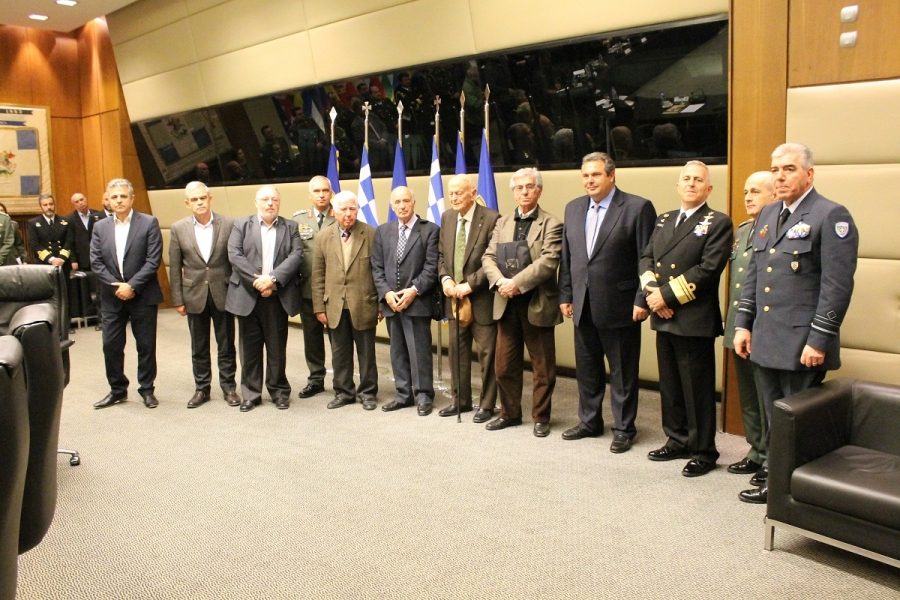
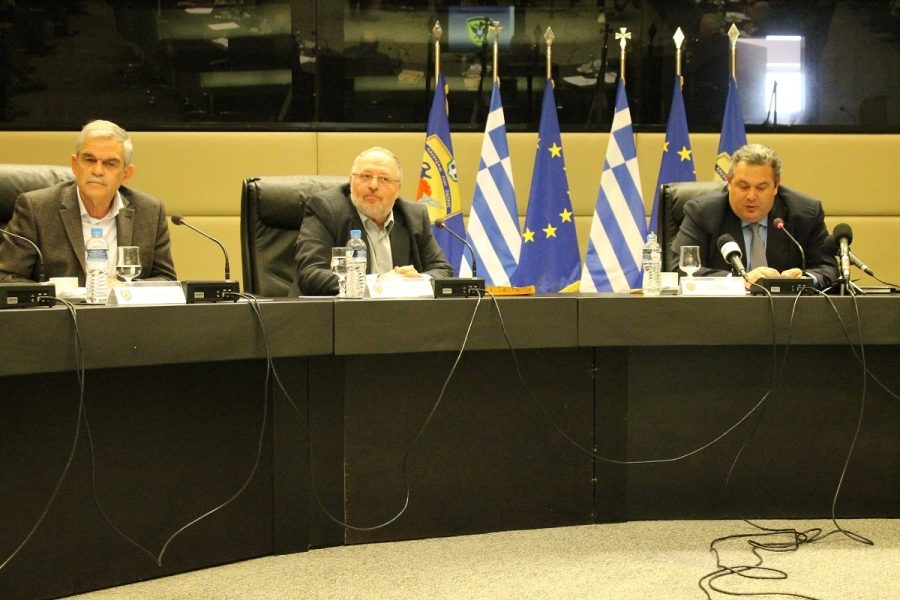
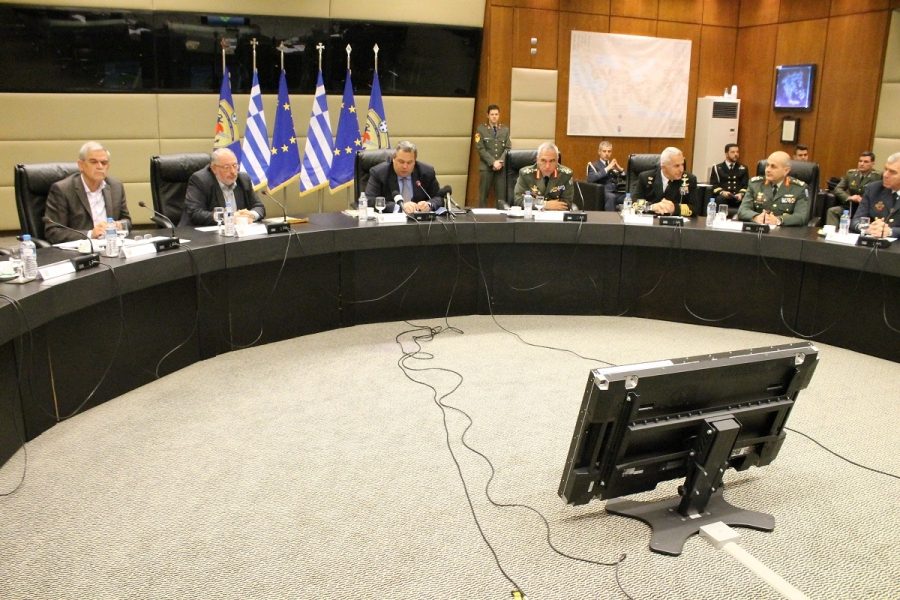
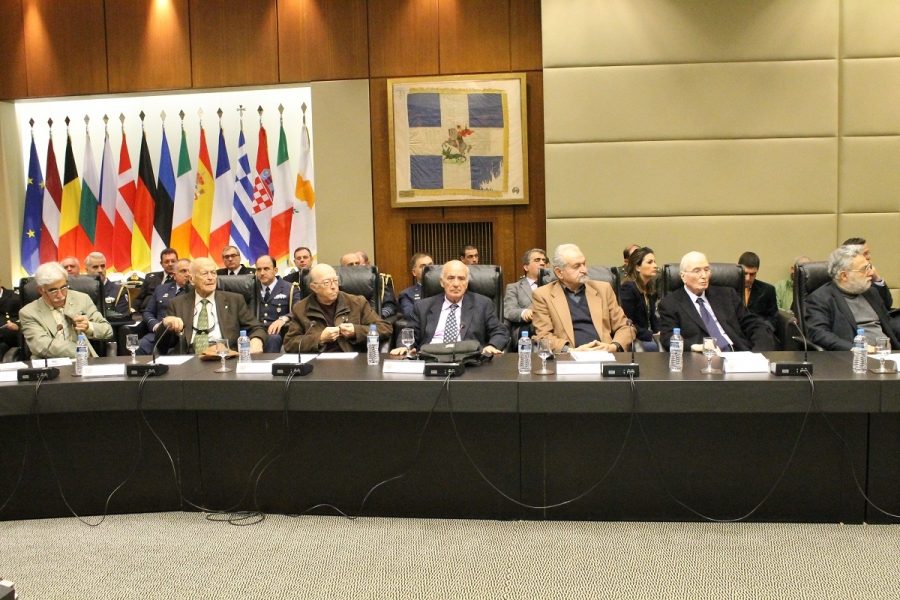
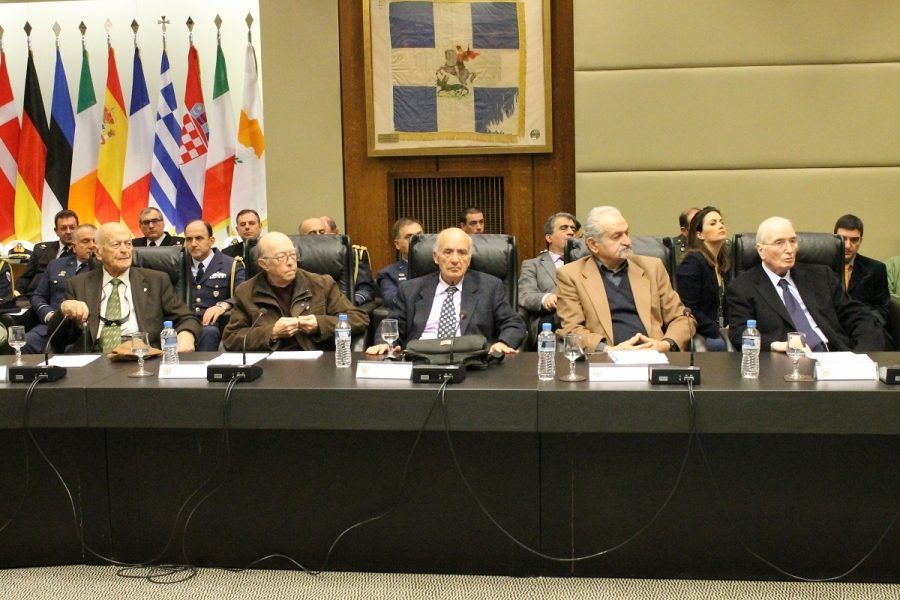
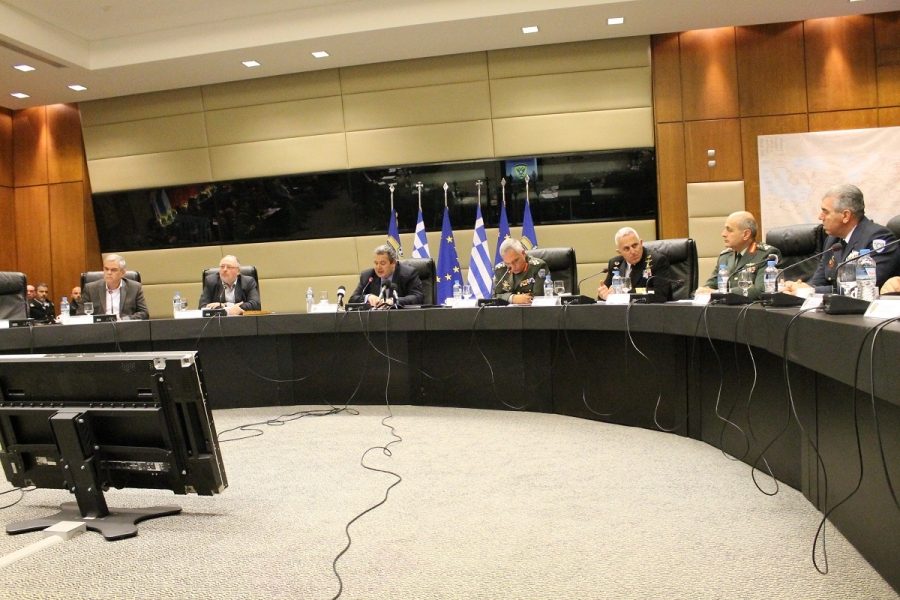
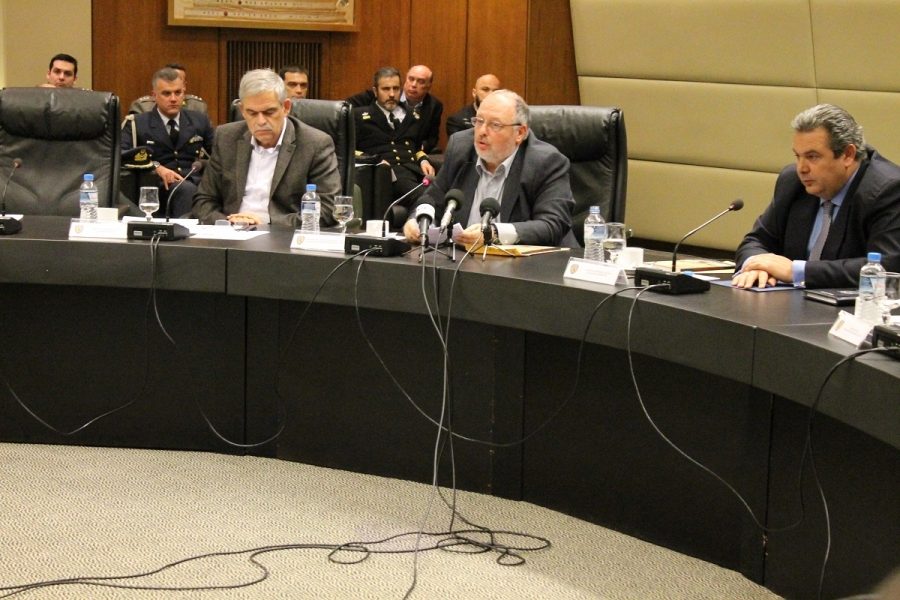
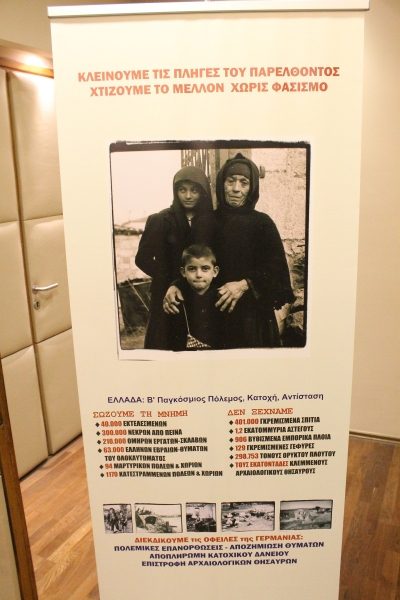
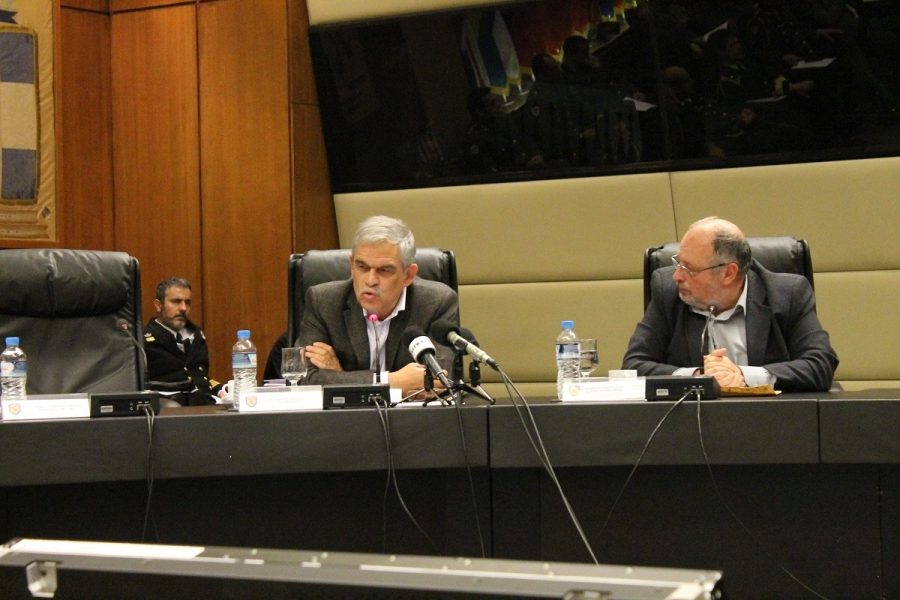
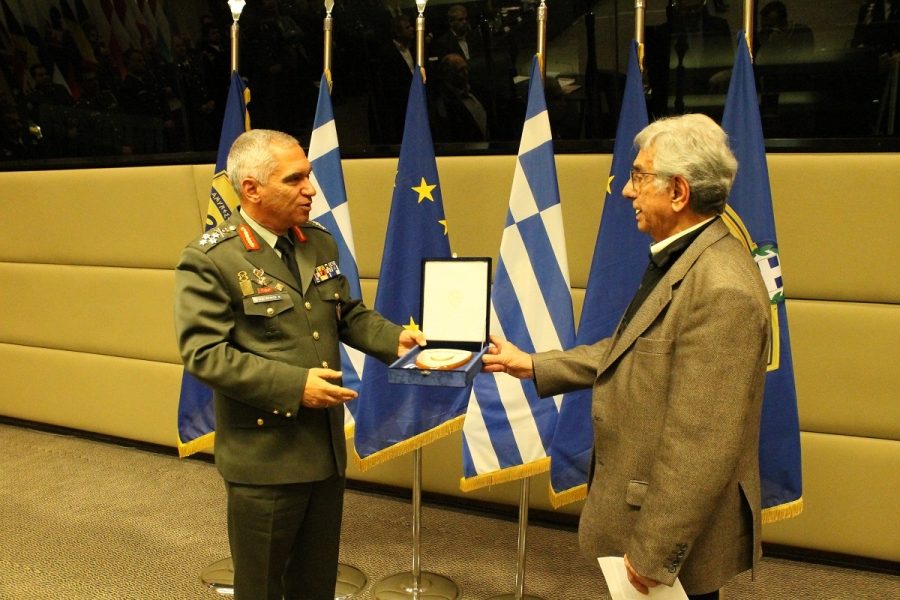
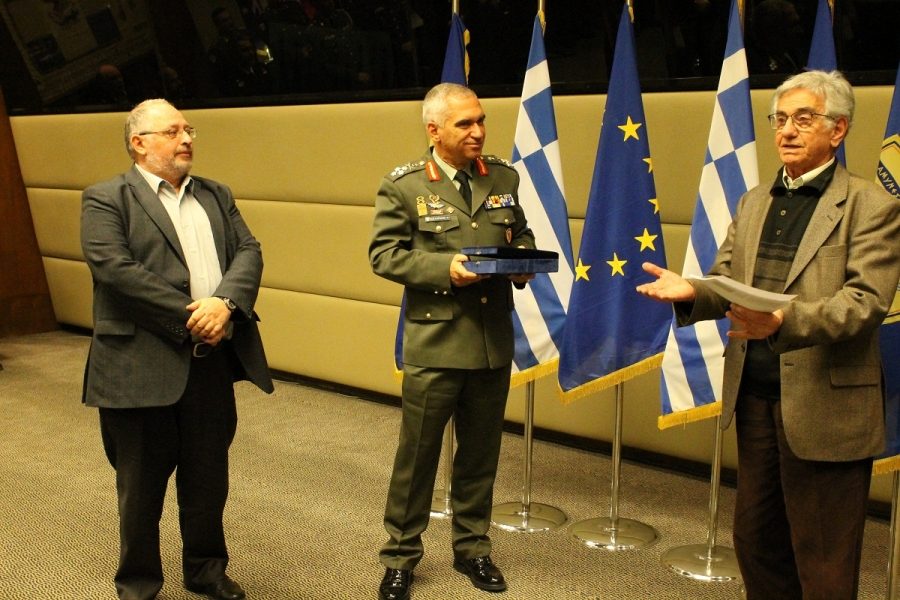
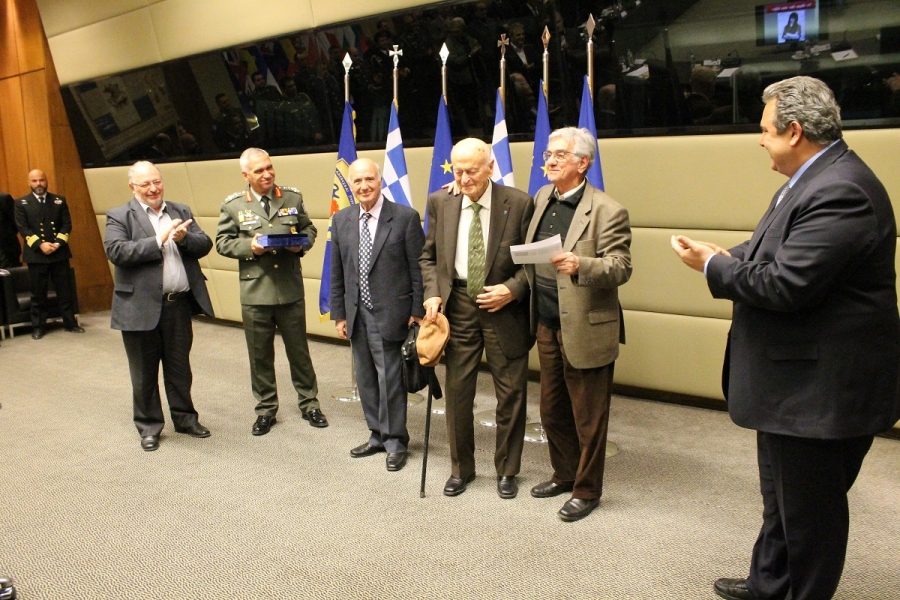
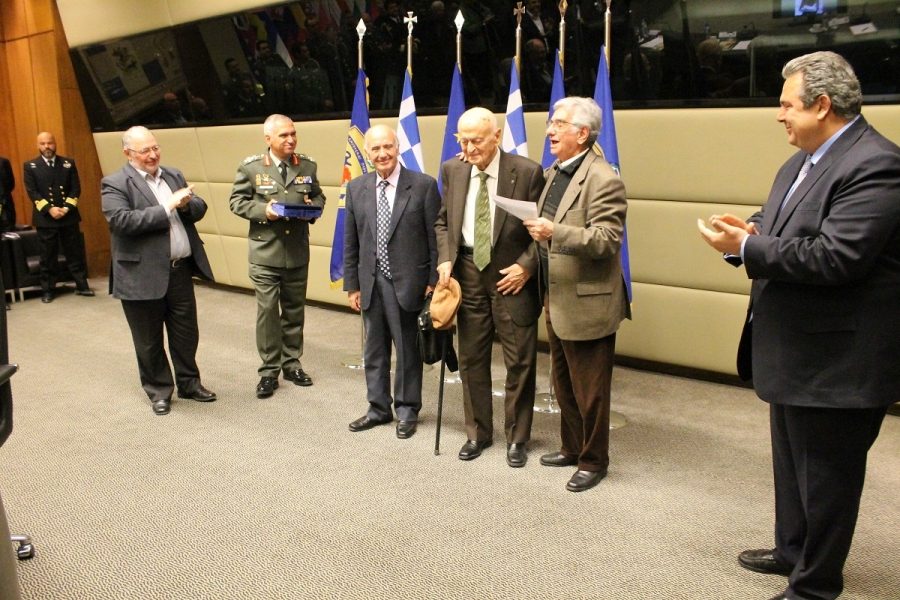
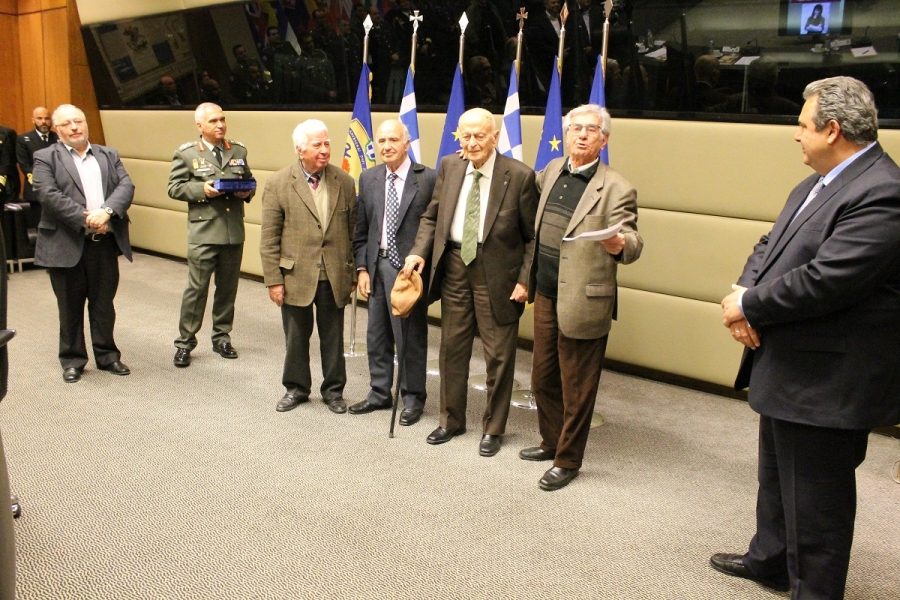
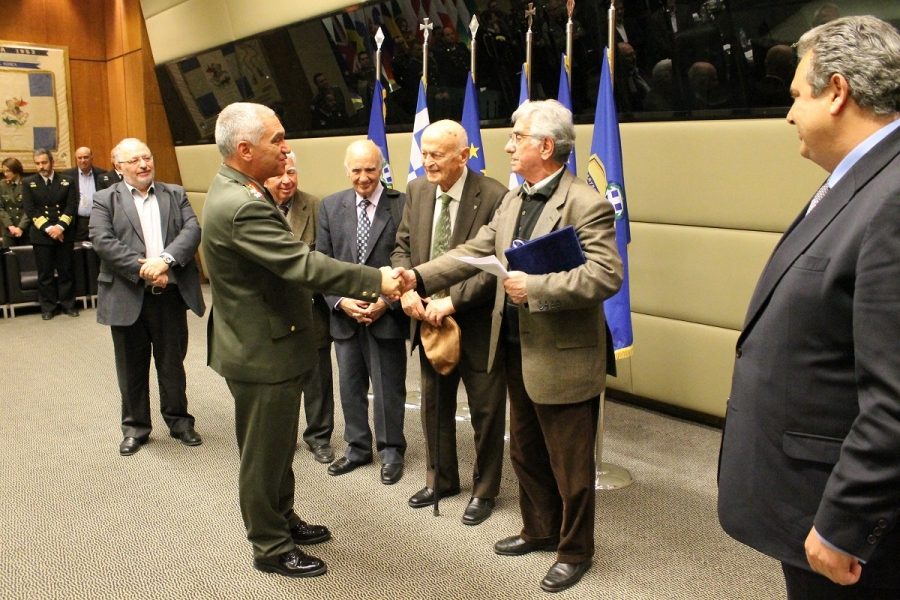
The Ministry of National Defence, on the occasion of the 74th anniversary since the day Nazi Germany declared the war on Greece, organised a commemoration dedicated to the fighters of the Hellenic Army, with the subject-matter: “Historical memory – A documented briefing on German reparations”.
In their speeches, the Minister of National Defence Panos Kammenos, the Alternate Minister of National Defence Kostas Isihos and the Deputy Minister of National Defence Nikos Toskas referred to the following:
P. KAMMENOS: “Respectable Fighters of the national Resistance,
Mister President of the Committee on National Defence and Foreign Affairs of the Hellenic Parliament,
Ladies and Gentlemen, dear colleagues,
Members of the Committee for Claiming the German Reparations,
General,
Representative of the Jewish Community of Thessaloniki,
Ladies and Gentlemen,
Your presence today at the Ministry of National Defence is a great honour for me and I would like to welcome you on behalf of the political and military leadership.
I would like to say that this initiative of the Ministry of National Defence started with a lot of work and enthusiasm by the Alternate Minister Mr. Isihos, whom I congratulate. It is only the first of a series of initiatives that will be taken by the Ministry of National Defence in the context of the effort made so as to bring out the Nation’s struggles; besides, apart from the historic memories, the Armed Forces unite the Greek people, at all times.
They are a benchmark for the entire Nation, they are the field of concord, solidarity and National cohesion. Furthermore, during the Epic of 1940, the Armed Forces expressed the popular feeling more than ever.
World War II, the most disastrous and murderous war in modern history, induced the worst evils humanity has ever known, within a very short period of time. The causes of this war are attributed to general political and ideological tension, powers’ and interests’ rivalries, nationalistic pursuits, the establishment of totalitarian regimes and revanchism. Mainly, it is attributed to the Nazi’s catastrophic mania.
A basic parameter was the Axis great powers’ aggressiveness, particularly the one shown by the German leadership, which trapped the people to chauvinist obsessions for the restoration of a traumatised national dignity, which was caused by the devastating consequences of World War I. However, these consequences were not educational for those who sought for revenge with World War II.
The wounds left by World War II to the entire humanity, and especially the European region, were undoubtedly enormous. We could simply consider that, so as to ensure more “lebensraum”, Europe got as far as mourning for more than 50 million victims. At the same time, we should not forget that the injuries inflicted by World War II to the sense of justice and humanity were shocking, since global values with a traditional character were lost from one moment to another.
Greece paid a very heavy price, disproportional to its size, in the framework of this broader rivalry of interests. It received the coordinated fire from two superpowers and it was immerged for several years into devastation, suffering, famine and poverty.
As if this was not enough, we also had the separate acts of Greek drama, in Kalavrita, Distomo, Levidi, kandanos and many other regions and villages, with the executions of civilians, the setting on fire of houses and the total disaster. I refer to this black period of the occupation, a period of sacrifices, blood, tears, executions and mass graves. I refer to the victims of the barbarians with the black shirts and the swastikas, who massacred Europe and humanity, and violated all ideals and human value.
Our country paid in the worst possible way the Nazi crimes. Unfortunately however, there are those who yearn for Hitler, fascism and Nazism and, the worst of all, they are trying to exploit and distort, since it is a distortion, all concepts of love to the country.
Such phenomena emerged the past years in our country as well and they are phenomena that concern the entire nation.
Greece, despite the terrible wounds it suffered, came out a winner from this War. Freedom and independence were ensured by allied victories but, mostly, by the struggle of the Greek people; your struggle, the fighters of National Resistance’s struggle.
For this reason, the allies recognised the Greek contribution and, after the war, they supported the country’s effort to walk the path of growth and prosperity; to also participate in all great International Organisations and “find its pace” by the side of all the rest democracies in Europe.
These were not just offered to us. On the contrary, they knew that modern Europe was created on the tremendous experience of war and the fascist regimes, such as Nazism and fascism. They knew that Greece has offered everything and sacrificed everything so that Europe would be today a great field of peace and democracy. They knew that Greece has always been the rampart and the borderline of Civilisation. This should never be forgotten by anyone. They owe us a lot, and they cannot be valued in Euros.
The struggle was difficult, excruciating for the suffering Greek people. However, our people had a unique property that allowed them to buoy up and regain their freedom: I refer to their high national spirit, the spirit allowing to “enjoy liberty under a free constitution” which was not relinquished to any occupation.
A spirit which currently plays its role to political developments.
We had martyrs, whose sacrifice serves as a point of reference for our own responsibility, being citizens of this country, a benchmark for our actions or omissions to be compared to and evaluated by.
There is an unfulfilled moral, political and financial debt, and that is the reparations to the Greek people; the debt due to our country since the Nazi occupation. There is new evidence for the Greek legal procedure, as well as for international law, which allow us to begin the procedure. We will not recede to unalienable claims towards the Greek people and we will bring up this issue, with the terms which respond to common sense. There is nothing in common with Greece’s debt; in this case, we refer to historical memory and justification. At the Ministry of National Defence, we have begun this undertaking, which is regulated by the Alternate Minister Mr. Isihos.
The evidence that have emerged, particularly Wehrmacht’s facts we collected from the United States, are shocking.
They refer to each village, to each town, to persons, to families. Such evidence compels all cases to reopen, even the ones that have already been adjudicated, and it will be at the disposal of local populations, under the Ministry of National Defence’s supervision.
Concluding, as a minimum homage I would like us to dedicate today’s commemoration, which brings common memories to all European citizens’ hearts and minds, to all the victims of Nazism and this war. It underlines the importance of understanding and peaceful resolution of the problems emerging at the international political stage. Besides, the history of World War II has proved that the arrogance of authority, especially when it is expressed in the relations between the countries, engenders extremely perilous phenomena, with devastating consequences for societies and peoples.
Thank you very much”.
K. ISIHOS: “We welcome you to the first attempt made by the Ministry of National Defence to bring to the surface, as the Minister said earlier, the big issue concerning the historical memory and the documentation of the financial crimes and crimes against human lives, which took place in our country during the period 1941-1944. It will be an effort that will have a progression.
The progression of this effort will not stay indoor the halls of Universities, or various other institutions and centres across the country; our aspiration is that this effort will unfold its wings to the entire Greek people and particularly Greek youth, who should receive the messages – from this commemoration today and another one on April 27, the invasion of the Wehrmacht troops in Athens – which will give them a vision for the present and the future.
A vision for a Europe without Nazism and fascism, without wars, a Europe with financial and social cohesion, which will not discriminate the peoples to privileged and non-privileged. Where even today, at the heart of Europe, at modern Ukraine – as great geopolitical interests take place – they are experiencing a war. A war that does not only take place in the heart of Europe, but it also takes place in North Africa, in tormented Palestine, in the region of the Middle East. It is the new threat of jihadism, which encompasses the Mediterranean in a tight loop made by great peril and medieval concepts for humanity.
Therefore, the message we convey today to the Greek people and particularly the youth is that a country with no historical memory cannot have a present, or a future. In this sense, I would like to thank you all for being here, since you will a part of this effort; and, what is more, you will be a part of an effort that will bring out the drama experienced by our people, to all its extent, yet without the least message of intolerance towards the German people.
I would like to underline this, since many times some people might consider such manifestations or efforts and strategies by a new political government as signs of an avenging historical obsession. However, this is not the case. Our effort is oriented towards closing the wounds of the past, the wounds that still remain open; in Kalavrita, Distomo and so many other suffering towns and villages of our country. This is why it is of special importance for us and I would like to congratulate the History Directorate of HAGS, which actually makes an enormous effort to digitalise 400.000 documents that we obtained from the US National Archives and Records Administration, but also to help us to share these documents and this historical truth with the German people and other European peoples.
Our effort aims at making these archives available to everybody; available to social, historical and sociological research, so that this research will accord with the current dangers taking place in our continent. It is crucial to underline that it is a colossal effort since, through the internet, we hope that –cooperating with Greek and foreign universities, and with big and smaller domestic and European organisations – anyone will be able to interactively obtain any information relative to the period of the German occupation.
Ever since we started this, we were flooded by telephone calls and letters. Some of them were anonymous and others were signed, letters by common people, citizens who firmly kept the letters of their relatives who were lost at the holocaust for decades. Even Greek-Jewish fellow citizens sent us letters, putting them at our disposal; they bring to the Ministry the last letters they were able to take out of some concentration camps, so as to help us have in the War Museum such exhibits which make up more than the historical path of some family, or citizens or fighters; they make up the mosaic of the Greek people.
I would like to conclude by saying that on April 27, but also with the effort we make along with the Ministry of Transport and other Ministries, our goal is to celebrate together with the rest of Europe, the great antifascist victory on May 9 as a day of commemoration and struggle against neo-fascism and neo-Nazism. The modern threats menacing our societies are not threats or accidents of history, they are the aspects demonstrating that the soil where the ideas of hatred can blossom is often the unacceptable financial and social policies which marginalise certain parts of our societies.
Concluding, on behalf of the political leadership, I would like you – dear friends of the National Committee – to convey to your chairman, Manolis Glezos, my sincere condolences on the loss of his dear sister Bubba; please tell him that he has been through a lot, he still goes through a lot, yet in his face an entire people remains teenager, he dreams and struggles.
All the best”.
N. TOSKAS: “We honour today, as we also did yesterday in the area of the Fortresses in North Greece, those who resisted, those who stood with dignity against a superior enemy and became the example for the following generations. We honour the 76,000 professionals and conscripts who fell or were injured at the fight against Italian fascism and German Nazism. We honour the fighters of the national resistance who bravely fought the enemy inside our country and we honour those who resisted to discriminations or succumbed during the genocides, against totalitarianism.
Today, these messages are both timely and useful. These traditions enhance our people’s current resistance against the practices of degradation and austerity. We now establish the basis so as to never create again the circumstances and the phenomena of Nazism and fascism; we train our personnel so as to have knowledge and will against such phenomena. We are determined to never see them again and we know that this fight will not be easy but constant, and one we will eventually win”.
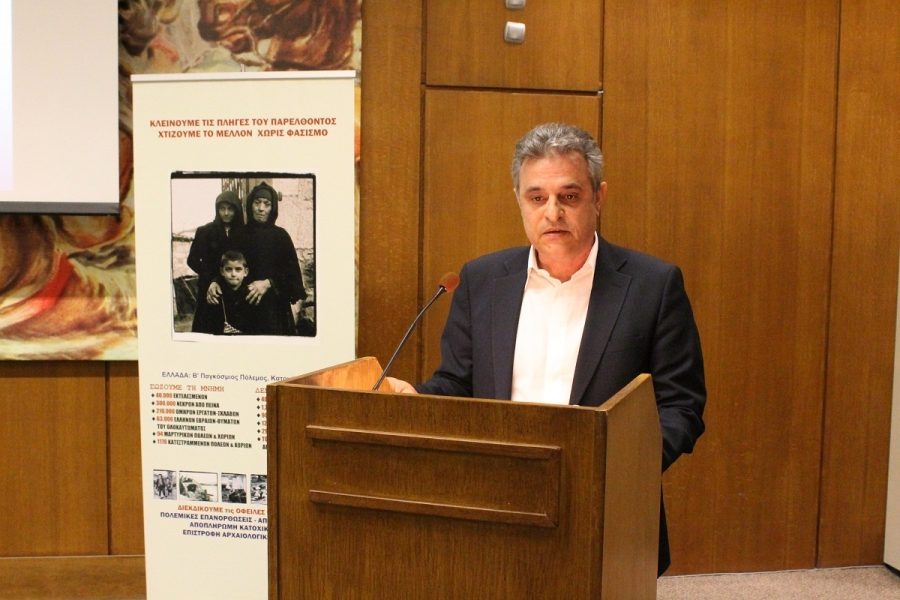
The commemoration started with an address made by the General Secretary of the Ministry of National Defence, Giannis Tafyllis.