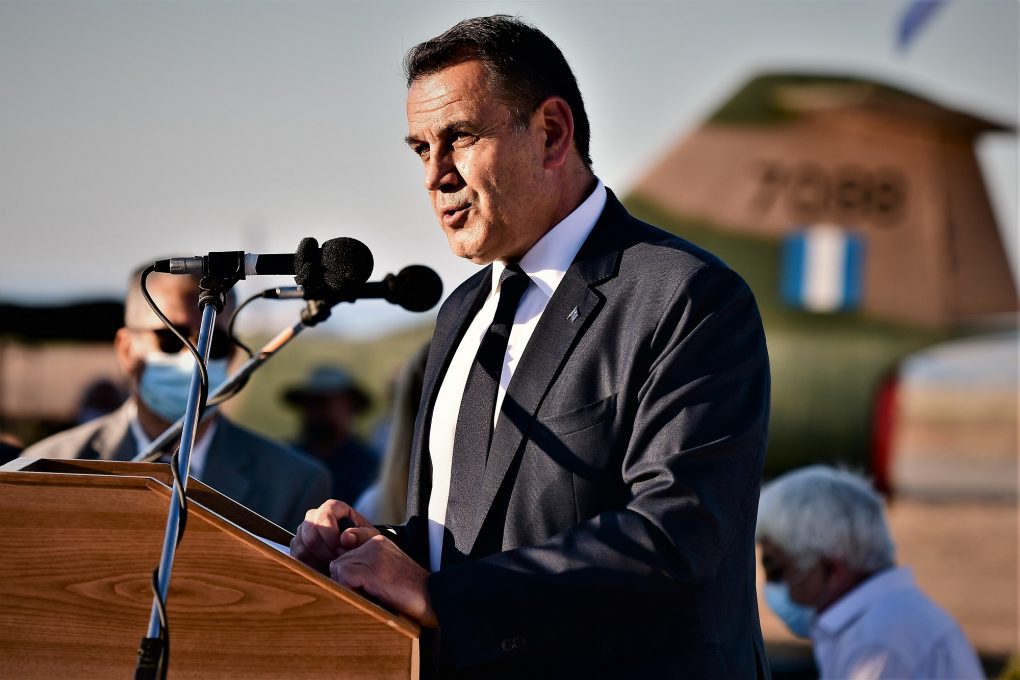
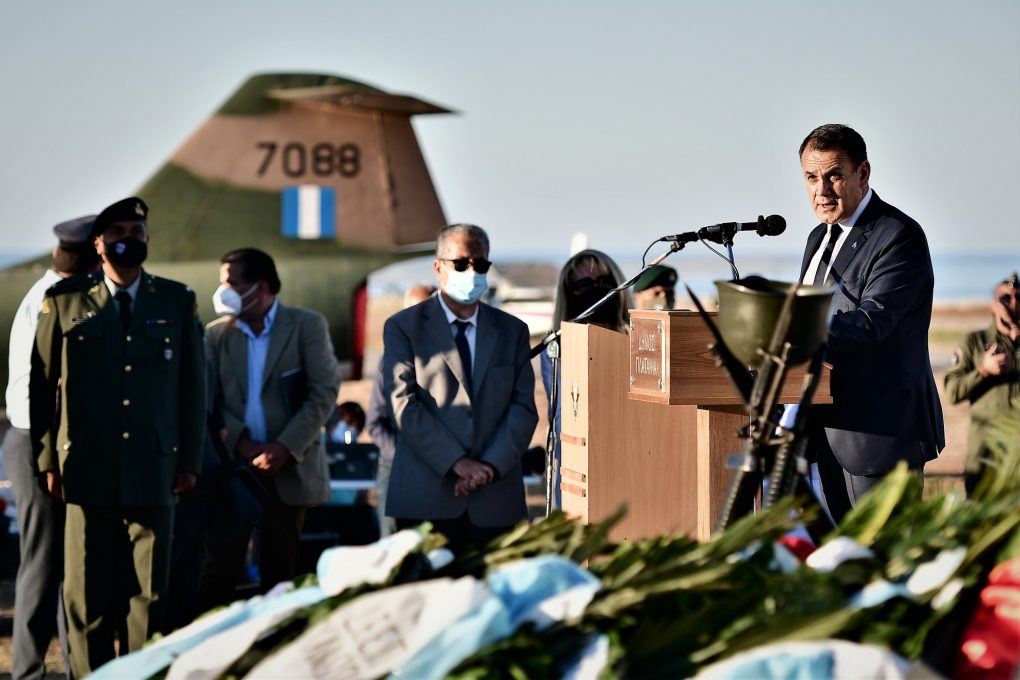
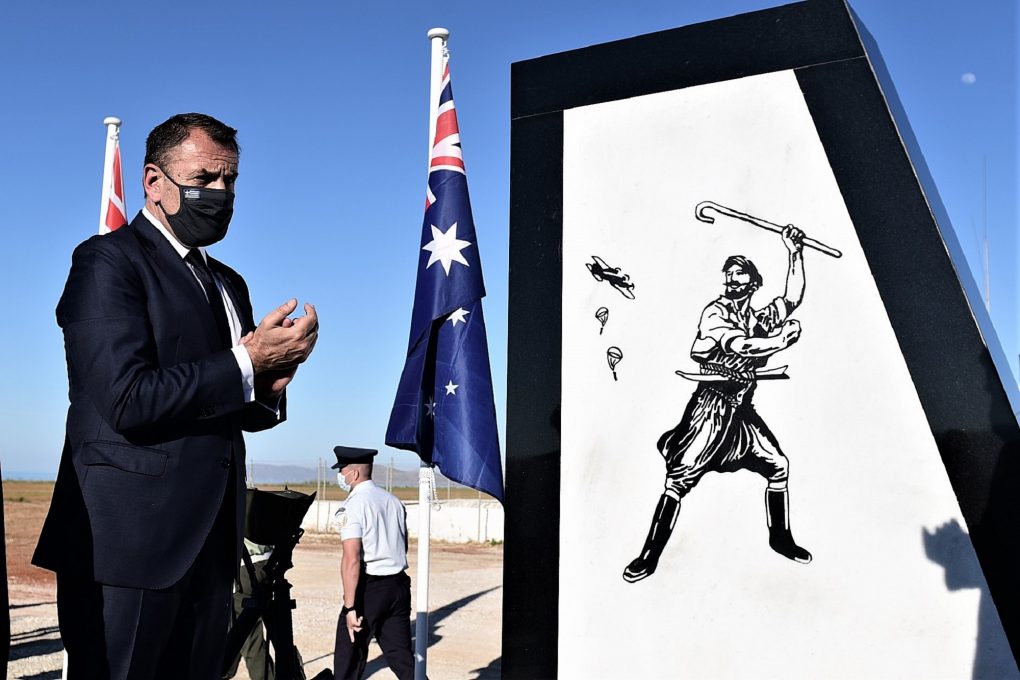
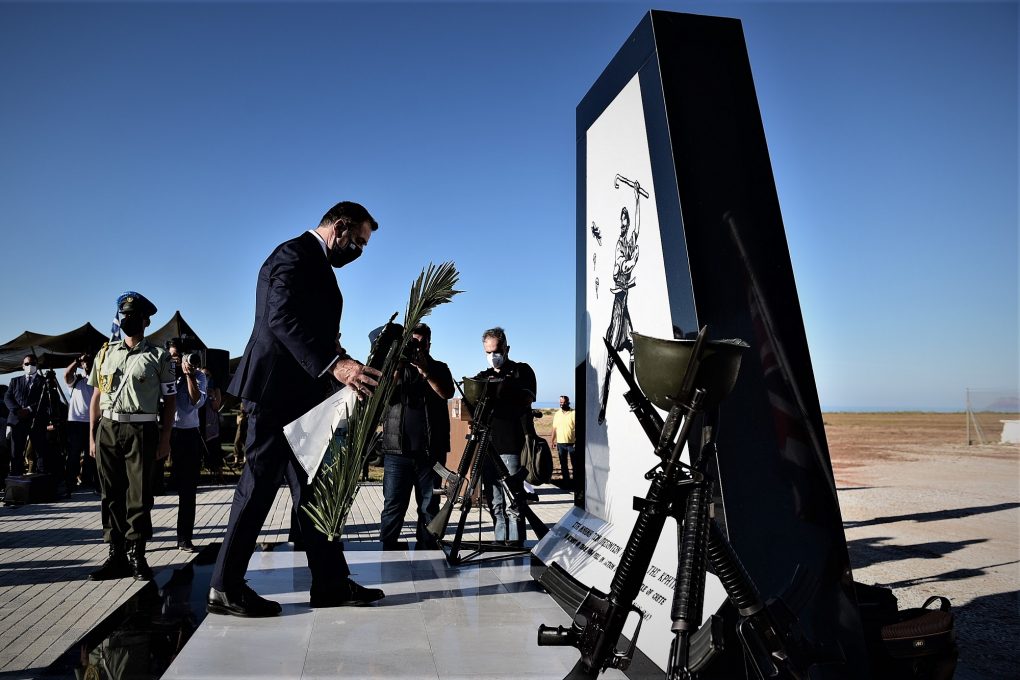
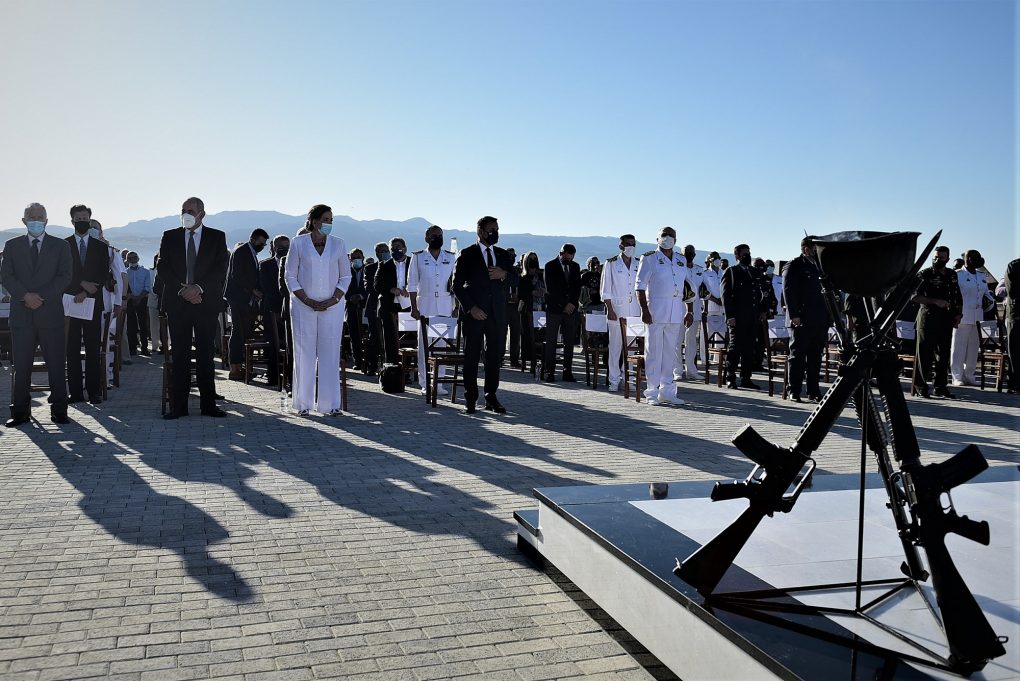
The Minister of National Defence Mr Nikolaos Panagiotopoulos participated, this afternoon, in the unveiling of the Battle of Crete Monument, in the memorial service and in the laying of wreaths in memory of the fallen, at the Maleme airfield in Chania. The Minister was accompanied by the Chief of HNGS Vice Admiral Stylianos Petrakis, head of an Armed Forces personnel delegation.
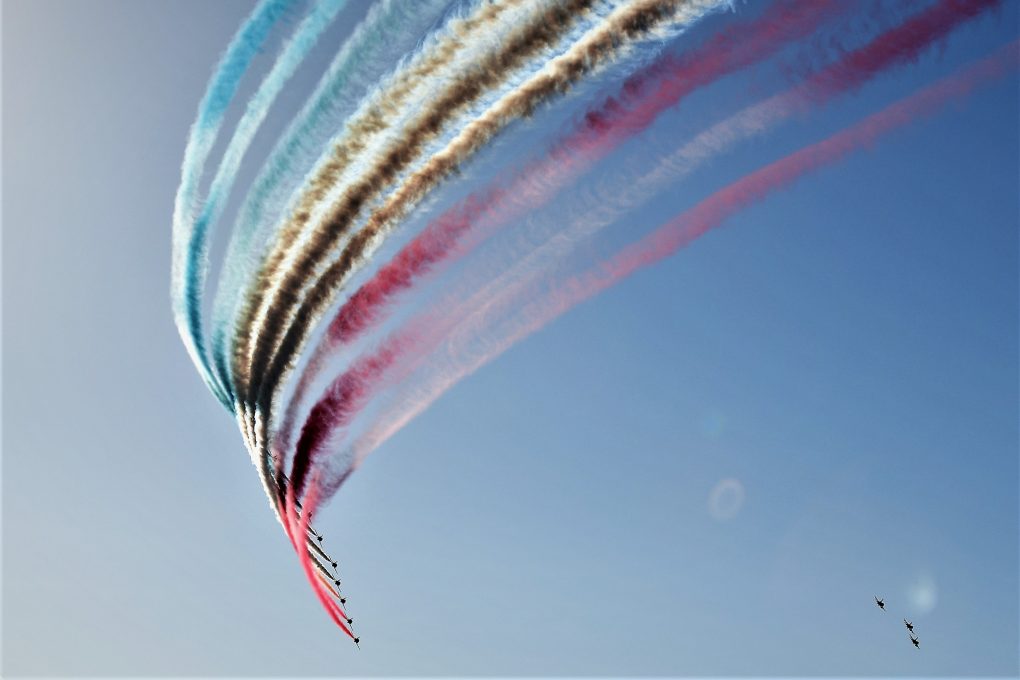
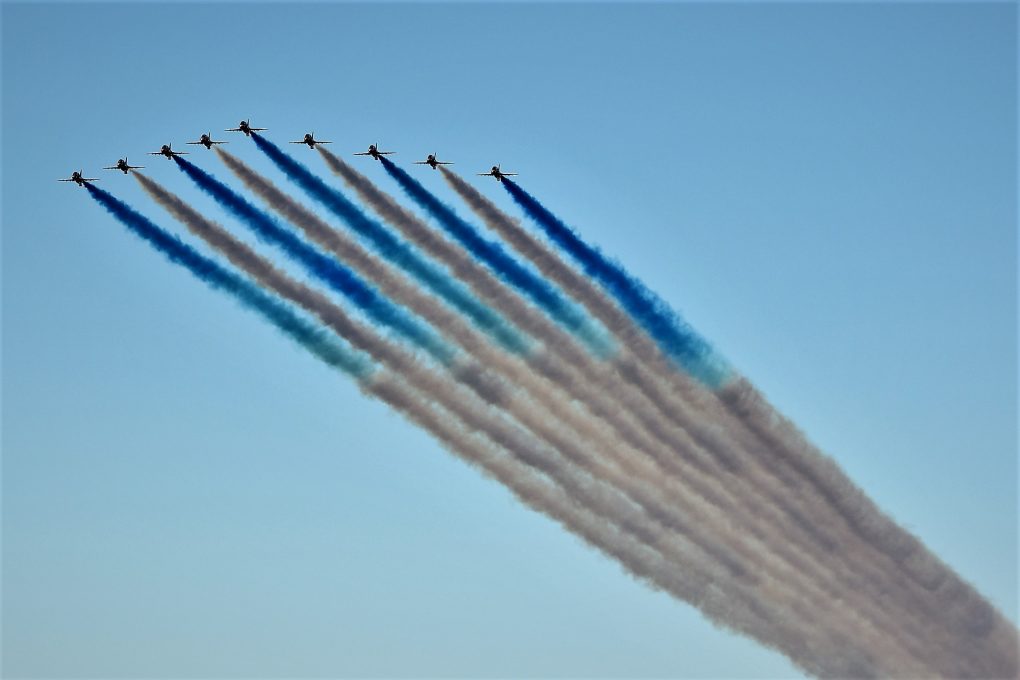
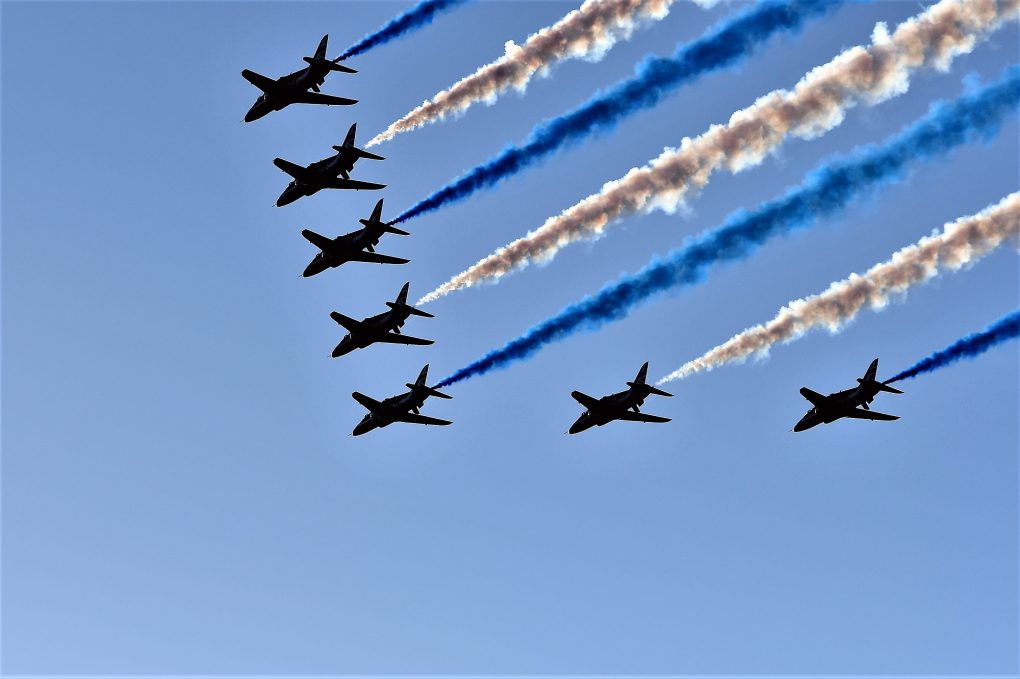
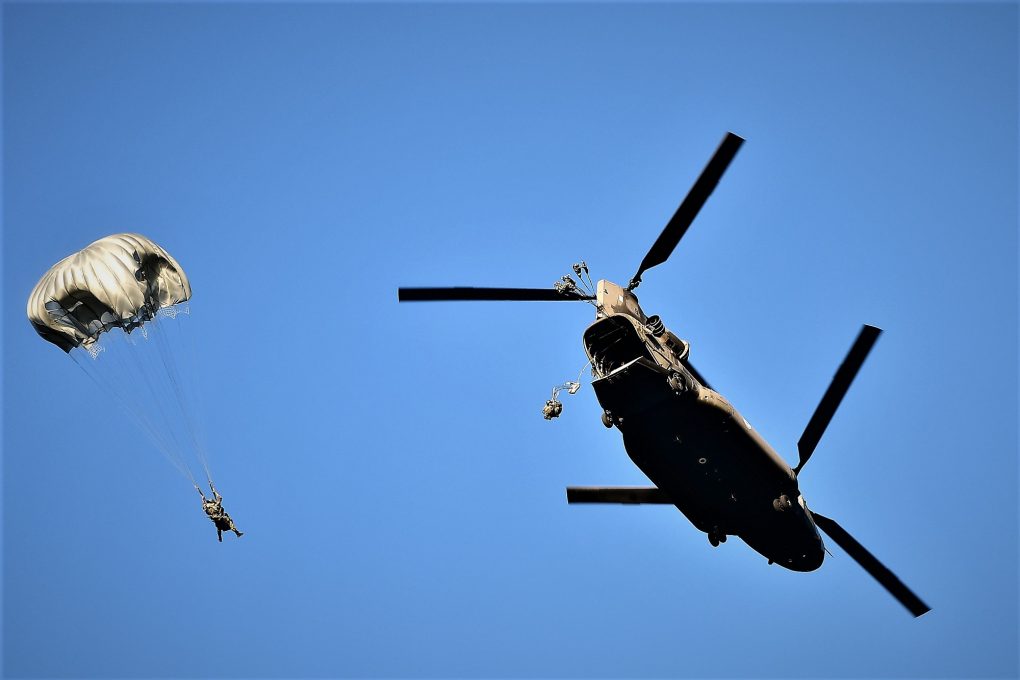
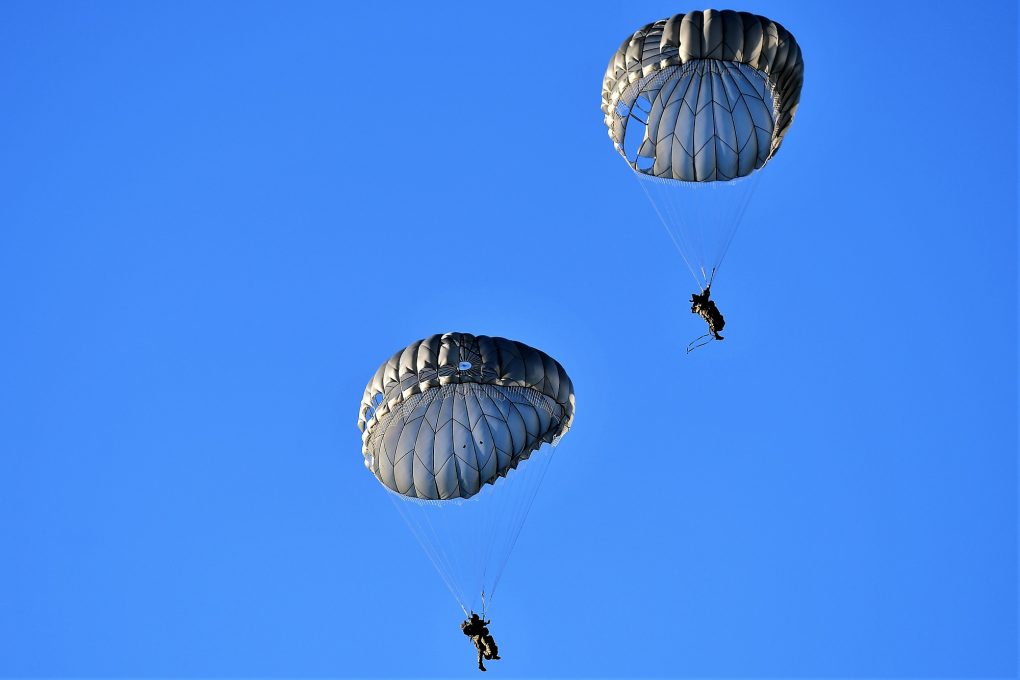
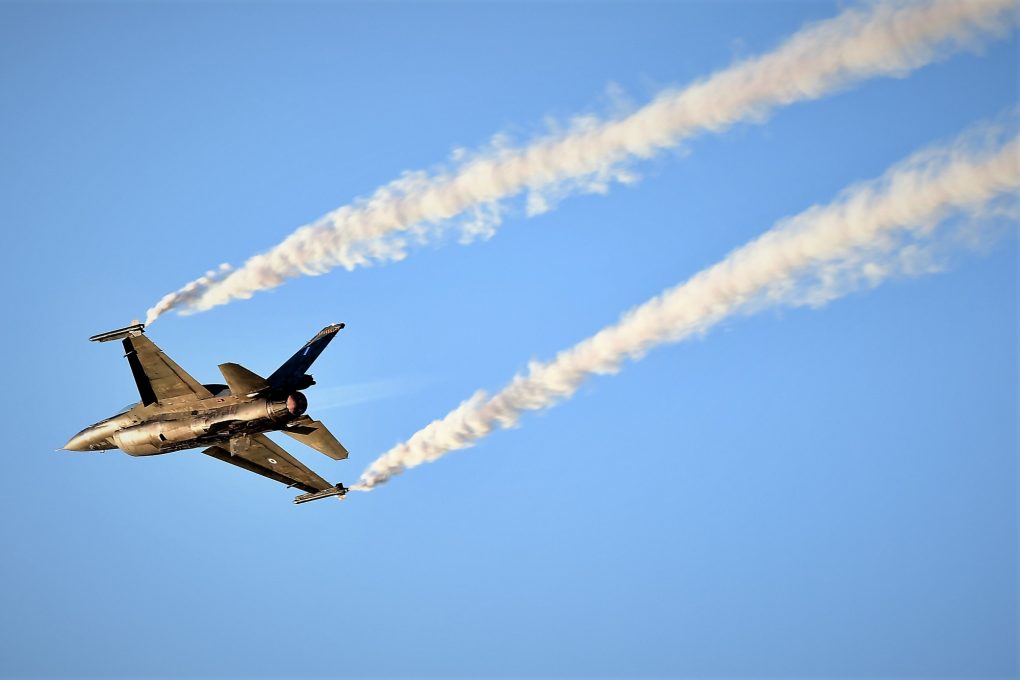
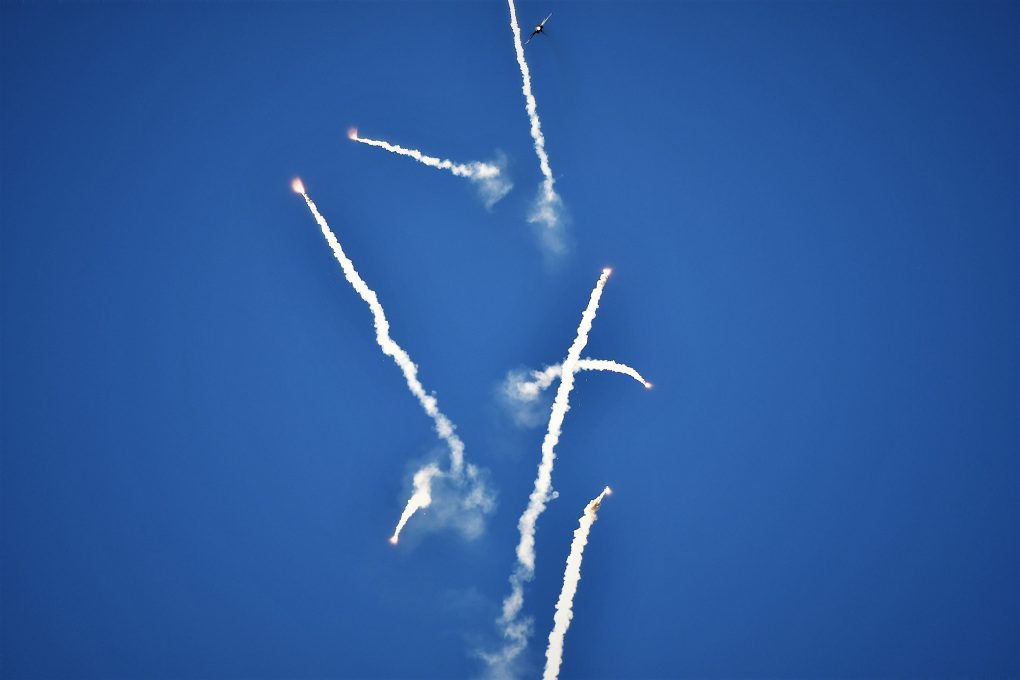
After the observation of one minute of silence in memory of the fallen in the Battle of Crete, Mr Panagiotopoulos observed the flyover of F-16 fighters from the 115 Battle Wing, in formation with the RAF “Red Arrows” aerobatic team, drop of paratroopers from the 1st Paratroopers Squadron and a display by a standalone F-16 fighter.
In his address, the Minister of National Defence stressed the following:
“Honourable ladies and gentlemen,
I am particularly glad to be here today, in the event for the celebration of the 80th anniversary of the Battle of Crete. At the same time, it is also a great personal honour to address you in the capacity of the Minister of National Defence, as a representative of the Hellenic Government. On this occasion, I would like to communicate to you the salutations and love of the Prime Minister to his homeland and his people.
The Battle of Crete constitutes a very distinctive episode in the history of World War II. It is a special moment in our country’s history, having acquired the status of a legend and assuring the heroism and the authenticity of the Greek soul, especially the Cretan one. Regarding the military history, I would say that it has been extensively analysed by others. For example, people have analysed the major possible differences in the operation’s outcome: If the Cretan Division, or at least its larger part, had not been stranded in continental Greece. If there was adequate air coverage. If there were no false estimations (as it always happens in such conditions) in the preparation of the island’s defence made by the allied command, e.g. if they had not underestimated the exceptional significance of the Maleme airfield, if they had not made false estimations in field operations, if –for example- in the critical night of the 20th to 21st May, after the first day of operations and with the German forces perplexed and bound by the intense conflicts and the heavy casualties, had it been decided and ordered in time to counter-attack in an organised manner here in Maleme, then maybe a crushing and decisive blow could have been then dealt to the German troops.
However, history developed differently. The Cretans and the Allies fought hard, but the German troops occupied and held this airfield. They established the required bridgehead and following that, they were reinforced by the 5th Mountain Division which came the following days and supported the German side in the operations. They pushed the allied forces back and forced them to either retreat to Egypt or surrender, finally occupying Crete.
However, after this “disastrous victory”, according to the appraisal of the man who planned it, general Student, no similar airborne operation was ever attempted again, as was decided by Hitler, due to the heavy casualties sustained during the Battle of Crete. So, the Allies retreated and the Cretans who resisted defending their homeland from the first moment of operations, a historically phenomenal fact, continued the Resistance even after the occupation and paid a heavy toll in the following years.
It was the resistance of the Greeks, of the Allies and of the non-combatant Cretan population who even fought with butcher’s knives and crooks, until they had machine guns and pistols in the palms of their hands, in the words of Kazantzakis. Along with the Australian, the British, the Indian, the Canadian and the New Zealander soldiers (some of them were the fearsome Maori warriors who distinguished themselves in the severe fighting which took place here in Maleme) fought side by side and against battle-worthy handpicked fighters, giving their life and staying true to the paramount duty.
Today we pay homage to their memory. But we are also doing something else, ladies and gentlemen: We celebrate here the magnificence of the Cretan soul. And in order to express this magnificence better –and I think that no one can do better than that- allow me to read to you passages from a text by Nikos Kazantzakis for the Battle of Crete, written a few years after, when the great author visited his ravaged by the harsh occupation homeland.
Kazantzakis writes: “Crete truly has something primeval, something Sacred, something bitter and proud, like the bereaved mothers who bore stout young lads. This land has fought and suffered so much, it is so used of death, that it does not frighten it anymore and it can laugh and play with it. (…)
“The Cretans truly love life fervently and they are also never scared of death. Through the ruined villages I passed, over the newly opened graves I strode over, behind the words I heard, I was continuously ascertaining this great twofold stoutness: fervent love for life and facing death without fear. (…)
“I don’t know if there is any other land in the world where the farmers face pain, sacrifice, their individual destruction with such pride. The Cretans knew that in this world there is a blessing superior to life and for that blessing our whole race fought and sacrificed and the moment had also come for the Cretan farmers to fight and sacrifice themselves, and that blessing is called History, meaning renown, meaning immortality”.
And he goes on with this amazing passage: “There is also something else in Crete. There is some kind of flame –let us call it soul- something which transcends life and death, which is hard to define. There is this pride, this doggedness, something else, unexpressed and incalculable, which makes you glad for being human. It makes you glad but at the same time it burdens you with a great responsibility. Because, while you feel obligated to do your best, so as to save these people, you are looked upon with irony and contempt. They do not need anyone else to be saved. They save others, but are not saved by others. Then there is only one thing left for you: try to prove yourself worthy of that people, gain the strength of their own soul, which never deigned to deceive itself or the others and which always stands face to face with that goddess who doesn’t bestow any favours and who doesn’t sit on anyone’s lap: the goddess who doesn’t smile or weep, responsibility”.
Ladies and gentlemen, everything boils down to responsibility!
We also try to prove ourselves worthy of our ancestors, in a period of fragile balances in the near vital geopolitical space of Greece and we are fighting hard to succeed, promoting the diplomatic effort along the power of deterrence of our Armed Forces.
It is our highest priority to bring into prominence the role of Greece as a pillar of stability and security provider in the wider region of the Eastern Mediterranean and the Balkans.
Today Greece, like 80 years ago, constitutes a reliable and powerful ally at a European and NATO level, which totally respects the values of Freedom and Democracy. At the same time, it effectively and decisively faces any threat from any direction, totally respecting the principles and rules of International Law and International Treaties.
Greece follows a structured and targeted high strategy, based on its internationally recognised role. It honours its commitments at a national and international level, constituting a trustworthy and reliable partner and ally, always giving its credentials, like it did during World War II by the side of its Allies against Nazism.
Today it is us, the allies and the enemies of that conflict, present today, as friends and partners in the context of the European family and the international community, working jointly, with respect to international law and good neighbourly relations between states (meaning the regulations which govern the relations between states), so that, through that struggle, to try as much as we can, to avoid new wars, disasters and bloodshed.
In my closing remarks, I would like to congratulate the Crete Prefecture, the Regional District of Chania, all the municipalities and all the organisers, for the flawless preparation and conduct of the festivities for the 80th anniversary of the Battle of Crete which enables the emergence of the magnificence and honours the struggles of the Cretans and of all Greeks in general, as well as of the friends and allies from Australia, Britain, Canada, India, New Zealand. So, here in Maleme, where 80 years ago the magnificence and heroism of the Greeks and our Allies was proven once more, we piously bow before the glorious fighters of the Battle of Crete and pay homage to their heroism and sacrifice.
Their fight for liberty will forever guide and inspire us and the next generations.
Thank you very much”.
The visit of the Minister to Chania was concluded with the inauguration of the thematic exhibition titled “The Battle of Crete” and the special event jointly organised by the Deputy Head of the Chania Region Mr Nikolaos Kalogeris, the Mayor of Chania Mr Panagiotis Simandrakis and the Mayor of Platanias Mr Ioannis Malandrakis.