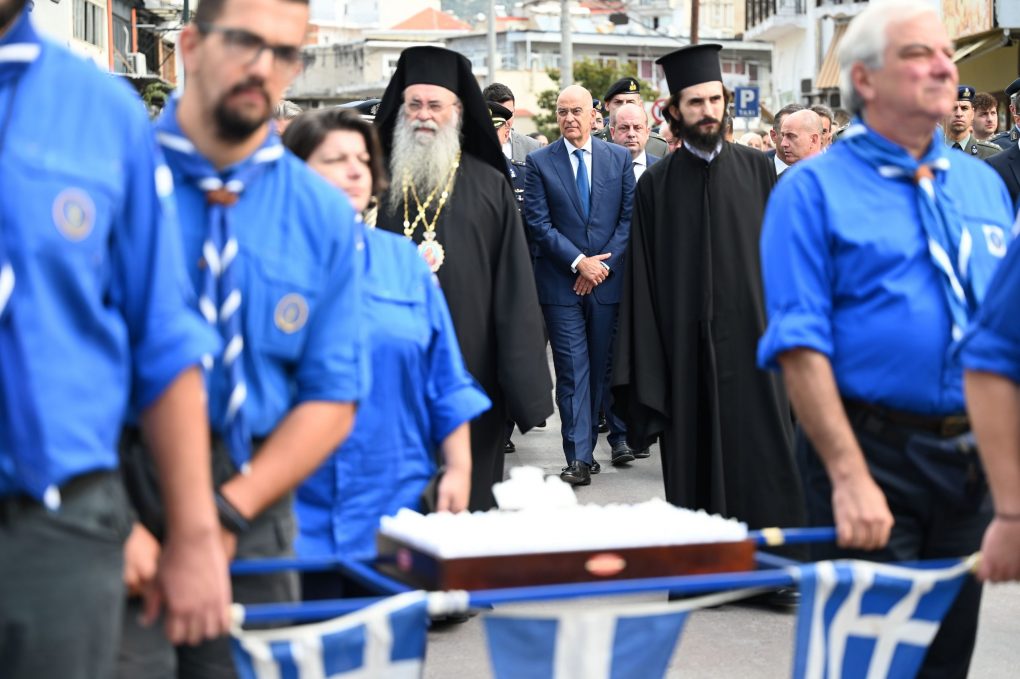
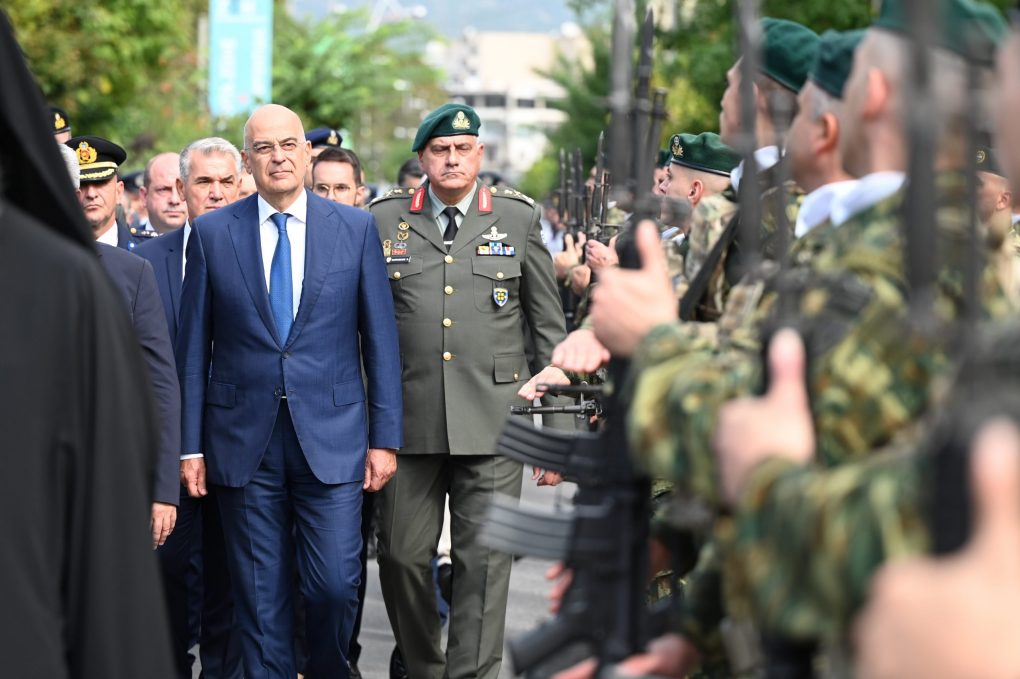
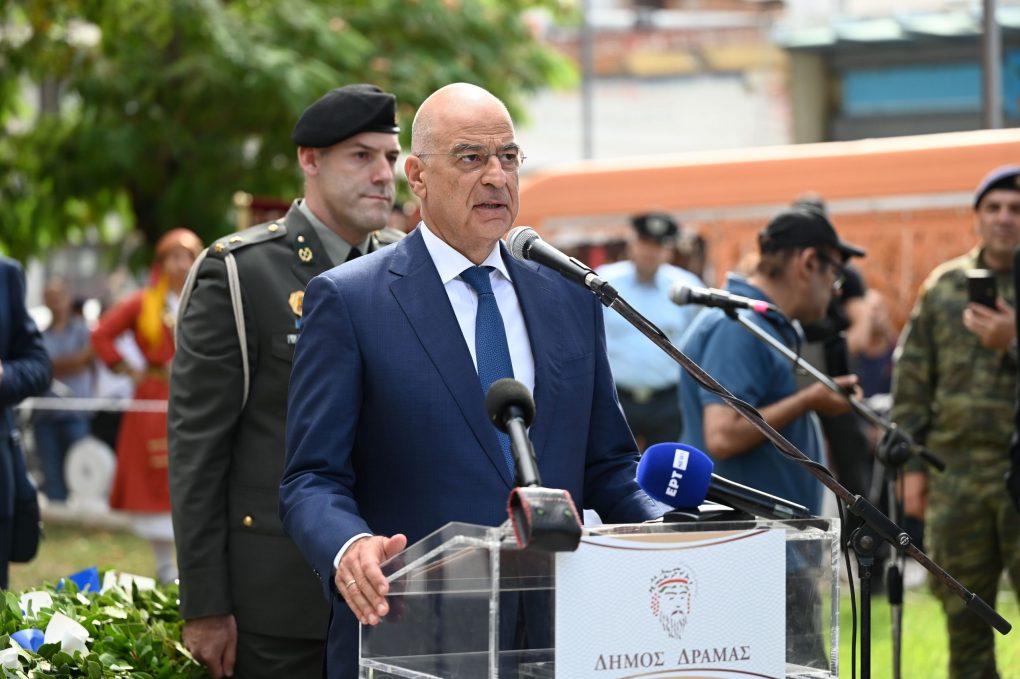
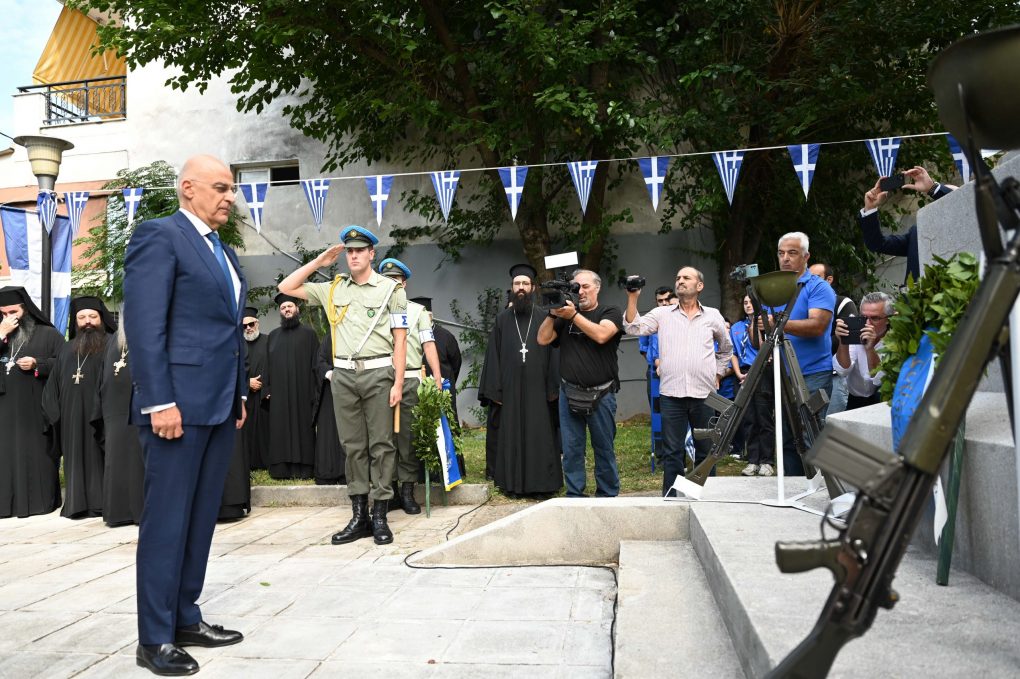
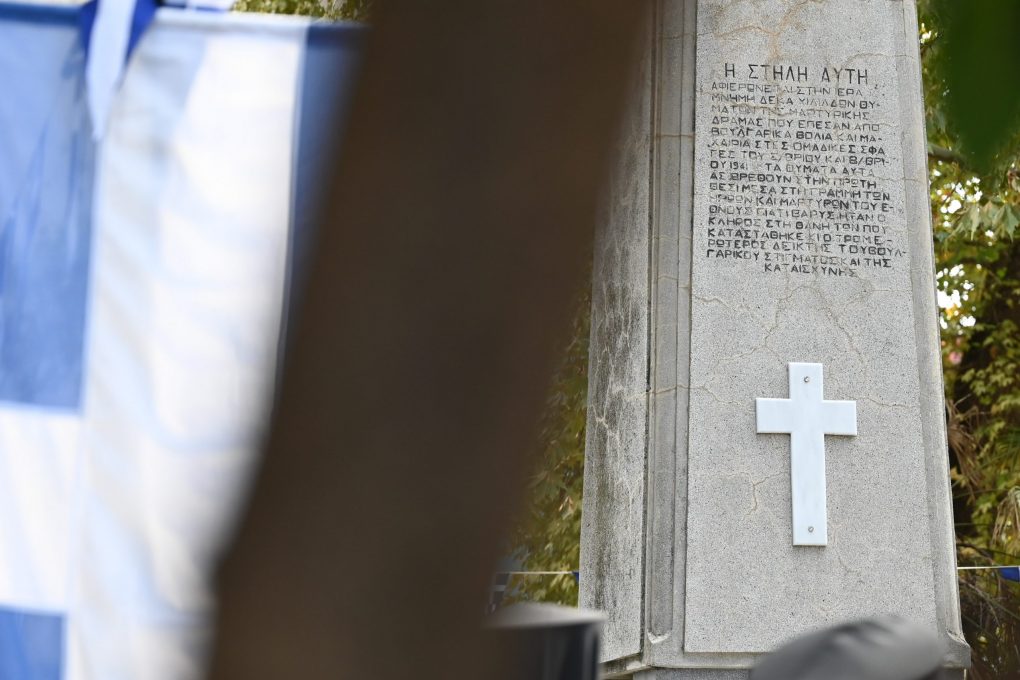
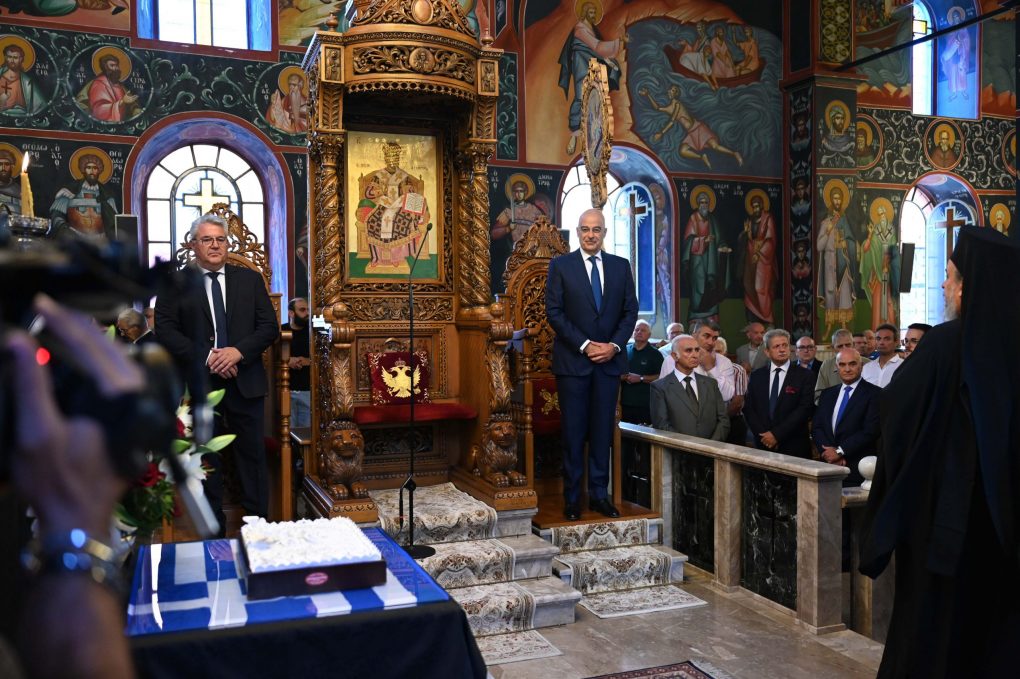
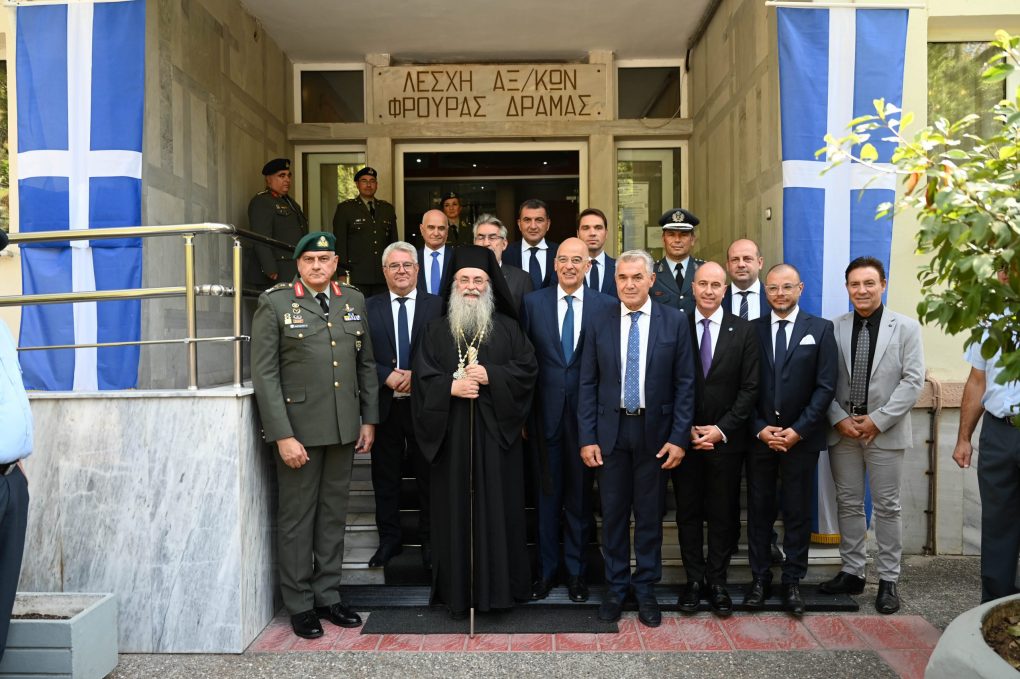
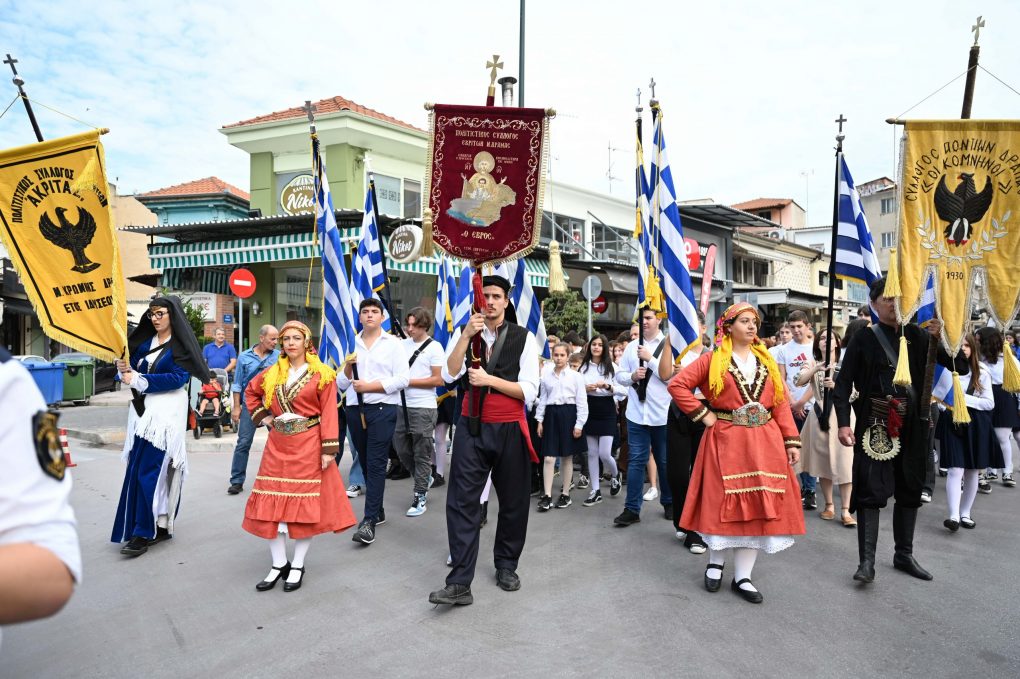
The Minister of National Defence, Mr. Nikos Dendias, representing the Government, attended on Friday 29 September the commemoration events on the occasion of the 82nd anniversary of the Massacre of the people of Drama by the Bulgarian occupation troops.
Mr. Dendias attended the memorial service at the Holy Church of Agios Nikolaos in Drama led by his Eminence the Metropolitan Dorotheos of Drama and then visited the Monument to the victims of Drama, where he laid a wreath.
In his address during the ceremony, the Minister of National Defence stated the following:
“Dear colleagues,
Deputy Regional Governor,
Mayor,
General, Commander of the 3 rd Army Corps
Distinguished guests,
Ladies and Gentlemen,
We are gathered here today to remember and honour the memory of the victims of that tragic period. But more than that, to ensure that the memory of those who fell will not be forgotten. The uprising of Greek people against the Bulgarian occupation that began in the evening of the 28th of September of 1941, lasted until the beginning of October. Without a declaration of war and while most of our country was under German occupation, the Bulgarians, with the blessing of German Nazis, invaded Eastern Macedonia and Thrace and, as you well know, sought the forced Bulgarization of the Greek people.
And not at all surprisingly, the Greek population reacted. In the evening of the 28th September, villagers from Doxato and Choristi attacked the local station. Moreover, the electrical plant at the city of Drama was blown up and there has been an attack on the railway station. Next morning, on the 29th of September, the killing started on the streets of Drama, as well as arrests, torturing and mass executions. Up to the 6th day of October, 1.614 people had been executed across 50 settlements of the Prefecture of Drama. Within the city alone, 562 executions took place. Then, 350 men were executed in Doxato, 114 in Kyrgia, 135 in Choristi, while there were executions in various other villages. The uprising of Drama was the first mass popular uprising in Greece, but also one of the first mass movements against the Axis in Europe. The massacre was the first massive reprisal.
Ladies and Gentlemen, Greek people have a historical memory; we remember our conquerors’ conduct throughout the course of Greek history. Besides, the word “truth” (“alithia”) means “denying oblivion (“lithi”)”, yesterday’s survival through today as reality. Το understand the counterpoint deriving from etymology, the Latin word “veritas” translated as “the truth”, means “now”. For us, memory is also a living reality. However, our Country is not trapped in the fear of yesterday; our dead are not cold marble slabs that case and block the nation’s course. Apart from being part of the everyday life, it is also a vital element of our country’s, our society’s and our people’s tomorrow. Their memory stays alive and accompanies us.
Modern Greece, a creation of their struggle and sacrifice, is currently a powerful European Balkan metropolis, a pillar of stability, a bridge to Europe. Greece is a European country in the Balkans. It avoided the trap of becoming a Balkan country in Europe. Greece, being aware of the past of neighbouring countries, has chosen to encourage cooperation and their European perspective. It has chosen to be a model for the
European integration across all countries in the wider region.
Its continuous commitment to support peace, security, economic growth in the region, illustrates everyone’s determination to serve the national objective. In other words, the stability and prosperity in the Balkans of the 21 st century. We, the modern Greek people, do not think of ourselves as an outermost outpost of European ideas to the east. We believe that our country is a valuable connecting bridge of Europe to our wider region, of historical turbulence.
To that end, it is necessary that Balkan countries move steadily towards integration into the European acquis. That they accept responsibility for yesterday’s mistakes and atrocities.
Ladies and Gentlemen, lessons learned from commemoration events like the one today, go far beyond the borders of our country. It is though a shame, a real shame, that there are still scenes of savagery, misery, invasion, brutality against civilians in the Europe of the 21 st century and yet, in a world that progress and prosperity should have prevailed as a result of maturity founded on past experience. It is deeply heartbreaking that dark chapters of History are repeated. However, the sacrifice of those who stood against oppression in 1941 stands as a reminder that the preservation of peace, freedom, justice, and if I may say so,
democracy remains a constant effort of all nations on earth. Therefore, as we are looking towards the future, we should draw strength from the example and the determination of those who stood up to tyranny in the past. The living memory of their bravery is a challenge; a challenge for all to fight for a Europe where the horror of war and brutality against humans will be kept in the chapters of historic memory and will not be a front-page story in today’s newspapers.
It is our responsibility to ensure that our ancestors’ struggles will act as an inspiration for a better and more humane world. A world where lessons learned from History built into our DNA will be a shield against their repetition. Glory be with them”.