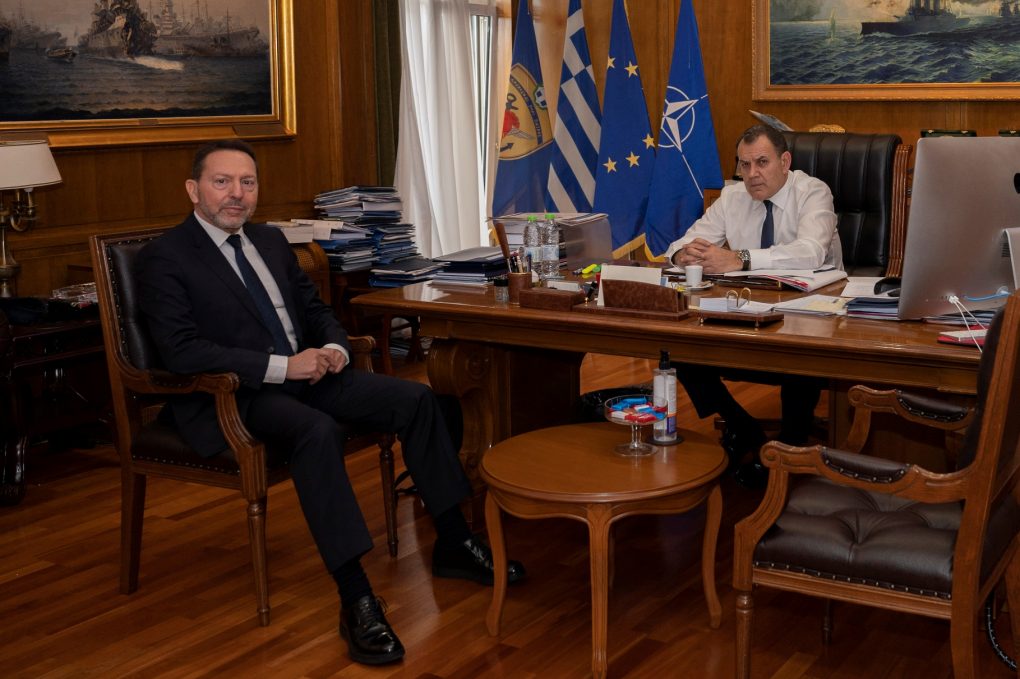
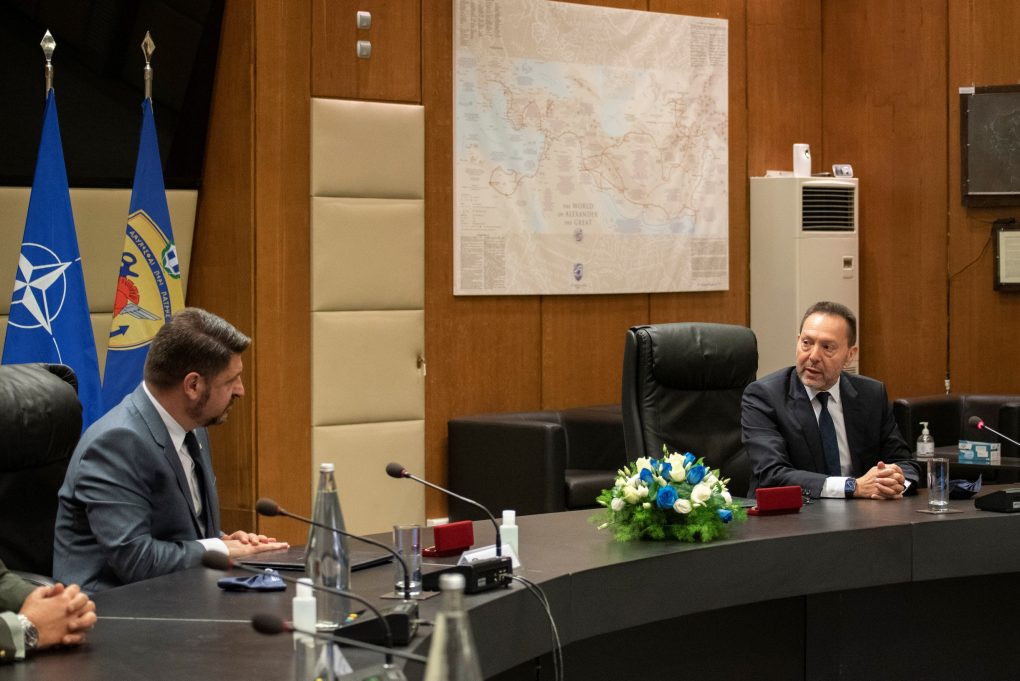
The Minister of National Defence, Mr. Nikolaos Panagiotopoulos, met the Bank of Greece Governor, Mr. Ioannis Stournaras, at the Ministry of National Defence on Wednesday, 2 March 2022 to discuss matters of mutual interest.
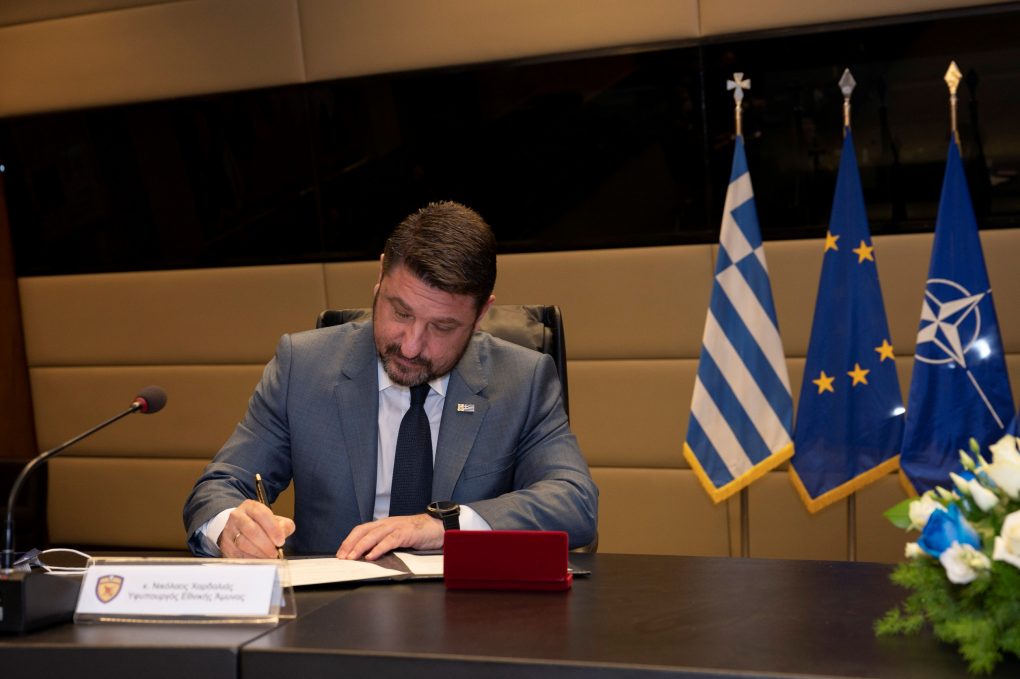
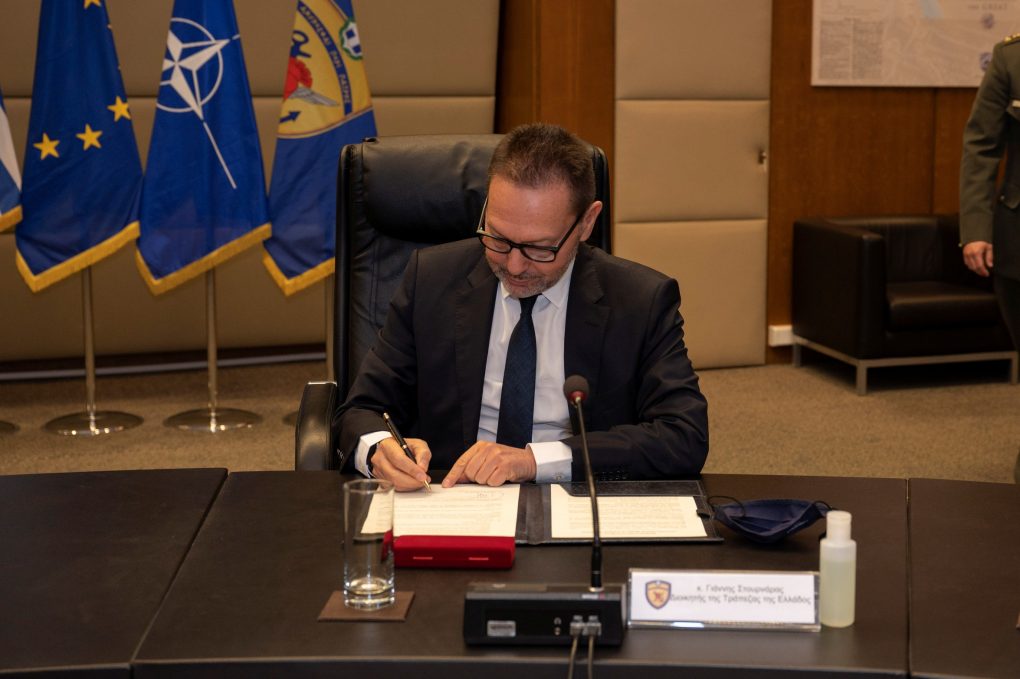
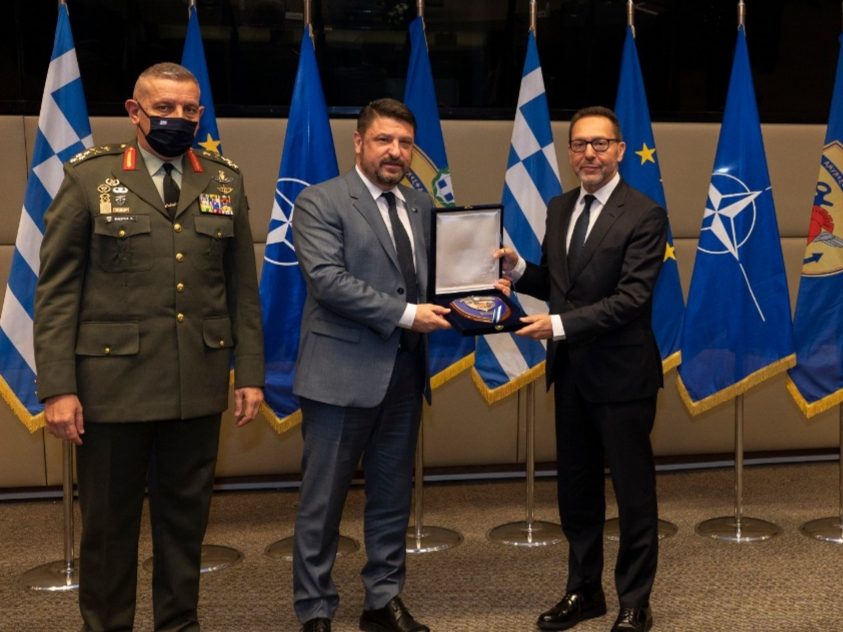
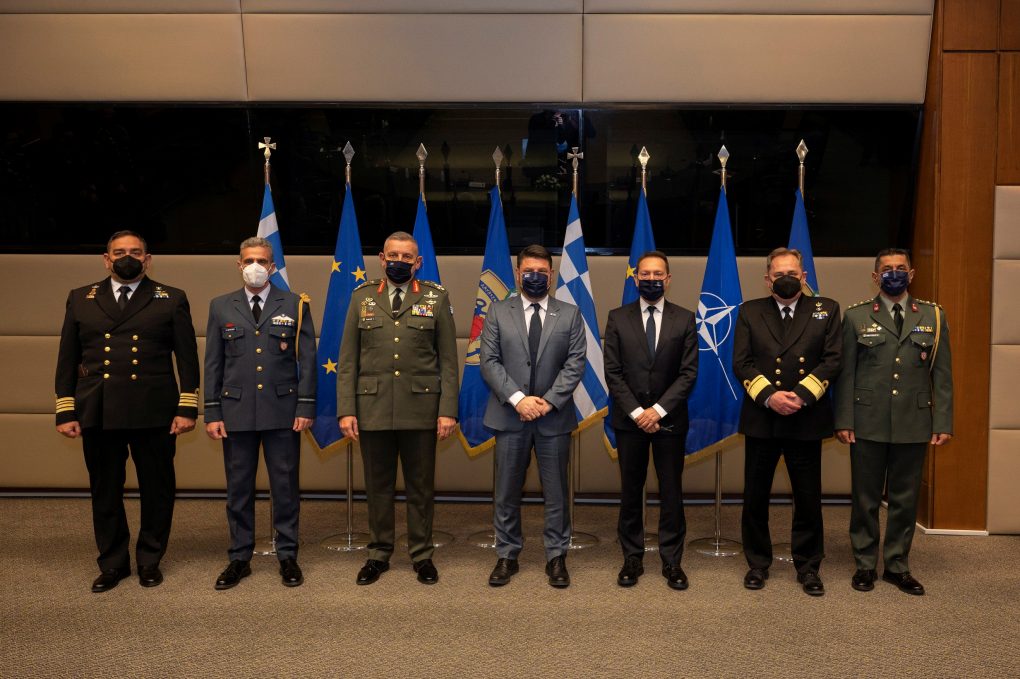
Following the aforesaid meeting, a Memorandum of Cooperation between the Ministry of National Defence and the Bank of Greece was signed by the Deputy Minister of National Defence, Mr. Nikolaos Chardalias, and the Bank of Greece Governor, Mr. Ioannis Stouraras, at “Ioannis Kapodistrias” Hall at the Ministry of National Defence.
The ceremony was also attended by the Chief/HNDGS, General Konstantinos Floros, and the General Director of the MOD GDFPS, Rear Admiral HN, Dimitrios Ryziotis.
Following the signing of the Memorandum, the two parties will cooperate to enhance the Ministry of National Defence capabilities against the repercussions of climate change, and more specifically:
• To support the Ministry of National Defence initiatives and actions, which relate to climate change, utilizing the expertise provided by the Bank of Greece Climate Change Impacts Study (CCISC).
• To support both Parties’ possible joint participation in nation-scale programs, which promote the necessity for our country to adapt so as to mitigate the consequences of climate change.
By the Memorandum of Cooperation and upon a more specialized agreement, both Parties may, indicatively but not limited to, agree on the implementation of the following actions:
• Provision of information and raising of awareness of the Armed Forces personnel on the mitigation of and adaptation to climate change.
• Collection, analysis, and dissemination of environmental information (such as recording of marine mammals, seawater salinity and temperature information etc.) provided by the Ministry of National Defence Services (e.g., Hellenic National Meteorological Service, Hydrographic Service, Hellenic Military Geographical Service) on the progress of phenomena, which relate to climate change and the protection of bio-diversity.
• Development of a methodology aiming at assessing the risk of climate change on Armed Forces’ operations (both at an operational and at a non-operational level) by also utilizing high-resolution regional climate models in specific points or areas of interest. The analysis will include the determination of appropriate climate indicators, which reflect the risks and impact of climate change on the operations of the Armed Forces.
• Determination and/or identification of the existing (or not) capabilities, sources, instruments and assets for the safest response to the most frequent natural disasters, which are caused by climate change and affect the Armed Forces.
• Implementation of joint outreach actions (one-day meetings, lectures, information brochures, press releases etc.) to widely disseminate the outcomes of the said cooperation.
This Memorandum comes into force as of this day upon its signing by both parties’ representatives, and it is agreed for an unlimited term.
The Deputy Minister of National Defence, Mr. Nikolaos Chardalias, whose powers also include the specialization of the Armed Forces’ policy in civil protection and climate crisis matters, pursuant to the more general governmental policy, stated right after the signing of the Memorandum:
“The signing of this memorandum by the Ministry of National Defence and the Bank of Greece is a concrete sign of the interoperability and cooperation for the protection of the environment and the response to the climate crisis under adverse conditions, also based on the personal experiences, which surely stem from my involvement with the said matters.
The climate crisis sheds a different light on matters. Outreach activities organized for the Armed Forces personnel reinforce the level of awareness on climate change matters. At the same time, the substantiated study through the collection and depiction of facts and data, which relate to the changes and risks threatening the environment, constitutes and will still constitute in the future a basic tool of prediction and enhancement of both our country’s capabilities shielding it against natural disasters and the Armed Forces’ capabilities for operational action.
The ability to utilize modern recording, analysis, and planning methods is thus offered so that the established policy translates into a holistic safety net for the state, its infrastructure and citizens.
In this context, the active contribution of both the Ministry of National Defence and the Armed Forces as guarantors of our country’s security, and of the Bank of Greece being the main body, which ensures the financial stability and monetary policy of Greece, constitutes an act of progress, extroversion, and substantial participation in the implementation of the commitments of the Government policy”.