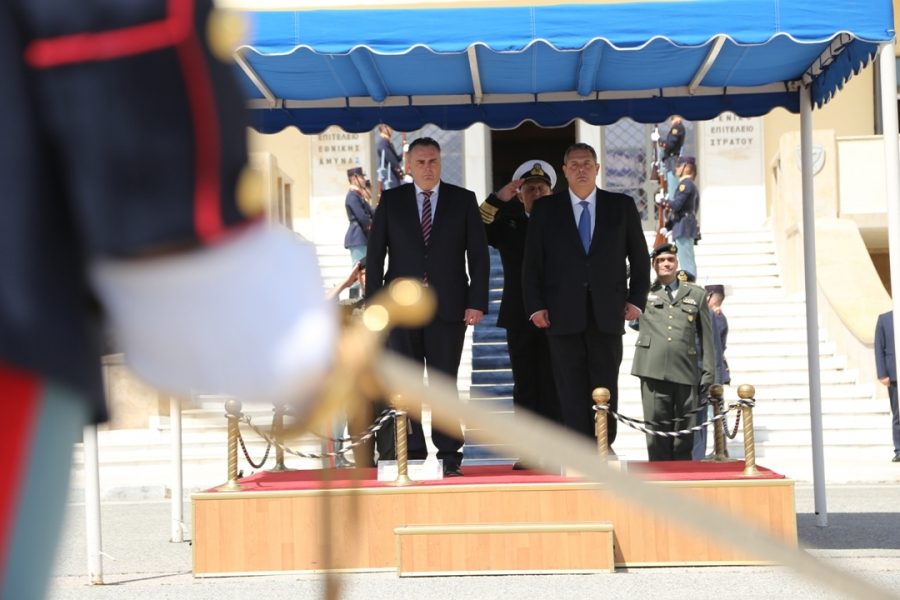
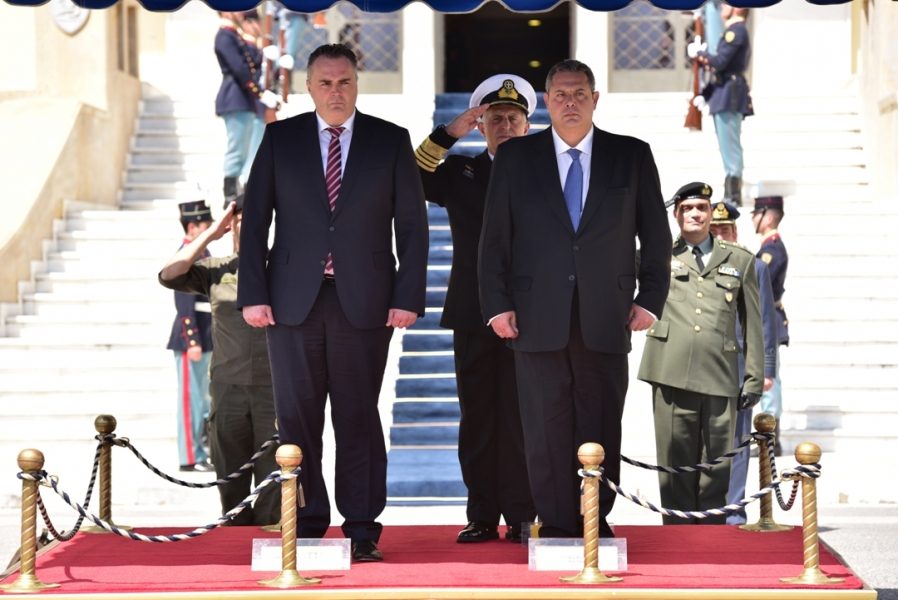
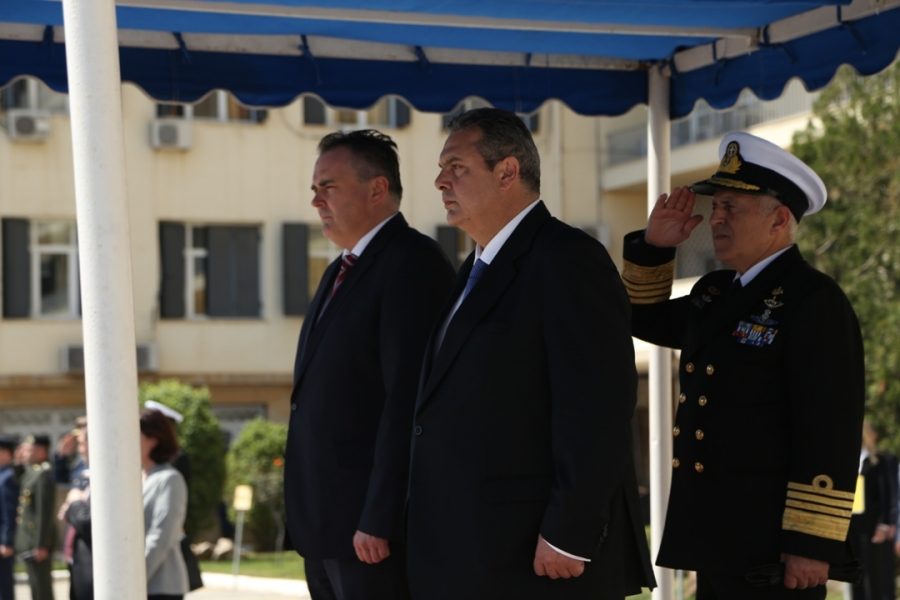
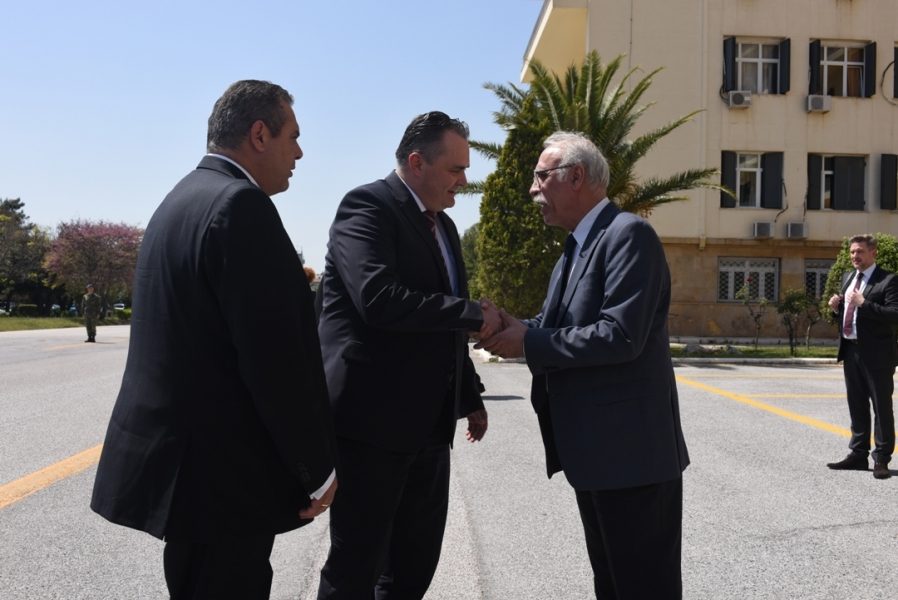
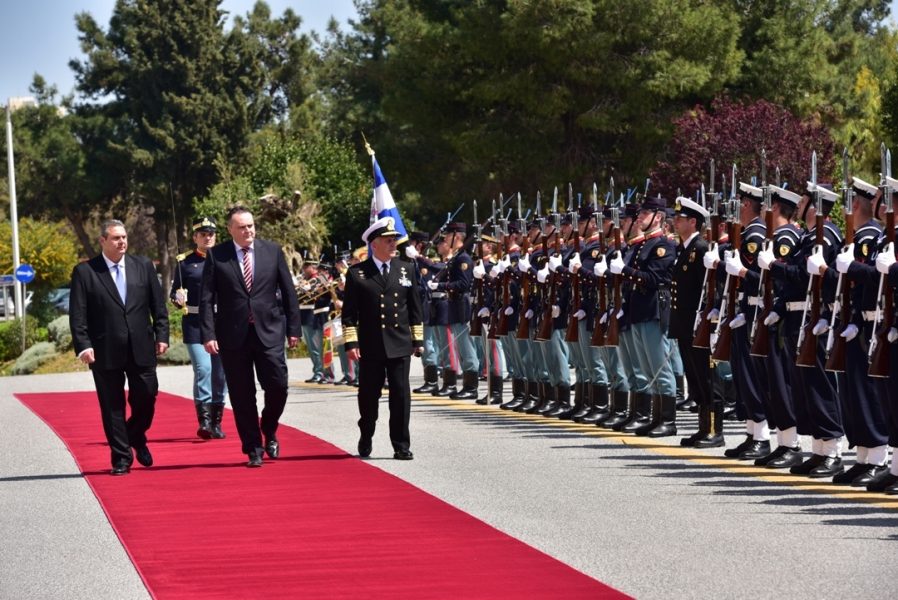
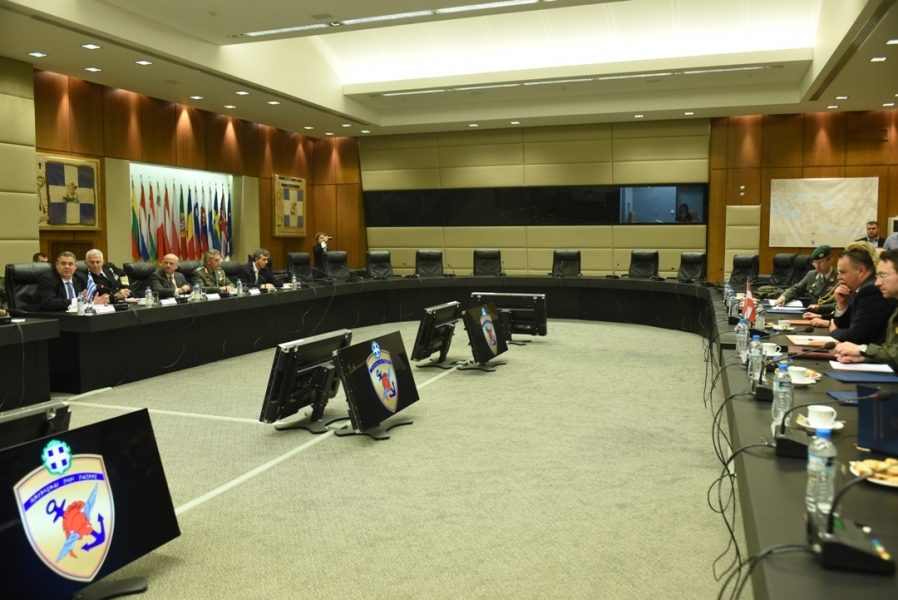
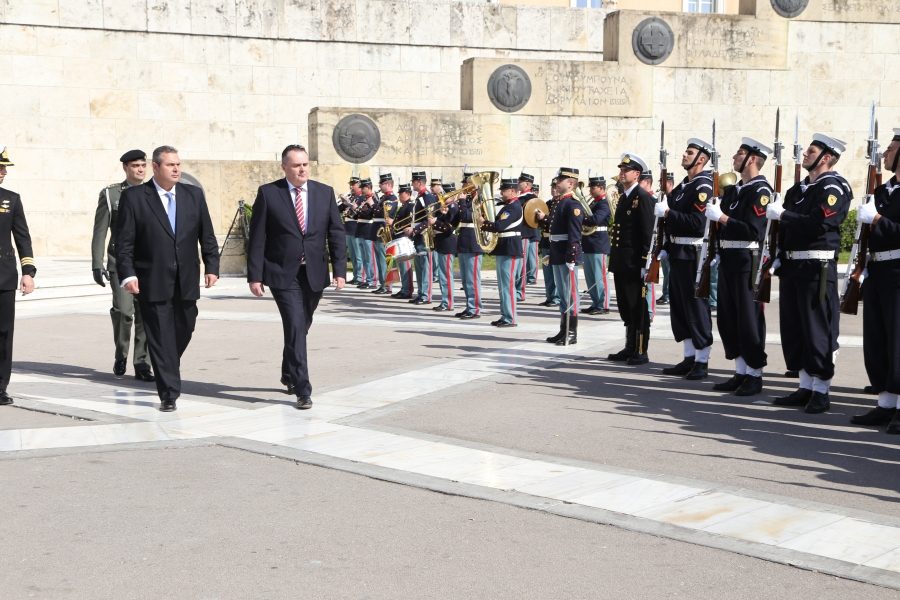
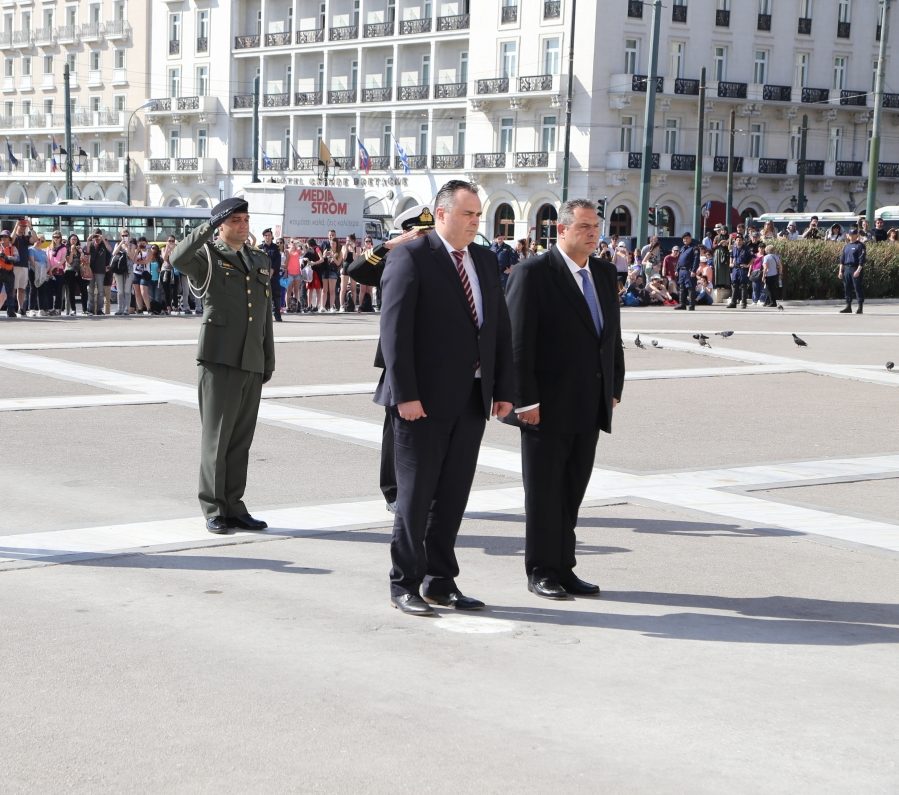
“I would like to thank my friend, the Minister of Defence of Austria, Hans Peter Doskozil, for his visit to Greece, as well as for our discussions. I believe that these discussions, led by our Defence Ministries, really help to build good relations between Austria and Greece.
I would like to remind you that this is the first visit an Austrian Defence Minister pays to Greece since 2003. It was a long delay and for this reason we decided that from now on, our cooperation will be closer, we will often exchange views and we will also cooperate at the level of political directors, so as to prepare common views for the European bodies.
What the Minister said is very important; that Austria clearly recognises that Greece’s borders are the borders of Europe. It is exactly what we, as Government, tried to make obvious from the first time, so as to have a common European policy against migration.
It is clear that the migrant or the refugee who tries to reach Europe from Afghanistan on foot is decided to carry on, irrespective of the fences that may be erected by some countries. Therefore, if there is no common policy for migration, we will not be able to provide a solution.
As far as the definition of the refugee or the migrant is concerned, a crucial issue for the grant of asylum, we agreed that a refugee is the person who leaves an unsafe country and goes to a safe country. A migrant is the person who leaves a safe country and goes to a safe country. This means that the refugee leaving Syria to flee to a safe country – on the basis of the Geneva Convention – is no longer a refugee when he leaves a safe country to go to another.
Why do I say this? Because, in order to ensure that the refugees will feel safe in a non-EU country which establishes the conditions for them to stay there, such as Turkey, it is very important that the camps that will be built by EU financing will be safeguarded by the EU, which means that that they will ensure safety for the refugees, so that they can stay there until the problem due to which they left their country and the danger they went through will be solved.
Consequently, the financing that Turkey will receive for the camps which will host the refugees should be combined with the condition that the camps will be safe and the refugees will have no reason to seek asylum in Europe. This means that, in parallel with the programmes we are currently developing at European level and the agreements reached with turkey, the refugees’ stay there should be ensured and the refugee and migrants flow should be stopped.
As far as the migrants’ issue is concerned, the agreements and the courts’ decisions need to be implemented, just like the Minister said. Many European countries have exhausted their possibility to host refugees. We should properly face the issue, depending on each country’s population. For example, Greece and Austria have a 5% of the European Union’s population.
If we consider that until now one million refugees have come, this means that we could cover 5,000, or 10,000 over the total amount of refugees in the last two years. The other countries of the European Union should assume respective responsibility; there should be a more reasonable distribution, so that they can be integrated. Naturally Greece, as I already explained and we all know, is a country at a huge financial crisis and, despite that, it has done all that was possible to offer humanitarian help while, on the other side, there were no security conditions; Syrian refugees did not feel safe in Turkey and sought asylum.
I think that the talks we will have in Luxemburg will also concern some new measures that need to be taken and have already been discussed. A measure that will be brought up by Greece is the issue of biometric data identification, especially for children. More than 100,000 unaccompanied children who come to Europe as refugees have been lost because the European system Eurodac, based on fingerprint identification, cannot be implemented to children under 12 years of age.
For this reason, I asked from the Minister to co-create a database especially for the children, so as to be able to register and protect them. Finally, we agreed to begin discussions concerning the establishment of a protocol of cooperation for intelligence, so as to face asymmetrical threats such as terrorism, and the establishment of a database that will further help our countries’ security.
Austria and Greece are two countries that depend on tourism. Besides industrial production and other products, the much depend on tourism. Therefore security is a major issue.
In this regard and at the level we can cooperate as Defence Ministers, we shall continue the cooperation”.