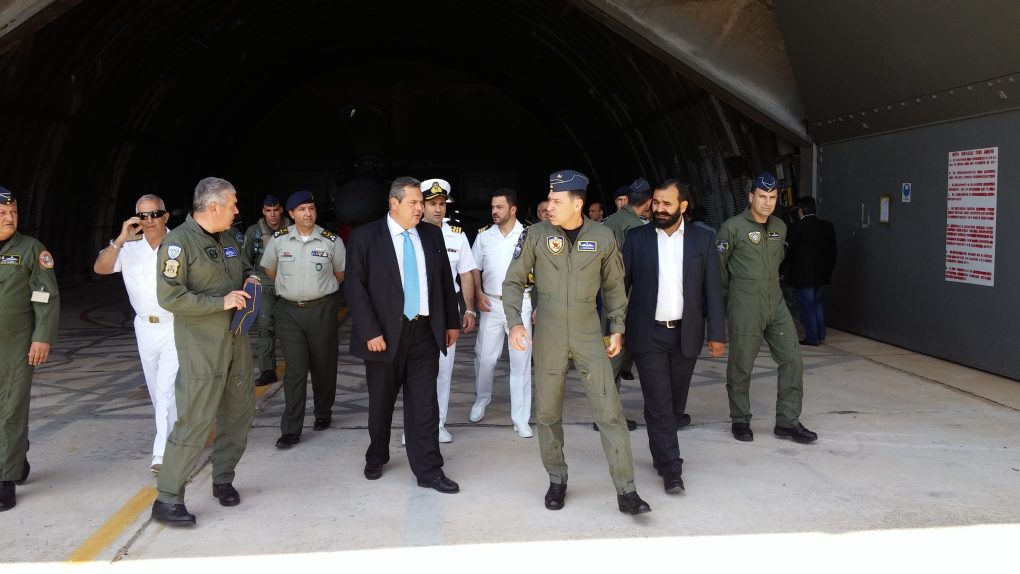
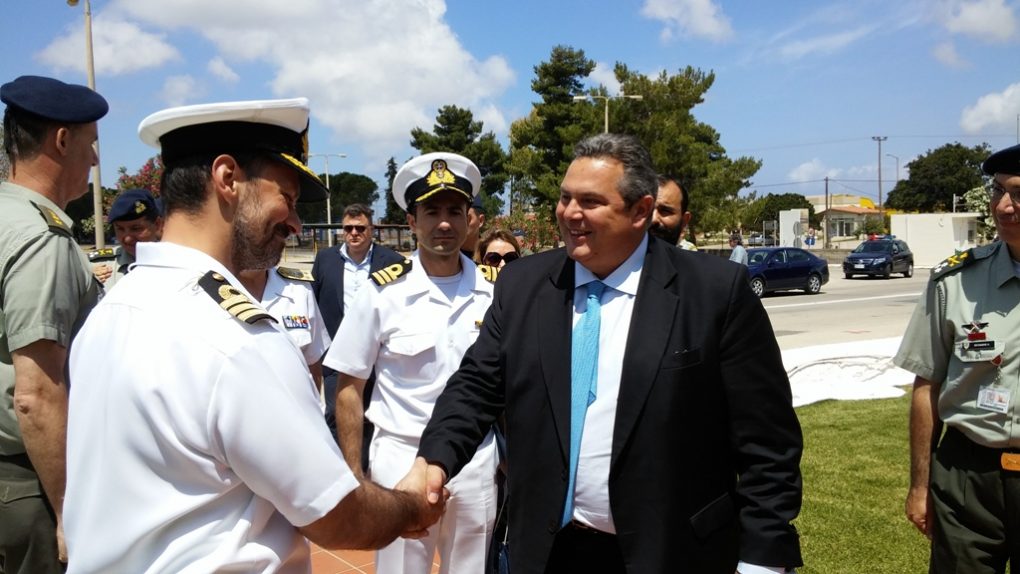
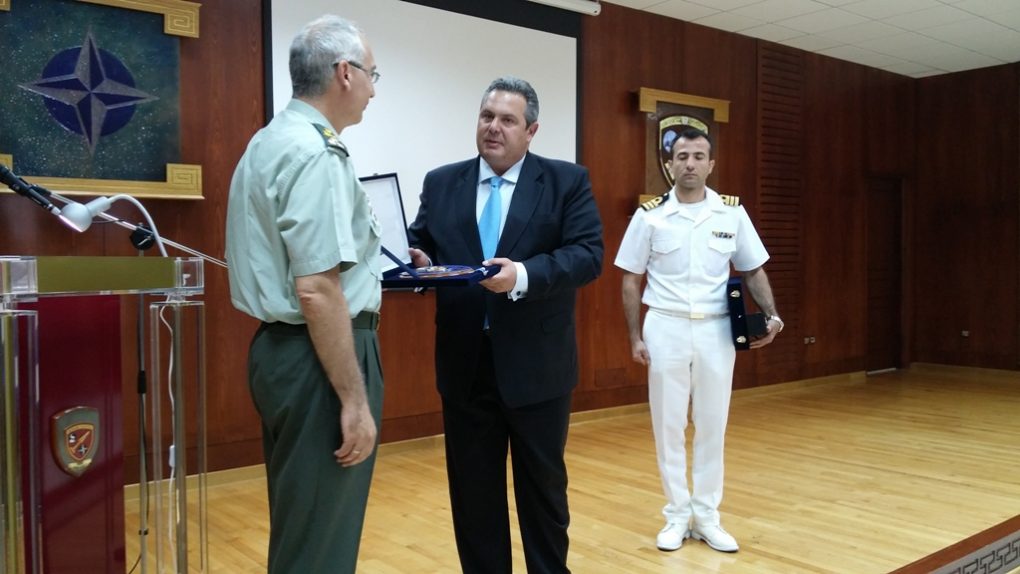
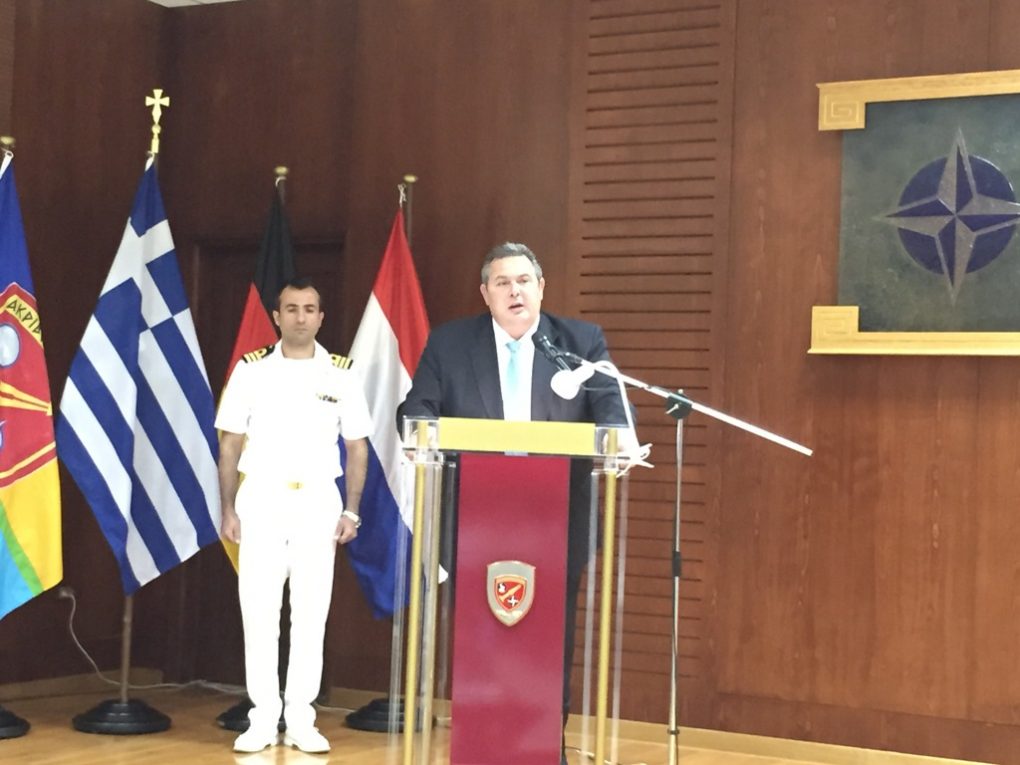
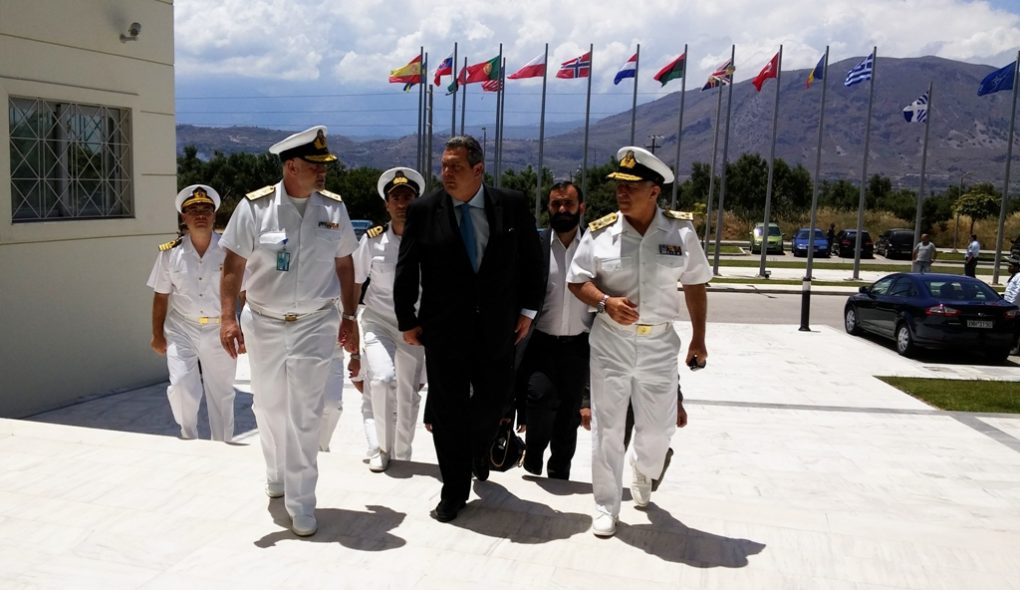
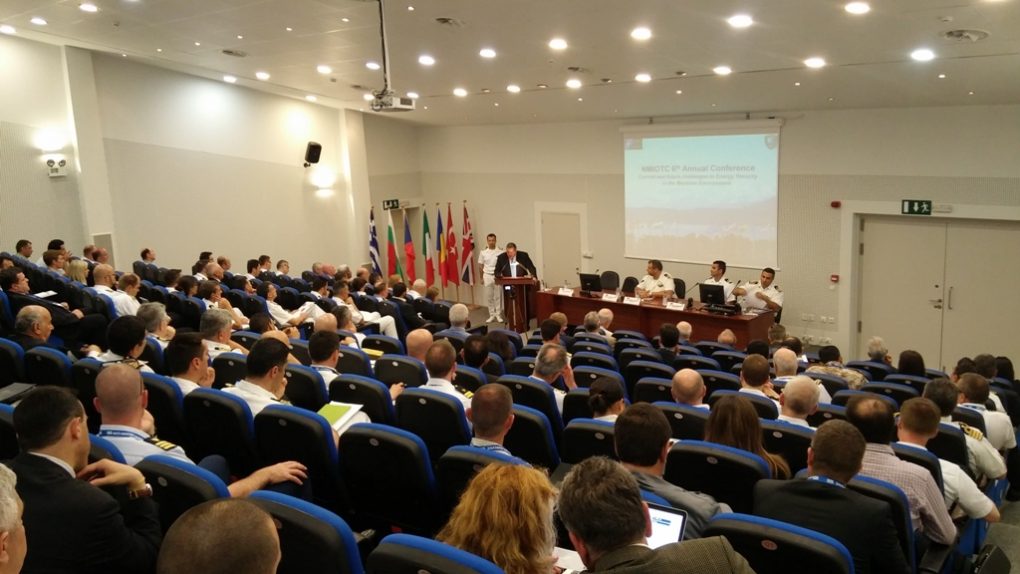
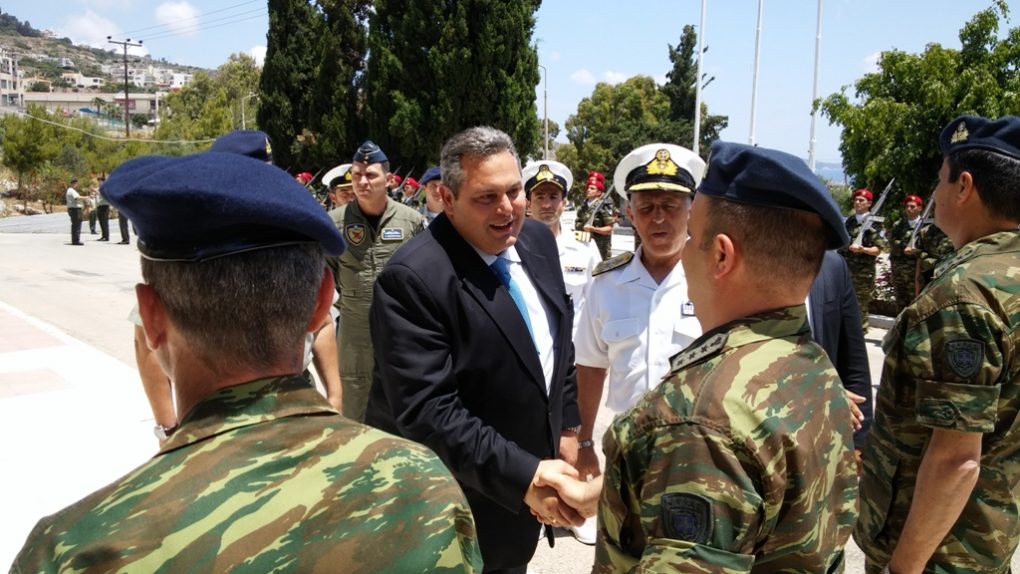
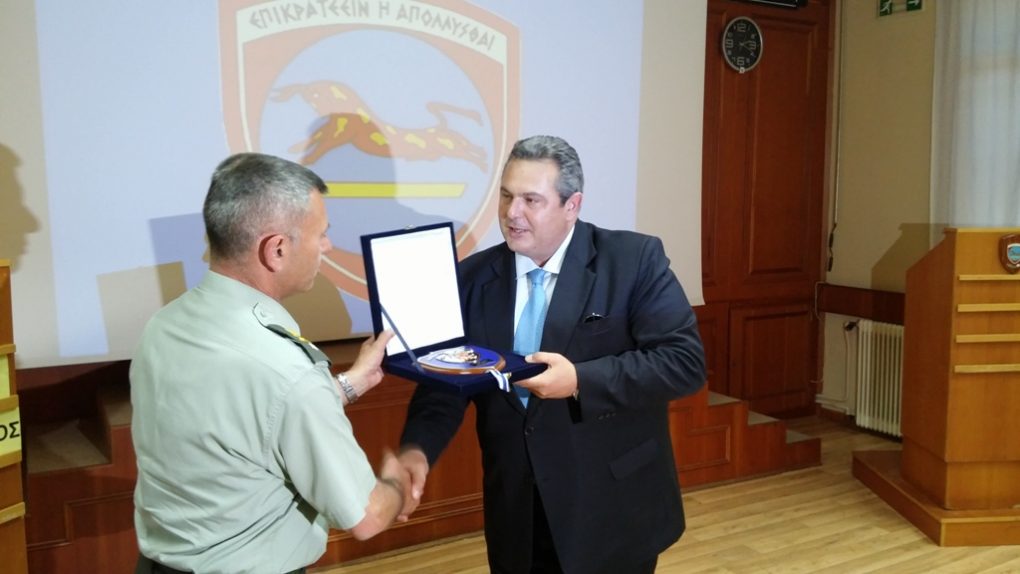
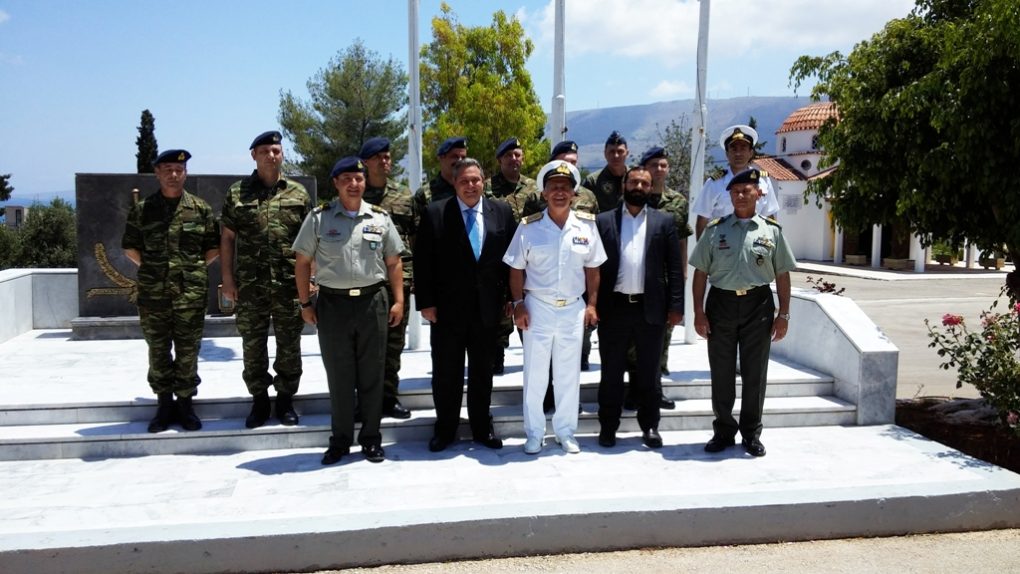
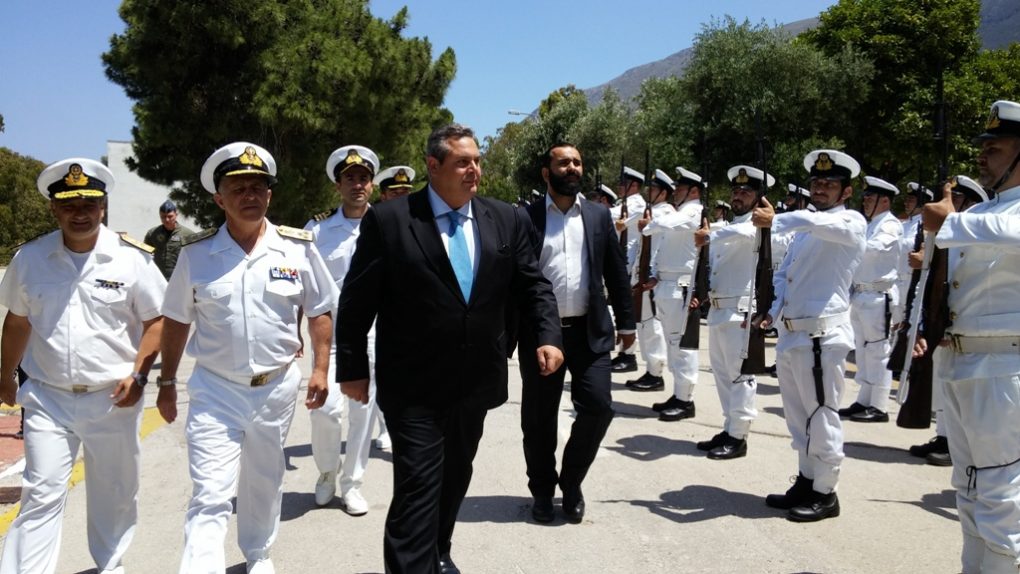
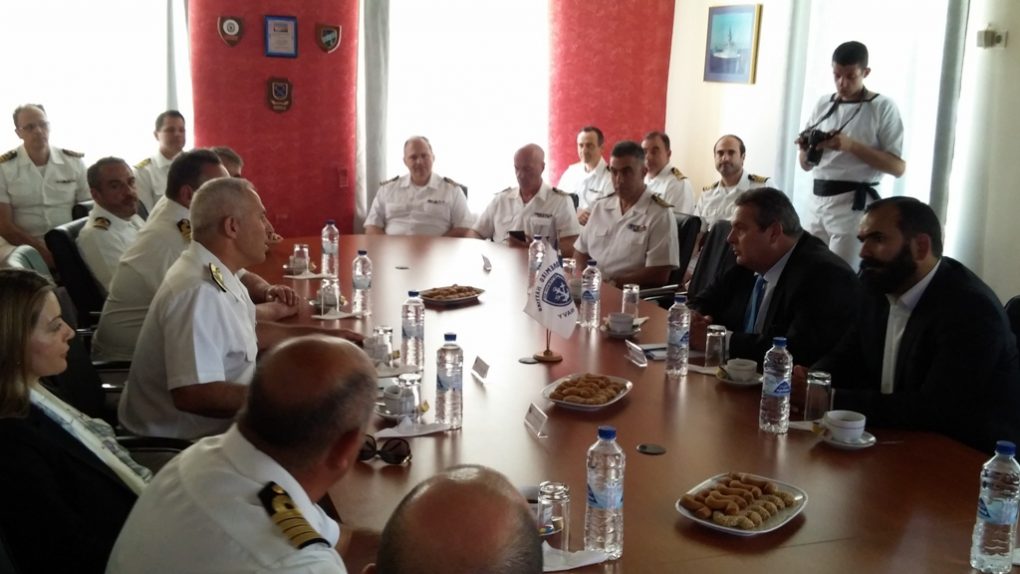
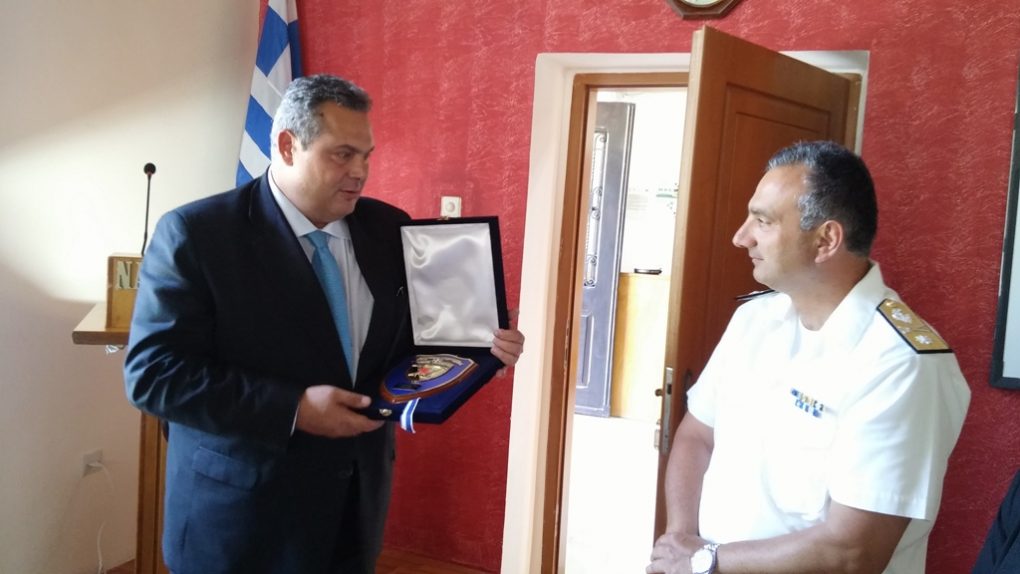
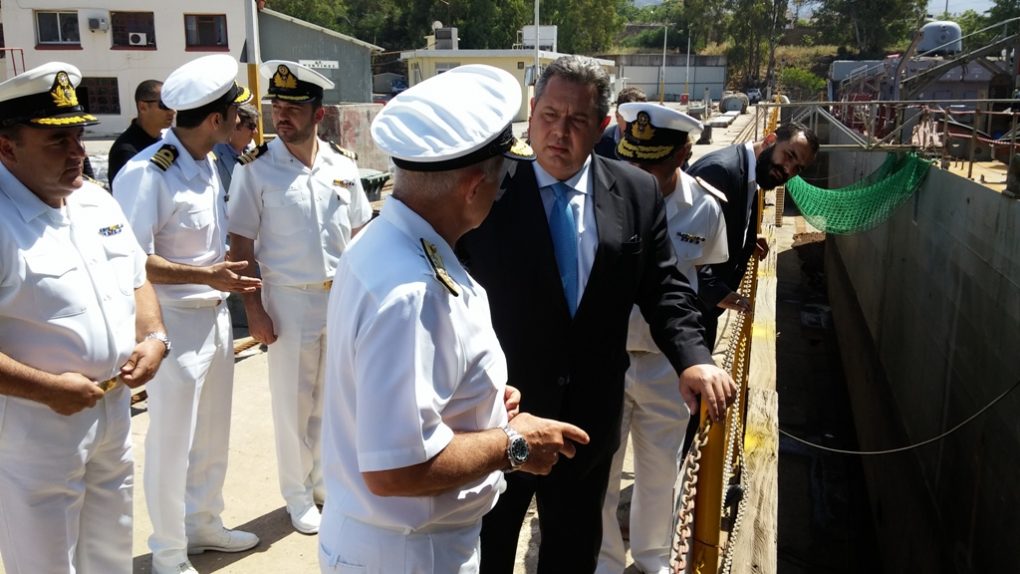
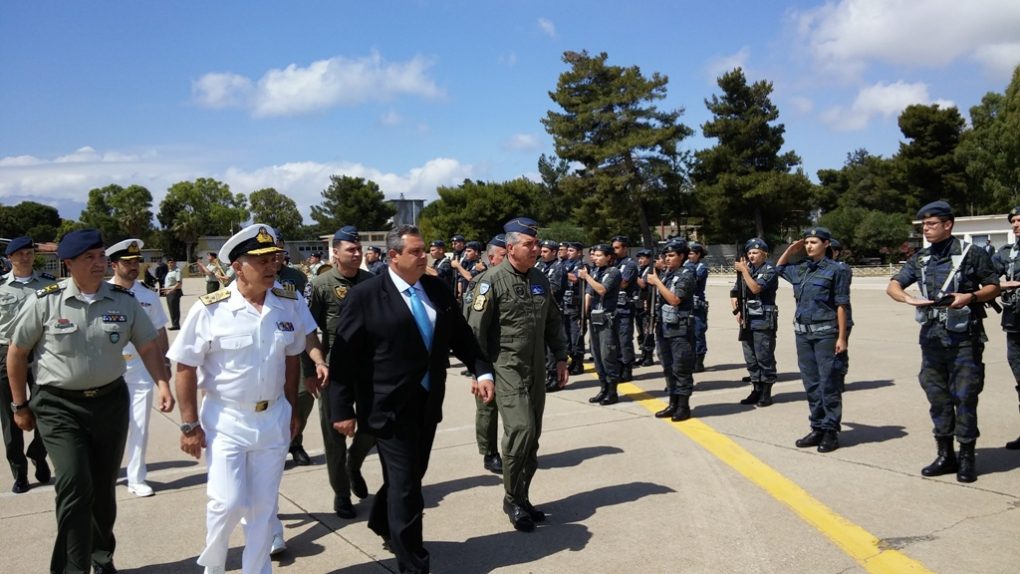
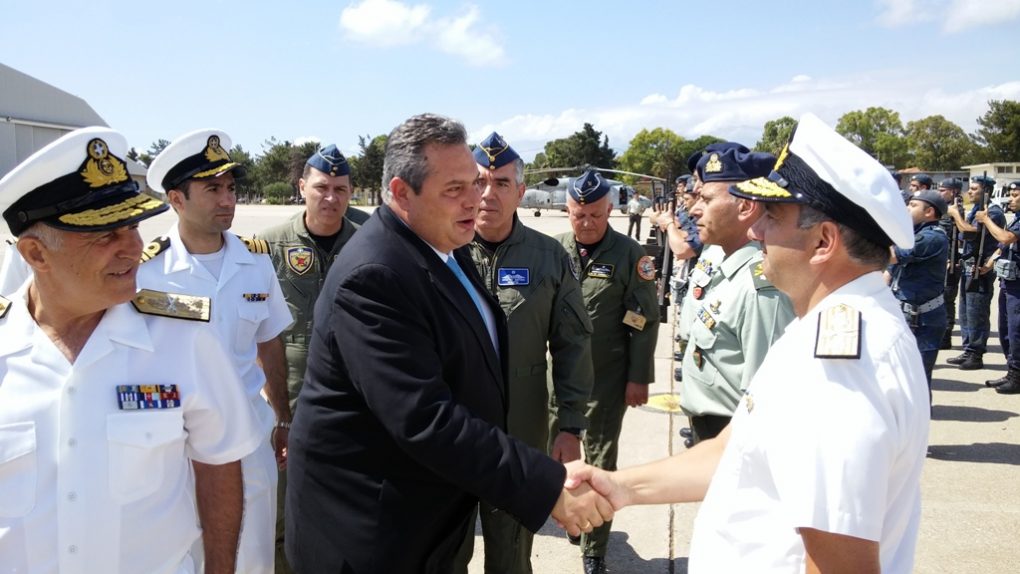
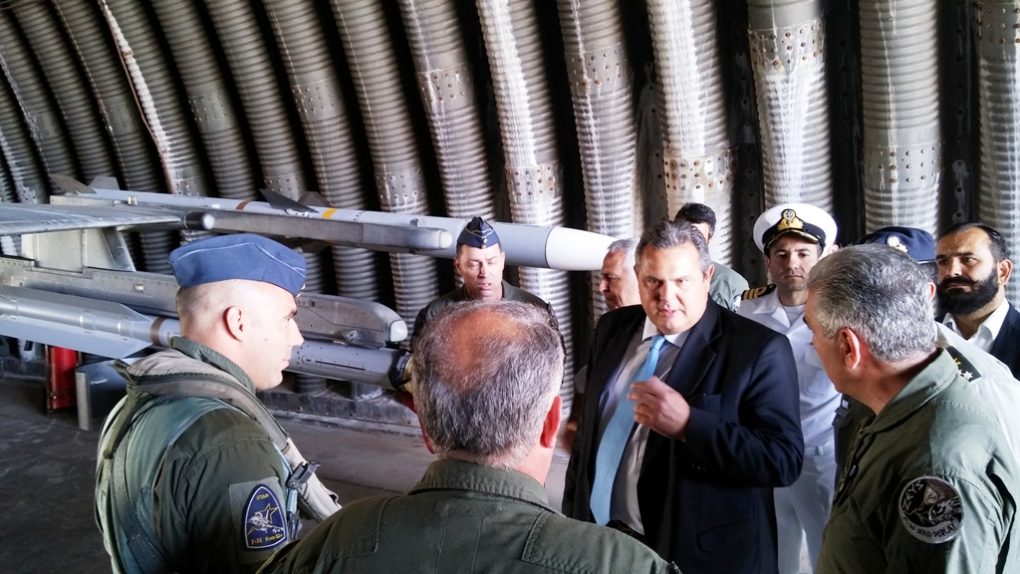
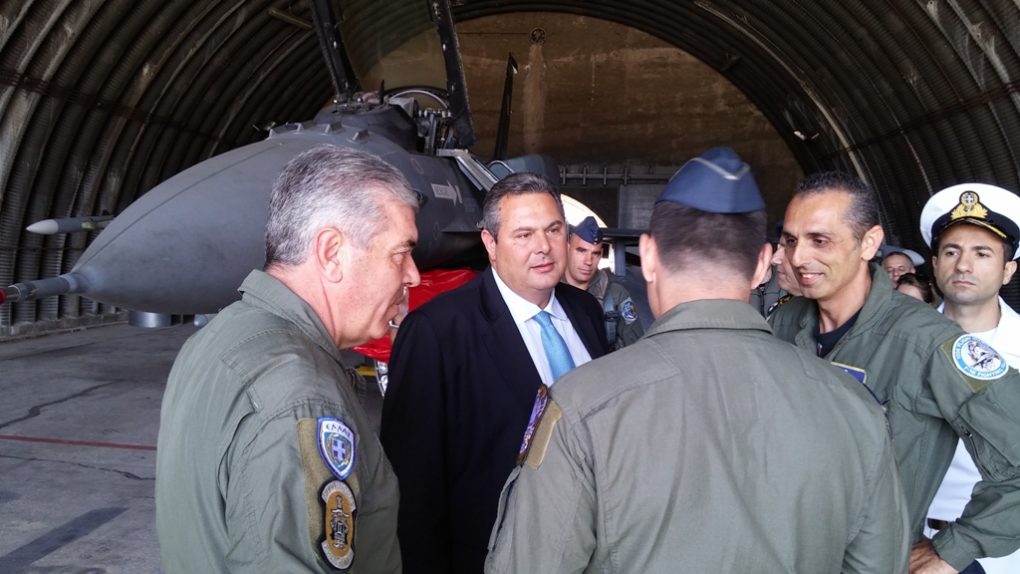
The Minister of National Defence Panos Kammenos, accompanied by the Chief of HNGS Vice Admiral Evangelos Apostolakis HN, the Chief of HAFGS Lieutenant General Christos Vaitsis and the “Independent Greeks” MP for Heraclion Kostas Damavolitis, attended the opening of the NMIOTC 6th Annual Conference, he visited the readiness aircraft of the 343 Sqn, the 5th Cretan Division and the Naval Dock of Crete.
The central theme for this year’s NMIOTC conference, which will take place from June 2 to 4 2015, is the current and future challenges to energy security in the maritime environment, and it will be attended by Academics and Supreme Officers from allied m-s and partner countries.
The Minister of National Defence addressed the following statement to the 6th Annual NMIOTC Conference:
“Chief,
Commander of the NMIOTC,
Professors,
Distinguished Speakers,
Respectable participants,
It is a great joy for me to be here with you in Souda Bay, one of the most important training centres globally, the important role and contribution to maritime security of which is recognized by our Allies, as well as by other partners, outside the Alliance, who cooperate with it.
Crete, with its extensive aeronautical facilities of high quality and operational value, and the unique – at allied level – installations for naval training, support and repair of naval units and weapon systems, is a “giant aircraft carrier”, at a strategic point.
It controls the maritime commercial and energy routes which connect the Black Sea to the Mediterranean and the Red Sea, and it is the spearhead of the Western world against an expanding field of instability which increasingly involves the European Continent.
Ever since the dawn of humanity, the sea has always been a source of opportunities, but also hazards. The Sea Lines of communication are the pathways of global economy and thus should be kept open and safe. More than 90% of the global transit trade is marketed by sea. Moreover, sea is the main channel for energy supply and, consequently, energy security is inseparable from maritime security.
I would like to underline that our times call for such meetings, as we live in a world completely asymmetrical, amazingly multi-parametrical and multi-polar, when rapid changes and extensive instability generate insecurity among the people. New issues in the fields of security emerge incessantly, and they require international cooperation so as to be dealt with.
The new risks, the emergence of non-state actors, the interference of criminal networks with global terrorism, present us with two basic trends: on one hand, we have the constantly larger integration of internal and external security, while on the other hand, one single state can only show ineffectiveness in solely facing all those challenges and threats.
Undoubtedly, we need political willpower to overcome the stereotypes and myths of the 20th century. The issue of constructing a modern and credible defence and security system, at both national and collective level – more than just being a technical or organisational or financial issue – is a deeply political issue as well.
And this is not a choice. It is a binding necessity, considering that instability – which currently outspreads from the Arctic to the coasts of North Africa and surrounds Europe – is a threat to trade, energy routes, tourism and the effort for sustainable development.
All this is of vital importance as to how we should construct the new security system at a European -as well as at global- level, however without endangering the democratic character of our societies, nor betraying the fundamental characteristics of our national sovereignty. The nation state remains the central actor within the global system, and the main guarantor of the nations’ democratic and national integration.
Therefore, it is vital to aspire every time to define the trends, as we can detect them, and to aim at bringing things to a relative balance, nationally or internationally.
Let’s observe the evident and the obvious, within the broader security environment.
Nowadays, the closely interconnected security environment faces a variety of interlinked and interactive threats, as for example the surfacing of non-state actors, the increase of terrorism and its interconnection to organized crime, the emerging threats which are associated with maritime security (such as piracy), cyberspace and new technologies, the social and political problems, the security issues which are caused by illegal immigration, inequality in the distribution of wealth, and the financial crisis.
The broader region of the Eastern Mediterranean, the Maghreb and the Middle East is probably the top geostrategic and geo-economical hub globally. The imperatives to find and exploit wealth-producing resources in the East Mediterranean basin and to shape the regional system for energy transit generate additional security challenges.
Terrorism remains the most important threat against the international community, as the last years it constantly evolves. I refer to the need for awareness against phenomena of obscurantism and savagery which constitute the activity of the so-called Islamic State.
The breakdown of state structures and the inability of states to manage and limit problems and conflicts within their borders, lead to spreading conflicts and regional destabilisation.
Due to all those lingering conflicts and crises, as well as to demographic trends and environmental changes, the Southern countries assume the massive and disproportionate burden of managing the great migration and refugee flows. Migration, on its key axis from the South towards the North, accelerates at an exponential rate.
Every night, in the Aegean Sea, which is the European Union’s east borderline, a struggle takes place to save the immigrants’ lives, but also a battle occurs to prevent extremists and terrorists from entering the country – and subsequently Europe and the Alliance -, as they will use the immigrants and refugees as a pretext to reach the West.
We should not disregard the increase in the jihadists’ transfer. Nowadays, we have more than 20 thousand foreign fighters, who come from all over the world and from European countries as well, to Iraq and Syria. This number outruns the total number of “foreign” fighters who have fought in the past in Afghanistan, Somalia and Iraq. The final return of all those fighters to their countries of origin is a time-bomb for European, but also general, security.
This is why I believe that one of the most important outcomes of the recent joint EU Foreign Affairs and Defence Ministers Meeting, at the presence of NATO Secretary General, was that the issue of migration and terrorists’ movement, is now an issue of defence, and not only an issue of internal security.
Hence, maritime security is a key factor, contributing to the economy and to our prosperity, but also to national and collective security.
Ladies and Gentlemen,
Greece is a country with vast maritime history and tradition; a country having no point more than 137 kilometres away from the sea. A country with thousands of kilometres of coastline, more than 3,000 islands and islets, with the largest merchant fleet in the world and with developed marine tourism.
This is the reason why we are very sensitive in matters of maritime security. So, it was not by chance that during the Greek Presidency, the EU Maritime Security Strategy (EMSS) was developed and adopted.
Our criterion, as far as the EU Maritime Security Strategy is concerned, was to confront maritime security threats and challenges, but also to peacefully resolve disputes in maritime space, on the basis of provisions of International Maritime Law and the relative mechanisms established in this context. The United National Convention on the Law of the Sea (UNCLOS) is the cornerstone of cooperation between Member-States and international partners. If we wish to live in a secure environment, in a peaceful world, if we wish to have a “Rules Based International System”, we should respect the principles of International Law and International Treaties.
Ladies and Gentlemen
NATO should recompose its policy in its South Wing, where the risks have become particular, and avoid being obsessive with exaggerated and overstated risks in the North Wing.
Greece is ready to assume initiative in NATO’s south sector. We are ready to provide premises, our Armed Forces, but also big bases in the south Aegean, so as to facilitate the Allied forces to develop war against terrorism, and to ensure energy routes and energy supply.
Because the issue of energy security in Europe is equally important. Europe’s energy security is the big question for all international analyses concerning its future.
In any case, reducing its energy dependency on third countries is, and should be, a top political, developmental and financial goal. Moreover, the developments of geo-economy and geo-strategy with projects, such as the expansion of the Suez Canal or the prospective opening of a new canal that will connect the Atlantic with the Pacific Ocean in Central America, form a new reality in the trading of energy sources which will show its effect in the future.
Therefore, we should obstruct the diffusion of instability, already existing in land areas, to the sea. The Navy is called to play a crucial role here, cooperating with the Coast Guard. Particularly in the area of the East Mediterranean, energy security is directly connected to maritime security. This implies the need to keep the maritime communication routes open.
Greece can contribute to this important effort keeping the maritime communication routes open, as it is a country which connects the East Mediterranean with the West, and Europe with the Middle East, and it has good relations with both Israel and the Arab world.
It is very important that Greece and Cyprus have a first regional cooperation with Israel. Greece and Cyprus have a second regional cooperation, with Egypt. In all those cases, what is inherent in political thinking, but also in the texts signed, is that such regional cooperation does not turn against anybody, nor does it create antagonism. Yet, it has a basic strategy; to bring balance and stability in the area; to use the benefit of energy, energy sources and energy routes as factors for the enhancement of the societies’ quality of life, and not as triggers of tension and war.
Ladies and Gentlemen,
Even nowadays, with so many fiscal problems, Greece is an essential pillar and a trustworthy partner of the western world and the Euro-Atlantic security system. We have a powerful defence system and efficient Armed Forces which are a factor of stability, power and deterrence in the region.
We are the country which connects peoples, as well as commercial, energy and communication routes and paths towards peace, prosperity and progress. This peaceful connection ensures security and prosperity to many, to the South and the Middle East, to the North and the Balkans, to Central Europe as well.
I wish you every success to the works of this conference.
Thank you”.