

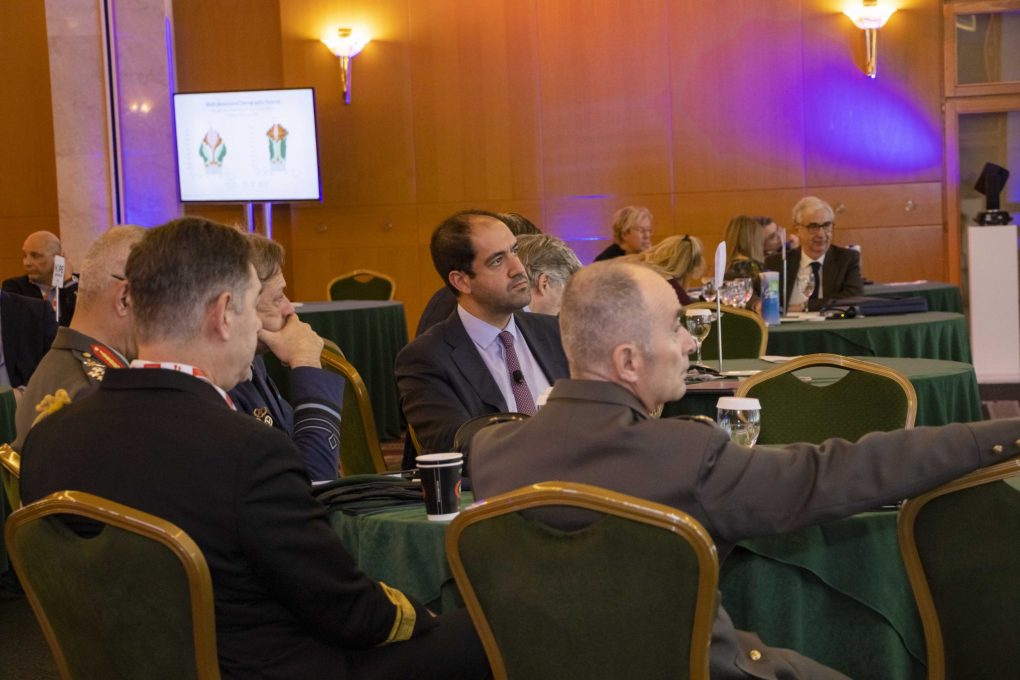
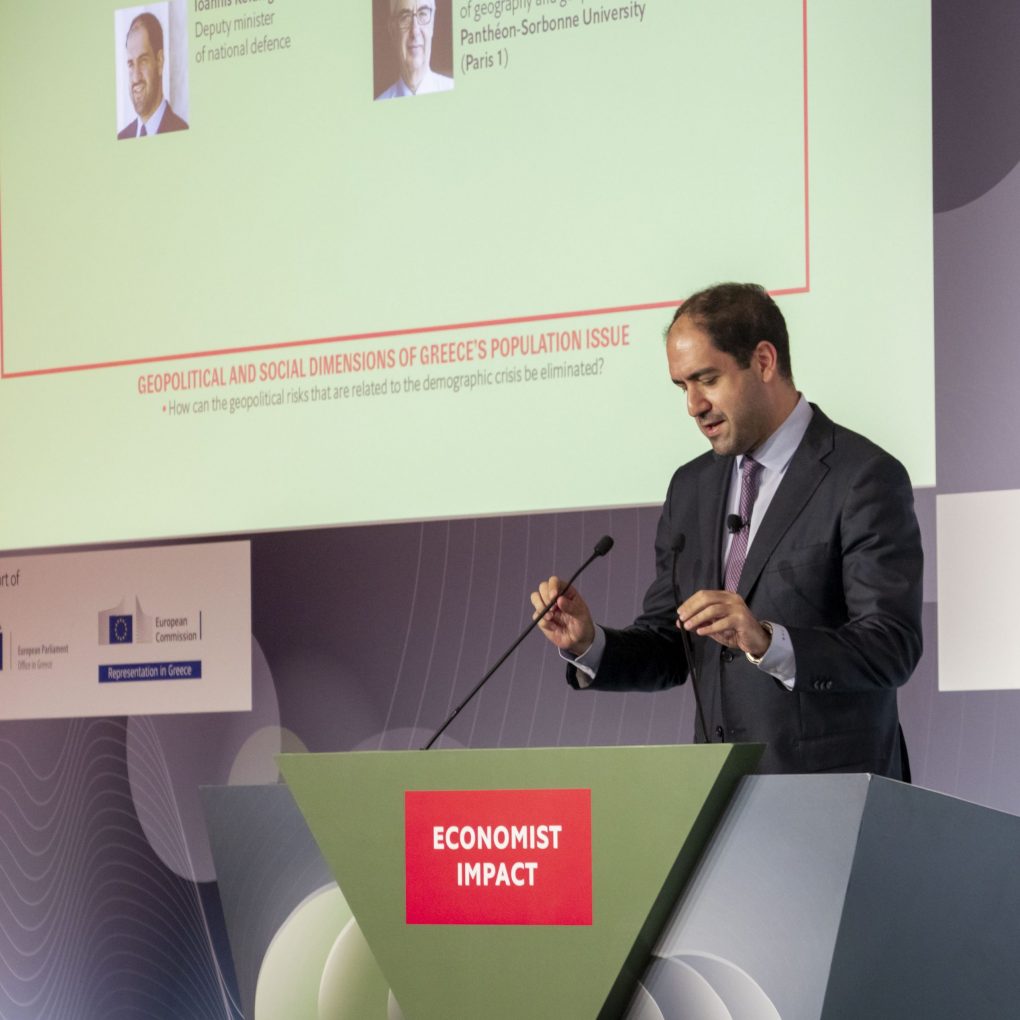
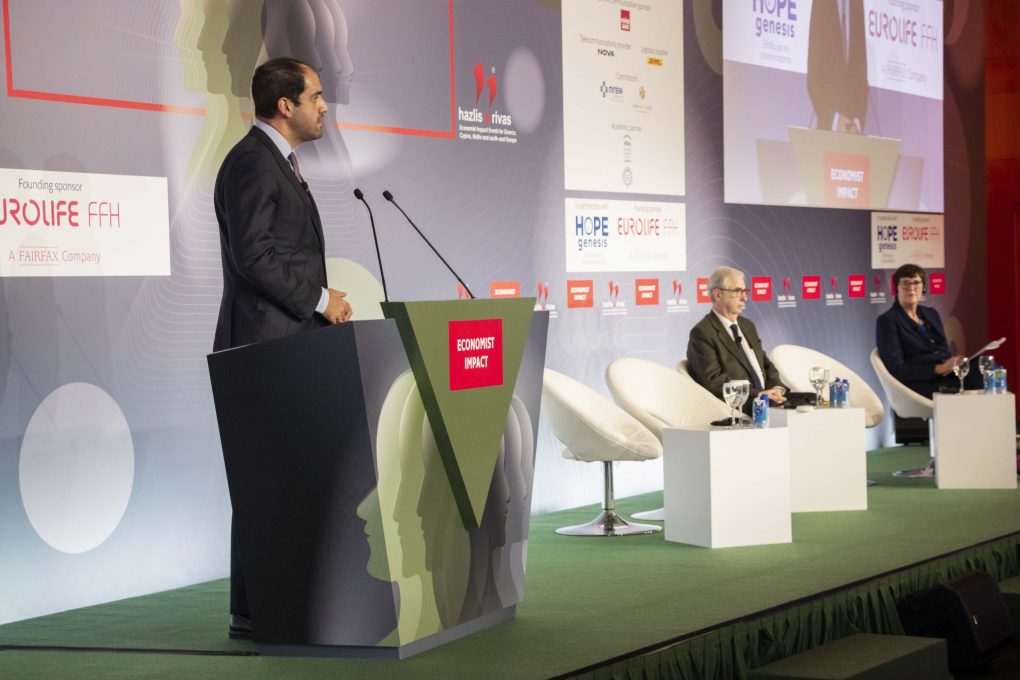
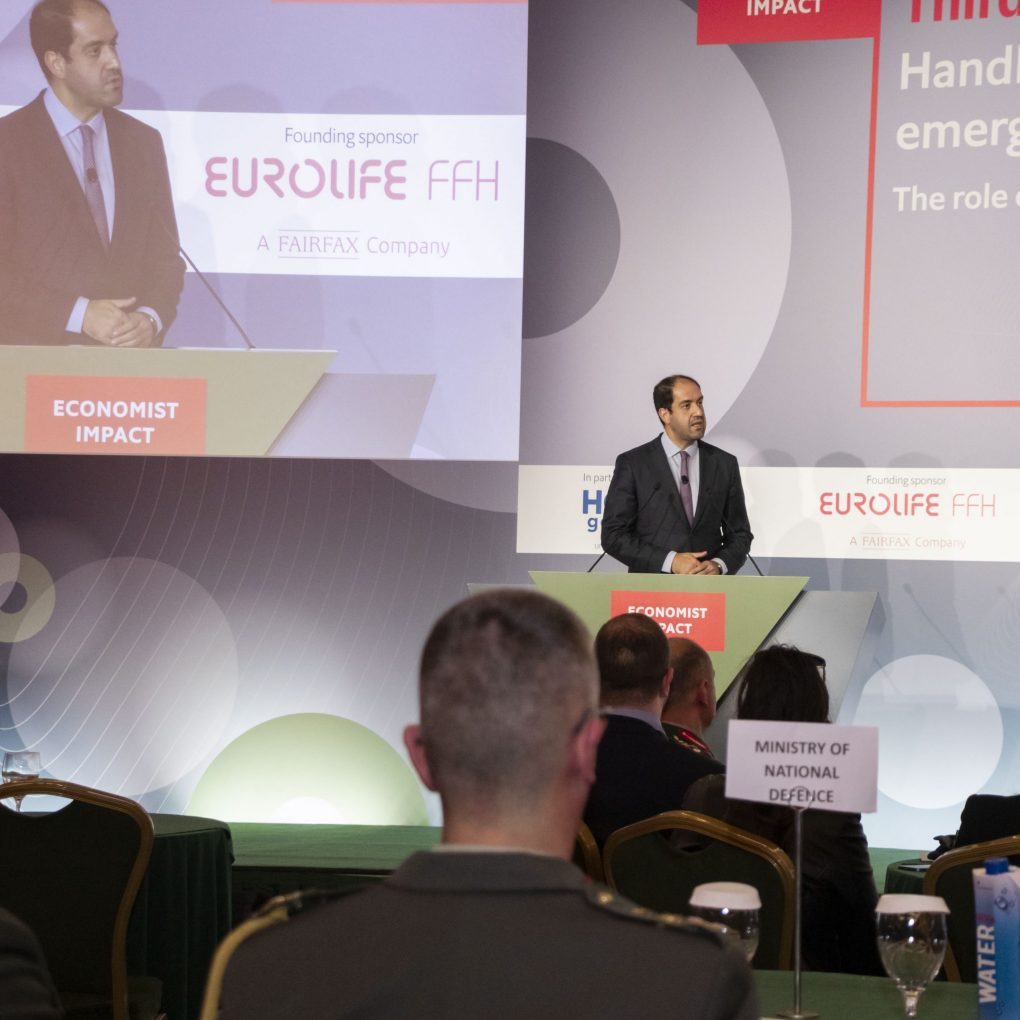
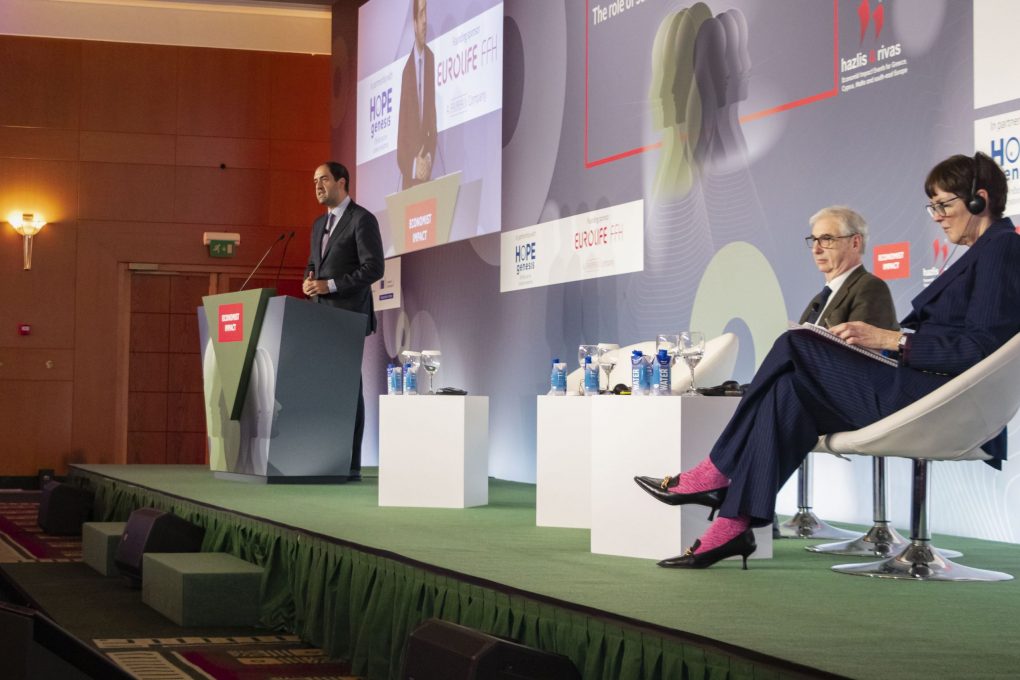
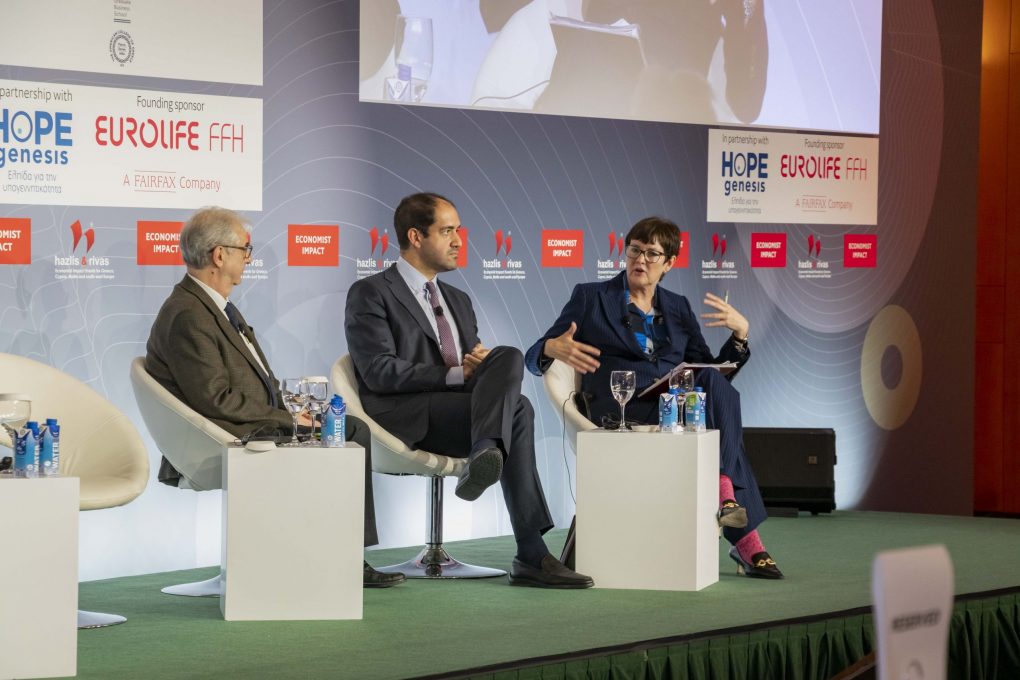
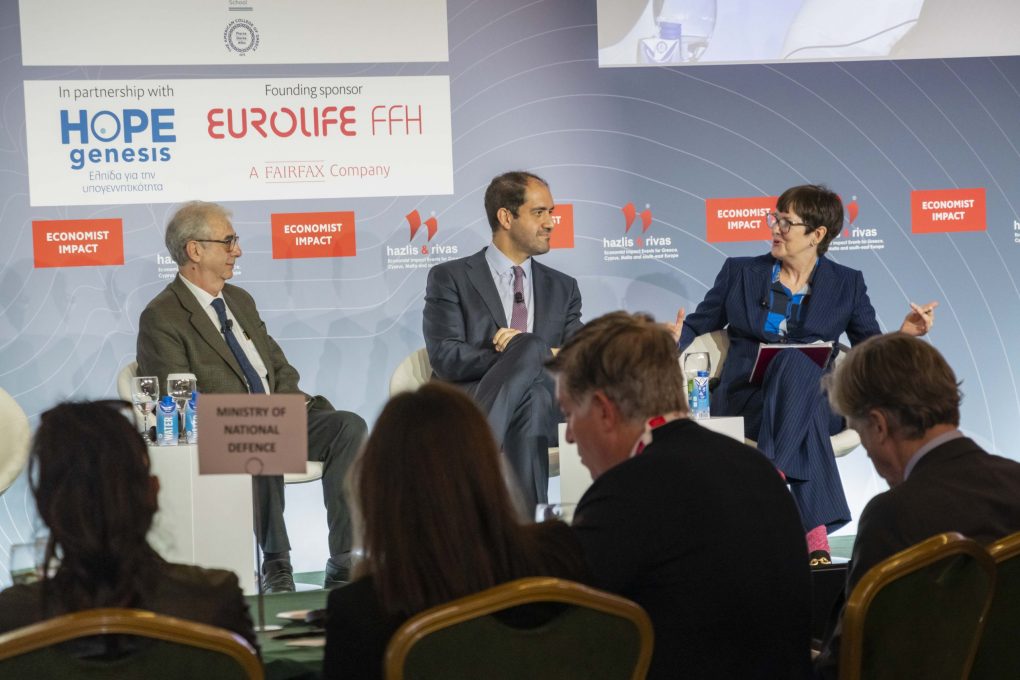
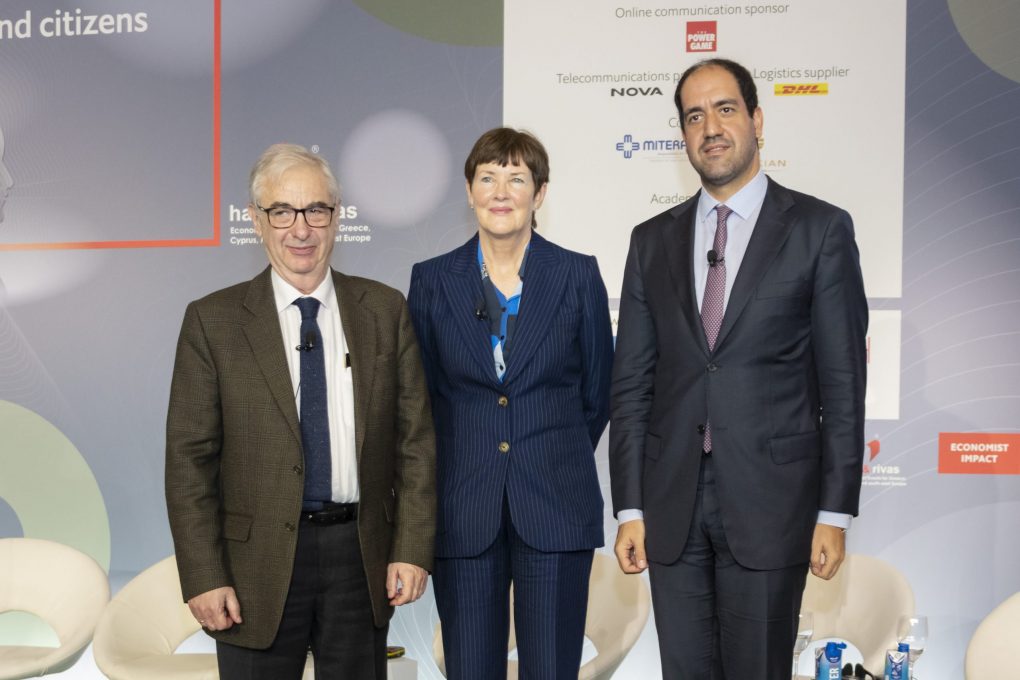
The Deputy Minister of National Defence Mr. Ioannis Kefalogiannis, attended the 3rd Economist Summit on demographic affairs, which was held at the Divani Apollon Palace & Thalasso Hotel, at Kavouri.
Mr. Kefalogiannis emphasised that a serious policy on demographics and by extension, the geopolitical reinforcement of our country must move on the axes of granting young couples and parents economic incentives, a targeted immigration policy, reinforcement of the role of the Greek diaspora, as well as augmenting the population of our islands. In this vein, he specified actions that will counterbalance the quantitative weaknesses of Greek demographics with qualitative data.
From the viewpoint of defending our country’s territorial integrity, the Deputy Minister stressed that the importance of our border islands is inversely proportionate to their size. For this reason, the role of the Ministry of National Defence is multifaceted: apart from the defensive protection, the societal contribution of the Armed Forces towards the frontiersmen is particularly visible today along a broad array of measures, such as improving vital infrastructure, preventing and facing natural disasters, and also providing primary health care. With the above, mention should be made of the housing program undertaken by the Ministry of National Defence, the first phase of which concerns building around 700 housing units for officers of the Armed Forces on the Aegean Islands and Evros. Around 15% of these will be furnished to cover the housing needs of employees in other entities of the public sector and cover basic needs of the regions, such as teachers and doctors.
In his address, the Deputy Minister mentioned the following:
“Allow me to open with certain basic axioms, which I hope will be the foundation of our discussion. For a long period, the dominant perception in geopolitical thought was that a country’s population size is directly proportionate to its power. To put it simply, population constituted, and to an important degree, still constitutes an indicator of power. This approach is based on specific historical examples: I indicatively mention France at the beginning of the 19th Century, the most populous and most powerful power of the era. In addition, China, which since the mid – 20th century to date, has become a superpower, in part due to her population aggrandizement, from around 500 million inhabitants in 1953, to 1.4 billion today. In later decades however, it has become obvious that power is dependent on other parameters, connected to qualitative, rather than quantitative characteristics of demography. To continue with the example of China, what decided her rise and geopolitical power was not so much the rise in population, as industrialization and technological progress, and by extension the fact that she has started to transform from a labor economy to a capital and knowledge economy. Secondly, demographic calculations are based on censuses, which register all residents of a given region. Mr. Prevelakis, in his writings, – with which I agree – has highlighted that when it comes to geopolitical terms, the number of the census subjects is much less important than the number of people who support the group from which the national identity is derived. A classical example of this is Israel, whose Jewish Diaspora residing in other countries, can constitute an asset of might and influence. In this case, it is obvious that the element of national identity considerably mitigates the demographic imbalance between Israel and its adversaries in the Middle East.
If we consider the geopolitical and demographic data in our own region, it is obvious that Greece is a country with clear demographic weaknesses: these weaknesses concern geographic distribution as much as shrinking population and ageing population. These basic characteristics of Greece’s demographic problem create important demographic liabilities: the first one is the depletion of regional populations – mainly in the insular part of the country and the Aegean islands more particularly. A second security concern is that the shrinking of the population and by extension of the workforce has not been accompanied by a transition from a labour economy to a knowledge and technology economy. On the contrary, the continuously augmenting needs of senior citizens in health, social security, and retirement funds forces many youths into emigrating abroad. Consequently, a vicious cycle comes into being, which creates difficulties in counterbalancing the demographical problem of our country by way of an economy based on utilizing modern technology and innovation. This weakness entails consequences in the country’s defence. I’m not at all certain that the demographic realities of our neighbours are in a better shape than what is claimed in the public discourse. A simple comparison of gross population sizes is not sufficient. Demographically, Turkey is split into two regions with great differences. A main trait of the eastern and southern regions are their much greater demographic dynamics than the western and northern ones. The demographic behavior of the populations around the Aegean and the Black Sea brings them closer to European standards. The presence of strong minorities, such as the Kurdish one, which is in conflict with the Turkish state is a geopolitical liability, despite its members raising the gross total of the Turkish population. Without the Kurds, the total population of Turkey would no doubt be considerably lower, yet she would possibly be strengthened since Turkish identity is reinforced.
What must we do therefore? We should first agree that there are no magic solutions. Hopes to reverse natural population movements are limited. The economic crisis, combined with the ageing population have limited the possibility for social policy measures, which aim to raise the birth rate. We should, however, persist in this direction, pursuing bold measures towards tax alleviations, allowances, and support for all parents. Secondly, we need a directed migration policy, which moves on two axes. On the one hand, strict enforcement of the rules concerning migrant entry, which render illegal entry difficult, and on the other hand a directed policy of attracting and incorporating immigrants according to Greek economic needs and cultural affinity. This policy should equally face westward and eastward: highly qualified Europeans may work in Greece if they find the right environment for businesses and families. For many youths, Europe is a homeland. We can reinforce Greece’s profile within Europe. What is needed is a tax policy in this direction, greater outward reach of businesses and universities with an international outlook. In the East, Christian populations are under severe pressure by the Muslim majorities. Many of their members will be forced to abandon their homes. The Greek Orthodox Christian network, which maintains a strong presence in Africa and Western Asia, may facilitate and encourage Greece as a choice, instead of some other western country. The Copts in Egypt alone number from 9 to 15 million. Thirdly, we need to comprehend the geopolitical importance of the Greek diaspora, and reinforce its role. The Greeks of the diaspora need to be convinced to contribute economically and mentally to the development of the country, and transform our economy into an economy based on knowledge and innovation. Measures, such as voting by mail, easing their participation in the common forum, which are being legislated this period are absolutely necessary. Fourthly, a directed regional policy, focusing on the reinforcement of our islands’ population and offering incentives for returning to them, must be a priority. The challenge we are facing as Government is pledging all of our forces to lifting the isolation of our insular space, and not simply mitigating the consequences thereof. From the viewpoint of defending our country’s territorial sovereignty, the defence of our frontier islands is inversely proportionate to their size. Therefore, the role of the Ministry of National Defence in these areas is multidimensional: Beyond the defensive protection, the societal contributions of the Armed Forces towards the frontiersmen today is especially obvious in an array of topics, such as improvement of vital infrastructure, preventing and facing natural disasters, but also providing primary health care. With the above, mention should be made of the housing program we are carrying out with the Ministry of National Defence, the first phase whereof pertains to the construction of around 700 houses for officers of the Armed Forces in the Aegean Islands and Evros. Around 15% of these will be granted for covering the housing needs of employees in other entities of the public sector, who cover basic needs in the area, such as teachers and doctors.
In my opinion, if we wish for Greece to cease being the weak link of European demographics, a serious policy on demographics and by extension geopolitical reinforcement of our country needs to move along these axes, through actions which will counterbalance the quantitative weaknesses of Greek demographics with quantitative data. It is obvious that the political system must take bold decisions, and also act in unison and explain to Greek citizens the actual consequences of the demographic enfeeblement of our country.
Thank you”