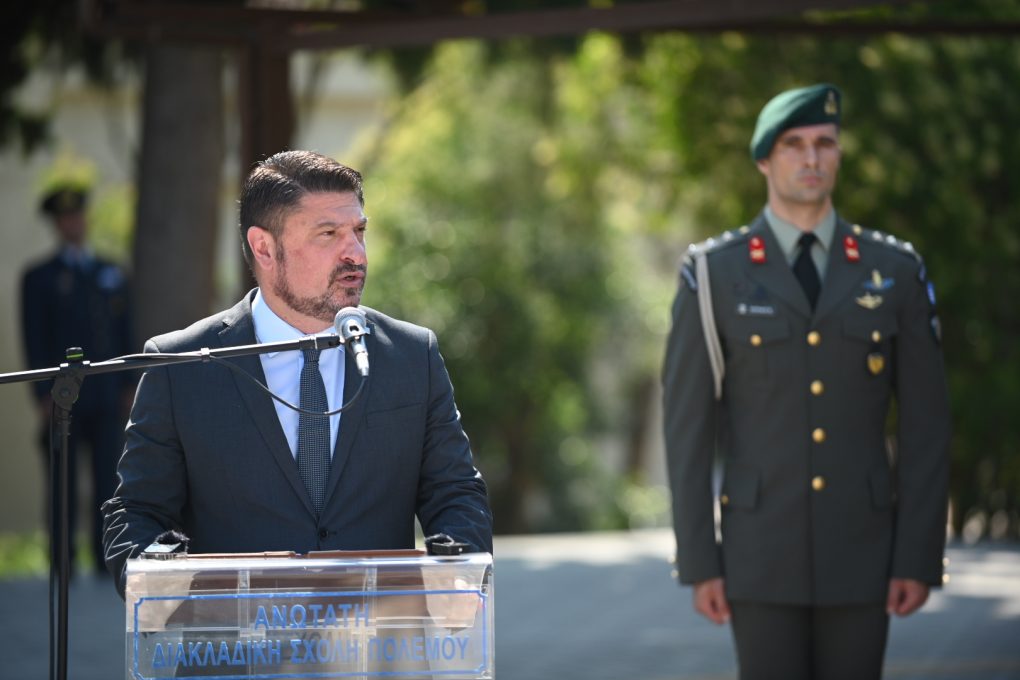
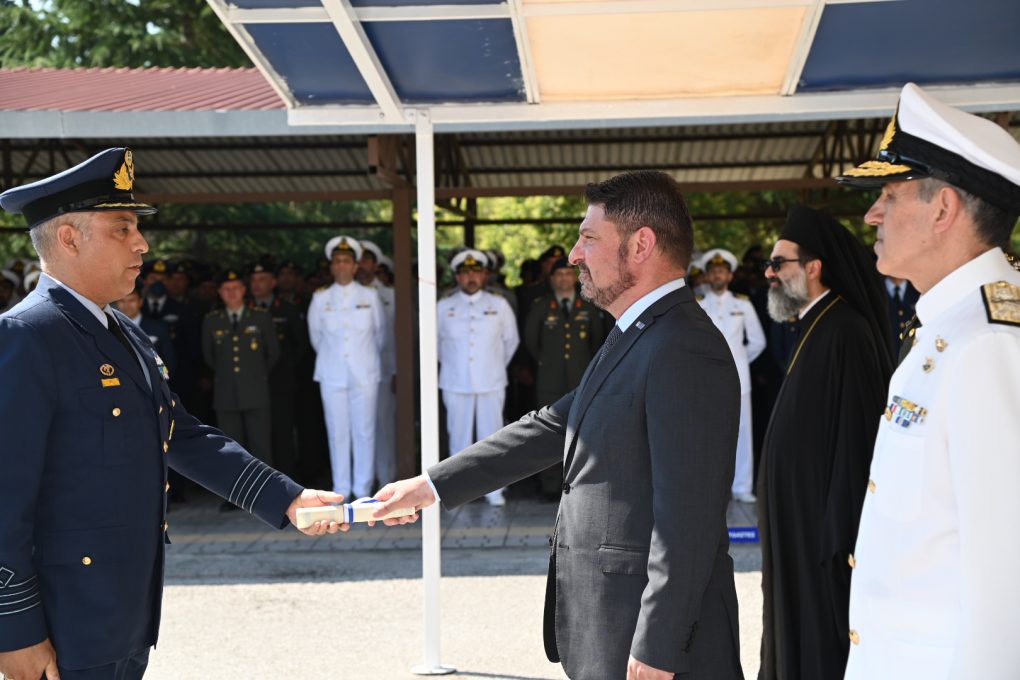
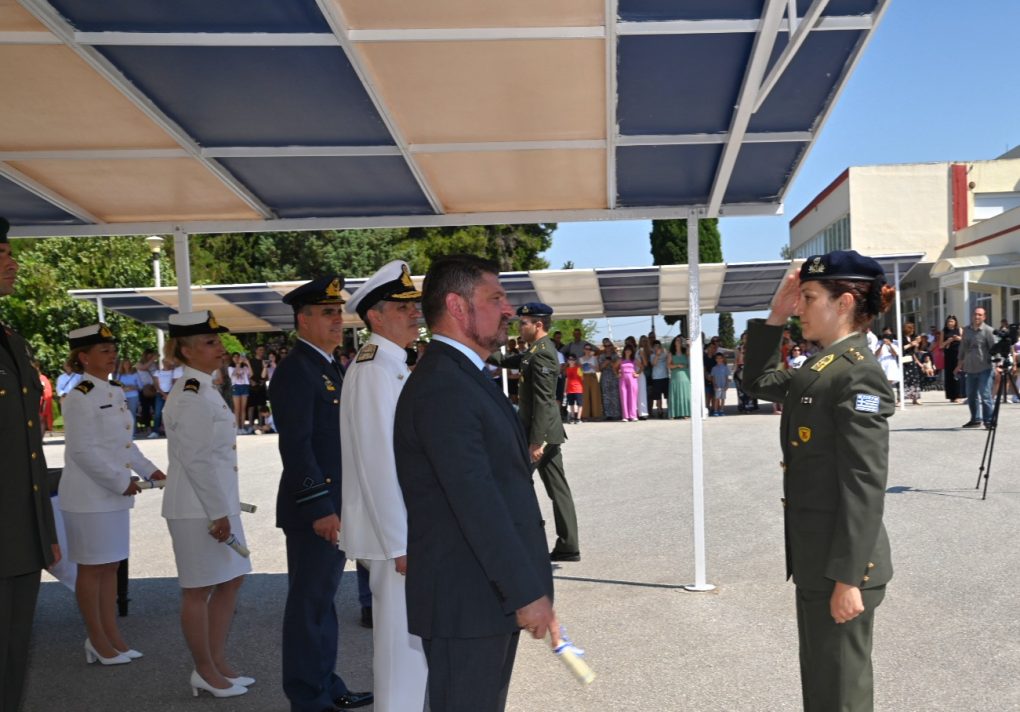
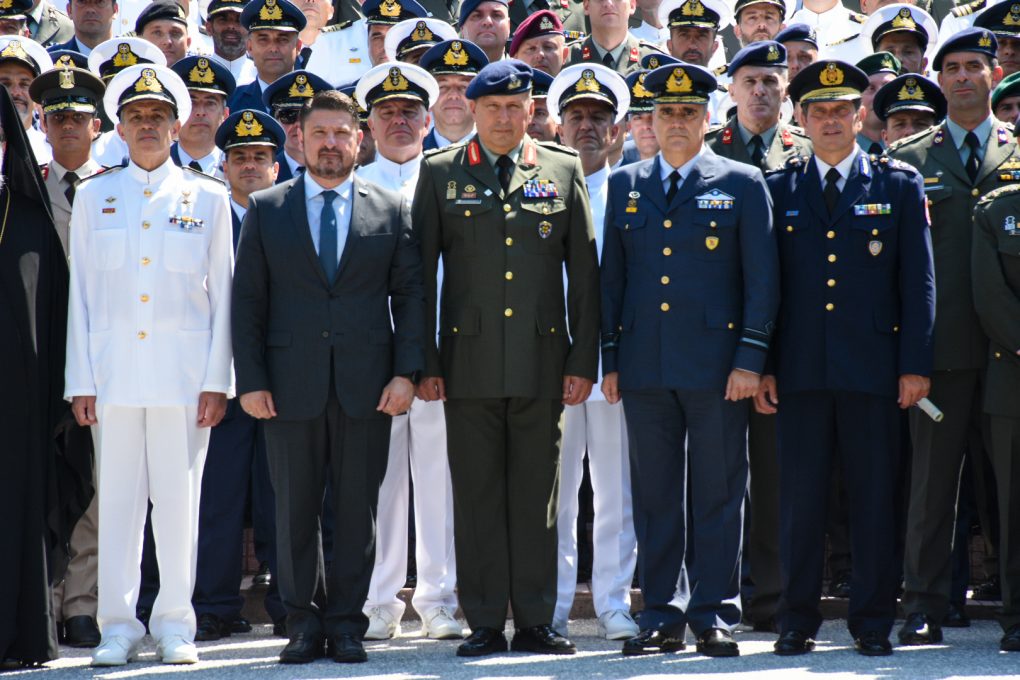
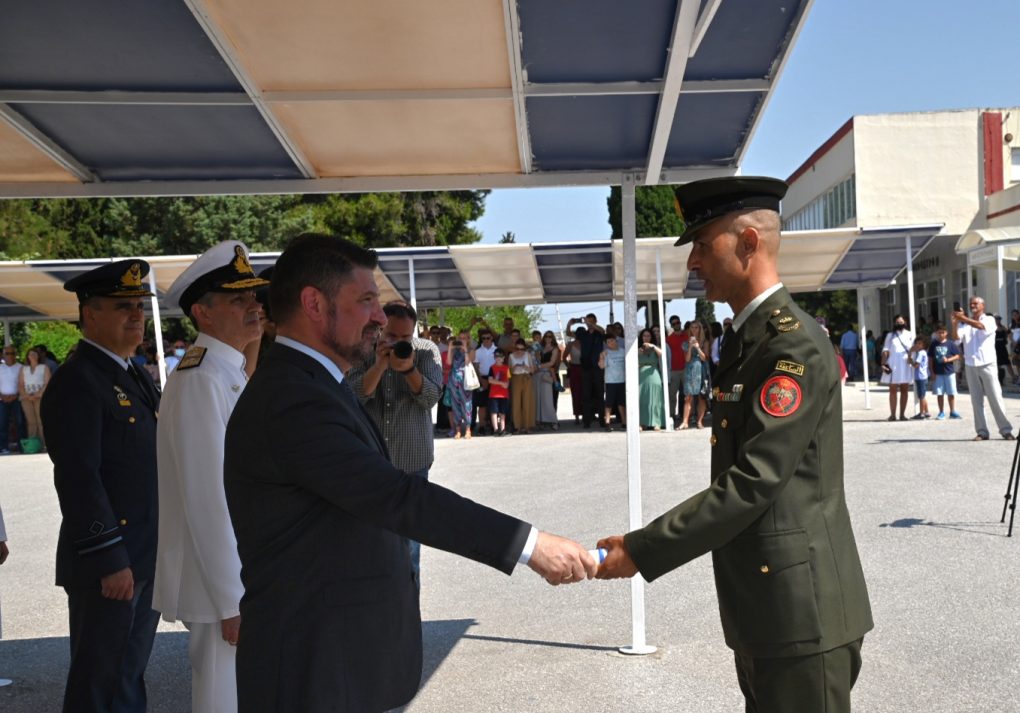
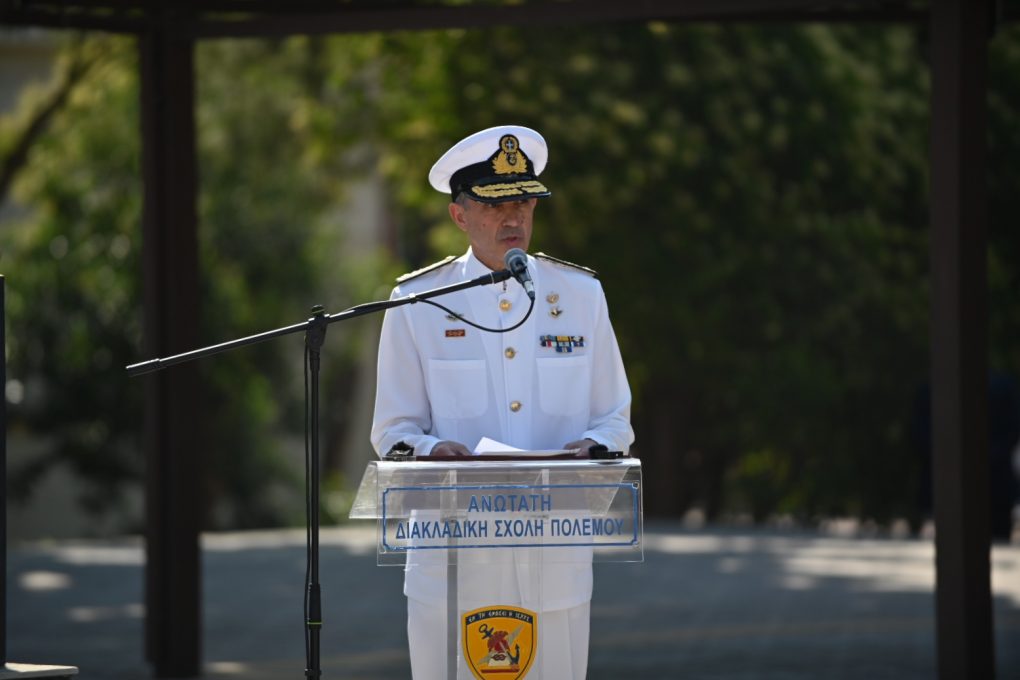
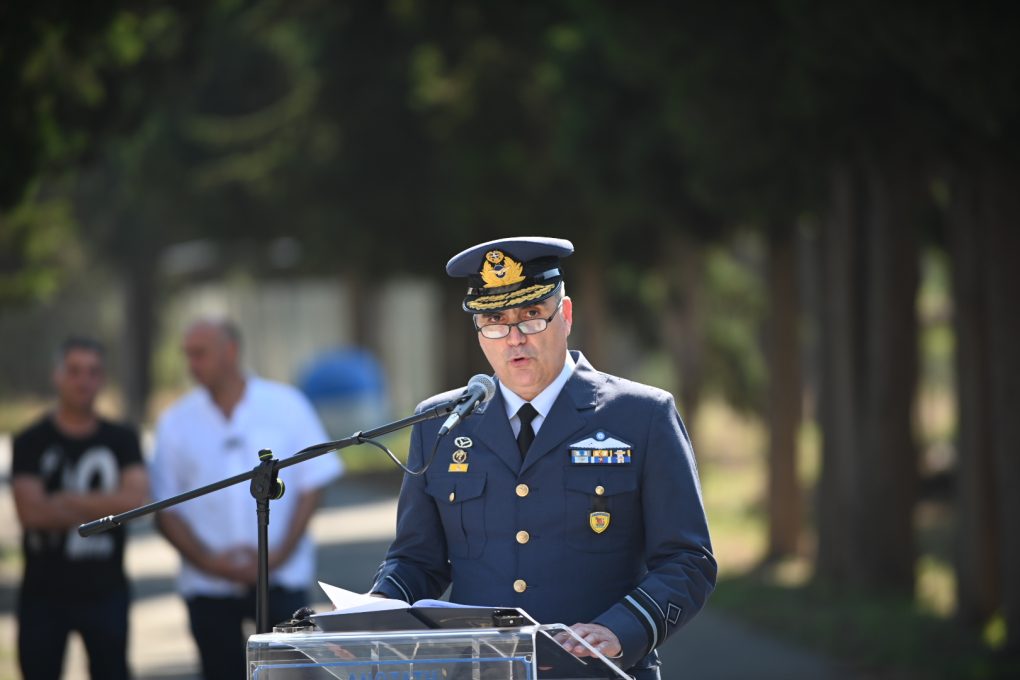
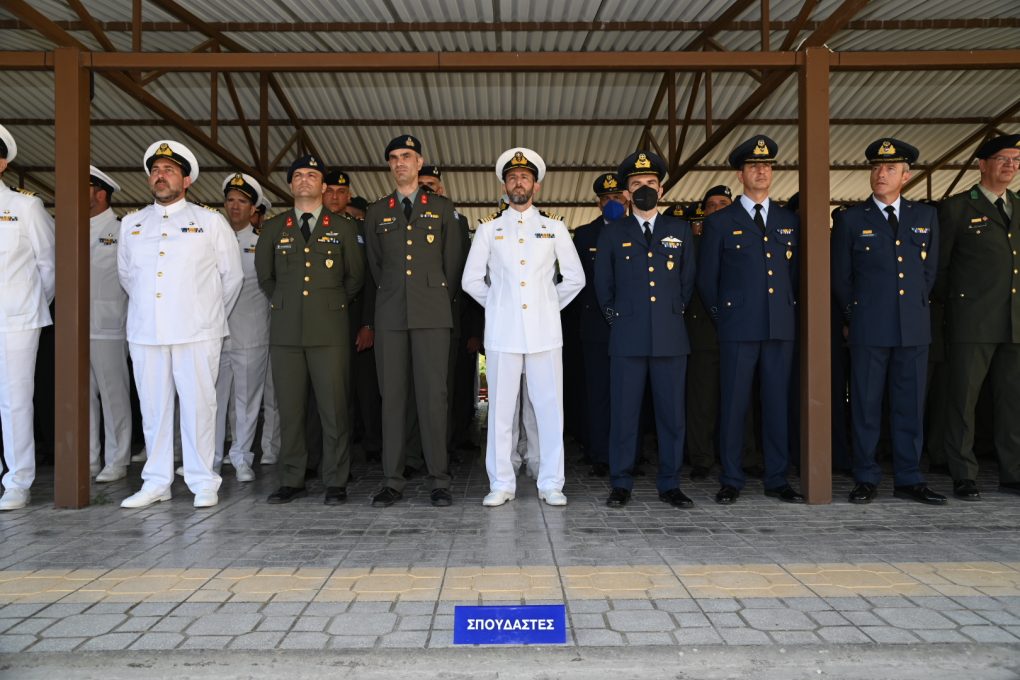
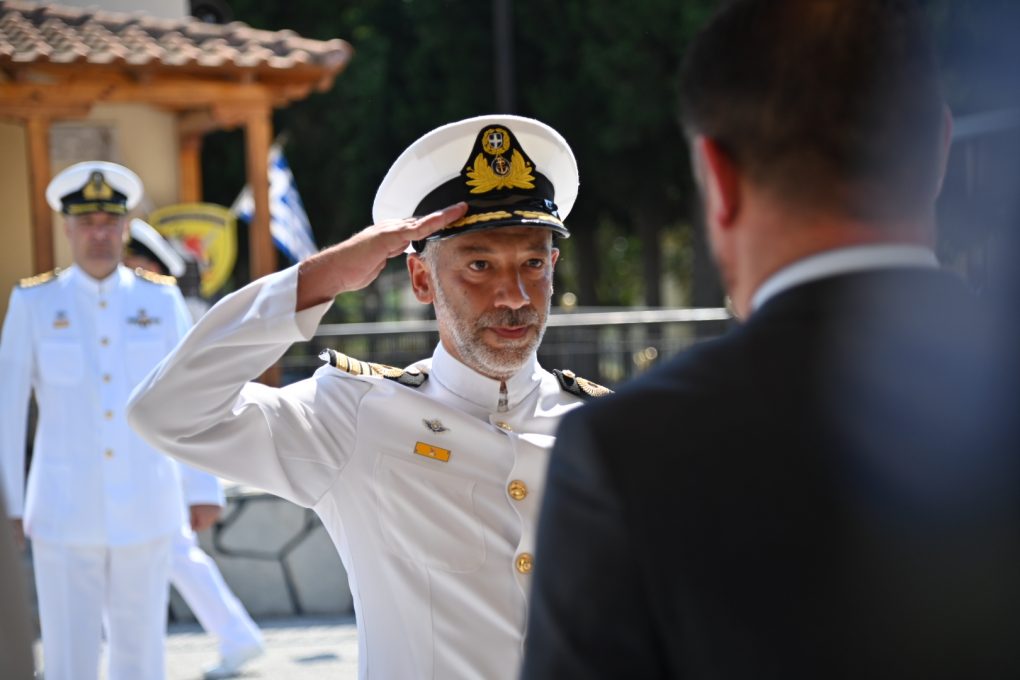
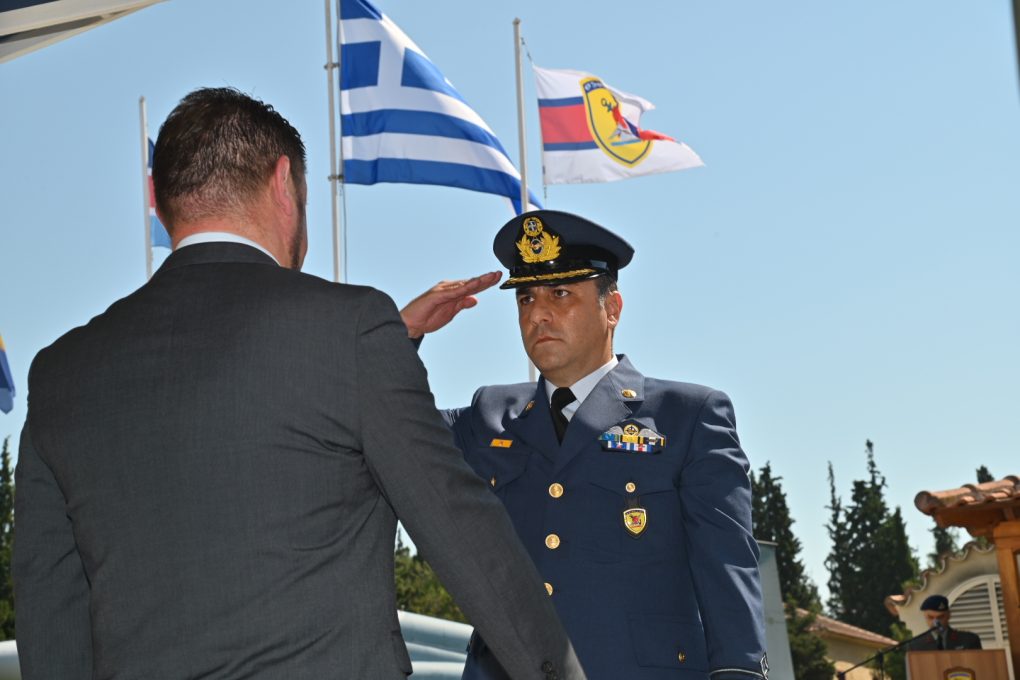
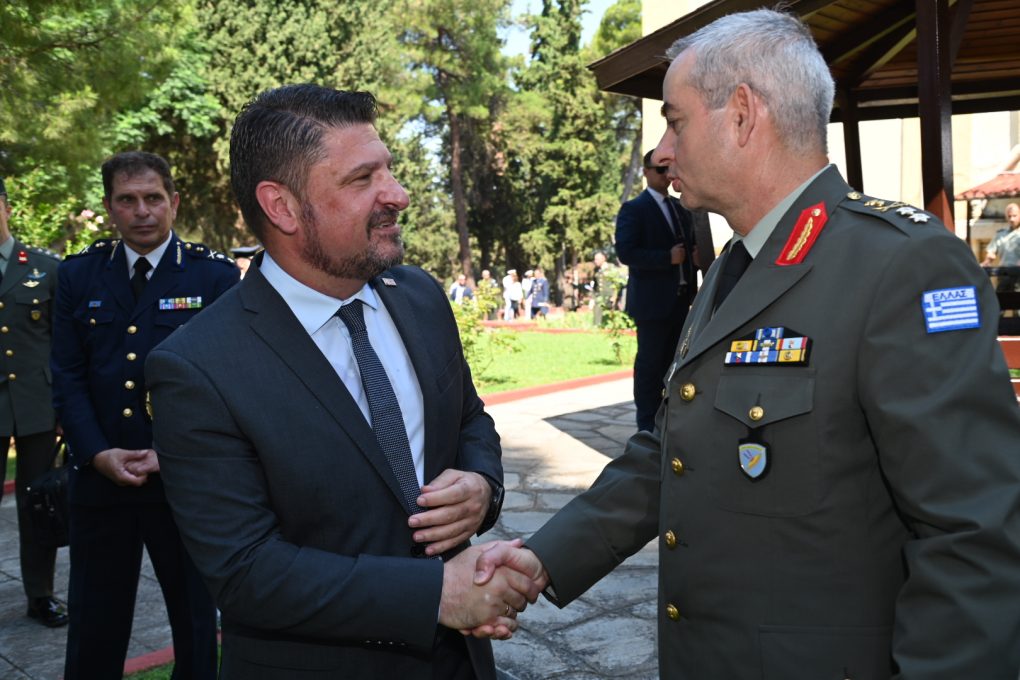
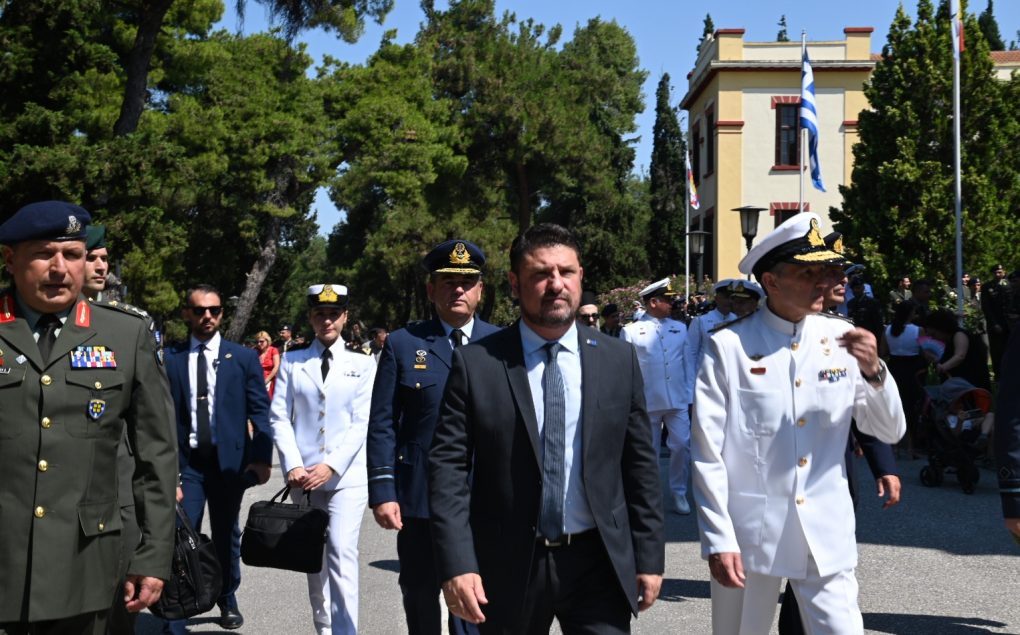
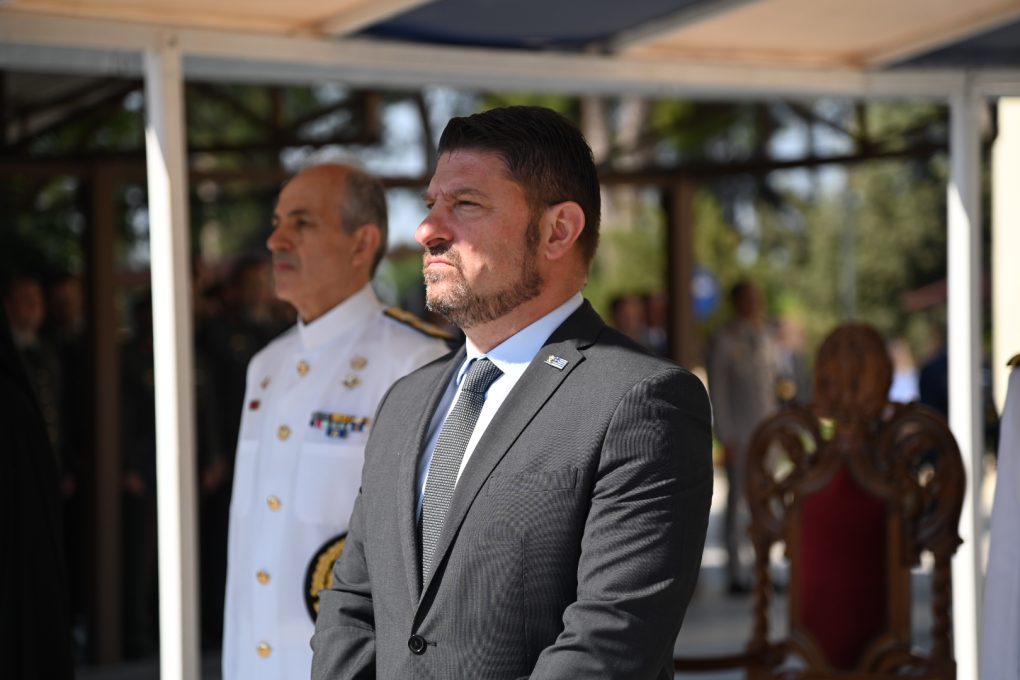
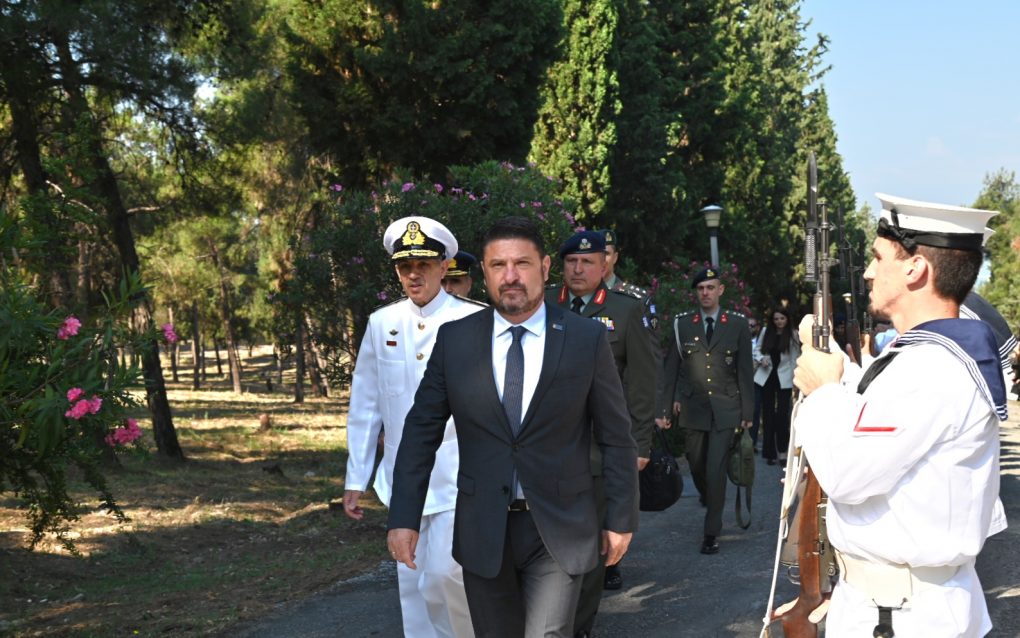
The Deputy Minister of National Defence, Mr. Nikolaos Chardalias, attended today the commencement ceremony for the graduating students of the 19th Training Series of the Supreme Joint War College, which took place at the College’s premises in Thessaloniki.
The ceremony was also attended by the Deputy Chief/HNDGS, Vice Admiral Ioannis Drymousis, representing the Chief/HNDGS, the Regional Vice Governor for Transport and Communications, Mr. Sokratis Doris, representing the Regional Governor of Central Macedonia, the Designated member of the Municipal Council for Civil Protection actions, Mr. Vasileios Moysidis, representing the Mayor of Thessaloniki, the Very Reverend Archimandrite Ignatios, representing His Holiness the Metropolitan of Thessaloniki, representatives of diplomatic and academia authorities, Armed Forces and Security Forces delegations, as well as graduates’ friends and families.
Two hundred seventy-six (276) Officers graduated in total, out of which 128 Hellenic Army Officers, 48 Hellenic Navy Officers, 65 Hellenic Air Force Officers, 1 Joint Corps Officer, 1 Hellenic Police Officer, 1 Hellenic Coast Guard Officer, 1 Fire Brigade Officer, 25 Officers from the Republic of Cyprus and 6 Officers from foreign countries [Egypt, Albania, Jordan, Bosnia-Herzegovina (2) and the Republic of North Macedonia].
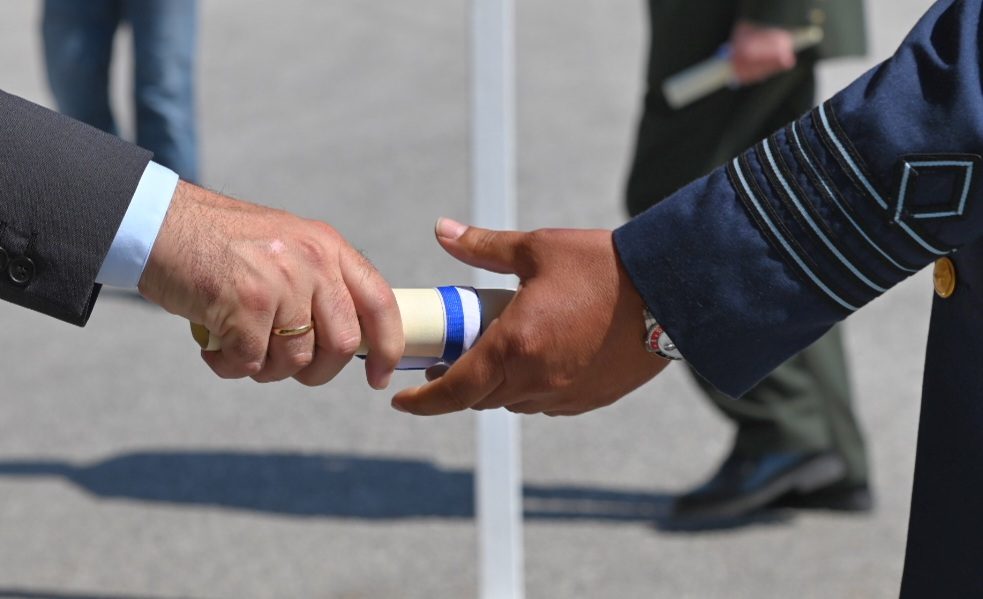
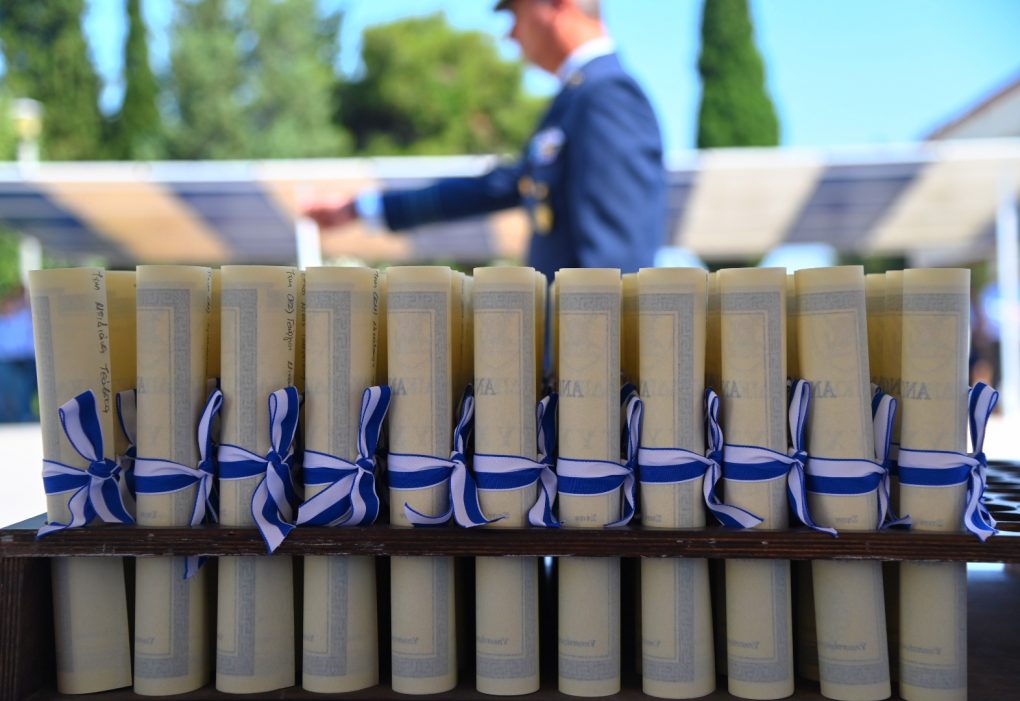
The Deputy Minister of National Defence conferred the diplomas on the graduating Officers, and delivered the following address:
“I am truly honoured to address today at the Supreme Joint War College you, the esteemed graduates of the 19th Training Series, who having successfully completed your demanding academic training, are now ready to fully meet the Service’s high expectations.
You were given the opportunity to attend one of the highest military colleges of the country, which is a high-level scientific body and at the same time, an Armed Forces’ joint college, which provided you with academic, operational and strategic training aiming at further enhancing your skills in the design, leading, and conduct of joint operations, as well as at educating you to staff national and allied HQs.
Thanks to its multifaceted curriculum, the College offered you specialized knowledge on Interoperability, Defence, and Security, and expanded your educational level in critical geopolitical subjects, enabling you on the one hand to strategically analyze the international and regional environment and on the other, to deliver constructive suggestions on concerns arising from National Defence and Security matters.
Ladies and Gentlemen,
There is no doubt that we live in a rapidly changing international environment, where volatility is prevalent, stability is contested, and peace is under threat.
There are many opposing trends which may at any time destabilize the global security system: the aggressive politics of revisionist forces, the explosive progress of innovative technological developments, the ever-increasing cyber-attacks, the energy insecurity, the threat of a food crisis, the migration or refugee waves, international terrorism, health crises and climate change.
The foregoing trends, along with the undisputable geopolitical, financial, and technological tug-of-war among state actors, progressively lead to all the more cases of military conflicts, hybrid crises, and asymmetric threats, which thwart the prevailing conviction that the nature of a threat and thus, its unfolding and handling means, are mainly determined and delineated in an accurate manner.
This dynamic global mosaic becomes even more perplexed by the recent, uncalled-for and illegal Russian invasion of Ukraine; a military undertaking which unfolded via an offensive war that forces us to re-assess the post-cold war Europe security architecture.
Russian revisionism is undeniably a source of intense concern as to the coherence and efficiency of international legal order while amicably settling disputes between state actors, and introduces new parameters in international relations.
It further challenges the admitted limits of interstate competition, tangibly proving that world peace can in no way be deemed undisrupted or taken for granted. The pursuit of a new model of security architecture, without recognizing any acts accomplished by force, has to remain the main goal of global politics, and in this context, the strict adherence to International Law must be the foundation of this very effort.
Of course, any violations of International Law in no way do they refute neither its value nor its useful character, since its provisions constitute the undisputed code of principles and values, which should govern all interstate relations.
This very code was jointly and freely established by the people through International Treaties and Conventions. It was also agreed by the people that it will be collectively construed by the United Nations Security Council which will assess the legal and moral status of the actions or interventions decided to be undertaken in order to find a solution to an international or regional issue.
In view of the above, and focusing on our near geopolitical environment, one may ascertain that not all states share the same commitment to international legal order, good neighboring relations, mutual respect and peaceful co-existence.
As against this provocative attitude, Greek diplomacy acts in a rational and decisive manner, highlighting all unlawful actions at a diplomatic level. It responds calmly and rationally without being carried away by the extreme inflammatory rhetoric, following a consistent policy of principles, always based on international legality and the EU acquis.
In this direction, pronounced, multidimensional and multi-leveled defence diplomatic efforts are being pursued via bilateral, trilateral and multi-lateral cooperation schemes, with countries such as the USA, France, the Republic of Cyprus, Egypt, Israel, the United Arab Emirates, Saudi Arabia, as well as with other regional and international partners and allies of our country which share the same principles and values.
Within this context, the Government and the Leadership of the Ministry of National Defence have placed the protection of our national interests at the forefront of our actions, with deterrence being the center of our defence planning.
To achieve this, we have planned and implemented in a coordinated manner the upgrade of the existing assets and infrastructure of the Armed Forces, whereas as the same time, we shield them with the most modern weapon systems, enabling them to respond to the challenges of both today and of tomorrow.
At the same time, we continuously and consistently reinforce our personnel, which has always been the cornerstone and the most significant force multiplier of the Armed Forces, both qualitatively and quantitatively.
In conclusion, I would like to reiterate that the Armed Forces, through their ongoing operational readiness, as well as their high combat force, constitute an indisputable critical Pillar of National Power; on the one hand, playing a highly crucial, dual and demanding role in safeguarding national independence and territorial integrity of our Country and on the other, contributing via their powerful deterring footprint as a tool to exercise an active defence diplomacy.
Dear Graduates,
With these thoughts, and convinced that you will live up to the high expectations arising from your graduation, I would like to wish you personal and family health and happiness, every success to your new duties, and all the best for the remainder of your career.
I urge you to seize every opportunity that you may be given in the future to leverage the knowledge you gained while studying at the Supreme Joint War College, and to make the most of it in the best possible manner, to the best interests of our Country!
Thank you”.