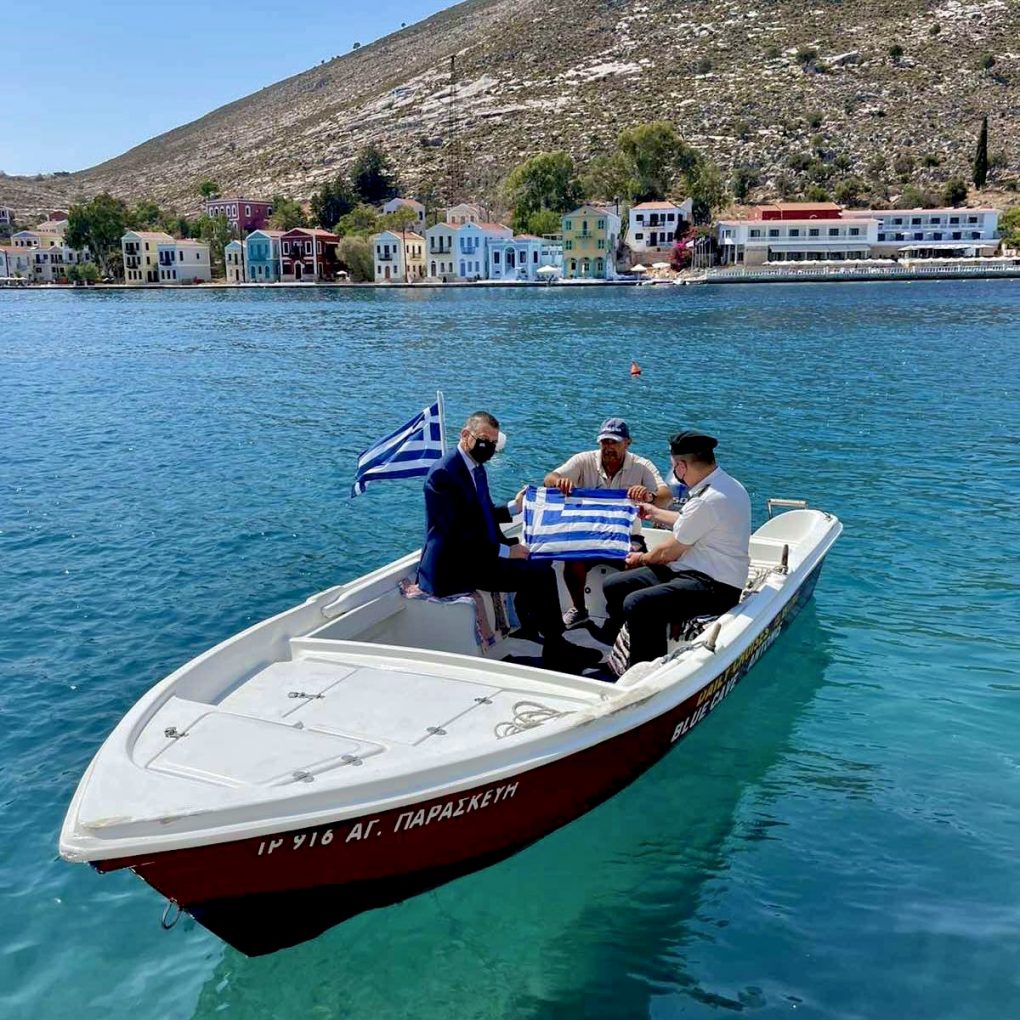




The Deputy Minister of National Defence Alkiviadis Stefanis visited Rhodes and Kastelorizo islands on Sunday 1 and Monday 2 August 2021.
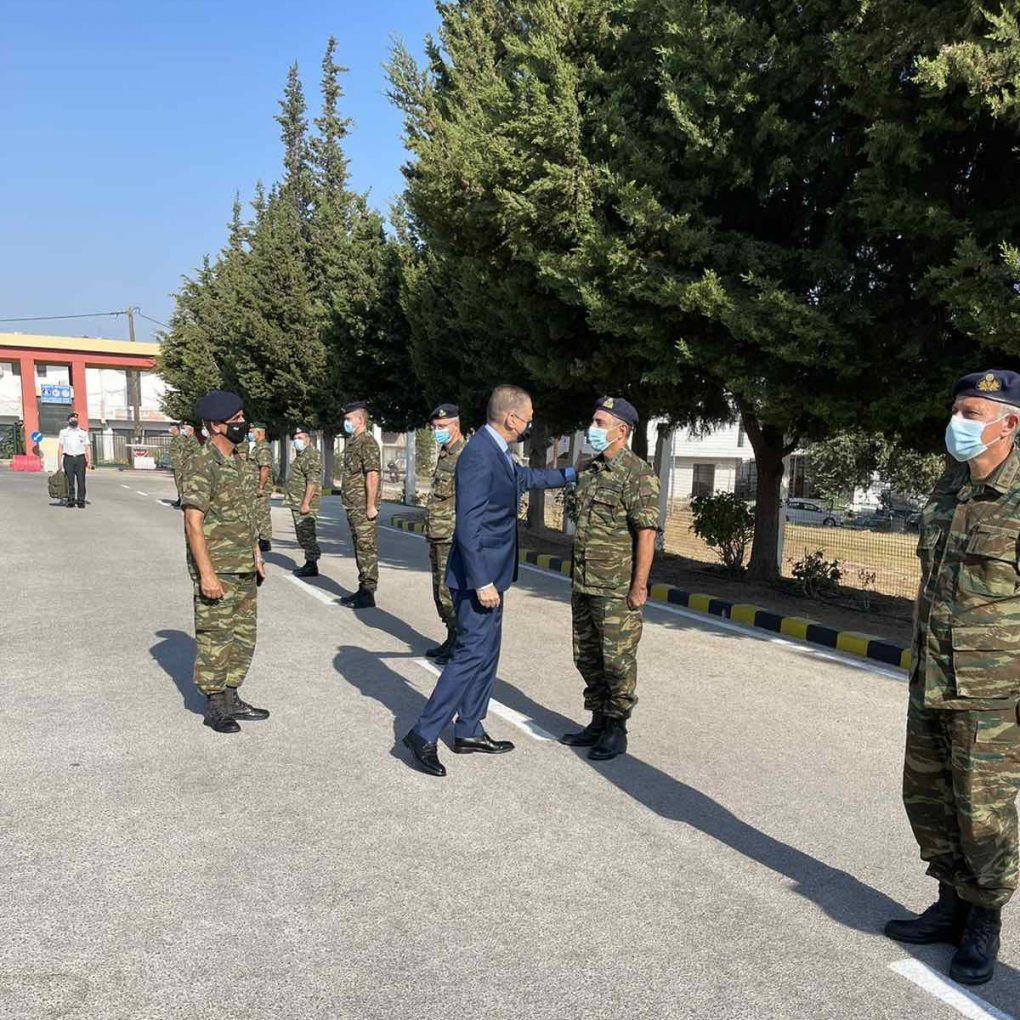
He visited the 95th Higher National Guard Battalions Command at Rhodes, where he was briefed on the ongoing activities, and discussed with the personnel.
He was also briefed on the Armed Forces’ contribution to the forest fires on the island, and he went to the affected areas and the threatened military camps.
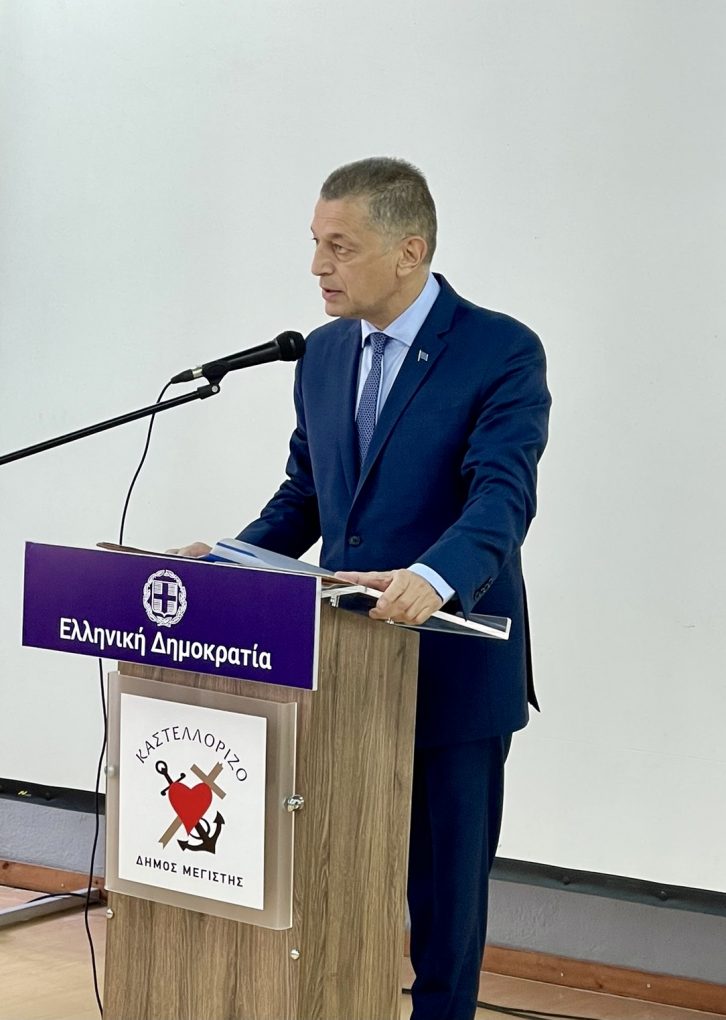
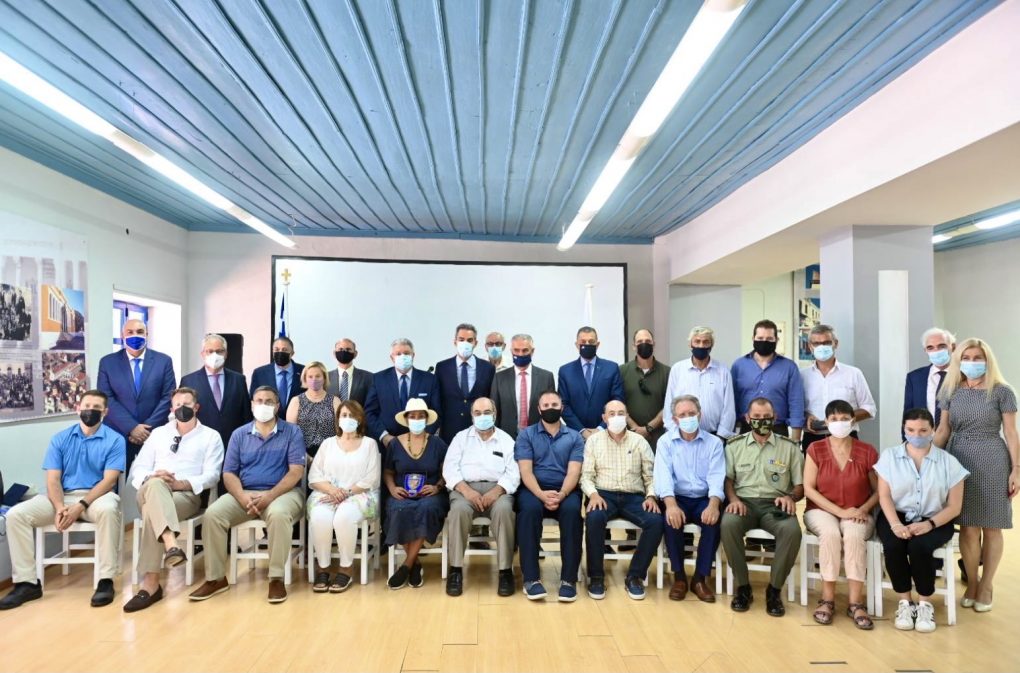
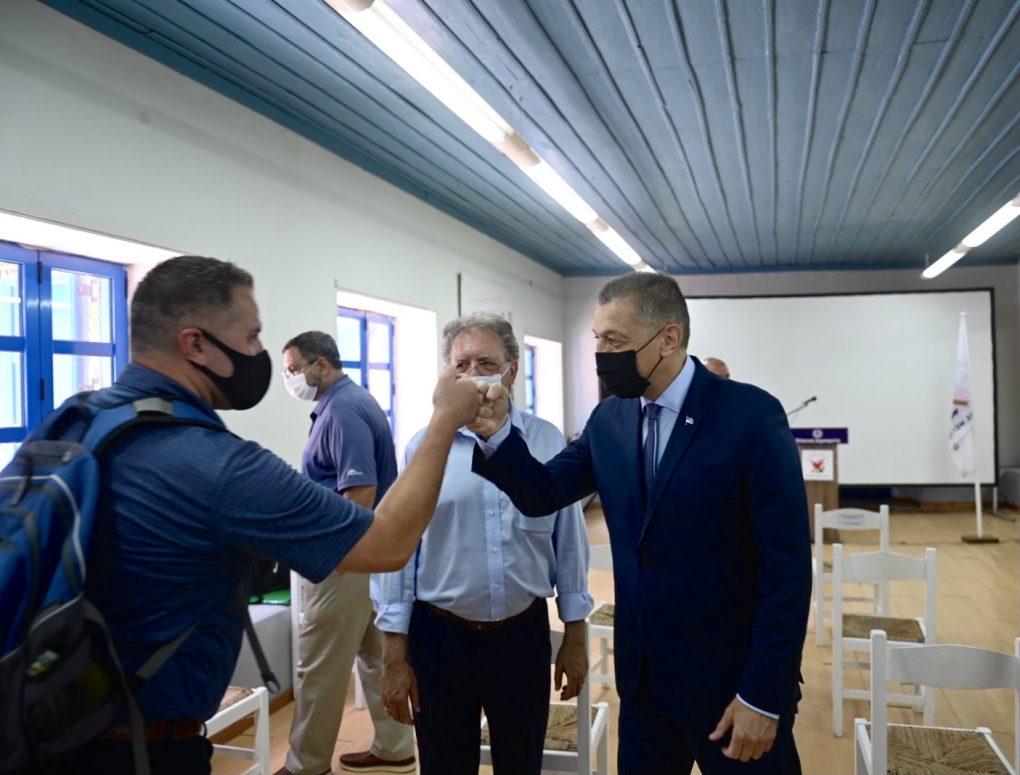
On Monday morning, he went to Kastelorizo, where he participated at a conference organised by the World Hellenic Inter – Parliamentary Association (WHIPA), on The Law of the Sea.
The conference was also attended by the Deputy Minister of Education Dr. Aggelos Syrigos, the Mayor of Megisti Mr. Georgios Sampsakos, the President of the Special Standing Committee Abroad the Diaspora and MP of Thessaloniki B’ Constituency Mr. Savvas Anastasiadis, the President of WHIPA and Senator Mr. Leonidas Raptakis, the Secretary-General for Public Diplomacy and the Greeks Abroad Mr. Giannis Chryssoulakis, as well as officials, representatives of the local community, and WHIPA members.
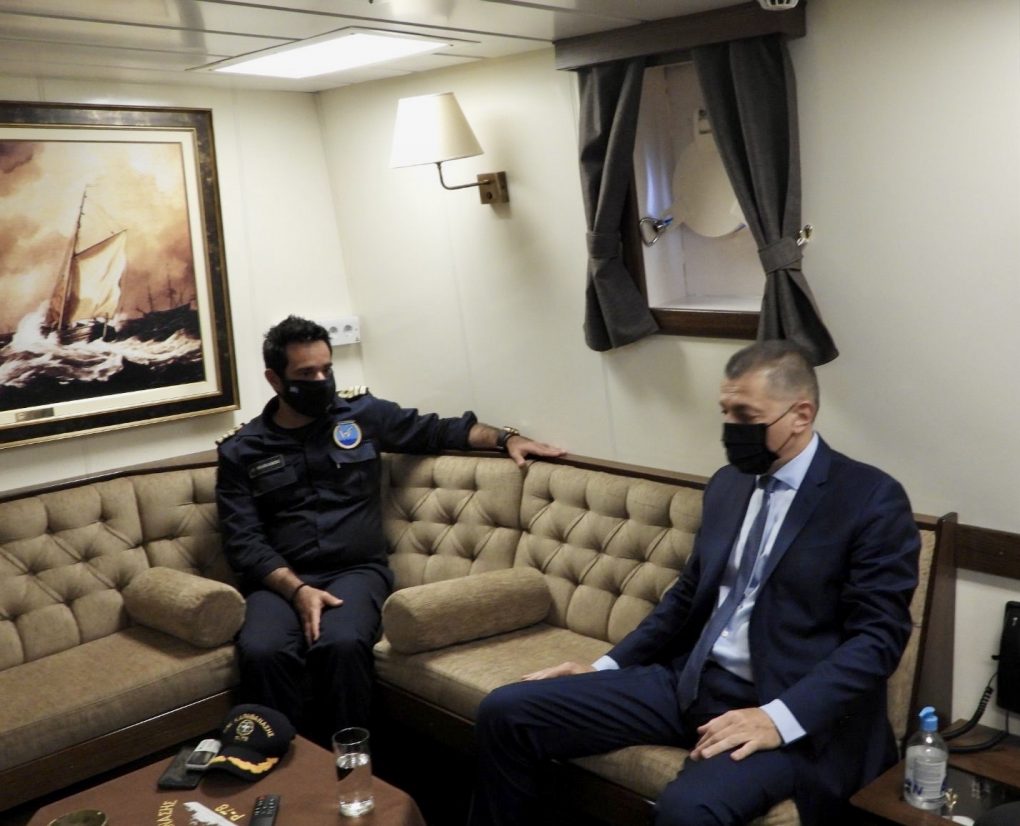
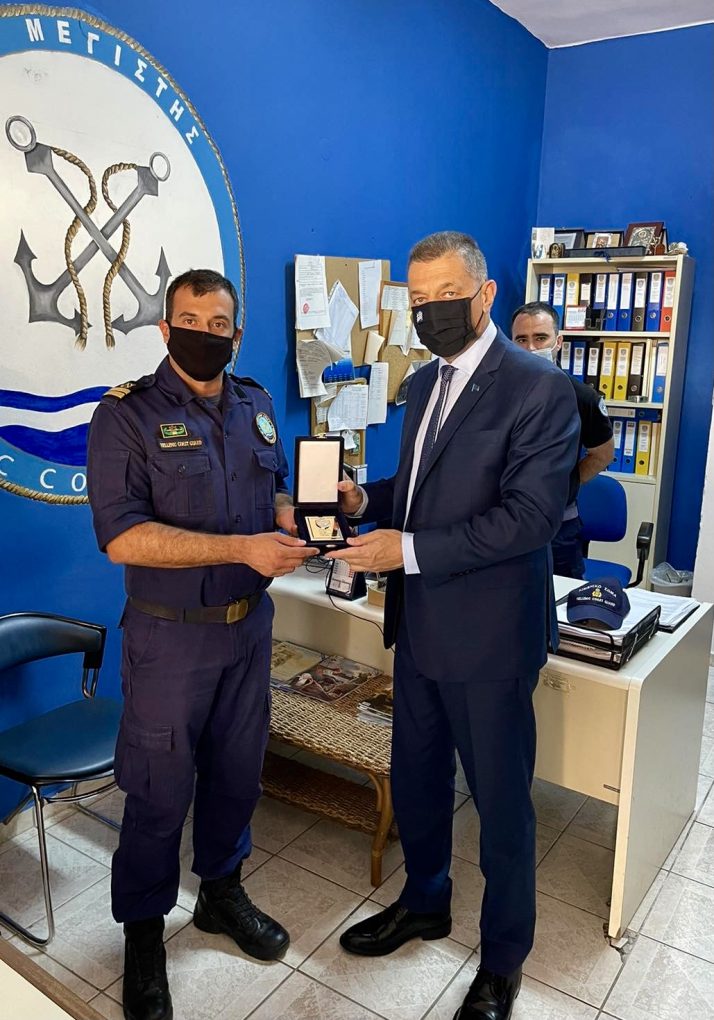
The Deputy Minister of National Defence also visited the gunboat “FPB KARATHANASSIS”, and the Port Station of Meghisti Island.
The WHIPA is an organisation established in 1996, by initiative of the Hellenic Government, and it has adopted significant resolutions to support Greek issues at international level.
The Greek version of the speech by the Deputy Minister of National Defence is the following:
“I am greatly honoured to be at today’s Conference on the Law of the Sea, which is organised in the context of the 13 General Assembly of the World Hellenic Inter – Parliamentary Association. The fact that this event takes place at Kastelorizo Island, which is one of the most remote from the mainland, and one of the most sensitive, areas of our national territory, adds special value to this circumstance.
In the course of humanity’s history, and the nations’ interaction development, the Law of the Sea represents a significant achievement within the framework of efforts made to establish international rule of law. Indeed, modern Law of the Sea undoubtedly acts as control over arbitrary use of violence, and outlaws approaches such as “power produces law”, in the relations between sovereign countries, thus providing international stability, enhancing legal clarity and limiting the disputes.
Our nation has always kept the principle expressed by Herodotus, more than two thousand years ago, that “we have land and a Country, as long as we have ships and the sea”. As a traditionally maritime nation, as a coastal country with a long coastline, and as a flag state, with a large and robust commercial fleet, Greece has always kept interest in the development and the proper implementation of the Law of the Sea. For this reason, it always participated in the negotiations preceding the signing of UNCLOS in 1982, which it ratified in 1995. Currently, Greece considers the principles enshrined in the Convention, including those who have customary effect and were consolidated by it, the cornerstone of international law and stability, across the world’s oceans. This view is incontestably shared by the vast majority of the community of nations.
Such an approach seems even more crucial, considering the fact that Greece is part of the European Union, which is also a party of the Convention. Therefore, we could very convincingly argue that the Greek sea borders and maritime zones are also European, so any violation of the Greek sovereign rights is also violation of the European sovereign rights.
Unfortunately, not all neighbouring countries share our adherence to the rule of law, mutual respect and peaceful coexistence. In particular, often violating its neighbouring countries’ maritime sovereign rights, launching illegal threats and promoting completely stale interpretations of the International Law, Turkey flagrantly disregards the most basic rules of the Law of the Sea, and tries to undermine the foundations of stability in the area of the Aegean Sea and the East Mediterranean. This behaviour only represents one part of Turkey’s overall illegal and destabilising stance, which extends from Caucasus to North Africa.
To this provocative and clearly unproductive stance, Greece responds by actively confirming and exercising its rights, under the Law of the Sea. The period of plain consolidation and the era of “we claim nothing”, belong to the past. For this reason, our Government signed the agreements on maritime delimitation with Italy and Egypt in 2020, and in 2021 it extended Greece’s territorial waters from 6 to 12 nautical miles, along its west coastline.
In parallel, we reserved our right to unilaterally extend the rest of our territorial waters, at any time.
This multidimensional and multilateral diplomacy is supported by the deterrent power provided by our Armed Forces, which we shall continue enhancing. No aggressor or international destabilise should have any illusion, regarding our adherence to defending all aspects of our sovereignty, as well as our ability to do this effectively, whenever and wherever needed.
In conclusion, I would like to congratulate the Municipality of Meghisti, as well as the World Hellenic Inter – Parliamentary Association, for this fruitful and exciting event. At the current period of global and regional turmoil, when Hellenism is once again distressed by a series of various challenges, our solidarity, our decisiveness, and our adherence to the rule of law are our guarantees that, once again, we will rise to the challenge”.