

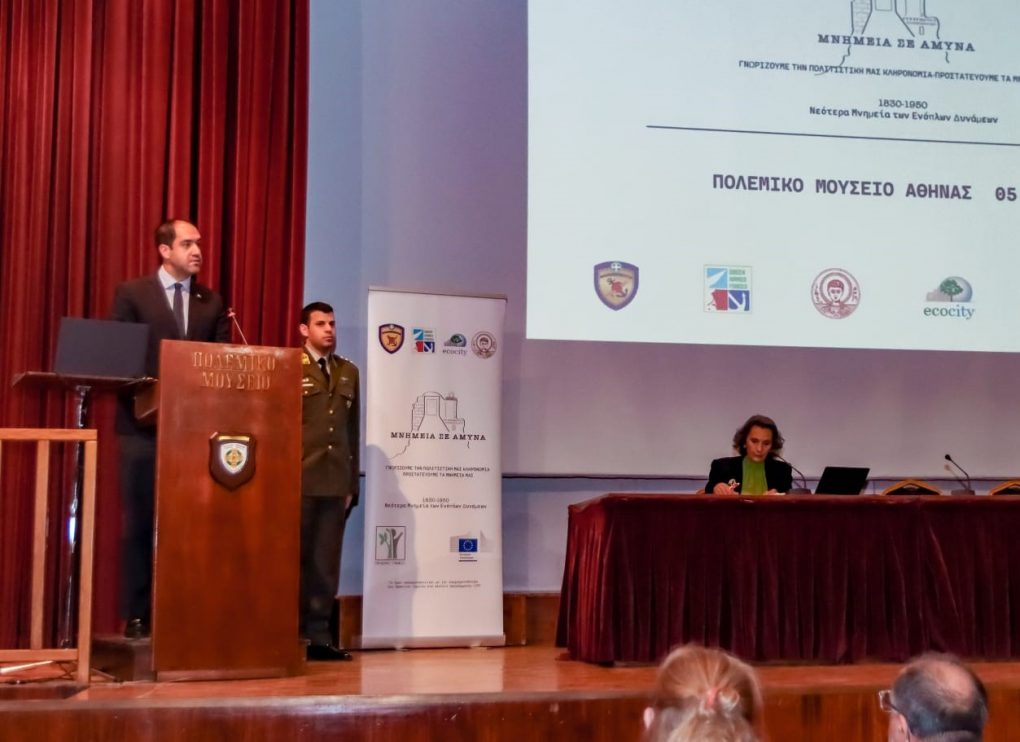
On Tuesday, 05 December 2023, the Deputy Minister of National Defence, Mr. Ioannis Kefalogiannis, attended the conference and presentation of the project organized by the Ministry of National Defence and ECOCITY on the subject “Monuments on the Defence: Getting in contact with our cultural legacy – Protecting our monuments”. The project was implemented under the scientific supervision of the Aristotle University of Thessaloniki and with co-funding from the Green Fund.
In his short address, Mr. Kefalogiannis emphasised that the project “Monuments on the Defence” is emblematic, since, for the first time, a complete survey is being made of the cultural legacy of the Armed Forces throughout Greek territory and is brought to the forefront in the light of managing climate change. Meanwhile, he stressed that the Ministry of National Defence has adopted a set of measures and policies set to contribute to dealing with the phenomenon in its totality, in the framework of a gradual transformation into an environmentally neutral economy.
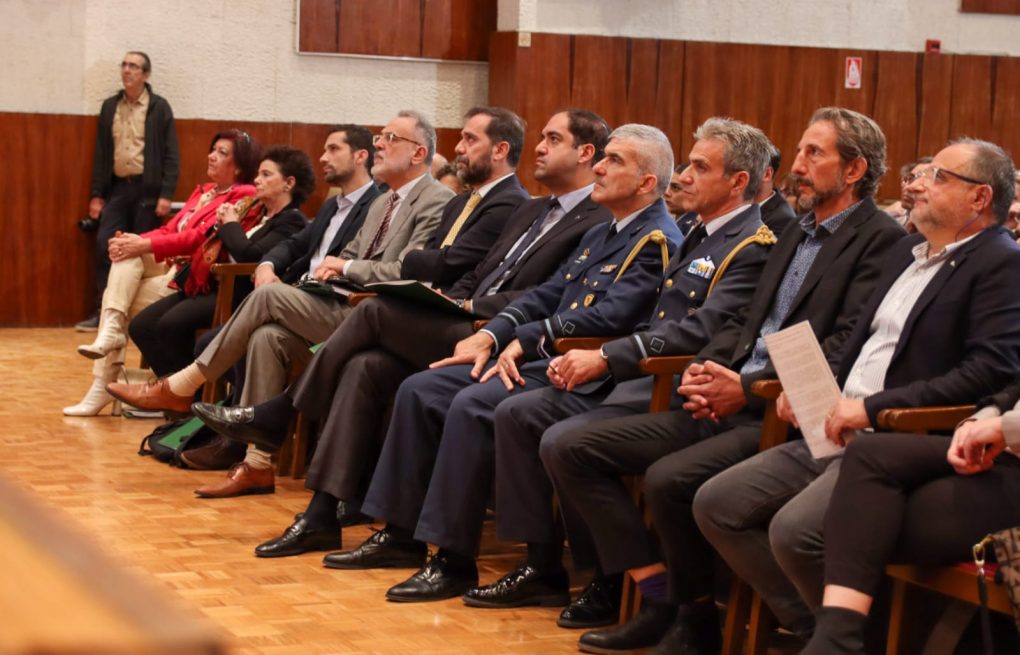
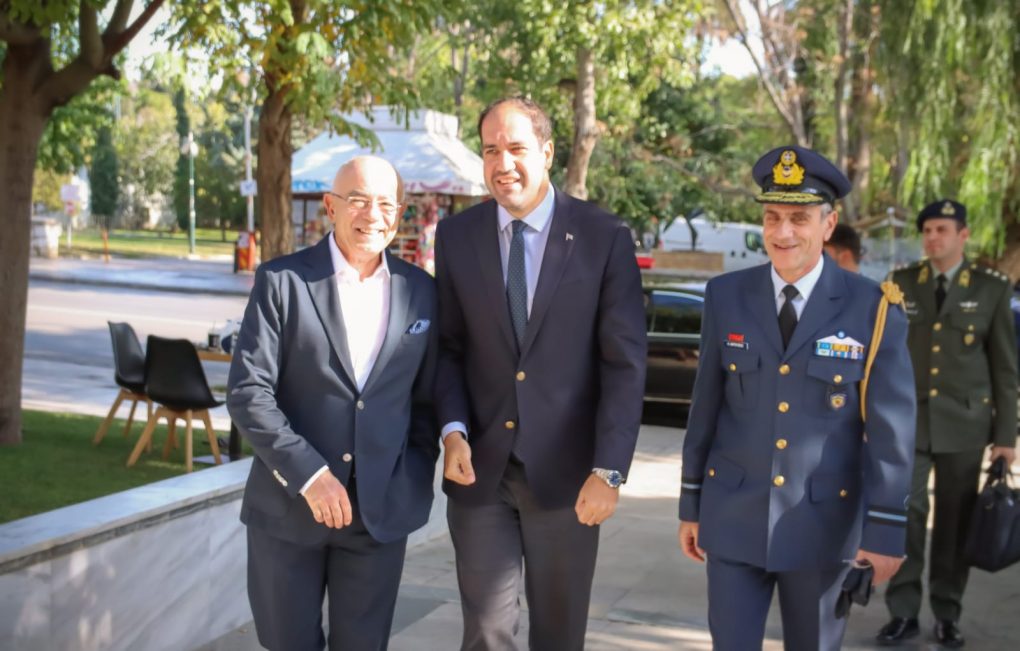
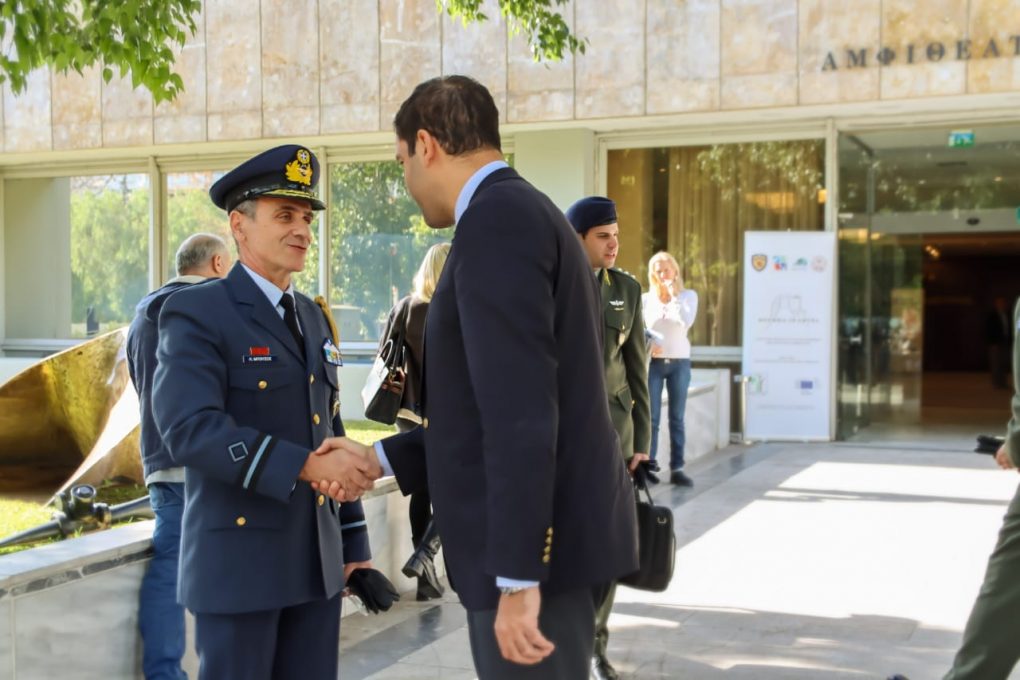
Also in attendance were, the Director of C Staff Directorate of the Hellenic National Defence General Staff, Major General (HAF) Christos Tellidis, the Director General of the General Directorate of Economic Planning and Support of the Ministry of National Defence, Brigadier General (HAF) Konstantinos Bouzos, the Chairman of the Executive Board of Ecocity, Dr. Kontsantinos Vafiadis, the Director and Chairman of the Executive Board of the National Observatory on Athens, Professor Emmanouil Plionis, the President of the Executive Board of the War Museum, Anastasios Liaskos, and Christiana Pirasmaki, Deputy Chairman of the Executive Board of Ecocity.
In his address, the Deputy Minister stated:
“Up until recently, we have known that climate change threatens our present and our future. Apparently, it is now also a threat to our past. As if by an irony of fate, it seems to threaten most the aspects of the past, which we deemed worthy for the younger generations to remember and safeguard in individual and collective memory, through monuments. So our monuments are on the defence – as correctly mentioned in the title of the project, whose findings we are discussing today. The monuments of the Armed Forces are vectors of modern Greek history; and in fact of its most glorious moments. Many of them have withstood hard battles. Today, however, they have to wage a new invisible battle, which can prove more dangerous: The one against the destructive results of extreme weather conditions, both in frequency and intensity. For this reason, recording, documenting, and estimating the effects of climate change on them is the first and perhaps most substantial step towards the protection and promotion of the cultural legacy of the Armed Forces.
In this view, the project “Monuments on the Defence” is emblematic. For the first time, the entire cultural heritage of the Armed Forces throughout Greek territory is recorded and brought to the forefront in the light of managing climate change, which one way or another affects all aspects of our lives. I do not know which other public services have undertaken a similar process, under this perspective. I feel however, that the Armed Forces are innovative in this sector. Due to the initiative of the Ministry of National Defence, the Aristotle University of Thessaloniki, Ecocity, and the Green Fund, which has funded the whole project, we have in o_ur hands today a cultural repository and – most importantly – a guide to strategies of conservation of monuments of the Armed Forces due to climate change.
I am particularly happy because the guidelines for the resilience of the monuments included in this guide and to be analysed in this conference invest – thanks to the scientific personnel who worked on them – in new forms of knowledge in order to adapt to climate change. This – we know well enough – requires a radical change in our way of thinking. Without an interdisciplinary approach and cooperation, without incorporating scientific knowledge in policymaking, without continuous education and training, without, finally, spreading this knowledge in order to raise the awareness of citizens and encourage their active participation in the protection of monuments, we can’t achieve much.
Climate change constitutes a complex challenge with undeniable consequences both for the mission and everyday work of the Armed Forces. Apart from adjustments to its operational planning, the Ministry of National Defence has adopted a bundle of measures and policies in order to contribute to a holistic solution to the problem, in the framework of our country’s transition to an environmentally neutral economy. Adapting the Armed Forces to climate change signifies an improvement to the energy efficiency of our infrastructure, the implementation of waste management programs, as well as the procurement of assets, systems, and materiel which have the least possible energy and environmental footprint. We can and must leave a positive footprint in the management of our cultural legacy. In this direction, prevention and monitoring are the best safeguard of our monuments. I would like to warmly thank all those who have contributed to this innovative program and the heritage they bequeath to the Armed Forces towards the protection of their cultural legacy.
Insofar as I am concerned, my participation in this collective effort as Deputy Minister of National Defence is a real honour. The political leadership of the Ministry, which I am representing, is not here to simply express its great satisfaction with this important task; it is here mainly in order to guarantee the continuation of this effort. It is our duty, in cooperation with the Ministry Directorates and the General Staffs to secure the necessary funding, which will allow us to implement everything required in the future in order to protect and highlight the monuments of our Armed Forces. With today’s event we set this effort upon strong foundations. And to achieve this we have many worthy allies.
I thank you.”