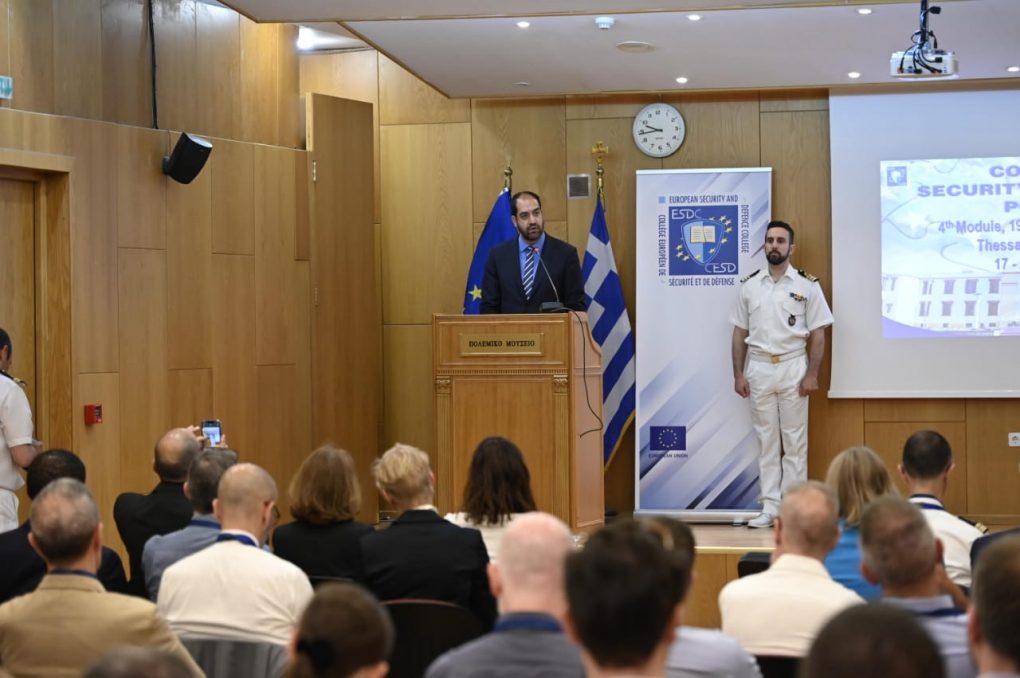
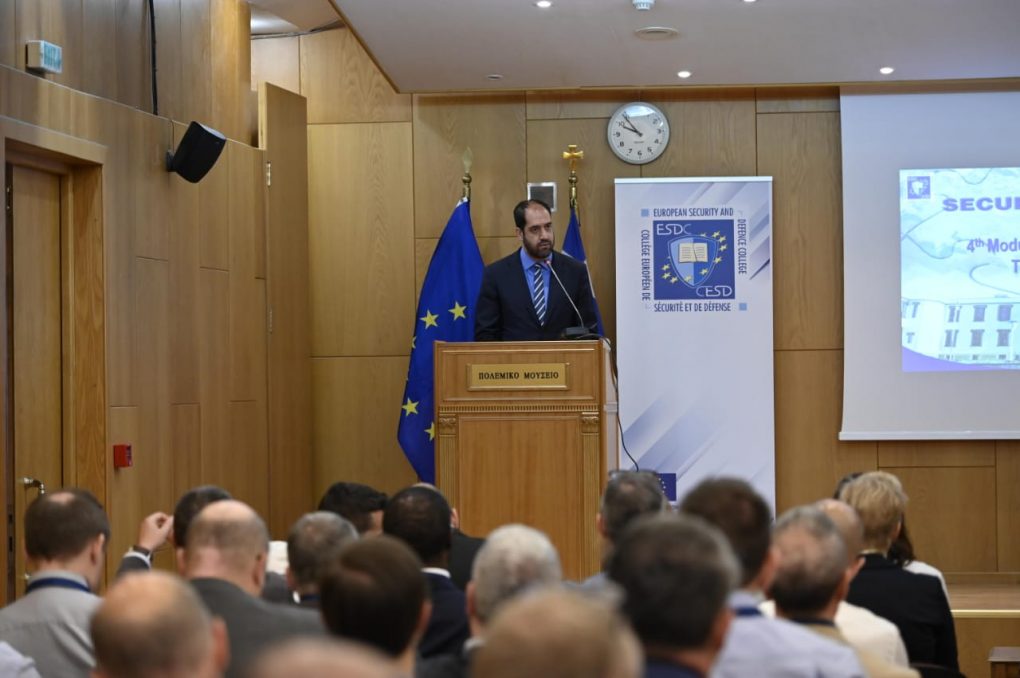
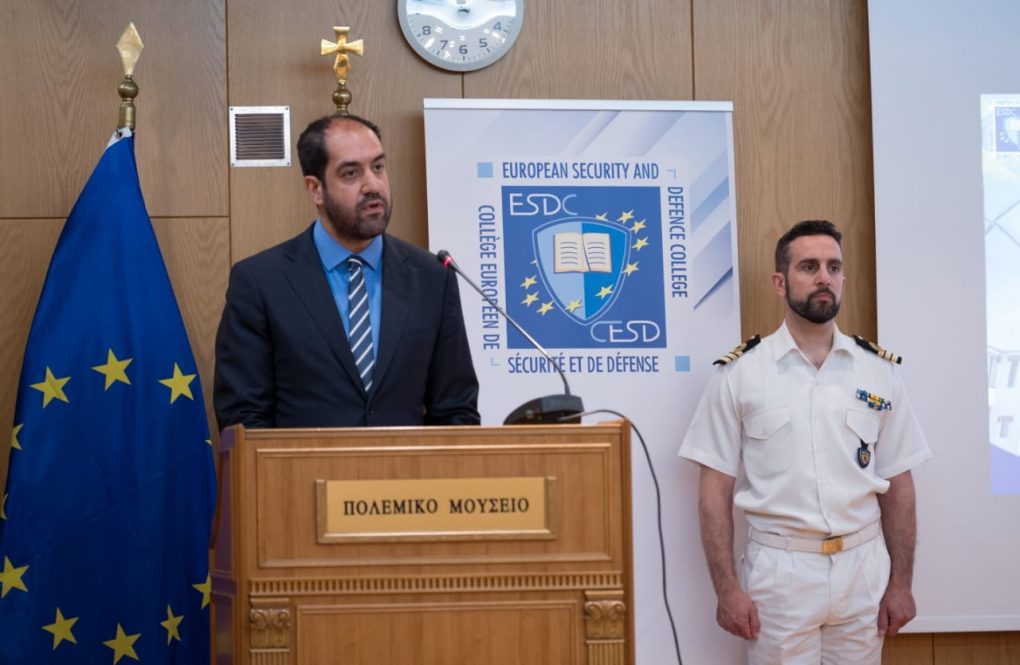
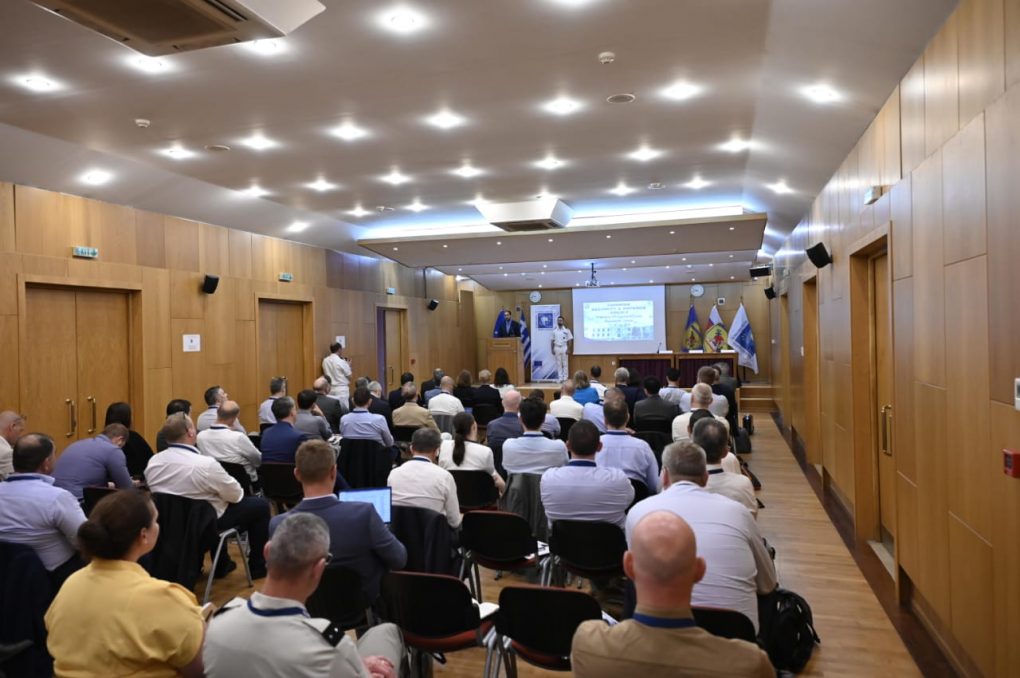
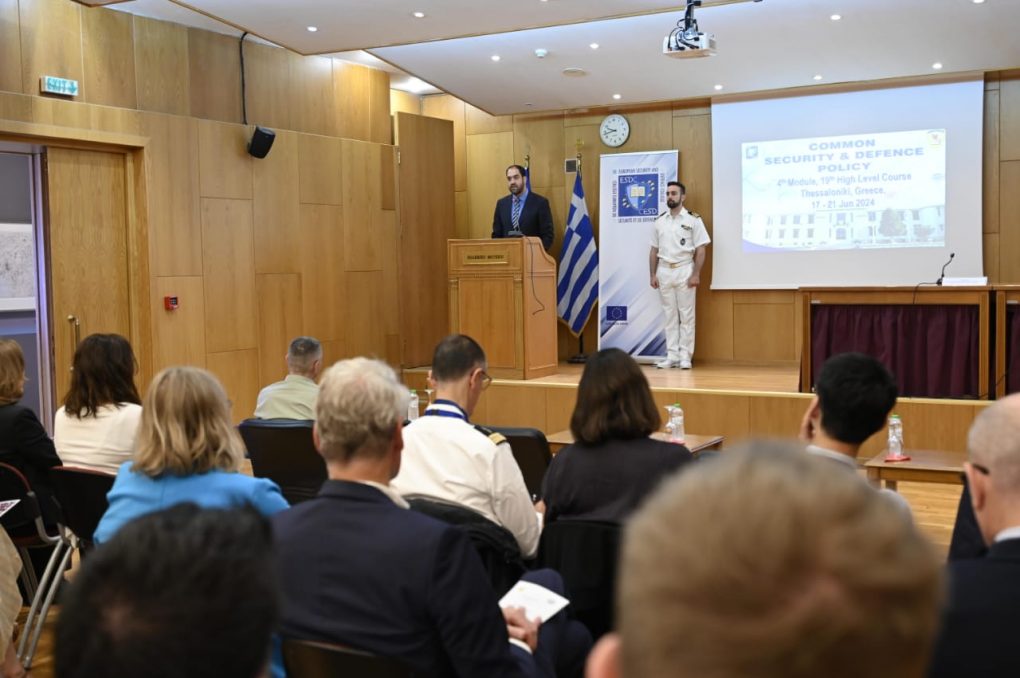
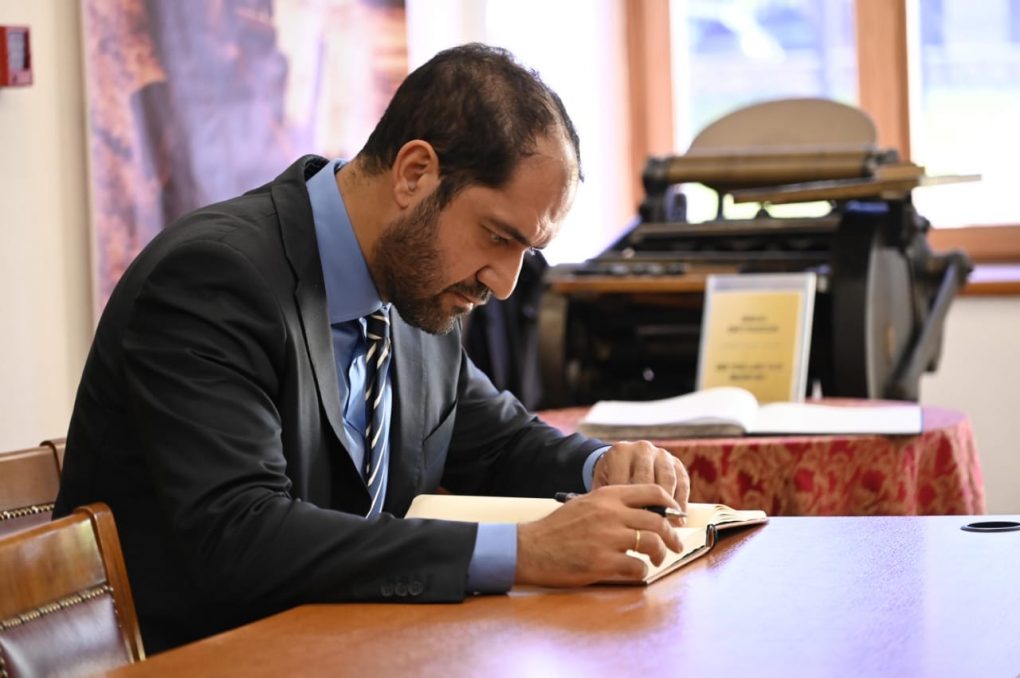
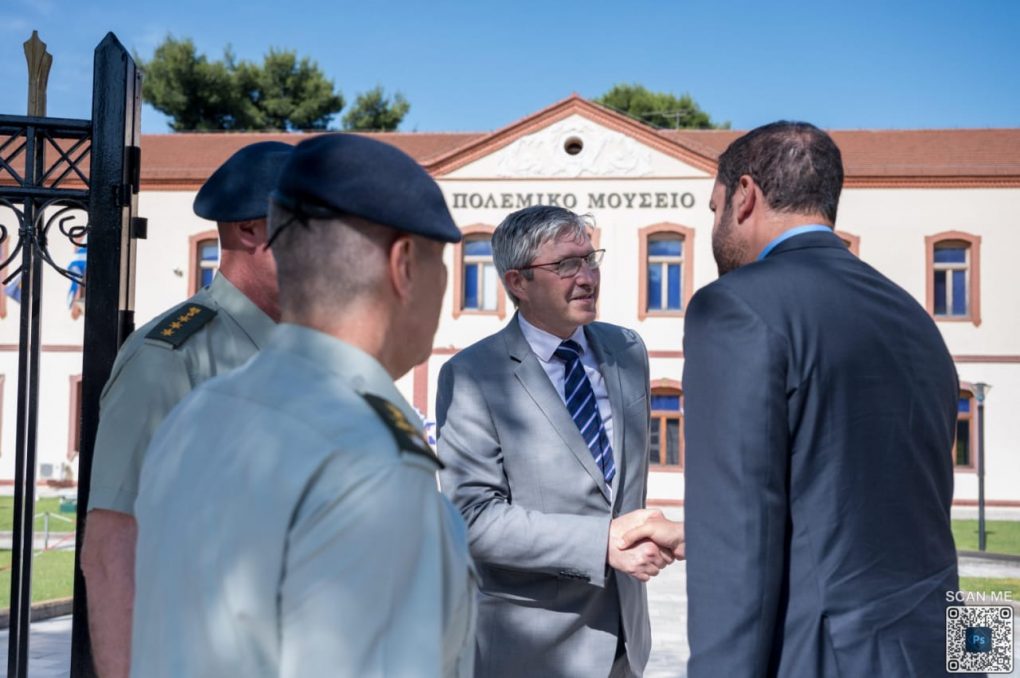
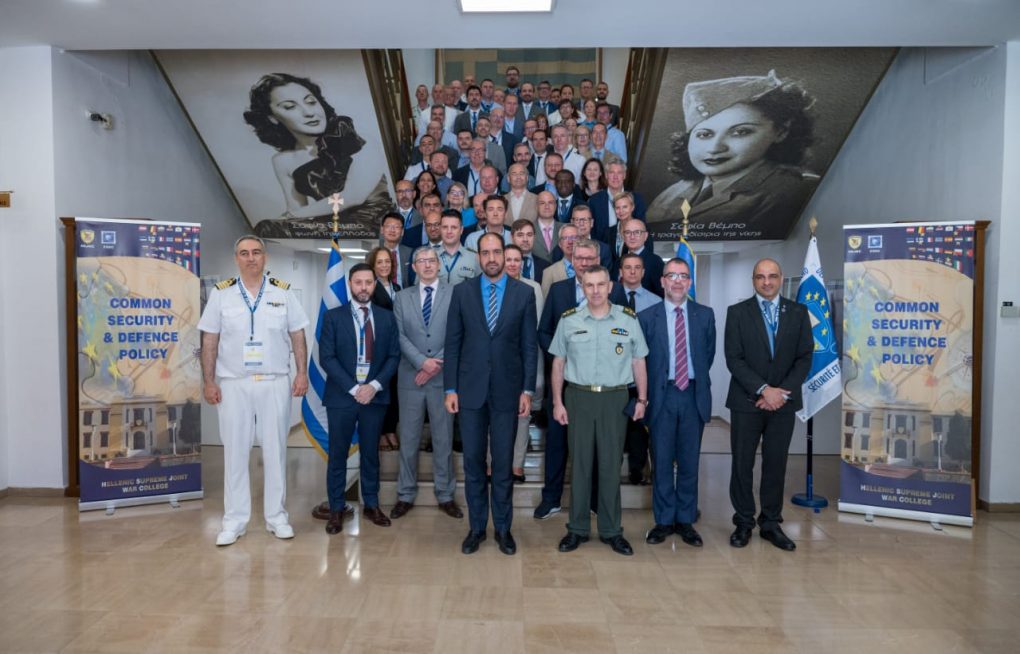
The Deputy Minister of National Defence Mr Giannis Kefalogiannis attended today, Monday 17 June, the opening of the works of the 4th European Security and Defence College, in cooperation with the Supreme Joint War College, held at the War Museum of Thessaloniki.
Mr Kefalogiannis, after having delivered an address, discussed with the participants, mainly diplomats and members of the academic community, from countries and institutions of the European Union. The discussion focused on issues of security, defence and development of European defence capabilities.
The Deputy Minister emphasised that there are margins for improvement in the Common Security and Defence Policy of the EU, at a quantitative, as much as at a qualitative level, so that it becomes more effective at managing security challenges, such as irregular immigration, border management, terrorism and organised crime. Meanwhile, he emphasised the need for the Union to strengthen its bonds with the UN, NATO, and other regional organisations, and cultivate partner collaborations with neighbouring states. Finally, he pointed out that Greece actively participates in military operations, in the framework of the Common Foreign and Security Policy and the Common Security and Defence Policy, in non-military missions, but also hybrid initiatives, and works towards achieving the strategic autonomy of the Union and establishing it as a reliable international factor of security and stability.
In his address, the Deputy Minister of National Defence stated, among others:
“Initially, allow me to express my joy at participating in the 4th Unit of the 19th high Level Course 2023/2024, in the framework of the European Security and Defence College, which provides specialisation and education, in the sector of the Union’s Common Security and Defence Policy (CSDP). I would also like to thank the Supreme Joint War College, as well as the European Institute for Security Studies, for co-organising the last teaching unit of ESDC HLC 2023 – 2024.
I will start by mentioning that, for the future of the CSDP, we have to take in consideration various and complex parameters, especially now that the EU is facing increasing threats and challenges, which range from conventional to international, including hybrid threats, cyberattacks, but also conflicts, as much within its immediate environment, as beyond it. All this turbulence, with the Russia – Ukraine conflict as its crowning, carries the reorganisation of world structures and relationships as a result in 2024. Europe faces a huge challenge after losing access to cheap Russian gas. Furthermore, the regional conflicts in the Middle East, and the great changes which have occurred in the Arab world in the last years, have contributed to the weakening of state institutions and to the creation of hotspots of instability. The conflicts in Syria, Iraq, Yemen, Israel, Libya, as well as the Houthi attacks have become an opportunity for the creation of a new security agenda, not only for the EU, but worldwide.
In this framework, the modern crises in the sectors of regional security and resilience of institutions require the redirection of priorities of member states and the Union, given the new responsibilities entrusted to it. Specifically, it is necessary to develop new abilities, incorporate equipment into new systems of security and deterrence, jointly produce and acquire defensive equipment, jointly conduct defensive research, and finally, achieve synergies with other intergovernmental regional security agencies, organisations, and international partners. Developing a structured procedure of decision-making and measure-taking is necessary for facing a new type of threat, such as outward malicious influences (hybrid threats) or cybercrime (cyber threats), which have become priorities in the Union’s strategic analysis. The release of resources, both at EU and national level, as well as their effective distribution, is a fundamental requirement of the implementation of the targets of the Strategic Compass for Defence and Security in 2030.
As a new landmark document, the Compass marks the road to the Union’s Common Security and Defence Policy, and describes the common strategic goals of the EU and its member states in the security and defence sectors, until 2030. Regulations such as those which determine the reinforcement of the European Defence industry through the common supplies act, in the framework of the current fiscal framework (2021-2027 MFF) follow this new transformation. The so-called Permanent Structured Cooperation (PESCO) refers to the cooperation between EU member states, which focuses on reinforcing the civilian and military crisis management and the intensification of cooperation for the development of defence capabilities, including the creation of funding mechanisms, which are an addition to the European CSDP tool kit.
A necessary prerequisite for achieving an integral approach to security is the reinforcement of the CSDP. The CSDP policy must be improved upon qualitatively and quantitatively, in order to equip itself with the requisite capabilities it needs in order to respond more effectively to today’s complex security challenges, such as irregular immigration, border management, terrorism, and organised crime. At present, the EU is conducting 21 CSDP operations and missions, including nine military ones: The Mediterranean operation EUNAVFOR Med Irini, which aims at reinforcing the UN arms embargo against Libya, and the recent EUMAM training mission (Ukraine) are indicative examples of the will of the EU to become a guarantor of international security. Sending military aid from the EU to Ukraine (EUMAM, Ukraine) aims to reinforce the capability of the Ukrainian Armed Forces to defend their country’s territorial integrity, within its internationally recognised borders, against the Russian threat, setting a new landmark for the EU in its decade long progress towards emerging as an independent safety factor.
At this point, I would like to mention that Greece is leading in the defensive naval operation ASPIDES, for the restoration and the safeguarding of the freedom of navigation in the Red Sea and the Gulf Area, under the guidance of the Hellenic European Union Operations Headquarters (EL EU OHQ) in Larisa. Greece has, from the start, been one of the most steadfast supporters of the development of a Common Foreign and Security Policy, including the creation of a common European identity on matters of defence and security. Dedicated to European solidarity, Greece actively participates in military operations, in the framework of the Common Foreign and Security Policy and the Common Security and Defence Policy, in non-military missions, and hybrid initiatives towards achieving the strategic autonomy of the Union and establishing it as a reliable international factor of safety and stability.
I would also like to mention the need for a Common Security and Defence Policy, with a view to the future. This will require new and continuous efforts, as well as more investments in innovative technologies, to develop new cutting edge military capabilities, to cover strategic gaps and reduce technological and industrial dependences. Therefore, the EU is obliged to reinforce its cooperation with the UN, NATO and other regional organisations in Europe, Africa, and the Far East, deepen its relationships with countries with similar perceptions, and cultivate partnerships with neighbouring countries in the Western Balkans, the Middle East and North Africa.
Closing, I would like to thank you for your choice to participate in this high quality program, which takes place here, in Thessaloniki. It is an excellent opportunity for everyone, in order to reinforce our knowledge background, through this multifaceted approach, which contributes decisively to promoting a common European culture of safety and defence. Reinforcing the dialogue between policemen, civilians, military personnel, experts and diplomats creates a framework of innovative thinking, which promotes mutual understanding between different entities of the Common Security and Defence Policy, and bridging the gap between policy and practice. By way of conclusion, I would like to wish that all capabilities of this specific program be utilised, in order that you extend your high level skills, which are necessary in the modern operational environment.”