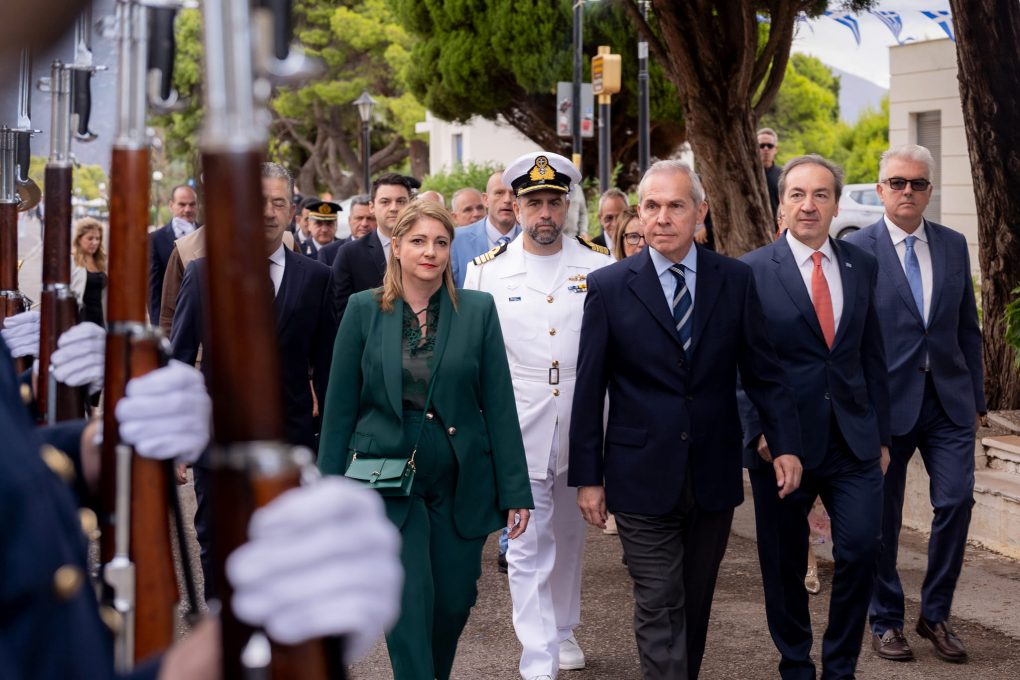
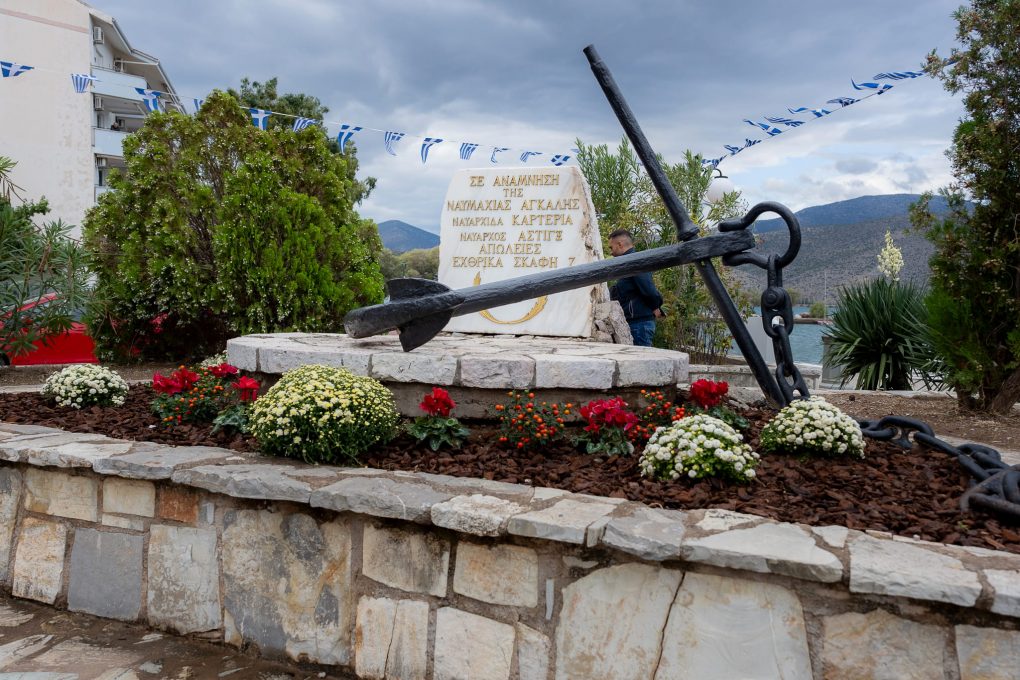
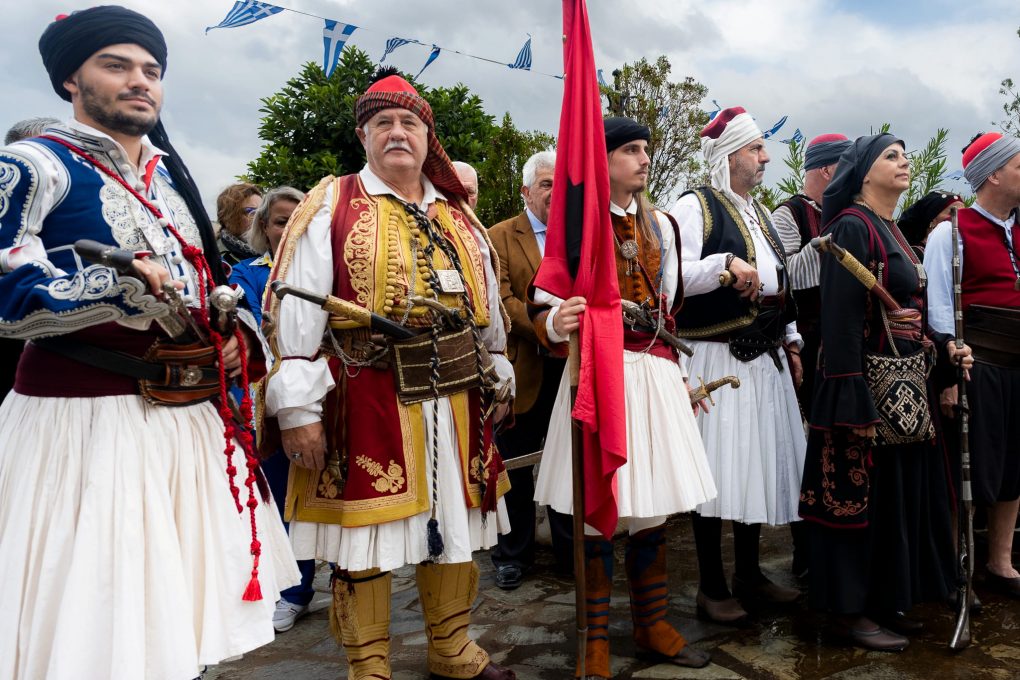
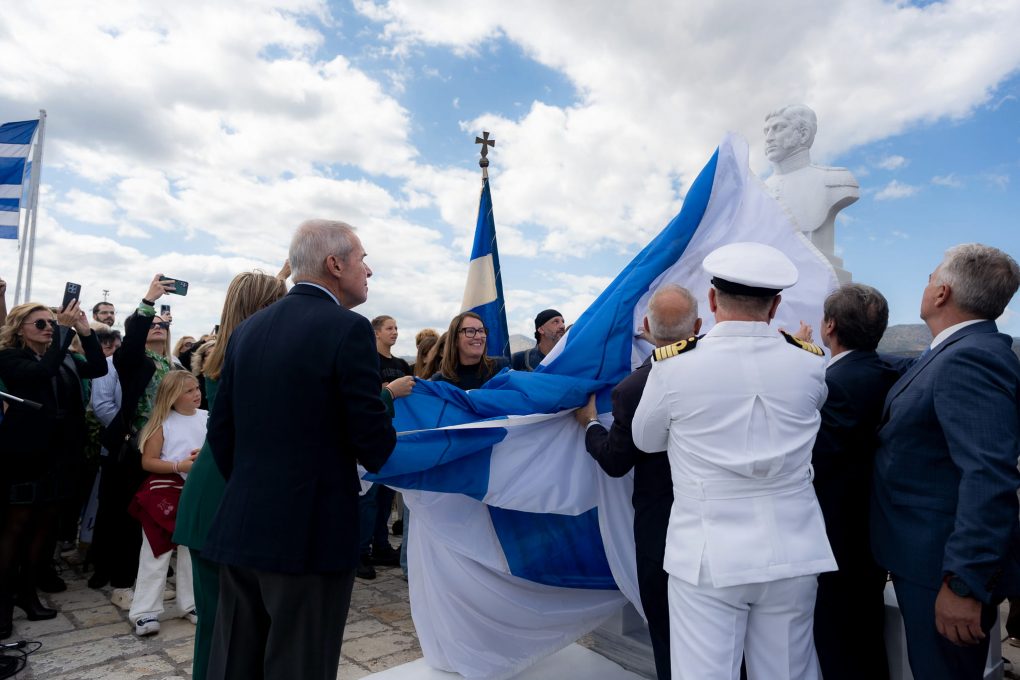
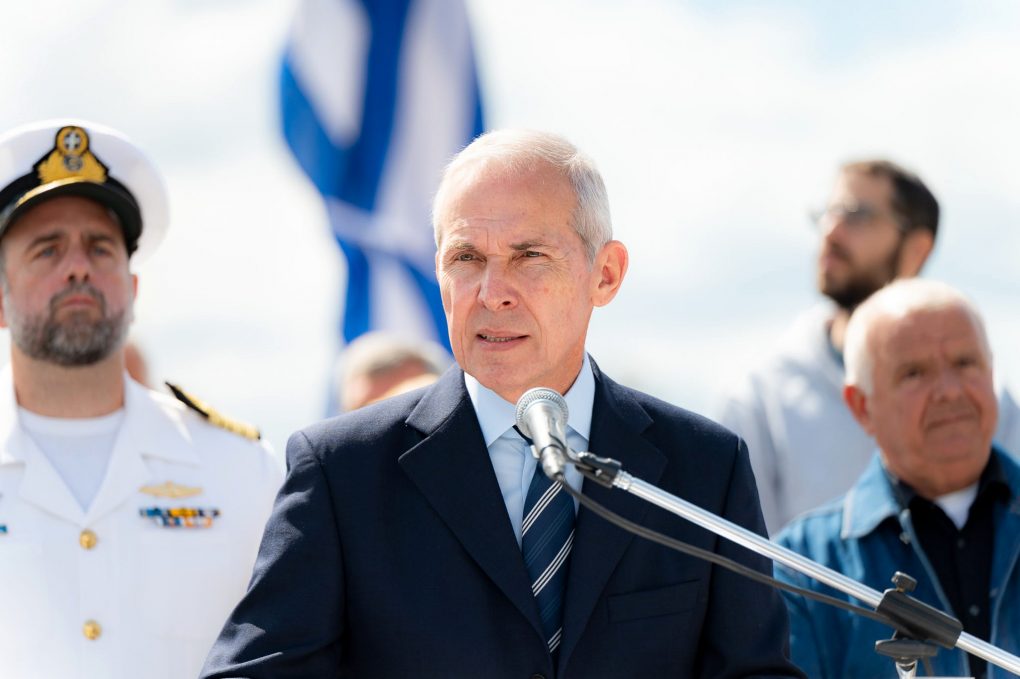
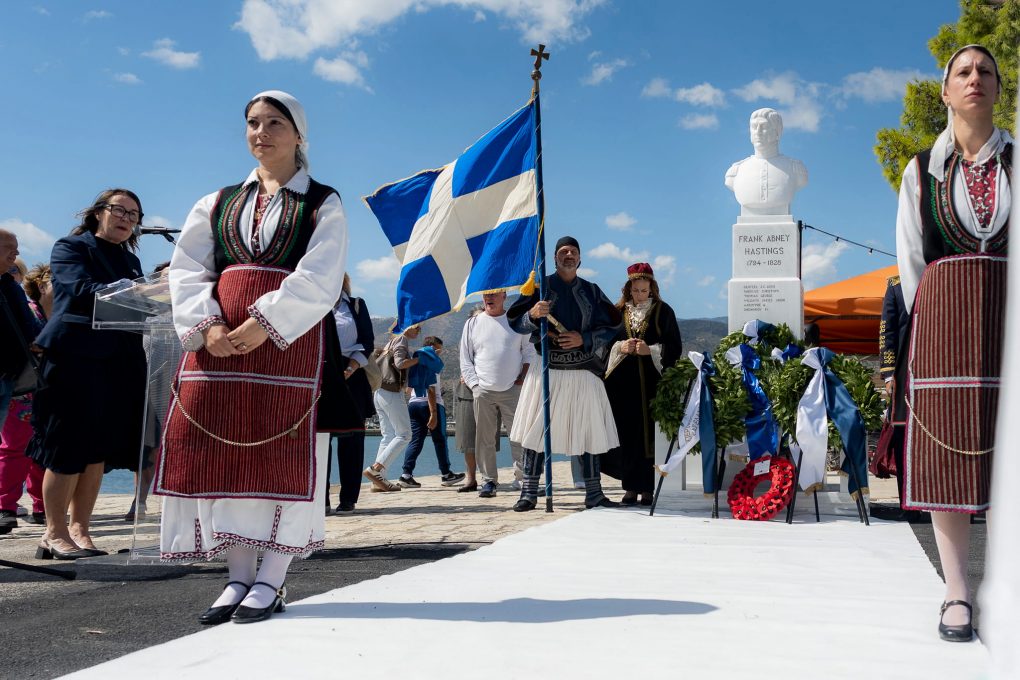
The Deputy Minister of National Defence Thanasis Davakis attended on Sunday 27 September 2026, the unveiling ceremony of the bust monument of Philhellene British Commander Frank Abney Hastings and the monument honouring the first Greek steam-powered warship “Karteria”, in Itea.
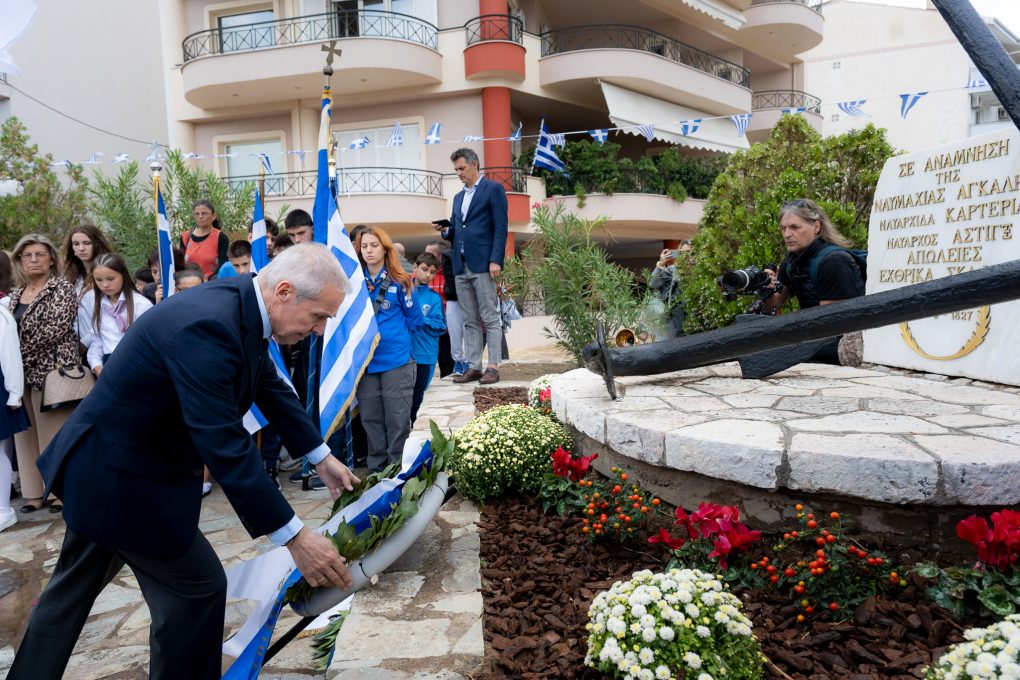
Mr. Davakis attended the Official Doxology at the Holy Cathedral of the Annunciation of the Virgin Mary in Itea, officiated by the Metropolitan Theoktistos of Fokida. He then visited the Agali Fallen Heroes Monument, where he attended the memorial service and the wreath laying, while following the conclusion of a student and military parade, he delivered the keynote address during the main unveiling ceremony.
Also present were the Deputy Minister of Justice Ioannis Bougas, the representative of the Chief HNDGS Captain Nikolaos Sartzis, the Deputy Ambassador of the United Kingdom Robyn Goldsmith, the Deputy Regional Governor of the Regional Unit of Fokida Pegky Aravantinou, the Mayor of Delphi Panagiotis Tagkalis, and the President of the Museum of Philhellenism, retired Brigadier Konstantinos Velentzas.
In his address, Thanasis Davakis stated amongst others the following:
“Today, we are not merely unveiling the bust of a man who fought in the Greek Revolution. We are paying tribute to a man who chose Greece. To an officer who abandoned the safety of his homeland, devoted his knowledge, his wealth and, ultimately, his very life to the struggle for Greek Independence. To Frank Abney Hastings.
One of the most important figures of Philhellenism; a pioneer of naval technology; a warrior whose name is associated with the birth of the National Fleet and with one of the most glorious, albeit lesser-known, victories of the Greek Revolution.
Hastings arrived in revolutionary Greece in 1822. He did not, however, come merely as an observer of a struggle that had stirred the hearts of Europe. He did not confine himself to declarations of support. He chose to fight. And it is precisely this choice that lends particular significance to his presence in the Struggle.
Because, in Hastings’s case, Philhellenism was not merely an idea. It became action. It became a sacrifice. It became a struggle. And ultimately, it became a sacrifice. As a former officer of the British Royal Navy, Hastings realised early on something we now take for granted: that naval power does not depend solely on the number of ships.
It depends on technology. On training. On discipline. On tactics. And, above all, on a person’s ability to translate all of these into results on the battlefield.
In 1824, he submitted a proposal to the Greek command for the acquisition of a steam-powered warship. However, he did not stop at merely making the proposal; he fought to see it through and even offered part of his personal fortune.
It was from this endeavour that the “Karteria” was born. The ship that was destined to link its name forever with Greek maritime history. With the arrival of the “Karteria” and the frigate “Hellas” in late 1826, something more profound began to change. The naval Struggle, which until then had relied primarily on the contributions of the major maritime islands and their private fleets, now acquired the first ships belonging to the rebellious Nation itself.
From the “Karteria” of 1826 to the modern Navy, the means have changed radically. One principle, however, remains unchanged: technology acquires value when it is in the hands of trained personnel, when it forms part of a coherent strategic concept, and when it serves a clear national purpose.
May the bust monument we are unveiling today stand as a lasting testament to the Greek State’s gratitude.
And may it serve as a reminder to future generations that Greece does not forget those who stood by her side in her darkest hours”.