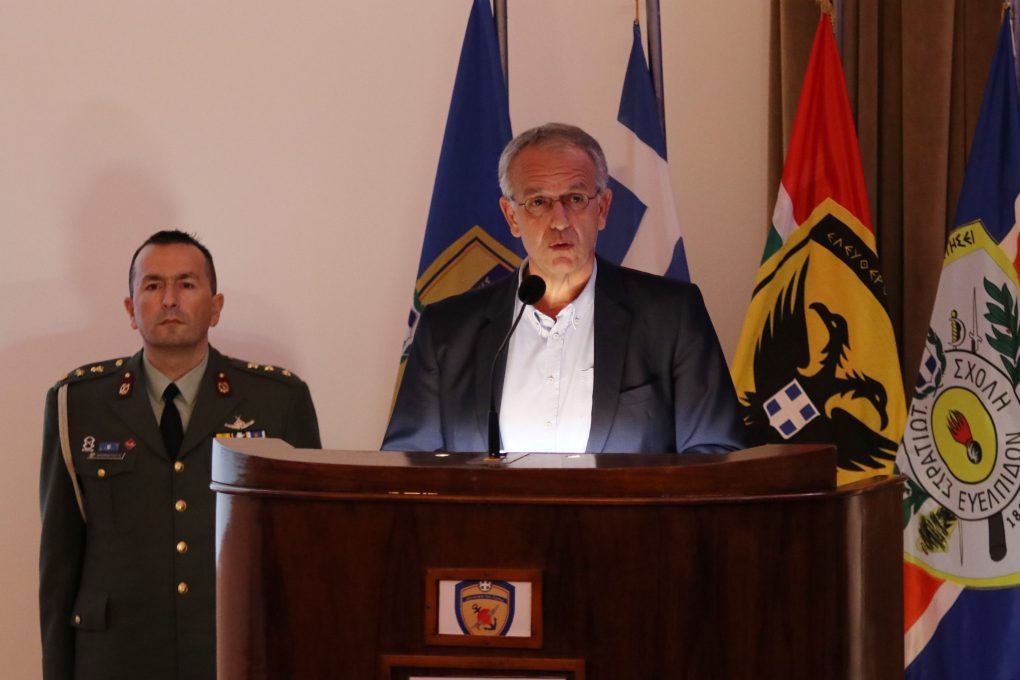
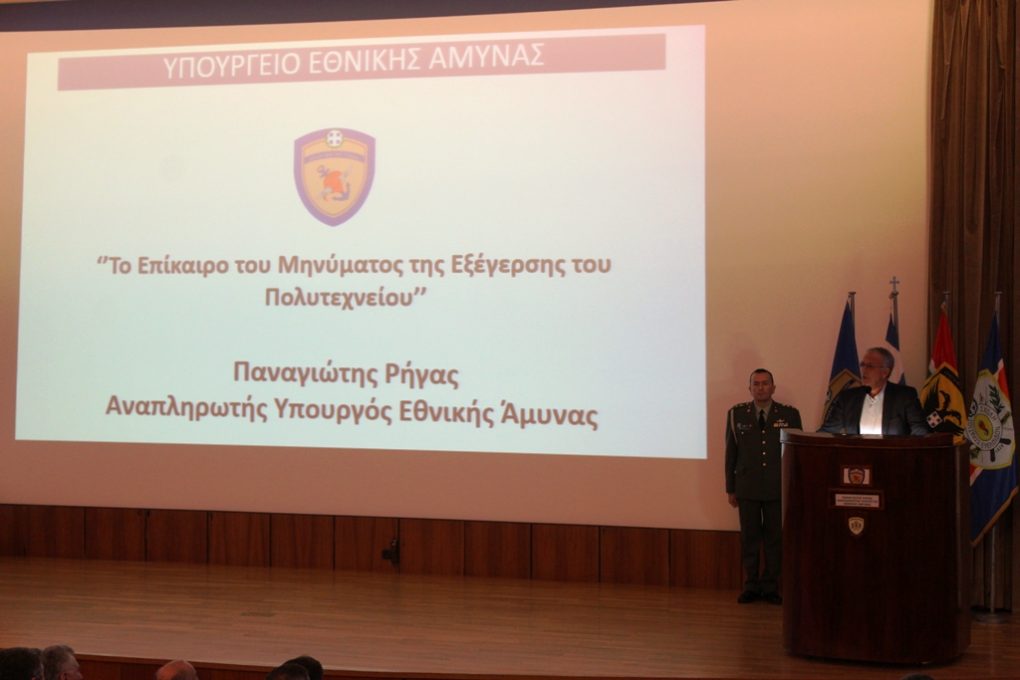
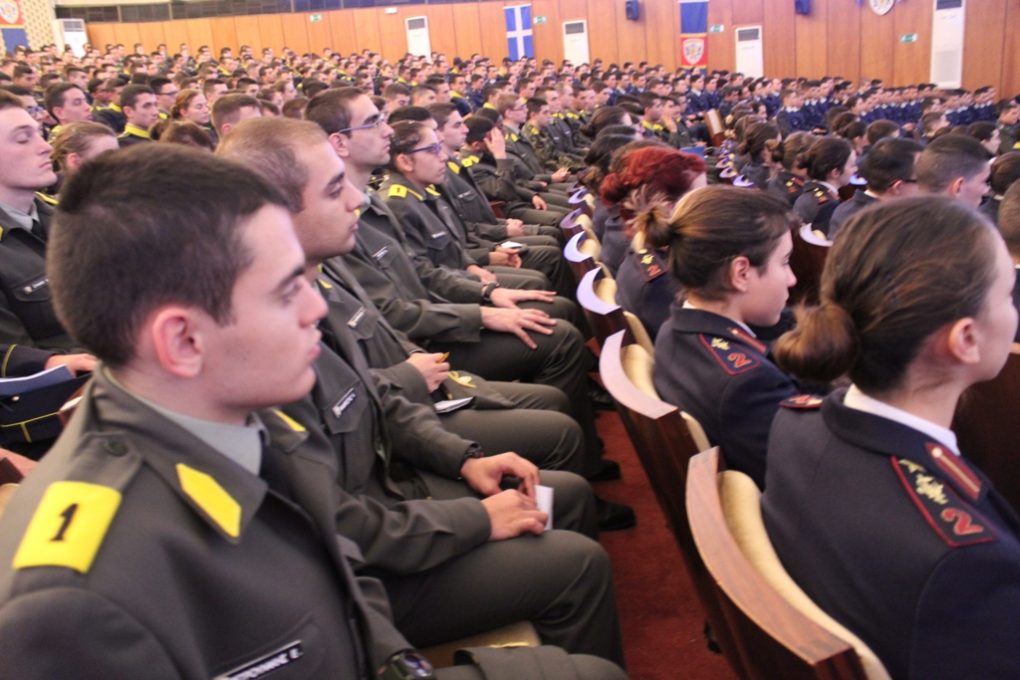
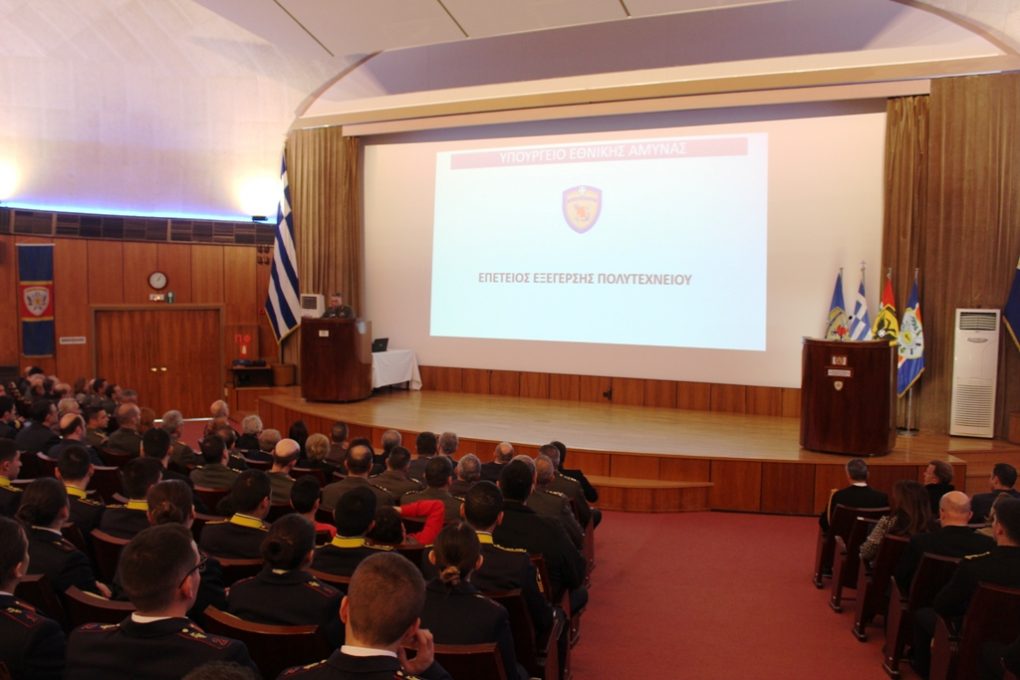
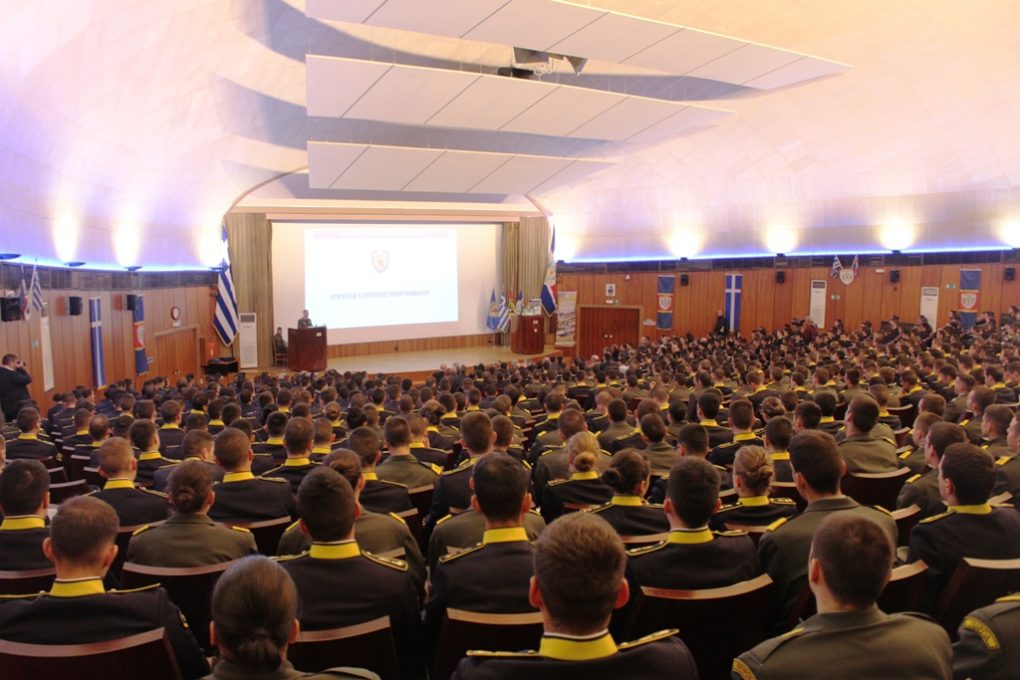
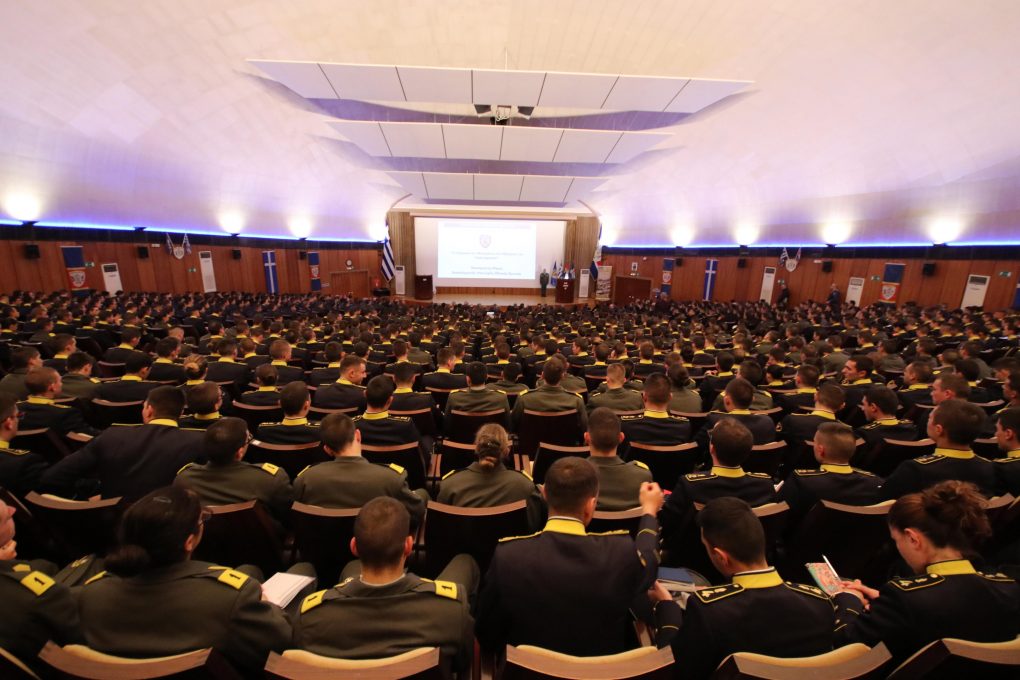
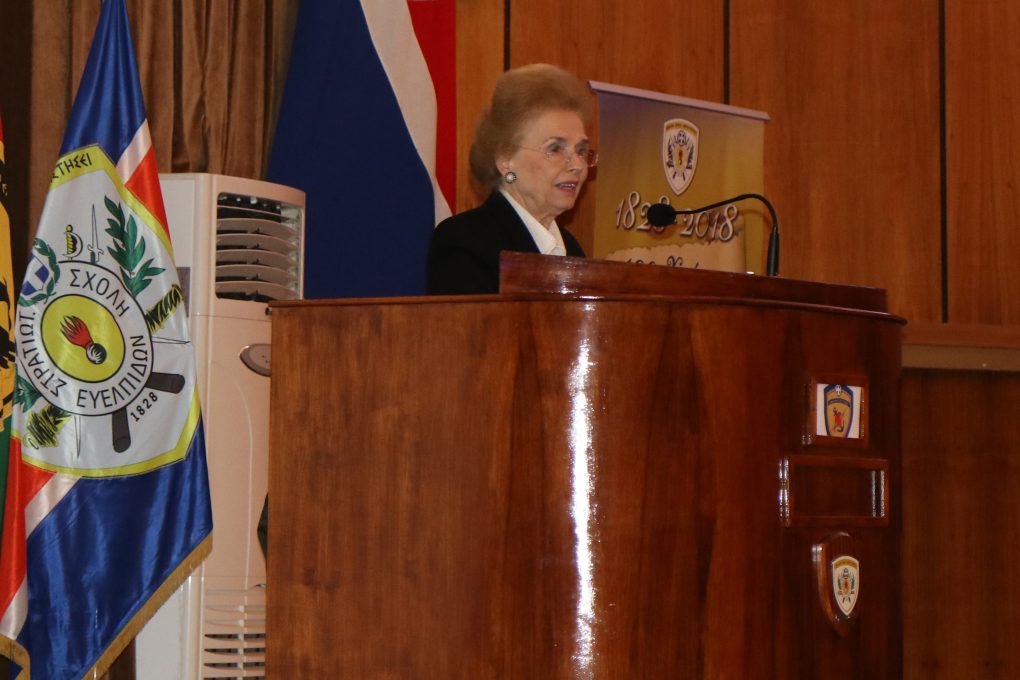
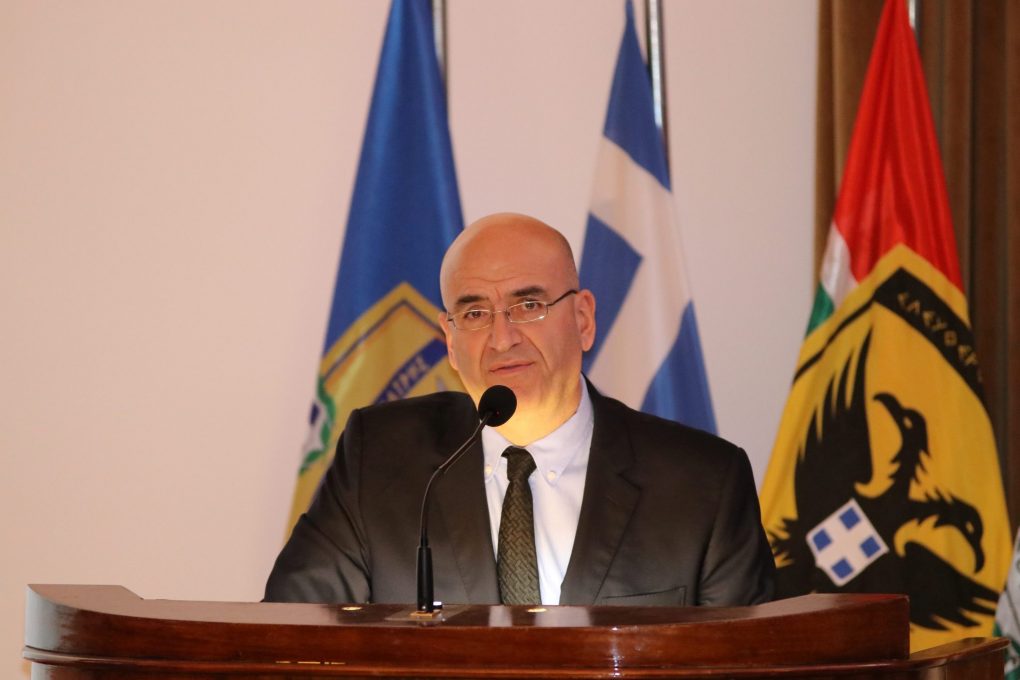
On the occasion of the 45th anniversary of the Athens Polytechnic Uprising, the Ministry of National Defence held an event on Friday, 16 November 2018 at the amphitheatre of the Hellenic Military Academy (Evelpidon) in Vari.
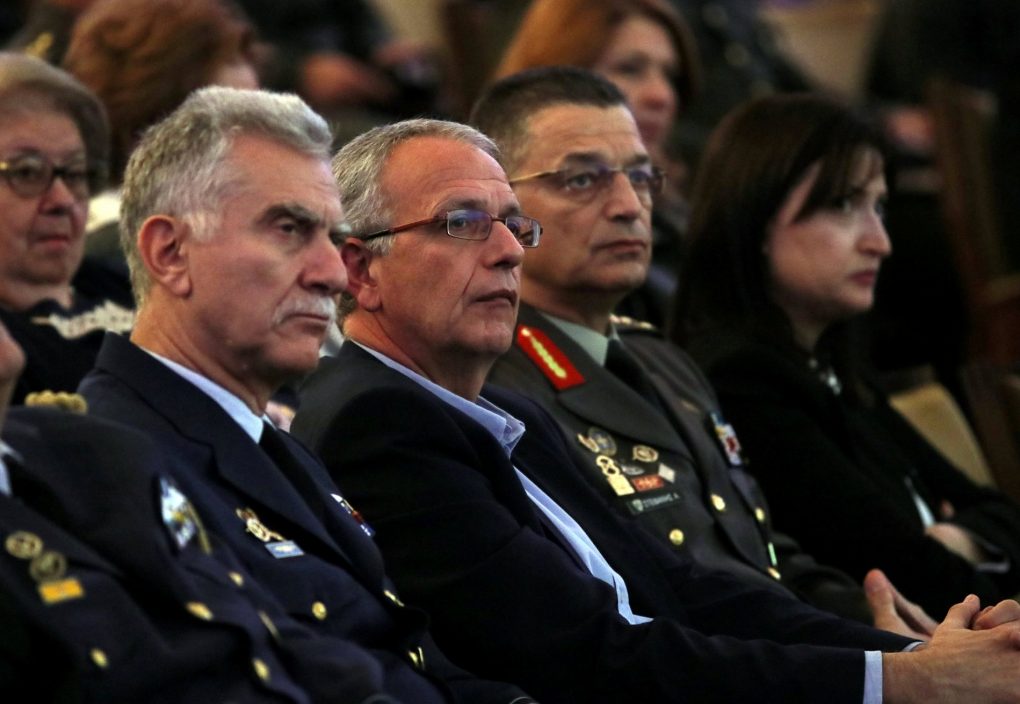
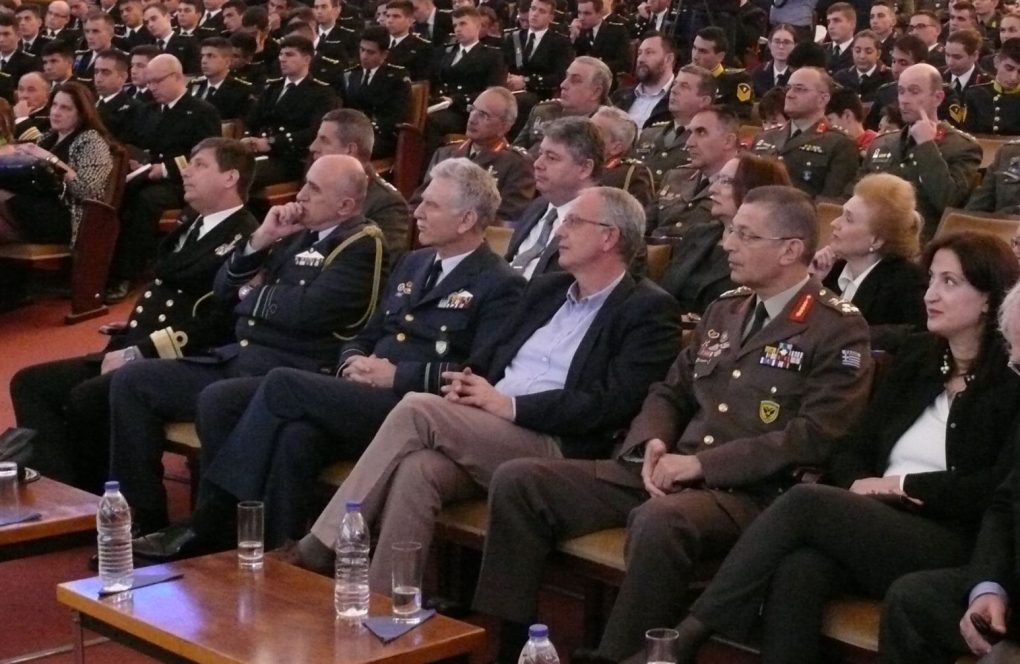
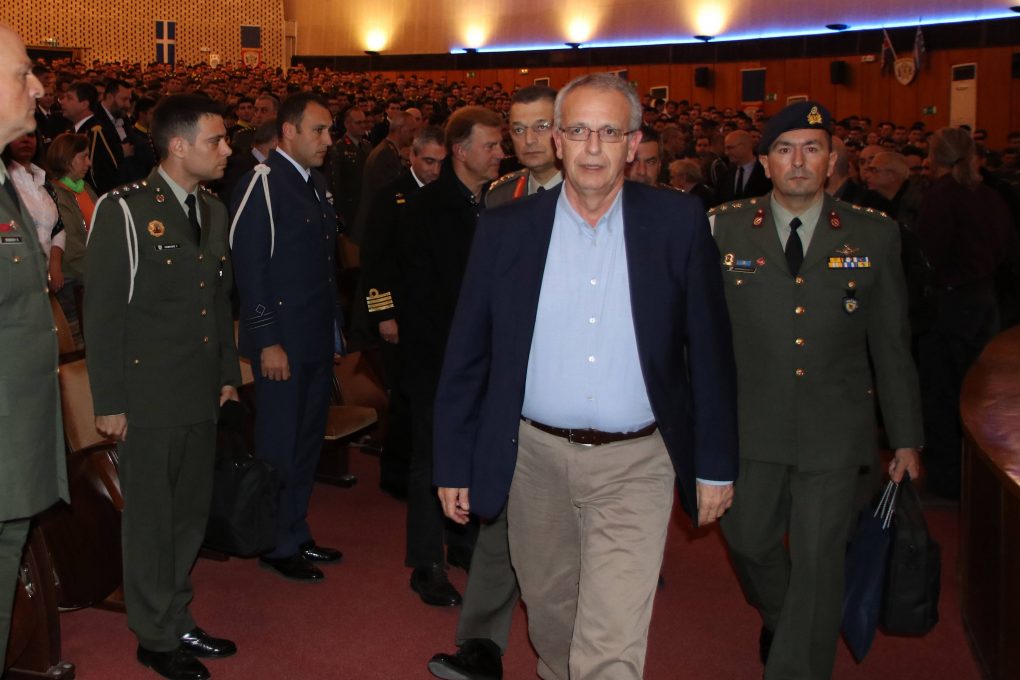
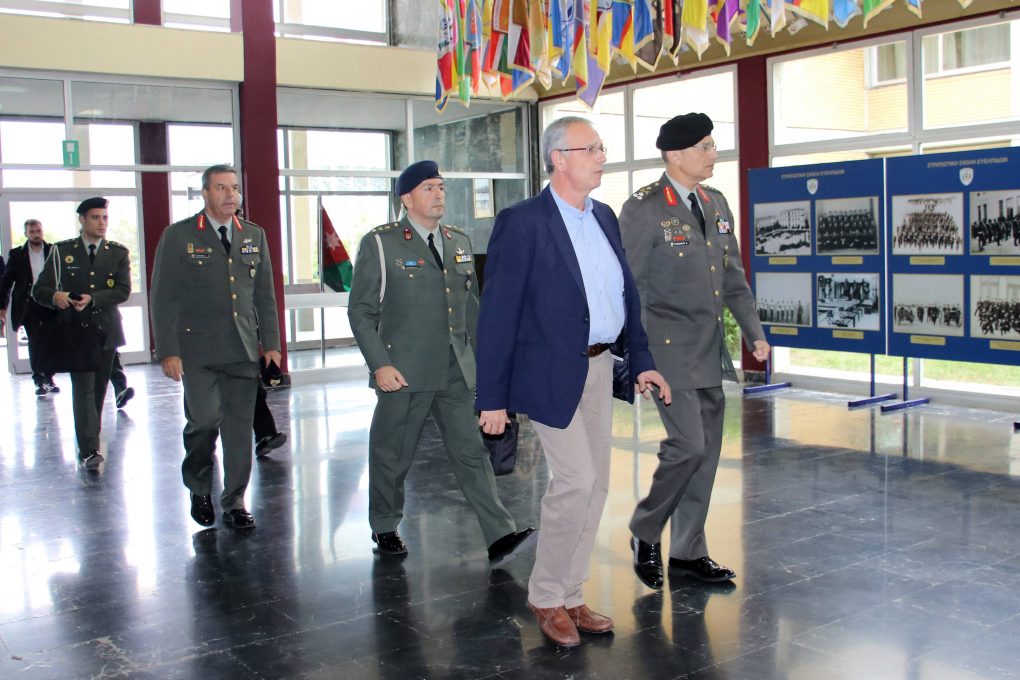
The event was attended by the Alternate Minister of National Defence – Panagiotis Rigas, the Chief HAGS – Lieutenant General Alkiviadis Stefanis, representing also the Chief HNDGS, the Chief HAFGS – Lieutenant General Christos Christodoulou, the Deputy Chief HNGS – Rear Admiral Ioannis Paxivanakis, representing the Chief HNGS and the MoD Special Secretary – Kalliopi Papaleonida. The event was also attended by officers from all three branches of the Armed Forces and representatives from the training personnel of Military Schools.
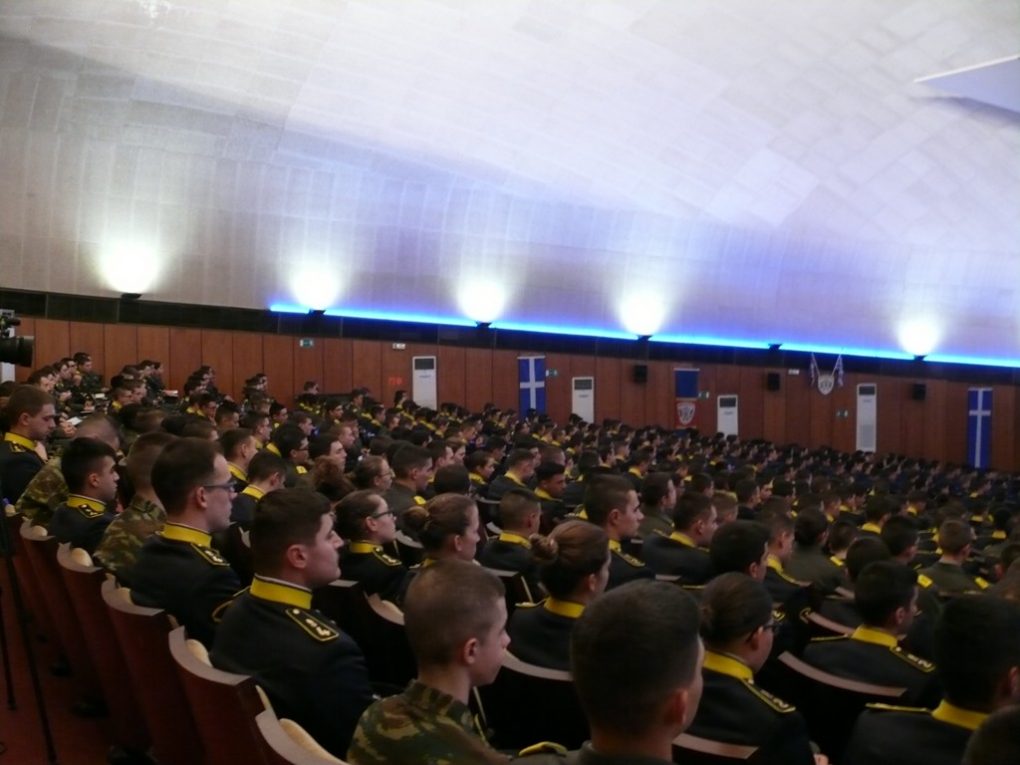
More than 1.000 students from Higher Military Educational Institutes and Higher Military Schools of NCOs of the Prefecture of Attika (Military Academy, Naval Academy, Air Force Academy, Nursing Officers’ School, Naval and Air Force NCO Schools) have also attended the event.
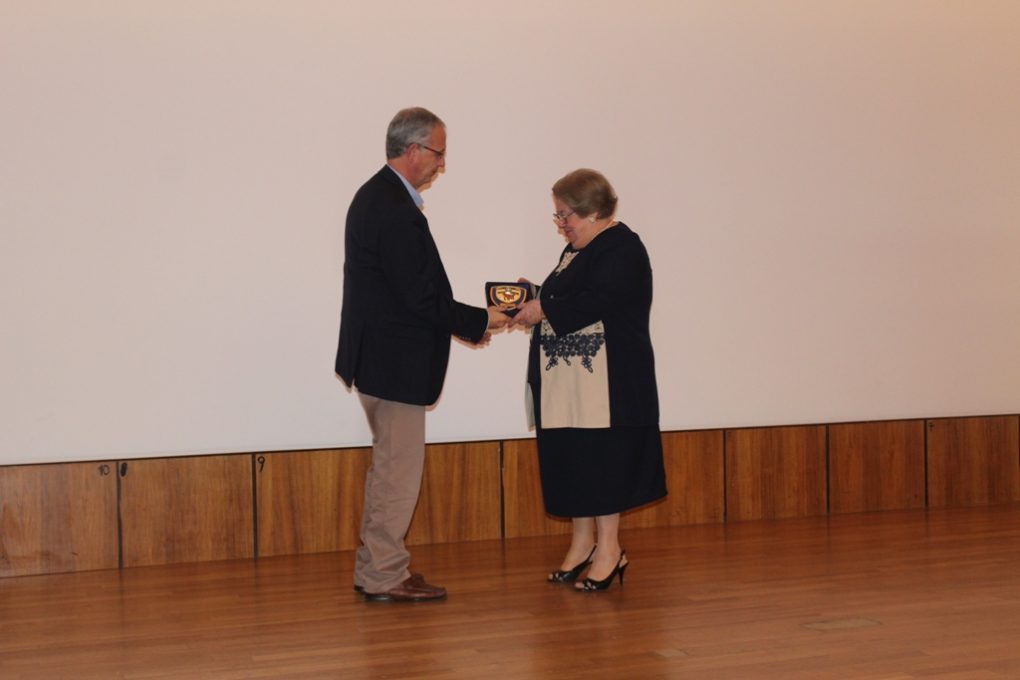
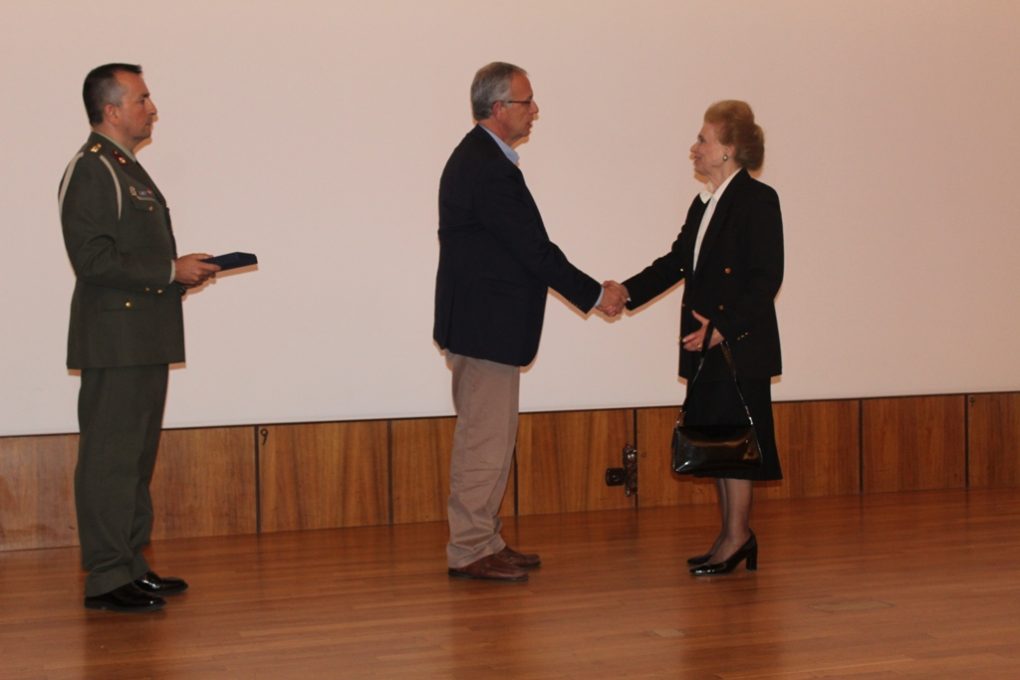
Relatives of officers, who have been persecuted – tortured during the Greek military junta of 1967 – 1974, attended the event as guests of honour.
– From the family of the ever memorable honorary Lieutenant General Spyridon Moustaklis, his wife Christina Moustakli;
– From the family of the ever memorable Admiral Nikolaos Pappas, his wife Poupa Pappa and his son – Vice Admiral (ret.) Velissarios Pappas;
– From the family of the ever memorable honorary General Nikolaos Stapas, his wife Aikaterni Stapa;
The event opened with the Commander of the Hellenic Military Academy, Major General Charalampos Lalousis, who referred to the significance of the anniversary and welcomed all guests.
Keynote speakers were the following:
Panagiotis Rigas, Alternate Minister of National Defence, who delivered a speech on “The topical message of the Polytechnic uprising”;
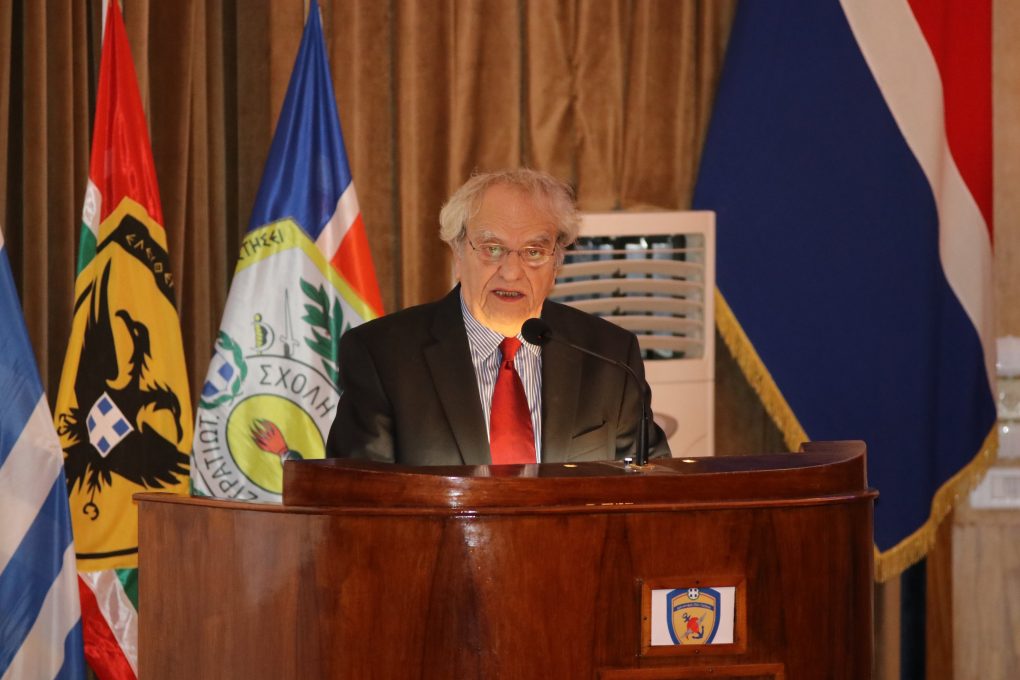
Dimitrios Alevromageiros, Lieutenant General (ret.), Honorary Hellenic Army Inspector General, who has served in Cyprus in 1964 and 1974 and took part in the resistance against Turkish invaders as a Commander of the 336th Battalion and has acted as a Commander is several United and Formations, who delivered a speech entitled “The 45th anniversary of the Athens Polytechnic Uprising. The time value of the uprising. Unknown aspects of the military resistance against the dictatorship”.
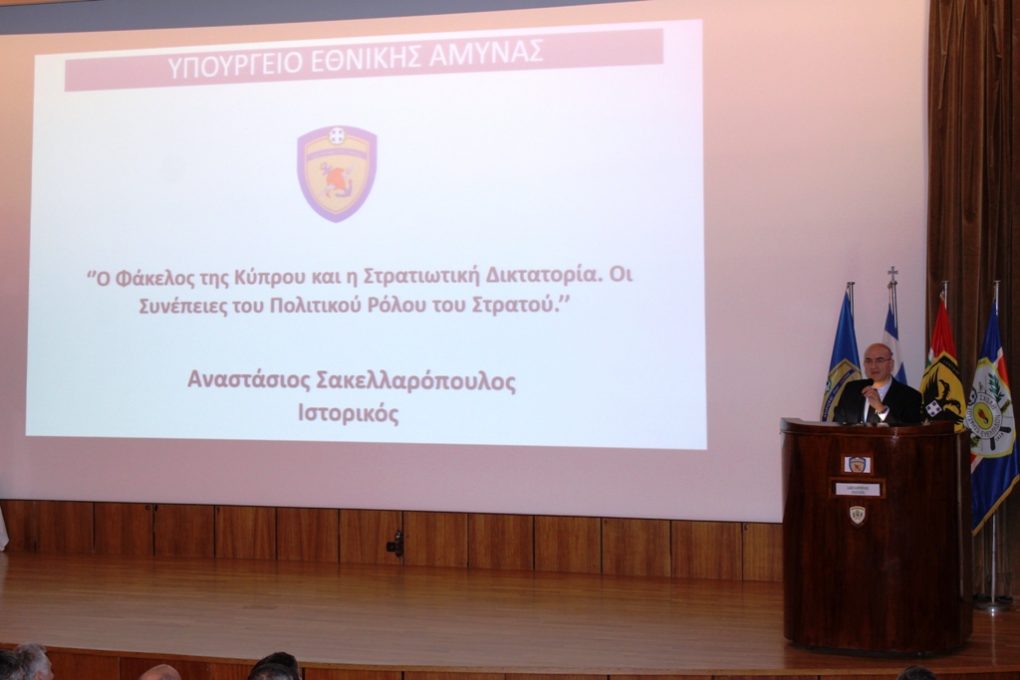
Tasos Sakellaropoulos, historian, director of the Historical Archives of Benaki Museum and member of the Experts Committee of the Hellenic Parliament on the Cyprus files, who delivered a speech entitled “Cyprus files and military dictatorship. The consequences of the Army’s political role”.
At the opening of the event, it was pointed out that:
“We are honouring today the 45th anniversary of the youth Polytechnic uprising in November 1973 that led to the violent repression and the invasion of a tank in the university’s yard at dawn on 17 November 1973.
It is an event of honour and remembrance that delivers a time message of Democracy and Freedom. We are honouring all those who have fought for Democracy and Freedom and first of all, those who were at the forefront and offered their lives. All those who resisted against an illiberal regime that was forcibly imposed by force of arms possessed by certain perjurers”.
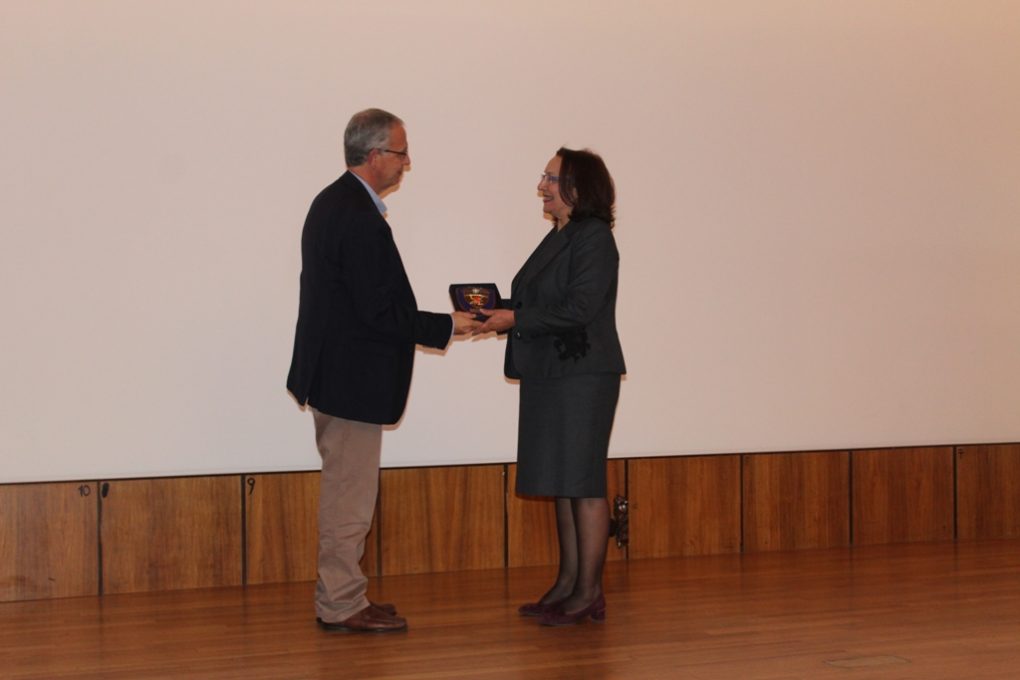
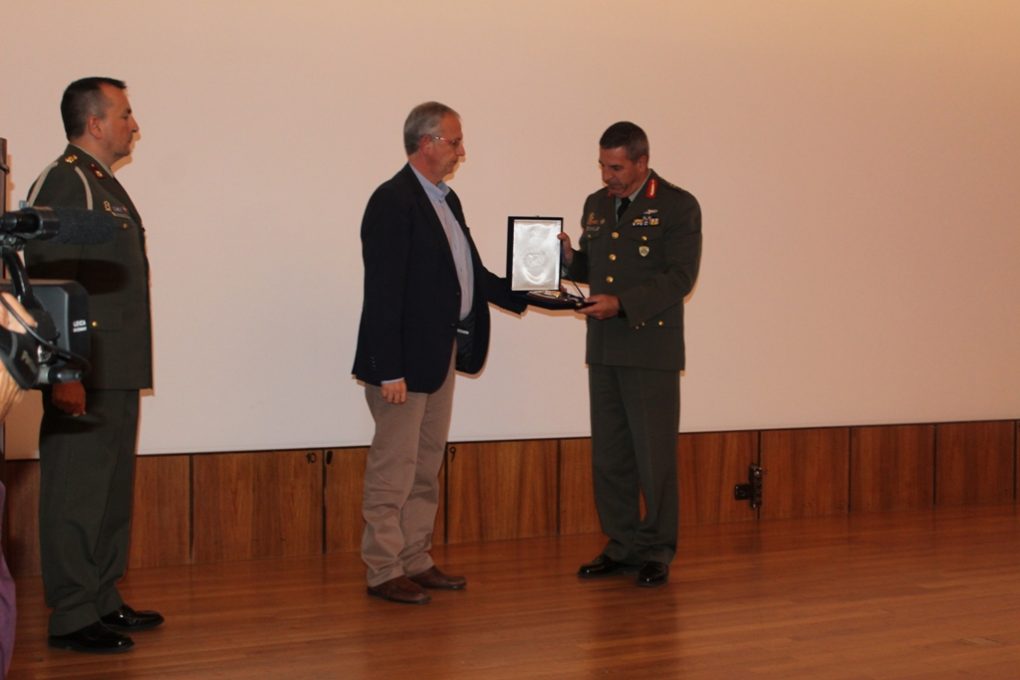
After the speeches, a documentary referring to the 1973 uprising was projected and special awards were presented.
The text of the Minister of National Defence, Panagiotis Rigas’ speech follows:
“Chiefs, speakers, relatives of persons persecuted by the Greek military junta of 1967 – 1974, dear guests, Students of Higher Military Educational Institutes and Higher Military Schools, I would like to thank you for your presence today.
Above all, I would like to say that it is a great honour for me, on the occasion of the anniversary of the Athens Polytechnic Uprising in November 1973, to have the opportunity to express some thoughts before such a special and elegant audience.
Obviously, I have not always been a Minister; this post has never been my objective in my career life, it just happened.
My personal choice within a professional context pointed me to the field of education. I come from there and I still belong there today, apart from my new duties that I had the honour of being assigned by the Prime Minister.
Hence, this allows me to feel at home in places like the one that we are here today; in rooms and buildings where our Armed Forces’ officers and NCOs of tomorrow are receiving an education and undergo training.
Moreover, it allows me to seize historical anniversaries, national or religious celebrations as an opportunity for interesting discussions between teachers and students.
Discussions that it is rarely possible for them to take place within the daily teaching programme.
I believe that it is everyone’s duty on this day and in any historical anniversary to think about this particular event.
If we become aware of some things about it, seek out sources and read, it is a great opportunity for us to enrich our knowledge.
Often, on the anniversary of the Athens Polytechnic Uprising in 1973, reference is made to the topical nature of the messages through time.
Effort is made to transpose the slogans of that time to today.
“Fascism will not get its way”, “Down with junta”, “Food, Education, Freedom” were some of the slogans of that time.
Slogans that are far from being meaningless at the current juncture.
They refer to the consolidation and expansion of democracy in the country, the upholding of the social state, the restoration of social coherence, the country’s productive and institutional reconstruction, Greece’s return to popular sovereignty conditions.
To anything that has been put in a straitjacket in recent years as a result of the memoranda and the supervision status.
At the same time, they express absolutely modern social needs and necessities for the marginalization of fascism, racism and populism that have started to gain ground in Europe.
They are giving voice to everyone’s right, and the new generation in particular, to education, work and dignity.
Today, unemployment mainly affects young people; there is a need for work, full-time and well paid employment with guaranteed labour rights.
At the same moment, with the rapid advancement of technology and the introduction of robotics in all fields of human activity threatening to bring down years of labour balances, the request for full and where possible unimpeded education and for the widening of scientific disciplines is just as relevant today.
Only in this way will the effective address of contemporary and multi-level problems that constantly occur and will occur in the future become possible.
In order to ensure the implementation of the foregoing and that everyone’s rights are being promoted, so that there would be a hope that all are involved therein, it is required that the above takes place within a framework allowing freedom of speech, freedom of access and circulation of information, critical thinking.
Otherwise, efforts are frustrated. Well, here’s the self-evident timelessness of the request for Freedom that falls on such fertile soil in the present context.
And allow me at this point, with regard to the precious asset of freedom in particular, to set out a reasoning. A reasoning involving what has happened at that time; however, its validity remains unchanged in time and applies today.
The historical inaccuracy about economic miracles during dictatorship has been often publicly heard.
However, when there is no freedom of action and no-one is given the opportunity to take part in the development and in anything that results from it, then the economic progress reflected does not involve the entire society, but only a select few that actively participate in the economic life of a place.
Given the existence of exclusions that lead to discrimination and inequality, the fair distribution of resources and the fruits of our production to people and the society constitute merely an “empty shell”, a dead letter.
Therefore, the best is – when we are notified that an economy is prosperous, when he hear about numbers blooming – to look for, through the economic indicators that reflect such prosperity, how fair the distribution of wealth is; to try and establish whether its generation and distribution involves the entire society.
Before drawing any fast conclusions, let us wonder: Were there any prohibitions in the economic activity during junta? In which way was its generated wealth distributed? What were the limits of the economic activity of Greece, which was isolated from the democratic and economically developed countries?
The answers to the above questions are necessary, before drawing conclusions lightly about economic miracles and other similar historical distortions.
Freedom is eventually highlighted, due to its content and the guarantees provided for the fair organization of societies, as a supreme value.
Therefore, we come to say rightly that when talking about the progress of the human kind in centuries, we are not essentially talking about the natural history, the evolution of the human kind in biological terms.
We are talking about the moral history of people that have been united on earth into societies and are being allocated to ethnicities.
Progress is to move forward, while backing-out from your vested rights is regression.
So it is unforgivably anachronistic, if someone imagines or believes that when using the term Democracy we mean only some typical characteristics, like certain political rights (universal right to vote), certain political organisation (in the case of our country, a regime without kingship), alternation of elected governments.
We did not inherit and we are not legalised to bequeath such a thing to the next generations.
Democracy, as a vested right, pertains to much more and it is unforgivable for us Greeks to not be aware of it. For our ancestors, the participation in political life was considered a privilege and particular feature of the free individual.
They were the ones who implemented any imaginable or feasible regime and remaining unsatisfied…
… they ended up forming the political philosophy and through that selecting the Democratic regime, being the only ones among the civilised peoples of Antiquity.
A precondition for Democracy is the uprooting of any trace of subordination from the souls of the people, the cultivation of free political thought, the enhancement of the citizens’ sense of responsibility for the fortune of the state.
We would not exaggerate if we claimed that the “Polytechnic Generation” had a vested right in that political vision. It is our obligation to remember and continue their fight.
Especially in our times, we are obligated to oppose those who long for dictatorship, right-wingers, racists, supporters of authoritarianism and revision of history, who rear their heads once more from the darkness of the past, preaching hate for anything progressive or different than them.
Because the answer to extant dysfunctions and the weak aspects of democracy is not appealing to the opposite, meaning tyranny. That is exactly what we mean by populism and democracy’s defamation.
The simplification of the facts’ interpretation, the enforcement of the view that truth is a privilege of the few, constitute a kind of modern cynicism which, lust like totalitarianism, prohibits conversation, pollutes the relations of people and distorts human coexistence.
The institutions of democracy allow us to resist, to face the danger, they give us the right to criticise, they promote criticism to a vital human activity, since the institutions themselves are a vital prerequisite for the existence of democracy and human life.
We are talking about ideals, moral values. Otherwise, the girls and boys of November 1973, along with everyone who resisted the seven-year dictatorship, wouldn’t have the strength to oppose a dictatorial regime which deployed armed men and tanks against them.
Whoever does not comprehend that morality and Democracy walk side by side, has obviously never communicated with the notions arising from Democracy.
He/she ignores its roots, its fighters, its heroes, the ones who sacrificed for it. Furthermore, he/she ignores modern Greek history, which is full of such small and big stories of simple everyday compatriots, which currently decorate the pantheon of Heroes and give us a sense of national pride.
The events of the Polytechnic University are much more than what transpired on these three days in mid-November 1973, at the night of 16 to 17, when a tank demolished the main gate of the higher education institution of the National “Metsovio” Technical University of Athens and the events that followed.
Have you ever wondered why there were tanks at the centre of Athens that night?
Was armoured protection against the bigarades thrown by the students necessary? That is how the Uprising began on 14/11, with bigarades.
The Uprising, not resistance against dictatorship, because that had begun a long time ago and it grew day by day, because life was insufferable at the time.
Have you ever wondered if tracks are installed on tanks to demolish the doors of Universities? Is that their purpose? Is the Greek military trained to invade the sit-ins of unarmed students?
Obviously not. What was the purpose of the army at Patission Street that night? Why was the order for the evacuation of the Polytechnic University given?
What was the danger? How can a group of unarmed young people, students, workers, pupils pose danger? And finally, who was in such a great danger?
Was the honour of the Armed Forces saved that night, even in the final hour, with the demonstration of humanism by the majority of the troops called to operate? It is a historical fact, underlined by all the events’ eyewitnesses.
If someone begins from these simple questions then he/she can find out what is the meaning of junta.
What fascism means, what it means to fear your neighbour, to be wary of how you look, what you look, what you hear, what you read, what you sing, where and when you sing.
Then, one will learn what happened in this country, in our Greece for seven years, from 1967 to 1974, about the victims of the Polytechnic University, about Attila’s invasion in Cyprus.
Then, one will learn that the most patriotic person is not the one who shouts, since those who shout are the most dangerous. History has proven that the ones to blame for our national tragedies were the ones who issued certificates of national morale.
We know very well that, despite its bloody ending, despite the tens of dead and hundreds of injured, it was not the uprising of November 73 which caused the immediate collapse of the junta.
However, the Polytechnic University decisively sealed the political developments of the following period.
Nobody could imagine a few months before the uprising, that the Greek people, with the youth at the forefront, would make a frontal assault at the Colonels’ regime.
And nobody could imagine that a few months later, the junta regime in conditions of complete isolation, after the atrocious suppression of November and burdened by the national crime it committed in Cyprus, would retreat to pave the way to a truly democratic, parliamentary regime.
Since then, Greece has gone through the longest period of democratic normalcy in its modern history. Despite that, the call for more democracy, deeper and more substantial exists and will continue to do so, because democracy is not a mute point, without substance.
Democracy constitutes a living entity, living and breathing through individual and collective rights and through each citizen’s liberties.
Ladies and gentlemen,
The references I made to history, the drawing of lessons from it, do not constitute any kind of self-inflicted punishment.
Historical memory constitutes a component of National Defence itself. Imagine an Army without references to the history of the country, the state and the nation which it defends. It would be a hollow entity.
Morale, morality and the might of the Armed Forces are greatly defined by the sense of duty, the sense of continuity.
The military defends the people, society, democracy. That is the state. That is the nation.
The contribution of November 1973 is exactly that. The Anniversary of the Polytechnic University’s uprising is an anniversary of memory for the victims of the fighters who fell for Democracy.
It is a source of lessons about the basic value of Liberty as means of defence of the Human value as well as of our Democratic regime itself.
The Polytechnic University represents the spirit of uprising hidden within us all. It is memory that suppresses oblivion.
The Polytechnic University came to prove that what is considered impossible can become possible. It is what we are often called in life to demonstrate, to realise”.