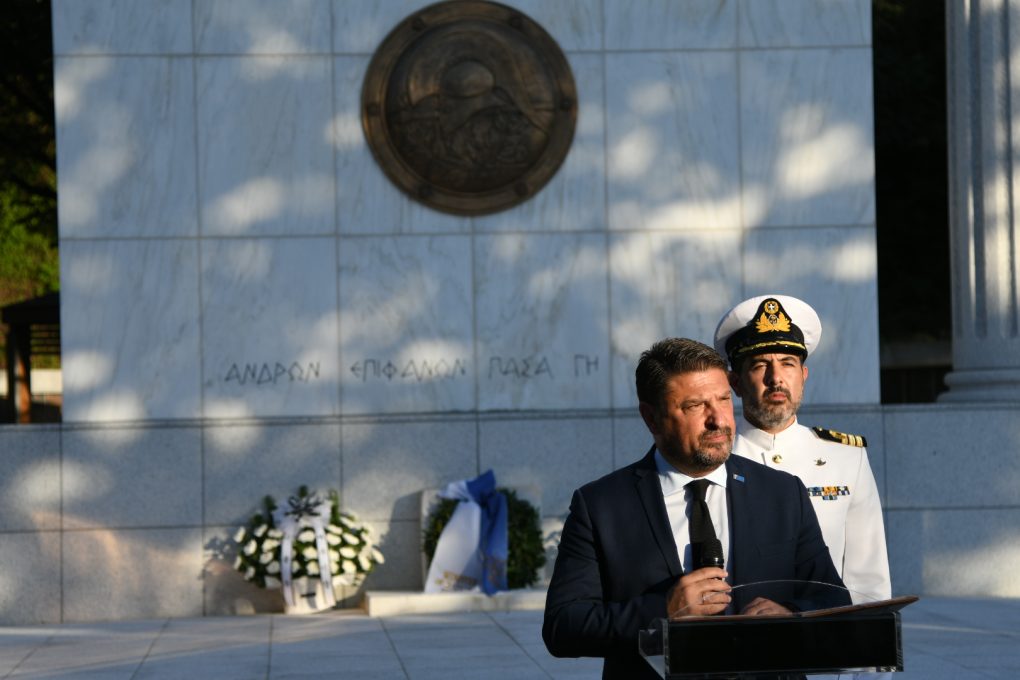
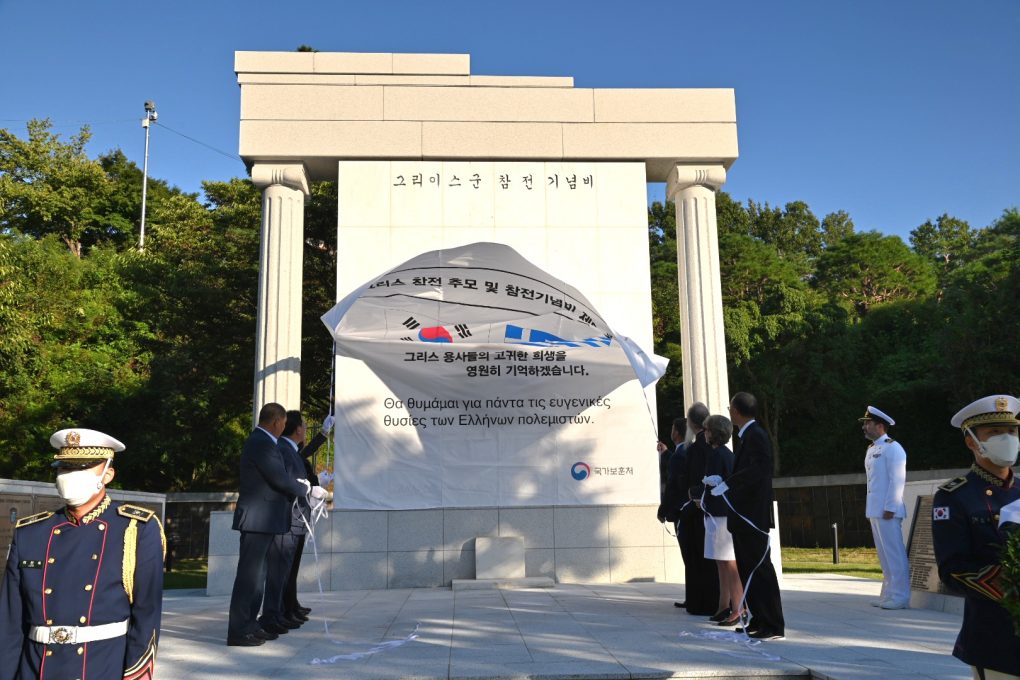
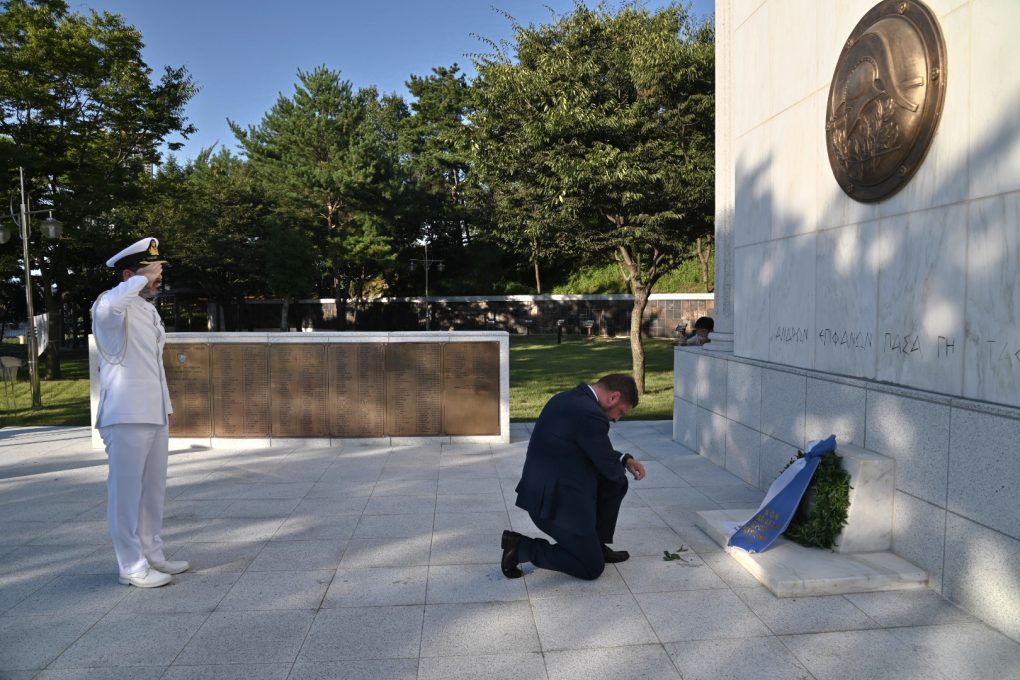
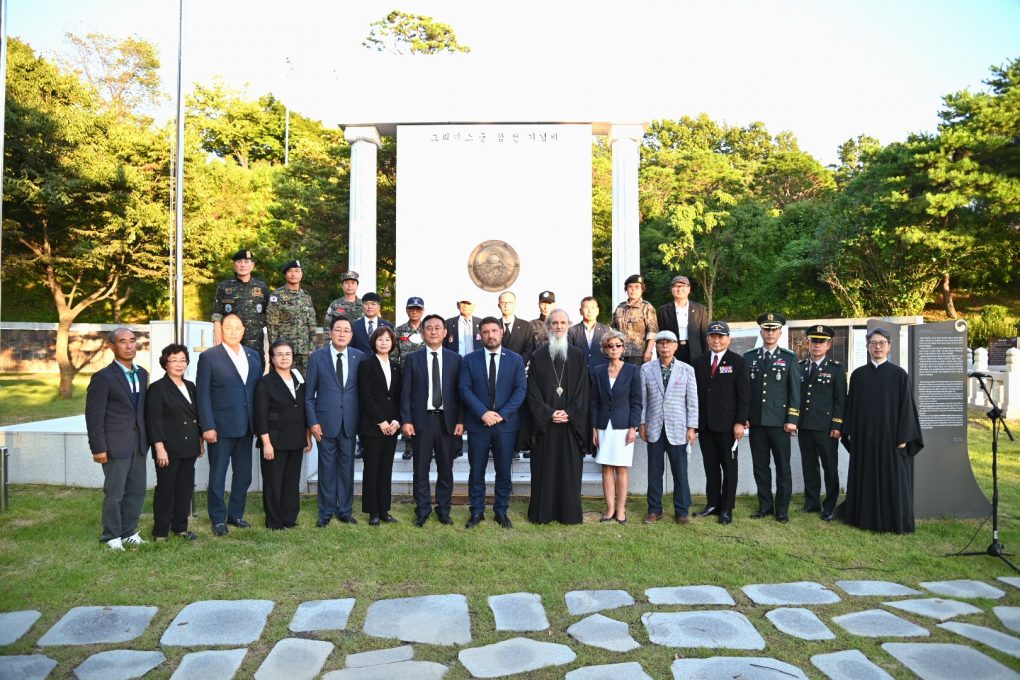
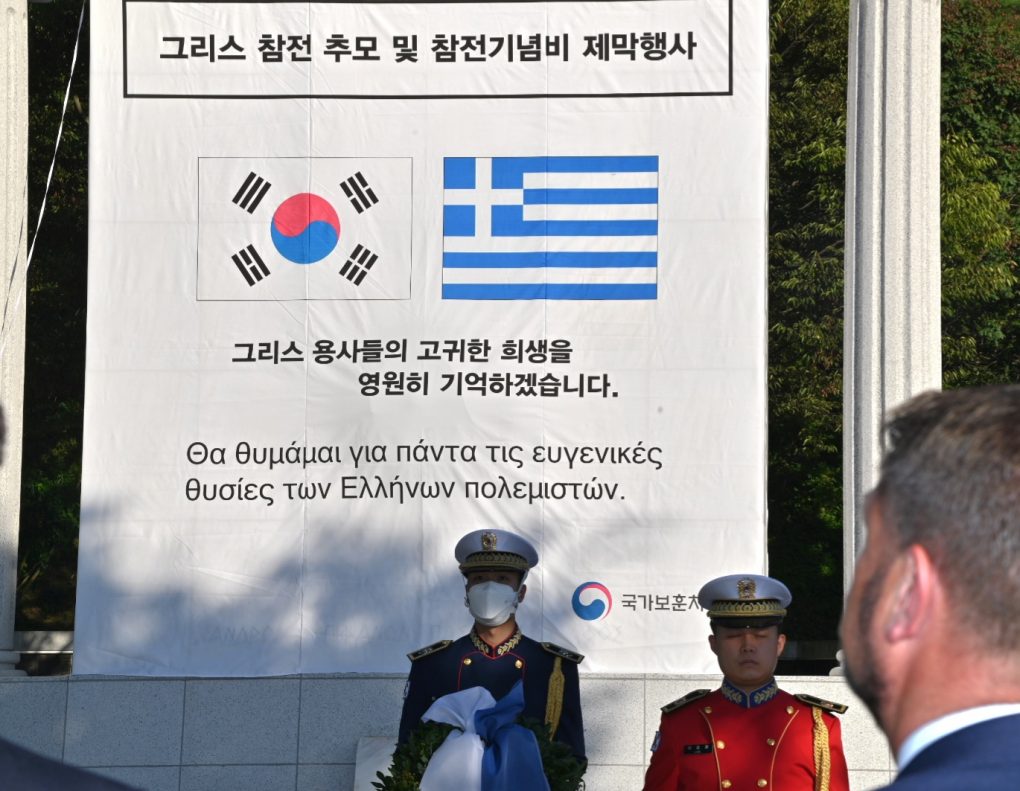
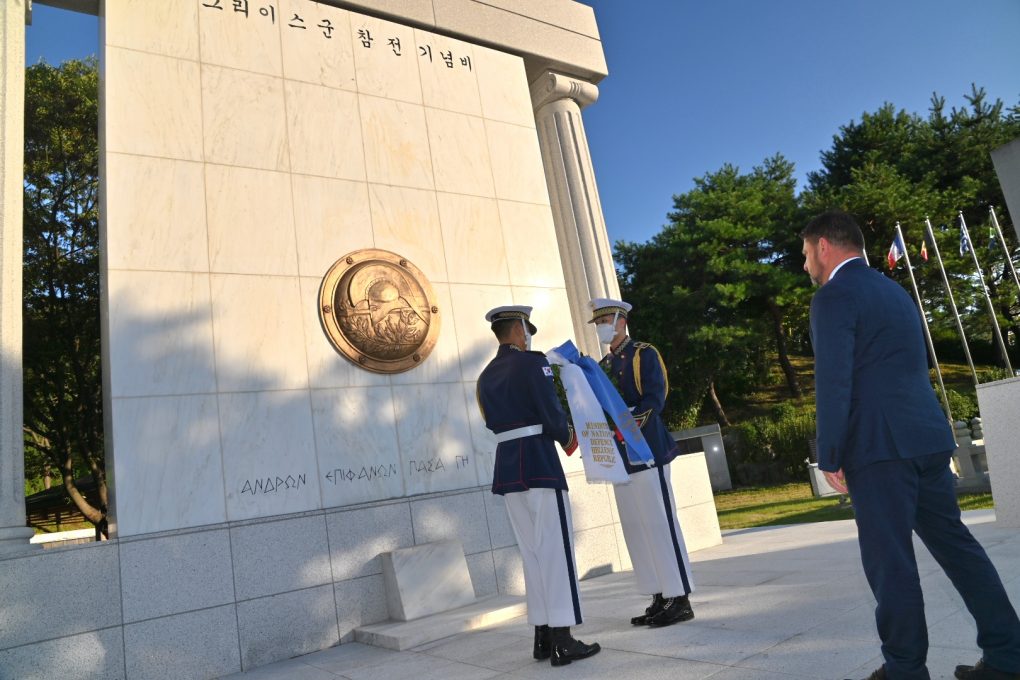
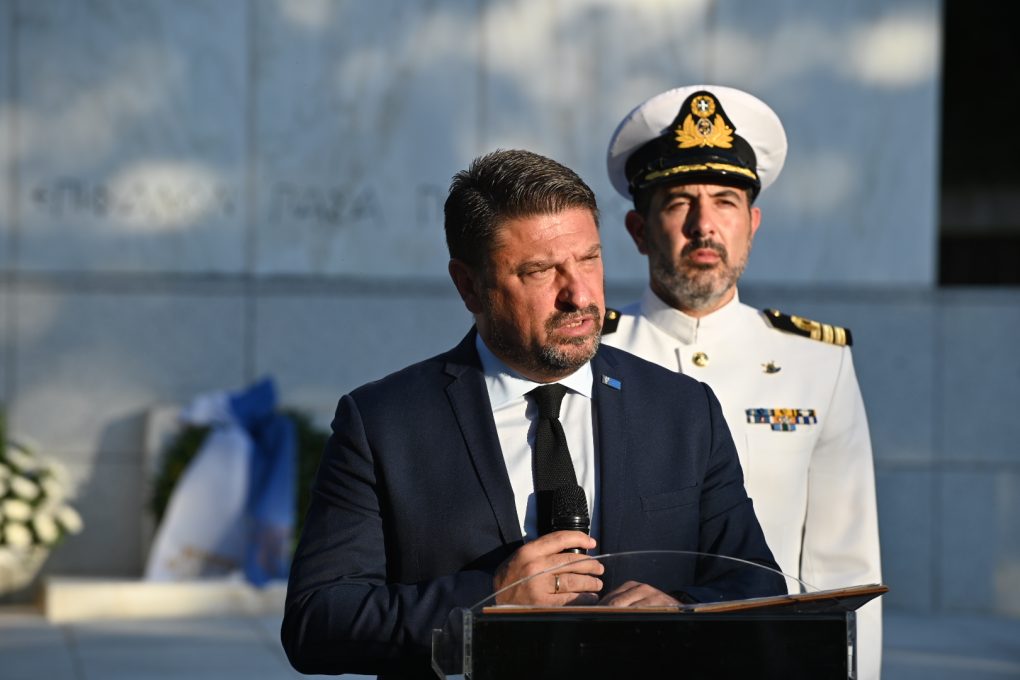
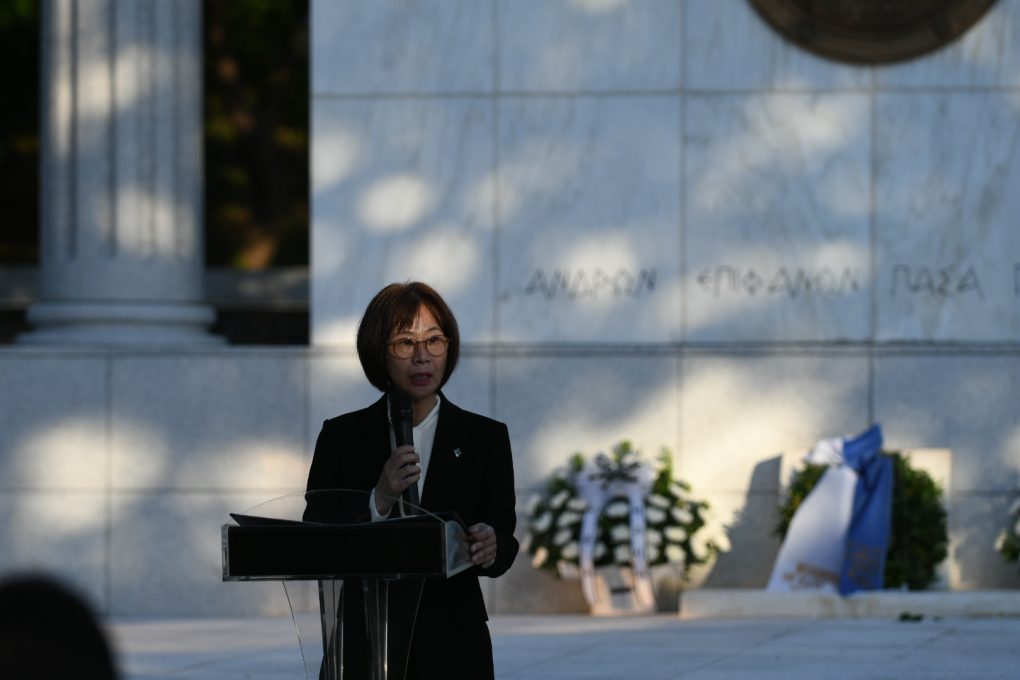
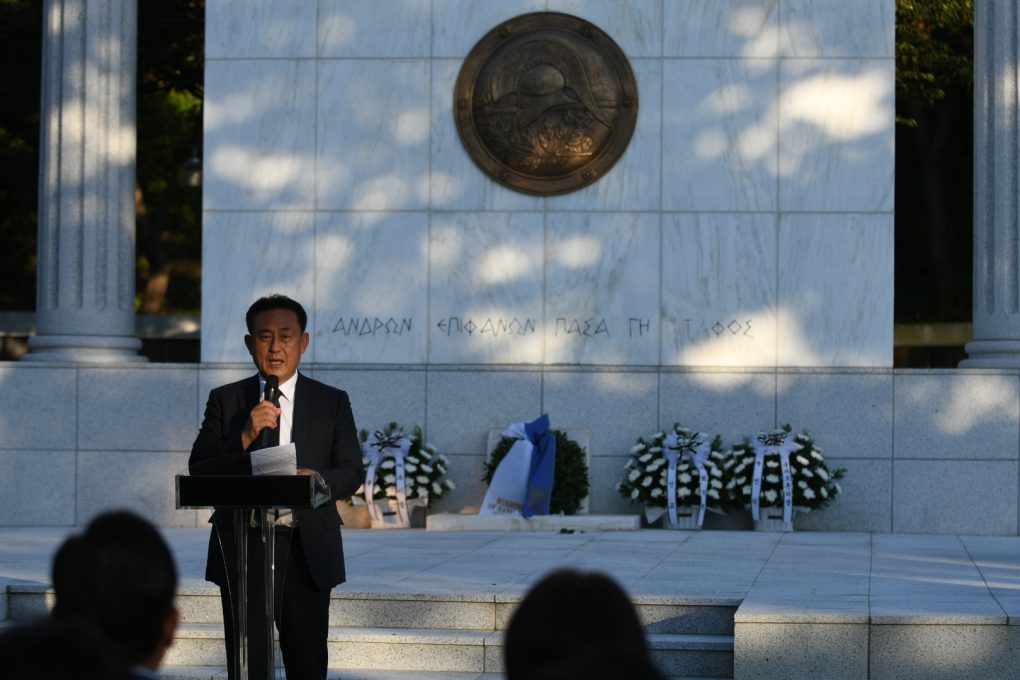
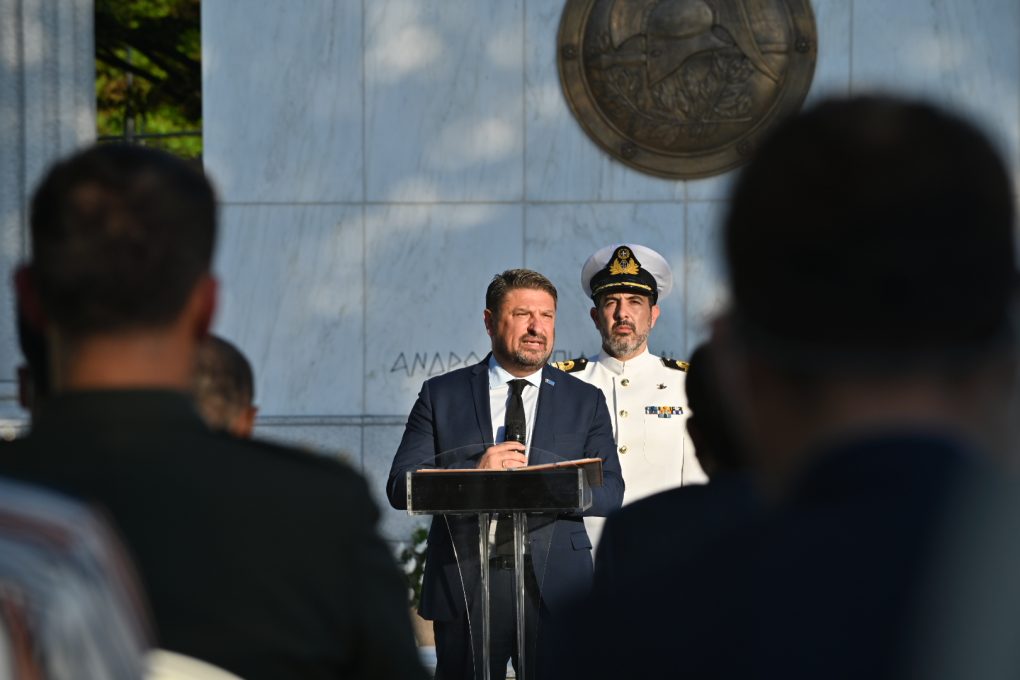
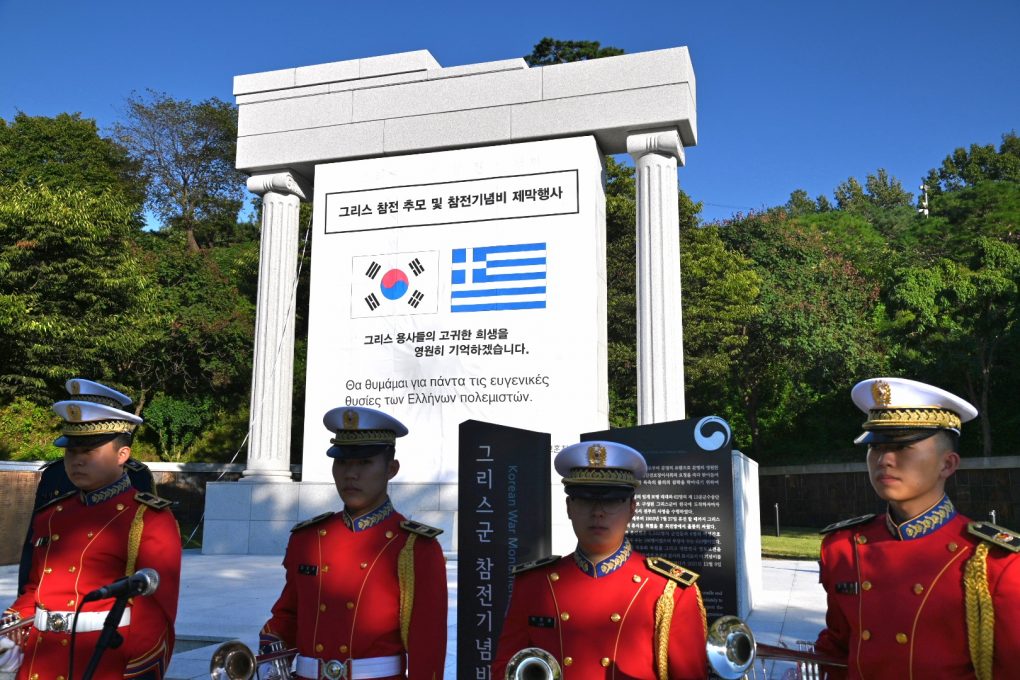
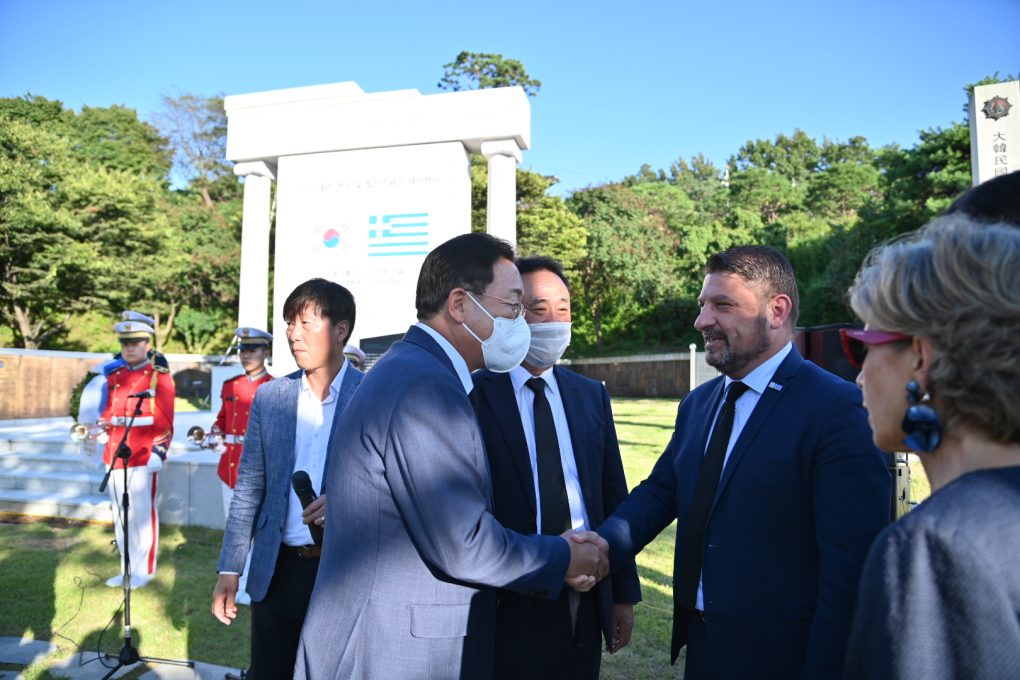
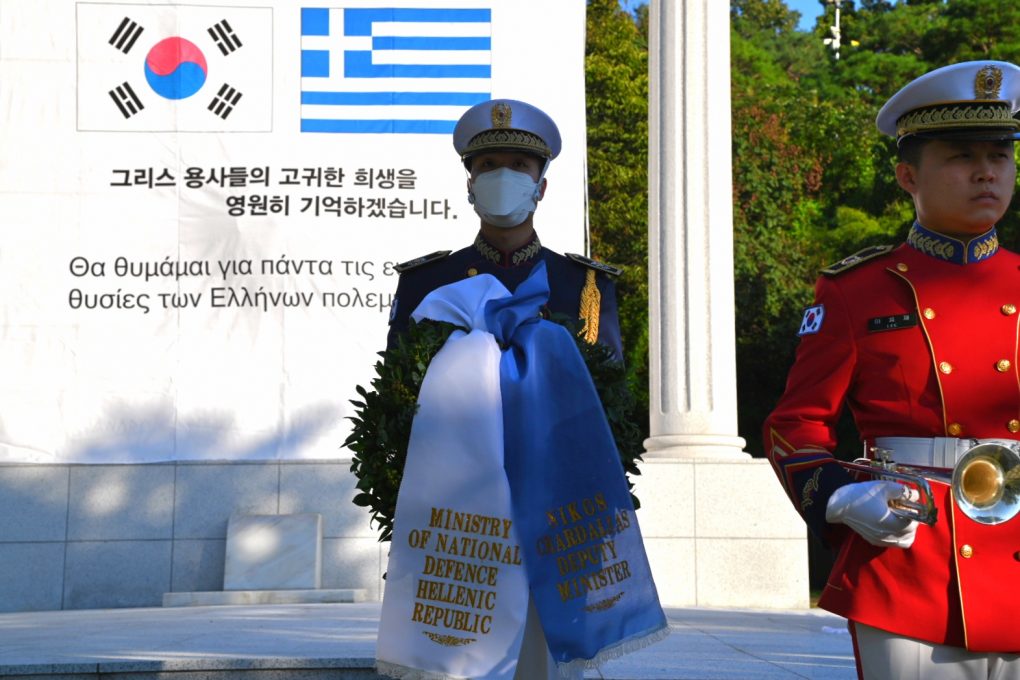
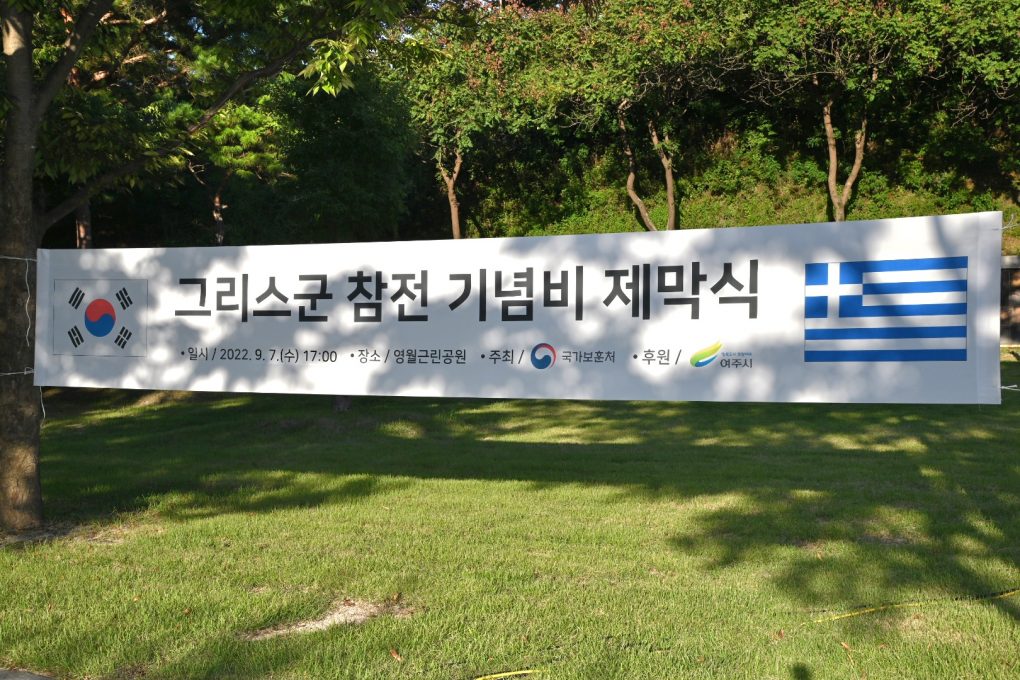
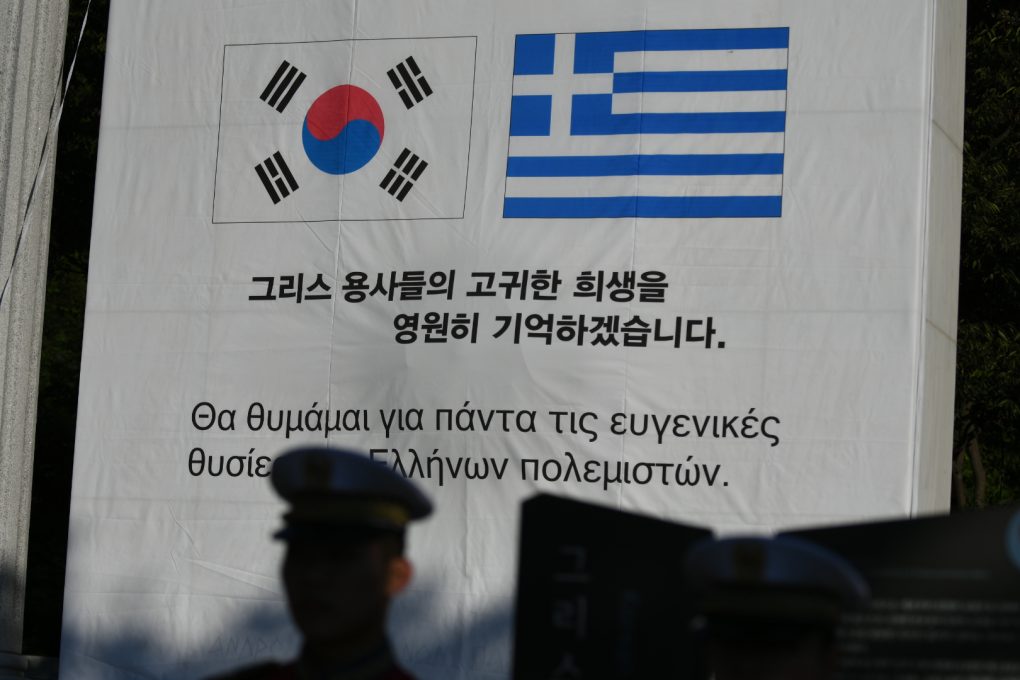
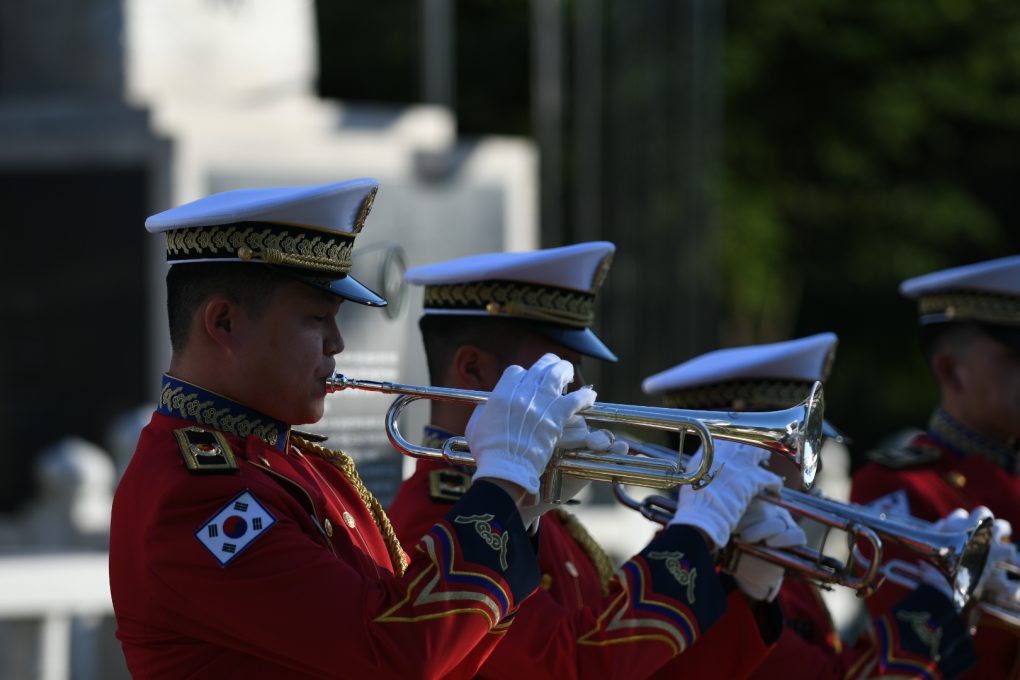
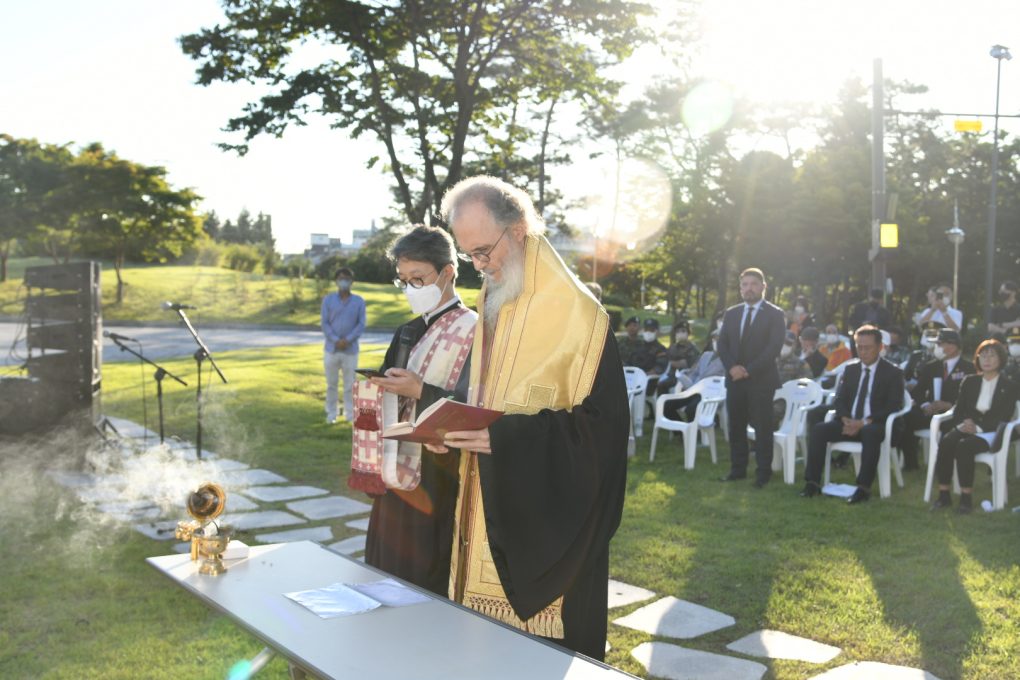
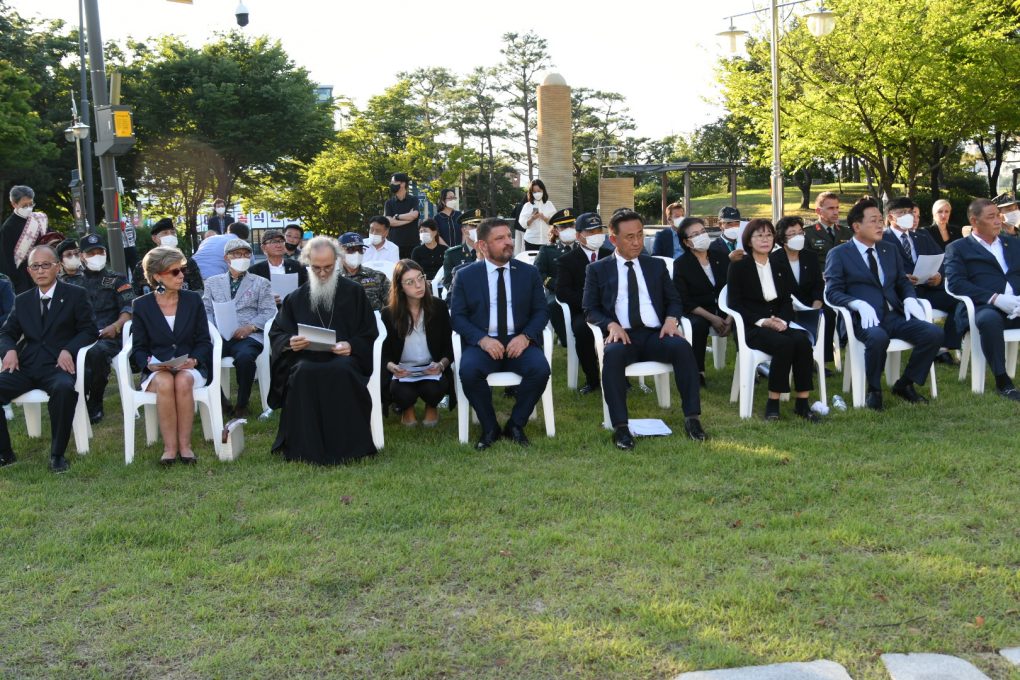
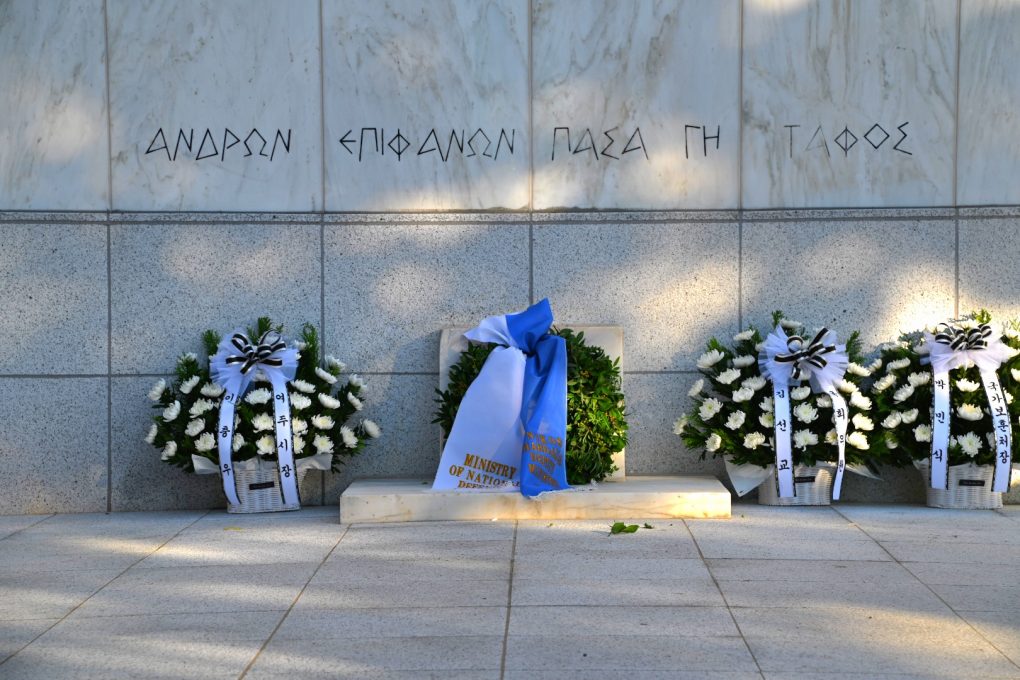
The Deputy Minister of National Defence, Mr. Nikolaos Hardalias, representing the Hellenic Government and the Ministry of National Defence, attended yesterday, Wednesday 7 September 2022, the inauguration ceremony for the new Monument of Greek Soldiers Fallen during the Korean War, following its relocation to the Yeoju Yeongwol Park in Seoul.
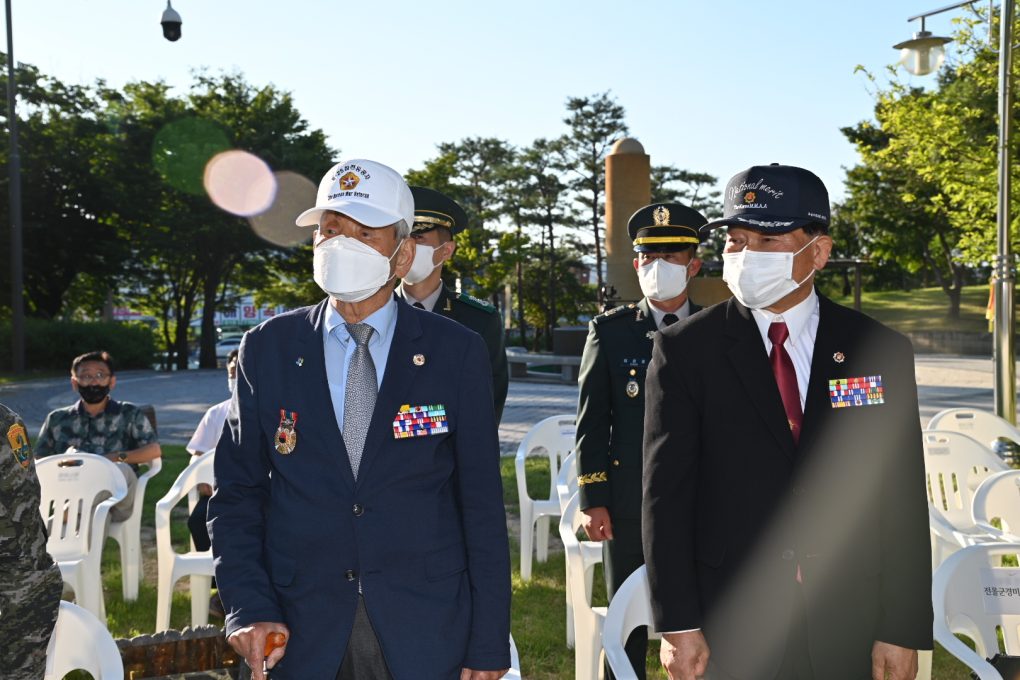
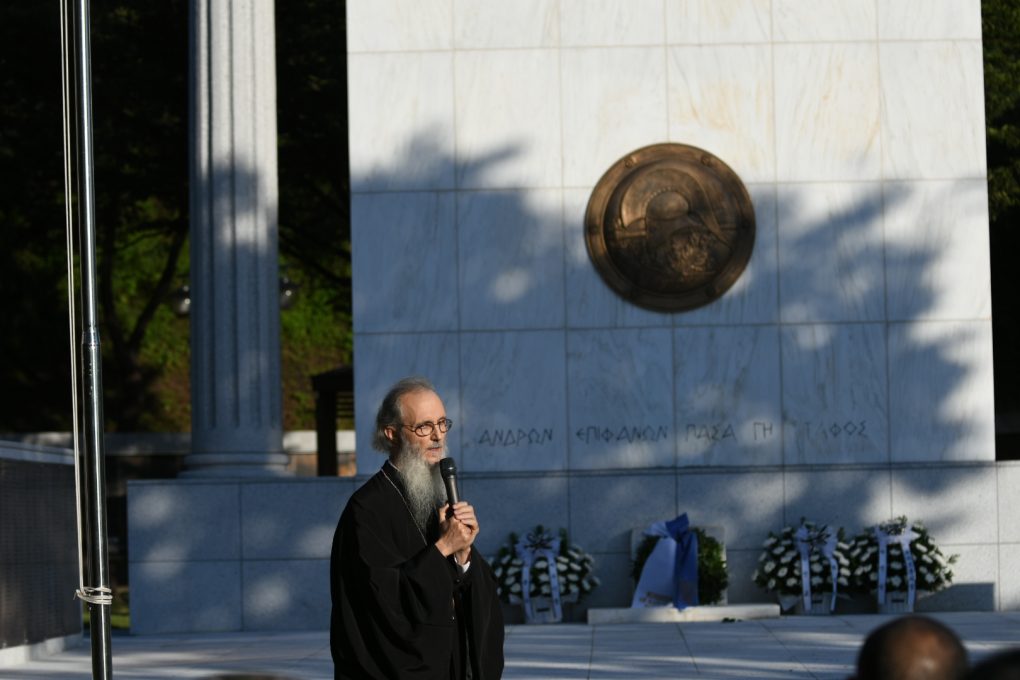
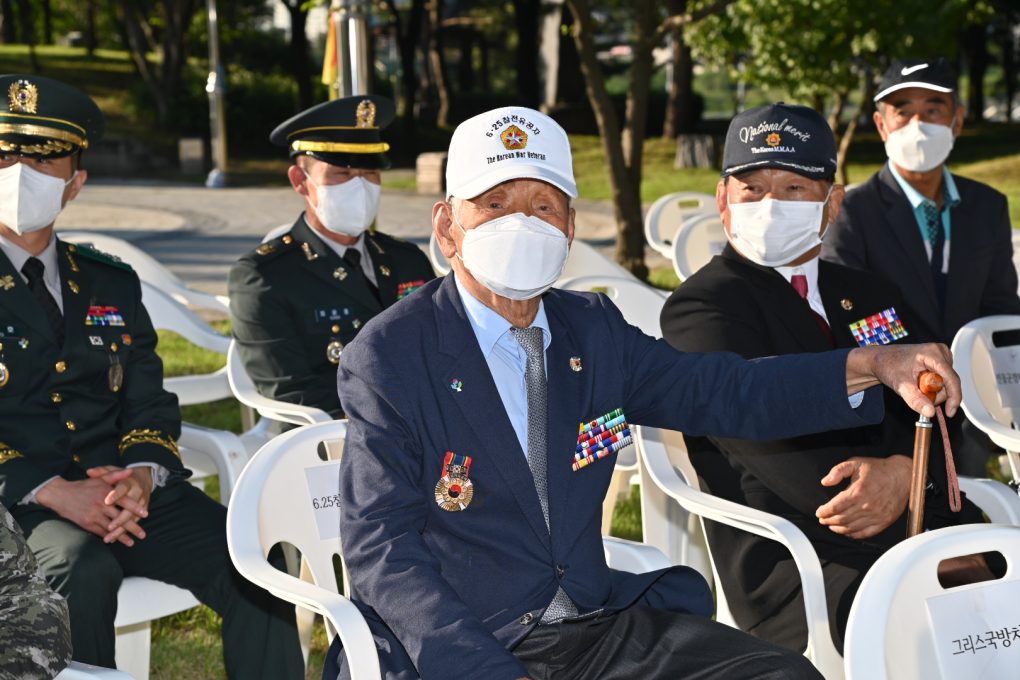
The ceremony was attended by his Eminence, the Metropolitan of Korea and Exarch of Japan, Mr. Ambrosios, the President of the Regional Offices of the Korean Ministry of Patriots and Veterans Affairs, Mr. Junglim Yeom, representing the Minister of Patriots and Veterans Affairs, the Ambassador of Greece to Korea, Ms. Ekaterini Loupas, the Mayor of the city of Yeoju, Mr. Choong-woo Lee, the Senator, Mr. Sungyo Kim, representing the National Assembly of the Republic of Korea, the President of the Veterans Organization of Korea, Mr. Kisso Kim, a delegation of Armed Forces members of the Republic of Korea and South-Korean Veterans of the Korean War.
In the context of the ceremony, the Deputy Minister of National Defence delivered the following address:
“It is a special honor for me to represent the Hellenic Republic in this extremely important, as well as emotional visit. The Republic of Korea is one of our most important partners in Asia.
Peace in the Korean Peninsula and in North-Eastern Asia in general is necessary in order to preserve global peace, and acts like a “vehicle” for the worldwide protection and expansion of the asset of freedom. The corner stone for achieving peace is the denuclearization of North Korea.
In this context, our presence today is an outstanding opportunity to remember an unstable time period during which Greece’s historic path crossed that of Korea.
More than 70 years have already passed since the occurrence of one of the most decisive and dramatic events of the Cold War in the Korean Peninsula. It was the 25th of June 1950, when the North-Korean troops crossed the borders along the 38th Parallel and tried to enforce through the use of weapons the unification of the entirety of Korea under an authoritarian regime. Of course, the regime of Kim Il Sung did not function autonomously and it did not stand by itself in this initiative. It was an attack that had been encouraged, if not motivated, by other authoritarian leaders holding similar views, who were eager to ignore the basic provisions of the United Nations Charter, which they had signed just a couple of years before.
The international community and consequently the “Free World”, touched by the courageous resistance of the less mighty forces of South Korea and its few allies, and furious with this outrageous attempt to subdue the entire population, immediately and decisively reacted on 27 June 1950. The United Nations Security Council issued Resolutions 83 and 84 through which it encouraged member states to reinforce the combating South Korea, by establishing an integral command under U.S. leadership and the United Nations flag.
To this historic challenge, the West and its allies responded by deploying hundreds of thousands of troops to fight by the side of the Armed Forces of the Republic of Korea. Following a bloody, uncertain and extended conflict, the attackers were forced to retreat before the decisive and effective resistance of the United Nations forces. The resulting situation following the end of hostilities has been characterized by many as a “strategic dead end”, but in fact, it was the first time after the end of World War II that the forces of democracy and International Law managed to prevail against those who worked towards their overthrow. In this context, the importance and historic heritage of the Korean War for the post-war legal order is truly significant.
For Greece, the decision of dispatching expeditionary forces to Korea was not easy. Our country had just exited a destructive decade of continuous war, since in its case, unfortunately weapons did not silence on May 1945, as in the rest of Europe. The Greek people were completely exhausted; the losses, both in human lives and materials, were incalculable. The economy of the country had been destroyed and its infrastructure had been demolished. The Korean Peninsula was way too far from any Theatre of Operations that the Greek troops had fought and the deployment of a powerful military detachment could result in a nightmare, logistically speaking. The situation was getting even worse, since the establishment of the “Iron Curtain” separated Eastern from Western Europe, meaning that Greece was once again in the front line of a possible all-out war, this time between west democracies and communist regimes.
However, the political leaders of the time and the international organizations had fully understood the importance of participation in the battle for the protection of the new principles arising from the dramatic experiences of World War II. The most important among them were the disclamation of war as a foreign policy-making tool, the non violation of borders, the sovereign equality and political independence of all states. If these principles were used once again by ruthless and warmonger dictators, the impact could be dramatic for the whole international community, which would be called upon to answer a question, which is unfortunately timely in our days: If the Republic of Korea had been left to collapse, who would be next?
Therefore, the decision was made without hesitation. Greece would be one of the twenty two countries contributing in military terms in South Korea, in the context of the United Nations initiative, by even dispatching an extremely big force compared to its size. Our army officers and soldiers would be once again exposed to danger, this time on some different part of the world, tangibly proving their undivided solidarity with the victims of an unprovoked attack.
Many of the army officers, NCOs and soldiers of the Greek Expeditionary Force in Korea were hard trained veterans of the 1940 decade conflicts. Facing harsh conditions, in some cases outnumbered by 30 to 1, these men suffered the most in the Korean battle fields to protect the blue and white flags of the UN and Greece. In total, 10.457 Greeks participated in the Korean War for its independence. Out of those, 196 were added in the long list of the heroes who sacrificed their lives, whereas 610 were wounded. However, while fighting by the side of the Koreans and other allied forces for the ideals of freedom and democracy, they displayed once more the everlasting characteristics that make a Greek soldier stand out: Courage, persistence, perseverance, vigorousness, and above all what we Greeks call “honor”; a word that describes a complex set of virtues, like selflessness, devotion to duty execution, and the will to contribute.
The Greeks have not forgotten the Korean War. Names describing places like “Outpost Harry”, cleverly called “Haros Hill”, the Greek equivalent for Hades’ ferryman, have been transformed to an integral part of the Greek military history. The war veterans are acknowledged and well respected by Greek society and the State. References to the war can even be found in everyday language. Of course, the word “Korea” has been carved on the Tomb of the Unknown Soldier in Athens and is included in a long list of battle fields worldwide, where the Greek soldiers fought and distinguished themselves throughout the centuries. Besides, as the historian Thucydides states, “The whole earth is the tomb of famous men”. The death of courageous people holds an ecumenical dimension!
Ladies and gentlemen, the distance separating the Hellenic Republic and the Republic of Korea is bigger than 8.500km. However, they are connected whereby their commitment to the shared values, which led them to the correct side of History, more than 70 years ago. Please allow me to mention some of them: Patriotism, justice, democracy, rule of law and amicable settlement of disputes. This very monument, which was erected by our Korean friends, proudly stands as a proof not only of the sacrifices of the Greek soldiers in this land, but also of the ongoing belief of our nations in shared ideals. In this era of global uncertainty and re-emerging of revisionist policies, it is important that we keep on reflecting on these values, while jointly building a better future.
Thank you”