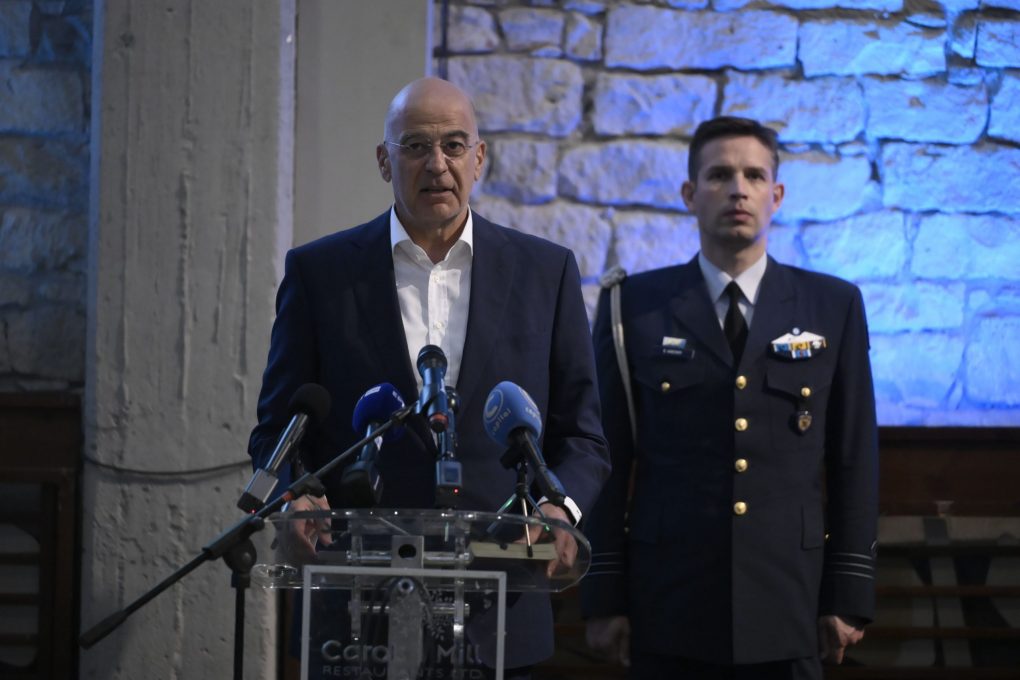
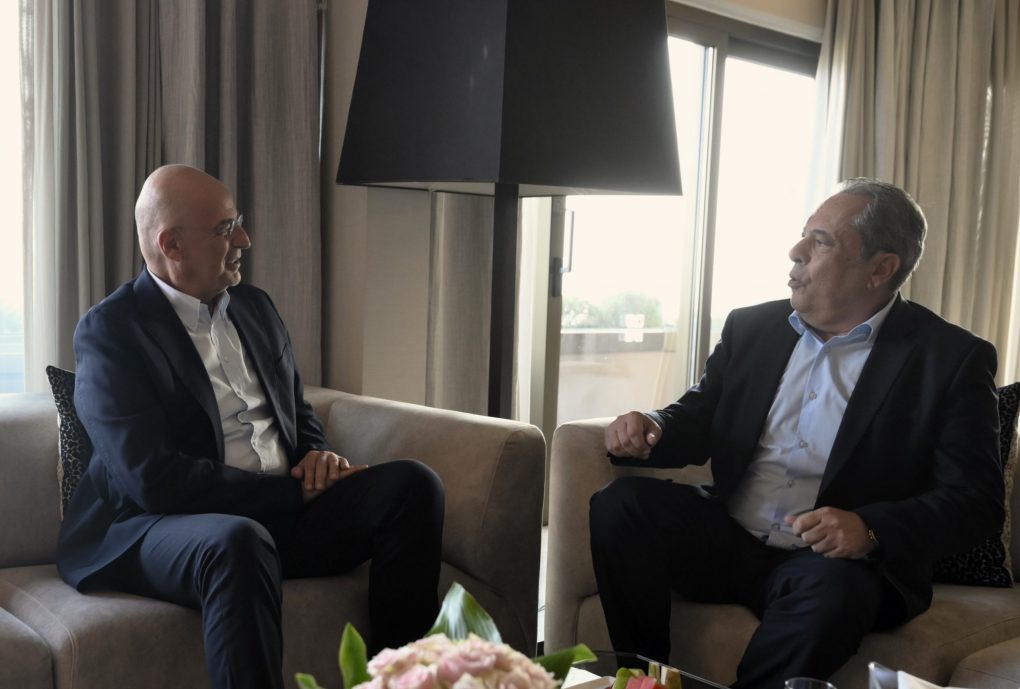
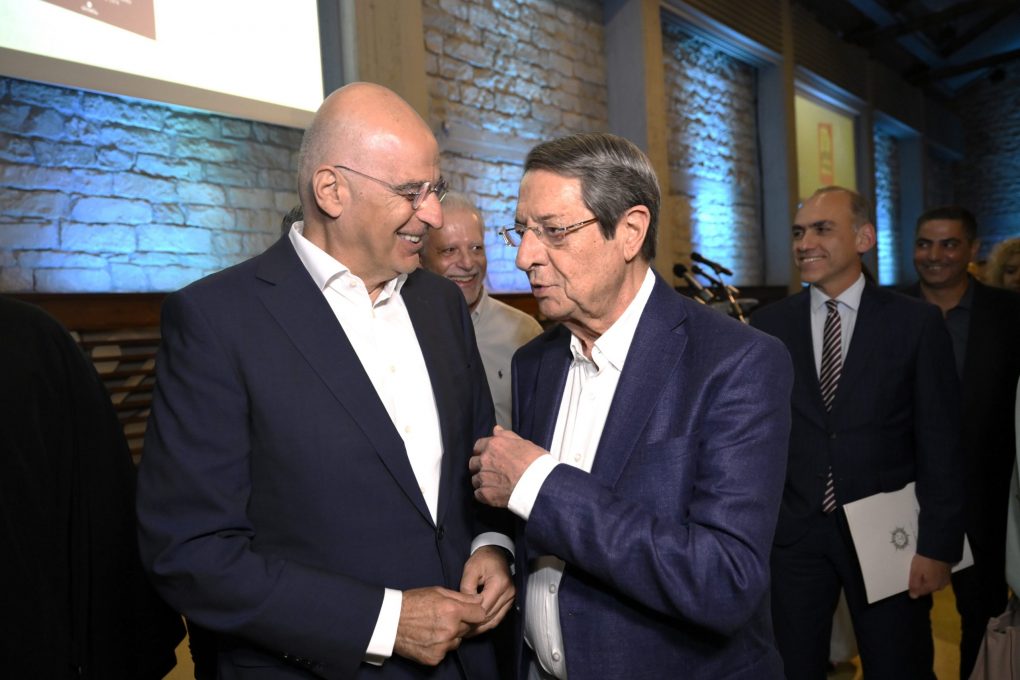
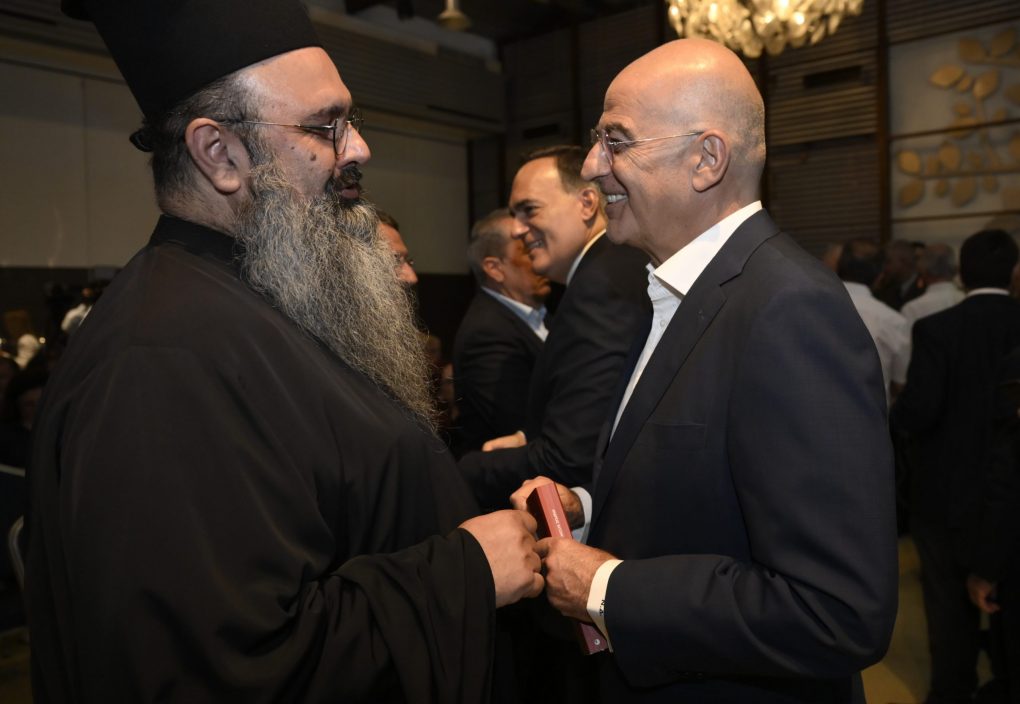
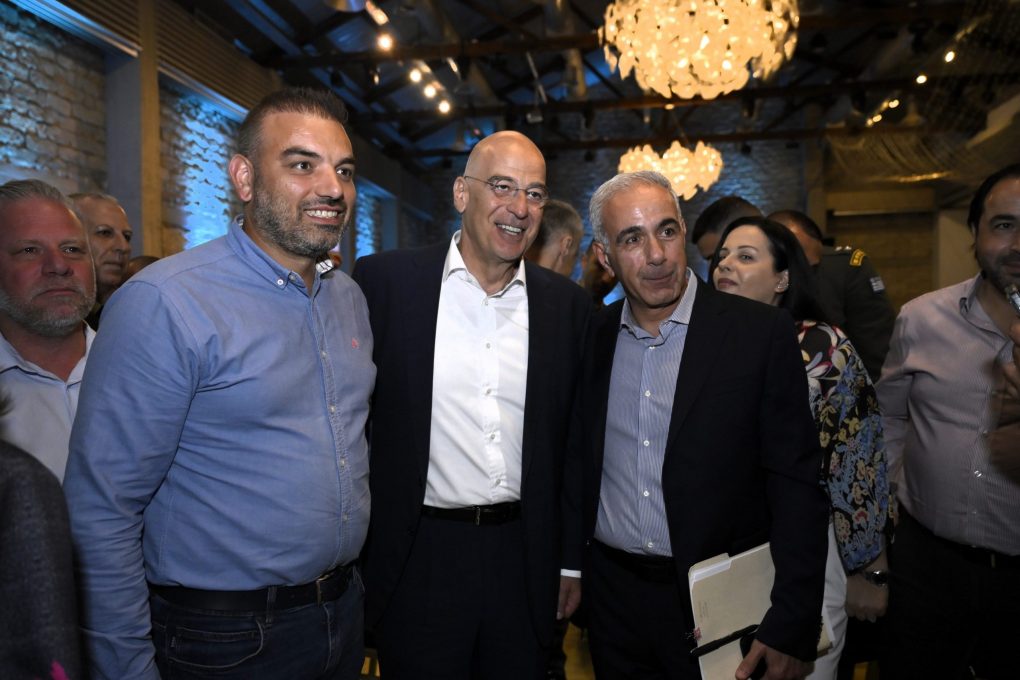
The Minister of National Defence Nikos Dendias conducted today, 16 June 2025, a visit to Cyprus.
Mr. Dendias had a private meeting in Limassol with the Minister of Defence of the Republic of Cyprus Vasilios Palmas. The two Ministers discussed about the Defence cooperation between Greece and Cyprus, as well as about the recent events happening in the Middle East, underlining security issues.
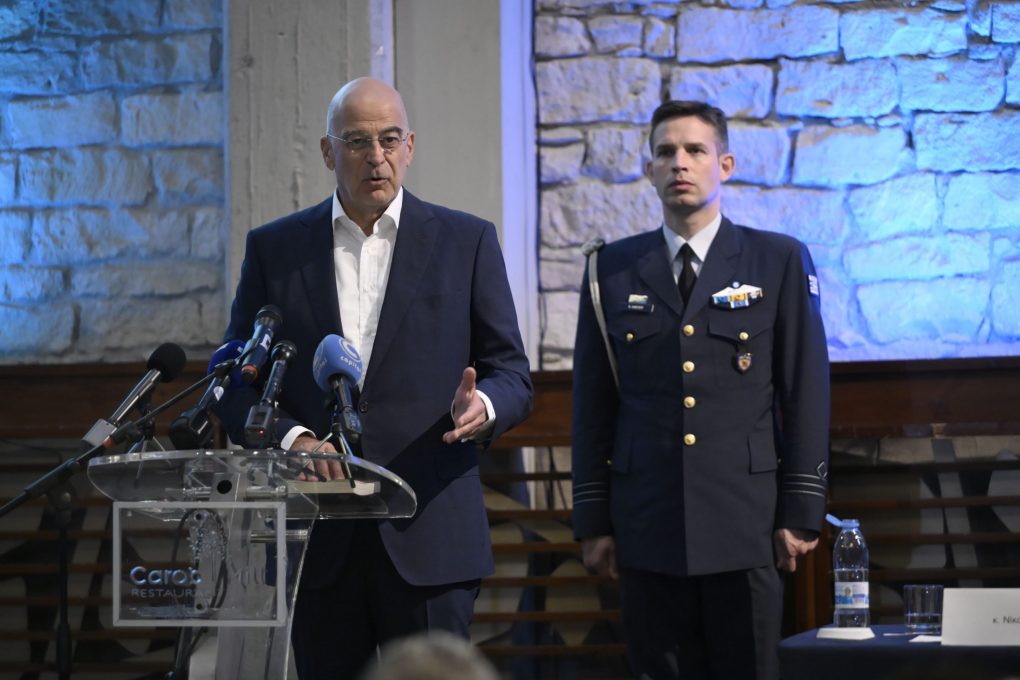
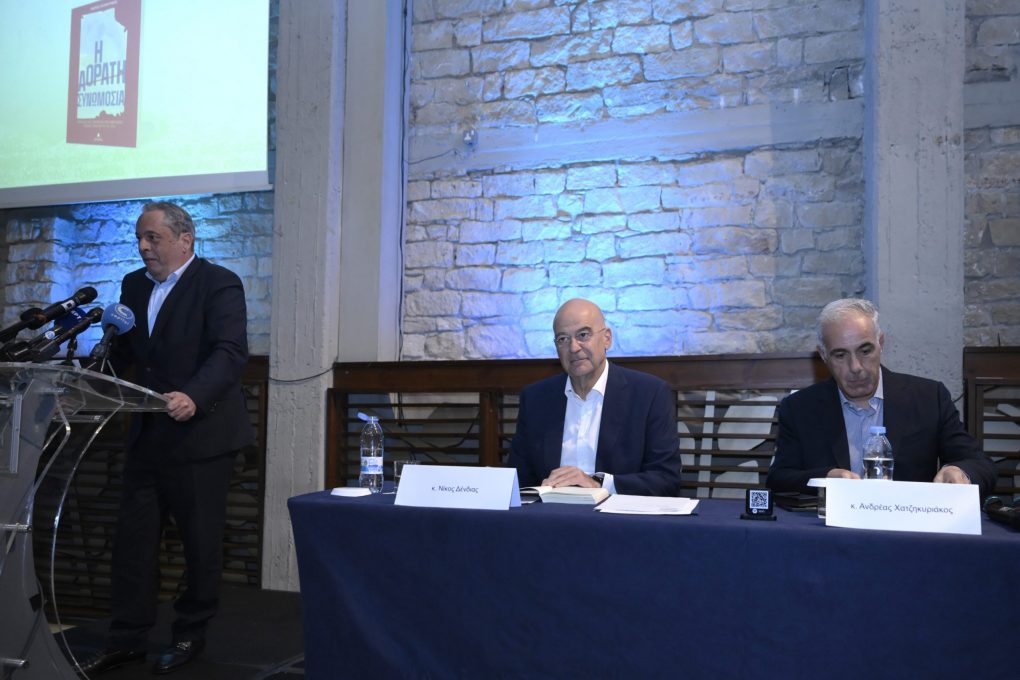
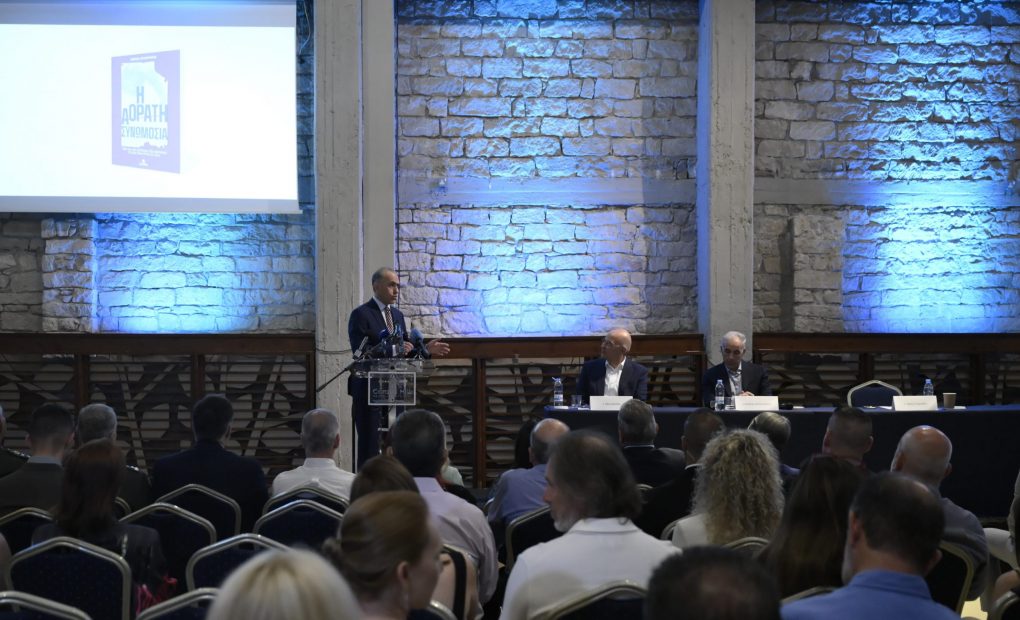
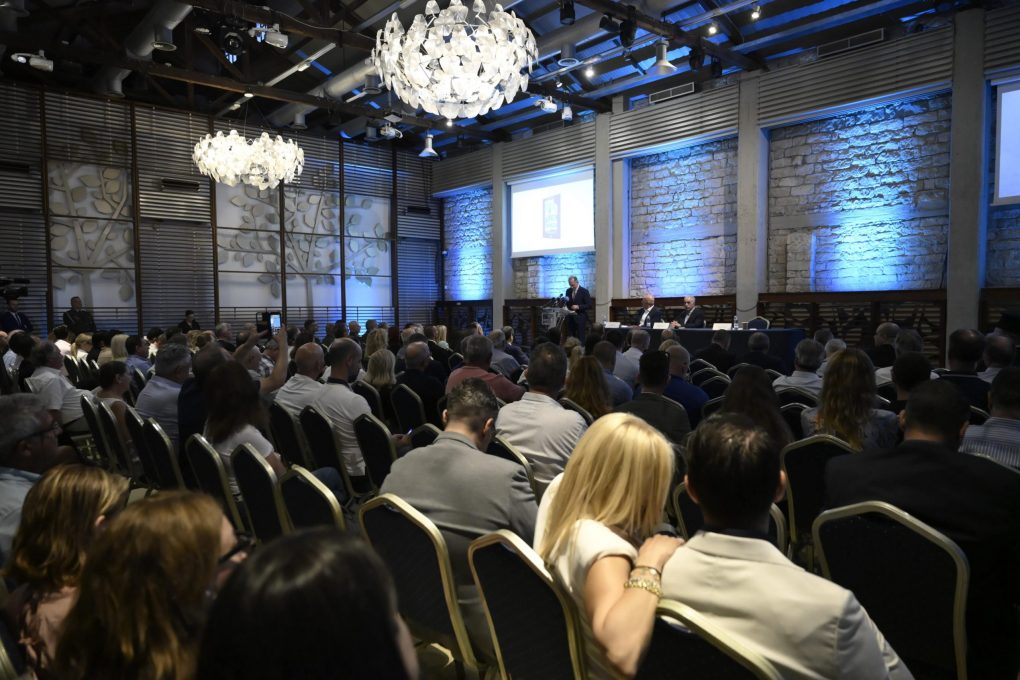
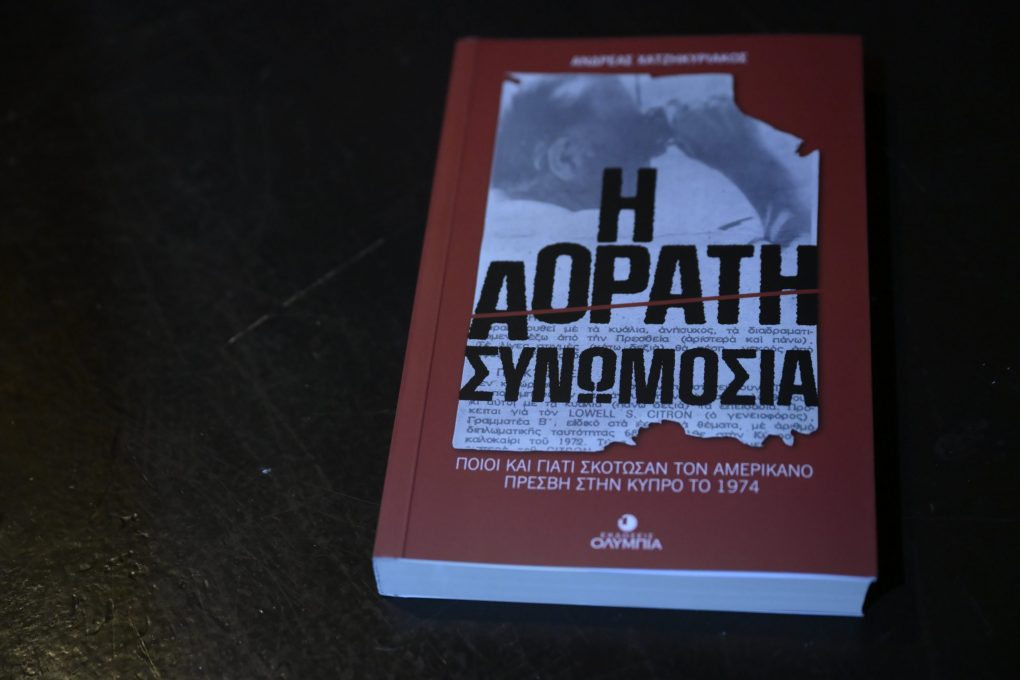
Subsequently, the Minister of National Defence attended the presentation of Andreas Hatzikyriacos’ book named “The Invisible Conspiracy”, where he gave a speech alongside with the President of the Institute “Glafkos Kliridis” Charis Georgiadis. The Cypriot Minister of Defence also made an address.
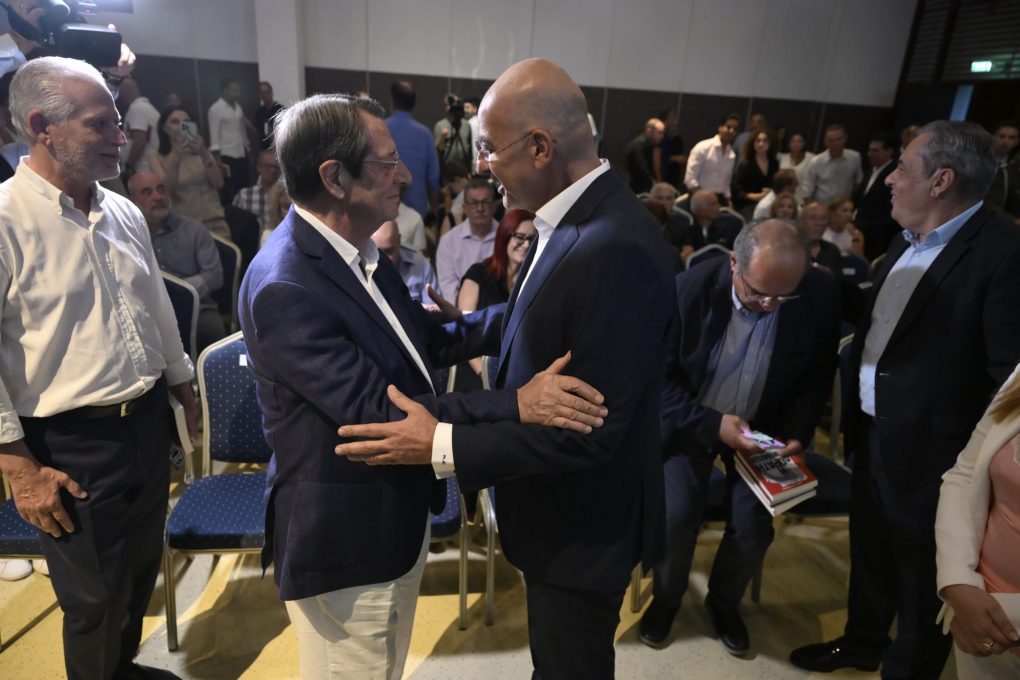
The previous President of the Republic of Cyprus, Mr. Nikos Anastasiades, the Minister of Labour and Social Insurance Yiannis Panayiotou, the Minister of Justice and Public Order Marios Hartsiotis and the Deputy Government Spokesperson Yiannis Antoniou attended the event.
The MPs Efthimios Diplaros, Nikos Sykas, Foteini Tsiridou, Panikos Leonidou, Marinos Sizopoulos, the Mayor of Limassol Yiannis Armeftis, the Ambassador of the Hellenic Republic Ioannis Papameletiou, the Chief of the National Guard General Staff Georgios Tsitsikostas, the Commander of the Hellenic Force in Cyprus Colonel Asterios Despoudis, representatives of the Holy Archdiocese of Cyprus, journalists and citizens, also attended the event.
In his speech, the Minister of National Defence noted the following:
«Dear Mr. President, Mr. Anastasiades, esteemed Ministers, dear Ambassador of the Hellenic Republic, honourable MPs, Chief of the National Guard, Mayor, ladies and gentlemen,
I will begin with a confession, though I have personally repeated it, it is a great joy for me every time I am in Cyprus.
I feel a unique connection and I am deeply interested. I would like to thank you for the opportunity to take part in the life of Cyprus, not just as a visiting Minister of the Hellenic Republic restrained to my official duties.
I would also like to warmly thank you for the honour of allowing me to say a few words about your book. I mention this because, in recent years, some friends collected various articles I had written and some of my public statements, thus giving me the idea to publish a book.
I visited a notorious publisher’s house. The publisher found my idea interesting. But, I stopped the project, fearing that my words would come out as a political conclusion, something I did not wish for the circumstance of the country of that time.
What else do I remember? In order to motivate me, my publisher proposed that we did a great book presentation ceremony etc. He told me, though, one thing: “Do not invite politicians”. I asked him “Why?”, and he replied to me: “Son” – he was quite old, he is still alive – “politicians never talk about the book, it’s all about themselves”.
I will avoid this challenge by sharing something that is still very bizarre. I never mentioned it to Vasilis, with whom I discussed; it is about an incident of my life that led me to encounter the event described in the book. The death of the American diplomat Roger Davies. At that time, when I first encountered the event, I were not aware of the death of Antoinette Varnava.
In the summer of ’74, I was a 14-year-old child in the United States, hosted by the American government in a program named “Camp Rising Sun”, which had brought together 18 children from 18 different countries with 18 American children from 18 American states. We became one group, which the American Government thought was interesting.
We visited various U.S. states and Washington D.C. Notoriously, there was a scheduled meeting with the President. President Nixon had resigned. But, why am I saying all that? There was also a scheduled visit to the State Department.
The day we visited the State Department, the flag was at half-mast. When I asked “Why?”, I was told that the American Ambassador in Cyprus was killed. Many years later, I revoked it to my memory, when Vasilis mentioned to me – I admit I was surprised by your research – that the flags were at half-mast. At that time, President Ford gave an order, according to which all flags at all government buildings should be at half-mast, during Roger Davies’ funeral.
Coming back to the book. It is truly enjoyable. It can be read pretty agreeably. I mentioned it at my first encounter with the author, whom I didn’t have the honour and joy of meeting earlier. It is a book which is read pleasantly, despite its heavy tone. The author has an exceptional writing style. Not only does he know well the facts and has the capacity to make an analysis, but he also has a writing style that helps the reader.
In order for someone to understand how much he is helping the reader, let me say that in his book he is dealing with a traumatic period for the Greeks. It isn’t always easy to read about the summer of ’74 in Cyprus. This book hurts or, to say it differently: It took me many years to manage reading the history regarding the War of Asia Minor, during the period of 1920 – 1922. I couldn’t stand it. I always left any book aside. Yet, this is a book that someone can read and feel the atmosphere of that period.
I must also tell that, fortunately, most of us didn’t experience it. We know it, but didn’t experience it. This atmosphere is apocalyptic.
There is a central event concerning the book, the murder of the American Ambassador, especially in a seemingly incredible circumstance. You witnessed it right before, at the hallway of the first floor. An Ambassador who is not descending to the armoured office, as planned by the security rules, when even a “miniscule” event occurs outside of the embassy. He is staying on the floor, but he is not seated at his office. Someone could assume where he could be.
He is located at the hallway of a floor, but the bullet finds him and kills him. It kills also Antoinette Varnava. This is the central event. A central event, whose actor we don’t know.
I will insist on the last page, which contains the decisive remark of the author – full of meaning in my opinion. On the 18th of August 1978, a month after the statement that the Davies’ case would be re-examined, the Government Spokesman in Nicosia was asked about any developments on the issue. His answer was: “I have nothing to say about it”. After all those years, we are at the same point.
Certainly, this book is discreetly expressing assumptions and thoughts. It is not a book that rests “deaf” or “blind” to the rumours at that time. It is, on its own, an event that is opening a window to the general sombre ambiance of the era. I must also say to you that, for me, this is an era that raised questions, and even a little shock.
Because, alongside the event and the rest of the things that were occurring during that period, a national tragedy is taking place: The Turkish invasion of Cyprus.
And one might expect that right after this tragic event, all internal opposition or anything else would paralyse, automatically forming a unified and unidimensional coalition, in order to confront the greatest tragedy in progress.
Yet, as the book depicts, this didn’t happen. The Greeks continued to recreate, under the tragic moment’s regime, their internal conflicts, their disputes, their tactics. They did not project a unified, clear, stable and utterly unidimensional, homogenised front against what was taking place.
This book helps you participate –even if this is hard to digest – into the ambiance of that era. It also helps you understand it; something that in a plain historical book, maybe it wouldn’t be simple and understandable. You wouldn’t read it in that way.
I have the greater picture of the majority of books that have been written about that tragic time. I will quote you another unpleasant experience, when President Anastasiades (I was also participating as Minister of Foreign Affairs) was negotiating the Cyprus Issue at the basement, in Geneva. In order to be able to participate with dignity in this tragic two-day delegation, I researched everything that had been written about the Cyprus Issue, and about that period. I spent endless hours reading.
And yet, this book did not transfer the ambiance of that time. It didn’t give it to me. I was given knowledge, reflection and facts. I was given sequencing. I was given policies. I was not given the feeling lingering among the Greeks, in Nicosia, in Cyprus.
Keeping this idea in mind, this book is read with great interest, talking about a central event, the murder, as an open window to a tragic moment. However, it gives you the opportunity to comprehend it, to see the characters, the names that we all know – and this is always essential. There is no reason for me to repeat them. As if a fourth dimension is entering the narration, apart from the three usual ones, which is permitting us to re-examine a painful and sad era, taking our distance, using the time that has passed and the calmness of the excellent author’s writing style.
In his effort, the author does not lose his humanity. He refers to Anna, the Ambassador’s daughter, who lost not only her father but also her mother to cancer, in a short period of time.
One can imagine how a child, a young girl, passes from one chapter of her life to another, obliged to travel by airplane, stand aside the President of the United States at an airbase, in order to accompany her father’s coffin, being already motherless, take the flag of the United States in her hands, gather up anything left from her family and carry on with her life.
I am saying this, because the author is not omitting this side of the events, the humane one. The way he is describing in his book makes you feel like you had met the murdered Ambassador, Roger Davies.
You thanked me for my presence. Please allow me to deeply thank you for the opportunity you have given me to read your book and for being here today in Limassol with you.
Thank you very much».