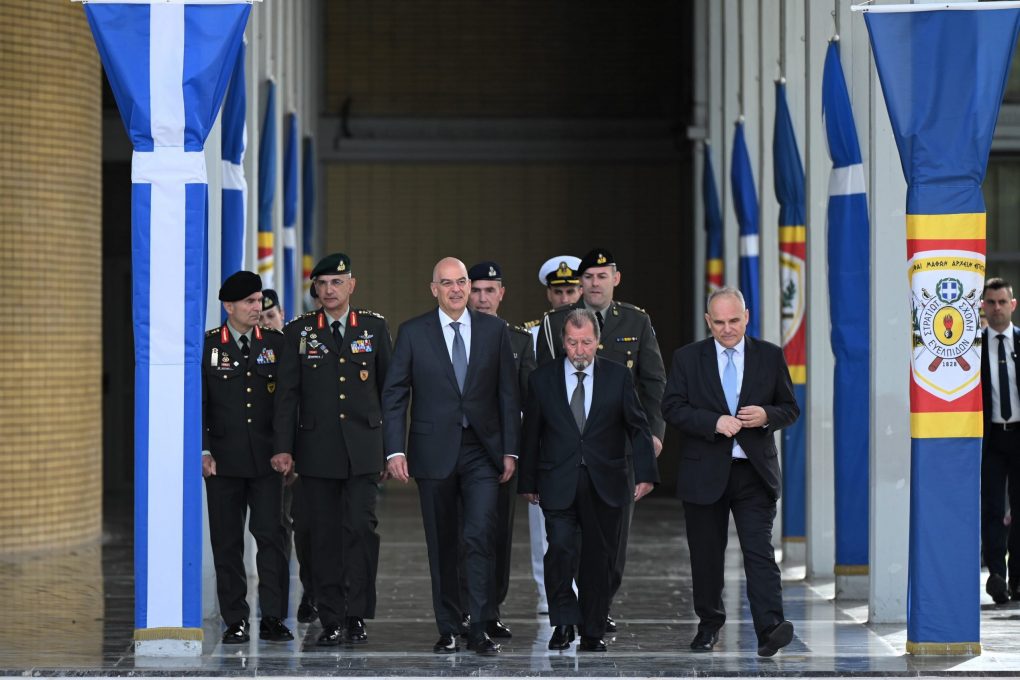
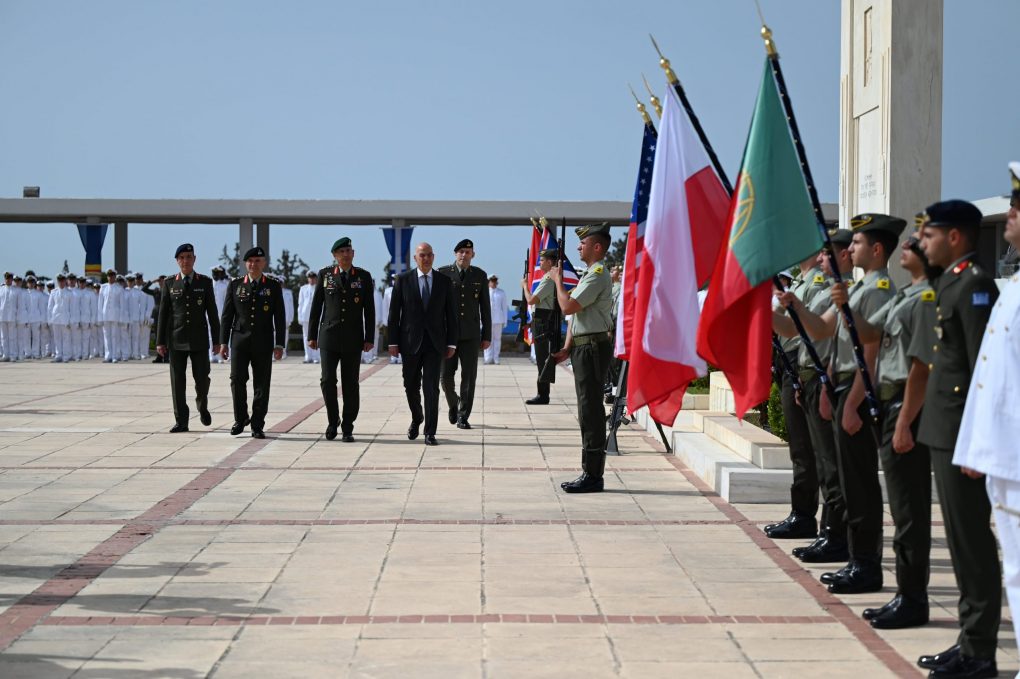
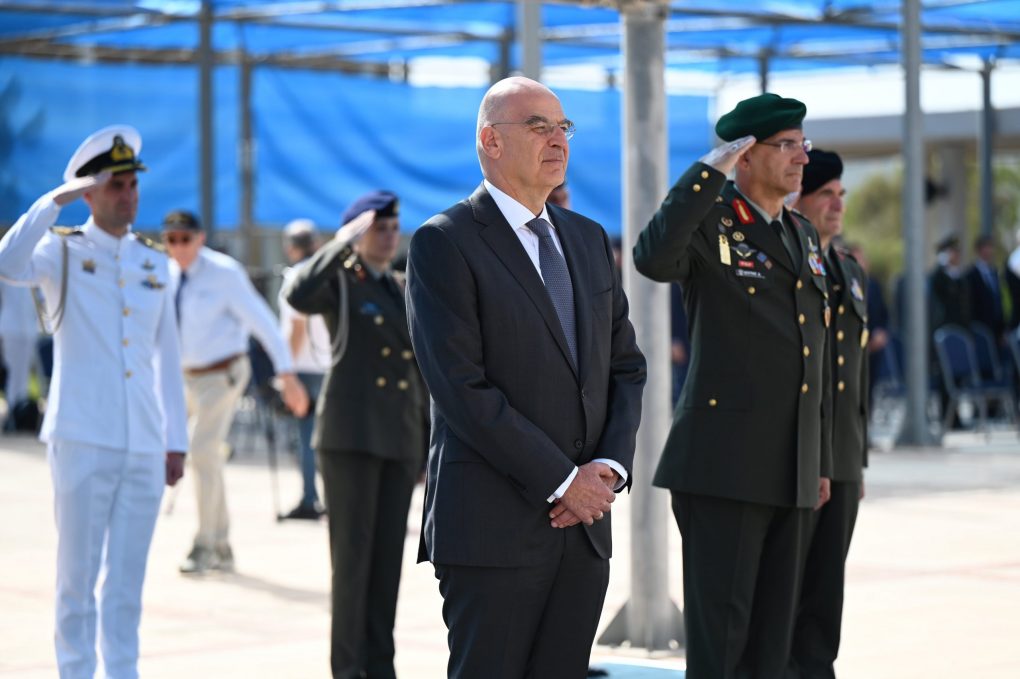
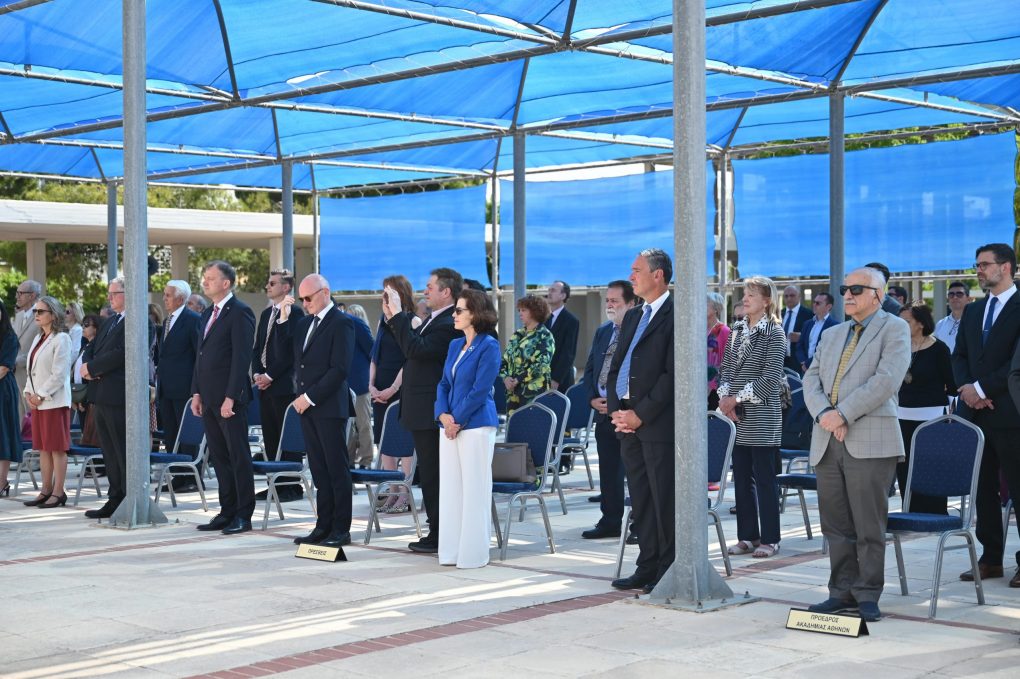
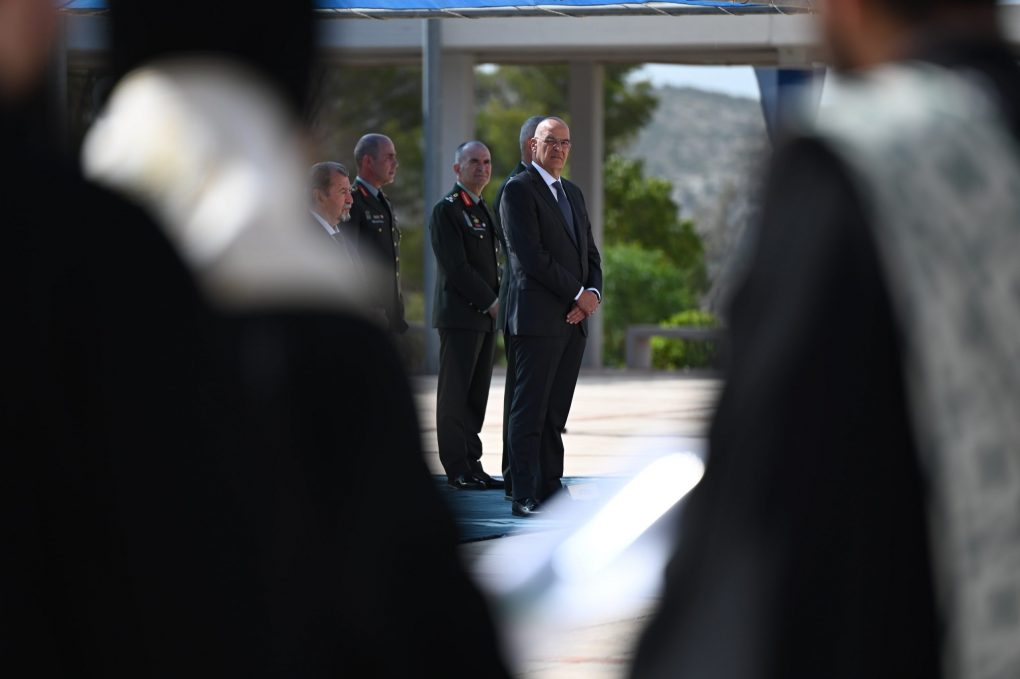
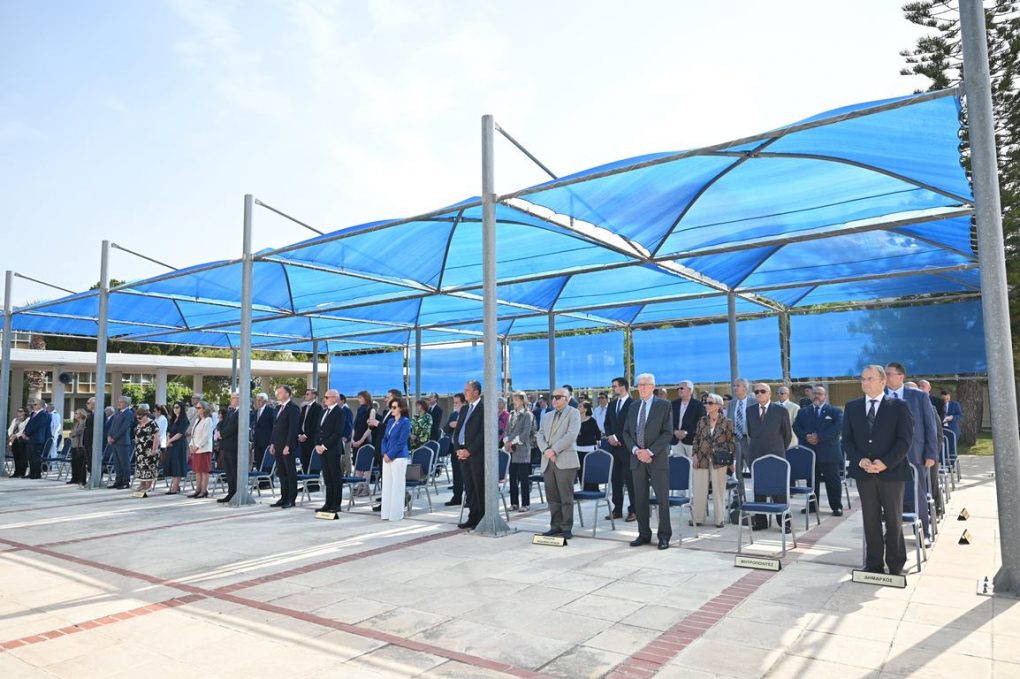
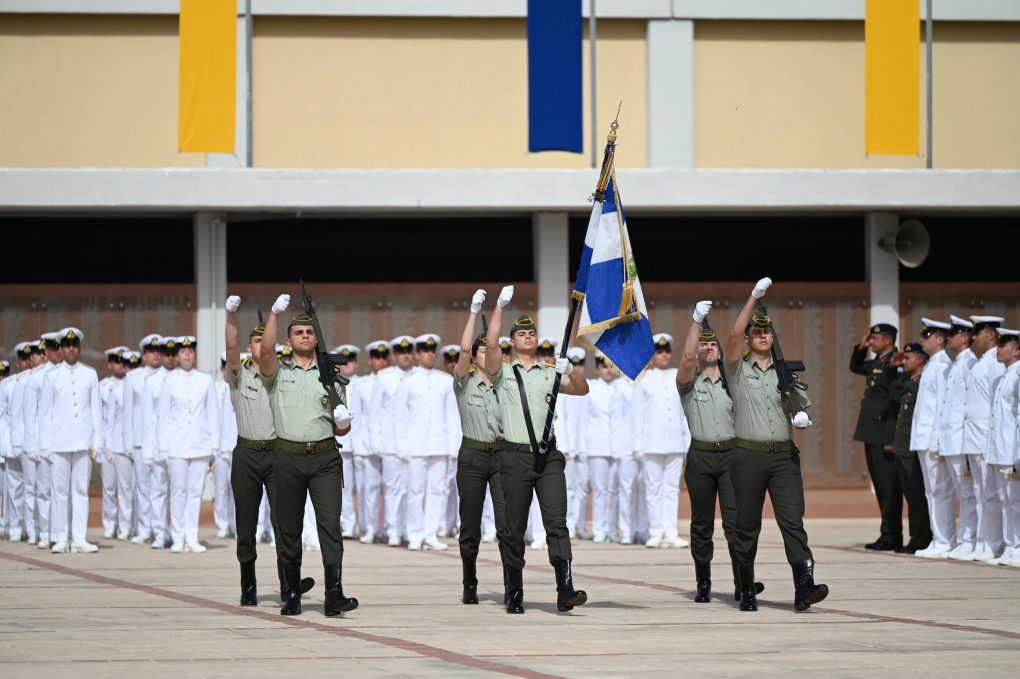
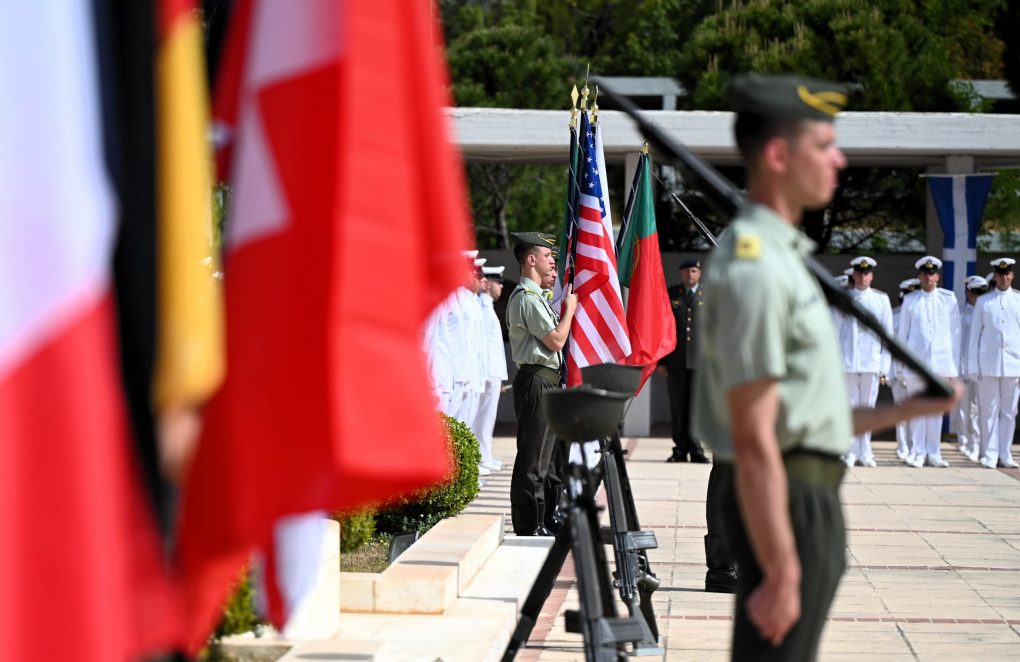
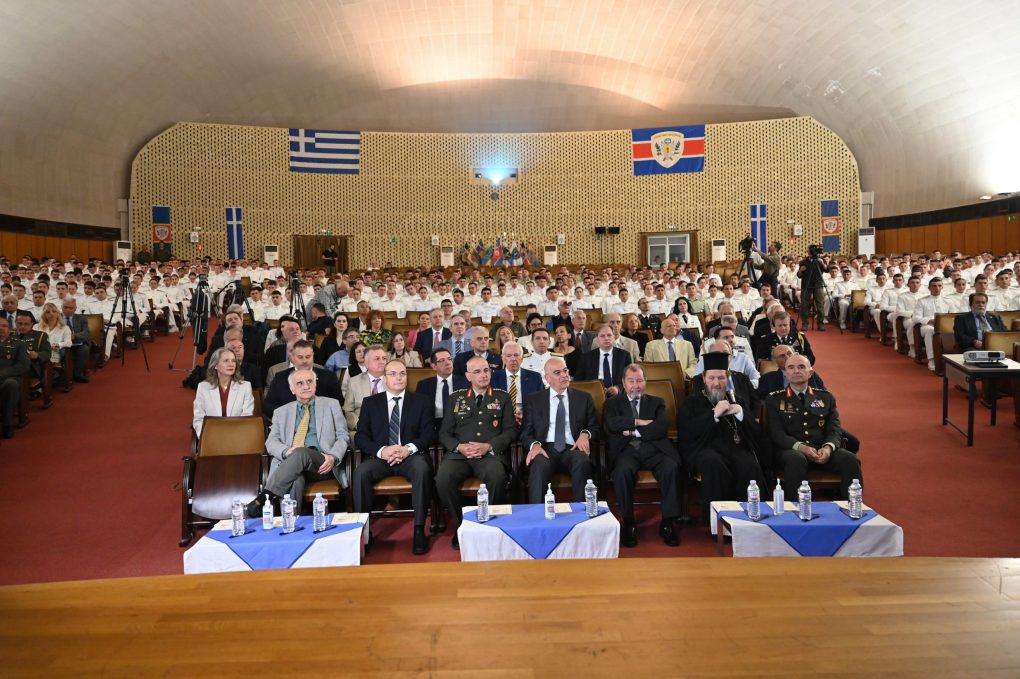
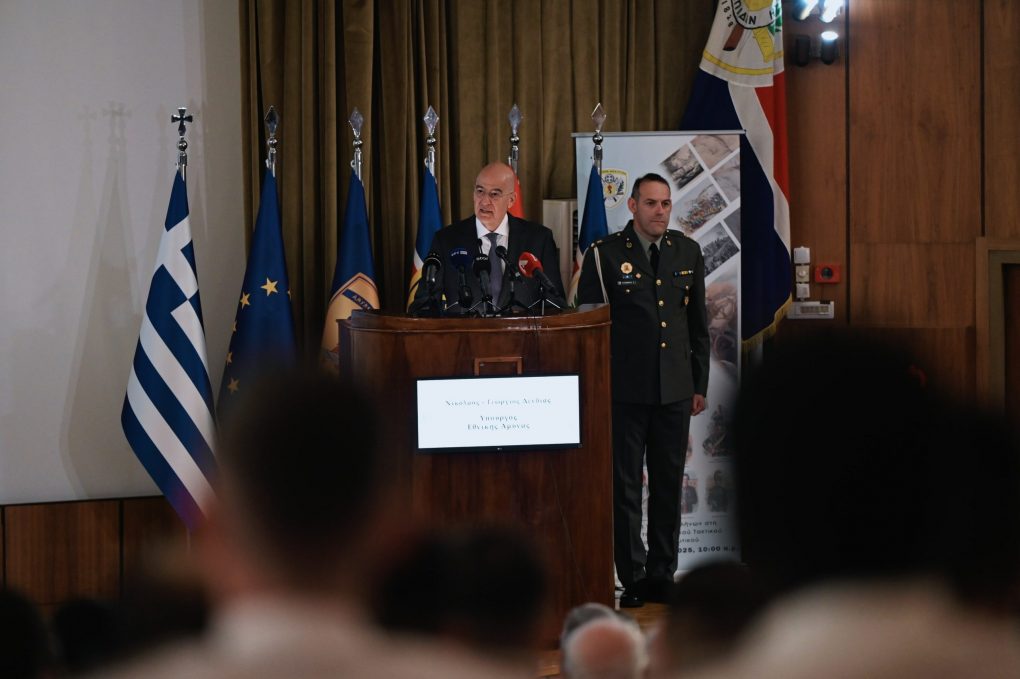
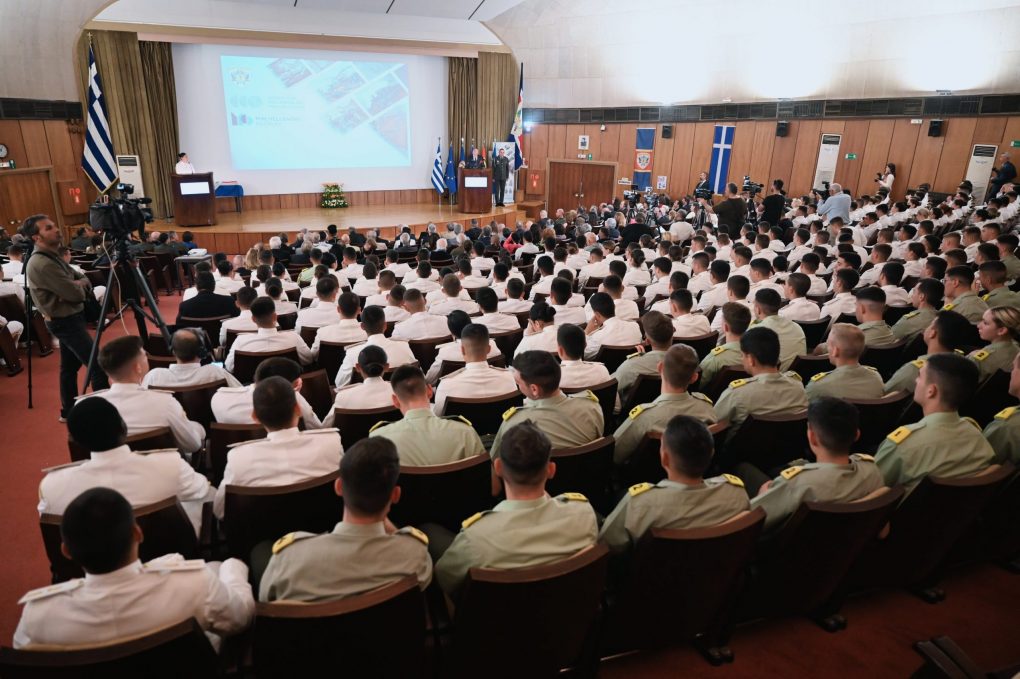
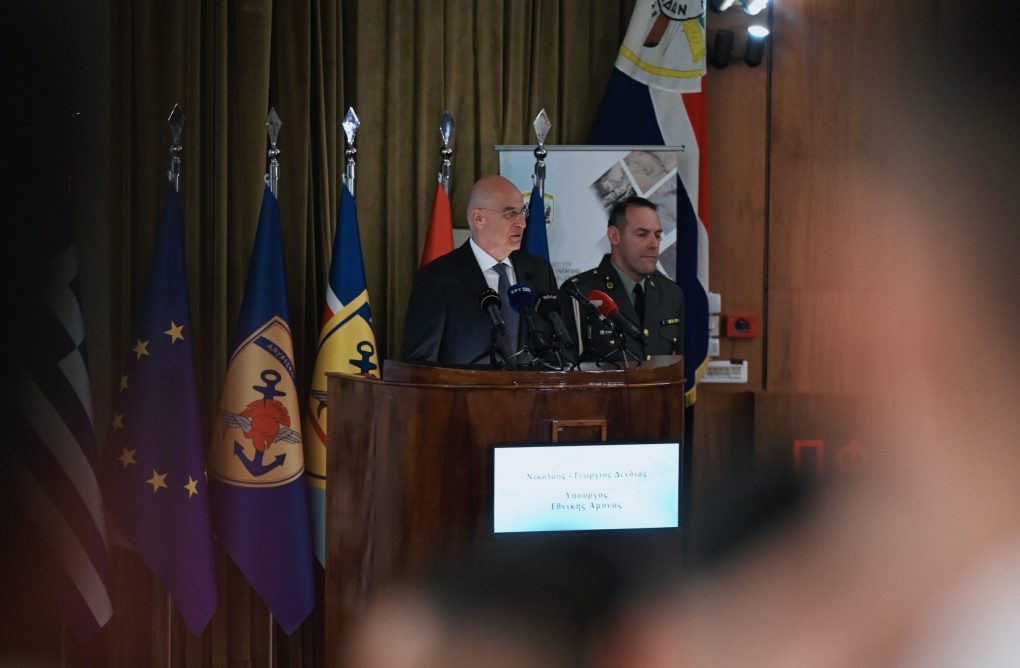
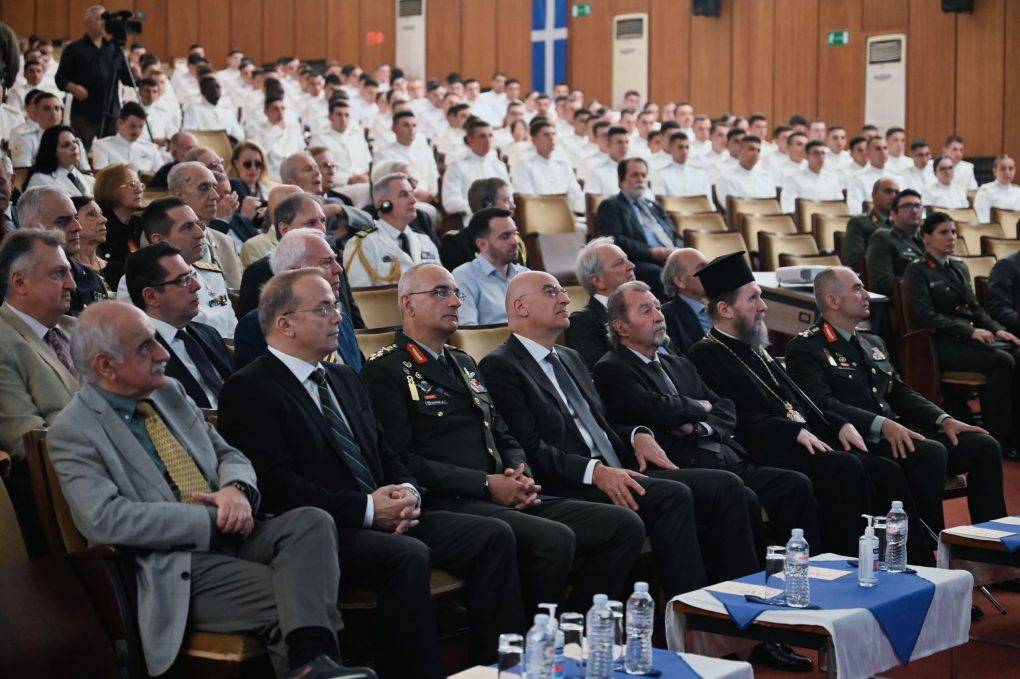
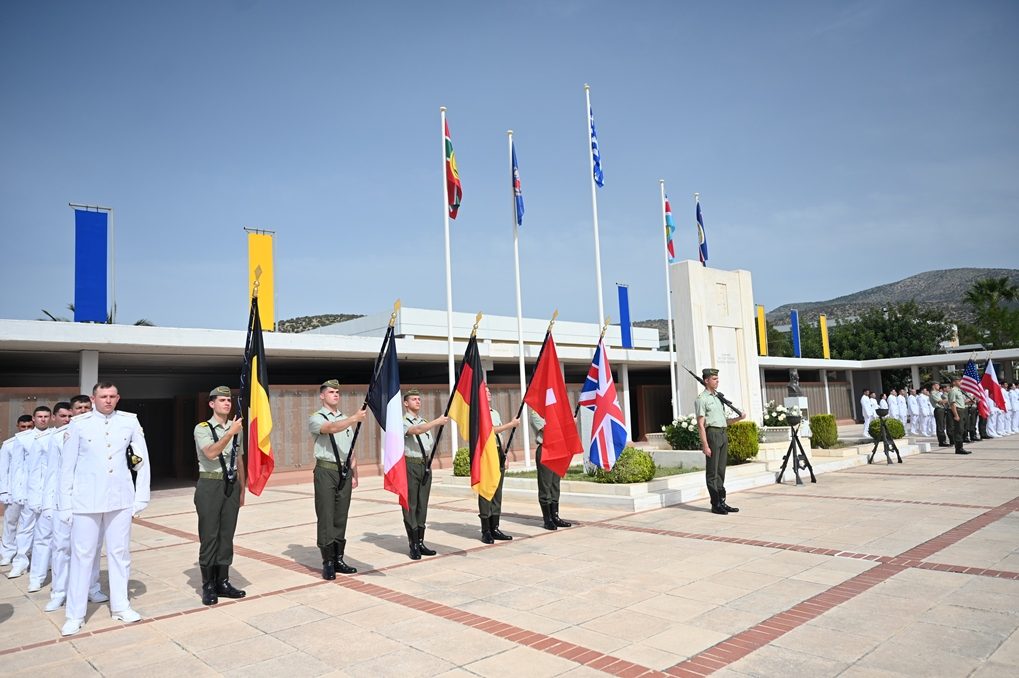
On Friday 9 May 2025, the Minister of National Defence Nikos Dendias attended the conference regarding “The contribution of Philhellenes to the Establishment of the Hellenic Regular Army and the Hellenic Navy”, which was co-organised by the Hellenic Military Academy, the Society for Hellenism and Philhellenism, and the Philhellenism Museum. The conference was held in the facilities of the Hellenic Military Academy.
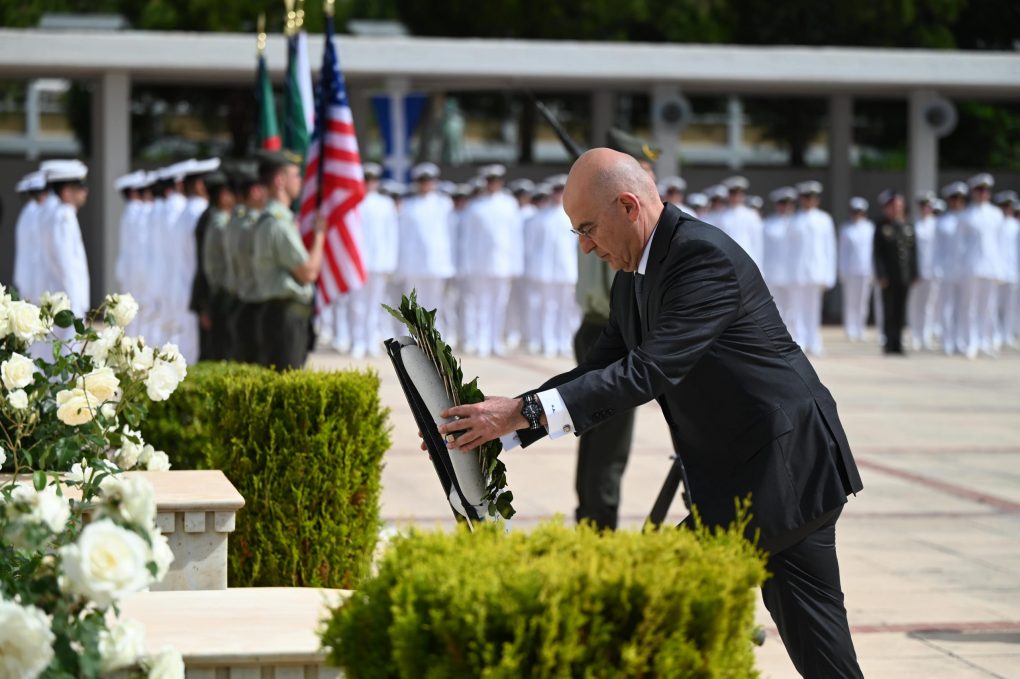
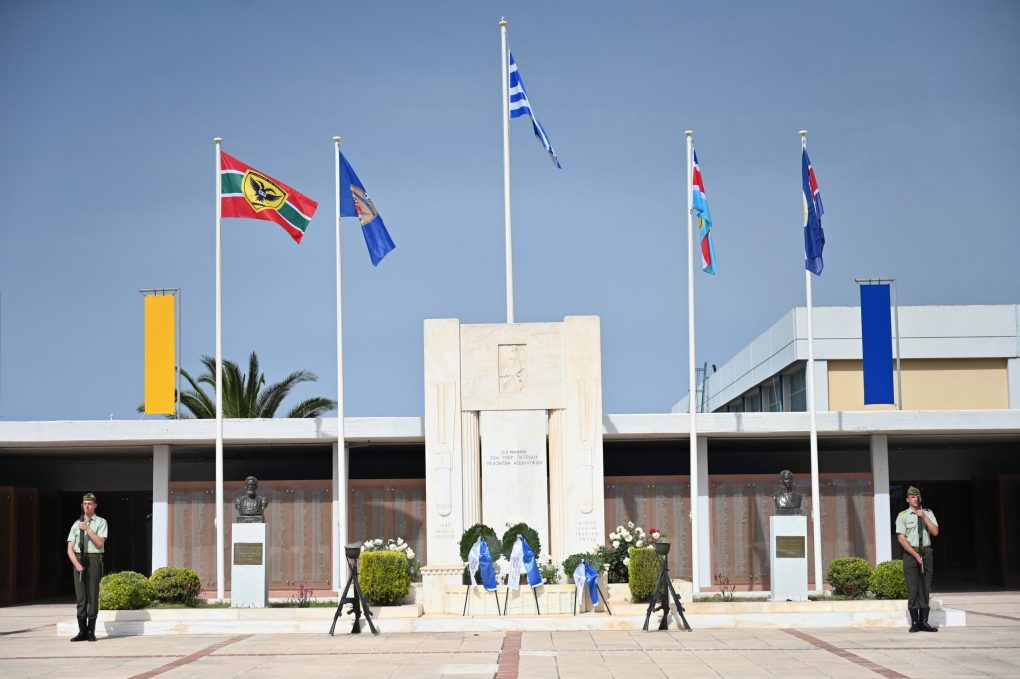
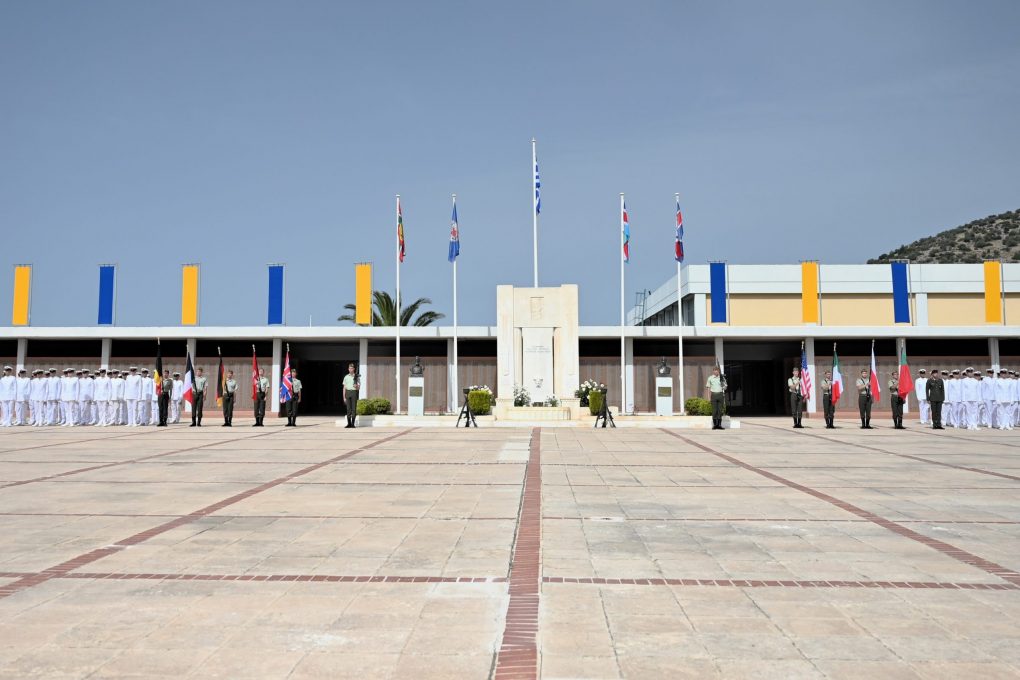
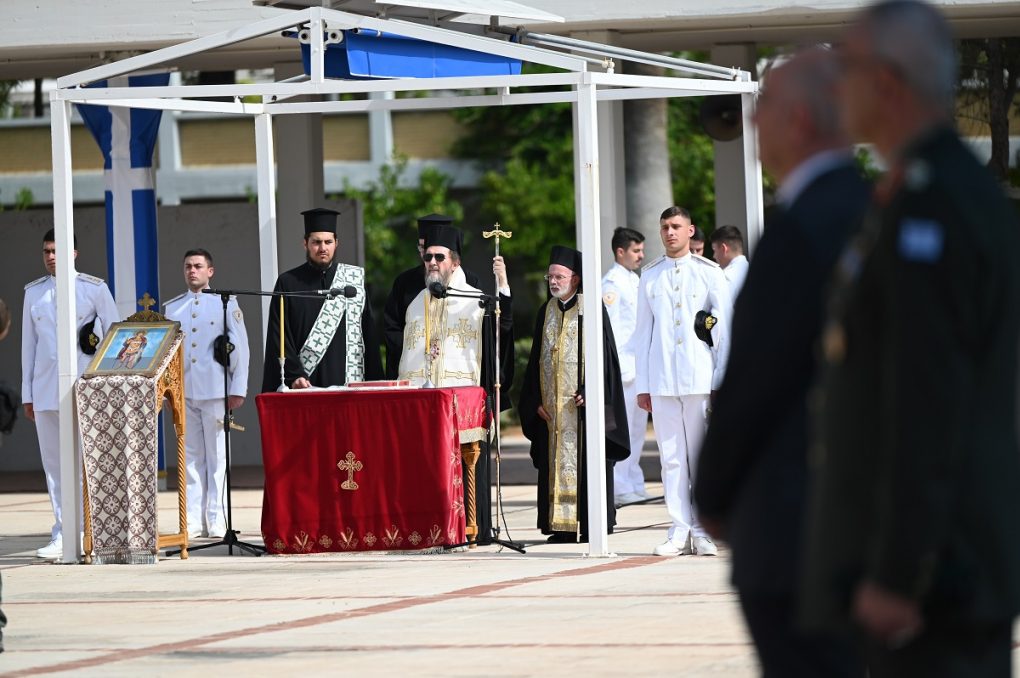
The Minister of National Defence first attended the memorial service officiated by His Eminence the Metropolitan of Glyfada, Hellenikon, Voula, Vouliagmeni, and Vari Mr. Antonios, at the Monument of Heroes. Following, 9 gun salutes were fired in memory of the Philhellenes and wreaths were laid by the political and military leadership of the Armed Forces.
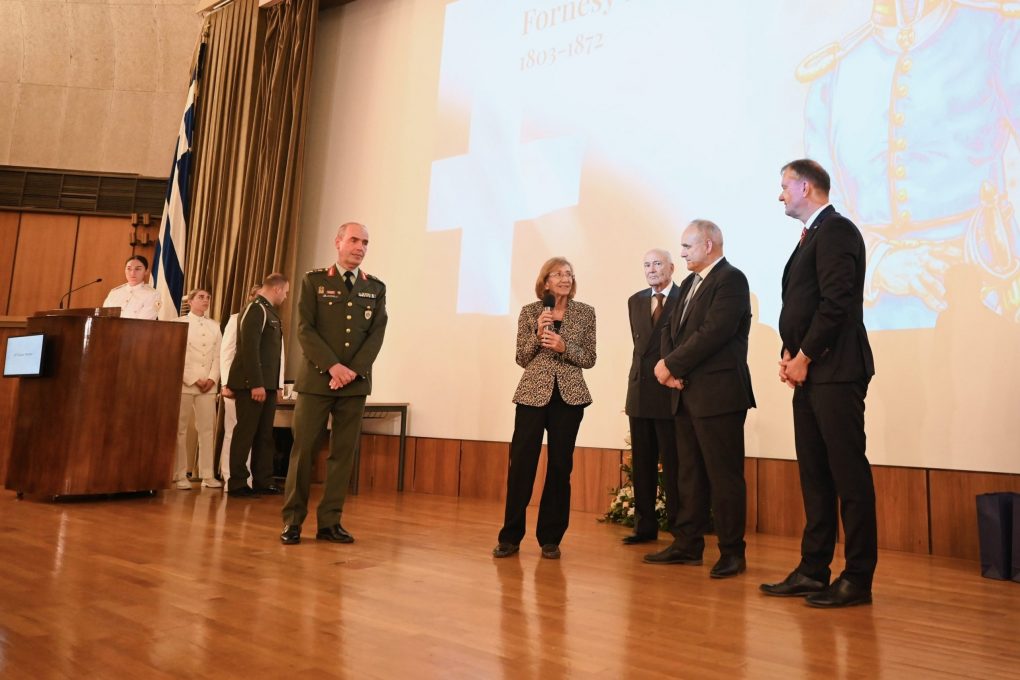
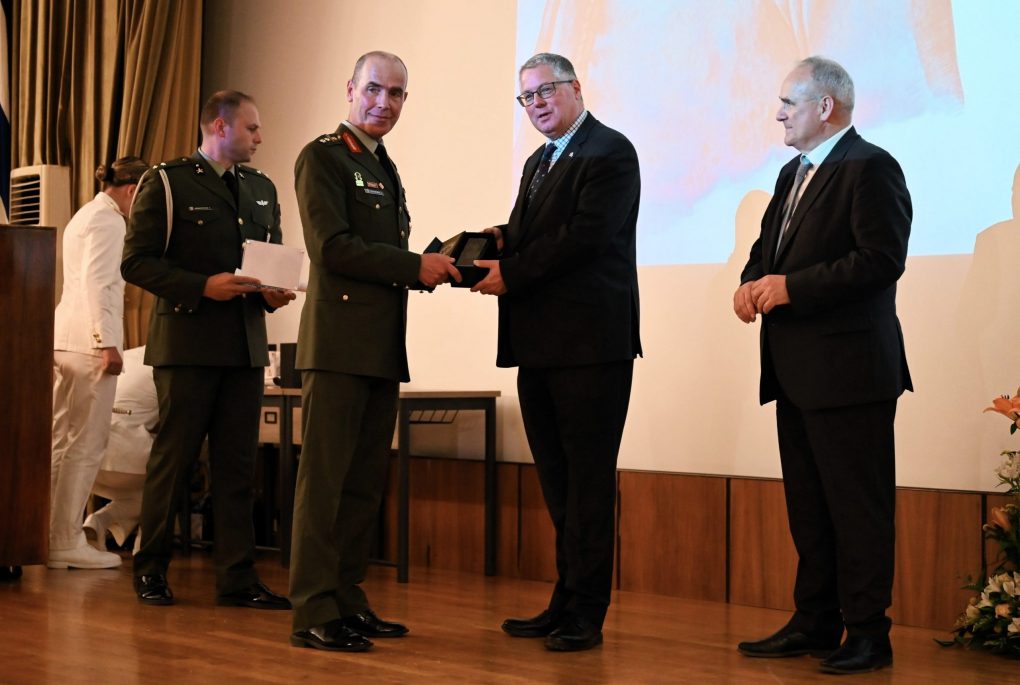
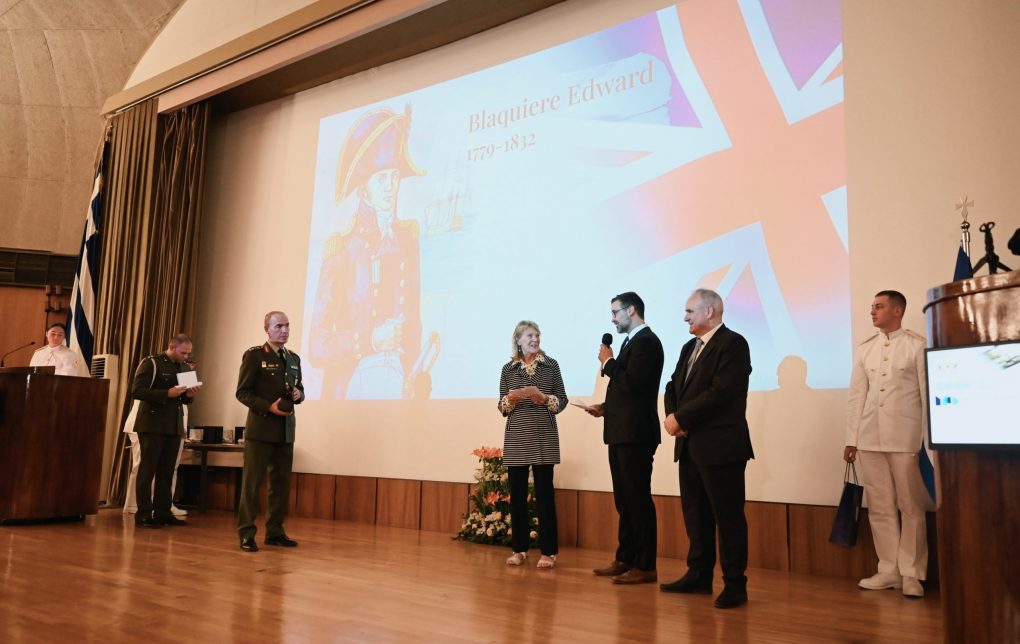
Following, the Minister proceeded to the “Major General Alexandros Xiros” Amphitheatre, where the conference was held, and during which, 25 descendants of significant Philhellenes were honoured for the contribution of their ancestors to the Struggle for Greek Independence.
The Speaker of the Hellenic Parliament was represented by MP Giannis Tragakis.
On behalf of the military leadership, the conference was attended by the Chief of Hellenic National Defence General Staff, General Dimitrios Houpis, as well as the Chief of Hellenic Army General Staff, Lieutenant General Georgios Kostidis, representatives of the Chiefs of Hellenic Navy and Air Force General Staffs, the Commandant of the Hellenic Military Academy, Major General Anastasios Polychronos, Honorary Chiefs, Active Duty and retired Officers and NCOs, and Hellenic Military Academy Cadets.
The conference was also attended by the President of the Academy of Athens, Michalis Tiverios, the Mayor of Vari, Voula, Vouliagmeni Grigoris Konstandellos, the Vice President of the Council of State Dimitrios Emmanouilidis, the President of the Court of Revisions, Court of Revisions Judge (Grade A) Michail Tsiloglou, Ambassadors and representatives of diplomatic delegations of the countries of origin of the honoured Philhellenes, the Director of the Diplomatic Service of the Ministry of Foreign Affairs, Ambassador Michail Diamesis, Embassy, Military, and Defence Attachés, the Mayor of the Holy City of Missolonghi Spyridon Diamandopoulos, the Mayor of Vyronas Alexios Sotyropoulos, the Director General of Harvard University in Greece Christos Giannopoulos, the Dean of the Hellenic Military Academy, Professor Giorgos Kaimakamis, Professors of the Hellenic Military Academy, the Founder and President of the Society of Hellenism and Philhellenism / Philhellenism Museum Konstantinos Velentzas, as well as representatives of foundations and institutions.
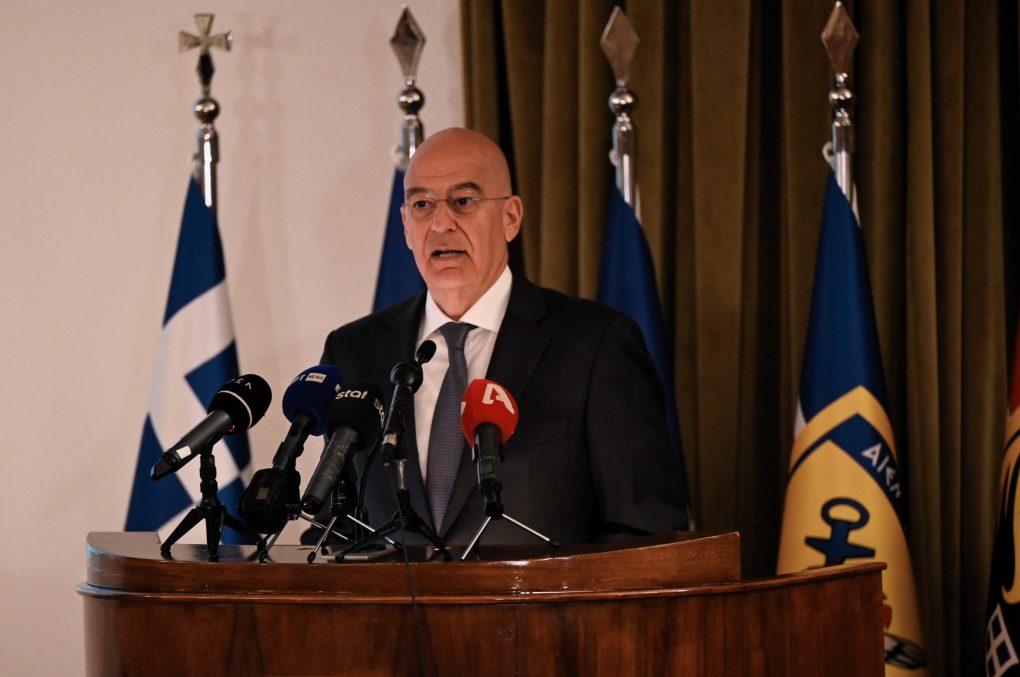
In his address, the Minister of National Defence mentioned the following:
It is with profound respect and a deep sense of historical duty that I extend my greetings to all participants of this distinguished symposium, which is dedicated to the contribution of the Philhellenes to the formation of the regular Hellenic Army and Navy.
Philhellenism emerges as a timeless wave in history, fuelled by the spiritual radiance of Hellenism.
In commemorating these noble individuals—who, guided by the universal ideals of freedom, justice, and solidarity, offered their knowledge, resources, and, in many cases, their very lives. We honour not only their memory, but also the enduring values upon which modern Greece was built.
It is a great honour for me to be here today, at the Hellenic Military Academy, in order to pay tribute to those who, even though had no Greek blood coursing through their veins, contributed equally, if not more decisively, to the freedom of our Country. Namely, to the Philhellenes. People who dedicated themselves to a much broader cause, the panhuman values, with freedom being the predominant one.
Those values first appeared as the framework of moral existence in Greek antiquity, but let us be honest, during their development, they affected modern Greece detrimentally and developed in magnitude and influence.
Those principles returned to Greece in the 19th century in order to be put to the test, while being influenced by the principles of Classicism and the Enlightenment, for the purpose of standing up to the tyranny of a crumbling empire.
I have repeatedly said, I think in this amphitheatre as well, that along with the Italian Risorgimento, the Greek Revolution was perhaps the brightest expression of Romanticism in the 19th century.
Within that context, General and Senior Officers of Europe – even people who had fought at the Napoleonic Wars as enemies a few years before – joined forces in the name of those values, in order to help establish a new nation; modern Greece.
The peak of that joining of forces and the confirmation of their efforts was the Naval Battle of Navarino. It was perhaps for the first time in human history, that the fleets of all major powers of the time joined forces for reasons other than the strategic interests of their own countries.
The Philhellenic movement was not expressed only through statements or proclamations, even though those were also significant. It acquired life through the actions and sacrifices of particular men.
Generals Richard Church, Karl Friedrich Leberecht von Normann, Charles Nicolas Fabvier, Captain Frank Abney Hastings, Lieutenants Joseph Baleste and Olivier Voutier, as well as numerous others – with the names of which we become familiar through our school textbooks – did not remain simple spectators or trainers. They became connected to the Struggle, established the Regular Hellenic Army and Hellenic Navy, and many of them lost their lives in the process.
By being here today, at the Hellenic Military Academy, the cradle of the future Officers and leaders of our Army, I would like to instil their responsibility as successors of the efforts of all those people.
Because you, my dear Cadets, are bound by historical duty. There is an interesting stanza in the twelfth word in the “Twelve Words of the Gypsy” by Kostis Palamas: “(Duty) remains; even though times change”.
The legacy of the Philhellenes who contributed to our Independence remains a cornerstone of our national tradition and strong proof of the might of the common ideas of humanity.
Thank you”.