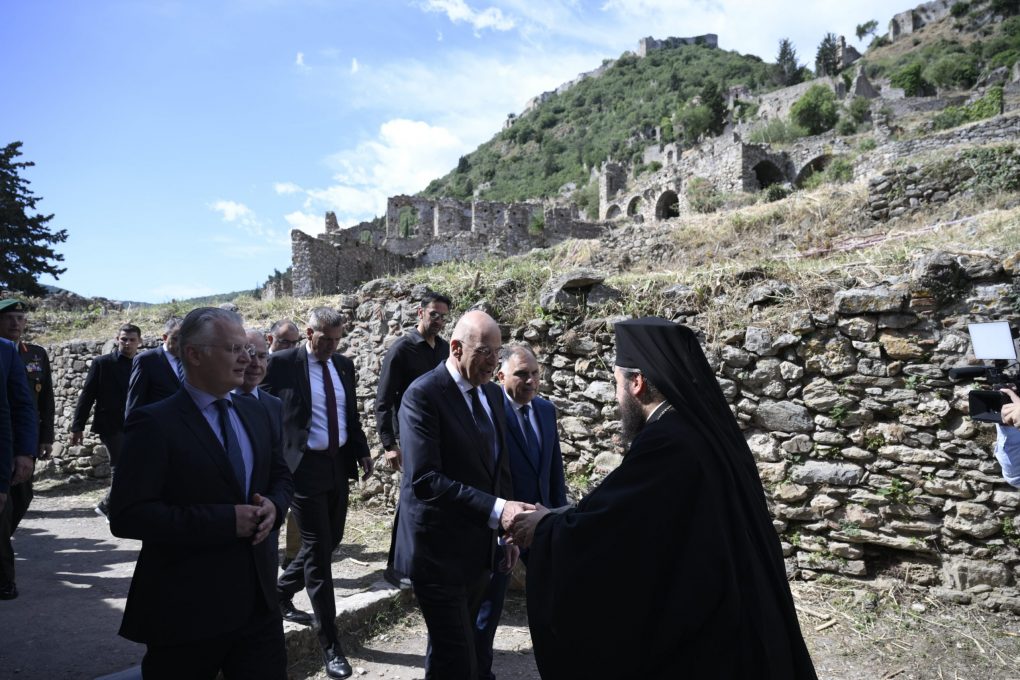
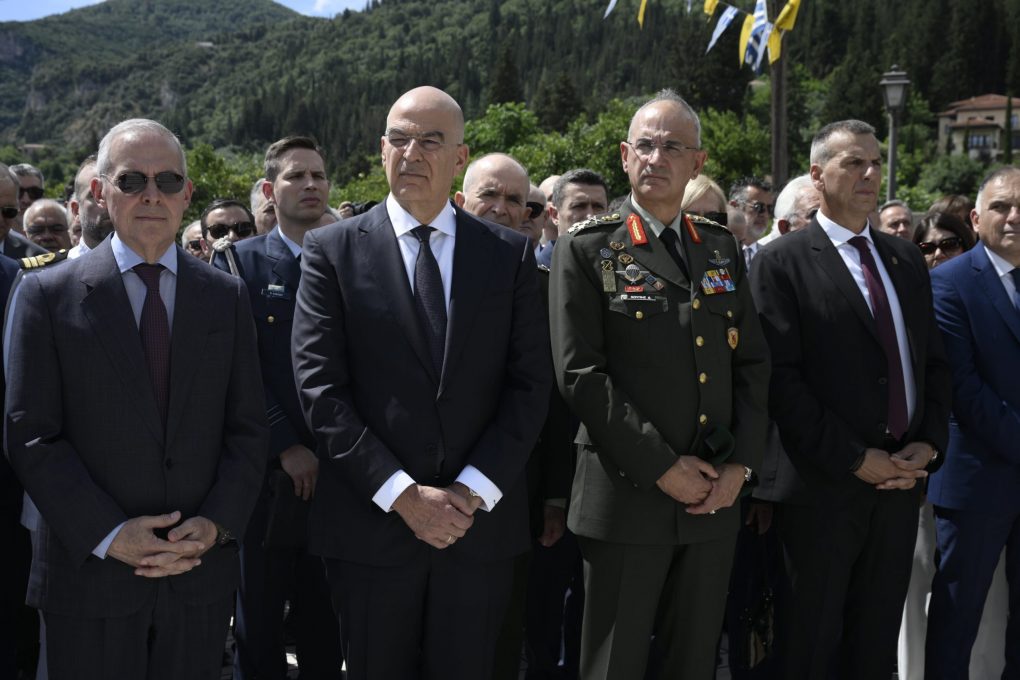
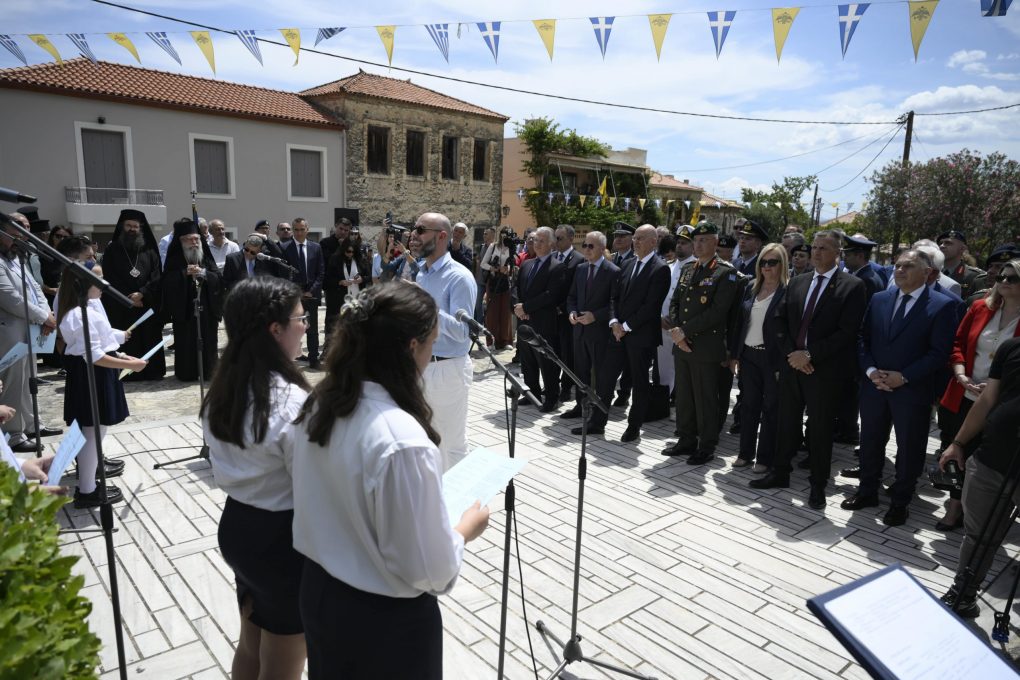
On Thursday, 29 May 2025, the Minister of National Defence Nikos Dendias, represented the Hellenic Government in the “Palaiologeia 2025” commemorative celebrations, held in Mystras, Sparta.
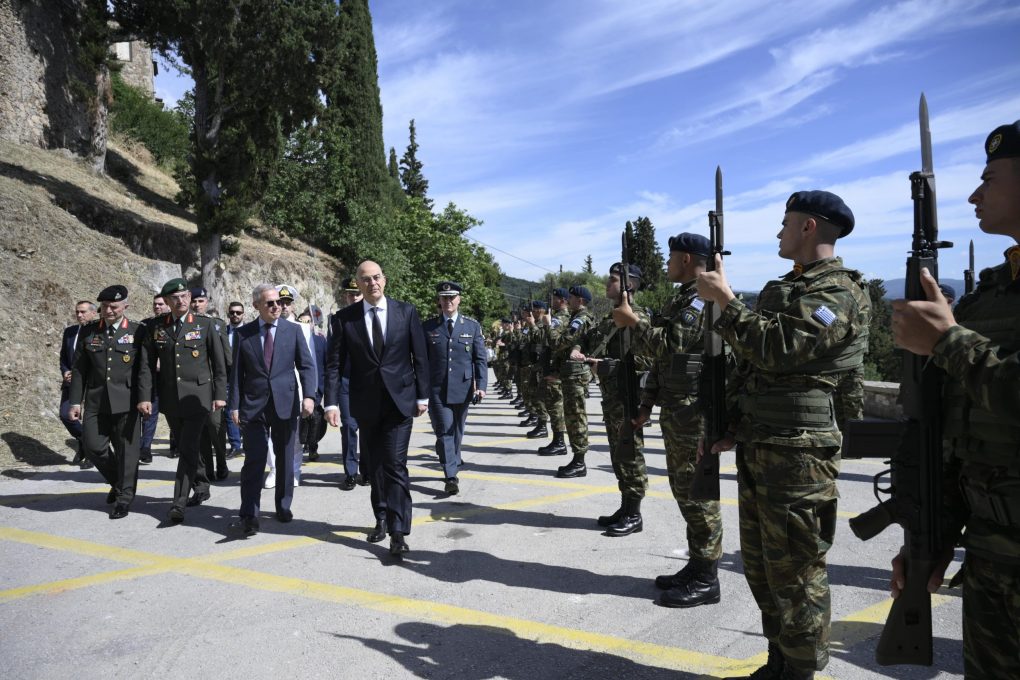
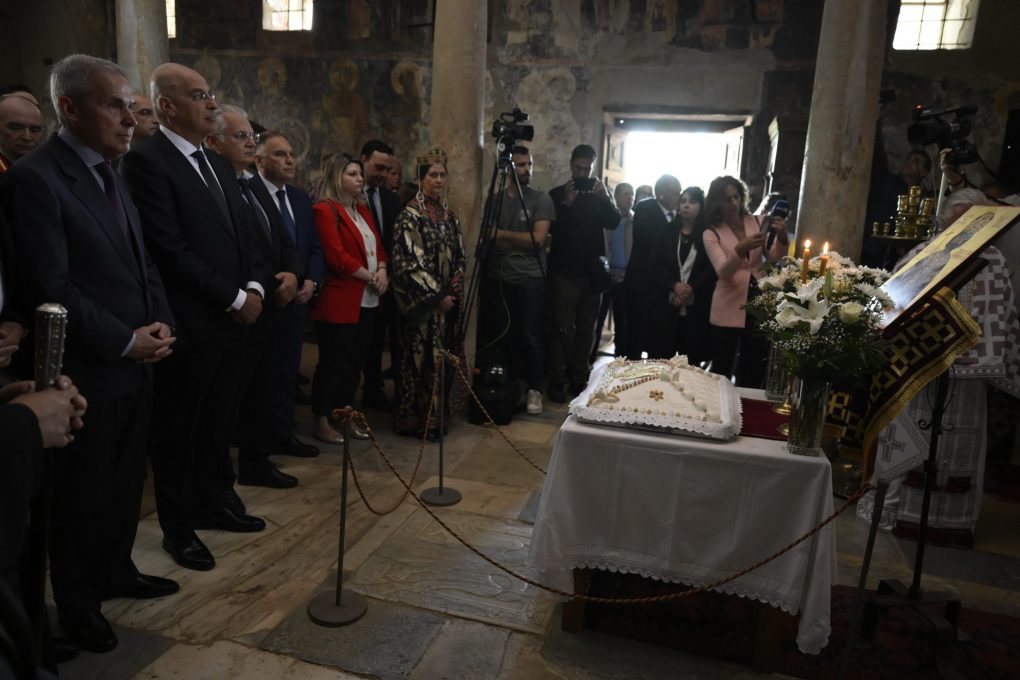
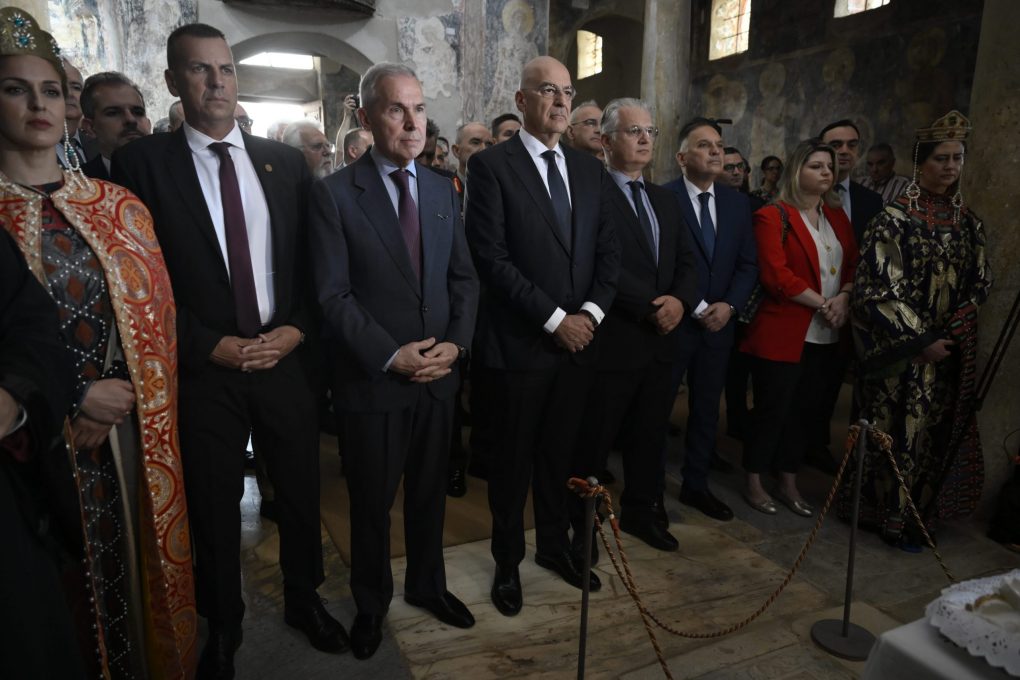
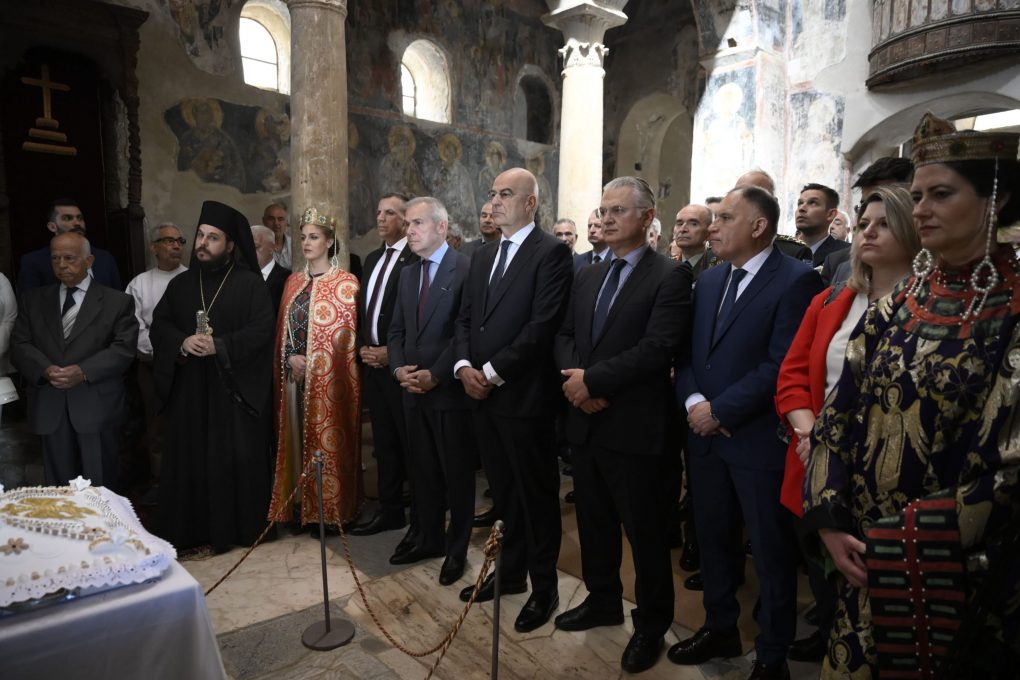
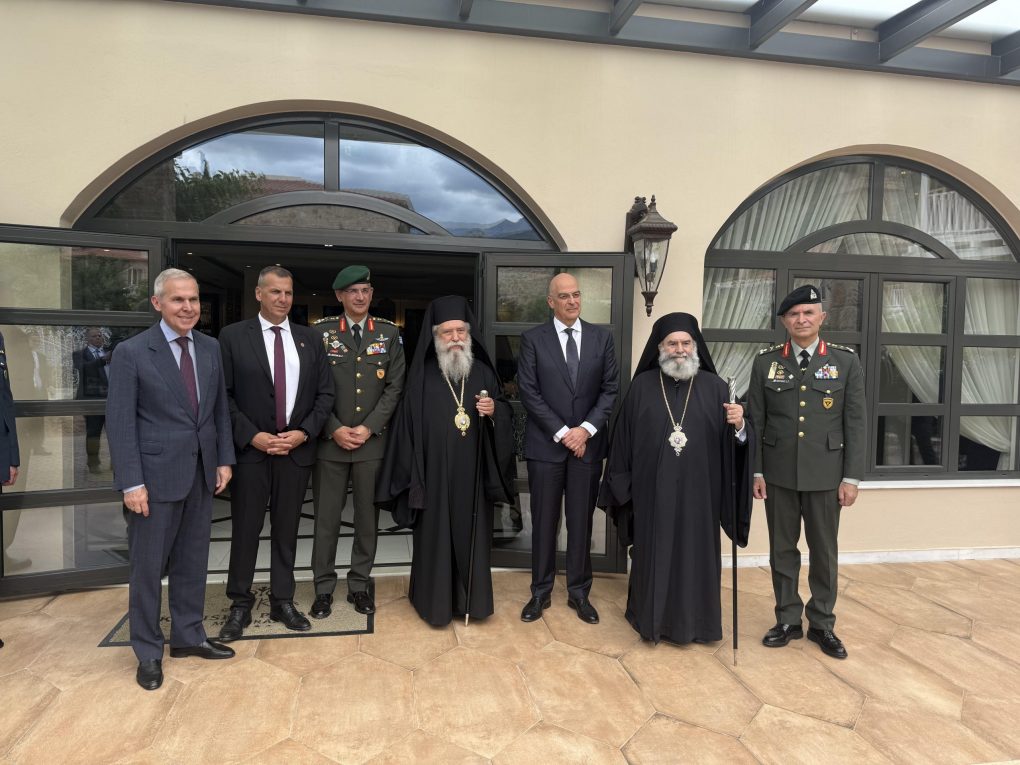
The Minister of National Defence, accompanied by the Deputy Minister of National Defence Thanasis Davakis, the Chief/HNDGS General Dimitrios Choupis, and the Chief/HAGS Lieutenant General Georgios Kostidis, attended the memorial service in memory of Constantine Palaiologos and his brothers in arms who fell at his side, which was held in the Holy Metropolitan Church of St. Dimitrios, in the archaeological site of Mystras, presided over by His Eminence the Metropolitan of Monemvasia and Sparta, Mr. Eustathios.
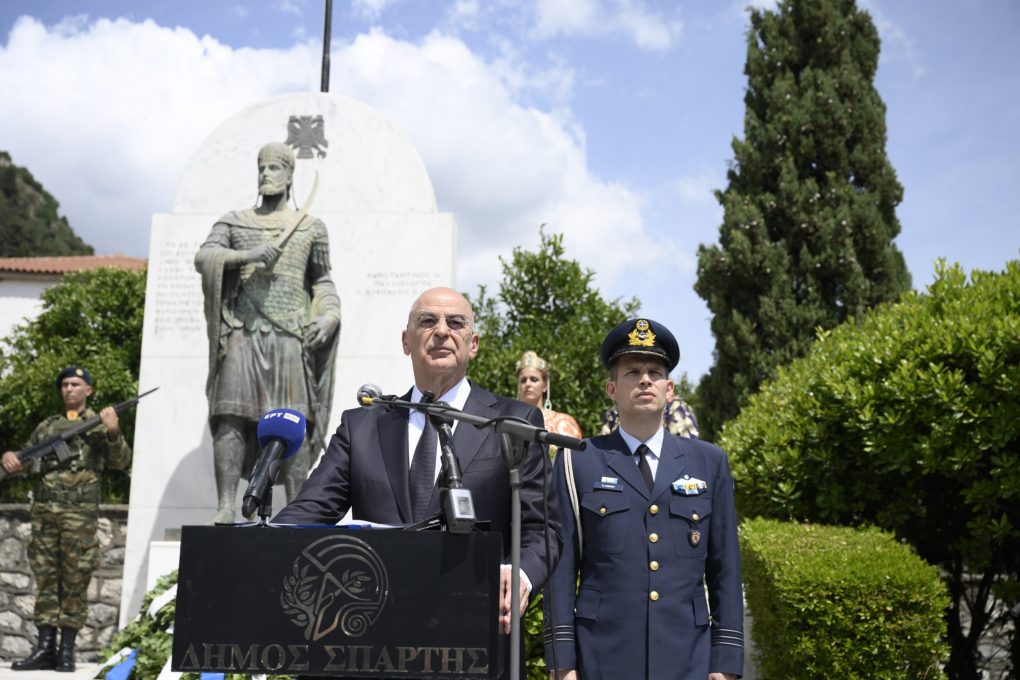
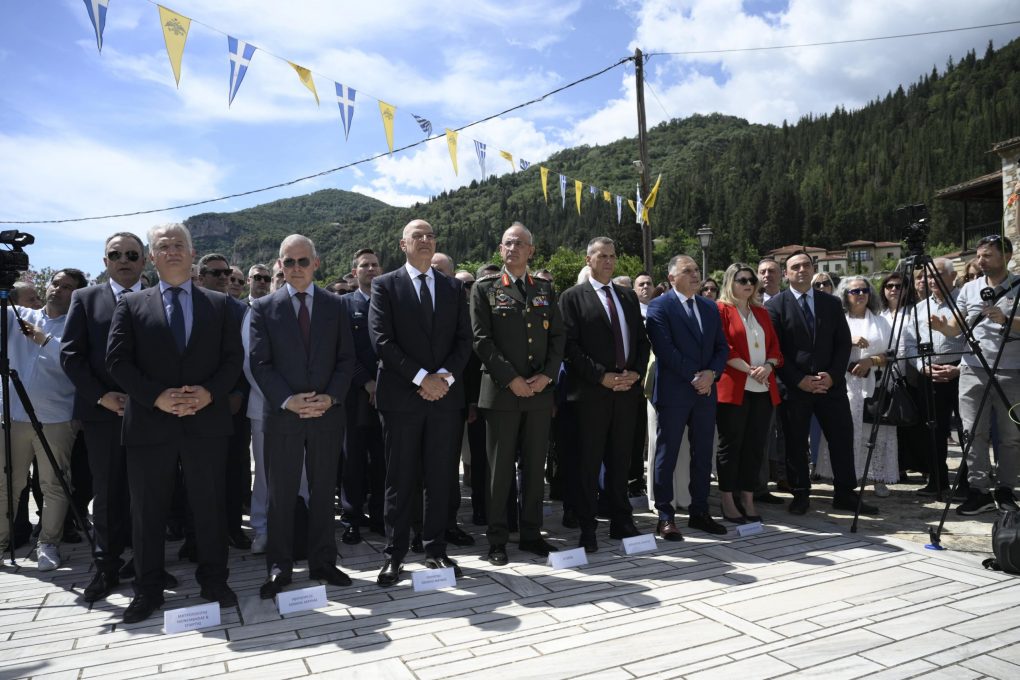
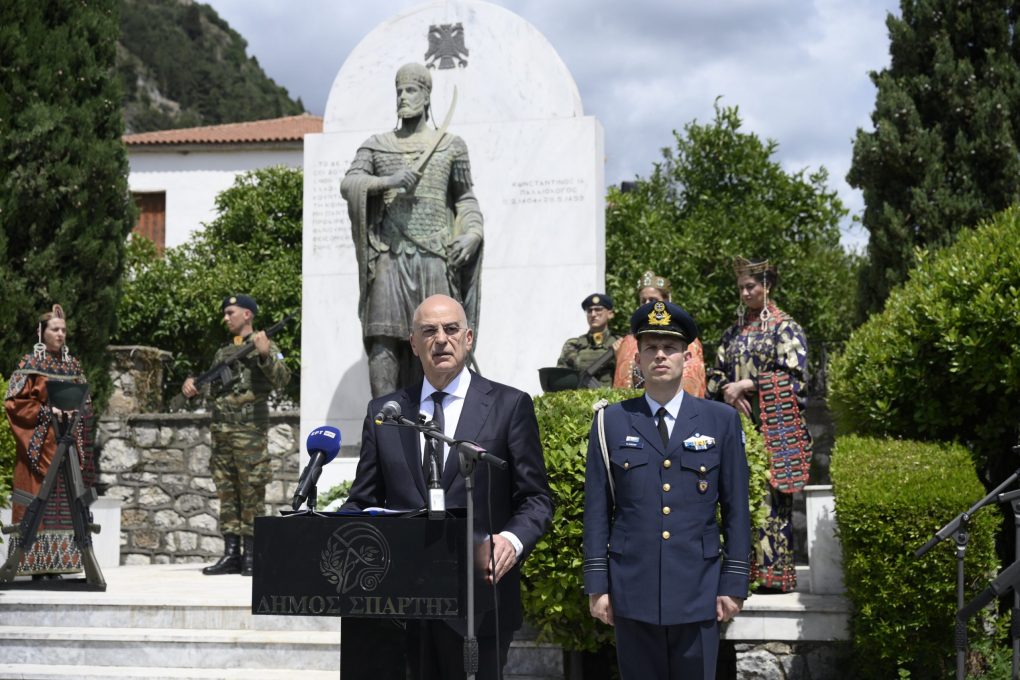
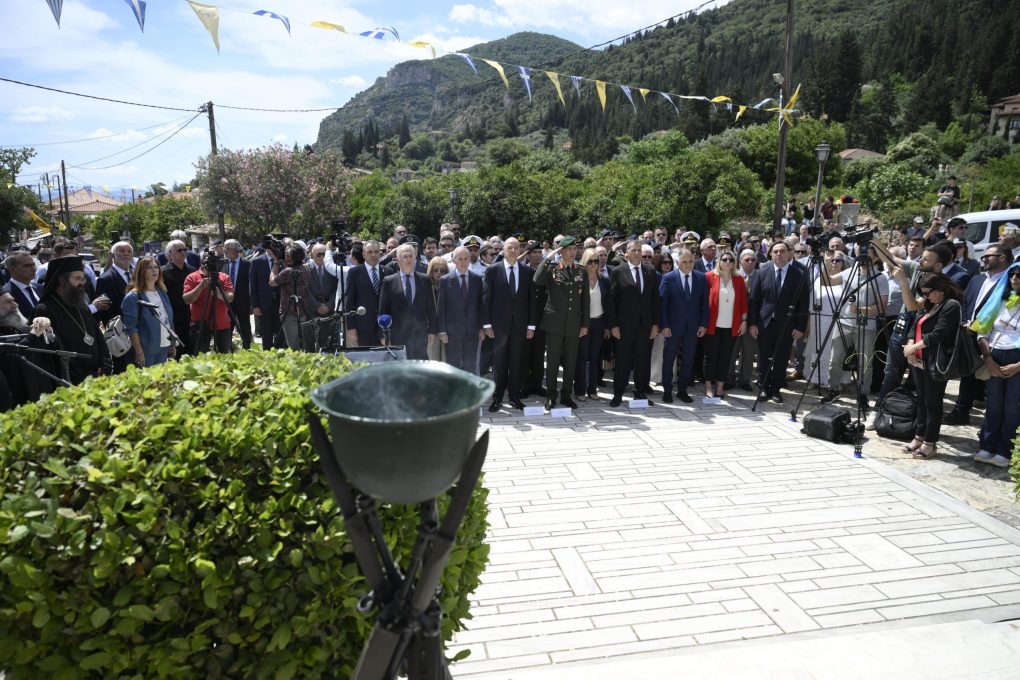
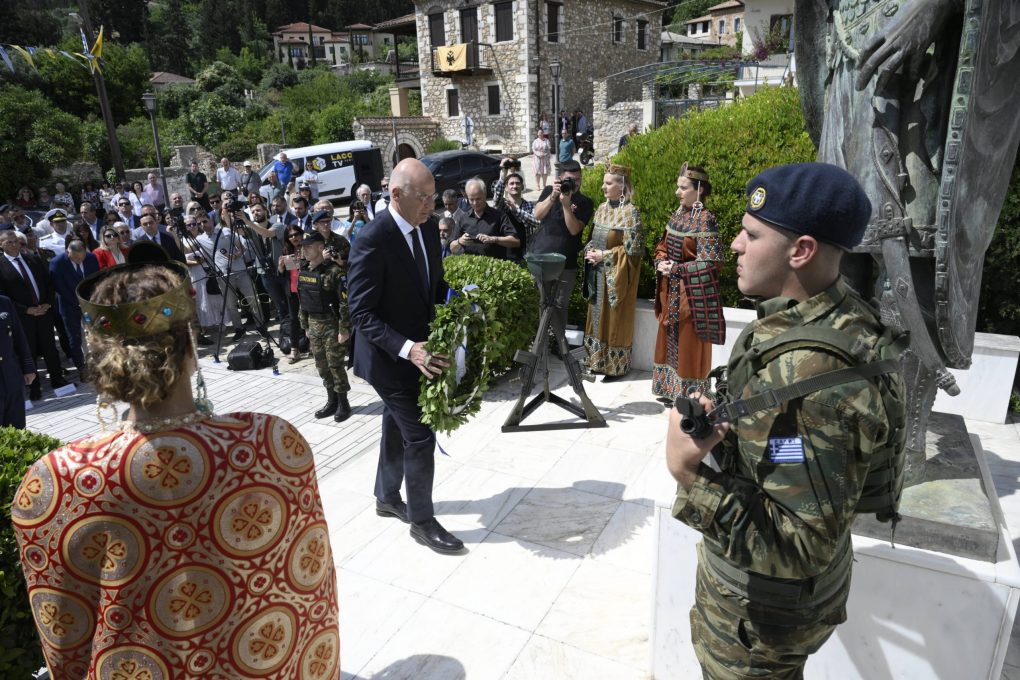
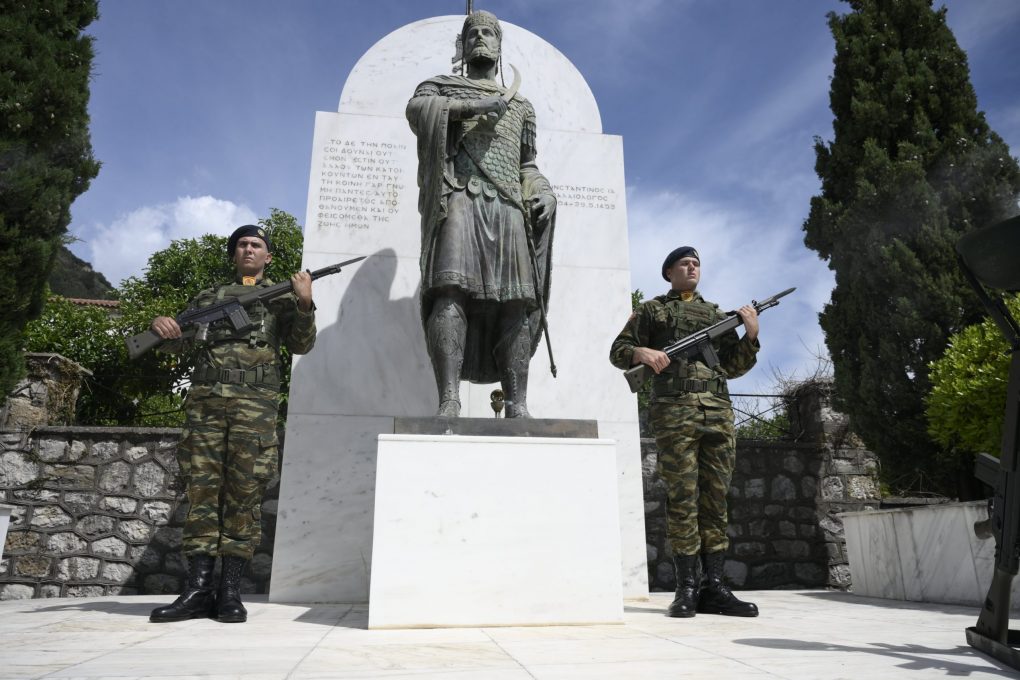
Subsequently, Mr. Dendias went to the statue of Constantine Palaiologos, in the square of Mystras municipal unit, where a Trisagion service was held. Subsequently, wreaths were laid.
The memorial services were also attended by MP Neoklis Kritikos, as representative of the Hellenic Parliament, the Leader of the “SPARTIATES” political party Vasileios Stigkas, MP Panagiota (Nagia) Grigorakou, the Head of Region of the Peloponnese, Dimitrios Ptochos, the Mayor of Sparta Michail Vakalopoulos, His Eminence the Metropolitan of Mani, Mr. Chrysostomos III, the Secretary General of the Ministry of Justice Pelopas Laskos, the Deputy Head of the Region of the Peloponnese for the Regional Unit of Lakonia, Theodoros Veroutis, the Deputy Head of Region of the Peloponnese, for the Regional Unit of Messinia, Eustathios Anastasopoulos, the Deputy Head of Region for Spatial Planning and Real Estate Management of the Region of the Peloponnese, Spyros Tzinieris, the President of the municipal unit of Mystras, Dimitrios Skroumpelos, Mayors of neighbouring Municipalities, the Commanding General of IV Infantry Division “Peloponnese”, Major General Alexandros Chatzialexandris, Commanding General of the Supply and Transportation Training Centre, Brigadier General Georgios Zorbas, headquartered in Gytheio, representatives of the Security Forces, of the Retired Military Officers Association, of local entities and associations.
In his address, the Minister of National Defence stated:
“Ladies, gentlemen,
The presence of us all today, 29 May, in Mystras, is a rendition of the honour owed in the name of Hellenism throughout time.
Here, according to legend, the last Byzantine Emperor, Constantine XI Palaiologos was crowned, in exception of the coronations of all previous emperors at the centre of The Byzantine Christian World, on the Omphalion of the Divine St. Sophia.
We Greeks have existed on this planet, as a discrete entity with a conscious identity for millennia. And, during this long march we have added further traits. The common language, as well as the common education of antiquity, became Christian, Orthodox, and common descent.
As a nation, we bear this collective experience of centuries in our genes. It is with this exact self-confidence, which our long experience gives us, that we honour, not only the victories, but, with yet more respect and emotion, the defeats and disasters of Hellenism.
The limits of our historical presence are not bounded solely by our triumphal arcs. They are bounded much more clearly by the tombs of our dead and the monuments to our national disasters.
In our millennia long history, never has there been a greater disaster than the Fall of Constantinople, 572 years ago, on 29 May 1453. Thus, Tuesday, and not Friday is remembered as an accursed day in the collective memory of real Greeks.
From the start of the siege, on 6 April 1453, Emperor Constantine Dragas Palaiologos, on whose head the martyr’s wreath was placed, took up a tragic and heavy historical responsibility. For, despite the efforts he had made for four years, the inevitability of the Downfall of the Empire of God on Earth was obvious. “Crimes which the Lord knows”. It was otherwise inexplicable for the Byzantines.
Despite the prayers, the Supreme General of the Heavens did not defend the Imperial City’s walls, and, but for a few exceptions which prove the rule, little help was expected from Europe, and less arrived.
The Western co-religionists, after having destroyed and sacked the Empire in 1204, indifferently observed, and opportunistically, through concessions and privileges, made more agonising the dying moments of the Orthodox Christian City.
The tragic anniversary for all, not only Orthodox Christians, is an opportunity for introspection and projecting the past onto modernity, provided that Europe chooses to be conscious of historical memory, and maintain reflexes of political survival.
Any interpretation, on behalf of our partners, of the SAFE regulation as a possibility of the European Defence Industry unconditionally funding those who are plotting against us and are threatening us would not constitute neutrality today, and the Defence of Europe cannot be the object of experimentation.
For Europe to survive, she ought to rest on common values and a common conception of the threat to the standard of living she represents, and ought to be based on standards and values, or else, she self-sabotages.
What does the inner European dialogue signify concerning the dangers that the Muslim Brotherhood is creating in Europe, for which, by the way, I point to the front page of last weekend’s Le Monde, when Europe herself subsidises those who, while sharing the Muslim Brotherhood’s value framework, occupy and threaten European soil?
I would suggest therefore, that the SAFE Regulation be renamed Back Door Regulation, in the event that some partners attempt to implement it by underhand means, bypassing the required unanimity of European Union member states for Agreements with third countries.
Furthermore, if this occurs without the Turkish National Assembly withdrawing the Casus Belli against Greece, despite the statement of the Greek Prime Minister, and in contravention of the legal complaints in the European Parliament.
Yet, I hope that common logic will prevail, and that the above warning will not be necessary.
Either way, Orthodox Hellenism has never erased the memory of the First Sack of 12 April 1204 and the abandonment of 29 May 1453.
We know well, very well, that if we want to live independently, we have to be able to defend our Homeland, alone if required. This is the aim of the “2030 Agenda”.
Historically, Western Christianity, to this day, owes an apology to the memory of Constantinople’s last Christian Emperor.
In the ultimate siege, the role of Constantine (Palaiologos) was of crucial importance. Of greater national importance than the Great Justinian, or even the triumphant Basil II the Bulgar Slayer. Since the Emperor was put before a clear choice. The Conqueror repeatedly offered him the opportunity to escape, since the Ottoman Sultan did not wish to prevail upon a monument to martyrs. His acumen allowed him to understand the dynamics the glorious dead acquire.
Having full consciousness of his historical mission, the Emperor rejected the offers, without even expecting or hoping to prevail or survive physically.
The answer Palaiologos gave, which is written on the memorial column behind me reads “To surrender this city is not in my power, nor in the power of anyone here. We have unanimously decided to die, and we will not regret our life”, is not simply a heroic or historical refusal in the history of Hellenism.
As an endnote to a millennia long empire, you have to notice that he does not utter a single verbosity, he does not even use a single adjective. With touching directness, he underlines the moral weight and consciousness of the national and religious duty, since Constantine was aware that he was the final custodian, by Divine Right, of a tradition more than a thousand years old.
For him, the throne was not an office, but a measure of value. He treated his crown as indicative of a higher presence which distinguishes human beings in hard times, and clearly understood that his mission was not his Kingship but safeguarding of the traces of the millennia long Christian Empire. The only means to achieve this was his sacrifice upon the ramparts above the Gate of St. Romanos.
Which duty he fulfilled to the utmost. He thus managed to overwrite the dark pages of the decline of the Empire, and transformed the disaster of the Fall into the legend of the “Marble Emperor”. The tale of the future resurrection of the Nation, through the resurrection of the ultimate Constantine. The century long dream of the enslaved. The stepping stone of literary inspiration, popular tradition in times of darkness, and the hope that the All-seeing God will turn his glance upon the Greeks once more.
The Byzantine Empire, despite its decline and fall, saved a priceless spiritual and cultural legacy. Like a flower, outpouring its sweetest scent just before it withers.
Its legacy maintained the sense of spiritual supremacy, of “belonging”, and of historical continuity. It influenced, if not jointly created, the Renaissance in the West, the approach to individuality.
Which Renaissance, in turn, influenced the Enlightenment, Korais, Pheraios, and lead to the Revolution.
The Fall of Constantinople was not the tombstone of Hellenism, albeit could very likely have been.
Due to the sacrifice of Constantine, it became the centre point of mythmaking, and the nucleus for the creation of national consciousness. A deep wound, yet one that did not paralyse, but in the way it occurred motivated the will to survival.
Awaiting the “Marble Emperor” created a new-found stamina and a dynamics of a historical Resurrection, manifested in tens, hundreds of revolts, in “rivers” of blood, and finally in the 1821 Revolution, which created Greece anew after 4 centuries. The product of two streams, Ancient Greek and Eastern Orthodox Civilisation.
It is this contemporary Greece which the Armed Forces, of which I have the honour of being the political leader, are protecting. And it is these very Armed Forces which are the guarantor, according to the Constitution, of our independence, sovereignty, and territorial integrity. A role which, albeit exercised in the present, gains its legitimacy from a long, uninterrupted historical march.
Temporal unity, that is, the survival of the past within the present, not as a fossil or dry historical fact, but as a life lived through symbolism, is a differentiating feature and a priceless legacy of Hellenism.
Since it allows it to move within the globalised climate, while retaining its difference and autonomy. So that it does not become an indifferent, scentless, tasteless cultural mush.
I refer you to the 400 folds in the Uniform of the Guardsmen of the Presidential Guard, which symbolise the 400 years in slavery. I refer you to the coat of arms of C Army Corps. The 4 Crossed Bs of the Palaiologi: King of Kings Reigns in Constantinople.
Honouring the memory of Constantine XI Palaiologos is not a product of historic nostalgia solely, and does not only rest on the need for rendering historic justice.
Our gamble in the present concerns the defence of our country and its march in the future. This, however, requires strong, deep, roots. Which roots can be found in our past. In the behaviours, choices, sacrifices, the values which have formed this past, and make contemporary Hellenism European, albeit with its own exclusive and particular characteristics of historic presence.
Constantinople fell on 29 May 1453, and St. Sophia unfortunately became a mosque, as she remains to this day. A cultural hubris, which for Christians is an open wound.
Yet Hellenism has survived and created Modern Greece. As the great Byzantinist Steven Runciman writes in his book on the Great Church: “The lamp has not gone out. It burns”. And it burns all the brighter.
Despite the Fall of Constantinople, and due to the sacrifice of Constantine Palaiologos, the Gates of Hell have not prevailed.
Thank you”.