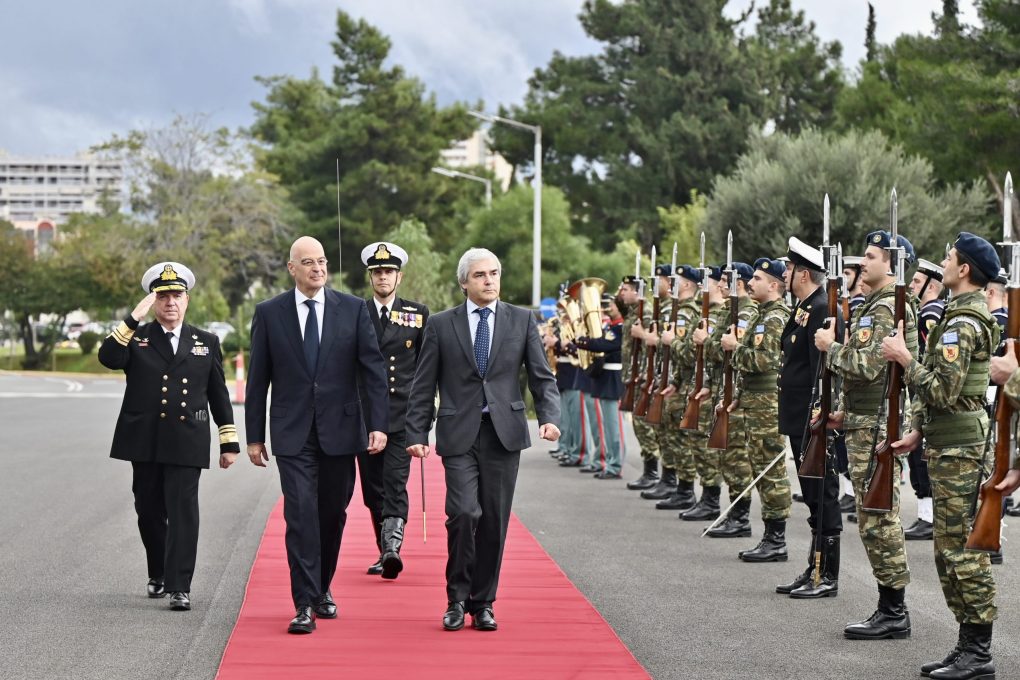
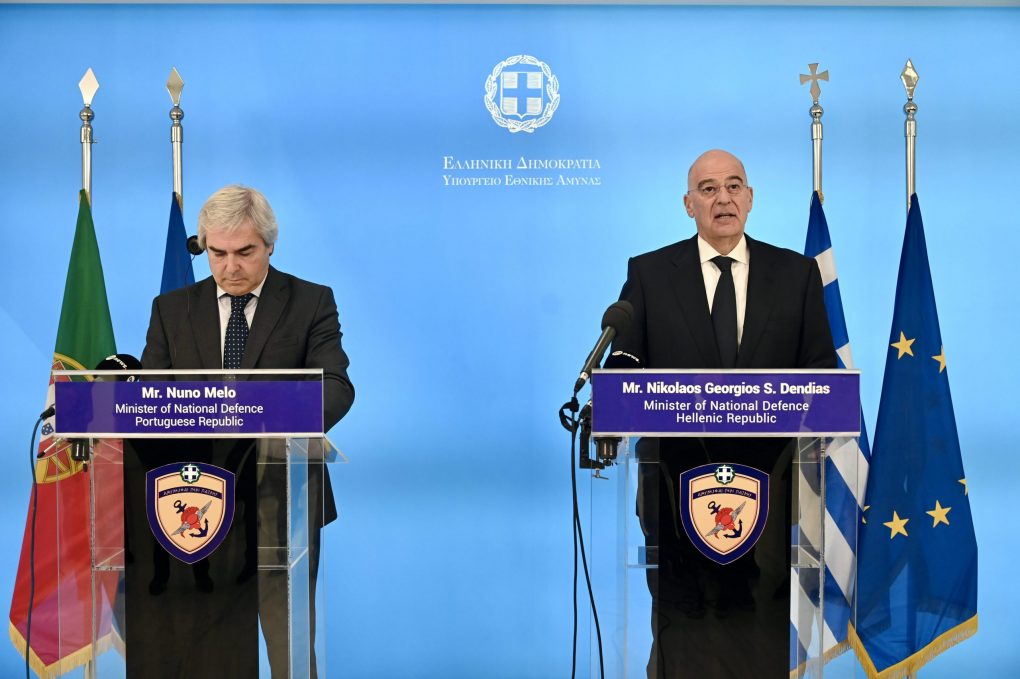
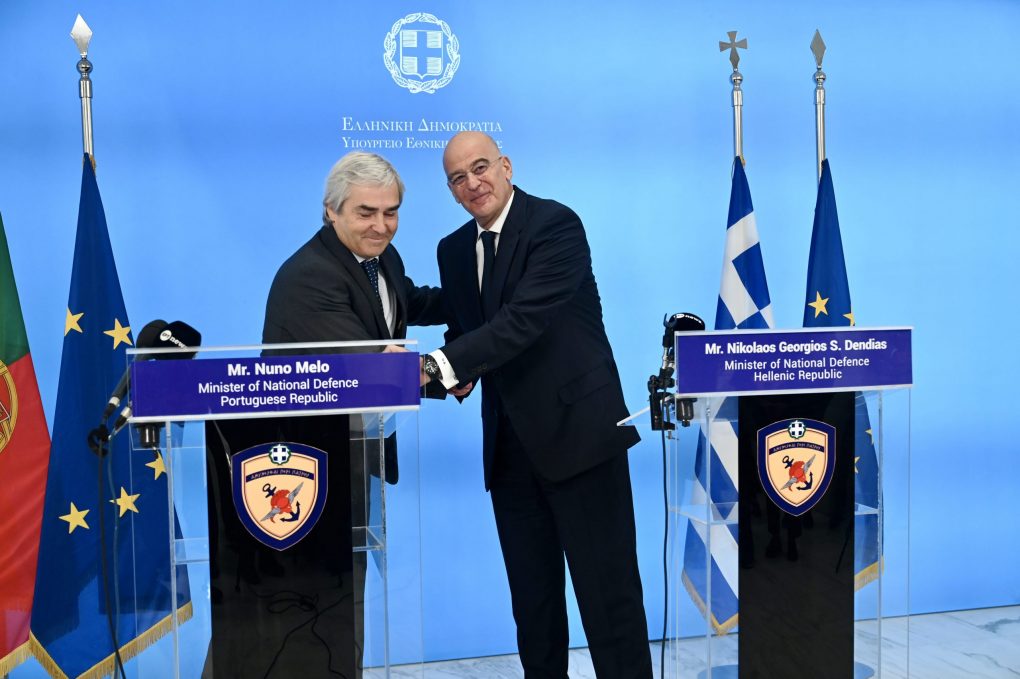
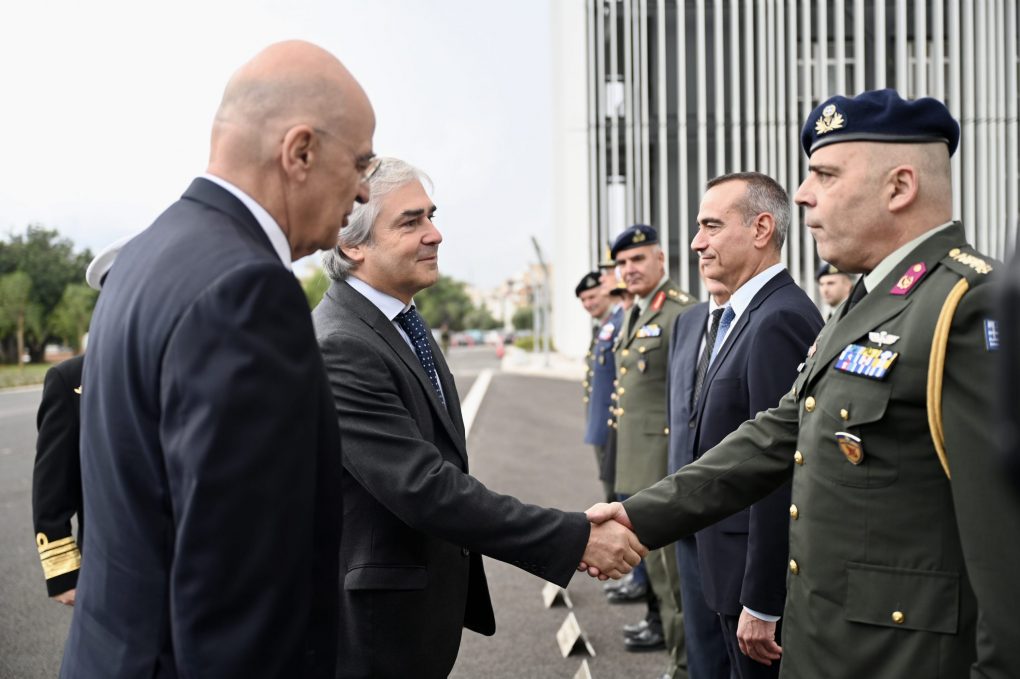
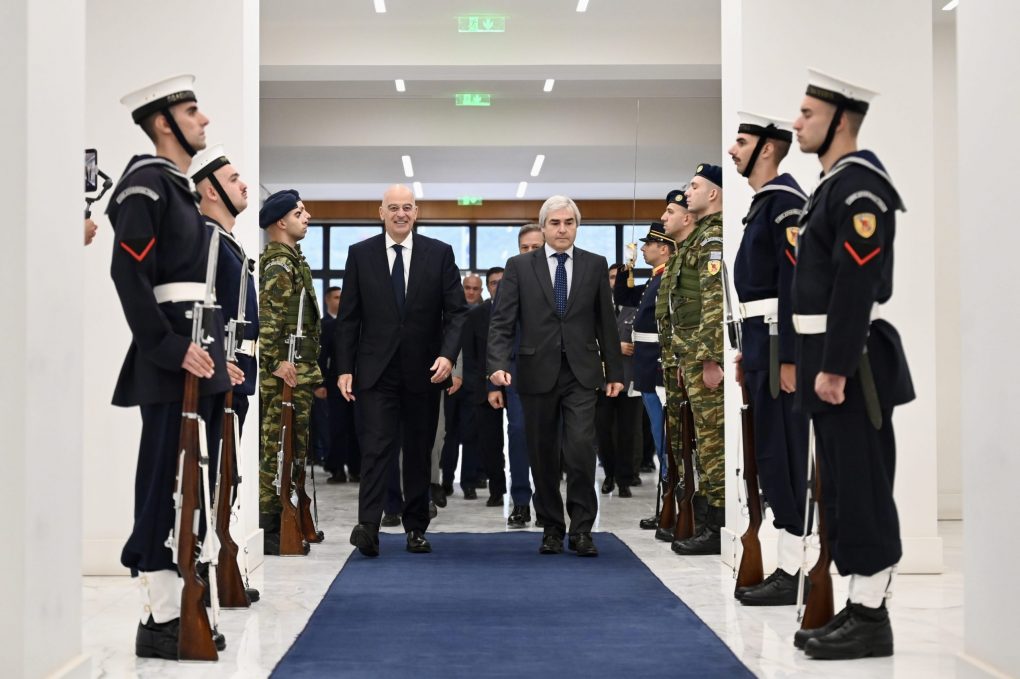
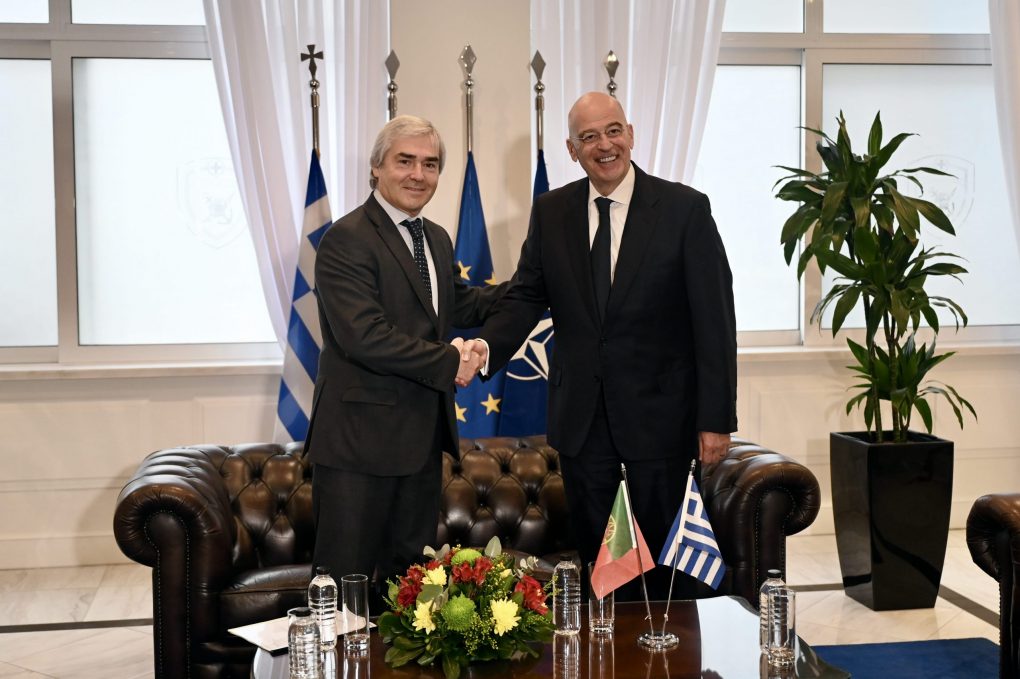
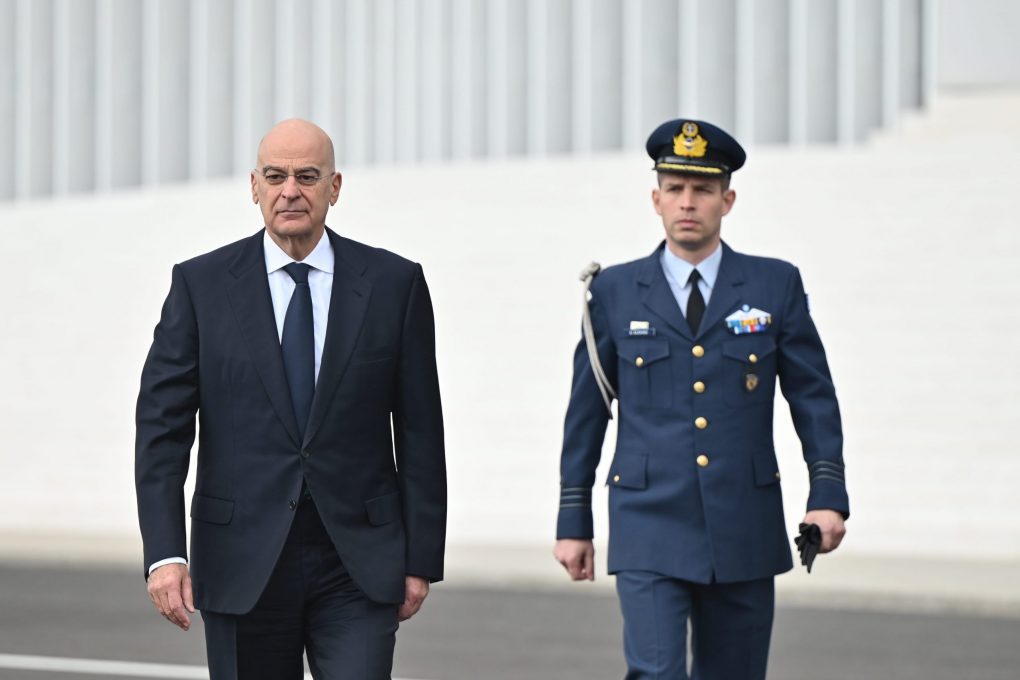
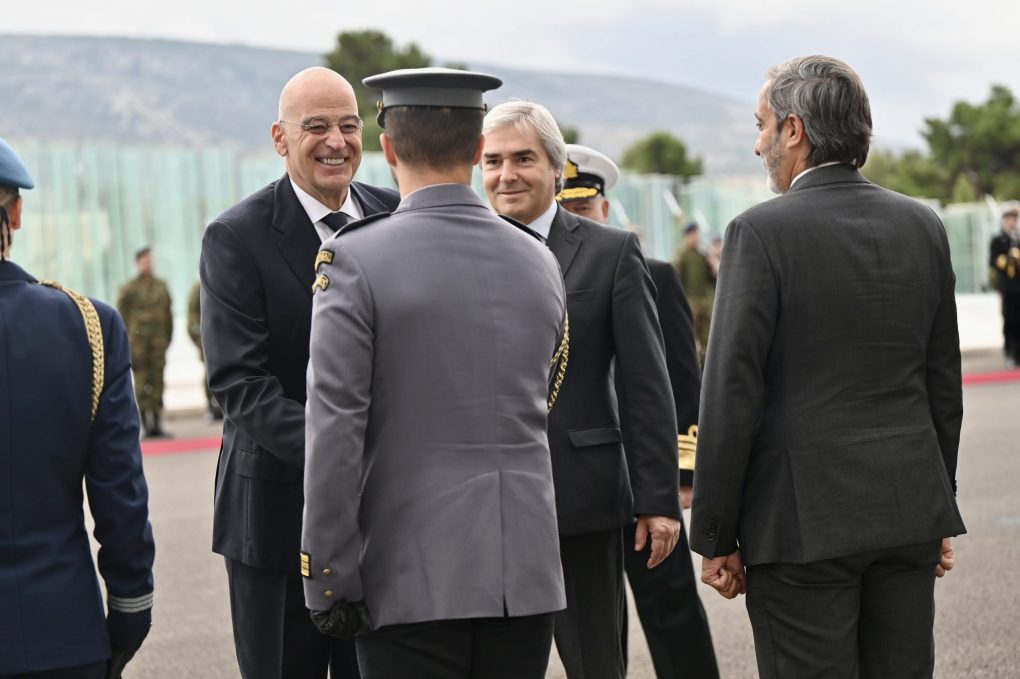
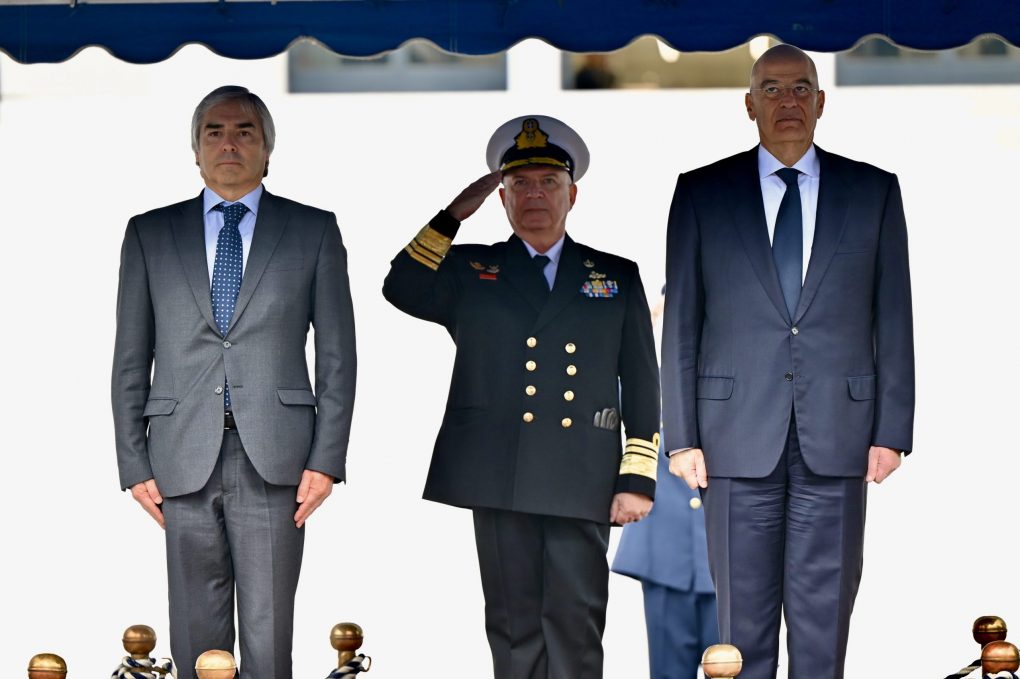
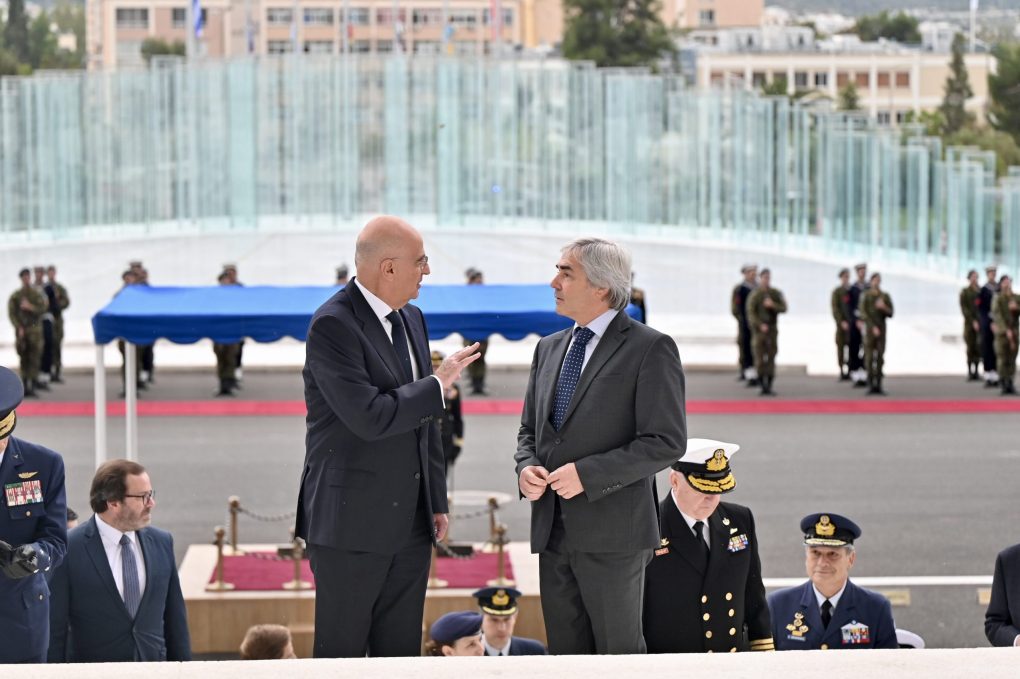
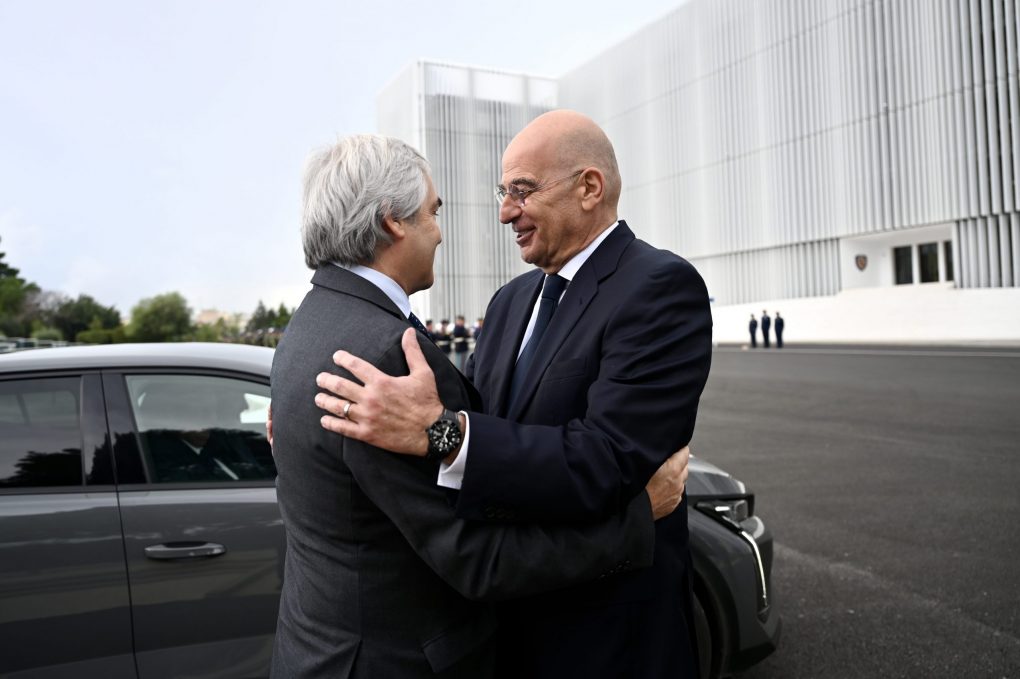
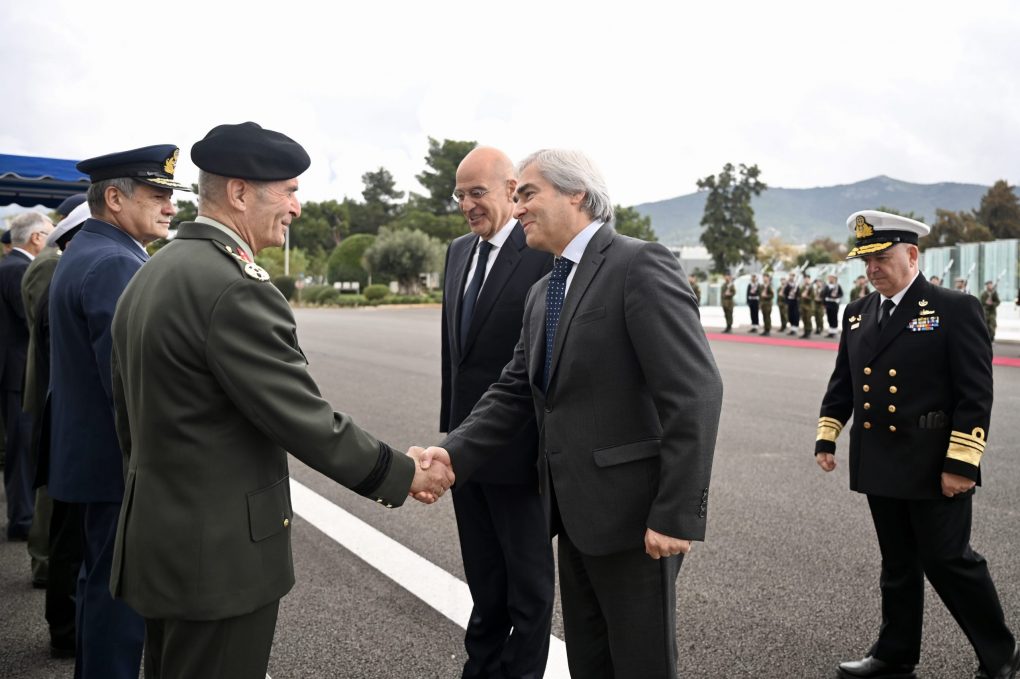
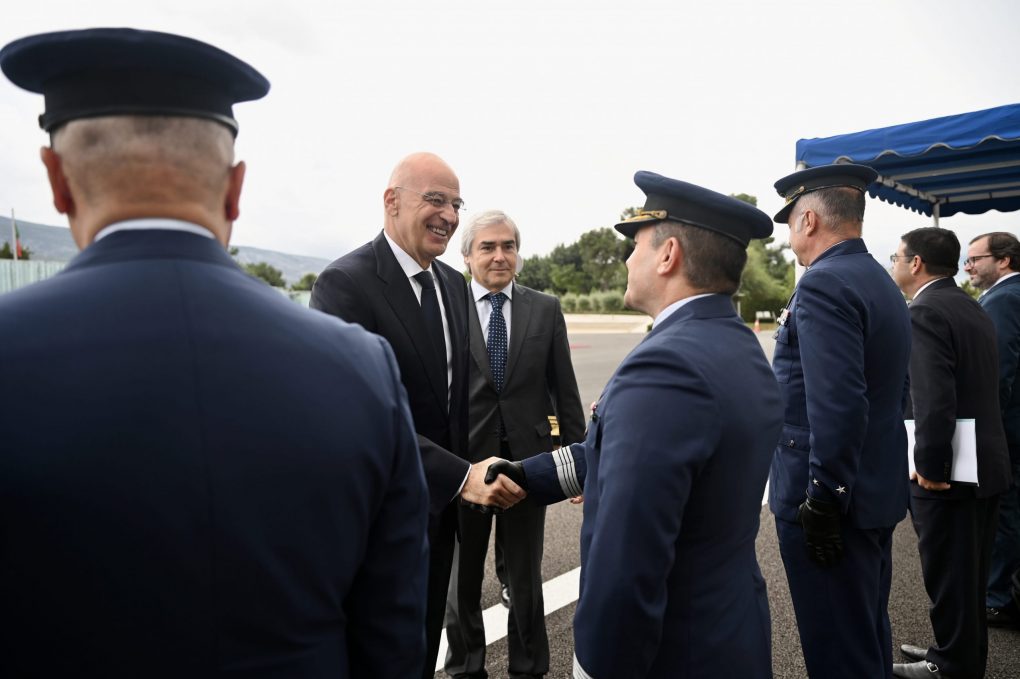
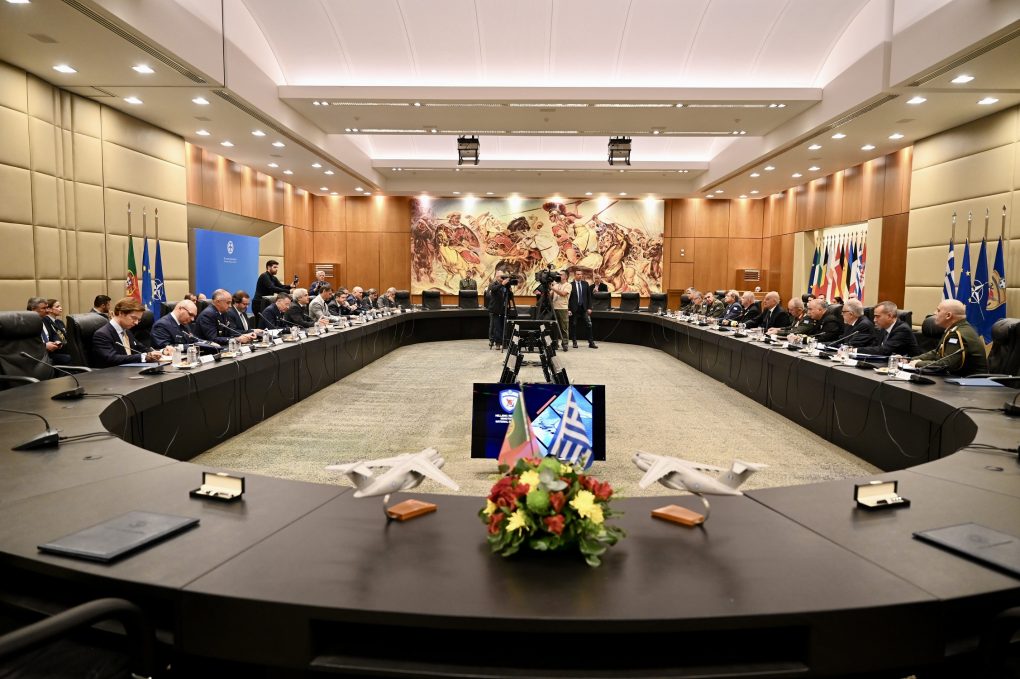
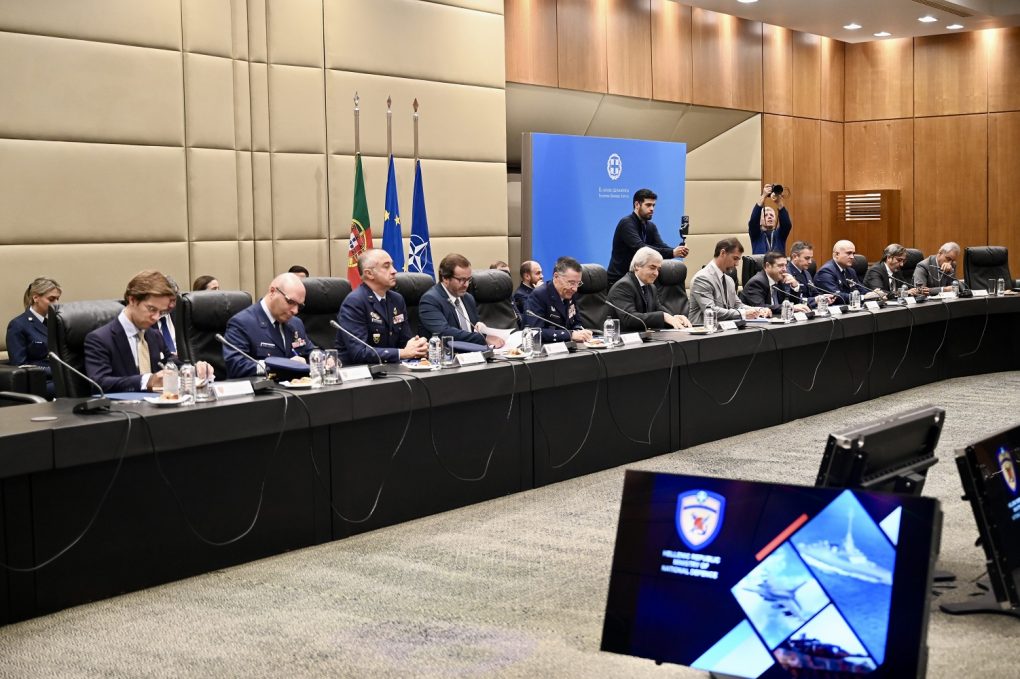
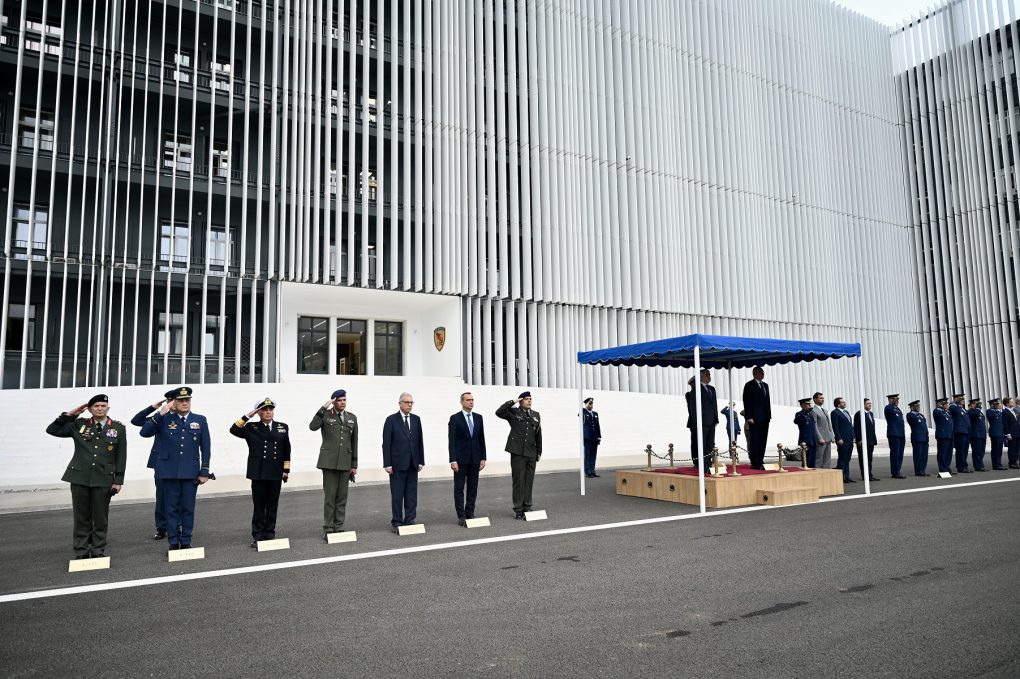
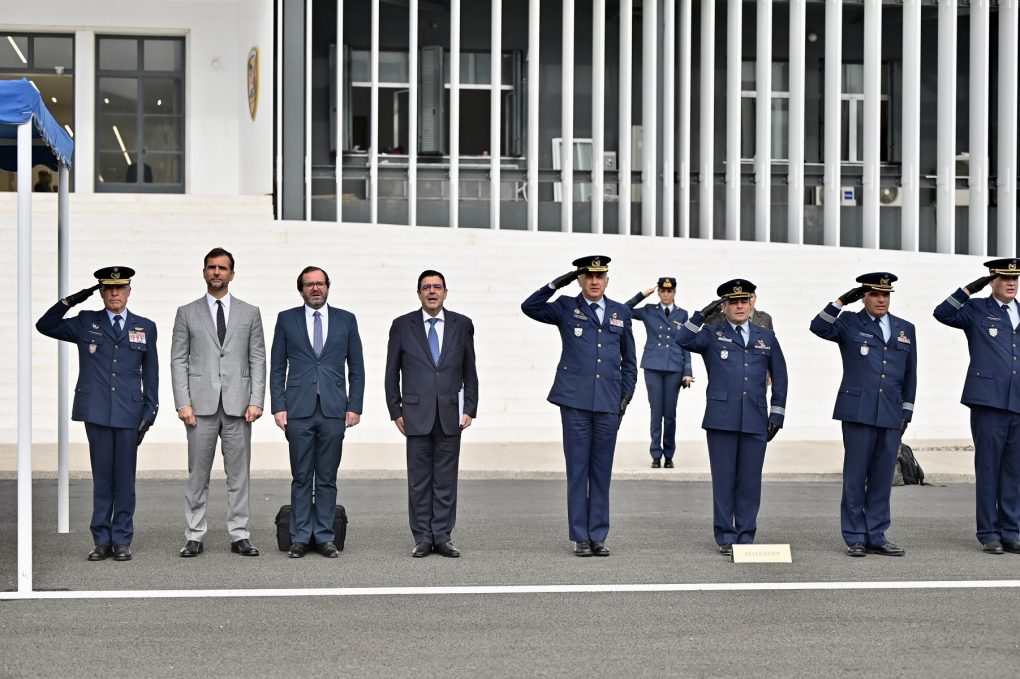
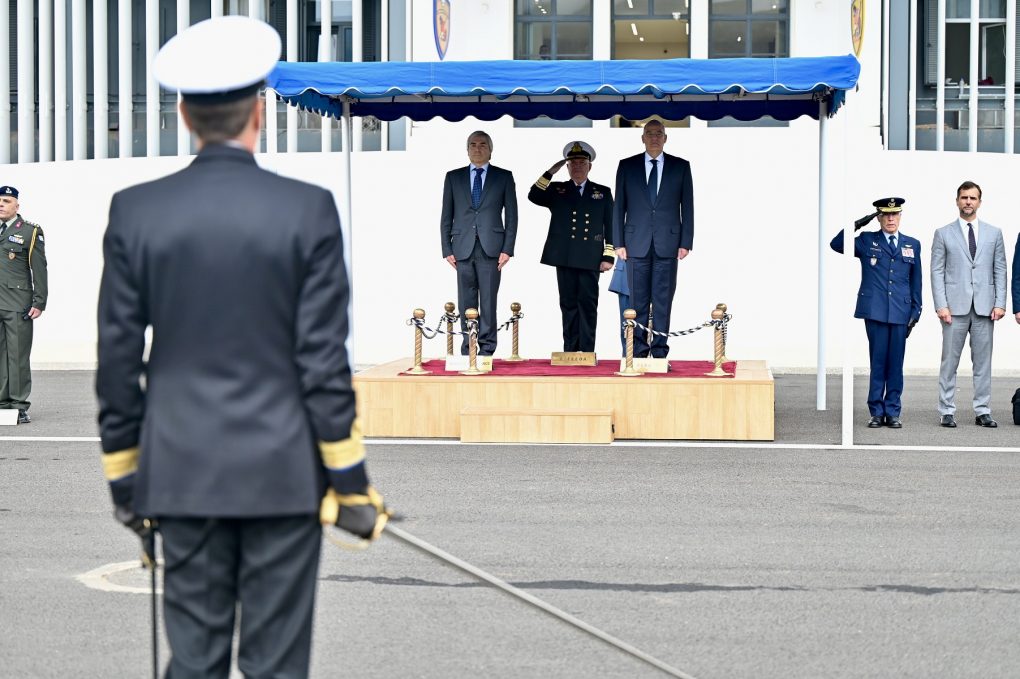
The Minister of National Defence, Nikos Dendias, met today, Monday 2 November 2026, with his Portuguese counterpart Nuno Melo, who was on an official visit to Greece.
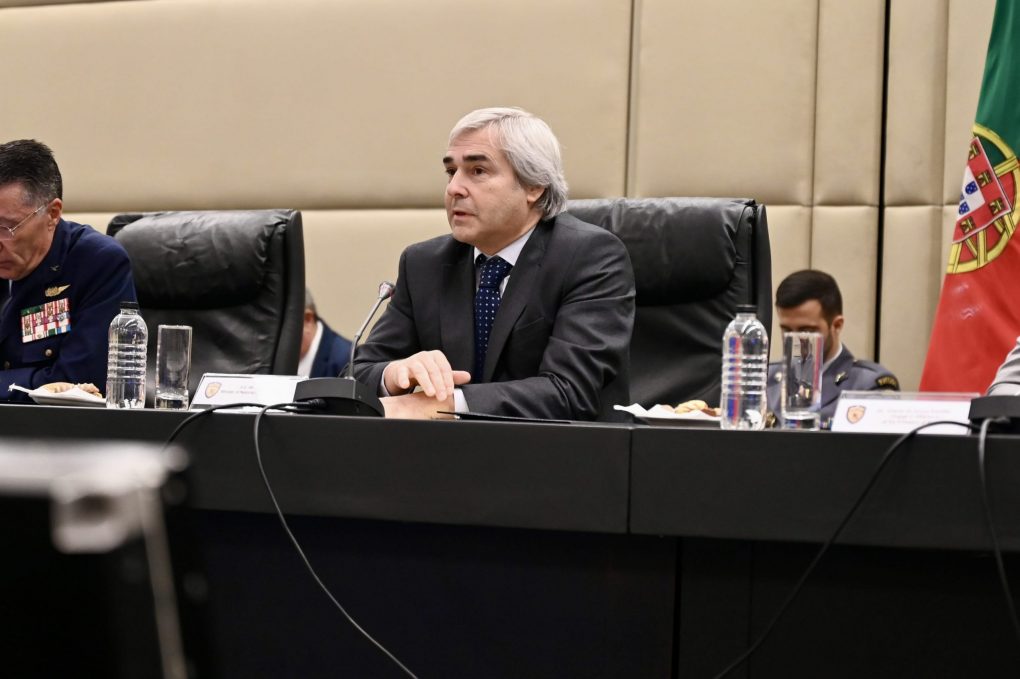
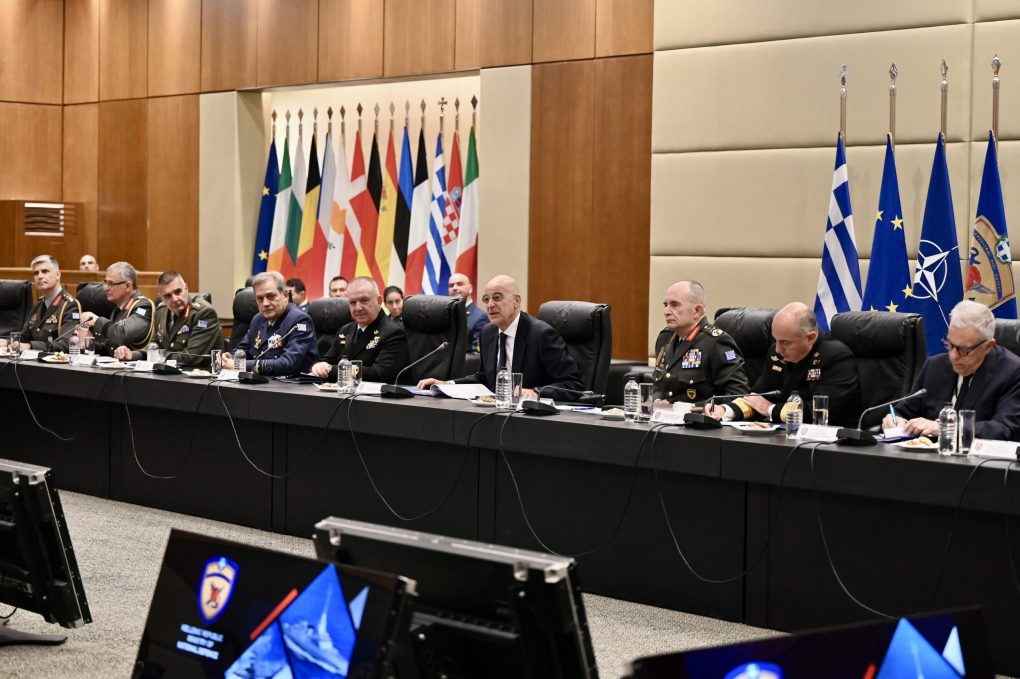
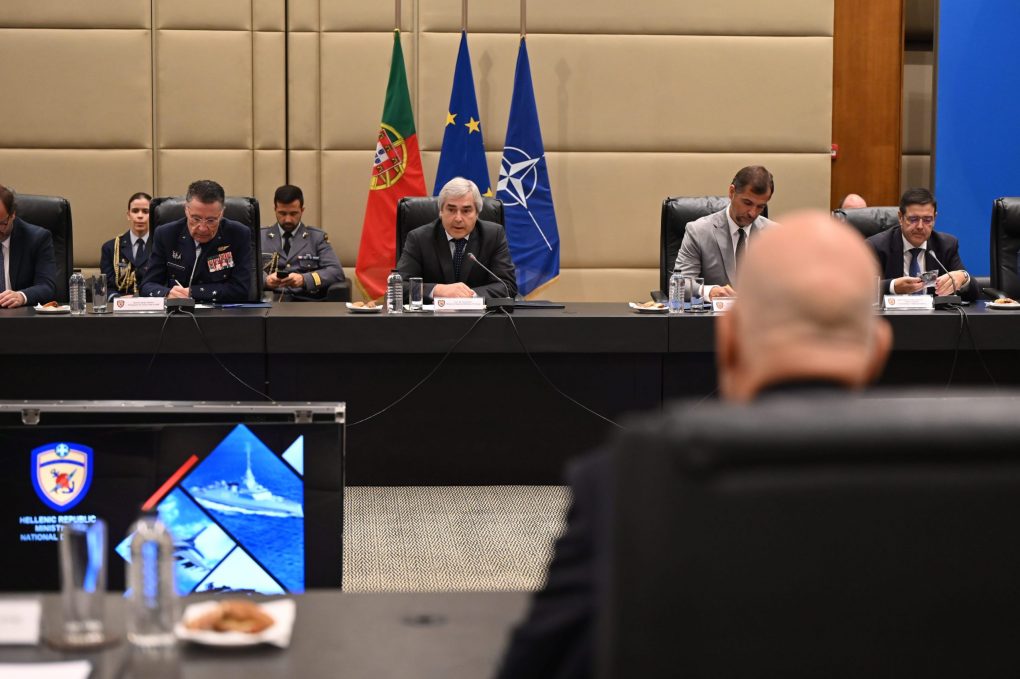
Following the one-on-one meeting between the two Ministers at the Ministry of National Defence, broader talks took place between the Greek and Portuguese delegations. The talks focused on further deepening bilateral defence cooperation, with an emphasis on defence innovation and industry. At the same time, the possibilities for further strengthening cooperation and coordination between the Greek and Portuguese Ministries of National Defence were examined, within the framework of the European Union and NATO. Regional and international security issues were also discussed.
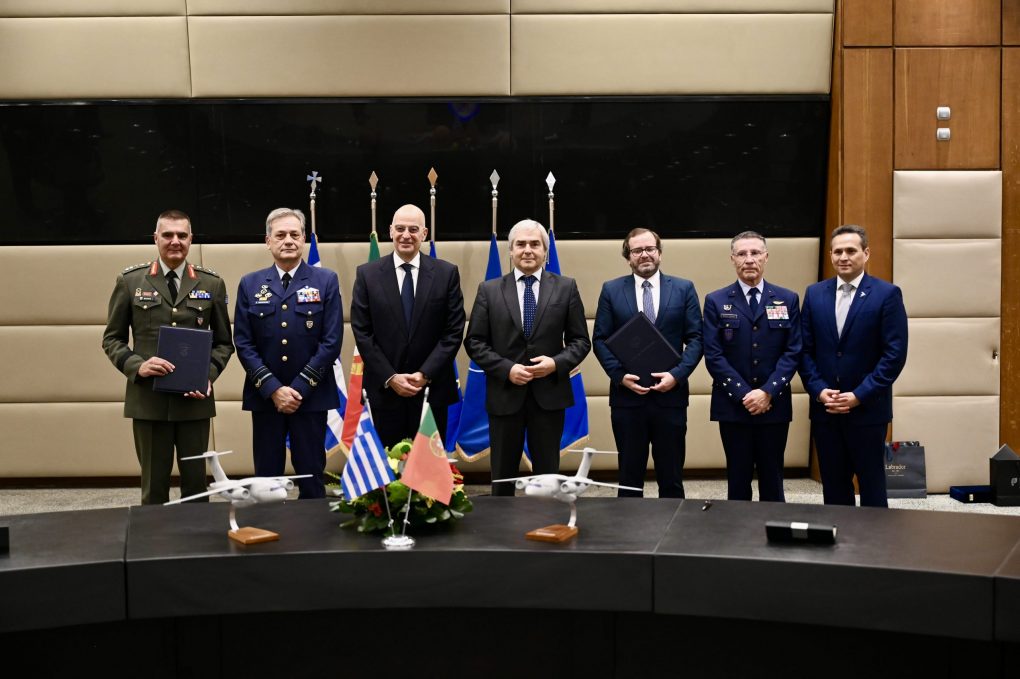
The talks were also attended by the Deputy Chief HNDGS Vice Admiral Theodoros Mikropoulos, acting as the Chief’s HNDGS representative, the Chief HAGS Lieutenant General Georgios Kostidis, the Chief HAFGS Lieutenant General Dimosthenis Grigoriadis, the Deputy Chief HNGS Vice Admiral Spyridon Lagaras, acting as the Chief’s HNGS, the Director-General of the General Directorate for Defence Investments and Armaments Major General Ioannis Bouras, the Director-General of the Ministry of National Defence General Directorate of National Defence Policy and International Relations Ambassador (ret.) Michail Spinellis, the Director of HNDGS S-F’ Dte Major General Georgios Panousis, and the Director of the Diplomatic Liaison Office of the Minister of National Defence Ambassador Giorgos Arnaoutis.
On the Portuguese side, participants included the Chief of Staff of the Portuguese Air Force General Sérgio Pereira, the Director-General for Armaments at the Portuguese Ministry of Defence António José Baptista, the Director of the Military Office of the Portuguese Ministry of National Defence Major General Pedro Sardinha, the Chairman of the KC-390 Programme Monitoring and Oversight Mission Major General João Rui Nogueira, the Head of the Interdisciplinary Planning and Innovation Team at the Directorate-General for National Defence Equipment Colonel Carlos Batalha, the Counsellor at the Portuguese Embassy in Greece and Head of its Consular Section Vicente de Souza Brandão, acting as the Ambassador’s representative, and other Officers from the Portuguese Air Force.
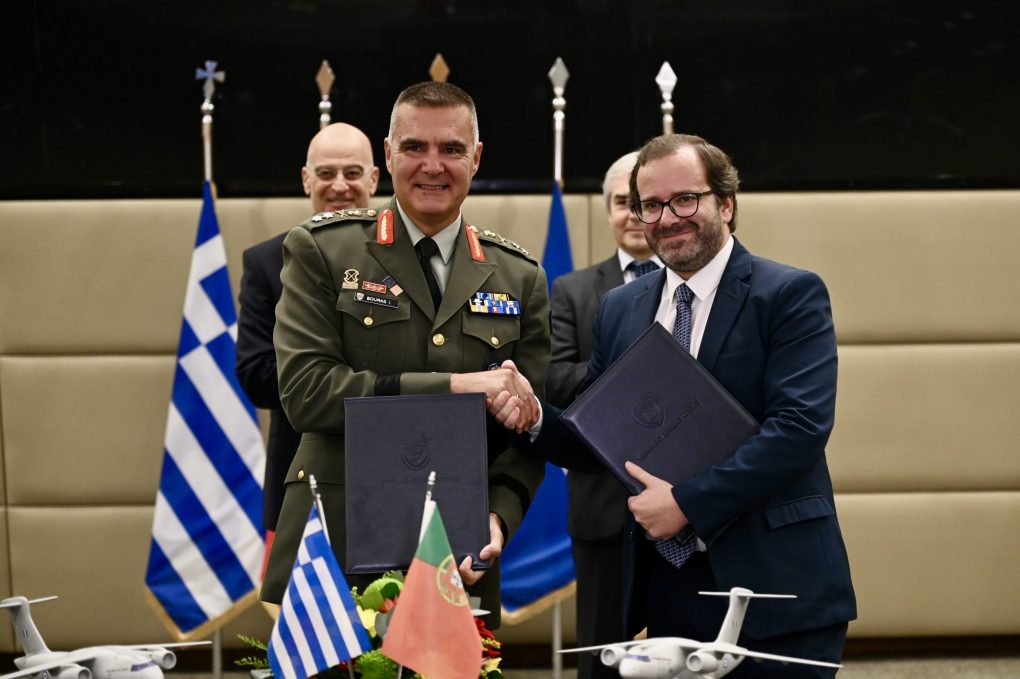
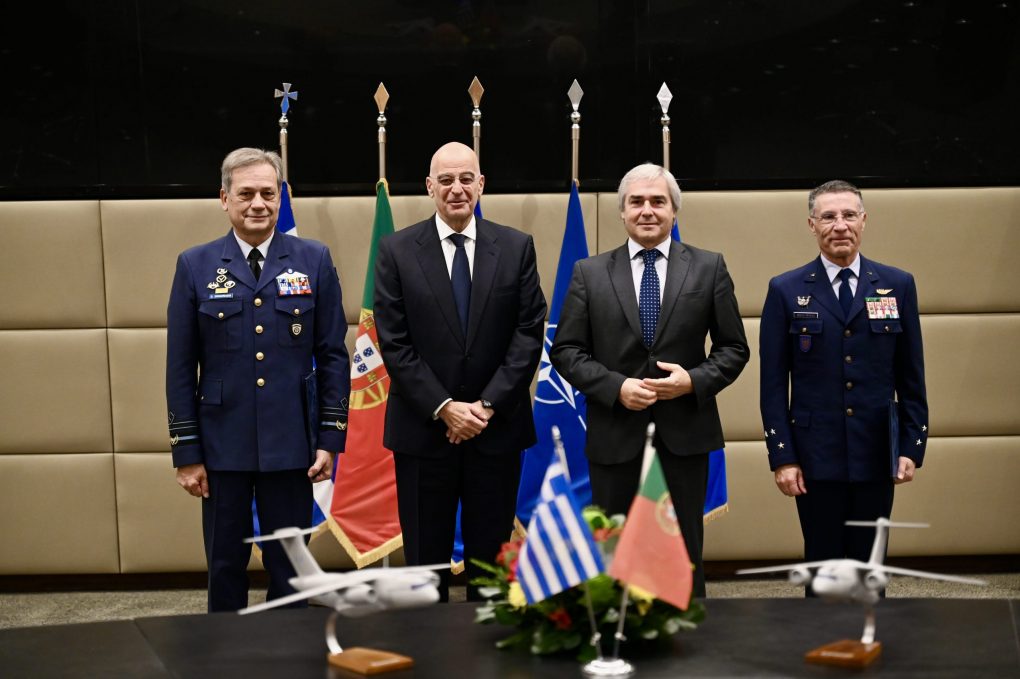
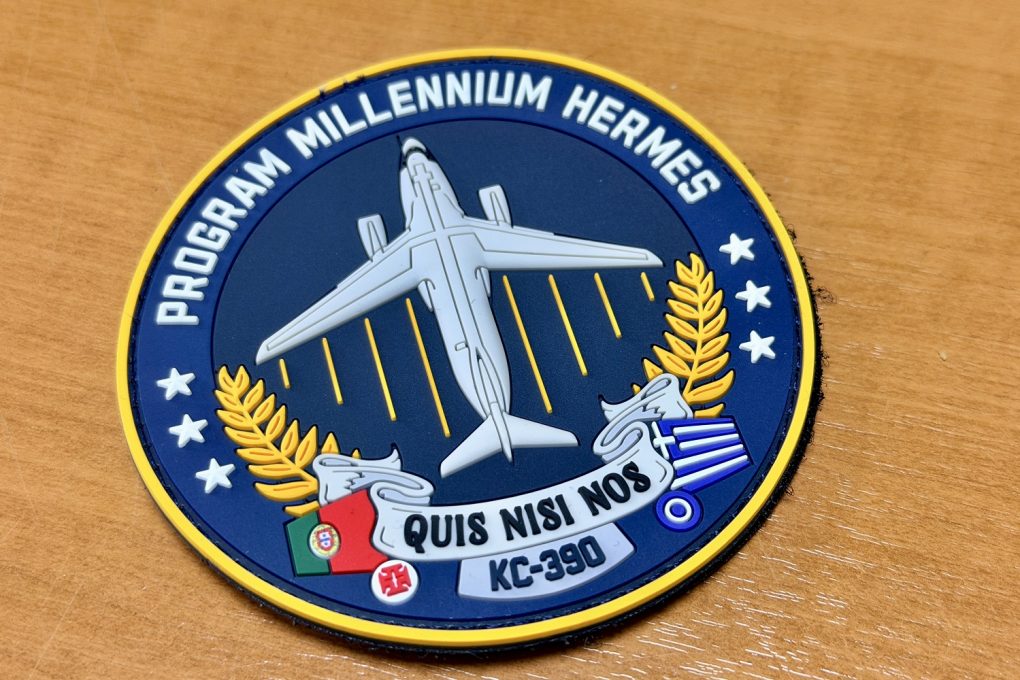
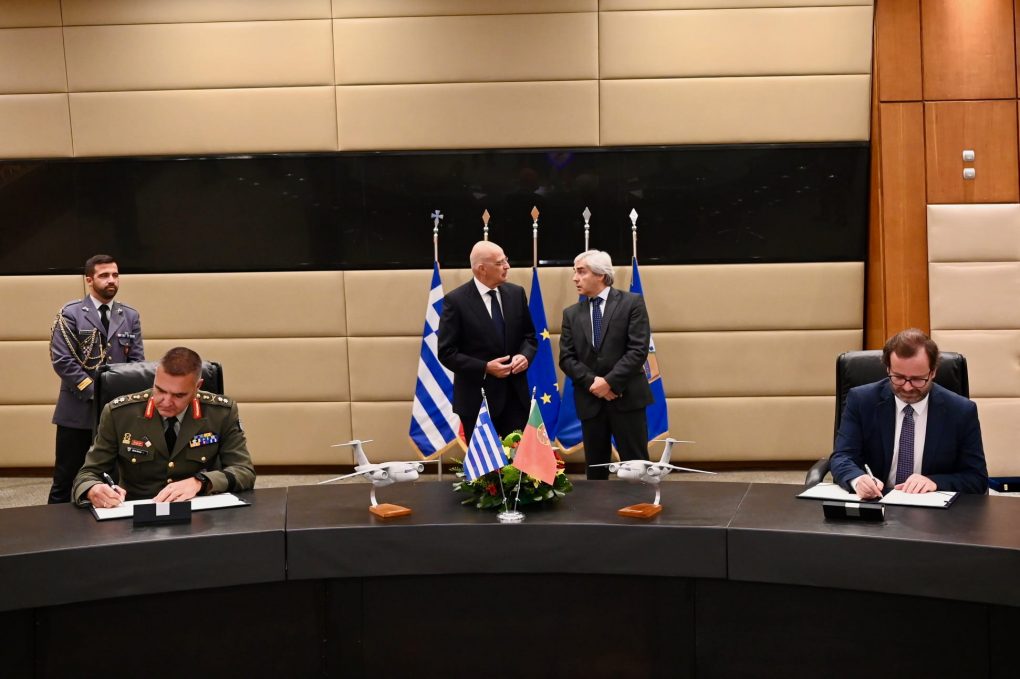
Following the meeting, the Director-General of the General Directorate for Defence Investments and Armaments Major General Ioannis Bouras and the Director-General for Equipment of the Portuguese Ministry of National Defence António José Baptista signed, in the presence of the two Ministers, the Intergovernmental Agreement for the procurement of three EMBRAER KC-390 aircraft, with the option to acquire three additional aircrafts.
The meeting and the signing of the Intergovernmental Agreement took place following Mr. Dendias’ visit to Lisbon on 7 May 2026.
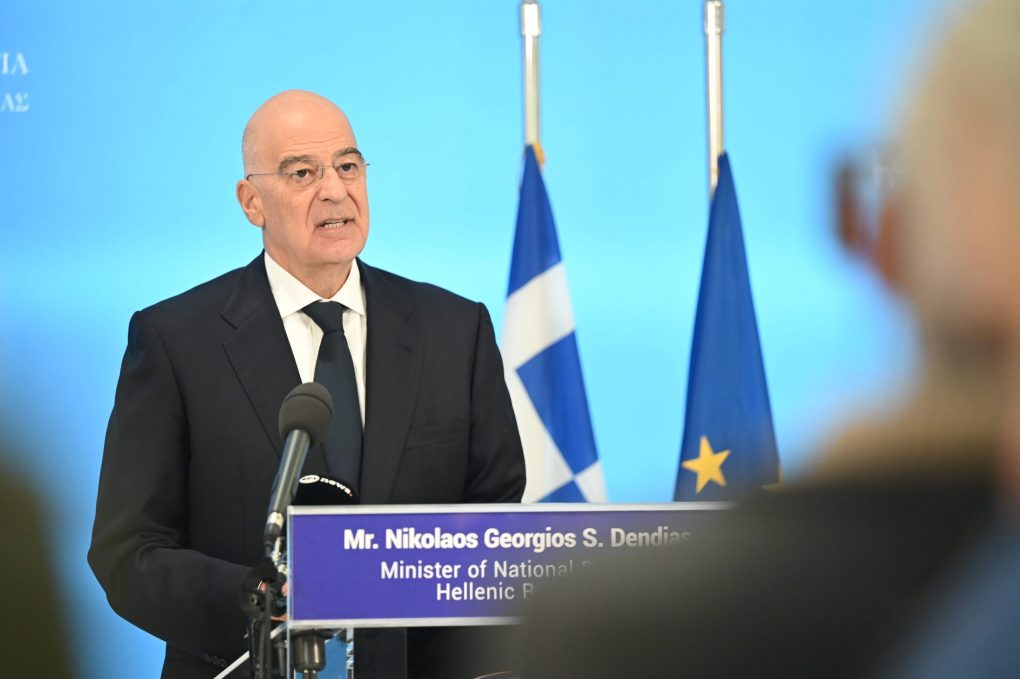
Mr. Dendias stated the following in the joint statements with his Portuguese counterpart:
“Dear Minister, dear Nuno, it is my great pleasure to welcome this fairly large Portuguese delegation here at the Ministry of National Defence, following my own visit to Lisbon.
And I believe it is a very important day for us and for you. This is the first time we are able to transform an excellent relationship between the two countries into a cooperation with a very concrete and significant content.
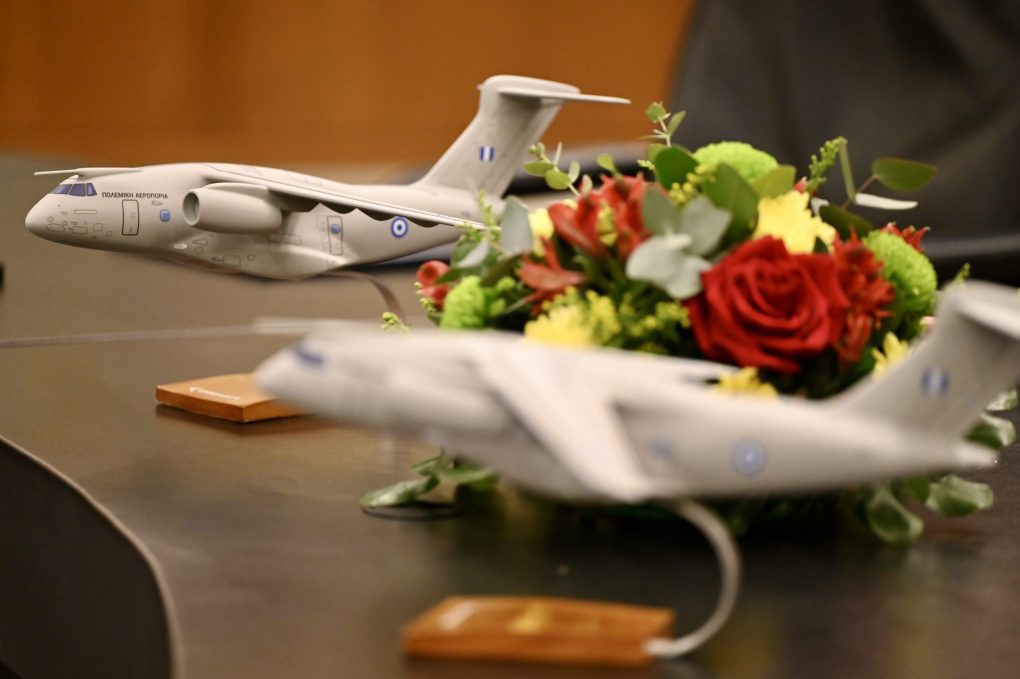
So, within this framework, we signed today the Intergovernmental Agreement for the acquisition of 3+3 KC-390 EMBRAER aircraft. This is a purchase that marks two firsts for Greece.
This will be the first jet transport aircraft in the history of our country.
Furthermore, it will be our first aerial refuelling aircraft, i.e. an aircraft capable of refuelling our fighters mid-air. At first, the Rafale and Mirage aircraft and within a year the F-16s too.
I would like to say that I cannot stress enough the huge advantage this aerial refueling capability provides to our aircraft.
It multiplies the time aircraft can stay in the air, which will now be limited only by the pilot’s endurance. Without this capability, an aircraft must land when its fuel runs out.
I would also like to thank the Portuguese side for providing one such aircraft which flew over Thessaloniki a few days ago on 28 October.
And of course, Portugal will also transfer its know-how from the use of this aircraft and will help train our pilots.
But our cooperation goes beyond these aircraft, important though they may be. And I will say it again, forgive me, but I cannot stress their importance enough. Or, if you’d like, I could give you an example: if Greece had aerial refuelling aircraft for our fighters, the 1974 invasion of Cyprus could not have happened and the invasion bridgehead could not have been maintained.
But there are also other areas of cooperation between us. I am referring to marine drones, an area where Portugal has made excellent progress. There is a specialised centre in a naval base in Lisbon, which I visited, and I must say that we will also develop our cooperation in this area, as well as in other very interesting areas, such as the creation of ships capable of operating as drone carriers, as well as ships – aircraft that can operate as drone killers.
In general, we have opened a chapter of close cooperation with Portugal, which, I should tell you, will also include satellites.
In a few days’ time, I will be launching the Air Force’s Space Command. We are also looking into this, and it is gratifying that we are finding partners on this issue too – the issue of European countries’ presence in Space. And I would like to thank the Minister for his willingness to cooperate with us on this matter as well – the issue of satellites.
I also had the opportunity to brief the Portuguese side on issues relating to the Law of the Sea, UNCLOS and Turkey’s peculiar – to put it as politely as possible – interpretation of the Law of the Sea in our region, particularly in relation to the signing and ratification of the Turkey-Libya Memorandum of Understanding.
Portugal is a country which has signed the UNCLOS, has extensive Exclusive Economic Zones, and is a country that believes deeply in the Law of the Sea and its implementation.
Part of our discussions also concerned the European and NATO dimensions. Both countries are members of NATO and both countries are members of the European Union.
We also had an extensive discussion on the application of Article 5, which requires mutual assistance within the framework of NATO, and Article 42(7) of the European Treaties, which requires mutual assistance within the framework of our European family.
We also had the opportunity to discuss the broader geopolitical challenges facing our European family, and indeed we had the change to discuss at length our presence in Africa, where, as you know, Europe cannot claim to have achieved any great successes. Portugal, however, has a presence on the African continent. I would like to say that we, too, in our own small way, are helping as much as we can; we have a presence in Mozambique and have opened a channel for dialogue and mutual understanding, because if Europe does not engage with Africa, this will create a huge problem in the medium term. Other countries and other actors are already present in Africa. Europe, too, must have a presence on the African continent. And Portugal can play a very important role in this – a leading role, I dare say – given its historical presence on the African continent.
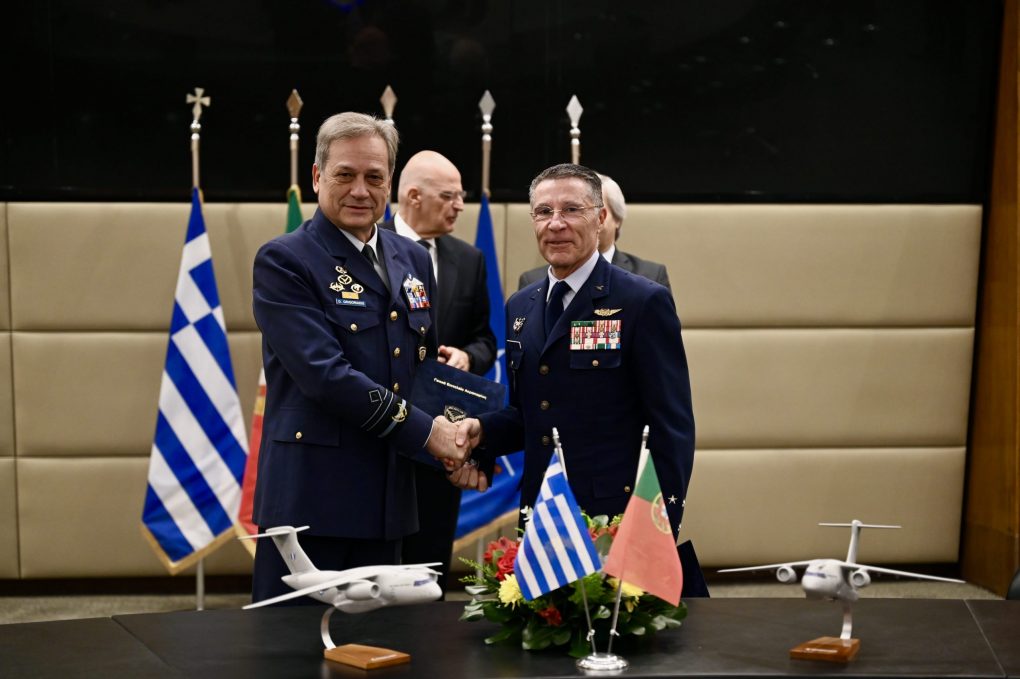
I would like to thank the Minister for his presence here in Athens; to thank him for signing the Intergovernmental Agreement and the Cooperation Agreement between our countries’ Air Forces; to thank him for the large window – not to say the highway – of cooperation between Greece and Portugal that we have opened today here in Athens.
Dear Nuno, thank you very much; I look forward to new chapters in the signing of agreements between our countries.
Welcome to Athens”.