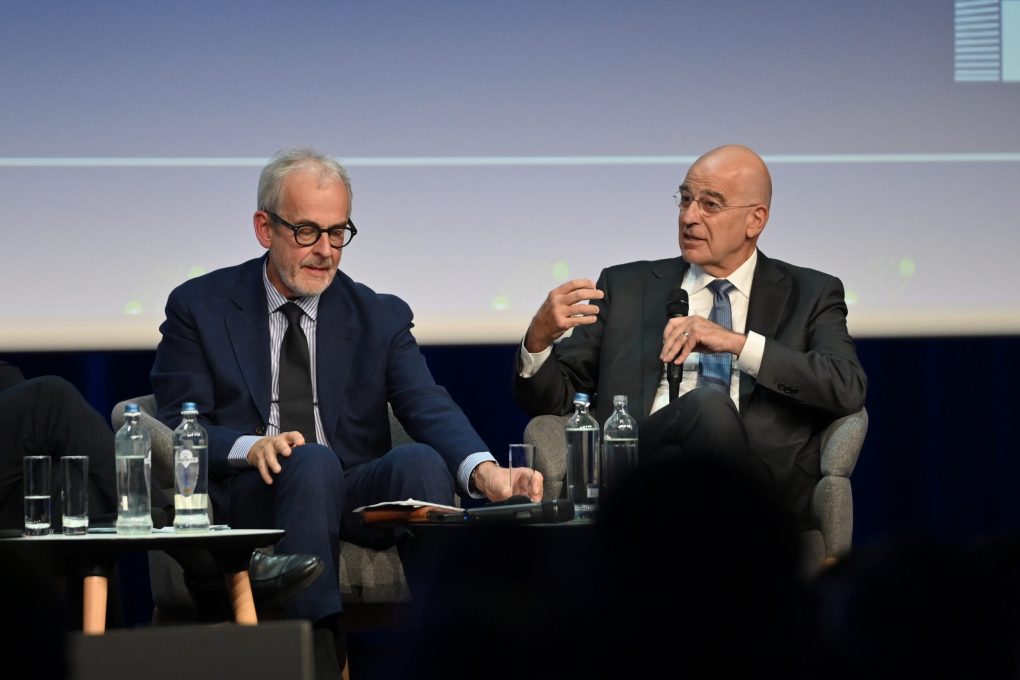
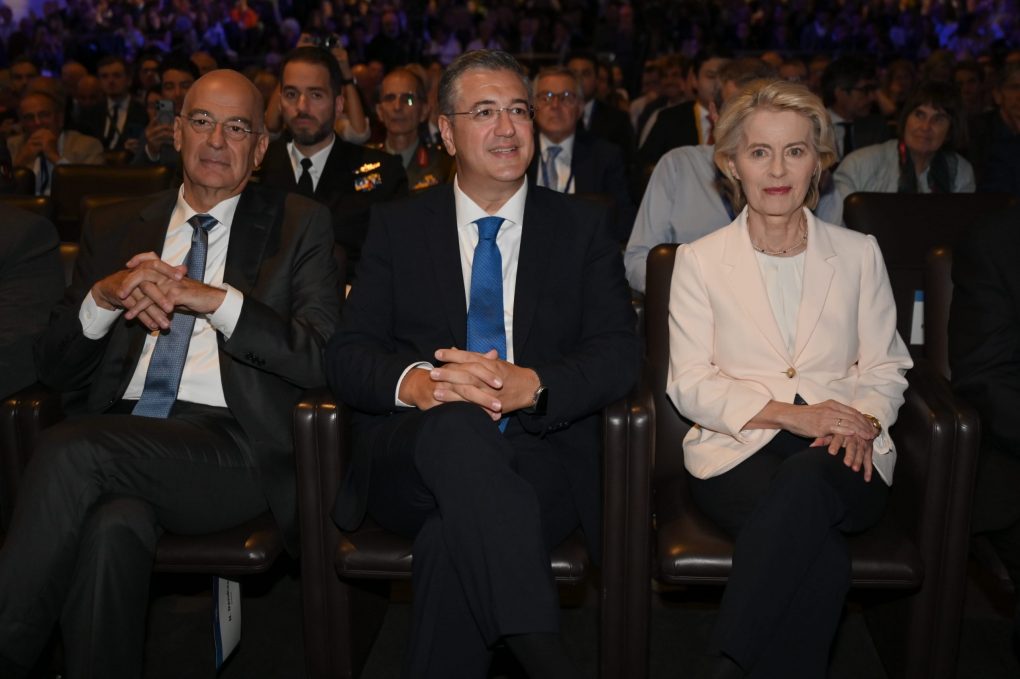
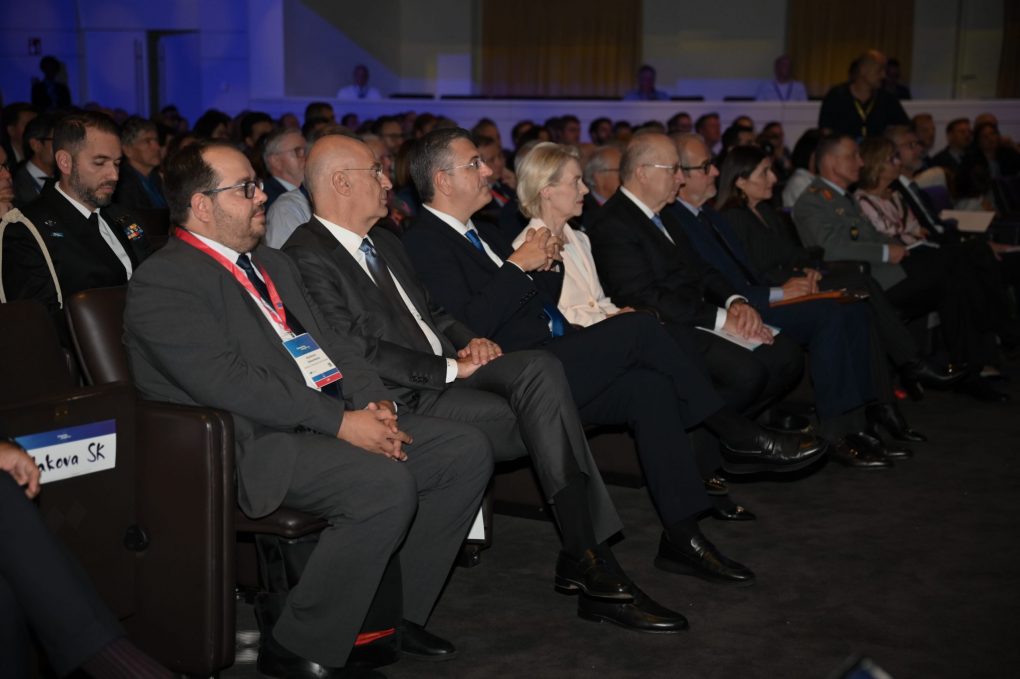
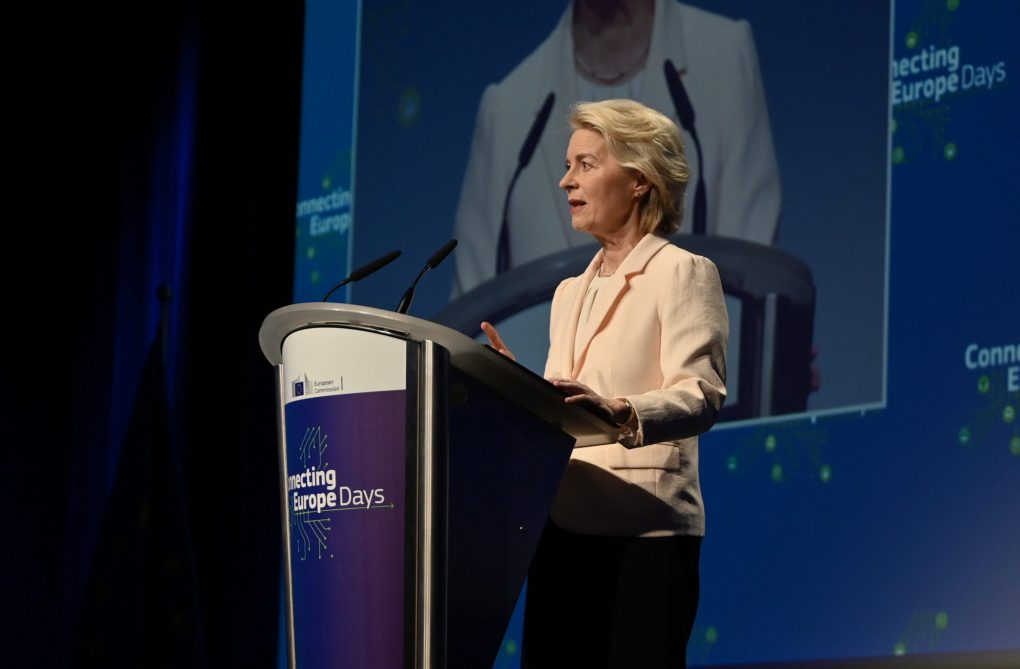
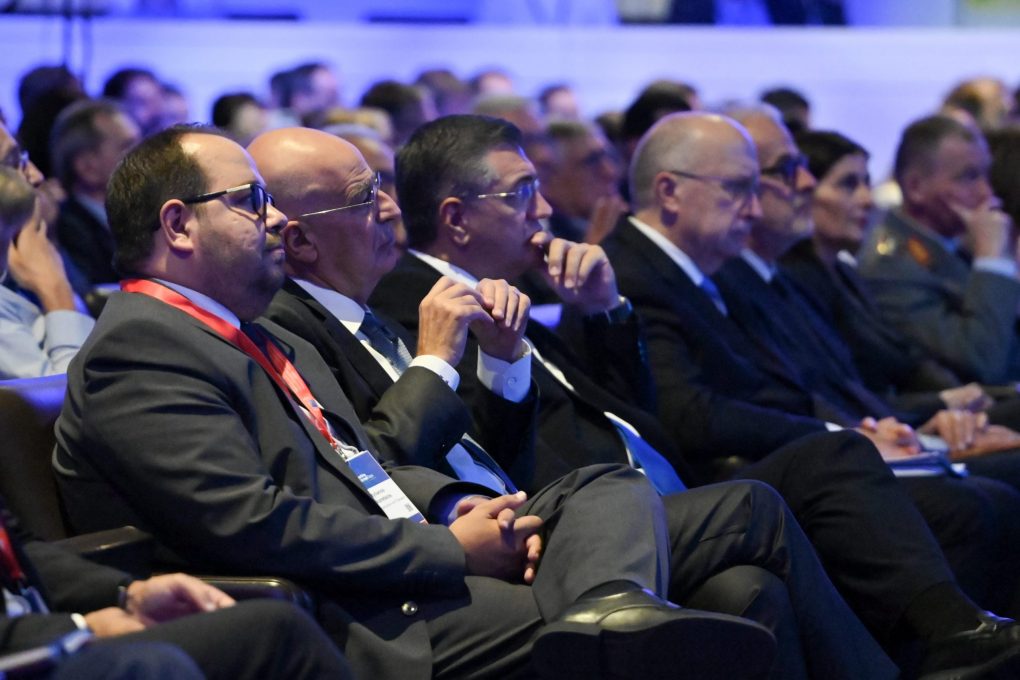
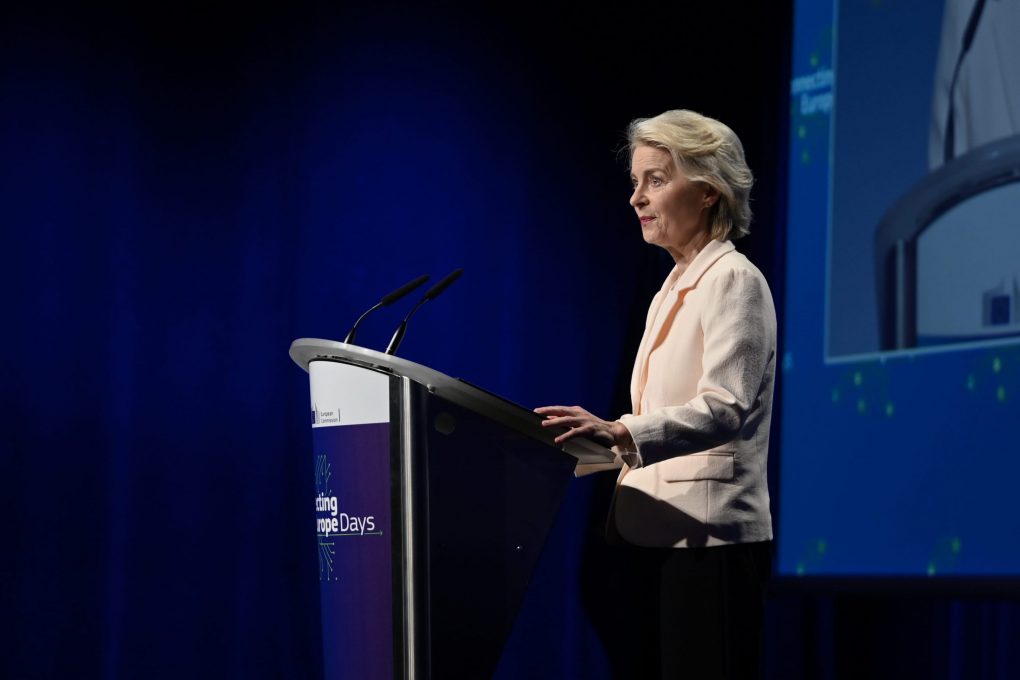
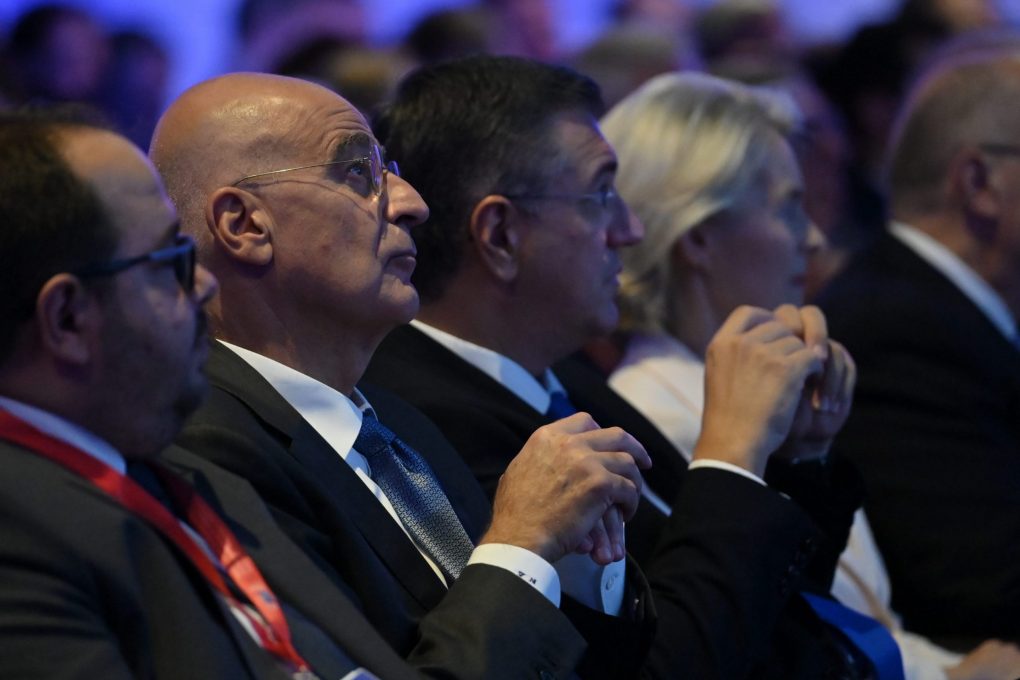
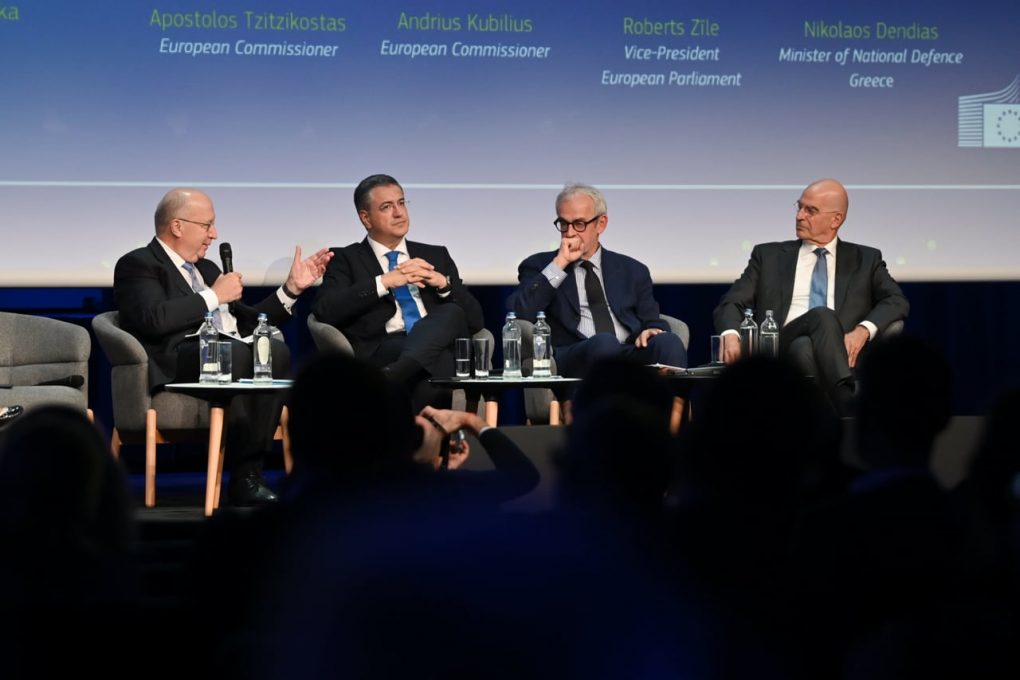
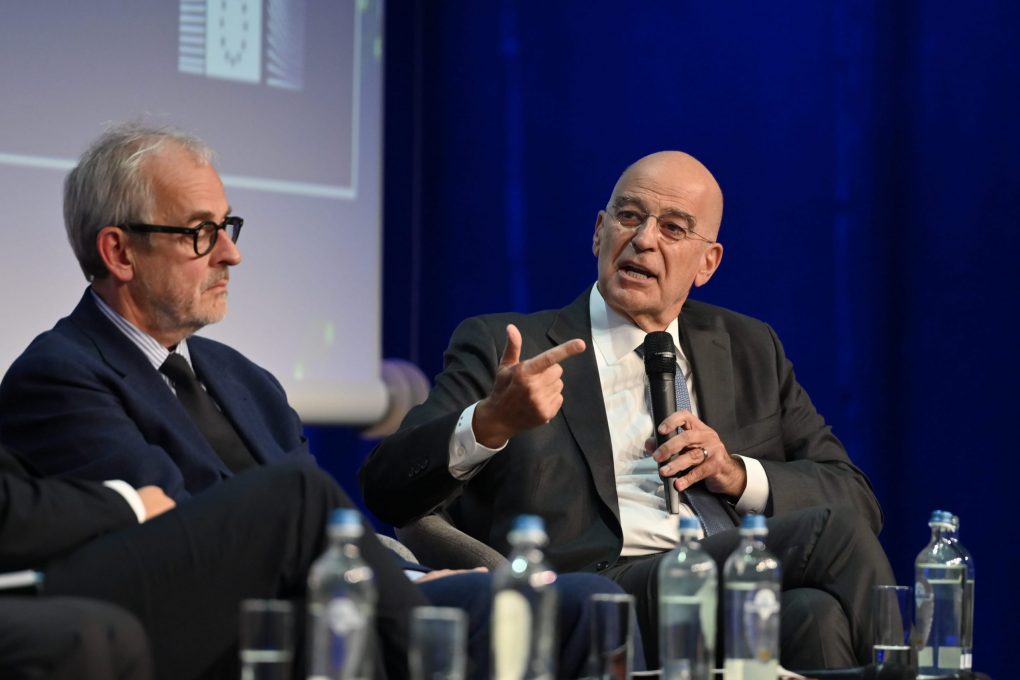
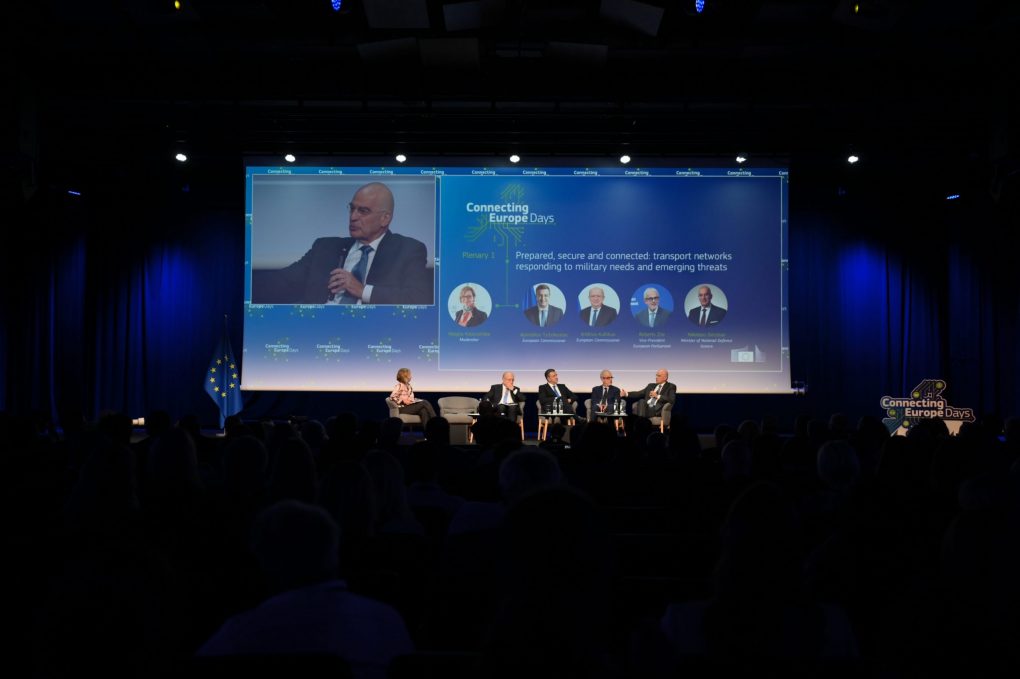
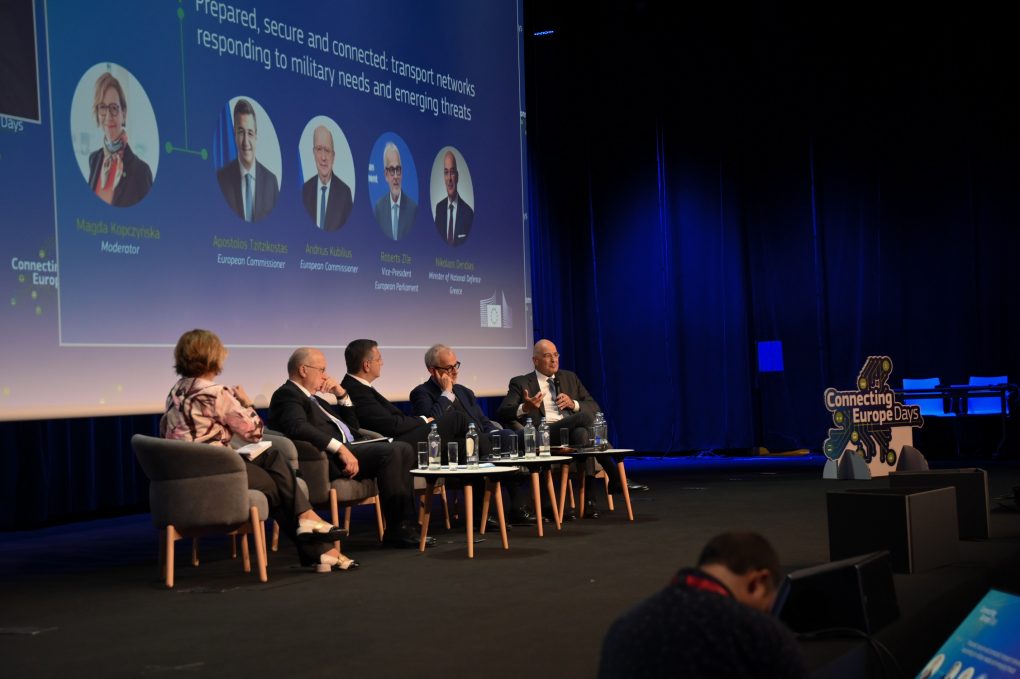
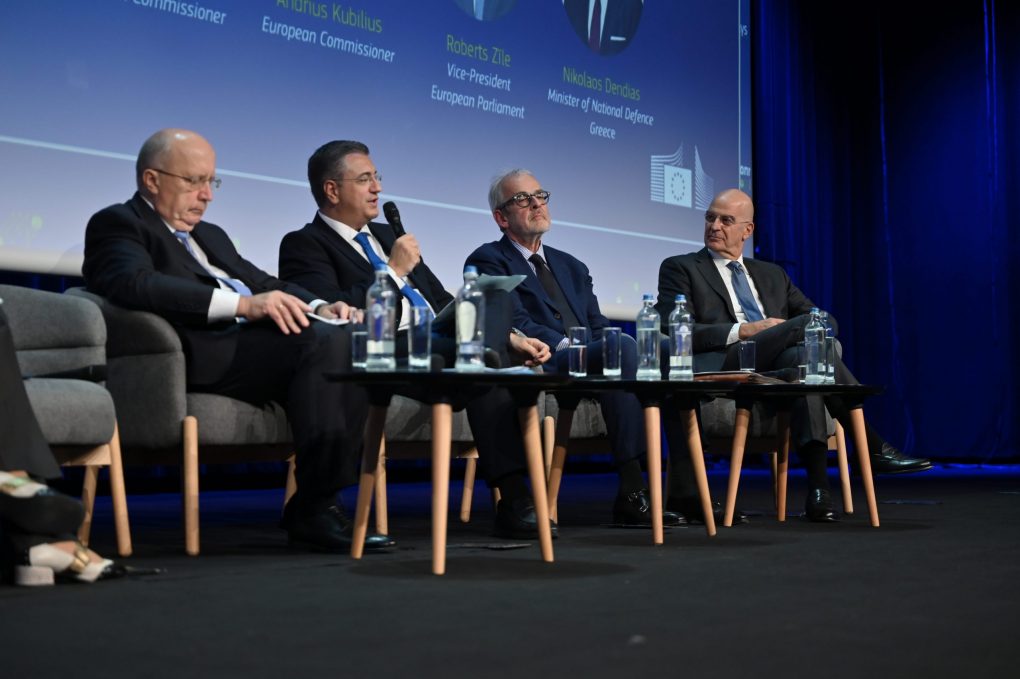
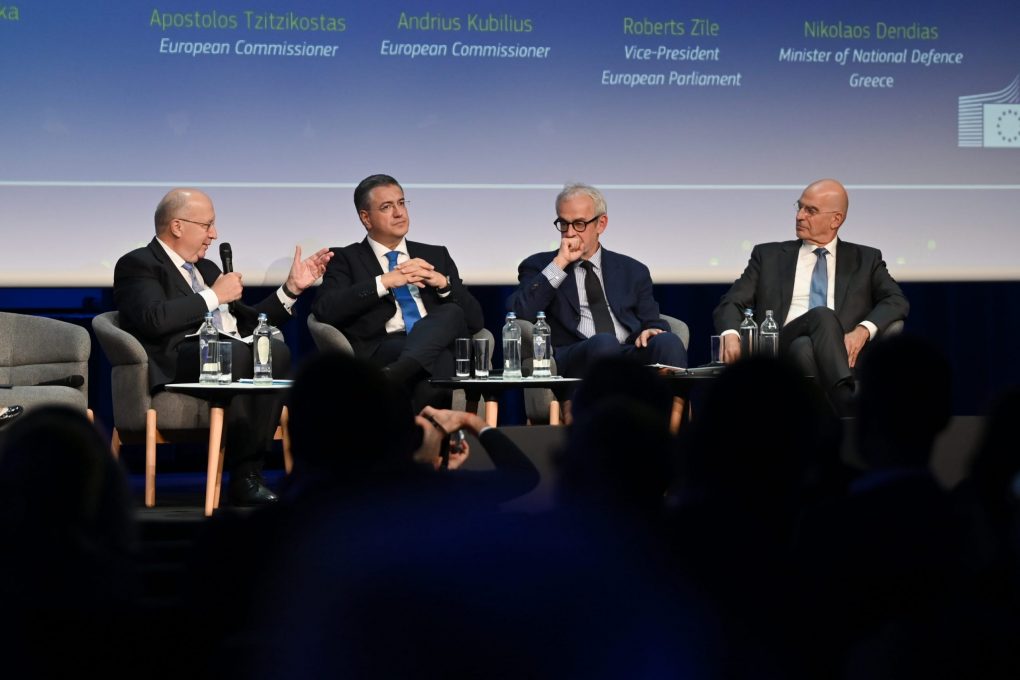
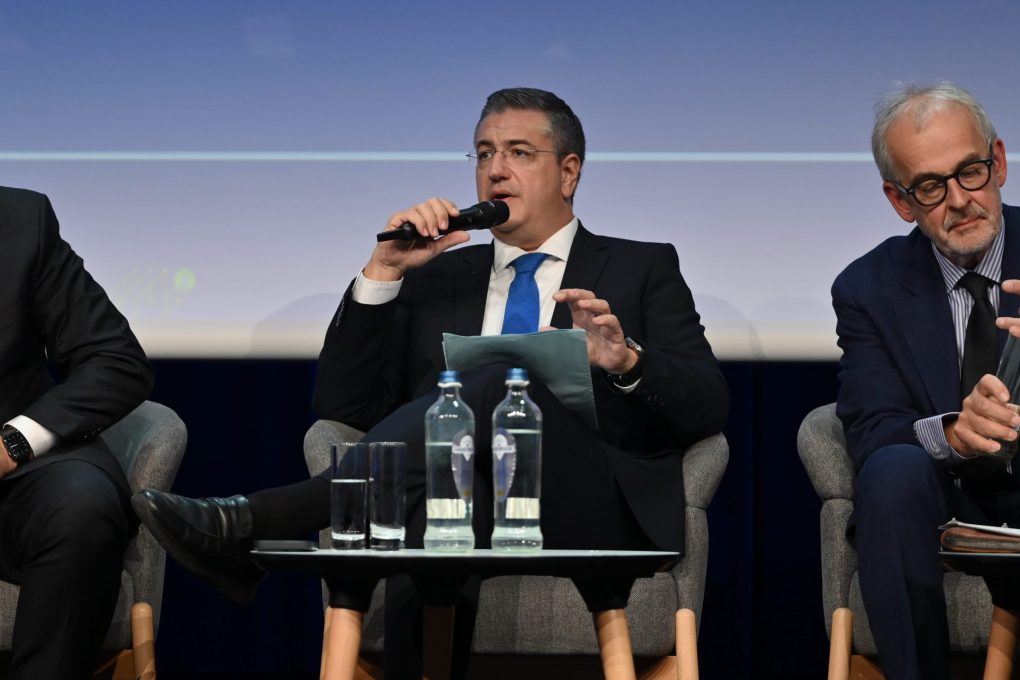
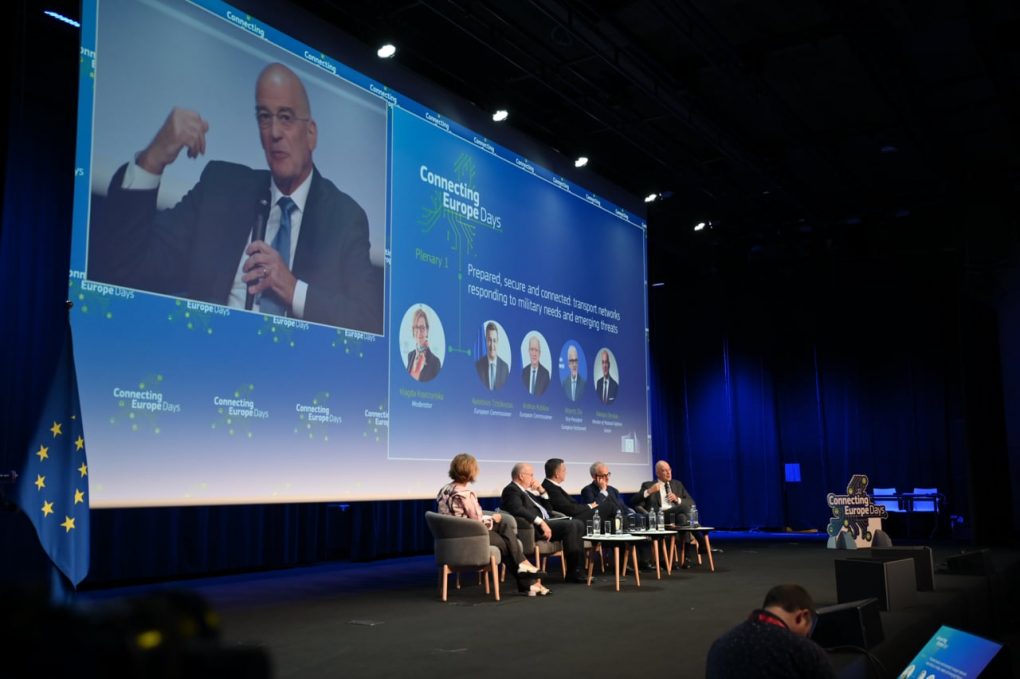
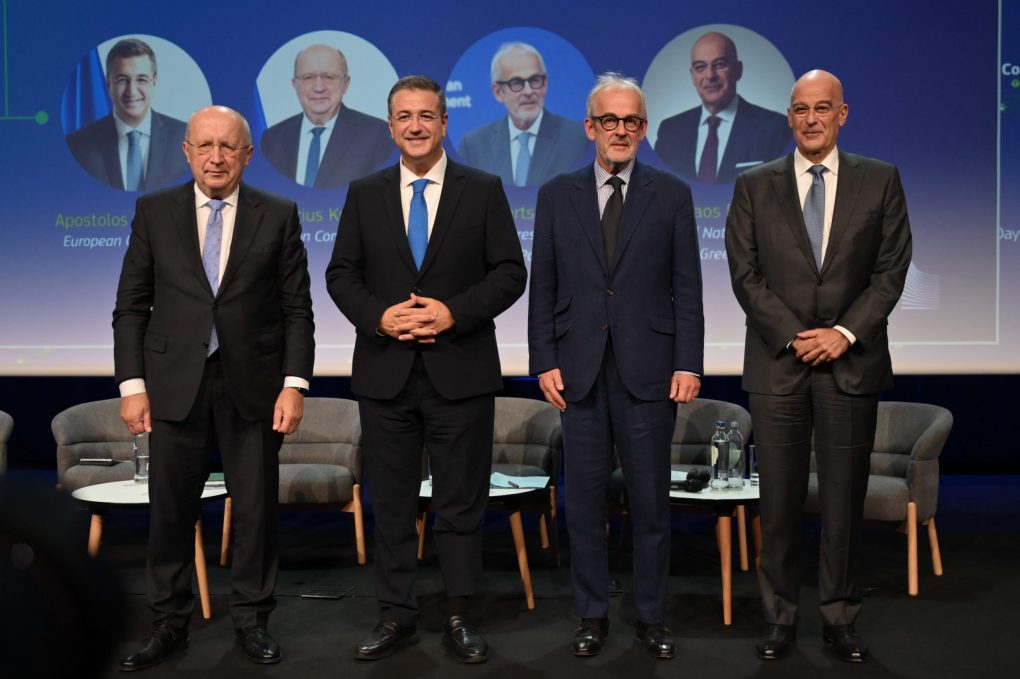
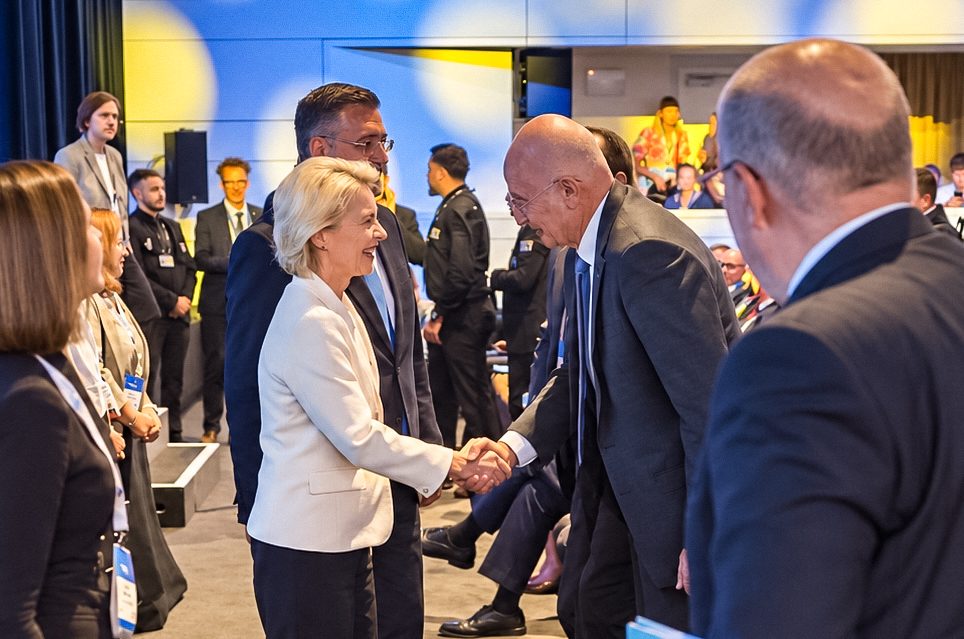
Today, Tuesday 29 September 2026, the Minister of National Defence, Nikos Dendias, participated in a discussion in Brussels on Military Mobility, within the framework of the “Connecting Europe Days – Europe’s Mobility and Transport Flagship Event”.
The event opened with addresses by the European Commission President, Ursula von der Leyen, and the European Commissioner for Sustainable Transport and Tourism, Apostolos Tzitzikostas.
In this discussion, the Minister was joined by EU Commissioner for Defence and Space Andrius Kubilius, the Deputy Prime Minister, Minister of National Defence, and interim Minister of Transport and Infrastructure of Romania Radu-Dinel Miruta, and the Vice President of the European Parliament, responsible for Military Mobility, Roberts Zile.
During the discussion with the panel moderator, the Director-General of the Directorate-General for Mobility and Transport (DG MOVE), Magda Kopczyńska, Mr. Dendias stated the following:
Magda Kopczyńska: Minister Dendias, I have a question to you. Building a little bit on this corridor that Commissioner Tzitzikostas referred to, but also turning back to the previous conversation where there was a lot of talk about cooperation between civilian and military. You’re a civilian minister, but of defence. From your perspective, everything that concerns military mobility, from the perspective of your country Greece, but also of the region where Greece is situated, are we in the right place and time?
Nikos Dendias: Thank you for the question. First of all, I would like to thank Commissioner Tzitzikostas for giving us this opportunity and being together with Commissioner Kubilius, a driving force behind something that, to my understanding, I have to say, it is long overdue.
And if you allow me to reflect a little, let’s go back to the 80s. In the 80s, the idea in Europe was that NATO will do the defending, which meant in our minds, let us be honest, that the Americans will do the defending. Then we go to the 90s and the Berlin Wall comes down. And then we said what Francis Fukuyama said, although now he has changed his mind, end of history. So there’s no need to defend anything because there’s no attack from anybody. And one cannot even understand the naivety of how we were thinking because it was all of us at that time.
Because when we tried to create a unique experiment of wealth, protection of human rights, democracy, rights of women in Europe, we thought that this unique place in the world does not need any defending. It will stand on its own merit. That cannot and could not have been the case.
And what we face now – and the invasion of Ukraine by Russia, allow me to say, was a wake up call – is not the only challenge that the European Union is facing. That brings us back into reality. And reality means we have to defend this space. But now, how can you defend if you cannot move resources? And again, history teaches us a lesson. When was the last time that we had a united Europe? Let’s find a historical example. Under the Roman Empire. What was the basis of the Roman Empire at the time? It was the Roman roads. 300,000 km of Roman roads that allowed the legions to move back and forth quickly and protect the borders.
And we, the European Union, with 10 times the population compared to Augustus’ times and with an almost $20 trillion economy, have fewer rail lines than the Romans had roads. So what we are trying to do now is catch up for what we have not been doing for years. And we have to catch up quickly. And it has to be at 360 degrees. We have to prepare. Connecting does not just mean addressing the current challenge of Russia. It means also addressing the challenges of tomorrow.
And that is not easy. And I have to say, and I apologise to the European taxpayer, I am one of them, that it will cost. It will cost, but it will be necessary. So my answer is we’re doing the right thing. We are late, so we have to move very, very quickly.
Magda Kopczyńska: So, are we coordinated enough and in line enough to catch up, to build up those roads and rails from Roman times that we have neglected over the past couple thousand years?
Nikos Dendias: Can I be a little iconoclastic? Well, I have to say a lot is being happening. But I do appreciate what both Commissioners and especially Commissioner Tzitzikostas said before, that we are creating something that we also have to defend. And we do not take into account its defence.
He put a figure on the table. It sounds staggering, €100 billion. Well, it’s a huge figure. But let me tell you that we are talking about the European Union. The European Union’s GDP is something like between $18 and $19 trillion. So, we’re talking about something so crucial, which is 0.6 or 0.7%, if I can do the maths by heart. So it is a lot, yes, but if it’s existential, can we afford it or no? The answer is yes.
But then we have to add how to defend it. And defending it – and there comes my main point – who is responsible for defending the pan-European structures? The general, General Clancy. Yes, he’s a general, but what is he heading? He heads a commission, a military commission. Have you ever heard of a military structure in the history of this world headed by a commission? Not even in democratic Athens. They would elect a general for 24 hours, but they would give him full powers to do that. So what I’m saying, at the end of the day, is yes, we are cooperating a lot, but we have to move further on. We have to create structures according to the needs of the times. And we should not hide because we may be afraid that we’re antagonistic to NATO, because we are not.
We’re complementary to NATO. We don’t envision a world in which NATO will depart from Europe. We’re envisioning a Europe in which NATO will stay here and participate in our common defence. But we have to create the structures that will be complementary to NATO. So, I do believe that we should enhance the Military Commission and its work a lot more, and also continue and enhance the big efforts that both Commissioners do.
Magda Kopczyńska: I almost regret that the participants of the first panel are now off stage, because when I asked them whether we need new structures, all three of them said absolutely no. And you now said we need new structures. So maybe we need to organise a new panel.
Nikos Dendias: I’m not saying we need new structures. I’m saying we need to enhance the existing structures. Turn the commission, the military commission, into something deeper, more capable, and with bigger forces.
Magda Kopczyńska: Are we there where we should with the defence of infrastructure?
Nikos Dendias: We have a long way to go. No, if I have to give you an honest answer, no, we’re not there. We’re rather far away. If I could, with all due respect, propose something to Europe, it is what the Commissioner said before, what we are trying to do for Greece.
Greece faces a very difficult security environment. It’s not only the threat to NATO and Europe from Russia. Also, we have our neighbours, Türkiye, which poses a threat to us. We have all a neighbour who is very difficult to live with. Iran is much closer to us.
The Sahel, which is a terrorist paradise nowadays, is much closer to us. Libya, a failed state, is much closer to us. Syria used to be a failed state up until very recently and we don’t know how it will go, Lebanon is also very close. So, it’s a very different neighbourhood. If I may just in two words say what we’re doing, we’re producing a total defence procedure which is called “Achilles’ Shield”.
Why “Achilles’ Shield”? Because in ancient Greek mythology, the shield given to Achilles by his mother when Hector killed Patroclus and stole his weapons had 5 layers. And these 5 layers are land, sea, air, but also cyber and space. And we do believe that this has to happen at a pan-European scale. Because let’s assume that a terrorist group from somewhere in the Arab Peninsula, a Houthi group, sends a missile, a ballistic missile, against a European country because they think that they support the United States of America. Or Russia. Who is going to address it? If, for example, this ballistic missile goes against Cyprus or another small European country, would that small European country be able to build anti-ballistic capability? We have to do it at a pan-European level, and that’s the only way to do it. And of course, we have to understand that the challenges of tomorrow are unspeakable.
What today is the realm of serious military powers, tomorrow will be the realm, through artificial intelligence, of terrorist groups and non-state actors. If we want to protect our European experiment, we have to create a holistic approach and that cannot be done individually by each country. So my whole idea goes beyond enhancing the capabilities of Europe’s Military Commission. To the level of creating a pan-European defence.
That’s the way I dream of Europe in the future. I know it will not be tomorrow. I know it will not be cheap. But I think it’s a coherent idea which the young people of Europe could subscribe to. Thank you.
Magda Kopczyńska: Mr. Dendias, you told us your vision, what you want to see.
Nikos Dendias:
Well, I will now stay with my Greek hat. As I’m a Minister of Defence of one European country, I cannot speak for a European institution. What I would say is that my proposal is to use us, Greece. We could be a very good example. We could be a very good example because we understand the security threats, taking also into account the current biggest challenge we are facing, and I’m speaking about the Russian invasion of Ukraine.
We are the closest. Funny as it may sound, it is not obvious to somebody who is not familiar with the map, but Alexandroupolis in the north of Greece is the closest port to the front in Ukraine. So, creating resilience and creating the capability that we are talking about within Greece and in the corridor from Greece north through Romania, Bulgaria, Moldova, I think would be a perfect example. On how Europe could work on creating connectivity, creating corridors, and protecting them at the same time. And I would like to thank Commissioner Georgieva and Commissioner Kubilius for understanding that and supporting this process.
Thank you”.