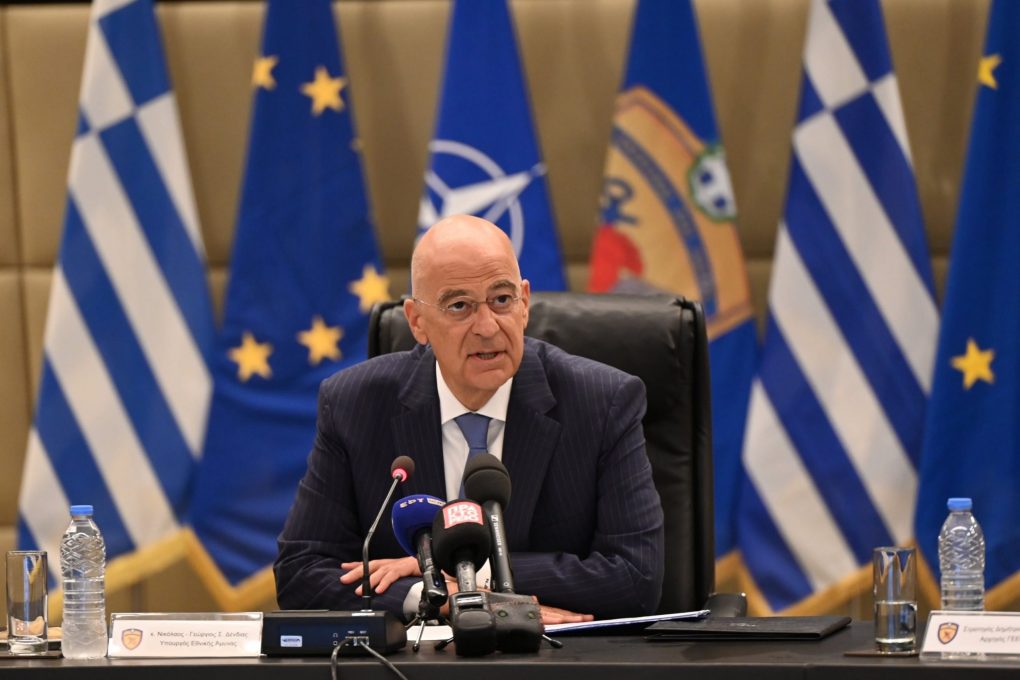
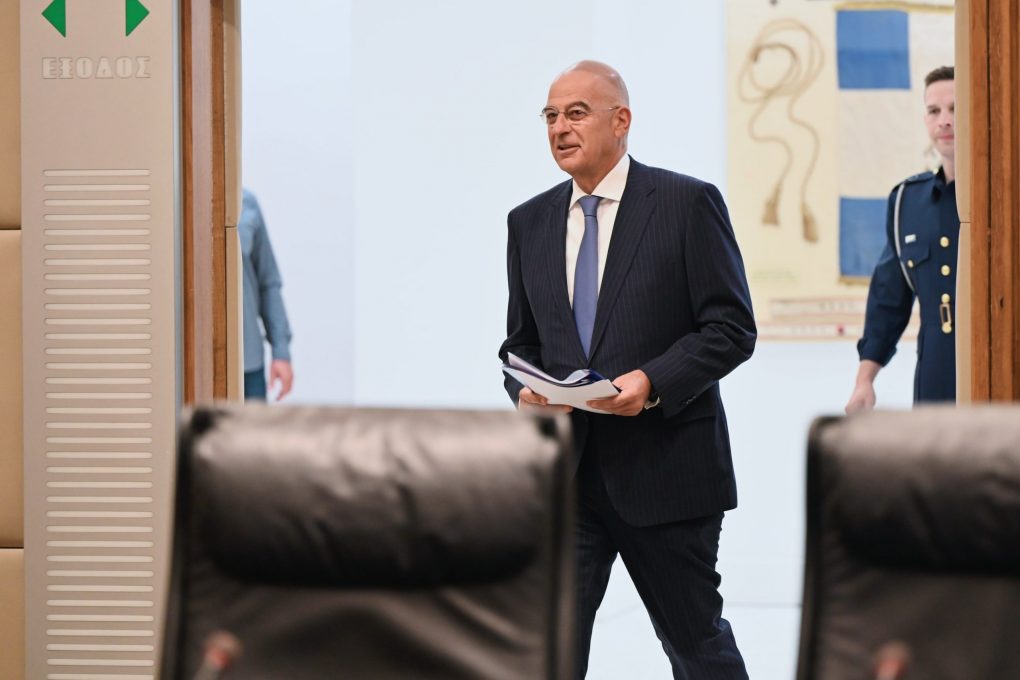
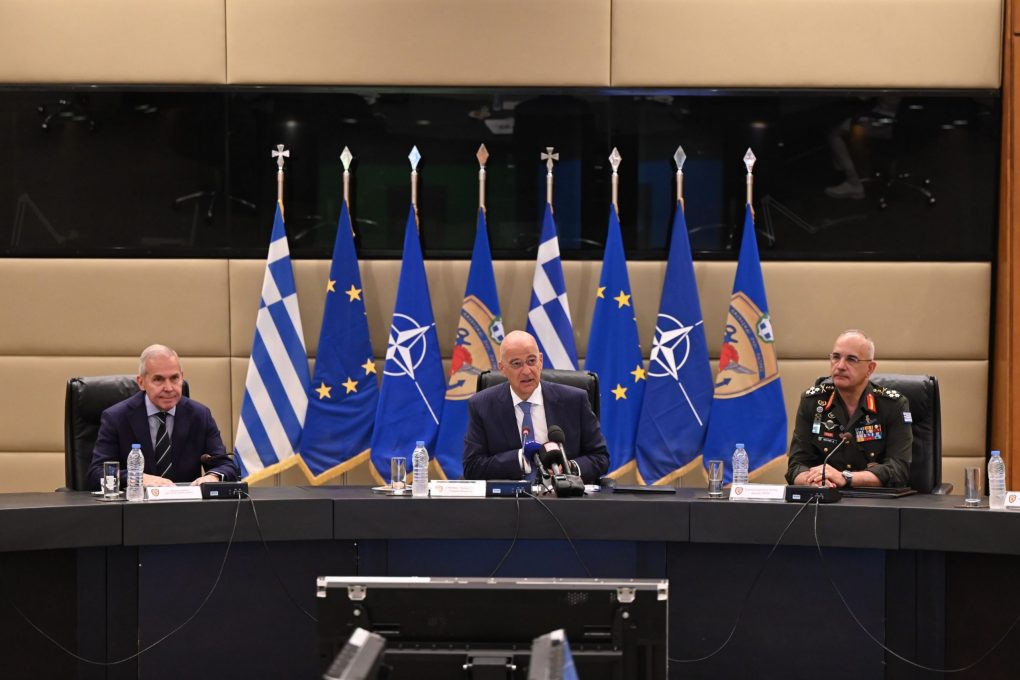
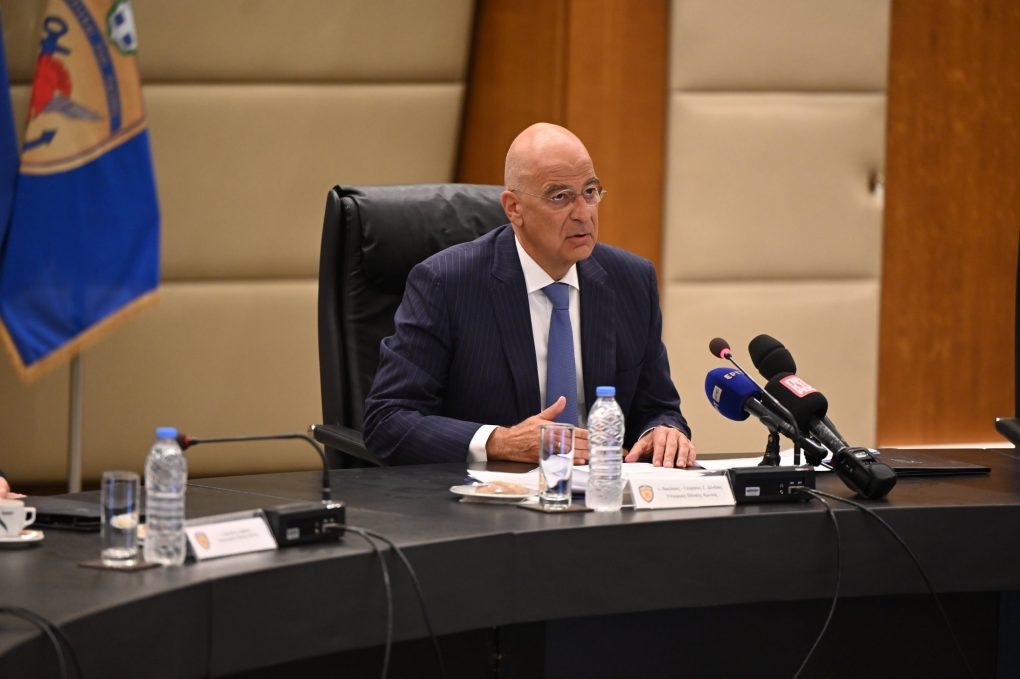
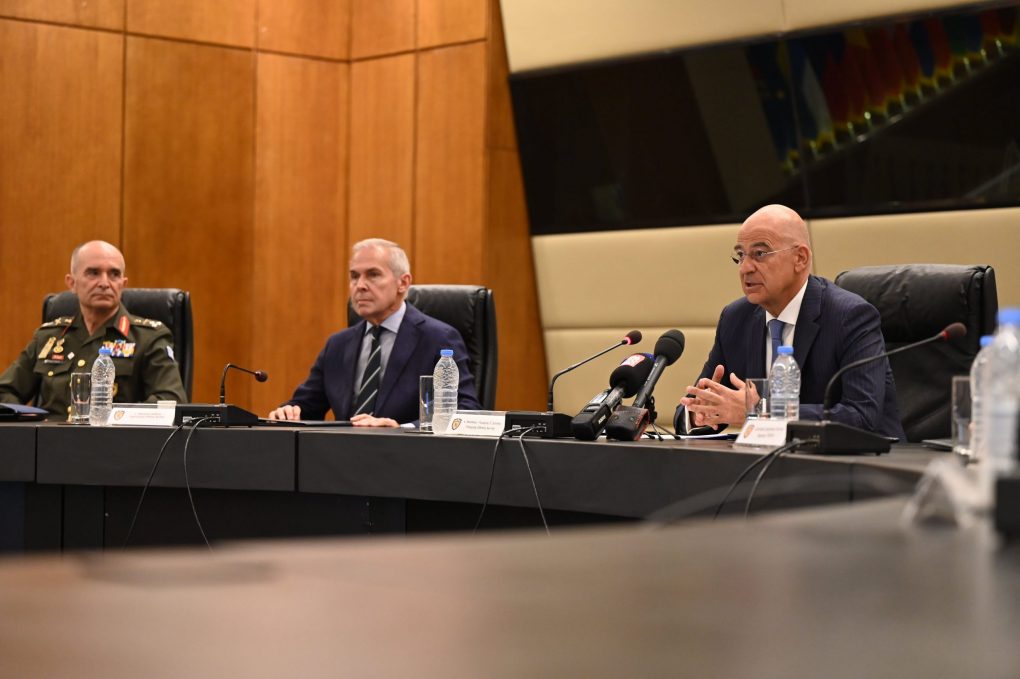
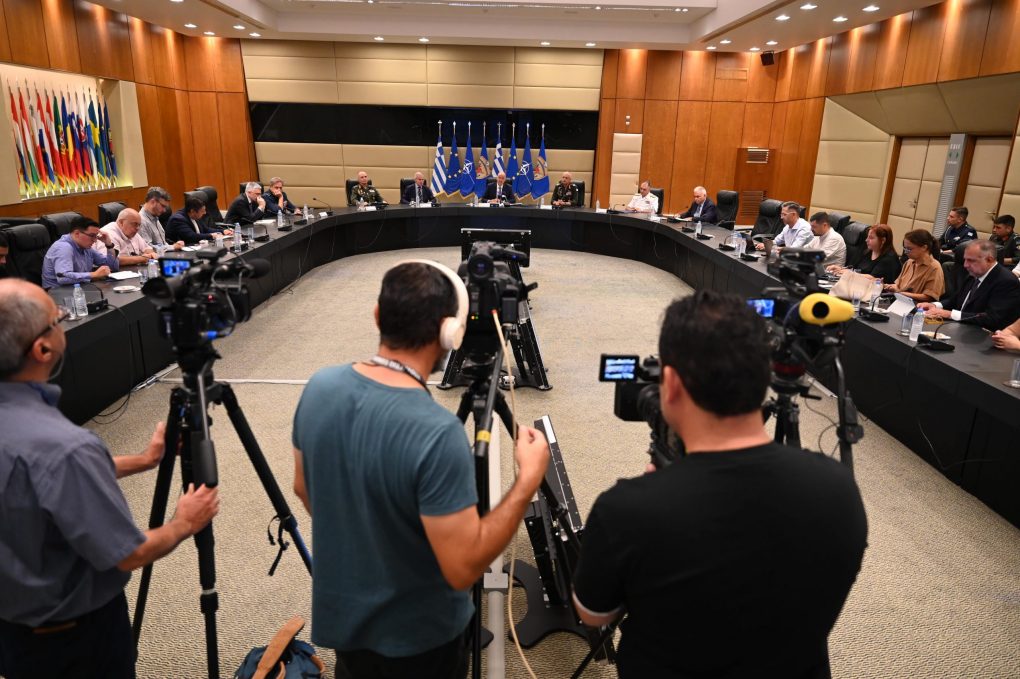
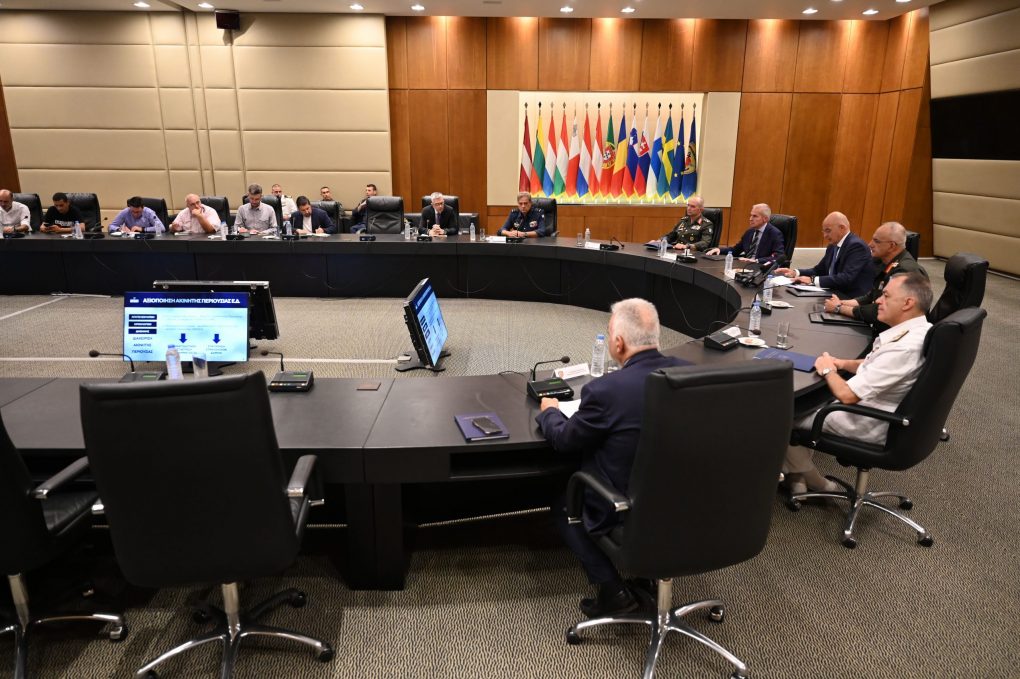
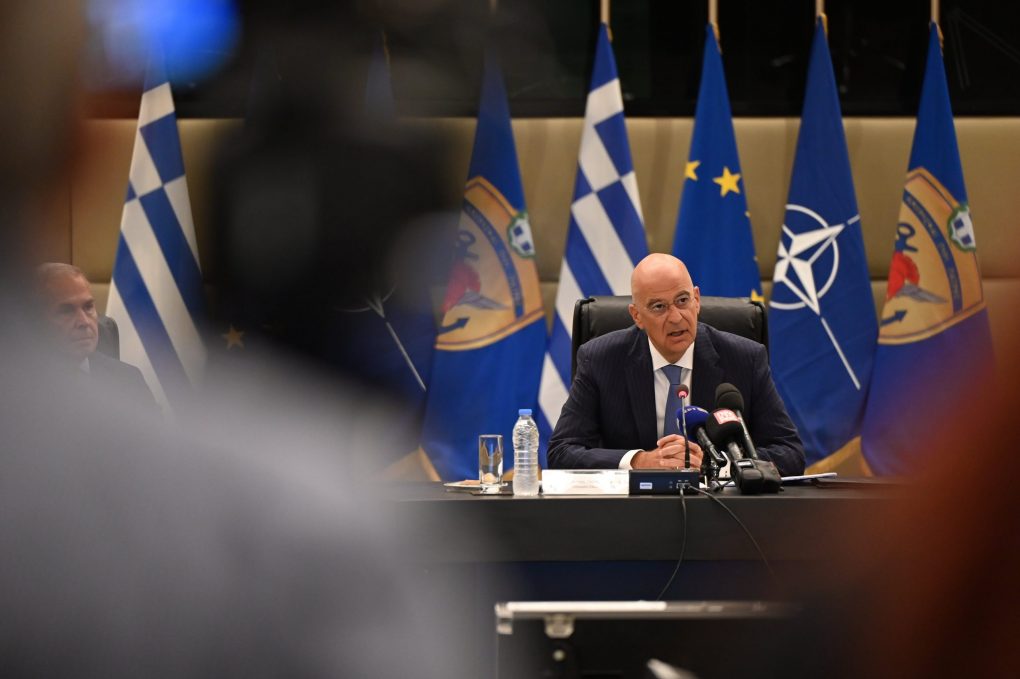
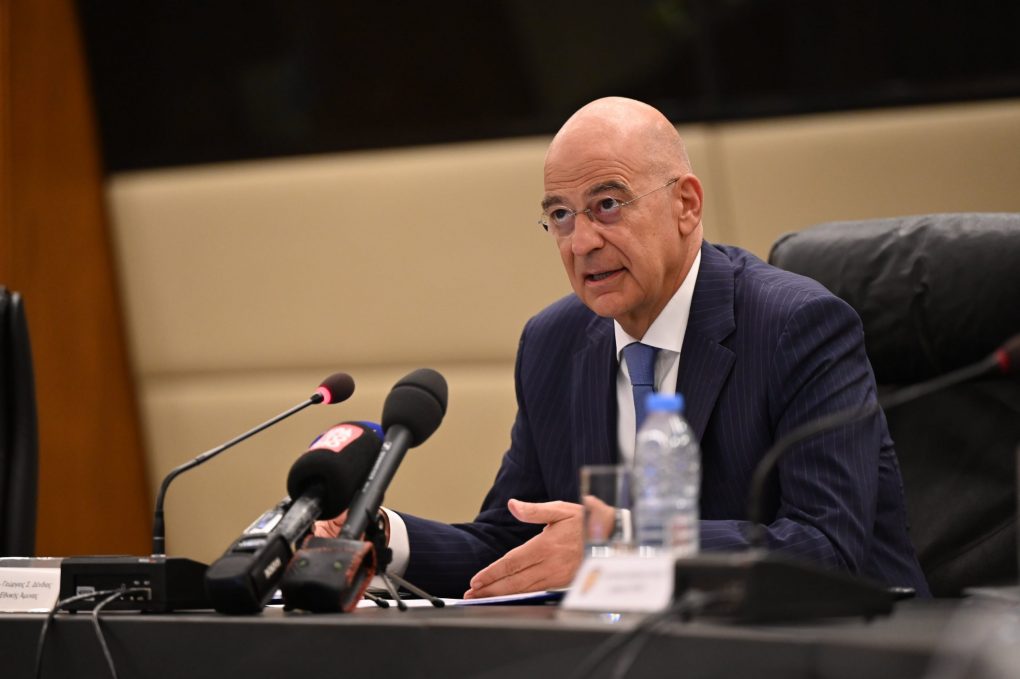
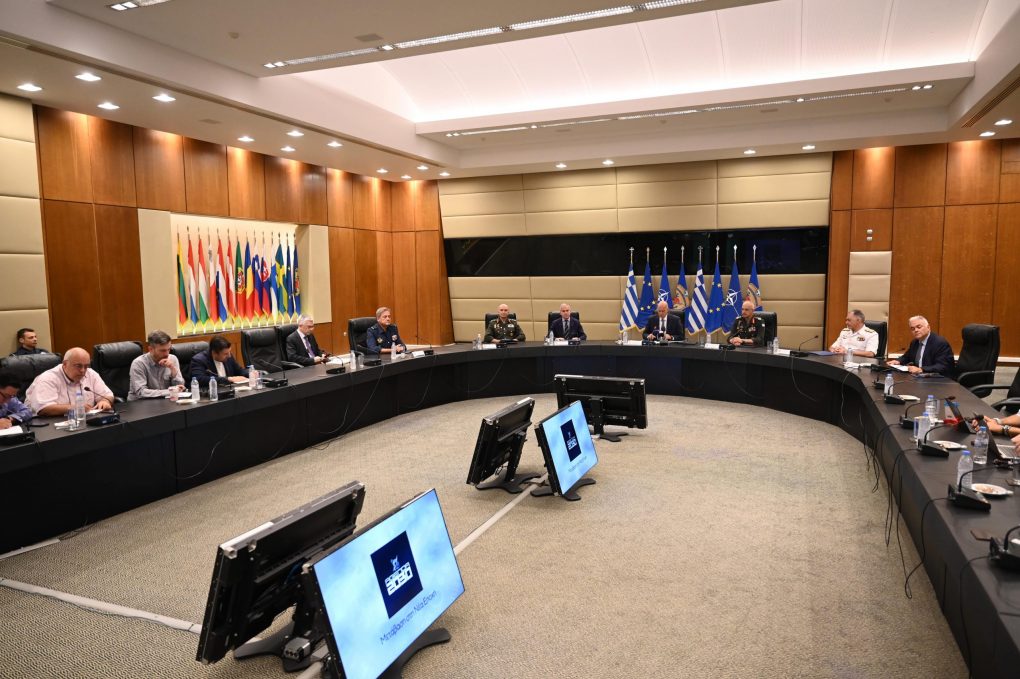
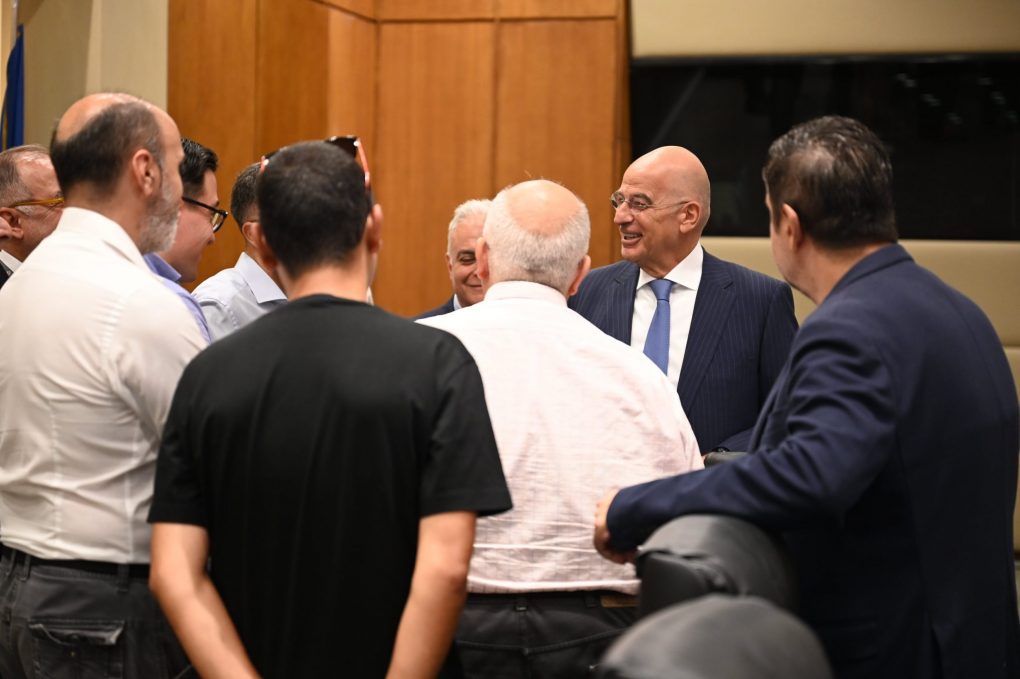
On Thursday 24 July 2025, the Minister of National Defence Nikos Dendias presented phase B of the “Agenda 2030” Armed Forces reform.
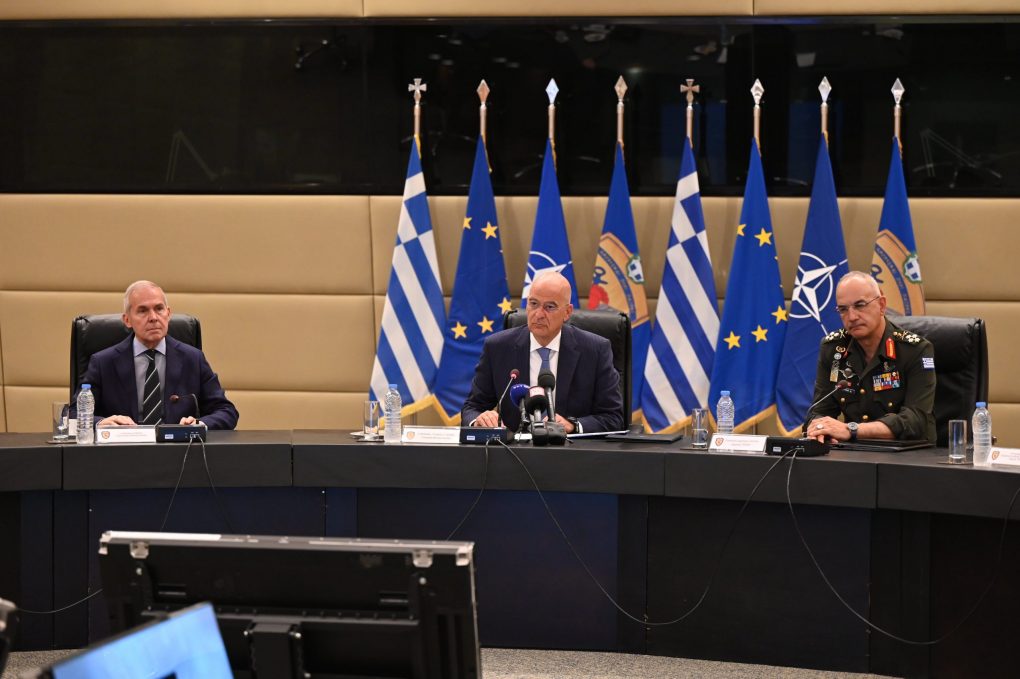
The presentation was held at “Ioannis Kapodistrias” Hall of the Ministry of National Defence and was attended by the Deputy Minister of National Defence Thanasis Davakis, the Chief of Hellenic National Defence General Staff, General Dimitrios Choupis, the Chief of Hellenic Army General Staff, Lieutenant General Georgios Kostidis, the Chief of Hellenic Navy General Staff, Vice Admiral Dimitrios– Eleftherios Kataras HN, and the Chief of Hellenic Air Force General Staff, Lieutenant General (HAF) Dimosthenis Grigoriadis.
During the presentation, the Minister of National Defence stated the following:
“I would like to cordially thank you for your presence here today during the heatwave. I can imagine that it was difficult for you to navigate to this hall due to the ongoing construction works for the Ministry’s new façade. So, before briefing you on the forthcoming changes, I would like to recapitulate what has been implemented thus far in the framework of the “Agenda 2030”, which, as we have already pointed out, aims at securing the country against all visible threats and fundamentally change the Armed Forces.
Firstly, I would like to mention “Achilles’ Shield”, which is the overall approach to the country’s capabilities regarding deterrence; namely, the ballistic missile, anti-aircraft, anti-drone, anti-ship, anti-submarine defence capabilities, which will cover the entirety of Greek territory and will lift the burden of simple territorial defence from our Fleet’s new ships and 4.5 and 5th generation aircraft.
I would also like to remind you of the Hellenic Centre for Defence Innovation, which has already been established and is operating with great success. The “Centaur” is already a proud example of that, but not the only one. There are already ten ongoing projects, and eleven more are going to be announced. Of course, the Hellenic Centre for Defence Innovation cooperates closely with the newly-founded Armed Forces Innovation Directorate.
I would also like to remind you that, for the first time in our history, a 12-year-long Armaments Planning, which is in fact a 20-year-long planning, has been submitted. This planning aims at reinforcing our domestic defence industry, the domestic defence ecosystem, with 25% of the total amount. In addition, it constitutes an innovation for Greece.
The new Force Structure, this new and solid system, which will have at its disposal the new assets that we are procuring.
The medical services, which we have upgraded through a bill that has already passed, but the ambition and need to go even further.
I would like to point out the pay increase, which has already been announced. Part of that increase regards the Fleet, namely with the Fleet Pay and the Special Conditions Pay.
In addition, there was an increase in the income of all Military Academy cadets. We are also anticipating the relevant bill by the Ministry of Finance, regarding the pay increase, which I have already announced after receiving the Prime Minister’s approval, and which will take effect from 1/10/2025, as the government has promised, regardless of when the bill is ready.
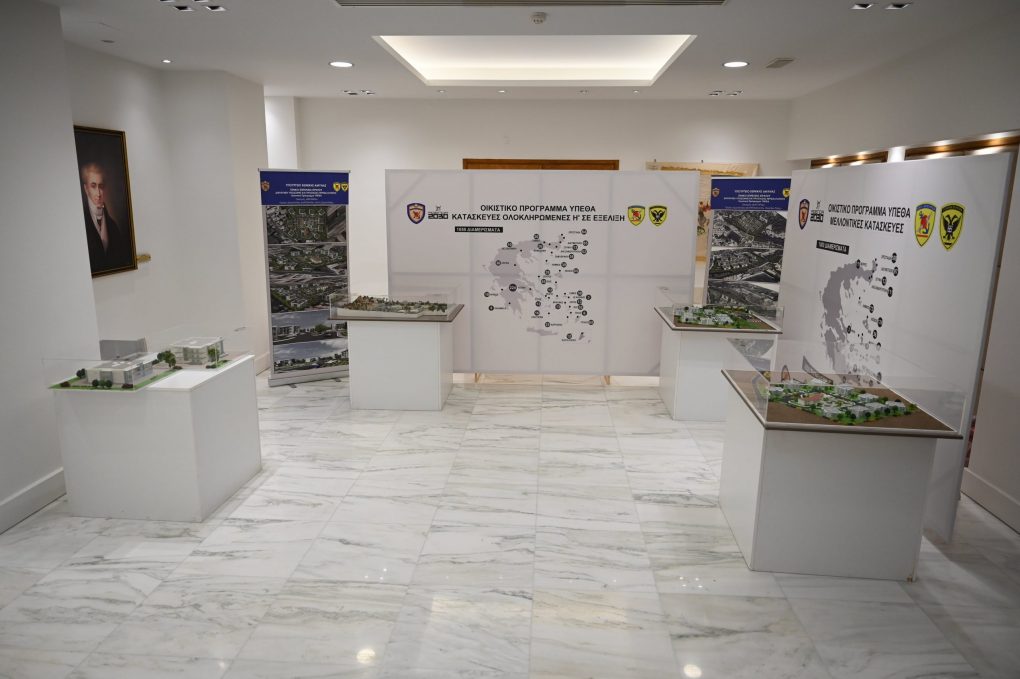
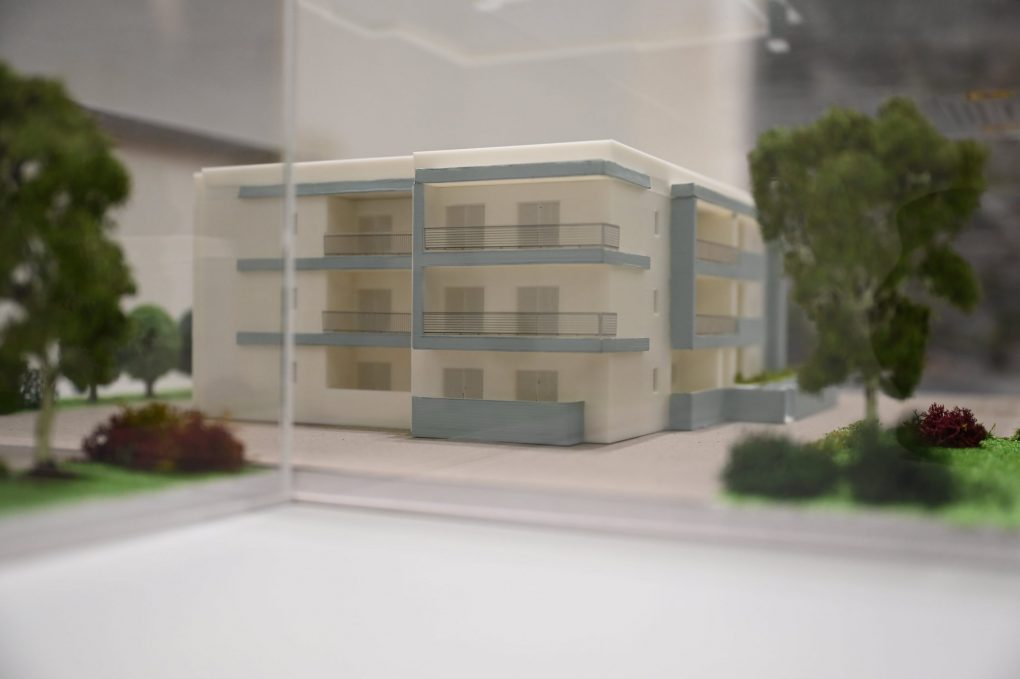
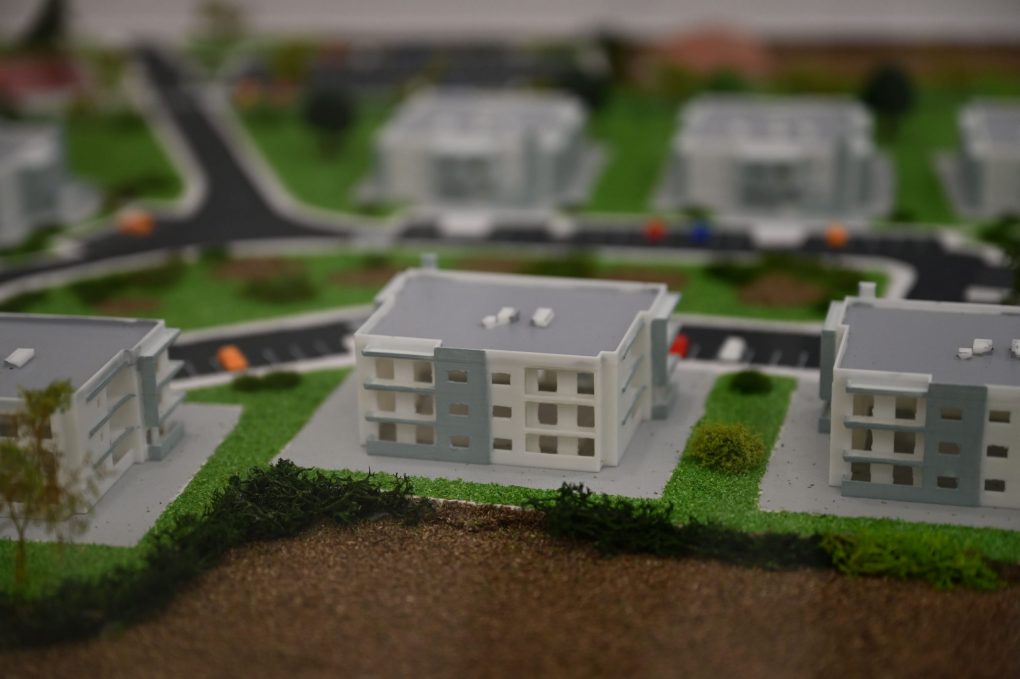
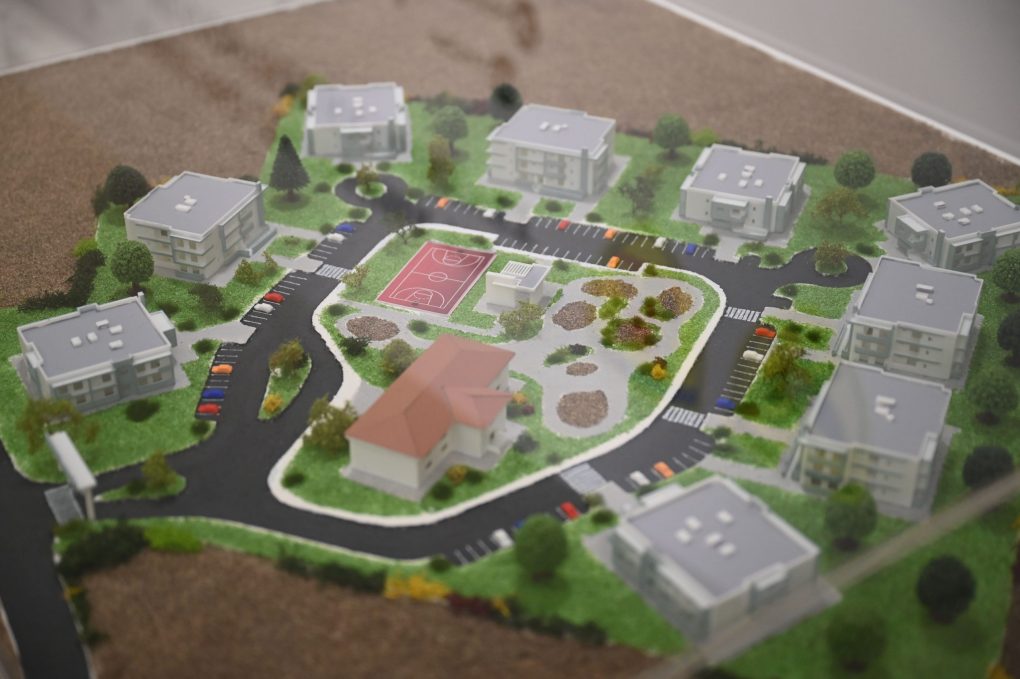
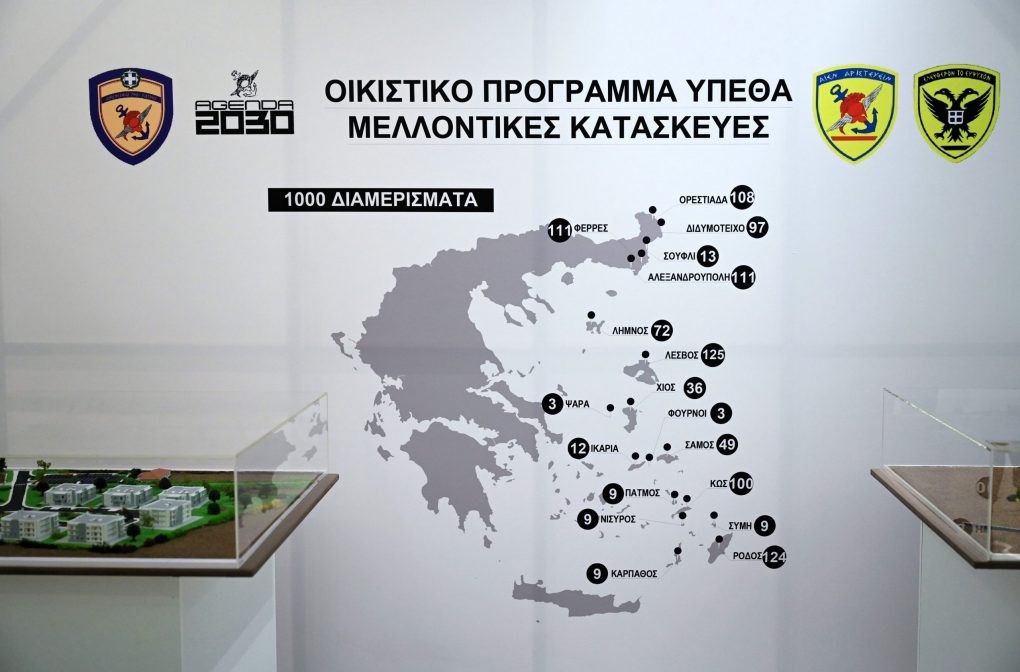
Of course, let us not forget the Armed Forces Housing Programme, which is in full motion and which we will discuss later on.
Today, I would like to brief you on the Phase of the new Force Structure that we are entering. Let me begin with the bill regarding the development of Armed Forces real estate, which is already being discussed by the competent Parliamentary Committee. This act stipulates the unification of the three individual Funds under a single entity, called National Defence Real Estate Fund, as well as the establishment of a new entity for the development of said real estate called Armed Forces Real Estate Development Entity.
Our ambition is to be able to use the funds received through the development of the real estate of the Armed Forces to fund the Armed Forces housing programme, as well as maintain already existing structures.
I would like to say that, at the Ministry of National Defence, we are fully aware of the times we live in and that society, and partially other political parties, are suspicious towards any effort of developing any public property, which in this case belongs to the Armed Forces, no matter how necessary it is for that to happen.
So, at this point, I would like to reiterate what I have already said in the Parliament and what I am going to say again tomorrow, during the Committee’s second session. The Ministry of National Defence will adopt and include in the bill any rational proposition that leads to management transparency, regardless of it originating from the leading opposition party or anyone else. We want complete transparency.
If someone takes the time needed for its implementation into consideration, it becomes evident that the actual implementation of this act does not concern the present leadership of the Ministry. However, we must lay solid foundations, which will allow this specific Ministry’s work to be the result of the complete agreement of the political system and not the differences that exist in it. When it comes to matters of Defence, we must all be unified.
I would like to present to you some numbers regarding our housing programme that we are really proud of. The housing programme is about meeting the housing needs of professional Armed Forces personnel, when they are transferred somewhere in order to fulfil their duties. During the past 20 years, the Armed Forces housing programme had built 799 houses. 799 houses in 20 years.
Until August of next year, we will have built 1,059 houses, mainly in Thrace and the Aegean Islands, and by 2027 we will reach 2,059 houses built.
If the data provided to us is accurate, today, we have already exceeded the 799 houses of the past twenty years.
If we add this to the increase in salaries and other benefits provided to military families, we hope to create an environment, which will render a career in the Armed Forces attractive to younger Greeks.
I have repeatedly said that we need the best Greek men and women in the Armed Forces. The size of the threat is much bigger than our numbers. In order to make up for that, face it, and deter it, we need our best people.
Now, I will proceed to Phase B of the Force Structure reform. The aim is to reorganise and modernise the existing model. The Chiefs and the Councils have carefully studied the learnings of modern wars, and I would like to thank them for that.
It is evident now, that large, heavy bureaucratic formations cannot withstand modern reality.
So, we proceed with increasing the autonomy of Major Formations by establishing four Supreme Military Commands. The Supreme Military Command of Thrace, namely today’s D Army Corps; the Supreme Military Command of Epirus and Macedonia; the Supreme Military Command of the Aegean and the Eastern Mediterranean; and the Hellenic Army Support Command, which maintains the role it already has today.
We abolish all intermediate levels of command. The Hellenic Army General Staff will be directly above the four Supreme Military Commands in terms of hierarchy, which results in the inactivation of the Hellenic First Army.
At the same time, we are upgrading the Army Inspectorate General by assigning new responsibilities to it and we are going to establish Unmanned Assets Commands to all Services. You understand that this is the modern weapon of war.
We will also proceed with the merging of an additional 45 military camps. I would like to remind you that another 137 camps have been merged thus far. We will also merge the 15 Military Courts into 6. Military Justice will maintain its presence in Athens, Larissa, Thessaloniki, and Xanthi.
From the above, we will save a total of 85 million Euro per year, as well as an additional 16.5 million Euro from the merging of camps.
The inactivation of the Army level command will free up hundreds of capable Officers, whose capabilities can be utilised much better from now on. The inactivation of the Hellenic First Army will provide us with 30,000 working hours a month to have at our disposal. 29,504 hours to be more precise.
At the same time, we learn necessary lessons from ongoing wars, mainly the war in Ukraine.
What I am referring to is the construction of a series of defensive fortifications, mainly in Evros and the islands of the Eastern Aegean. After the modernisation of already existing fortifications – the country already possesses the infrastructure, but it must immediately be rendered operationally useful – another 207 projects will be added in mainland Greece and 315 projects on Greek islands. Our prediction is that 100% of this target will have been completed within three years. These, as well as a lot of other reforms, should have taken place a long time ago. The estimated budget for these projects is 65 million Euro.
Next, I would like to conclude with the reform in what I refer to as the citizens’ army. Starting from 1/1/2026, no soldiers will be enlisted in the Hellenic Navy and Air Force. Everybody will be enlisted in the Army and will follow a new training programme, which along with the bill on mandatory service, will be announced in September. The reason I am announcing this now is because enlistment for 2026, namely the internal procedure of the Ministry of National Defence, has already begun.
We are also establishing a new supply regulation for the Armed Forces. A modern regulation of supply, standardisation, and I must say reporting on supply processes, which was designed by the General Staffs and the HNDGS. It is an improvement in terms of nutritional value.
The Army Inspector General will be responsible for its implementation. There will be an inspection mechanism, which will ensure the implementation of the new regulation.
Food quality that prohibits the people serving the Country from fulfilling their duties is unacceptable. I do not claim that what I am about to say happens everywhere, but we can’t just cook food and then throw it away. And it is unthinkable that citizens who serve the Country and wear the military uniform deserve to resort to Unit Recreation Centres for food.
The last but equally important change I would like to announce is the following:
I would like to announce the increase of the monthly pay of enlisted soldiers from 8.80 to 100 Euro (for those serving in remote areas) and to 50 Euro for those serving in the mainland. I am unaware as to how today’s announcement leaked on the internet, but I saw some calculations made. In fact I saw a “strange” calculation that the horizontal pay increase is 20%. In reality it is a horizontal increase of 1,036.36%. It is 1,036,36% for the 100 Euro pay and 468.18% for the 50 Euro pay.
However, these are estimates. Of course, there are additional benefits. Let me give you an example: Today, an unmarried orphan with one parent is paid 35.22 Euro. With the new system, their salary will be 150 Euro while serving the country.
Today, the parent of a child is paid 88 Euro, while with the new system their salary will be 200 Euro. We consider this necessary for someone to be able to serve. And to put it plainly, just like I felt it when I was serving the country, they must have enough money in their pockets in order to go out for a coffee.
I would like to add that the amount we will need for this exceeds 25 million Euro and the entirety of the sum comes from the savings created by the reform in the Force Structure, the merging of camps, and the inactivation of intermediate command levels.
The increase in the monthly pay of enlisted Soldiers comes from the savings achieved by the Ministry of National Defence, and just like the greatest part of the pay increases that have been announced, will be implemented starting from the 1st of October. At the same time, the battle worthiness of the Armed Forces is increased.
Lastly, at least to avoid complaints on the matter, I would like to give you some insight regarding the merges in Military Justice, so that you can comprehend the reasoning behind them. The Army Court-Martial of Ioannina, which is being abolished, tries 8 cases every year. Eight cases within a whole year! The Navy Court-Martial of Ioannina – because you might not know it but we have one – tries 10 cases every year and the Air Court-Martial of Ioannina tries two cases each year. That makes us 20 cases within a year. There are 6 judges and 15 personnel working for those 20 cases. So, we have 21 people working on 20 cases a year!
The Army Court-Martial of Chania – which is also being abolished – tries 6 cases per year. The Navy Court-Martial of Chania tries 10 cases every year, while the Air Court-Martial of Chania tries 5 cases a year. That makes us 21 cases within a year. One more case than Ioannina. There are 5 judges and 15 personnel serving there. So, we have 20 people for 21 cases!
As you can understand, it is unacceptable for any country with a basic sense of reason to use the money of Greek, or any taxpayer for that matter, in order to maintain this situation.
Thank you very much”.
The Minister answered to the following questions from the Press:
JOURNALIST: Minister, Chief, Deputy Minister, good morning! Thank you for the invitation. I would like to ask you one question and for some clarifications please. As you said, no one will be enlisted in the Hellenic Navy and Air Force, as everyone will serve in the Army. Could you say if that only includes a single basic training and a subsequent redistribution of soldiers to the three Services depending on their needs? Or are people only going to serve in the Army from now on?
Also, I would like to ask who will guard naval facilities and airfields in the absence of soldiers? Also one clarification. You made word of “Mainland Greece and the East Aegean Islands”. Is the Dodecanese included in the projects or not? Thank you very much.
NIKOS DENDIAS: I will begin from the third part, but since this is an open announcement, allow me not to go into much detail. There are many issues that I will analyse extensively during the meeting of the competent Parliamentary Committee, but as it happens I trust the seriousness of our country’s Press in such matters. I am also ready to answer individual questions.
Regarding the first two questions which I absolutely understand: The first answer is “no”. Soldiers will not return to the Hellenic Navy and Air Force. People will only serve in the Army, except in very few cases, where the professional capabilities of soldiers make it needful that they serve in the Hellenic Navy or Air Force. I am specifically referring to captains and even more so to aircraft engineers. The number will be very limited and we will publish exactly which specialisations those will be. But there will be very few. Minimal!
Regarding the matter of guarding, as well as other services that soldiers might provide (it is not just guarding); soldiers will be transported by the Army. Guarding, which you mentioned will also be undertaken by the Army.
Everything will be the responsibility of the Army.
I want you to understand, that what has been happening regarding personal preferences to serve in the Hellenic Navy and Air Force for reasons that you can already understand, the Hellenic Navy and Air Force are services staffed at 100% even during peacetime.
That means that anyone or almost anyone who served there would not undergo basic training and would disappear from the Armed Forces of our Country after completing their service. They would disappear from the reserve.
Given our population, this situation could not continue. So, the capability for all Greeks to train and retrain if they want to under the legislative act for the reserve, which will also come during autumn, is absolutely necessary for us to be able to plan the deterrent capability I talked about previously. It cannot be otherwise. Numbers do not lie. We have run them countless times. The development of our population is also known. You might not have run the numbers in detail because you did not need to, but we do.
It is necessary to reinforce the basic pool of the Armed Forces.
JOURNALIST: Minister, the first question is, when will people have the option to pause their enlistment in the Hellenic Navy and Air Force? Also, when talking about greater independence for Major Formations, up to which level does that go?
NIKOS DENDIAS: I will answer the first question and the second briefly for reasons that you also understand. Regarding the first question, enlistment in the Army as well as salary increase will take effect on the 1st of January 2026.
Regarding the independence of Major Formations, modern warfare is different than in the past. We said that before. Let me give you an example. Right now, the war in Ukraine is mainly conducted with small drones called FPV – First Person View and their technology, shape, and capabilities constantly change. Just like the manner they are used. By the way, a great number of them is produced with 3D printers in small and flexible production lines. Normally, for a small change to be made, one must write a document and send it to the Divisional General. Then the Divisional General must send it to the Commanding General of the Army Corps. Then the Commanding General of the Army Corps must send it to the Commanding General of the Field Army and, in turn, he must send it to HAGS. Then HAGS sends it to HNDGS. Then the Chief/HNDGS sends it to the Minister and after receiving the Minister’s approval, this document must follow the same way back. As you can understand, the issue discussed in the document or even the battle/war will be over by then.
So, we must completely overhaul our processes and mindset. We must provide our personnel with the capability of decision making in the battlefield regarding matters that did not exist before. Both as questions and issues. For this reason, Military Academy students are already being prepared for that in a great effort to change this mindset. I can’t claim that it will be done by tomorrow morning though.
But the Chiefs of HNDGS, HAGS, HNGS, and HAFGS encourage initiative. I hope that the new structure will keep on developing.
We are far away from the times of rigid and unchanging ways of operating. We live in times that need constant changes. This is what we are trying to incorporate here. And as regards our work, it is highly likely that I will announce a third phase for our programme. Since, however, we are still working on it, I do not need to say anything right now. Please keep in mind that we live in times of constant changes.
JOURNALIST: Minister, I would like to ask you about the inactivation of the Hellenic First Army, as it has a double function, it is a NATO and European Headquarters. Could you elaborate on that?
NIKOS DENDIAS: Yes. The NATO and European Union identity of the headquarters will be the responsibility of the Army Inspector General, who will be based in Larissa from now on. He will not be in HAGS anymore. The role of the Army Inspector General will be reinforced.
And rightfully so. Within the Army, the Army Inspector General will be the main inspection authority and will also assume the duties of commanding the European Headquarters, as you pointed out.