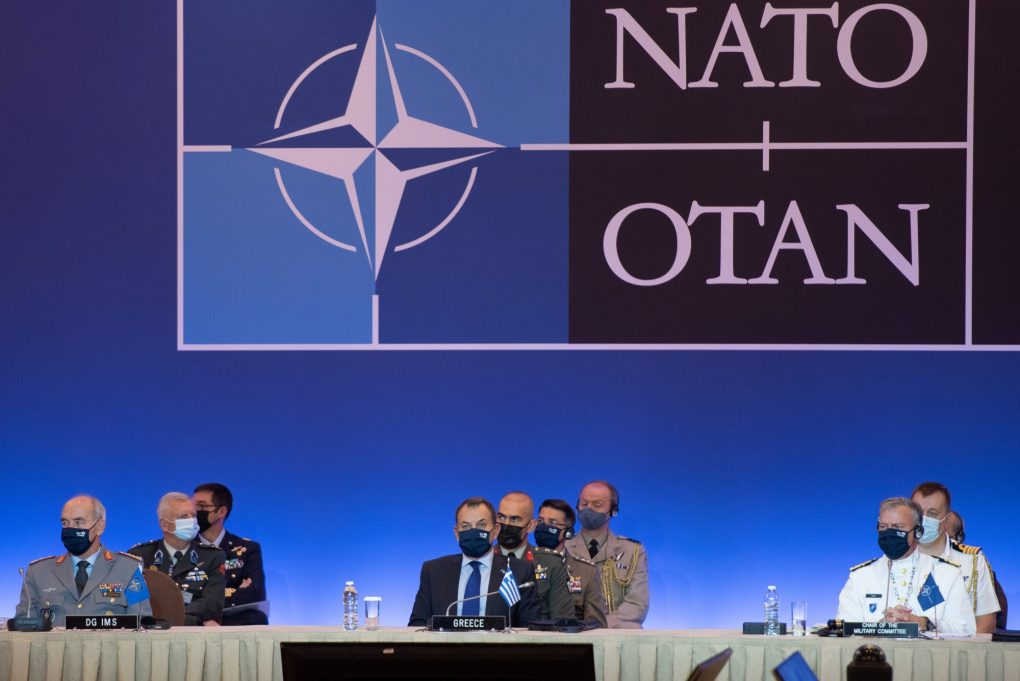
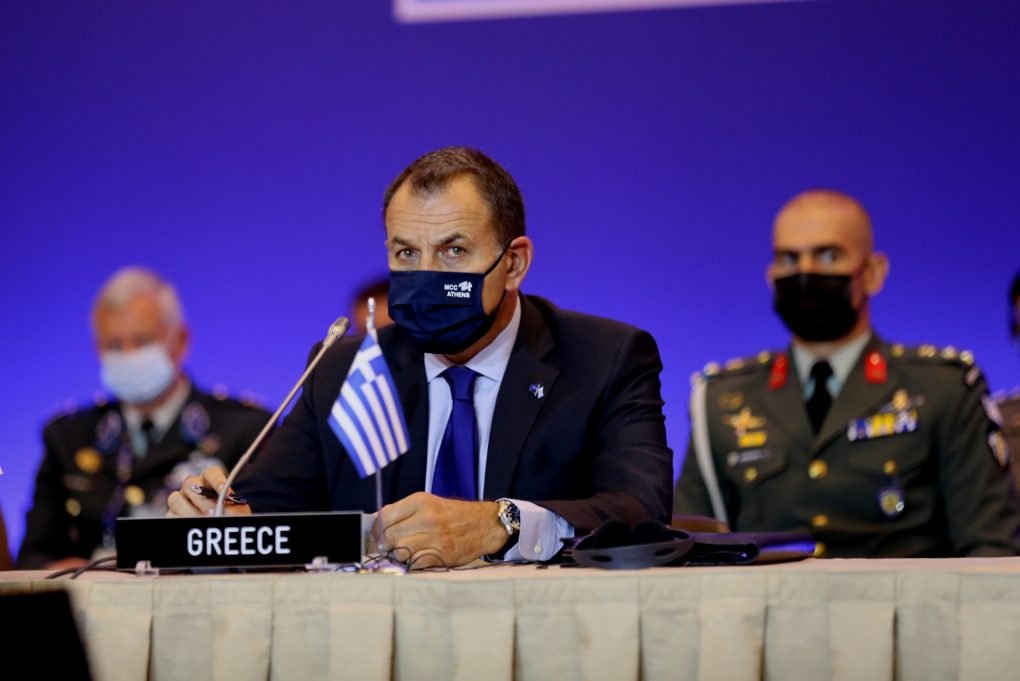
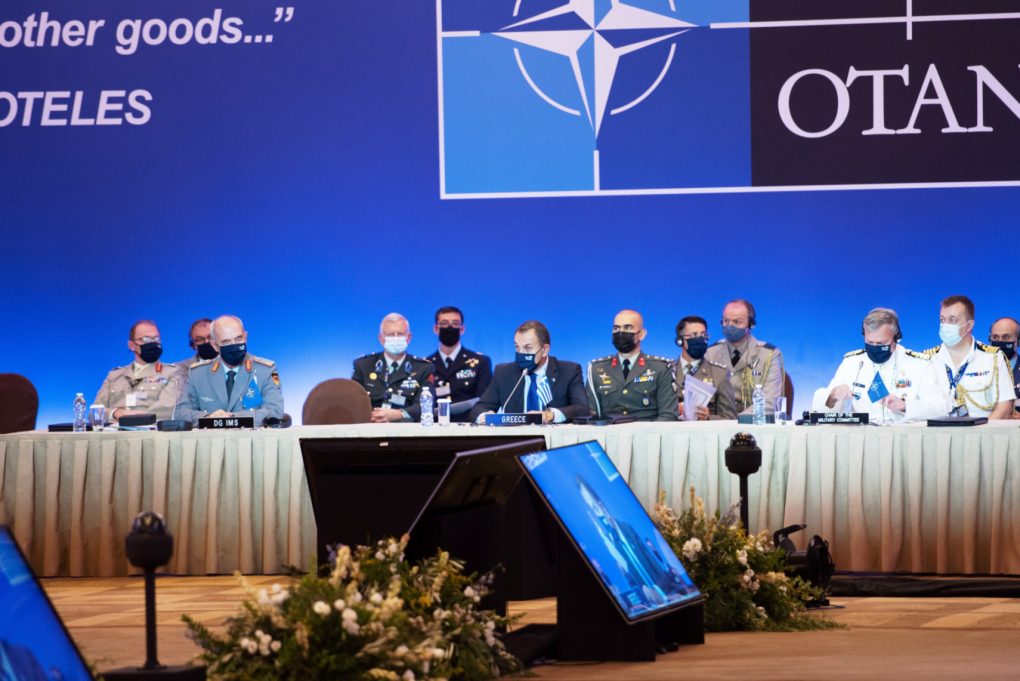
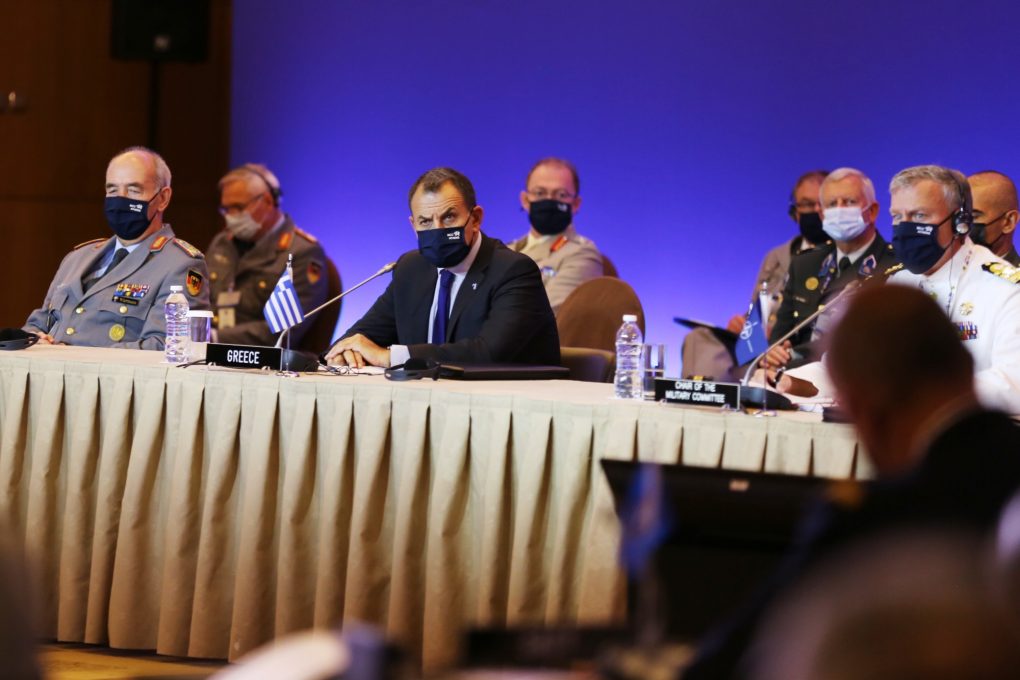
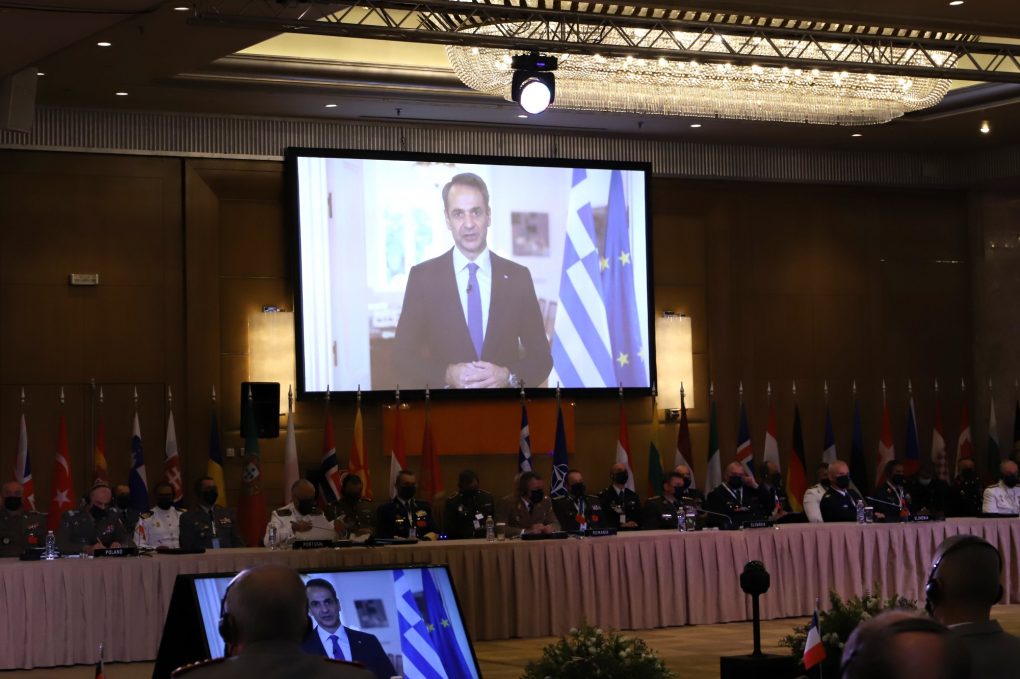
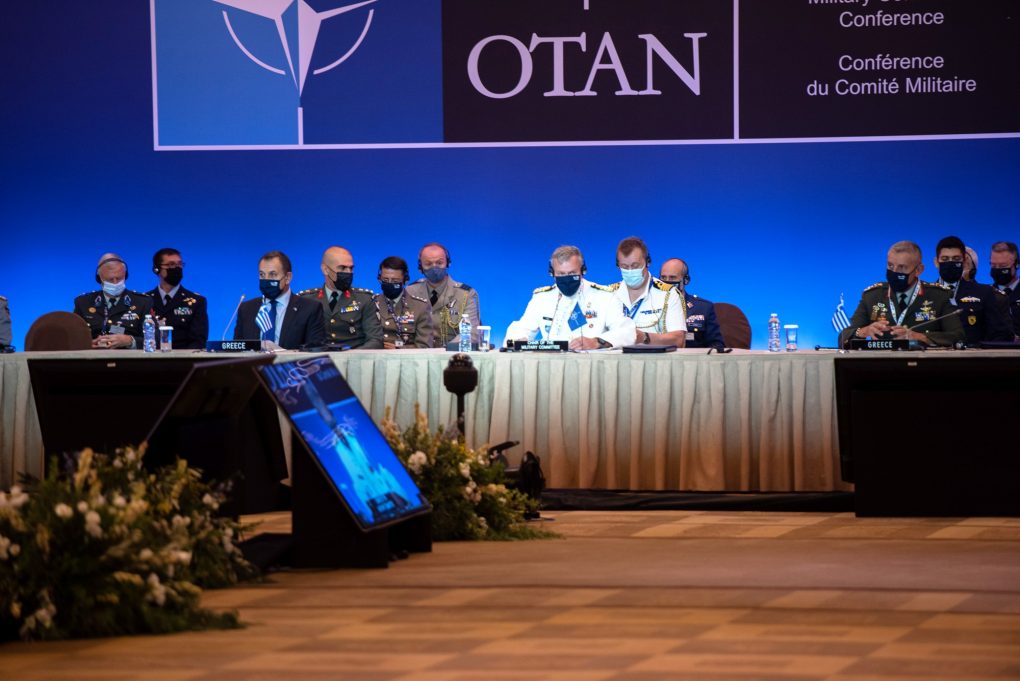
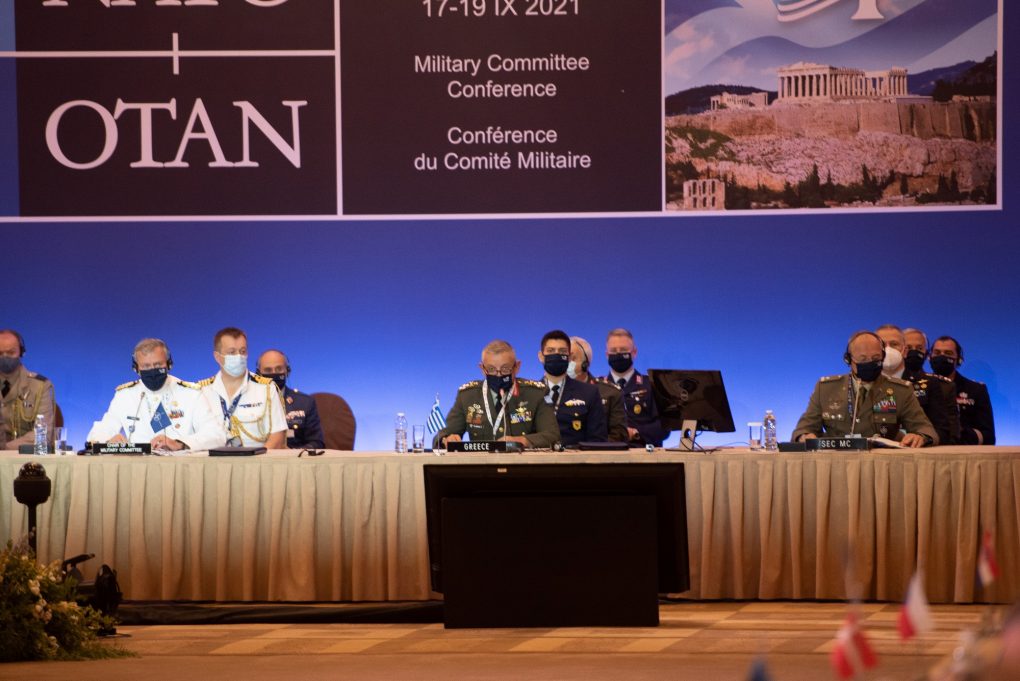
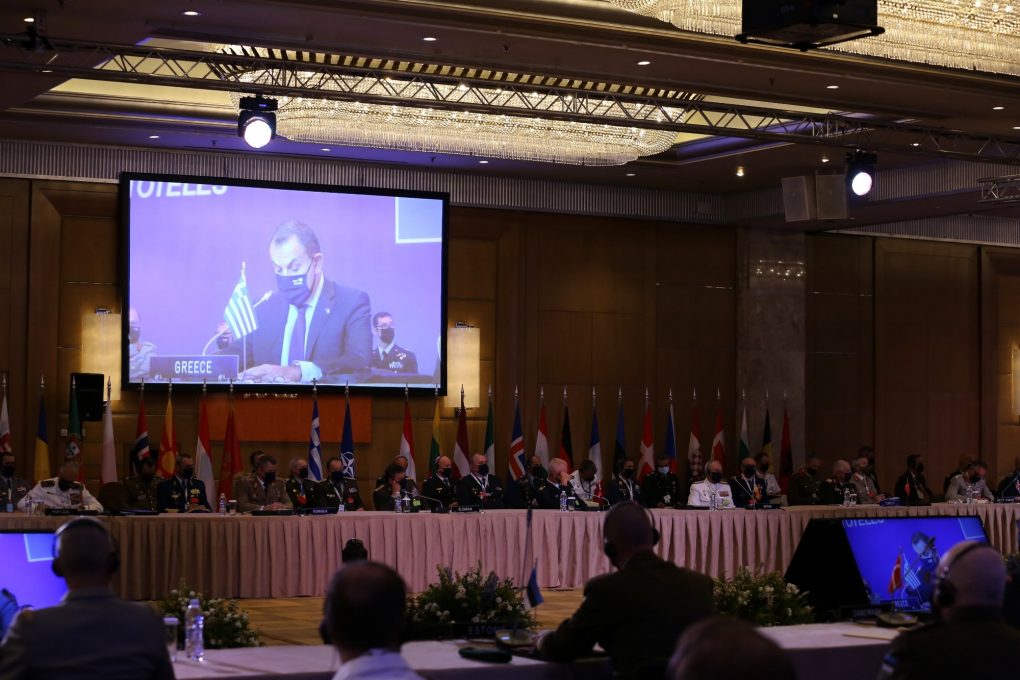
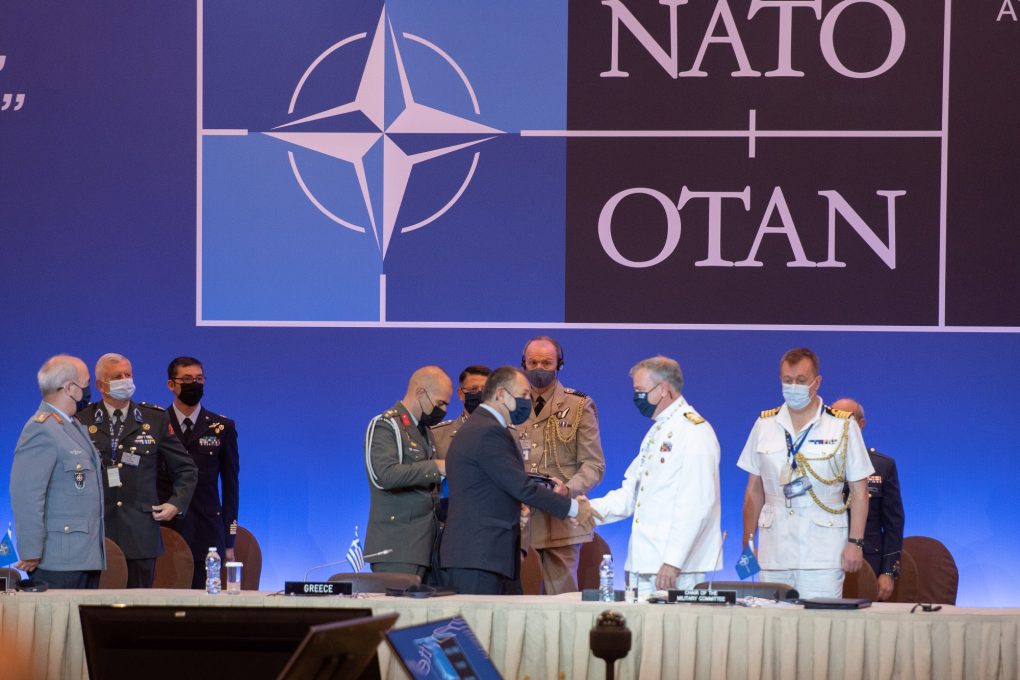
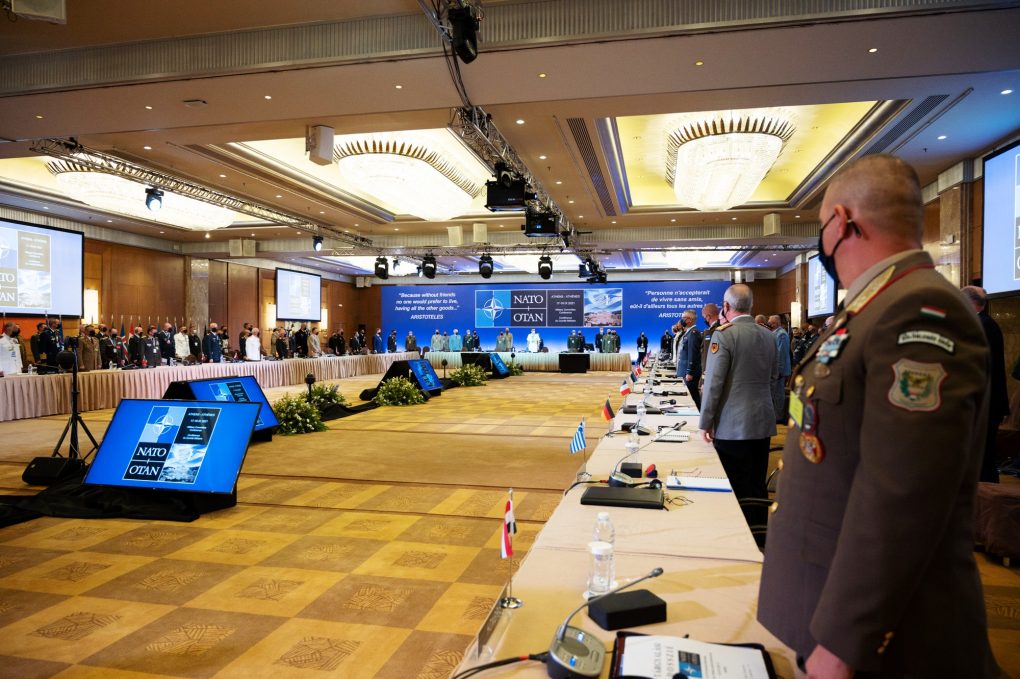
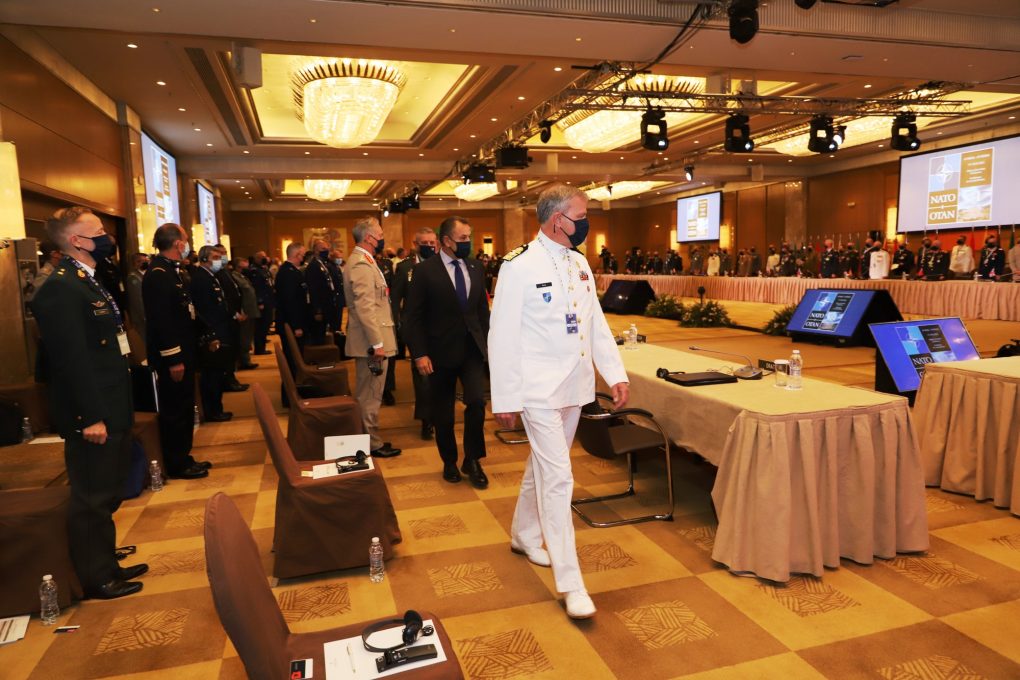
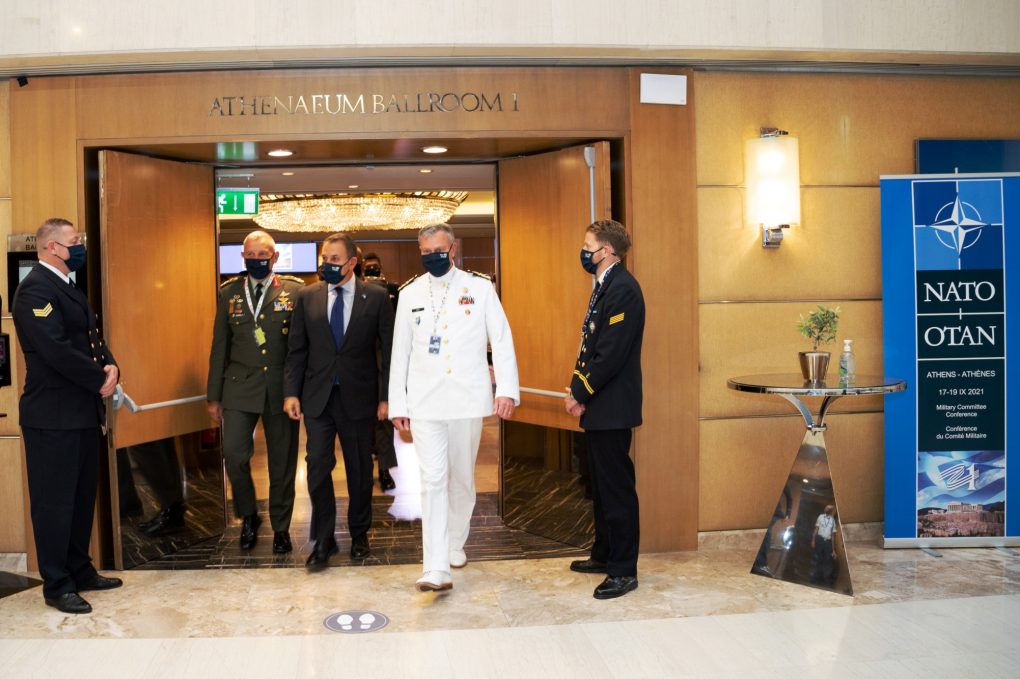
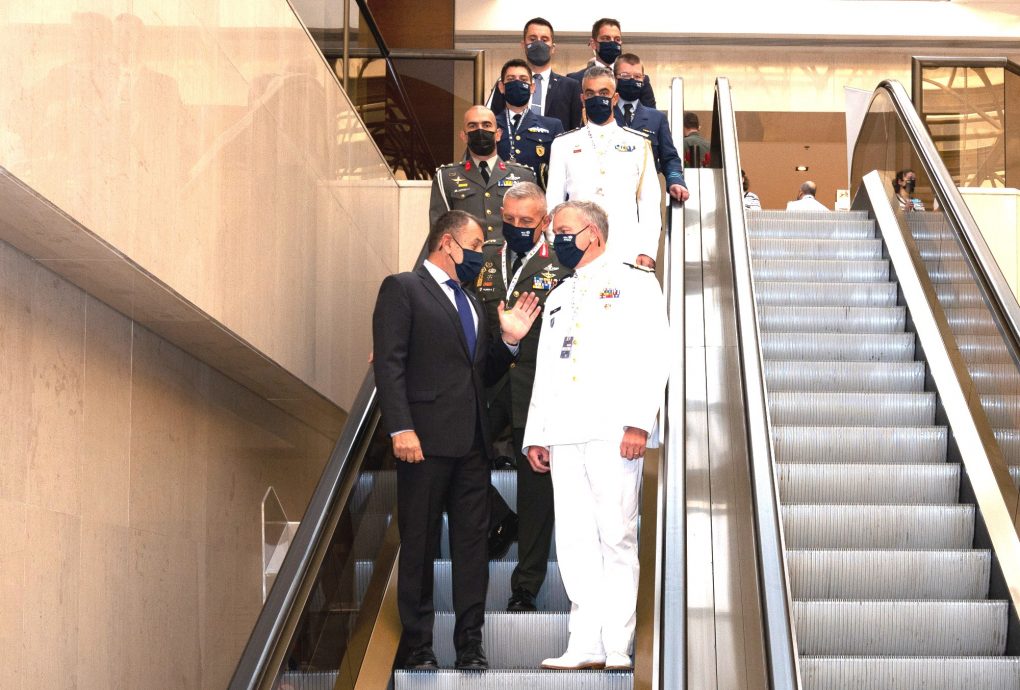
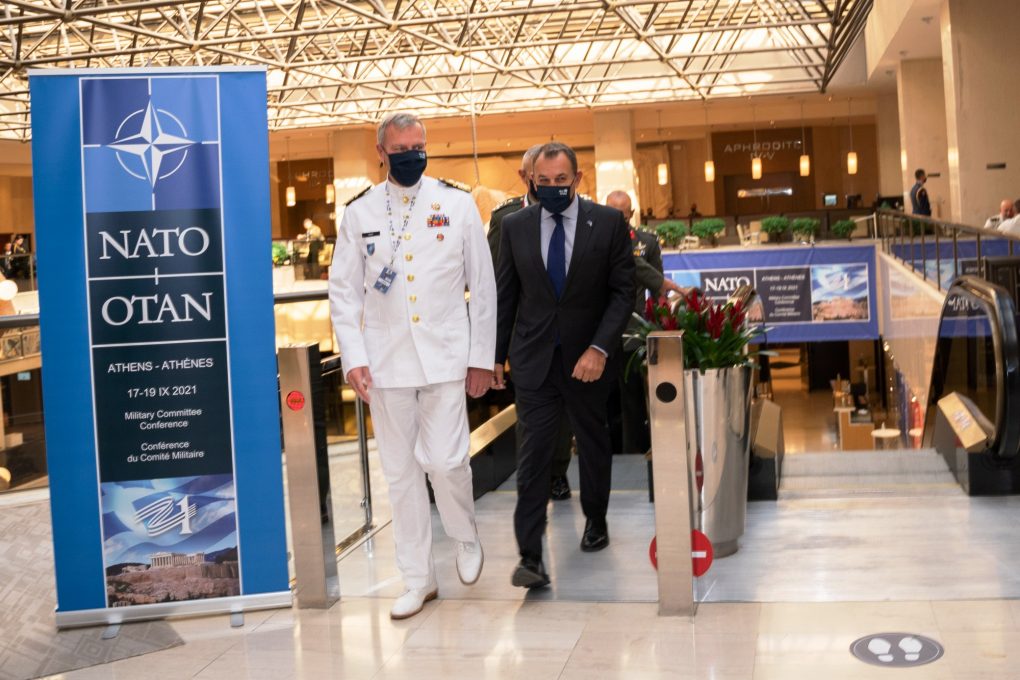
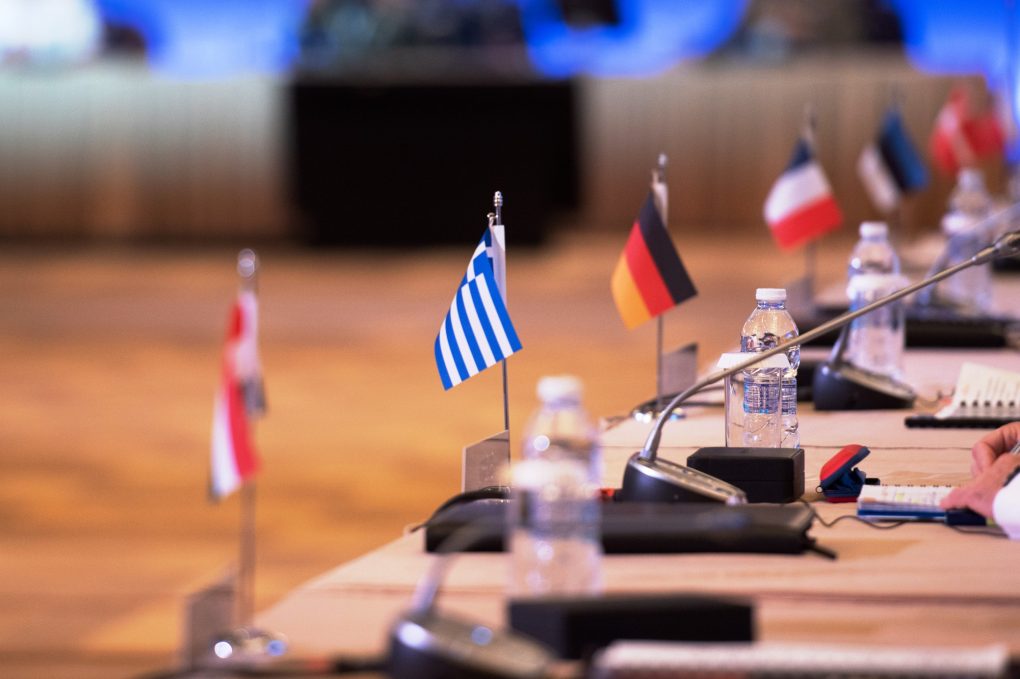
On Saturday 18 September 2021, the Minister of National Defence Mr. Nikolaos Panagiotopoulos declared the opening of the works of the NATO Chiefs of Defence Conference, held in Athens, on the occasion of the 200 years since the outbreak of the Greek Revolution.
The Prime Minister Mr. Kyriakos Mitsotakis delivered a recorded address to the NATO Chiefs of Defence, while the Chair of the Military Committee Admiral Robert Bauer and HNDGS Chief General Konstantinos Floros both delivered introductory addresses.
In his address the Minister of National Defence highlighted the following:
Allow me, first, to wish you successful and productive deliberations of the 2021 Military Committee’s Conference.
Yesterday, I shared with you some thoughts about our Alliance and its key role in promoting democratic values, and facing together constantly evolving threats in an unstable and turbulent international environment. Today, I would like to put forward some ideas concerning the present and, most importantly, the future of our Alliance.
First, following the recent developments in Afghanistan, I should underline the importance we attach to the efforts of the international community, which must work closely together to avoid a resurgence of terrorism in Afghanistan and beyond. We need to ensure the safety and security of vulnerable Afghans and the prevention of a humanitarian crisis.
It is our moral duty to help the Afghan people, and provide as much support as possible, especially to those who are at immediate risk. And those are women, girls and children, who make up the vast majority of internally displaced people.
We are going through a period of significant challenges in Afghanistan, including a risk of migration flows to Europe. We need to effectively cooperate in order to provide support to those countries in the immediate neighbourhood and to avoid a migration crisis in our borders.
What happened in Afghanistan should clearly help us draw useful lessons for the future and strengthen our joint sense of purpose in defending our common values and ideals, keep NATO capable of dealing with any potential threats, emanating from any direction. That is why a clear roadmap to the future of the Alliance has been defined with “NATO 2030” Process.
Enhancing our Resilience is a basic dimension of this Process, an important aspect in the effort of building up improved Defence capabilities for the future. Although, Resilience is a national responsibility, it certainly reflects on the survivability and the overall warfighting capability of NATO as a collective entity. Hence, it is considered that common standards concerning Resilience should be adopted, the same objectives should be aimed for and pursued. There is evidently an added value in our Alliance becoming a platform of Allies sharing best practices on designing their own tailor-made national plans and procedures.
Another essential factor of vital importance to the future of the Alliance is of course technology. In the past, our technological advantage has largely determined to our benefit the outcome of conflicts, in which we were engaged. This particular advantage must surely be preserved. Moreover, I strongly believe that our assets should consist of interoperable, technological platforms, permitting their integration into a common Command and Control (C2) structure. In relation to systems procurement, multinational initiatives are considered to represent a “smart” approach, splitting the Research & Development cost. Synergies in maintenance are also most valuable, maximizing the usage of critical material and facilitating the sharing of technological know-how.
In our effort to forge the future for our Alliance, military training is considered to be of outmost importance. Common training actions bring together personnel from different member states, thus enabling better communication, whilst also building up a well desired mutual understanding. This approach can certainly help bridge any existing gap in perceptions, allowing for effective interoperability. Furthermore, joint exercises constitute an opportunity, as well as the motive for the development of new tactics, techniques and procedures. And of course, it is essential that any training activities cover the whole spectrum of forces, capabilities and entities, from the strategic level down to the tactical one.
On climate change, I think we all agree that it is the defining challenge of our time. It affects our daily lives, our future, but also our security. We support the idea that NATO should become the leading international organization in analyzing how it affects security and intensify our initiatives and work with a view to understanding and adapting to its impact.
Talking about the future of NATO, we should not forget the importance of our Partners’ substantial contribution to our missions and operations. Over time, they have shared our values and interests to safeguard the rule-based international order, and suffered losses along our forces. Overall, it is considered of absolute necessity for NATO to enhance its cooperation with any friendly international players. In doing so it would actually increase its own capacity.
I firmly believe that, amongst our Partners, a predominant position belongs to the EU. EU is by no means a competitor of NATO, on the contrary it is an indispensable Partner, adding up to the Alliance’s broader Defence and Security Capability, reinforcing NATO. Therefore, we support a strong, closer, synergetic mutually beneficial relation between NATO and the Union, in accordance with the two Joint Declarations, which constitute the framework of our cooperation, and the principles of inclusiveness, reciprocity and the respect of decision-making autonomy of both organizations.
Let me conclude with one last thought: it is my strong belief that today, as ever, our most important asset, the one that will lead us to prevalence over any potential adversary, if need arises, is not other than the women and men in service, the people you command, the people you lead. They constitute the formidable human capital of our Nations and our great Alliance. I therefore urge you to make the best for them, and thus, the best of them.
Distinguished guests,
Greece is stable, credible and reliable Ally in the region. We always support the cohesion and the unity of the Alliance, and the stability and security in the Eastern Mediterranean, the Balkans and beyond, ready to assume our regional role. We built strong alliances with countries of the broader region, which share the same vision and values, based on the rules of International Law and the principle of good neighborly relations.
As Prime Minister Kyriakos Mitsotakis said, last June, on the occasion of NATO’s Summit in Brussels, “Greece is a pillar of stability in the Eastern Mediterranean. It is a country that, even during the difficult times of the economic crisis, steadily spent over 2% of its GDP on defence expenditures. Today, Greece invests increased resources in its military capabilities, so that it can be even more reliable in its obligations vis-a-vis the alliance”.
I wish you every success in this important Conference, which, I am convinced, will provide important conclusions and inspiring perspectives for the future of the Alliance.
Thank you.