

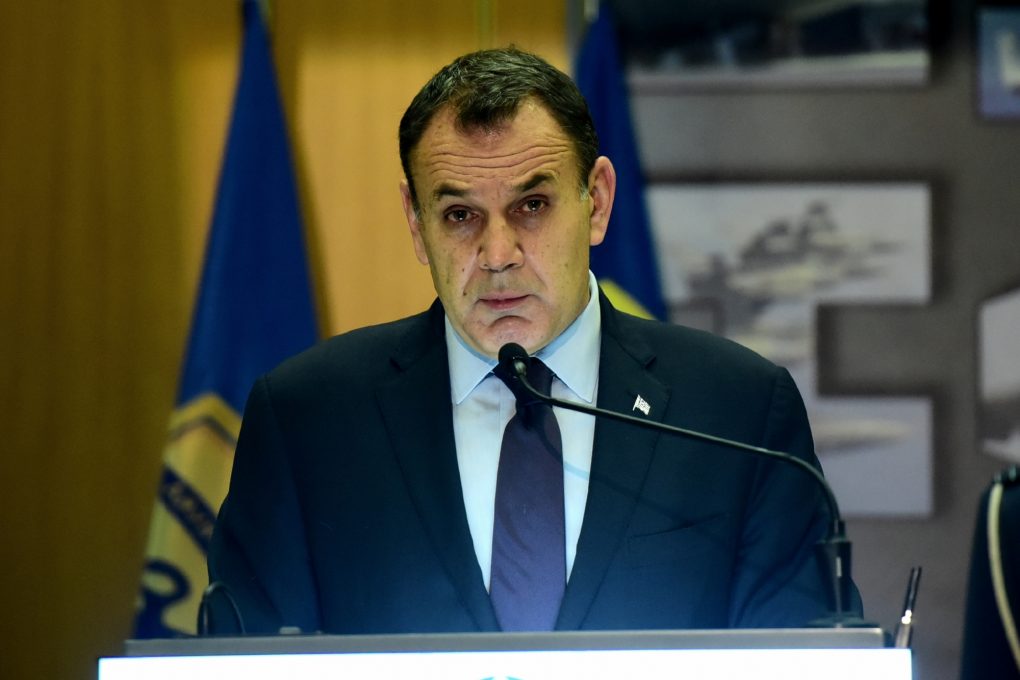
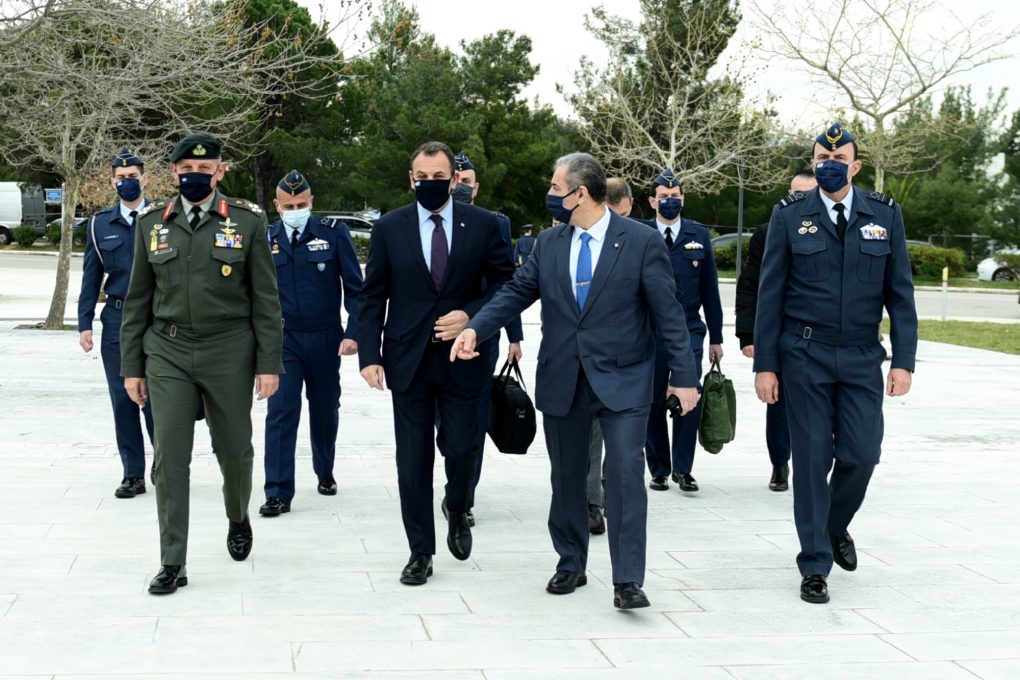

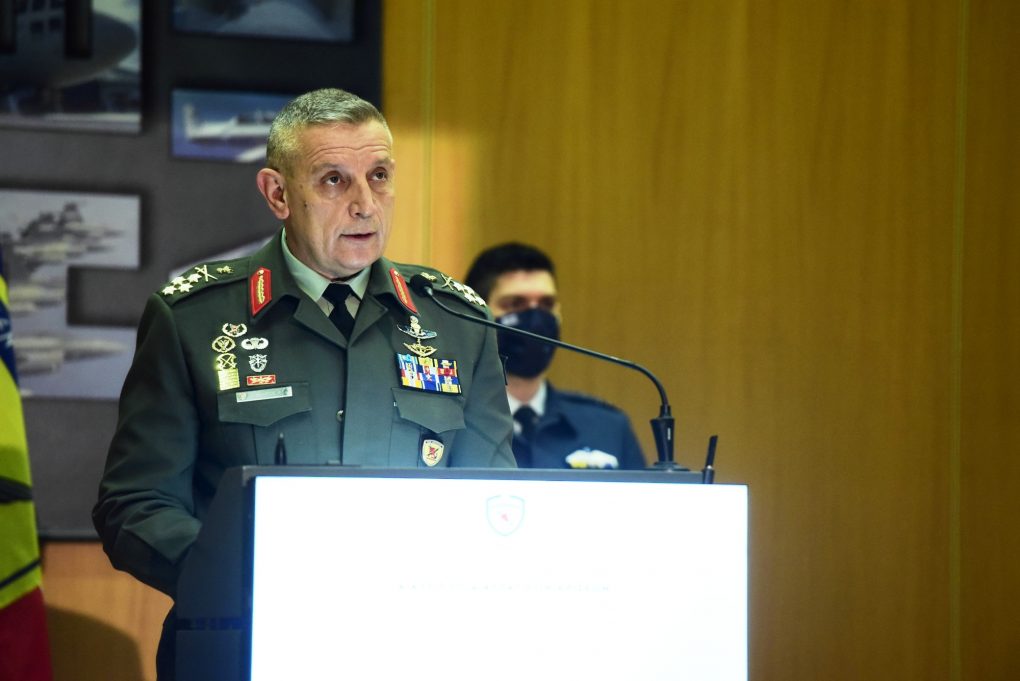
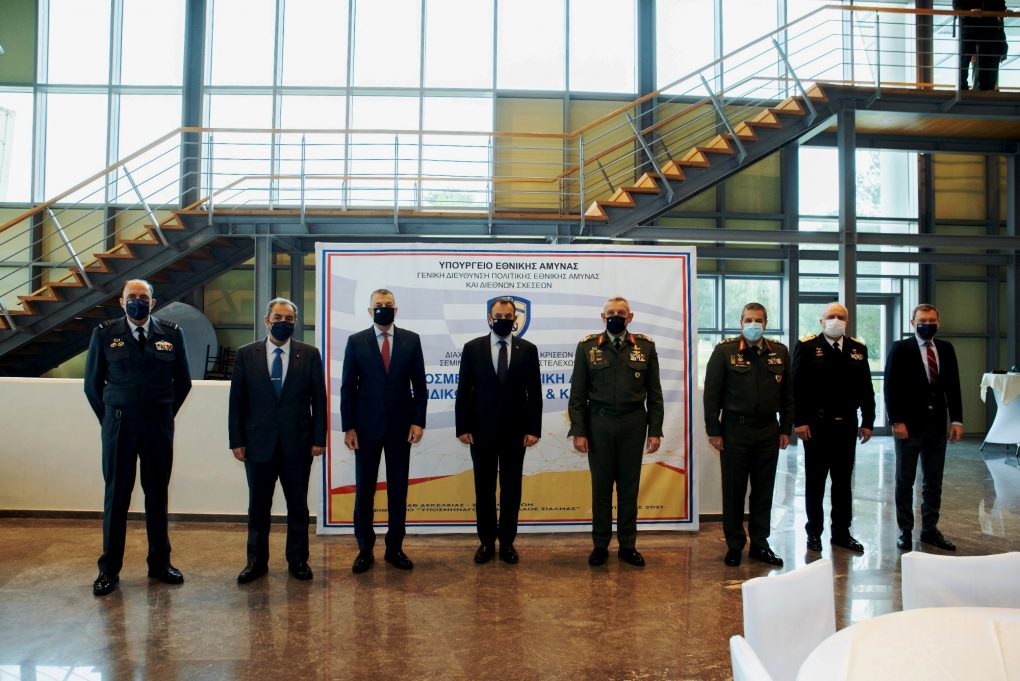
Yesterday 1 April 2021, the Minister of National Defence Mr. Nikolaos Panagiotopoulos declared the beginning of the sessions of a Seminar for Armed Forces personnel entitled “APPLIED & HOLISTIC MANAGEMENT OF HYBRID THREATS & CRISES”. The seminar is organized by the General Directorate for National Defence Policy and International Relations of the Ministry of National Defence, at the “First Lieutenant (AF) Nikolaos Sialmas” Amphitheatre of the Air Force Academy and it ends on the 24th of April.
Addresses were delivered by the Deputy Minister of National Defence Mr. Alkiviadis Stefanis, HNDGS General Konstantinos Floros and the General Director of the National Defence Policy and International Relations Dr. Konstantinos Balomenos.
In his address the Minister of National Defence stated the following:
«Ladies and gentlemen,
I remember back in August 2019, in the context of the first NATO bilateral meeting I was honoured to participate in, in Helsinki, on the sidelines of the meeting sessions, we visited the Centre of Excellence against Hybrid Threats, based there. It was a rather interesting new experience for me, as I had the opportunity to be briefed for the first time by specialists – the members serving in the centre – on the nature and the manners to tackle hybrid threats. Of course, back then we hadn’t witnessed in their ‘magnitude” the forms of the hybrid threats we encountered in 2020.
The basic thing to understand is that every member-state of NATO and the EU has possibly had its own experience with the management of hybrid threats. Back then I mentioned the Migration issue and how this flow of people could become an element of hybrid threat, in the sense that it is instigated by a third country with a view to destabilize our interior.
A few months later, approximately this time last year, we had a massive inflow attempt from Evros and then we all realized that this whole thing could turn into an emerging hybrid threat, i.e. a realization of the feared threat! I hadn’t guessed back in Helsinki that things could turn out this way, i.e. that this case could be used as a tool by our neighboring country. I think however, that it emerged in such a n obvious self-implying way.
The Northern Europeans, or the Scandinavians, of the Baltic Republics, may consider as hybrid threat a mixture of threats coming from Russia, in the form of cyber-attacks, spreading of fake news in the interior of the country and generally such types of threats. When it comes to countries exchanging information and trying to define a manner of management in the context of their quality as members of an Alliance, they face their own form of threat. The main manner to move on is to cooperate on the basis of a holistic management and define and analyse these different types of threats for different countries.
The meaning of hybrid war comes to rule out what we believed up to now, meaning that the nature of the threat, hence its means of manifestation were precisely defined and delimited.
Here we understand that the threat places the emphasis on the vulnerabilities of the enemy, for example his infrastructures or his unguarded borders and it actually constitutes an effort using a formless strategy to achieve strategic Objectives, it is a low-risk action, providing simultaneously the enemy with the possibility to disguise his actions in the so-called ‘grey zone”. It is difficult to put the blame when it comes to the emergence of a hybrid threat.