

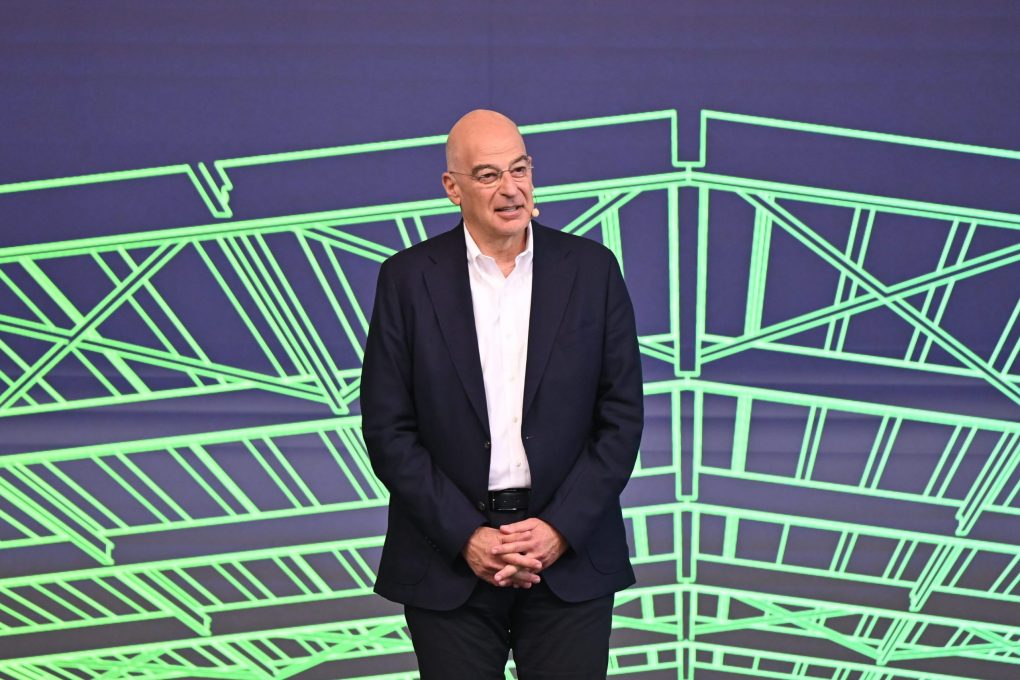
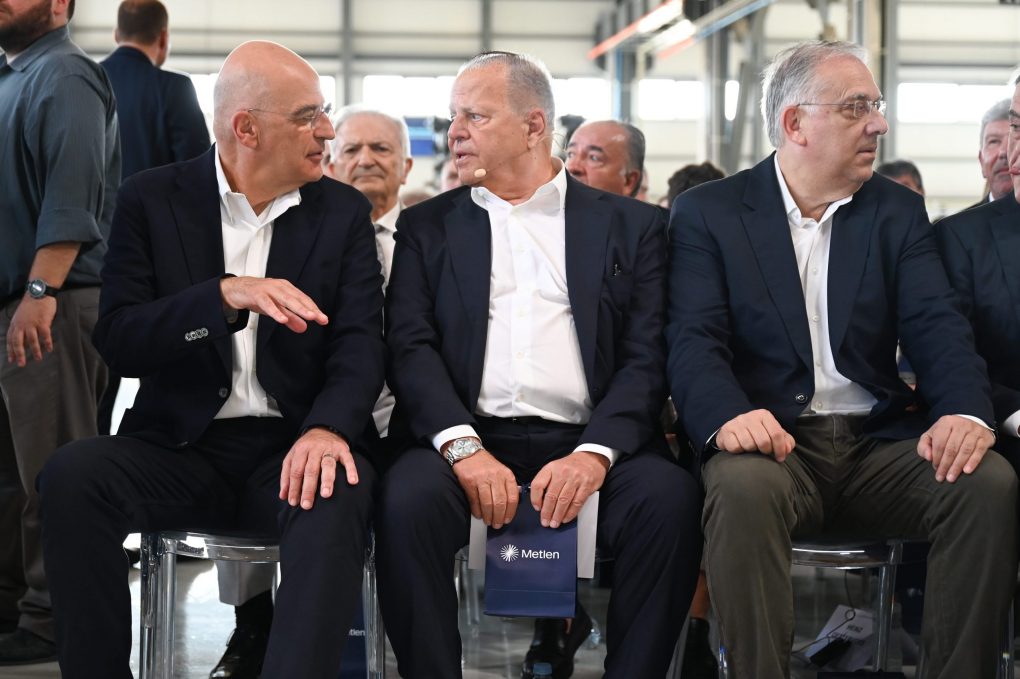
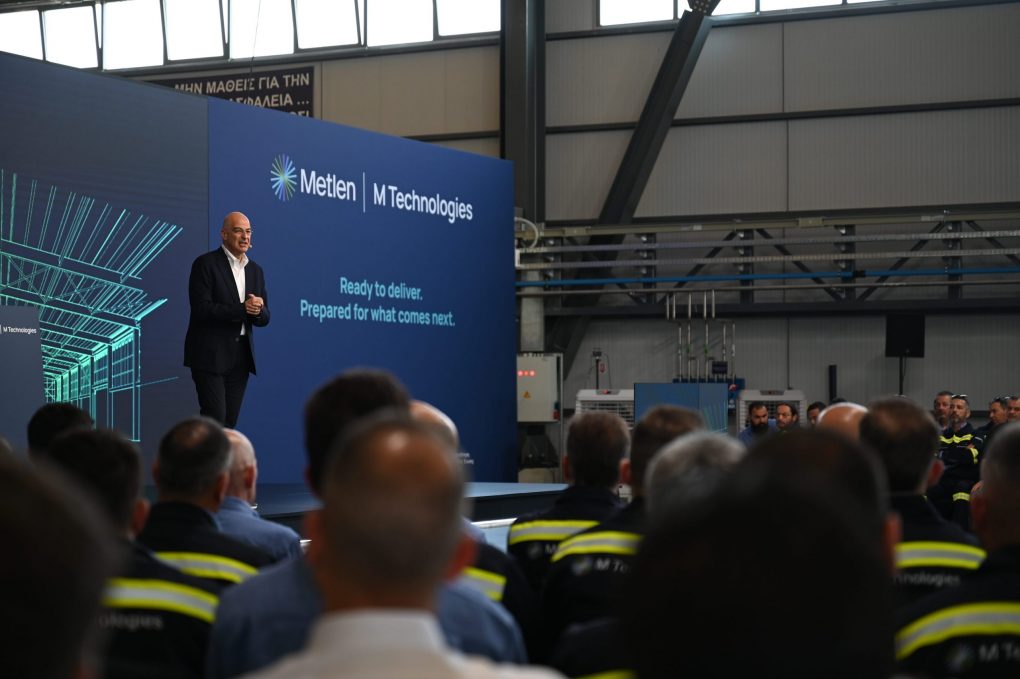
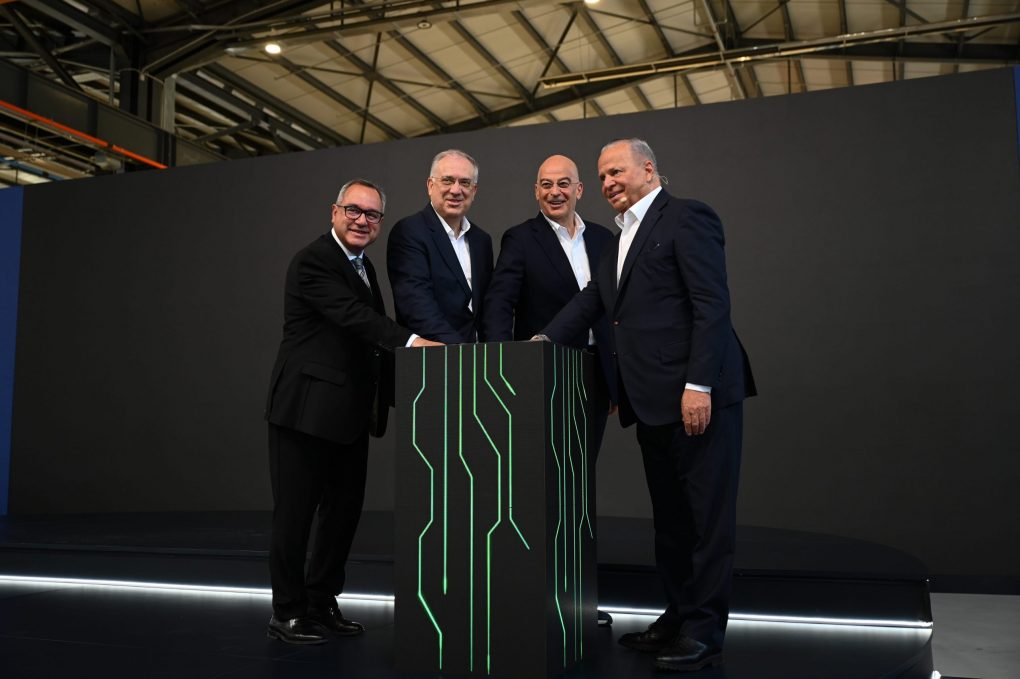
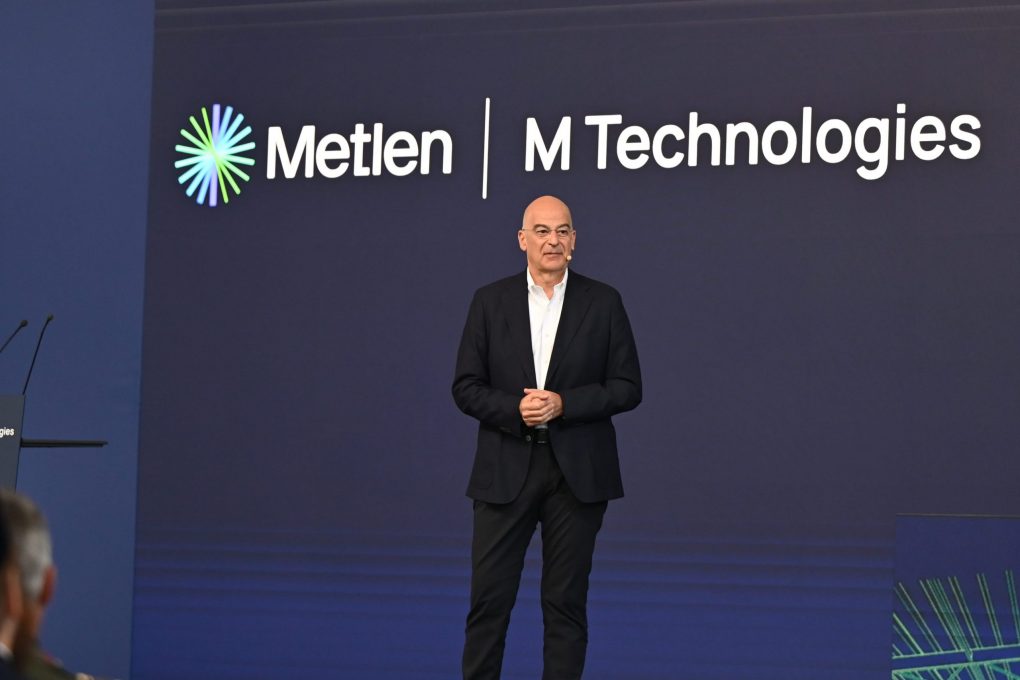
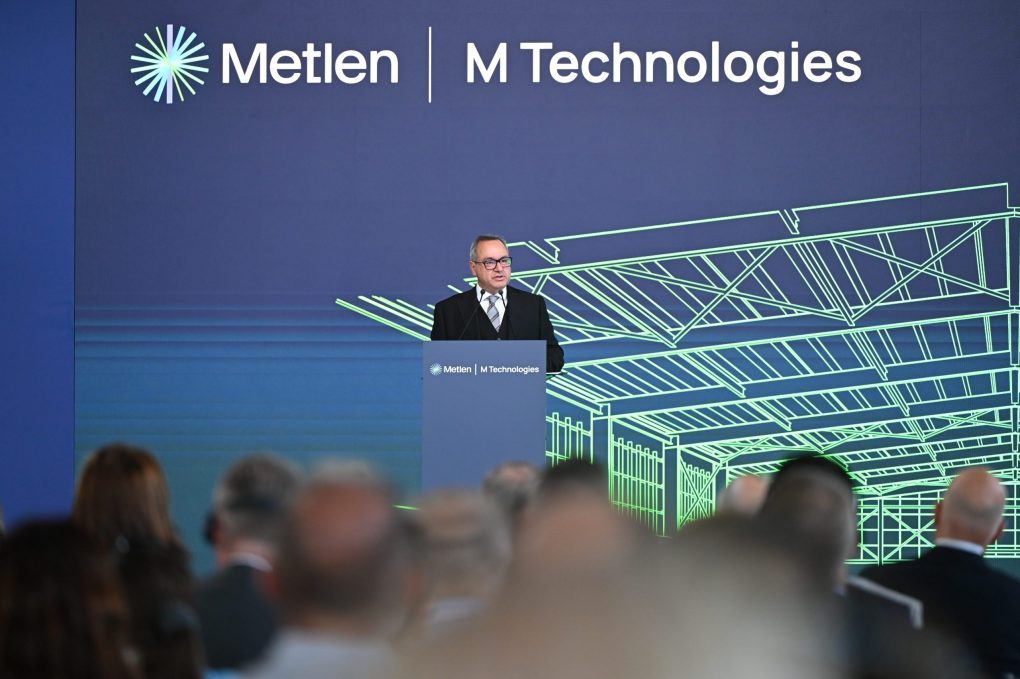
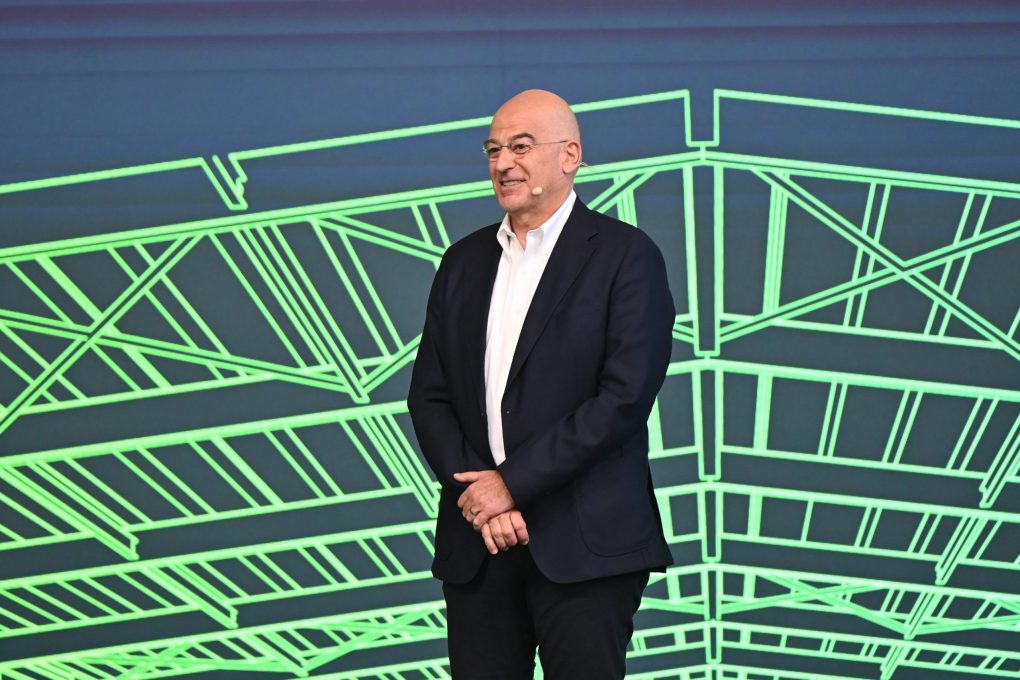
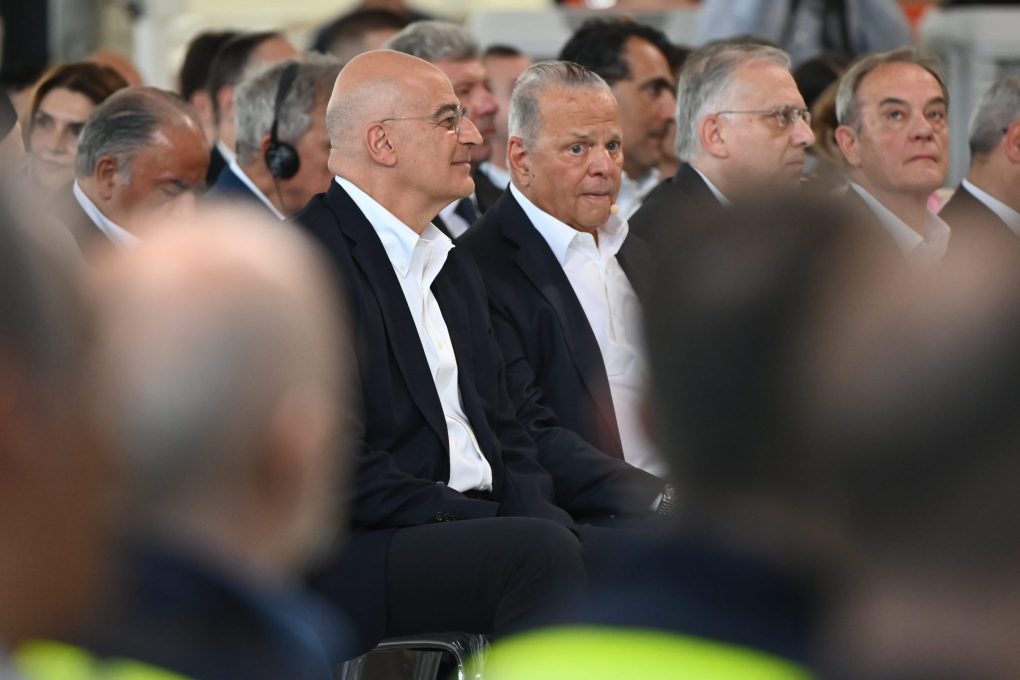
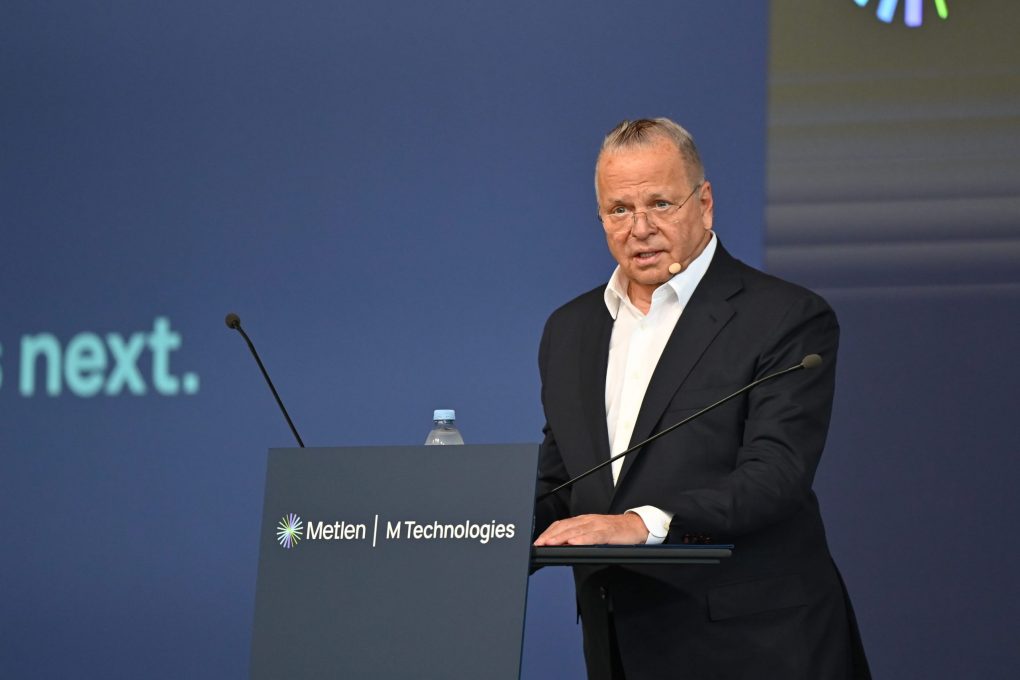
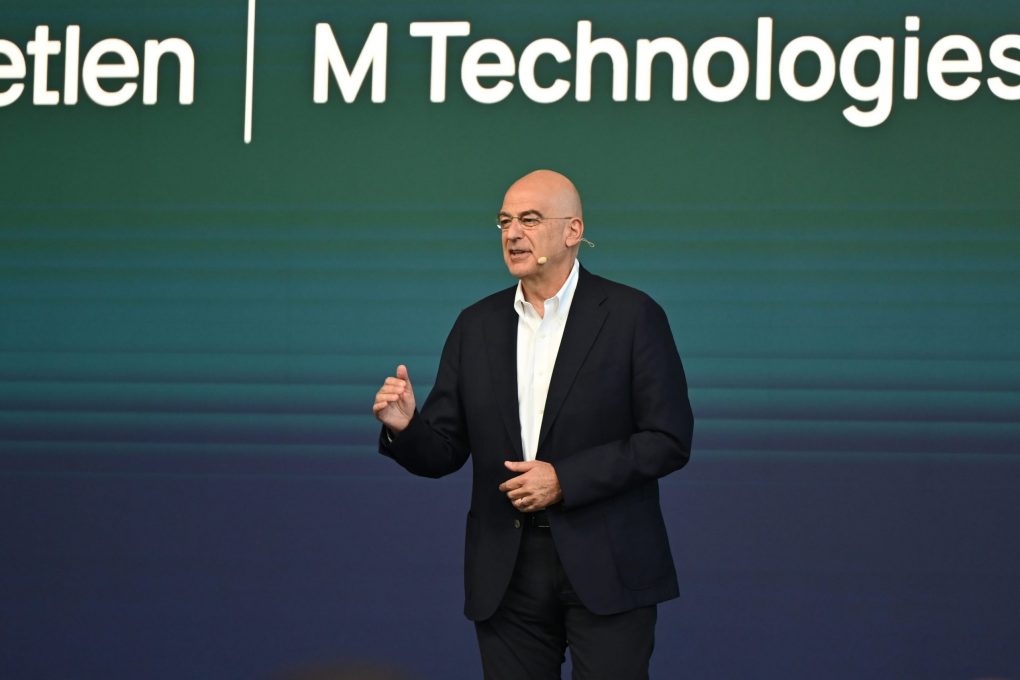
On Tuesday, June 23, 2026, the Minister of National Defence, Nikos Dendias, representing the Prime Minister, attended the inauguration of the fourth industrial production unit of M Technologies (METLEN) at the company’s defence hub in Volos. Representing the government, the Minister of Development Takis Theodorikakos was also present and delivered a speech.
Also in attendance were the former Deputy Prime Minister and former Minister Evangelos Venizelos, the Members of Parliament for Magnesia Christos Triantopoulos, Zetta Makri, and Christos Boukoros, the Member of Parliament Michalis Katrinis representing PASOK – Movement for Change, the Regional Governor of Thessaly Dimitris Kouretas, the Mayor of Volos Achilleas Beos, His Eminence the Metropolitan Ignatios of Demetrias, the Chief HAGS Lieutenant General Georgios Kostidis, the Ministry of Development’s Secretary General for Private Investment Stellina Siarapi, the General Director of the Ministry of Defence’s General Directorate of Defence Investments and Armaments (GDDIA) Major General Ioannis Bouras, heads and representative for foreign diplomatic missions in Greece, METLEN Executive Chairman Evangelos Mytilinaios, METLEN Chief Executive Director Vasilis Tsiamis, executives and members of the Board of Directors, as well as company employees.
In his address, Mr. Dendias noted:
“Since we are here today at an innovative company, please allow me to depart from the Ministerial tradition of speaking from the podium and instead address you more freely and, I believe, in a more conversational manner – and, for the most part, to deliver a monologue in the form of a dialogue.
Your Eminence, dear Minister – my colleague in the Government, Mr. Theodorikakos, dear Mr. President Mr. Vangelis Venizelos, it is a great honour for us to have you here today.
Dear colleagues in Parliament, Your Excellencies the Ambassadors, Mr. Mayor, Mr. Deputy Regional Governor, Madam Secretary General, Mr. Chairman of the Group, Mr. Vangelis Mytilinaios, I must say publicly that you hold a special place in our hearts at the Ministry of National Defence.
You are a major donor to the Ministry of National Defence. You have shaped its aesthetic form and, consequently, its symbolic character. The Ministry of National Defence will never forget this. Dear Vivian, you will always remain a colleague to us. Mr. Chairman of the Hellenic Manufacturers of Defence Material Association, ladies and gentlemen.
If we look back a bit, Greece had invested over 270 billion euros in its National Defence by 2004. In contrast to this massive investment, the contribution of the defence ecosystem – I even find it had to say this, but the total of all defence industries, since there are so few of them – to Gross Domestic Product did not exceed 0.5% the year before last. Half a percent – twenty to thirty times less, for example, than what tourism contributes. I’ll say it again: given an investment of 270 billion, what conclusion must one draw? One must conclude that we did something wrong. And what are we trying to do now?
We are trying to correct our own mistake, and as long as I serve in this Ministry or at the Ministry of Foreign Affairs, I will never stoop to the petty logic of assigning blame to Political Parties, Ministers, or Deputy Ministers. That is irrelevant. These are national issues, and as national issues and national challenges, we must address them. So what are we trying to do differently from now on, and why are this investment and today’s event significant?
The country, ladies and gentlemen, faces two major challenges. Both are very important. The first challenge is obvious: it is the security challenge facing the country.
I’m not going to tell you anything new. The country is facing a real threat. We are the only country on the planet – the only country on Earth – that faces a declared threat of war from a neighbor. A casus belli. And indeed, for what scenario? For the scenario in which our Homeland exercises a legitimate right that, in our judgment, is not a legitimate right, but is included in the European acquis – the body of European Law, that is, of our European family.
And the second, which is equally important, is one of the three reasons that led the country to default in 2010, namely the current account deficit, which the Minister of Development Mr. Theodorikakos mentioned earlier.
We are therefore called upon to use the funds we spend – taken from the Greek taxpayer’s pocket – for the country’s Defence to address both of these security challenges.
And we address them in an innovative and different way, so that we can achieve the desired result, but also tackle the current account deficit, which is damaging the Greek economy, our very existence, and our credibility. Because, ladies and gentlemen, a poor country cannot be a strong country, and it is not Greece’s destiny to be a poor country.
So what are we doing about this?
We are promoting and implementing a completely different approach. The first thing we do is learn and teach our Country’s Armed Forces; the leadership trains the officers of the Armed Forces – not like in the past, when they simply requested the purchase of products (“I want an airplane”, “I want a ship”), but rather to articulate operational problems and seek solutions from the ecosystem for those operational problems.
Example: I am facing a potential threat from a swarm of drones; what should I do about it? From there on, we have created the framework, which allows an entity called HCDI, Hellenic Center for Defence Innovation, to pose this question for consideration by the defence operations ecosystem, and for these operations – together with the Armed Forces’ research centers – to provide answers.
Not products, but solutions! And the difference between a solution and a product is that a product is something tangible and involves technology that already exists, whereas a solution may involve products and technologies that are still under investigation.
The Anglo-Saxons call these “tier levels”, and it could be “tier level 7”, “tier level 6”, or “tier level 9” – which is the finished product. From there on, it is evaluated by the Armed Forces, and orders are placed for a product that does not yet exist on the market.
However, to be honest with you, in order for this to happen, we need to speed up the process considerably. Because, as was mentioned earlier and as Mr. Vangelis Mytilinaios pointed out, time is also one of the essential factors. A product that has value today – you won’t believe it – may be obsolete in 8 to 10 months.
I’ll give you an example you’re familiar with: the Ukrainian drone that was “intercepted” in the Ionian Sea, off our coast. That Ukrainian drone is outdated technology: it was remote-controlled. Nowadays, drones are equipped with Artificial Intelligence. How many months have passed since that drone was manufactured?
We are therefore called upon – and the legislative framework must take this fact into account – to face a different reality. And we must also allow for the risk of failure.
And we must – let me be clear – subsidize the risk of failure. After all, we’re talking about creating something new.
We need to help businesses innovate. We need to help entrepreneurs innovate. We need to help entrepreneurs experiment, explore new solutions, and find new answers.
This is the first course of action that must be embraced by the entire political system of our Country and, consequently, by Greek society as a whole. And we must not criminalize a company’s failed attempt just because it made headlines.
The second, which was carried out by the Government, but concerns the implementation of a law that is not the intellectual property of this Government – but rather a law introduced by the here attending President, Mr. Vangelis Venizelos – is the submission of a long-term plan. This is what is known as the Integrated Long- Term Defence Equipment Programme.
For the first time in our history, we have implemented an older law – one drafted by Vangelis Venizelos – which requires but which was not observed by the Ministry of National Defence, to plan 10-12 years in advance, thereby creating transparency regarding the intentions of the Government in power, so that businesses know the general direction, where we are headed, and where we need to invest, so that they, too, can adapt accordingly.
And I couldn’t agree more with that the METLEN Chairman said earlier. We need to foster a culture – rather than blame that culture – of close cooperation within the Greek defence ecosystem, the Ministry of National Defence, and the Greek military leadership.
There is no shame, ladies and gentlemen, in talking with Greek companies. It does not make Ministers suspect when they try to steer Greek companies toward the innovation that the rest of the world is pursuing.
If there is no such interaction between them, this cannot be achieved. It there are huge barriers, if there is no communication, if there is no understanding, what will happen? We will return to the previous situation where we were merely customers of foreign companies.
And of course, there are also practical measures that we have taken. For example, as was mentioned – and I appreciate that it was acknowledged – the 25%. I issued an order to the General Directorate for Armaments – whose head, General Bouras, is present here – that 25% of every system not produced by a Greek company must involve investment in the country. And when we say 25%, just to be clear, for products based on older technology, we’re not just asking for subcontracting work – as was the case in the past, albeit at much lower percentages, of course. Is that a good thing? Yes, it is. Is it enough? No, it’s not.
In new technologies, there are codes – source codes – algorithms – and if you don’t have them, you can’t develop the product. And so you become hostage to a supplier, who either develops it or doesn’t, in order to force you to buy the next version of the same product, paying the full price up front.
Therefore, it is important for Greece that, whenever investments are made in the country, they be accompanied – wherever feasible, possible, and useful – by the source code, so that the know-how can also be transferred to our own system and adapted to our own capabilities.
And I must tell you, ladies and gentlemen, that I am confident all of this will be achieved and will happen – perhaps not in the next six months, or next year, or within an election cycle – but when it comes to National Defence, that is irrelevant. What matters is the homeland, not the Government of the day, the Prime Minister of the day, or the Minister of the day.
This will happen because there is exceptional human potential; there are brilliant minds in Greece, and there are also skilled hands that work to bring to fruition what those brilliant minds conceive.
The day after tomorrow morning, I’ll be at the Naval Academy, and what I’ll be doing there is attending the seminars given by Professors from MIT, the best technical University on the planet – or one of the best technical Universities on the planet, to avoid getting into the whole university ranking debate. The head of the MIT faculty team is Greek – Professor Triantafyllou – who teaches the Greek trainees how to build robots and how to build autonomous systems at sea, so they can immerse themselves in the culture of this new reality.
It is therefore worth realizing that everything on his planet is changing. And since everything changes, in order for our Homeland to remain strong and secure, everything in the Defence sector must also change. Everything in the Defence sector must change, so that the country can become resilient.
Just a side note: look at what resilience means in Ukraine. In the past, plans were made for conflicts lasting two, three, or four days. That was the prevailing view. Right now in Ukraine, the conflict has been going on for four years – longer than World War I.
Therefore, for there to be resilience, there must be production facilities in the country that are capable of establishing a productive base and fostering innovation – that is, of renewing their own products. They must be able to provide the Greek Armed Forces, throughout this effort, with continuously updated products so that they can rise to the challenge. I spoke to you earlier about the six-month life cycle.
This is why, ladies and gentlemen, and especially my dear employees at this Facility, I am very happy and very proud to be here with you today. Because what is happening here today – and in which the Greek taxpayer also has a stake, as Mr.Theodorikakos explained earlier – is exactly what needs to be done: the creation of innovative, robust Greek production bases that can help our country stand on its own two feet in the future – not only in terms of National Defence, but also in terms of the national economy. These two pillars are essential to our very existence and to the well-being of future generations – your children and ours.
Mr. Mytilinaios, my warmest congratulations; thank you very much”.