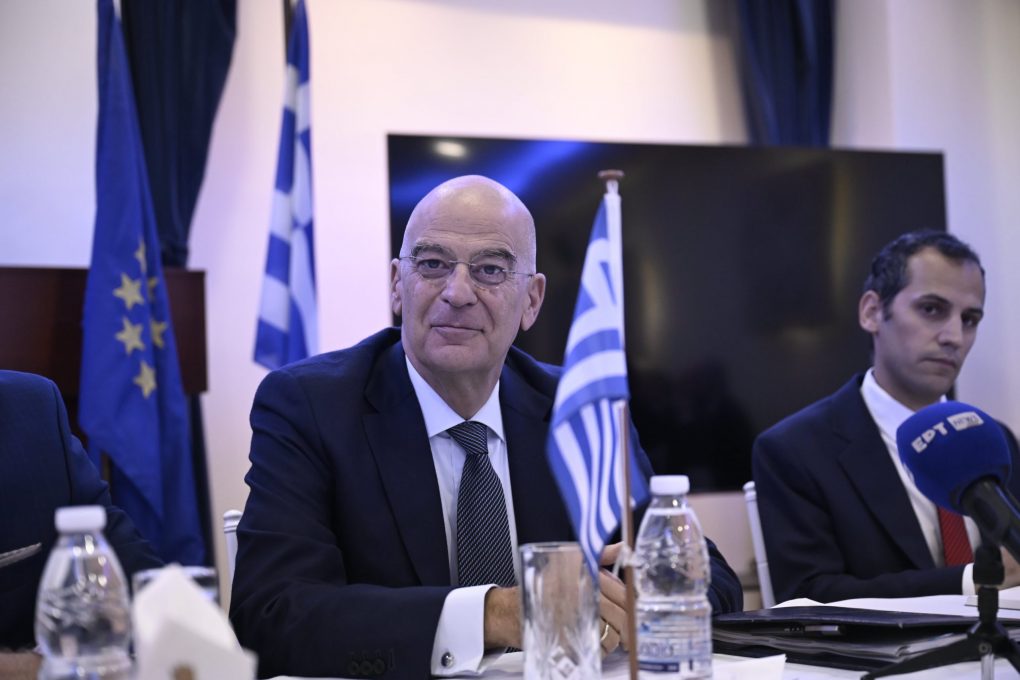
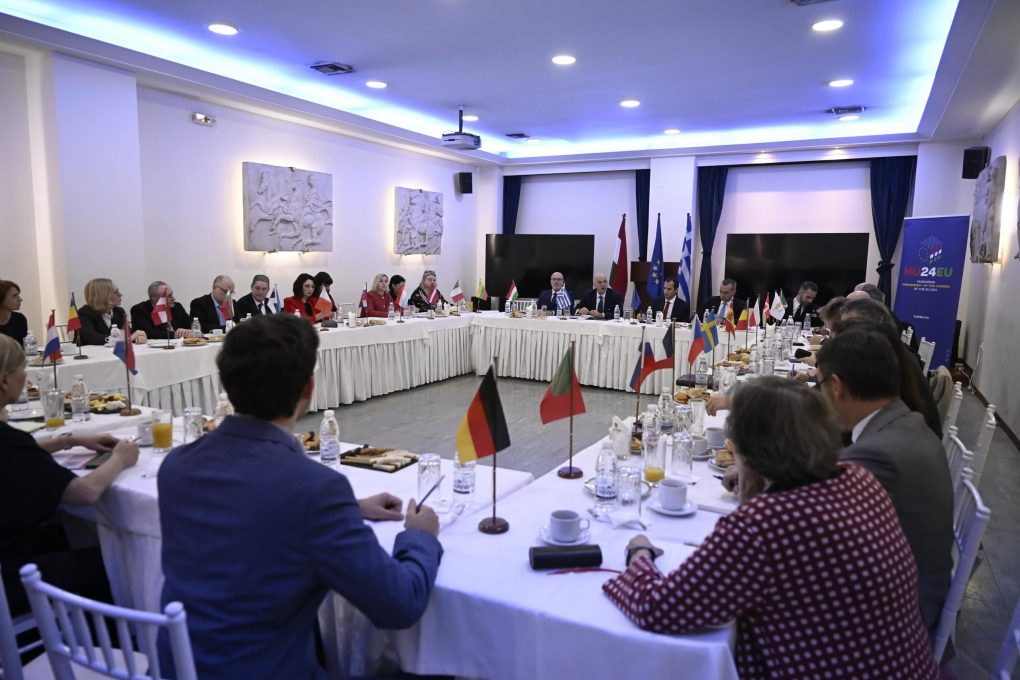
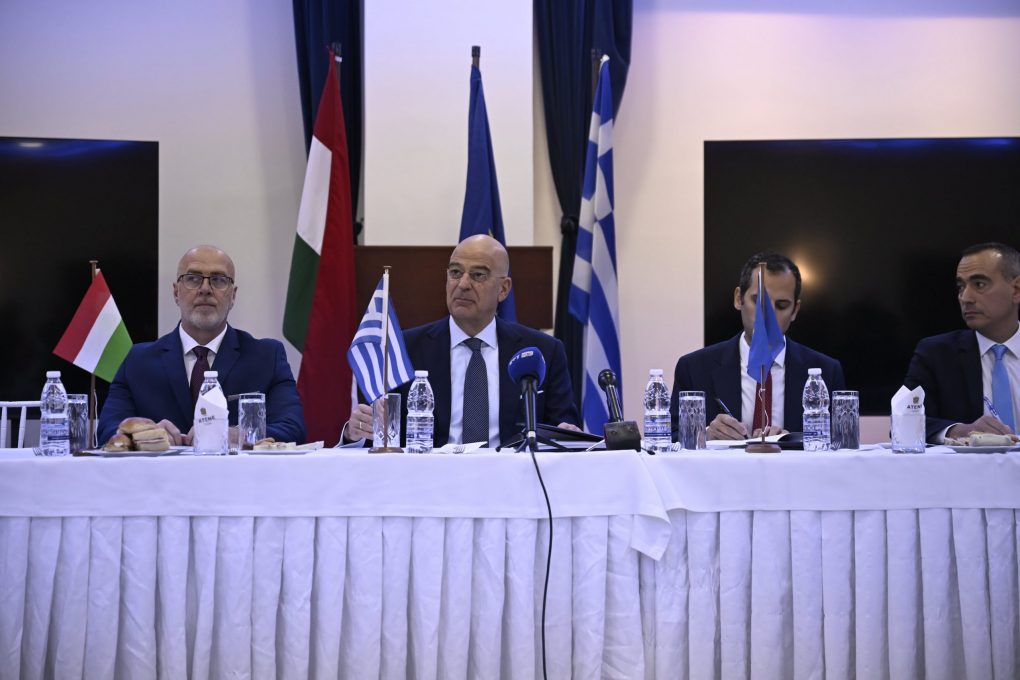
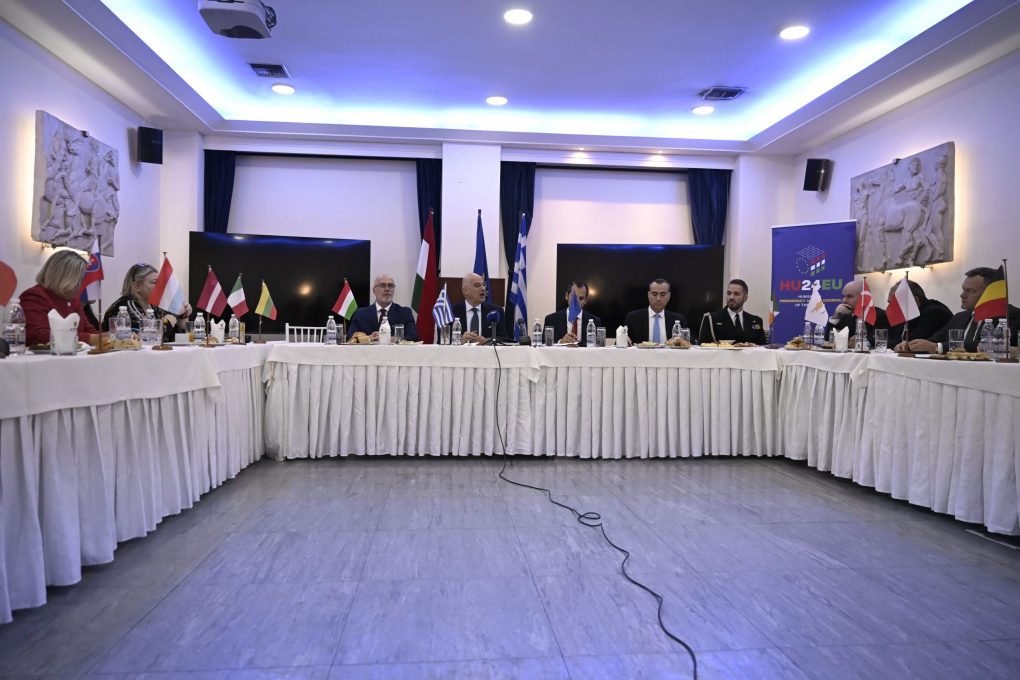
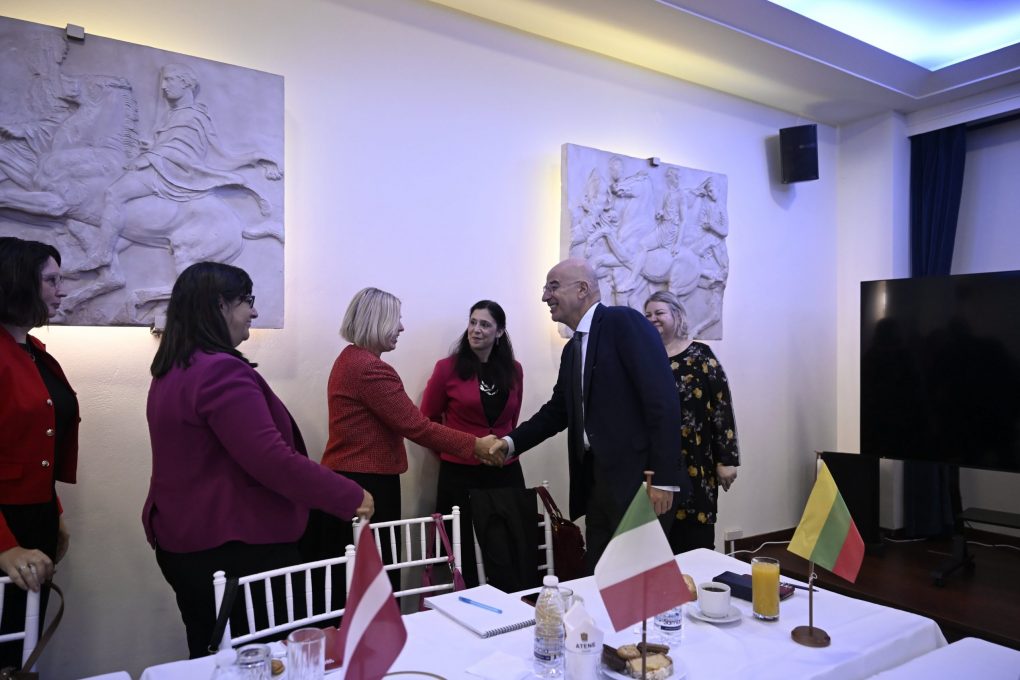
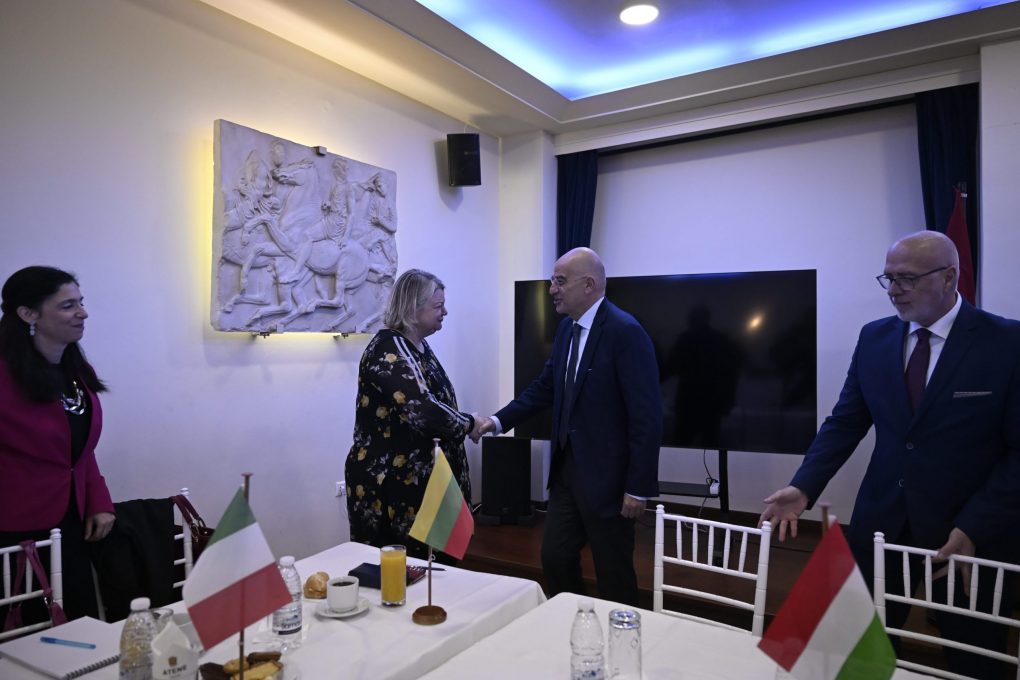
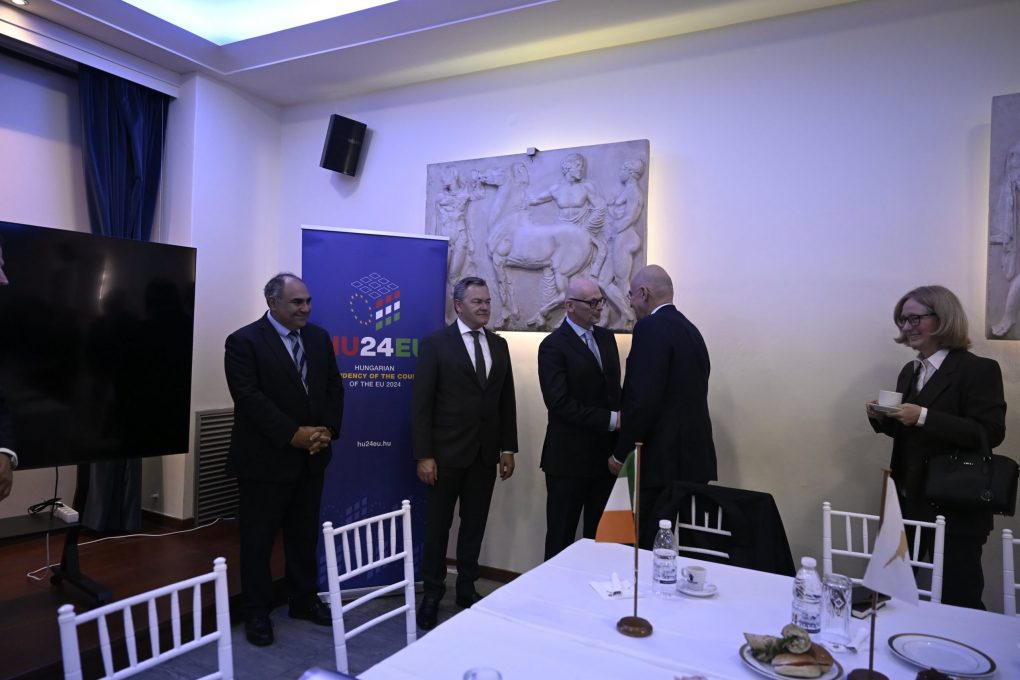
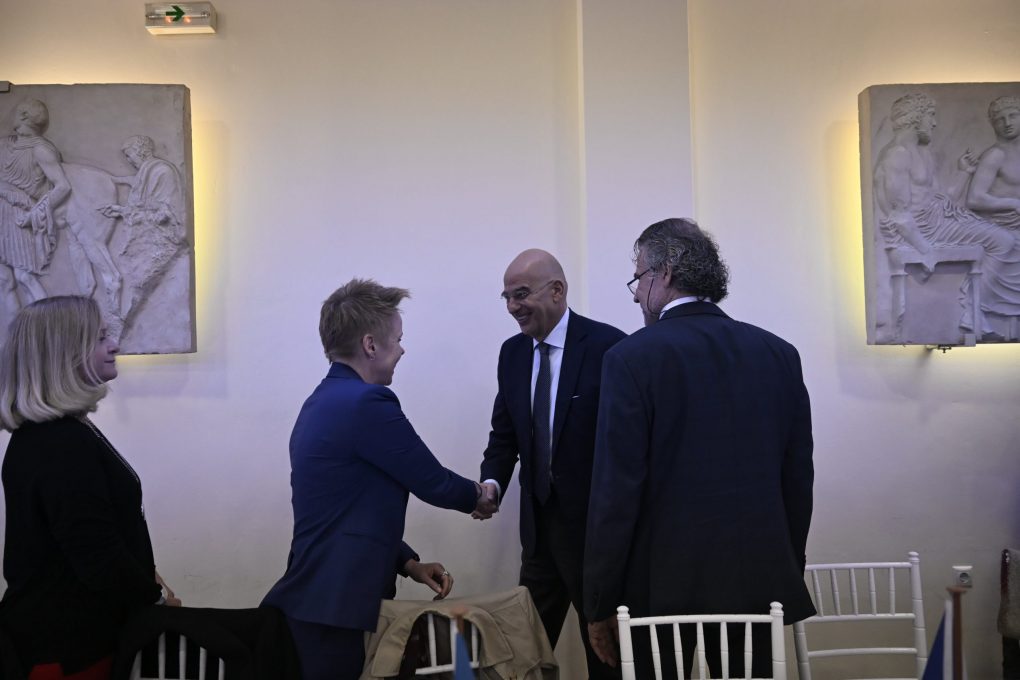
On Monday, 9 December 2024, the Minister of National Defence Nikos Dendias had a working breakfast at the War Museum with the EU member-state Ambassadors. The event was hosted by the Ambassador of Hungary, Zsolt Sándor, whose country has the Presidency of the Council of the EU for the current semester.
In his introductory remarks, the Minister of National Defence stressed, among others, the following:
“Your Excellency, this is a great pleasure for me, also it reminds me of my old hat as Foreign Minister, so allow me, please, to feel quite at home. With a number of you also I have quite close personal relations, so please allow me to express how happy I am to see you.
I am not going to give you a big speech, that’s totally needless. I think it would be more important to answer to your questions. Just two initial remarks.
First of all our region is totally volatile as one has seen. It was proven again the last few days. A regime that existed for 50 years is not there anymore, so we know very clearly what does not exist anymore but we don’t have a clear picture at all what is going to happen, what is going to be tomorrow in Syria.
And allow me to say that Syria is less than 1,000 km from where we stand right now. So for us, Greece, but also for us European Union is a near abroad.
In looking locally, and it’s the second failed state in the shores of the eastern Mediterranean, and if you count Libya also it is the third that in no way, in no way predicts a very easy future for us, for us the Europeans, for us the European Union.
As far as for us Greece concerned and my portfolio it is true that I am struggling, I have to present a budget to Parliament a few days from now, and you know that this is a very difficult moment for all Defence Ministers in Europe.
I would like to underline to you one approach within our European family that it considers at least schizophrenic. And I am using my words carefully. I am speaking about our fiscal rules versus our priority on defence.
From the one hand we are being called upon to create a credible defence capacity, and on the other hand if we exceed our fiscal limits, which we have not in any way changed by the way, then we get a thumb, we are getting under probation and it will be examined by the bureaucrats in Brussels if it’s needed or if it’s not needed, etc. etc. In the meanwhile if that happens then your interest rates and your bond is skyrocketed and you bring your country into trouble. So, you have one existential threat against another existential threat and you have to resolve this.
And on the other hand we pretend to be a geopolitical actor, let alone a geopolitical power. I don’t think this will get us very far”.
In his statement after the end of the event, Nikos Dendias stated the following:
“I had the opportunity today, upon invitation of the Ambassador of Hungary, to brief the EU Ambassadors to Athens on the “2030 Agenda”, he Hellenic Armed Forces reform, and in general the great changes we are bringing at the Ministry of National Defence.
And I must say that I was very impressed by the interest of the European states in this great reform.
Of course, we also discussed other things, mainly the situation in Syria after the collapse of the Assad.
I had the opportunity to state something that I would also like to reiterate in public. The need to protect Christian populations in Syria and the Middle East.
A new day starts in Syria, full of uncertainty. No one will shed a tear for the Assad regime.
But what happens now is not clear. Greece, however, and the European Union, have a duty – I repeat, a duty – to protect Christian populations in Syria and the Middle East.
Yesterday, I was at the Sacred Monastery of Saint Catherine in Sinai. There are Christian populations in the broader region that have lived there for centuries. There are monuments from the era of Justinian, perhaps even earlier. It would be a shame to allow them be destroyed. They are part of our overall European cultural identity”.