

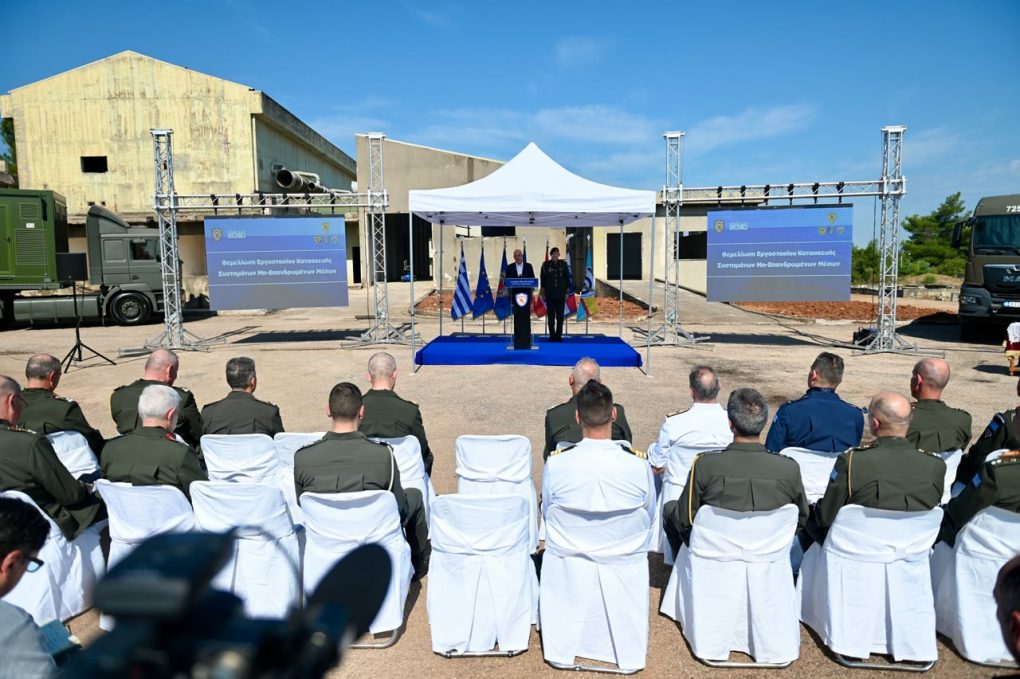
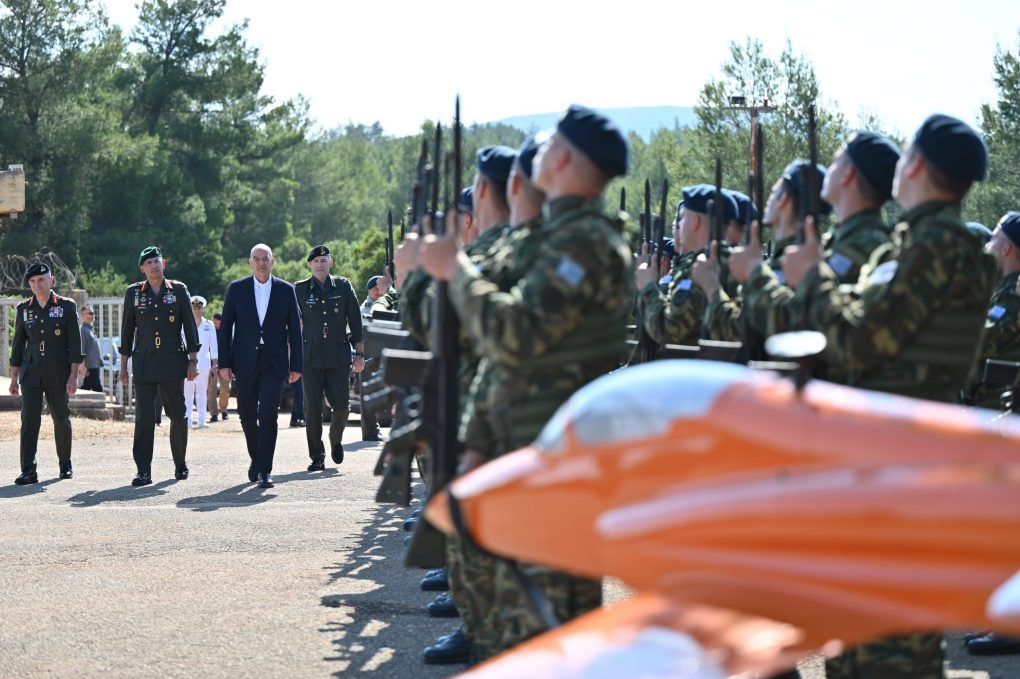
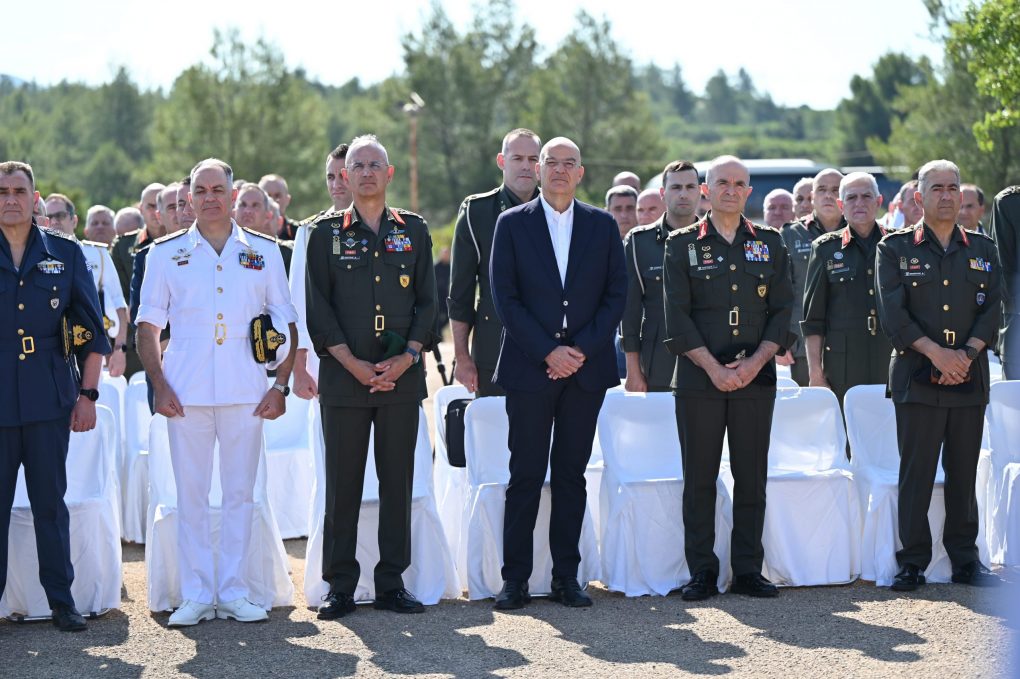
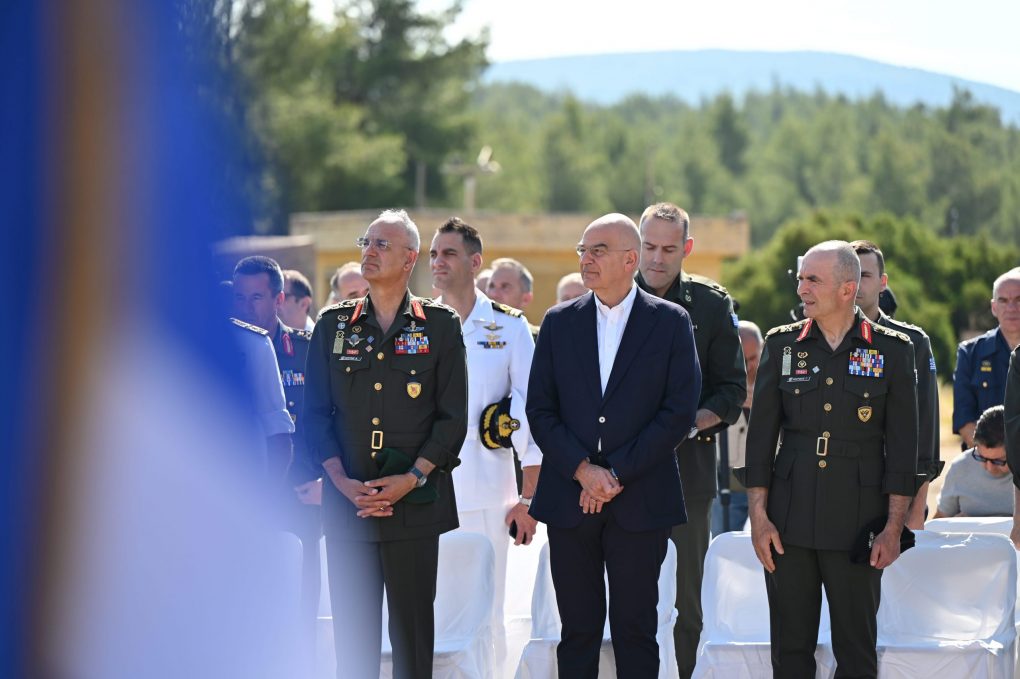
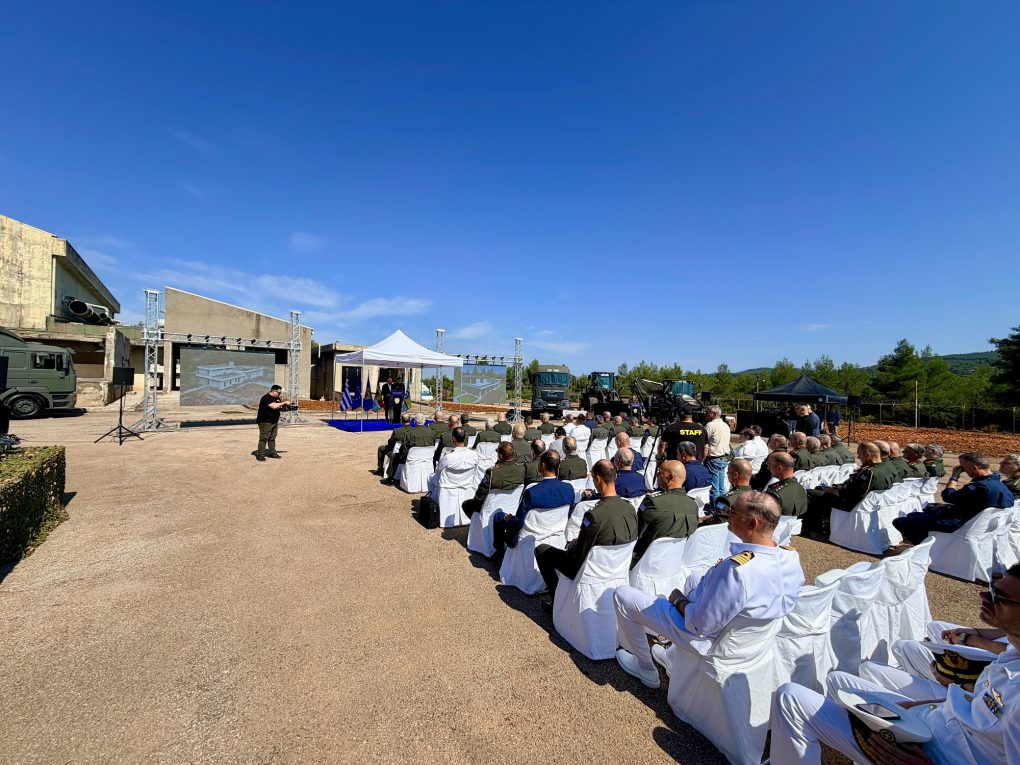
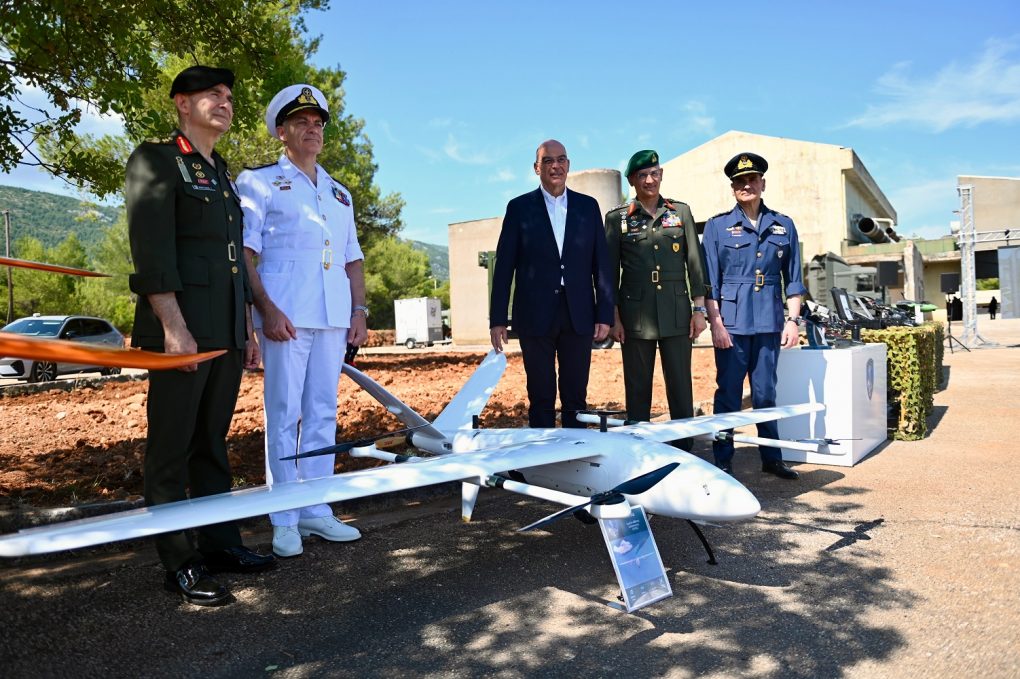
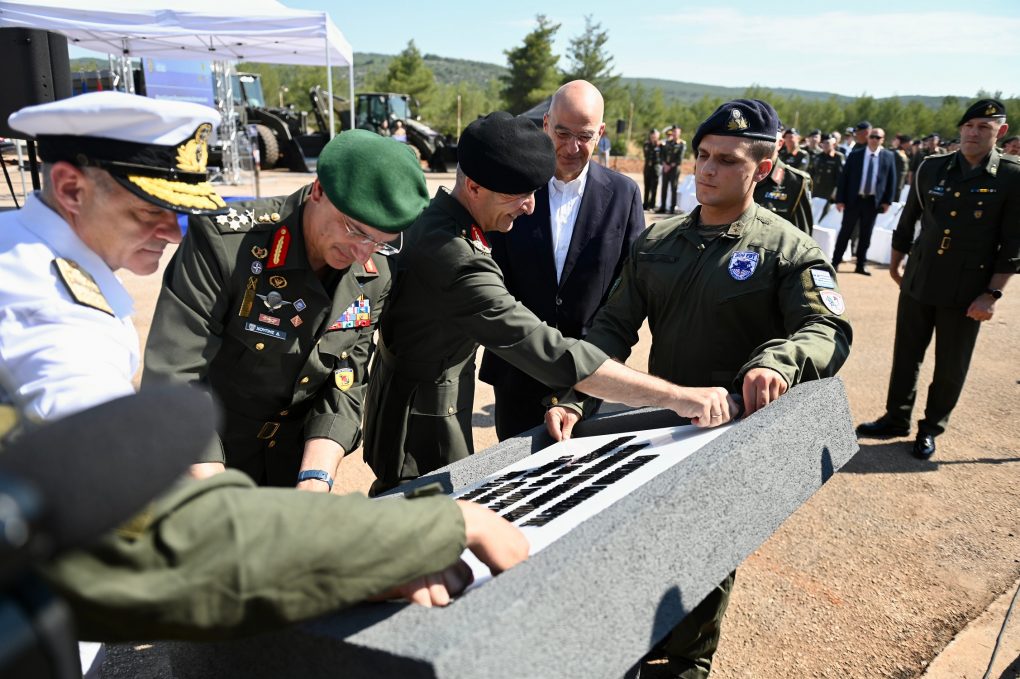
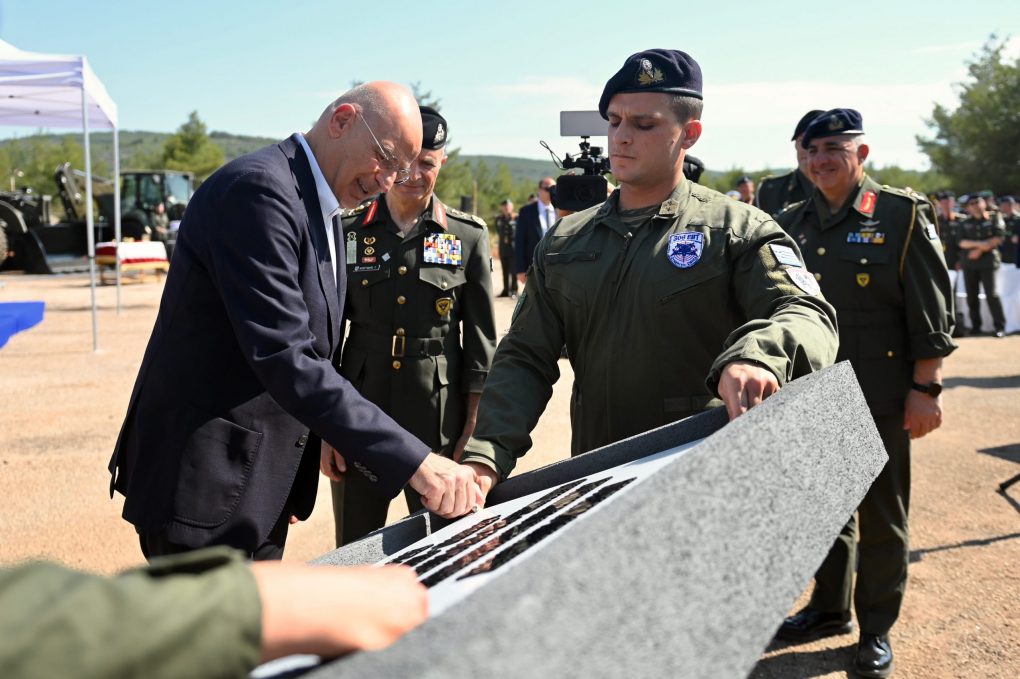
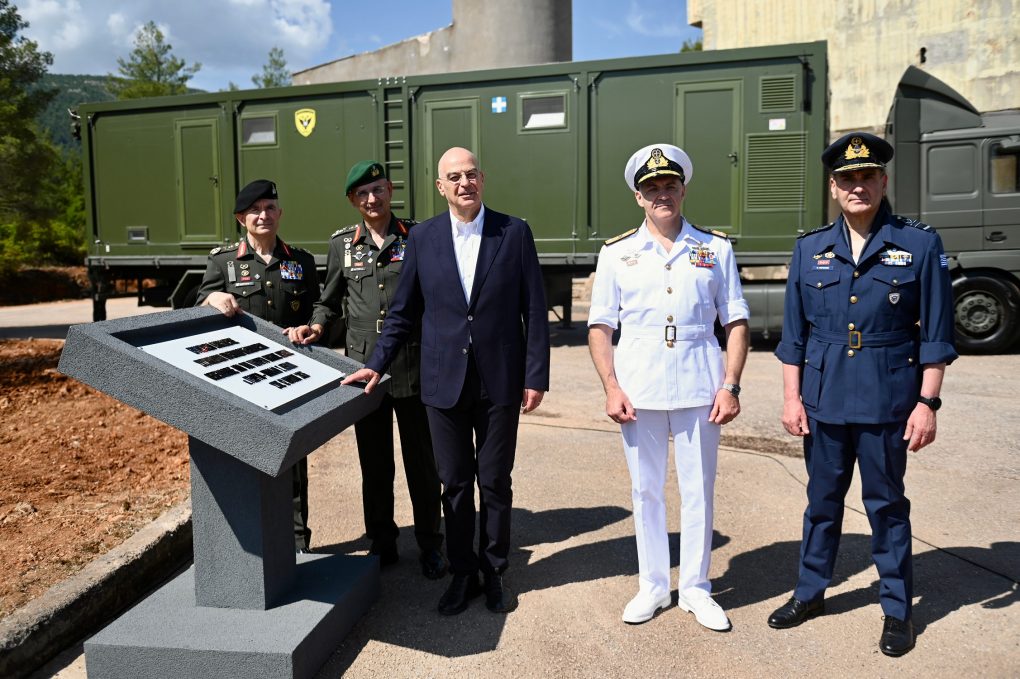
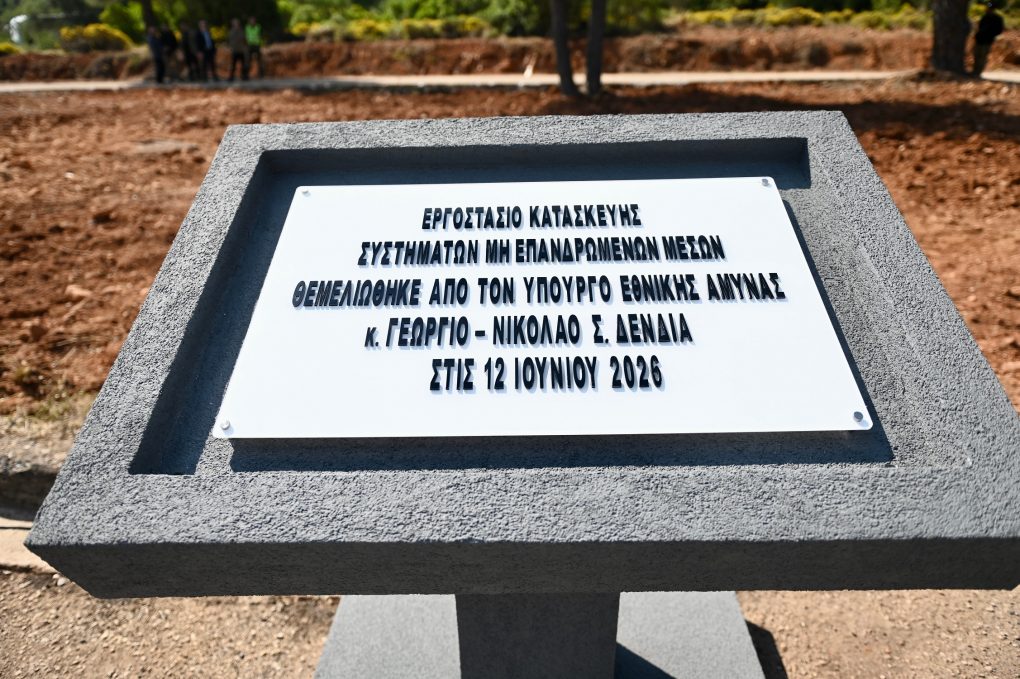
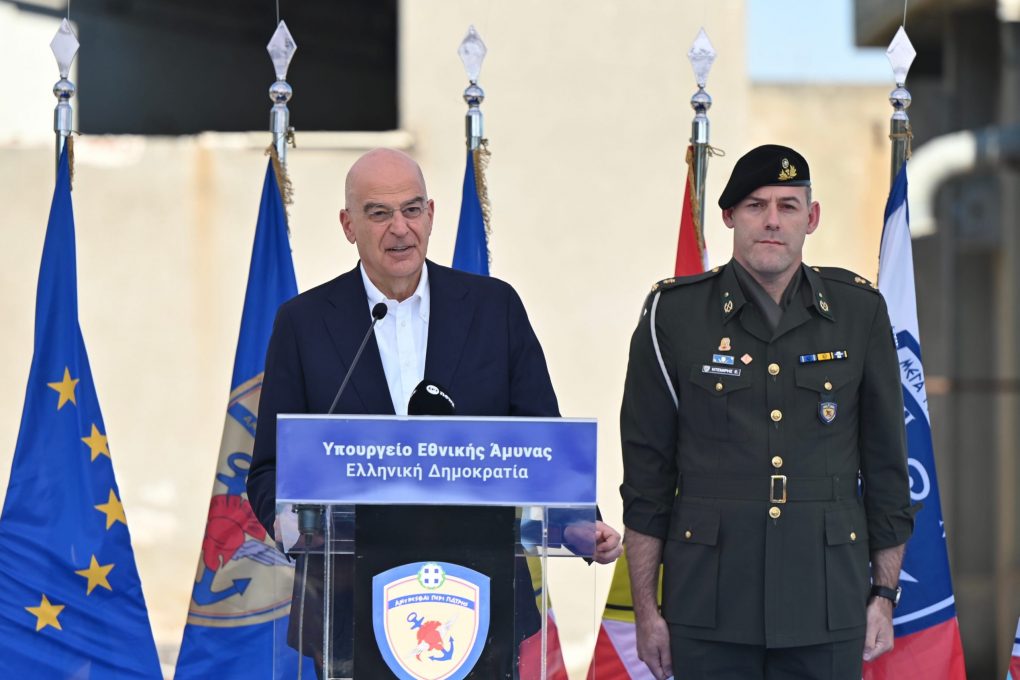
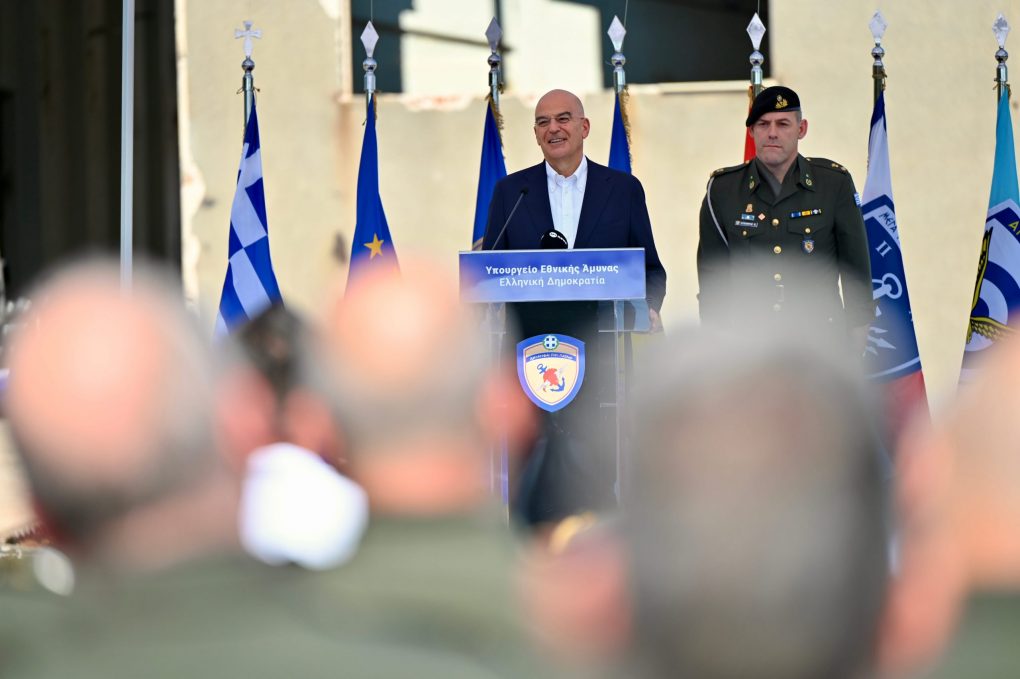

The Minister of National Defence, Nikos Dendias, accompanied by the Chief HNDGS General Dimitrios Choupis, laid on Friday 12 June 2026 the foundation stone for the 309 th Drone Manufacturing Plant in Malakasa, Attica.
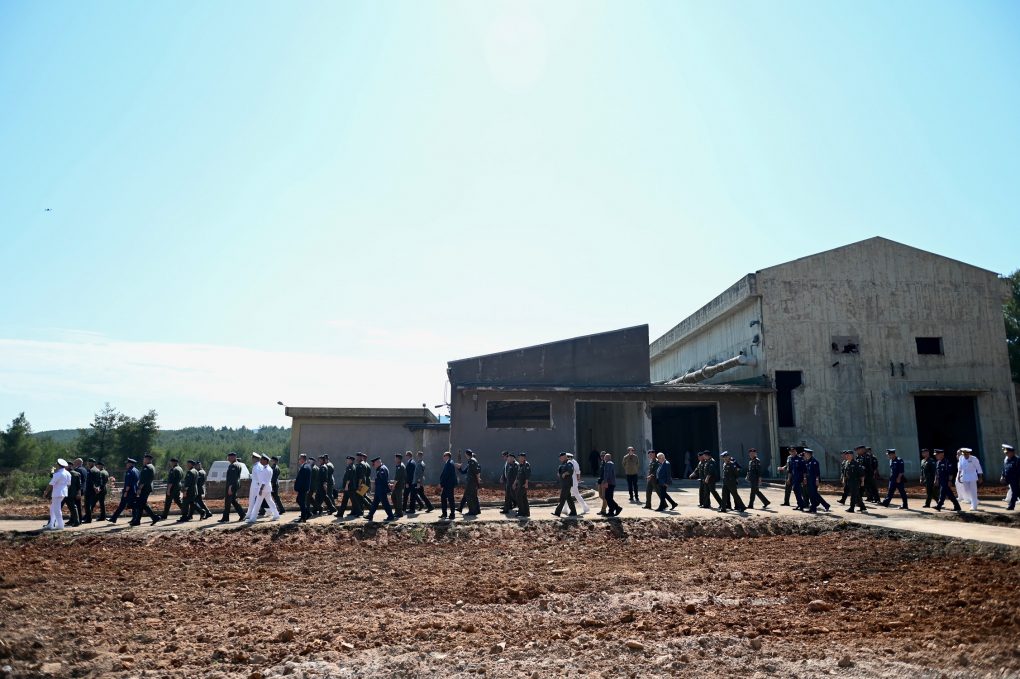
Also present at the ceremony were the Chief HAGS Lieutenant General Georgios Kostidis, the Chief HNGS Vice Admiral Dimitrios – Eleftherios Kataras, the Deputy Chief HAFGS Lieutenant General Vasileios Broumas, acting as the Chief HAFGS’ representative, and Senior Officers of the three Branches of the Armed Forces. Mr. Dendias in his address during the ceremony, stated:
«It is a great honour for me, but I must say that it is an even greater pleasure to be here at today’s ceremony.
As we have discussed many times, the “Agenda 2030” is a comprehensive framework for protecting our Homeland.
With a specific strategy, the «Achilles’ Shield», which extends to the sea, the land, the air, and now also to cyberspace and outer space. And it is based on a fundamental concept, a fundamental principle: the transformation of everything as we knew it. This is what today’s ceremony also signifies.
Unmanned systems and anti-drone systems are a vital element of the new operational mentality.
Autonomous systems in the air, at sea and on land are an organic element of the modern operational environment, in the full spectrum of missions. I would like to point out that in the incident two days ago involving the crash of an American helicopter in the Strait of Hormuz, the rescue was carried out by an unmanned aircraft.
In addition, unmanned systems are used for surveillance, reconnaissance, infrastructure protection, countering asymmetric threats, and, of course, data ransmission and the subsequent precision targeting.
We are a country that has an active threat levelled against it, and cannot afford to passively observe events. We must participate, not only as purchasers and users of systems… but also as a country that produces, designs and develops them. And it is one of the clear objectives of the “Agenda 2030”, its stated goals: the creation of domestic production capacity, particularly in this critical sector for our deterrence and operational autonomy.
The results are visible and measurable, because the groundwork has already been laid.
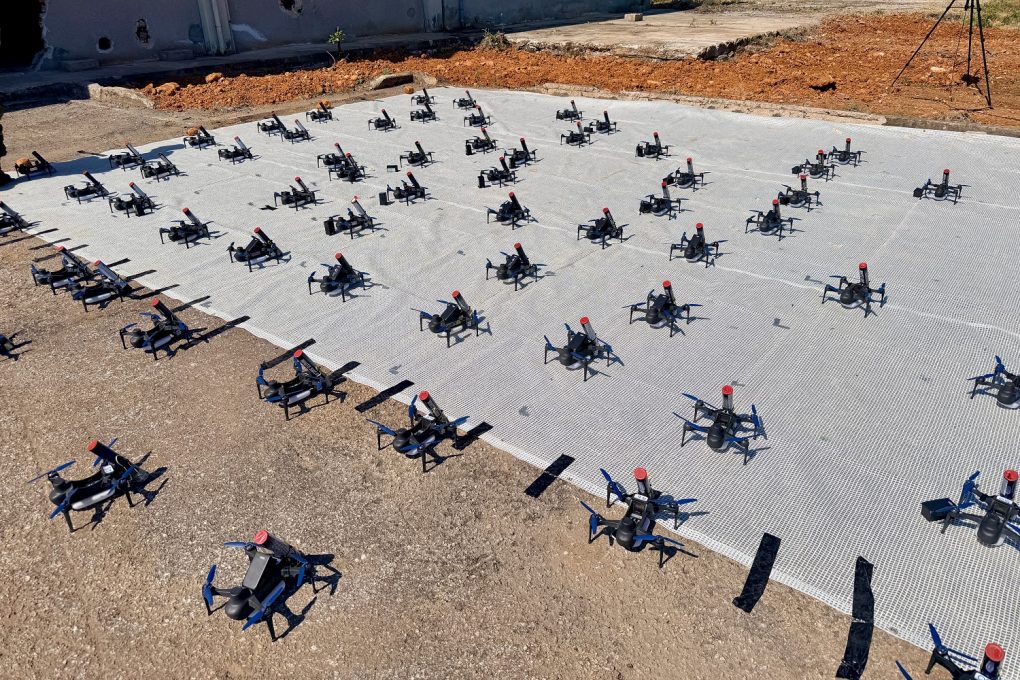
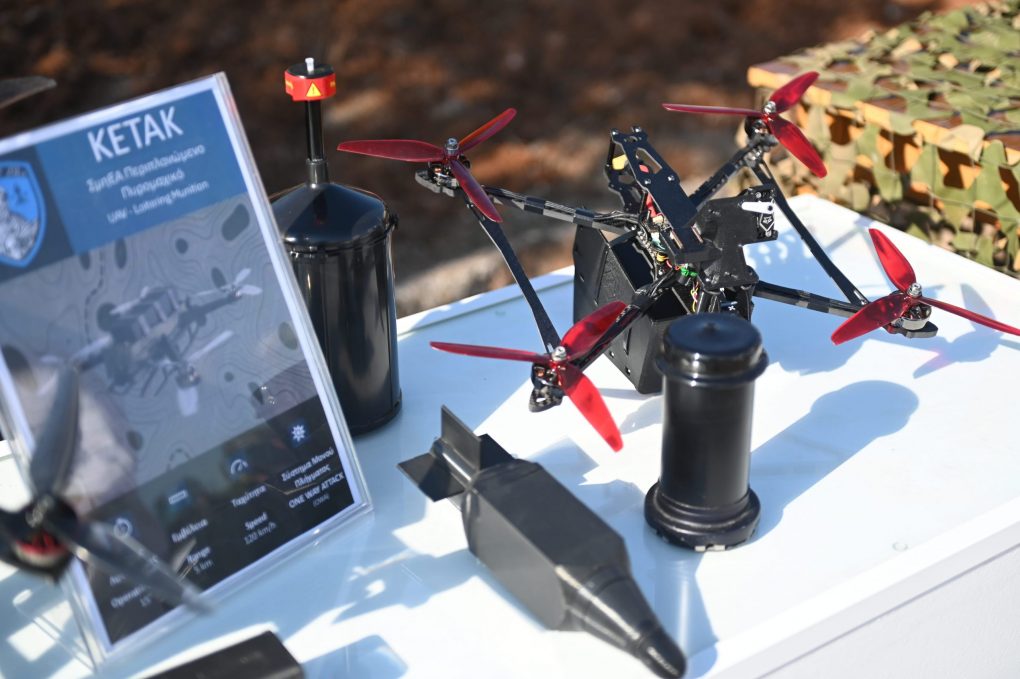
In a very short period of time – specifically, within the next two years – the 306 th and the 316 th Base Factories have the capacity to produce 4.000 FPVs, Class I Drones.
And indeed, with the addition of 6 Mobile Production Units, this capability gains reach, flexibility, operational depth, and the ability for Formation Commanders to decide exactly what they need, to adapt the software to absolute operational needs in a very short time, without the need for the cumbersome process of obtaining permission, orders, or analysis from General Staffs or political leadership.
This is where we innovate. I have not seen any other Armed Forces that have developed this ability. To introduce the possibility of design and production to our units, to decentralize our capacities. For the time being we are doing that with the Army, but I hope very soon to be able to do it with the Navy and Air Force.
And I would like to note, following today’s ceremony for the laying of the foundation stone, that two more ceremonies will take place in the coming days: the inauguration of the Air Force’s Unmanned School in Tripoli and also, of the corresponding School at the Navy’s “Kanellopoulos” naval base in Skaramangas. Because we will produce them, but we must also have the personnel capable of using them, with operational
proficiency, in combat conditions.
And this comes on top of the introduction of drone training as part of the New Military Service.
It is, therefore, a holistic approach – a completely different environment in which we must train our members and empower them.
Today we are taking a bid step forward. I dare say – if I may – it’s a giant leap. This new Plant for the Manufacture of Unmanned Systems is set to transform an initial capability into full-scale industrial production. It is the first large-scale industrial facility of the Greek Armed Forces that is fully specialized in the manufacture of Unmanned Systems. The 309 th Drone Manufacturing Plant.
And, moreover, it is of a joint nature. Because, for the first time, Drones will be produced here for the Army, the Navy, and the Air Force. In other words, a large, vertically integrated industrial structure with a clear operational focus, capable of covering the entire life cycle of each system. That is, design, research, production, maintenance, upgrades, and operational utilization.
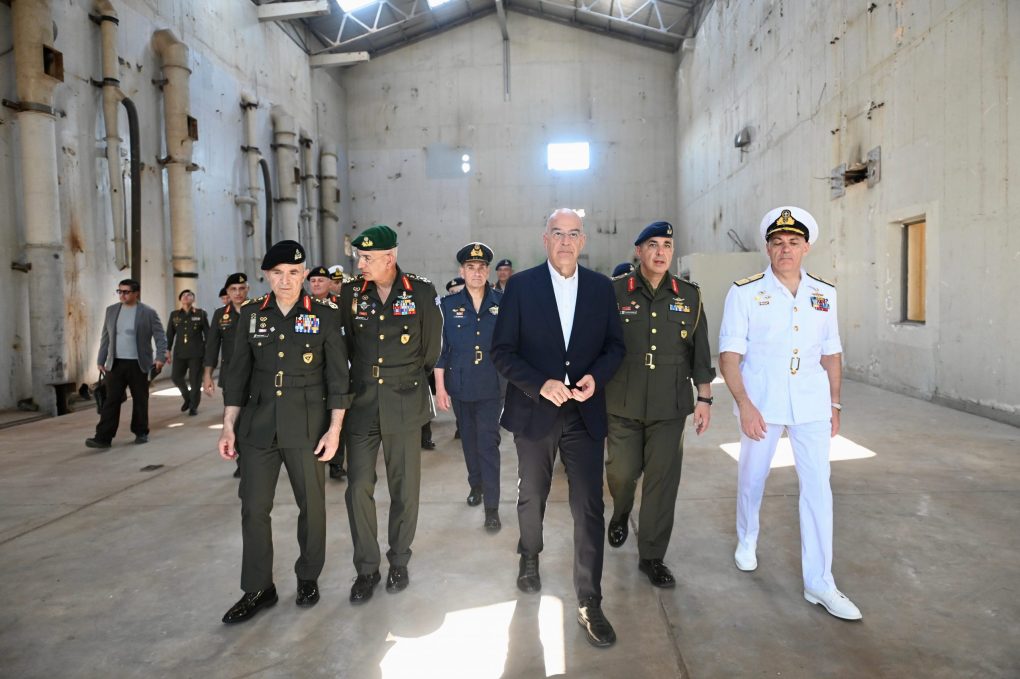
And also, the project has another example: it makes use of existing unused resources of the Armed Forces. This plant shell behind me has been abandoned here for 46 years. We are bringing it back to life, to a life it deserves, to serve the needs of the Armed Forces.
The site’s features are impressive. And of course, it was mentioned that we’ll start laying the foundation stones once the funding and design are already in place. There is a specific timeline for completion. And I am certain that we will “beat” this timeline as well; we will be able to move faster.
Also, I would like to make something clear. Class I drones, FPVs are not fixed assets like planes or guns. They are expendable, like bullets. So we need mass production.
And besides, the lesson from the last three wars has now become clears – wars that we may not have paid enough attention to when we should have. I am referring to he first war, in Karabakh in 2020, and of course the invasion of Ukraine in 2022, and finally the war in Iran now.
Greece does not have unlimited resources; it does not have unlimited funds. Greek taxpayers are already contributing what they can to our major effort, and this project is, of course, part of our long-term plan. We have never proceeded with projects that were not costed and fell outside our budgetary scope. I must also say, however, that it gives the country depth and resilience, because what the war in Ukraine has demonstrated is that countries must have not only the capabilities, but also the time to sustain the effort.
I’ll conclude by saying this: Lately, I’ve been reading a book by a well-known historian titled “Always A Posteriori:”. It deals with Greek History and the challenges facing the Nation. Here, we want to turn that on its head. Always a priori.
Thank you very much».
The project that was launched
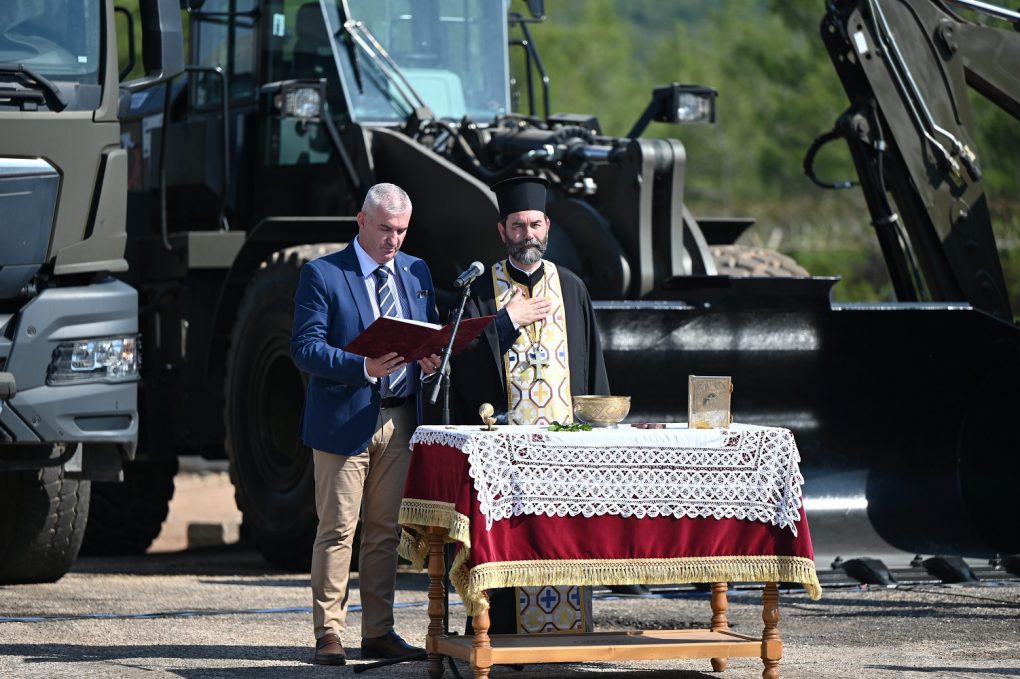
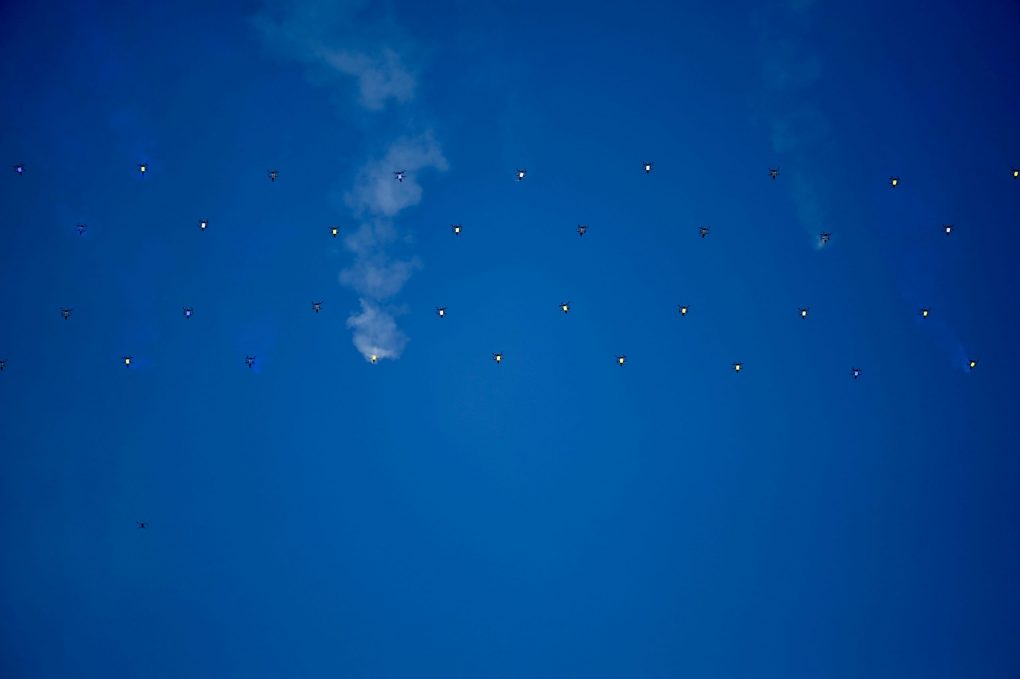
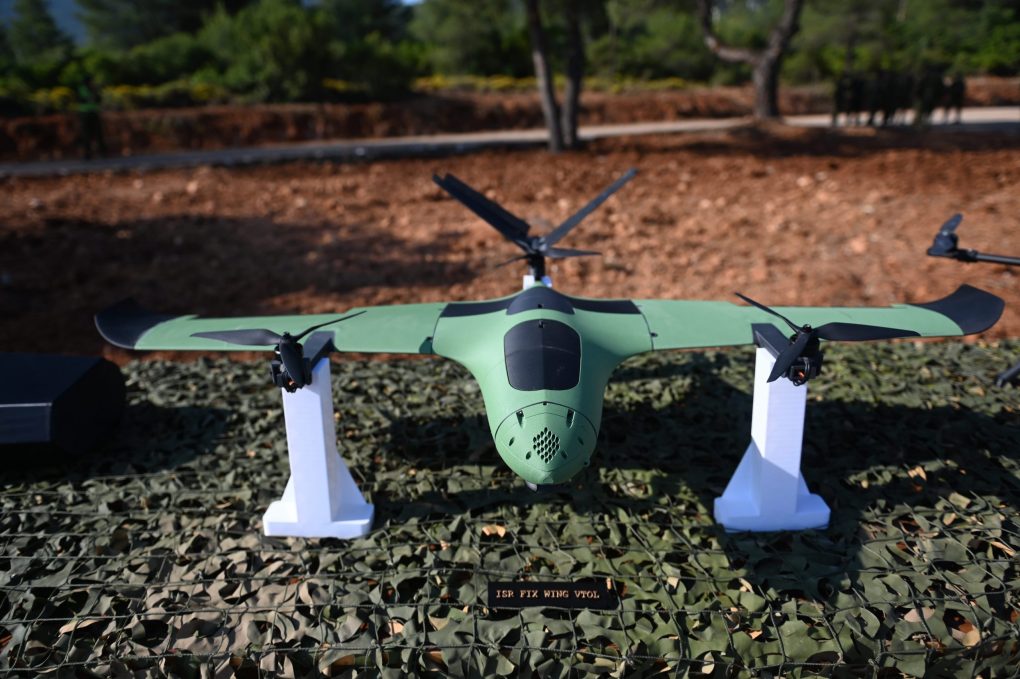
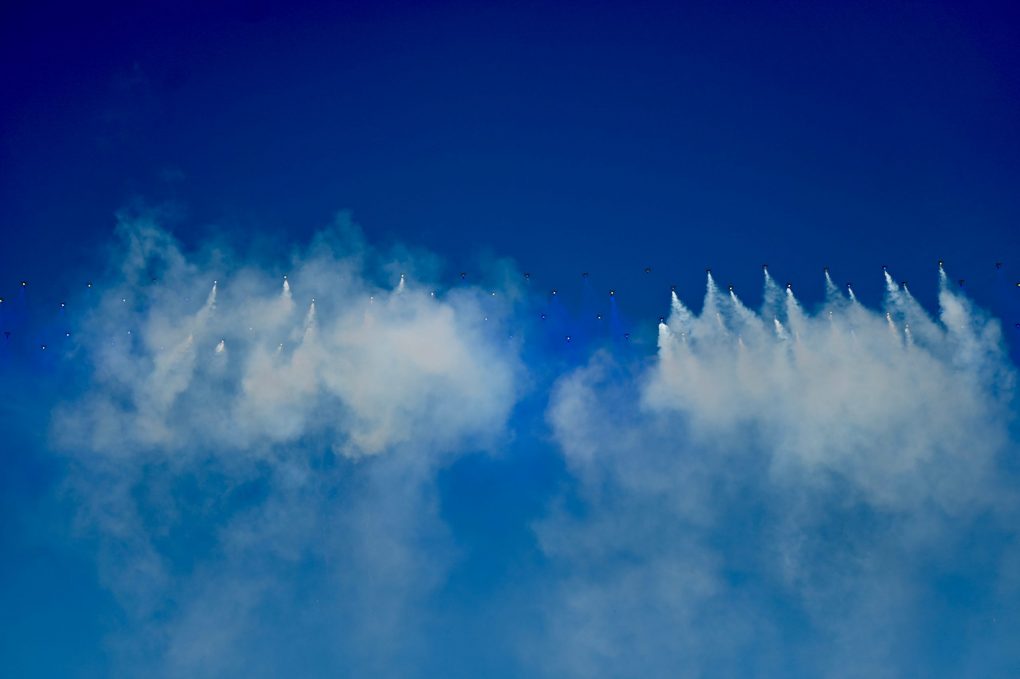
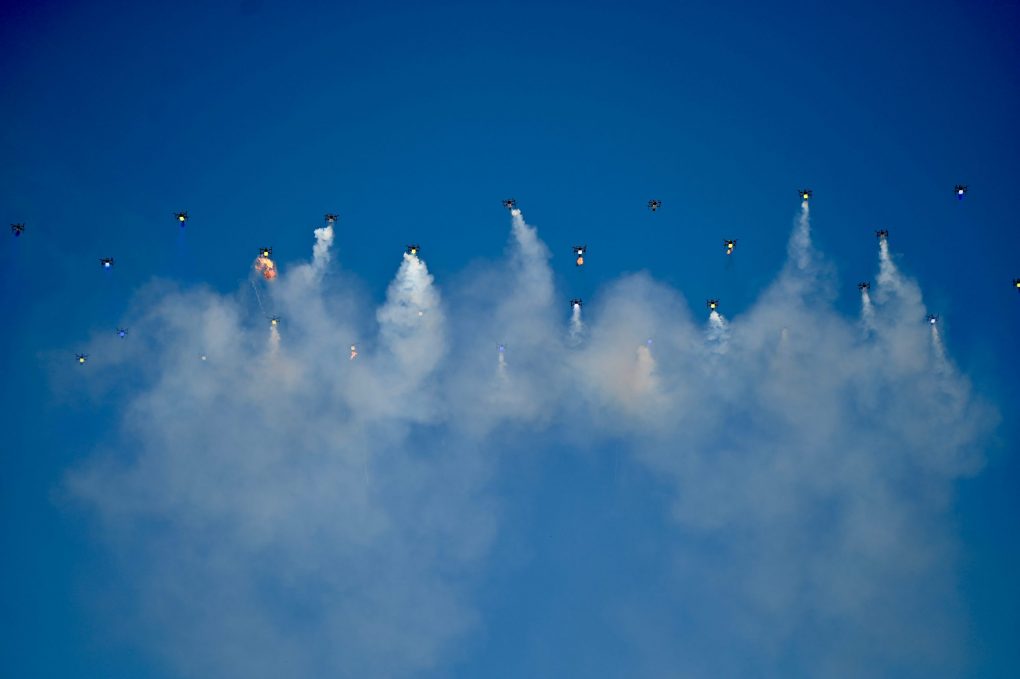
Following the Blessing ceremony, Major General Dimitrios Kourkoulakos, Director of the 3 rd Staff Directorate gave a presentation on the project. This was followed by a demonstration of aerial systems and the laying of the foundation stone by the Minister of National Defence.
The project that was launched today comprises two distinct but complementary phases: complete reconstruction and modernization of the Camp’s old facilities, restoring their structural integrity, as well as repairing external and internal damages. The facilities will be converted into modern spaces for production, support, and technical operations.
It covers an area of 2800sqm, and with funding secured, the necessary steps are currently being taken to ensure that construction works for the 309 th Plant begin in 2026.
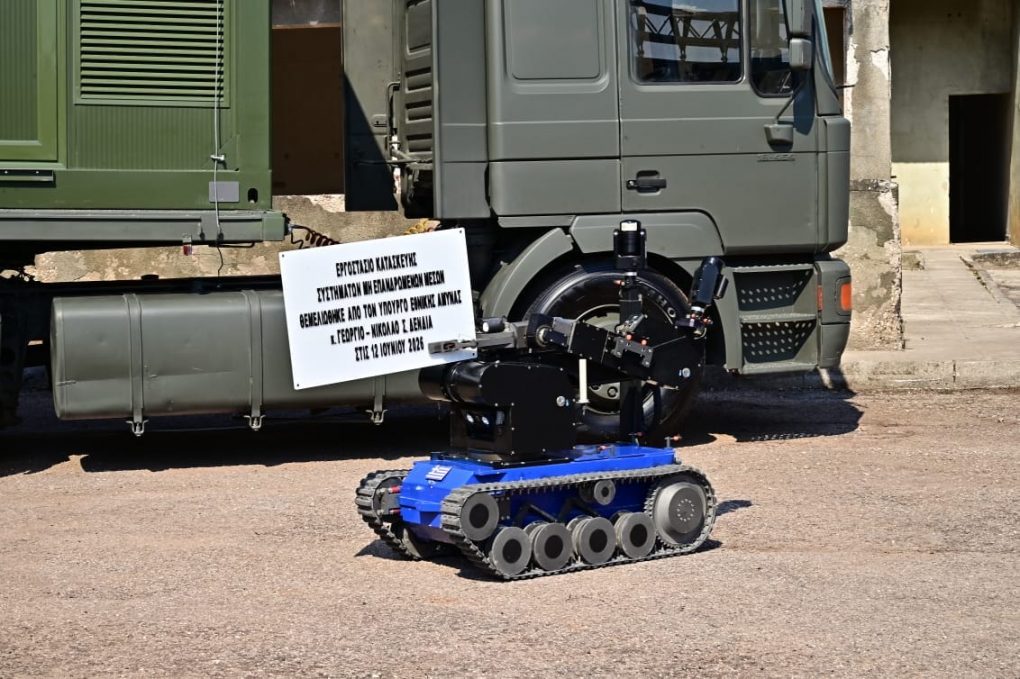
The new facility will manufacture a wide array of unmanned platforms: Class I & Class II Drones, R&D for Class III Drones, Unmanned Ground Vehicles (UGVs), Unmanned Surface Vessels (USVs) and Submarines, as well as Advanced Anti- Drone Systems.
The goal is to increase annual production of Class I drones to at least 10,000 from the current 4,000, annual production of at least 300 Class II drones, 300 ground vehicles and 300 anti-drones, while at the same time establishing capabilities for the Research and Development of Surface Vessels and Submarines.
The second major intervention at the Camp involves the construction of a new building with a total floor area of 3,600sqm, spread over two levels. It will serve as the Complex’s core, housing advanced production lines, Research and Development facilities, Laboratories and Testing Centers. Its construction will enable a significant increase in production capacity, providing specialized R&D capabilities. At the same time, it will create new opportunities for collaboration with the defence industry and the country’s research institutions.