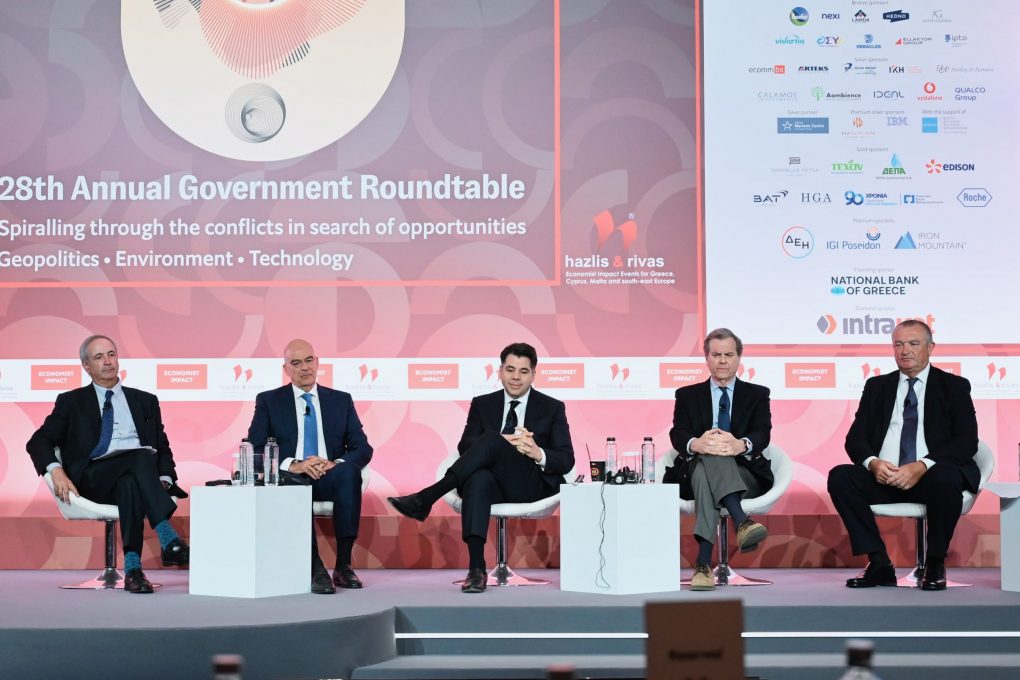
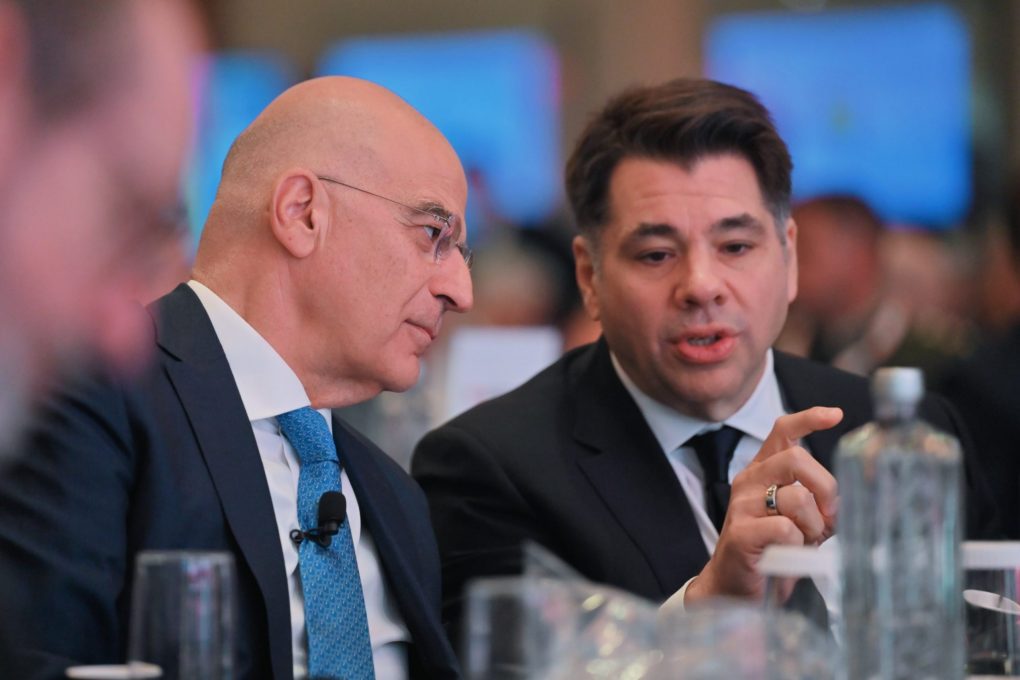
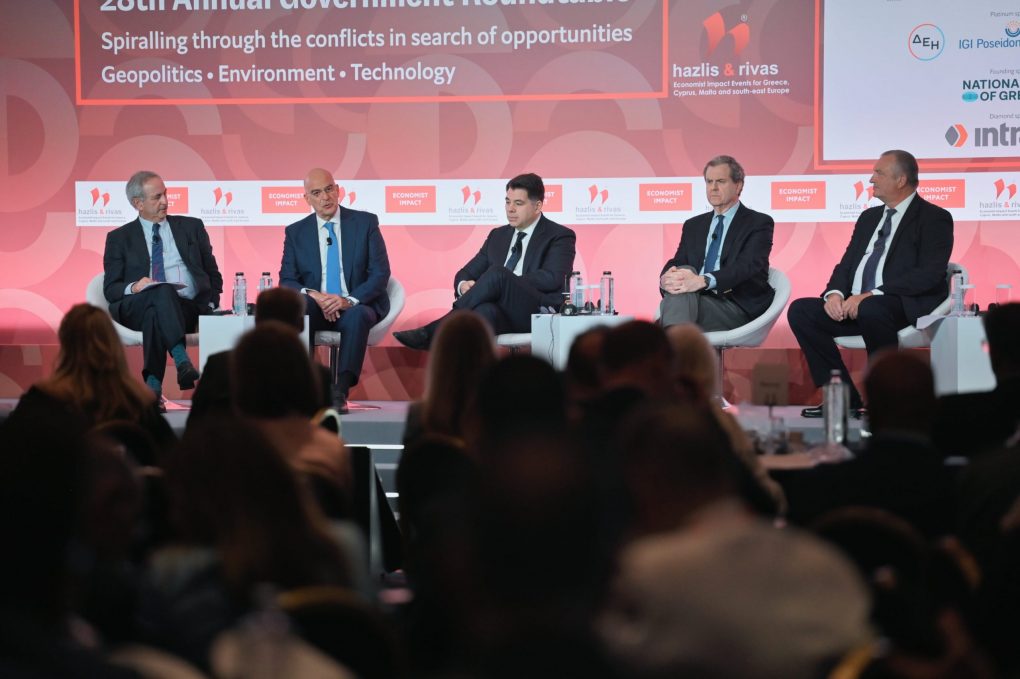
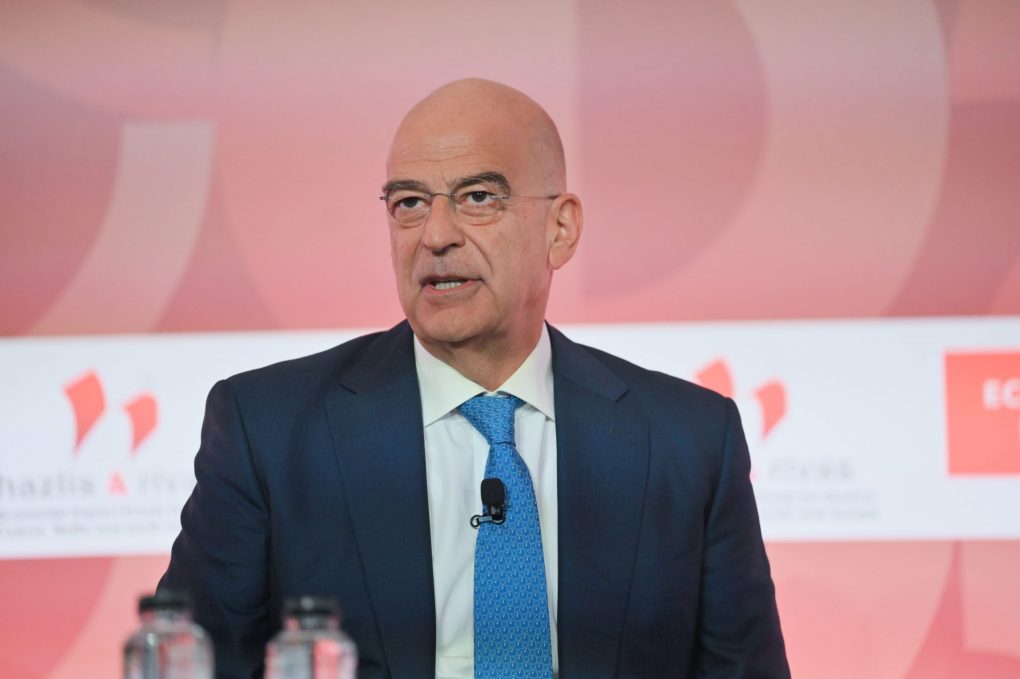
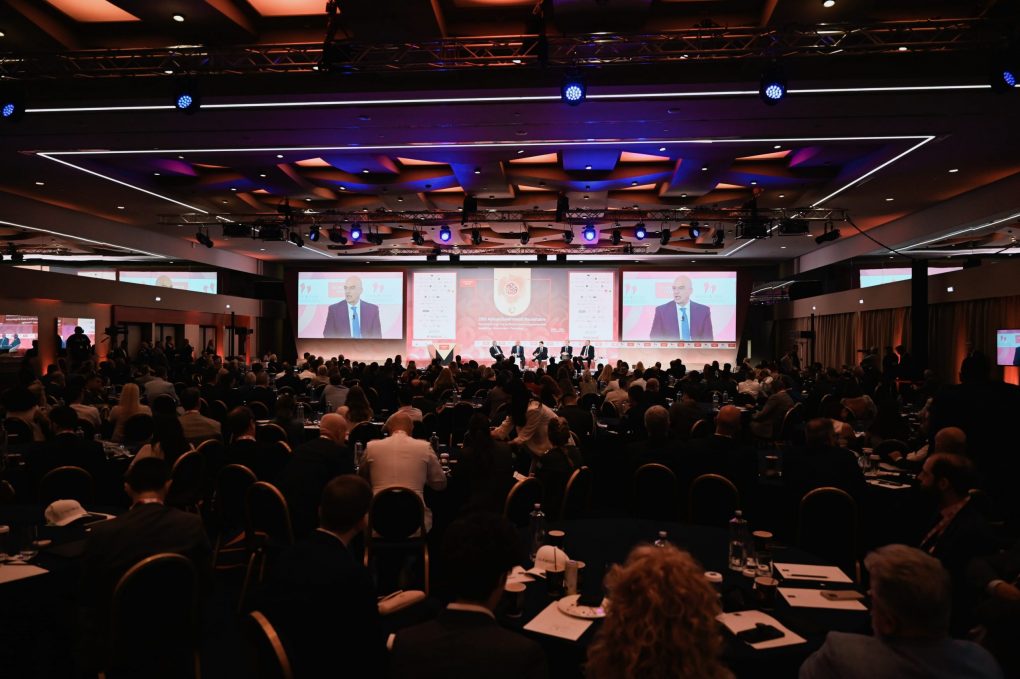
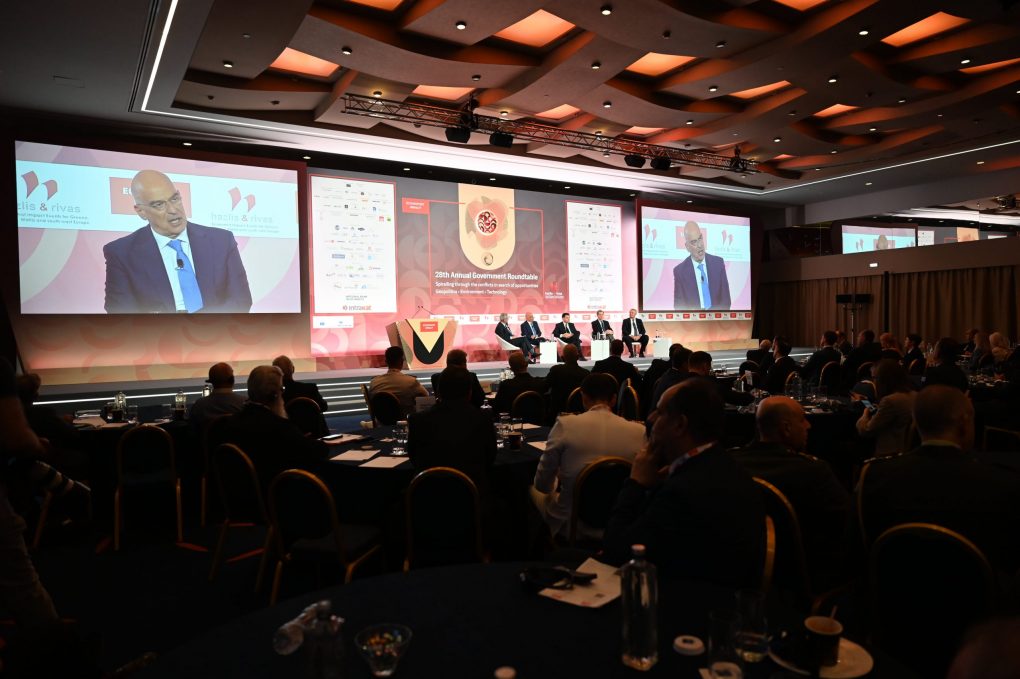
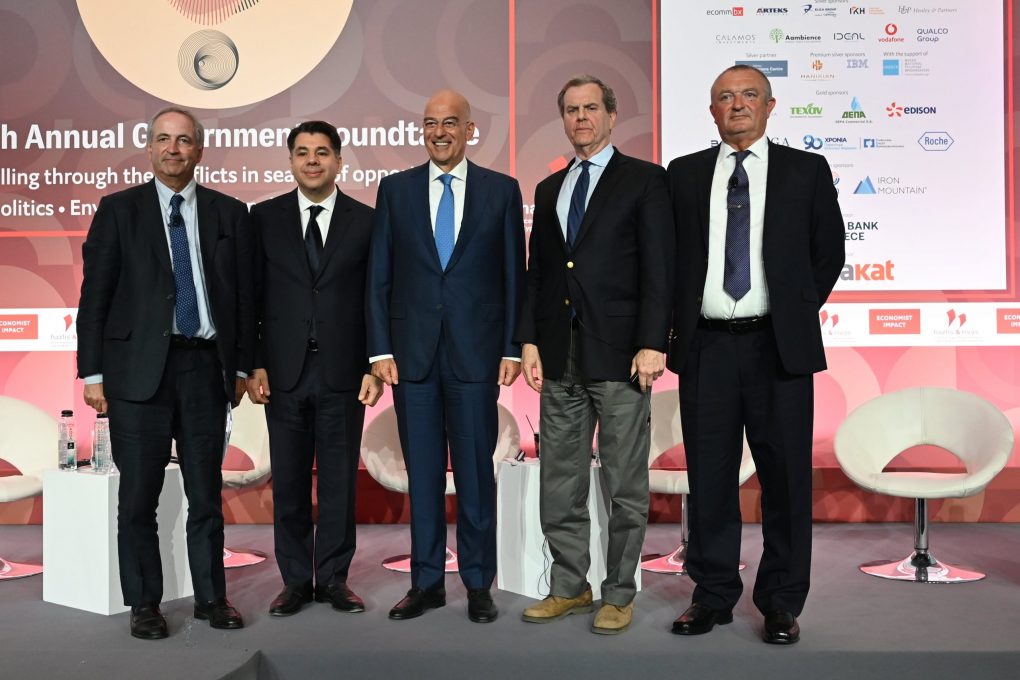
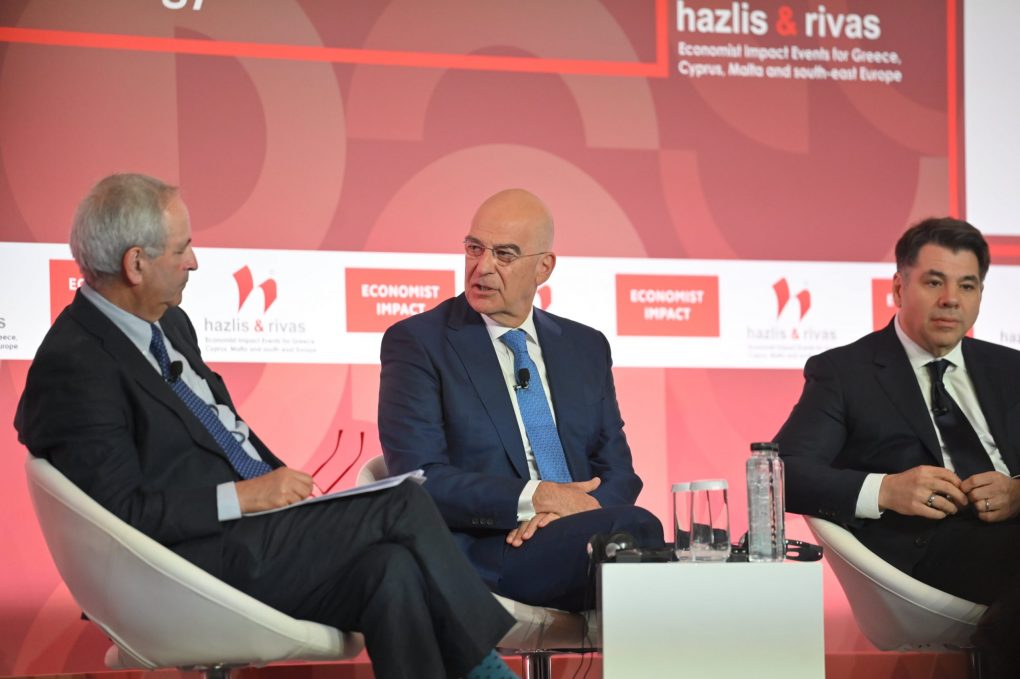
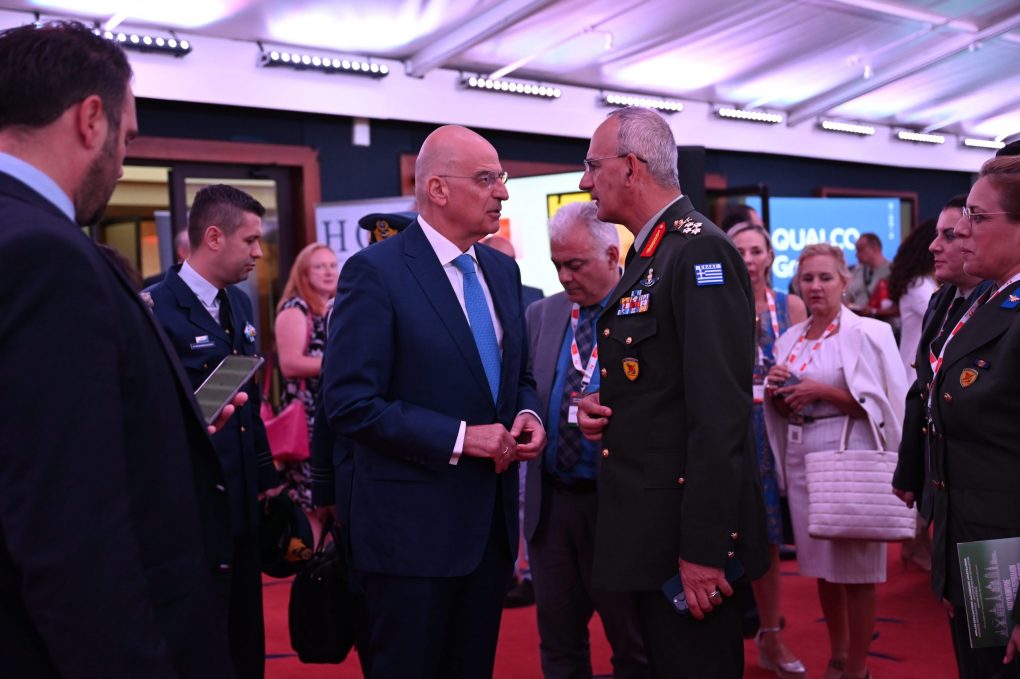
On Tuesday, 2 July 2024, the Minister of National Defence Nikos Dendias participated in the 28th Annual Economist Government Roundtable in Lagonisi in the session “How can Europe mitigate the current security threats?”.
Other participants included the US Ambassador to Greece, George Tsunis, the Executive Vice-Chair of the Institute for the Study of Global Antisemitism and Policy, David Harris, the former Supreme Allied Commander, NATO, Vice-Chair for global affairs of “The Carlyle Group”, Admiral (retired) James Stavridis and the Director of the Black Sea Security Programme at Harvard Kennedy School of Government, Sergei Konoplyov.
The discussion was moderated by the executive editor and senior editor of the United States “The Economist”, Daniel Franklin.
Mr. Dendias stated the following, in response to the relevant questions:
DANIEL FRANKLIN: Let’s get to the subject, how can Europe mitigate the current security threats. Let’s start with Mr. Dendias, the Minister of National Defence. How can we mitigate threats?
NIKOS DENDIAS: Such an answer would be difficult, but that is not really a case for jokes. I will start by saying the obvious, that we have found ourselves in a very, very difficult situation and a situation not anticipated.
As far as Greece is concerned and the region is concerned, we are facing a war in our north-east, a war in our south-east, a totally destabilised North Africa, I am speaking especially about the Sahel region, Libya, Syria.
A very awkward situation by the Houthis who threaten to destabilise commerce and there is rising violence. There is some more. For example the Western Balkans situation which is far from ideal. We had hoped for a faster convergence towards the European acquis and membership of the European Union. And of course, the internal political situation in most of the Western Democracies is a challenging one again.
If one would start answering how I would propose to address all these issues, like Ukraine, Mr. Kuleba spoke very eloquently. They are fighting an existential fight. Remember how we felt the first 24 hours after the Russian invasion. Almost nobody would have believed that Ukraine would have been able to stand on its own and even gain back territory.
Now we are speaking about threats in the Eastern Mediterranean and Gaza and the overall situation between Israel and the Palestinians. Again this is something that we have to address as a big challenge, it is not something that has just to do with Israel or with the Palestinians, it is much bigger than that.
But of course, nobody should ever-ever forget what has happened, and another challenge, that has been rather overlooked is the situation in the Sahel. I want to say that perhaps from Brussels, Mali and Chad look very far away, but… there is a big but. I will go back to history. For Europe to be safe and secure, the situation in North Africa, and that necessarily includes the Sahel, has to be safe and secure.
And please remember one historical example. Why was the Roman Empire always fighting for control of Northern Africa? Why was the “Carthago delenda est” something we have all learned when we learned Roman history? It is clear that for the security of Europe, control and security of North Africa is essential.
But we have a much more recent example. Before D-Day, before “Operation Overlord” it was “Operation Torch”. The Allies first invaded North Africa before they felt secure to go to Normandy. So we have to address all these huge challenges simultaneously.
I will go back to the Red Sea and the Indian Ocean in the continuation of our discussion. I am going there this Saturday with High Representative Borrell to look at “Operation Aspides” and the Greek ship, the Greek frigate that is leading that operation. But our challenge now is to deal with all these threats simultaneously. It is easier said than done.
DANIEL FRANKLIN: Can I ask you before we move on? Will you be at the NATO Summit? What do you expect to come out of that meeting?
NIKOS DENDIAS: Some people do not like NATO but they have to accept one thing. That NATO has been the most successful military alliance in history. Ukraine testifies to that, by the way. But we have to move the extra mile.
And by that I mean that NATO has to become something more. Something that is, I believe, in the NATO DNA. To move from the point of being a military alliance to becoming an alliance of values, of principles and be able to export those principles and values around the world.
That I believe will be the challenge for NATO as it moves towards 75 years of existence. Small steps in every meeting. That is what I expect from every NATO summit.
DANIEL FRANKLIN: I come back to you, Minister, on this question of the expansion of NATO with Sweden and Finland. What do you see in practical terms in NATO with the new capabilities that very long border with Russia entails? Do you see it on the ground making it a more muscular Alliance?
NIKOS DENDIAS: Well, first of all, it is something, let us be honest and frank, nobody believed that we will see in our lifetime so, really, “congratulations” to President Putin for achieving that! Having said that, I think it’s beneficial in many ways. First of all, we have developed democratic countries coming to the NATO alliance. And of course we see border as an exposure towards Russia. But can we please see it otherwise as well? We have a bigger say in what’s happening in a very crucial part of the world. I’m speaking about the “Arctic route” which, because of climate change, is becoming much more important for navigation.
So, having these two countries in NATO is very important. But yet again, I’ll go back to what I said in my first approach.
I believe in an alliance of democracy, principles, values. Both those countries hold dear those values that Greece holds dear as well. So, for us, it was a very welcome thing that they became partners in the NATO alliance.
And a final remark on what we are doing. We can talk for hours, challenges are all over the world, Caucasus, South China Sea, etc. Each country has to do its part and it’s not just expenditure. Of course, Greece spends much more than 2%. And I have to say we are not really such a rich country that we’re doing it without sacrificing things.
DANIEL FRANKLIN: You spend a lot on pensions though.
NIKOS DENDIAS: We do yes, but much less than we did before the crisis. And we don’t see one as against the other.
We see expenditure on defence, which sometimes goes even north of 4%, as the ticket to survival. It is not just that we are spending. We are reforming. It is much more important than spending.
We call it the “2030 Agenda”. We bring the Armed Forces to the 21st century and even more than that. In all sectors of our Armed Forces. In the various concepts.
But also what we are doing is introducing innovation in the fast lane in the Greek Armed Forces. And I believe that when we will have finished with this reform, Greece will be able to have the strongest Armed Forces it ever had in our 3,000 years of existence
and that will be a contribution to security and stability in the region. Because as all participants in this discussion really underlined, Greece is a country that offers whatever it can towards International Law, the International Law of the Sea and towards peace and stability in the region.”
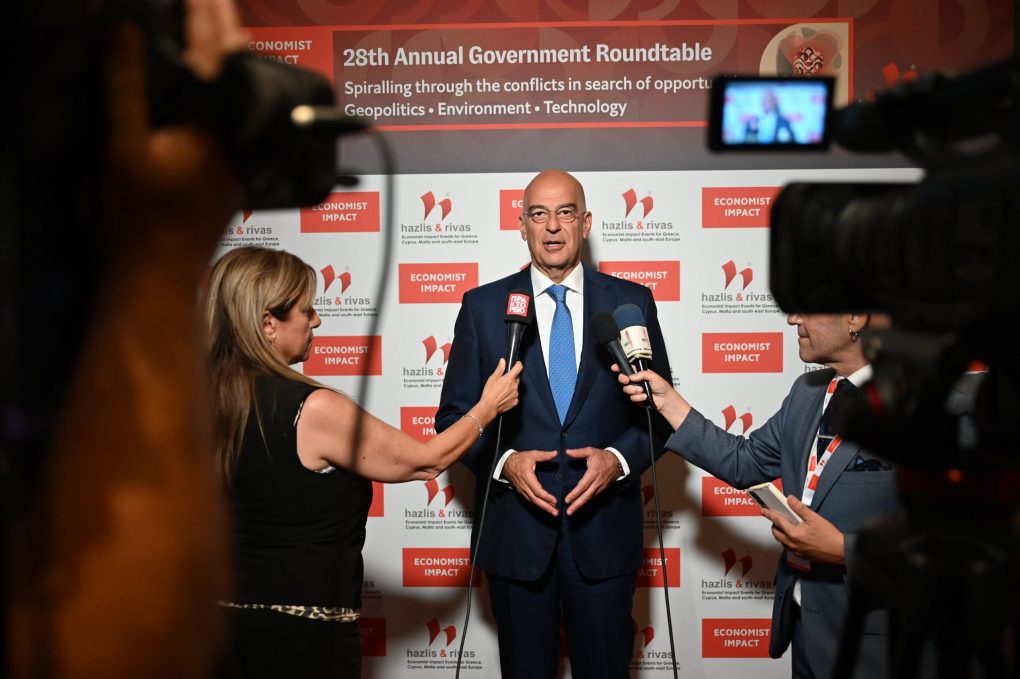
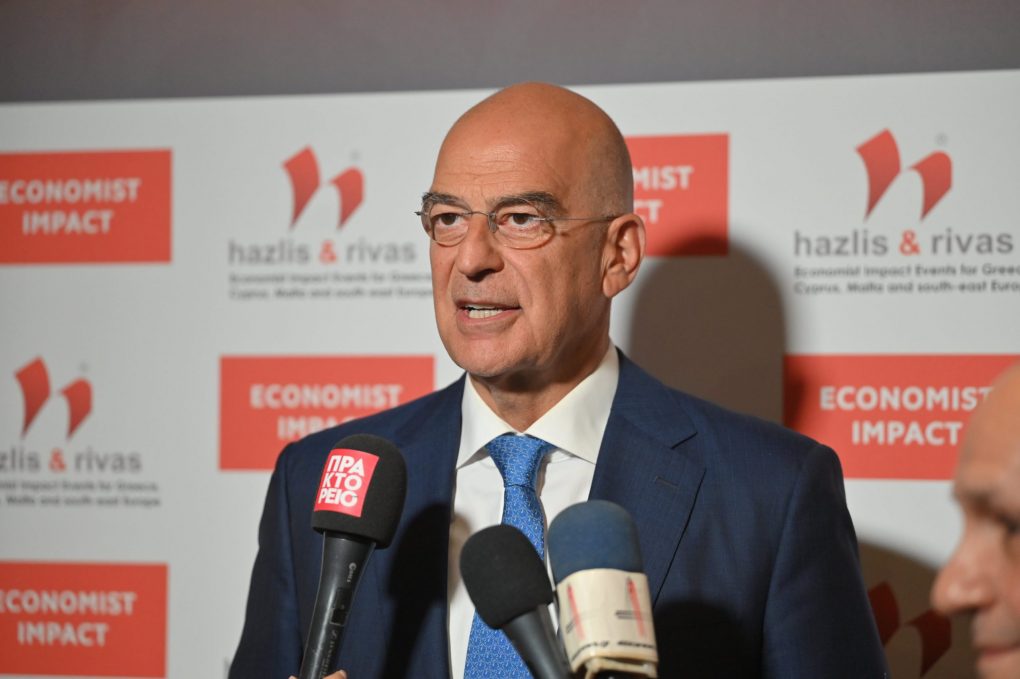
After the session of the 28th Annual Economist Government Roundtable, the Minister of National Defence Nikos Dendias stated the following:
“I believe that the Annual Economist Roundtable is a great opportunity every year, with very important people from all over the world coming here to Athens to have an open discussion about the great challenges we are facing in our region.
For me it was a great opportunity to explain the role that we believe our country and the Hellenic Armed Forces can play in the broader region, with the “2030 Agenda”, i.e. the agenda for their modernisation, as a factor of stability and security, representing the interests of a country that believes in International Law, the International Law of the Sea, peace, and the United Nations Charter.
Thank you very much”.