

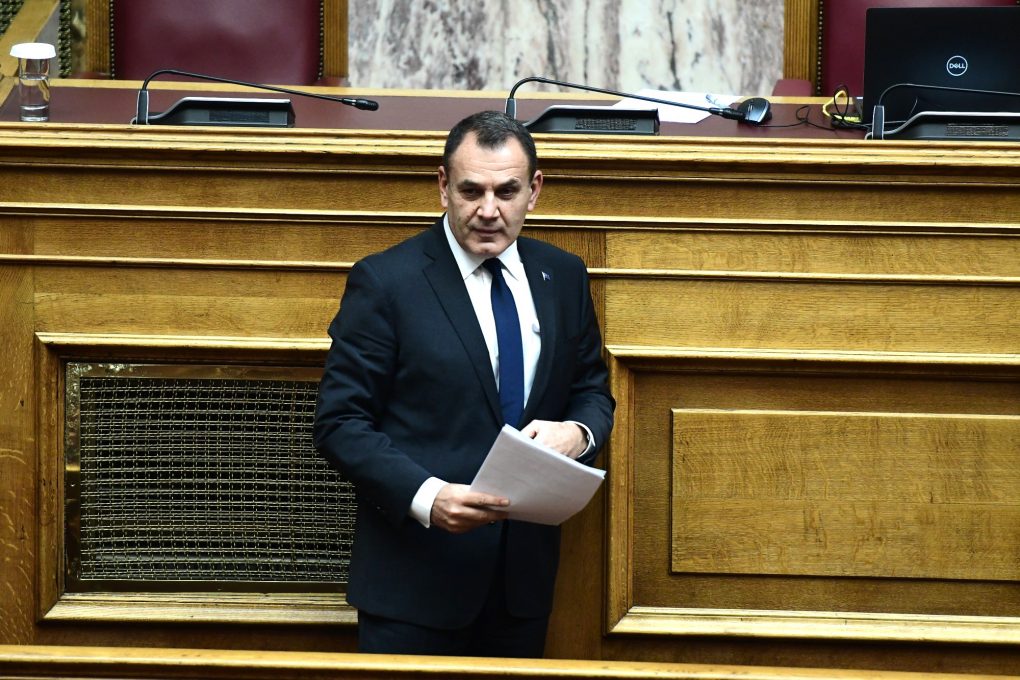
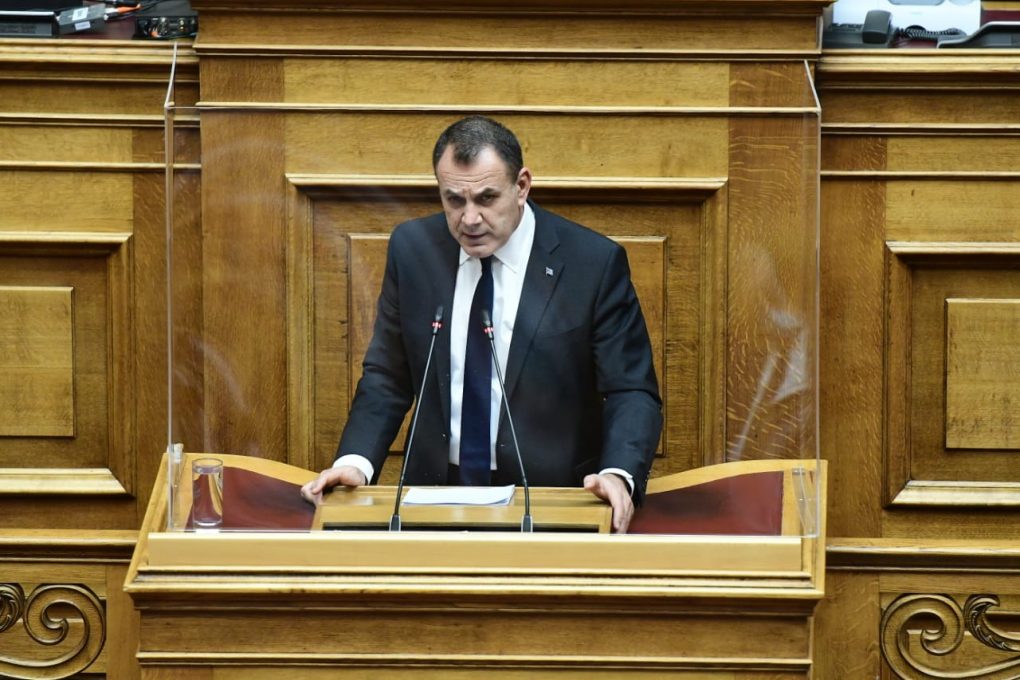
On Thursday, 14 January, shortly before the start of the vote on the Ministry of National Defence bill “Approval of Draft Contracts in the area of Defence” at the Plenary Session of the Parliament, the Minister of National Defence Mr. Nikolaos Panagiotopoulos stated in his replication the following:
Ladies and Gentlemen, Members of Parliament,
On the subject we discussed today, after the address of the rapporteur of the Official opposition concerning the treatment to personnel, I would like to make just one comment. If we entertained feelings of vengefulness or persecution of a certain Military Leadership, we could simply have changed it as soon as we took office, as has happened in the past, but we did not.
We cooperated with the previous Military Leadership for a semester and, I would say, on very good terms. We deemed that a few changes needed to be done and we made them this time last year. But for six months we worked together and I think we went along well for over six months, from July to January, late January – early February last year.
So we do not accept insinuations of feeling of persecution or vengefulness against any Military Leadership. And this is how we will proceed in the future. The current Leadership of the Ministry of National Defence truly never did anything to justify such accusations.
Other than that, as Manolis Anagnostakis wrote, ‘so far, so good, small gains and small losses; so what to say now?’. I think today the Parliament said quite a lot. It sent a message that most, not all as shown by the final decision, have the intention to be positive towards the great effort to reinforce the country’s Armed Forces.
So I want to thank everyone involved in the discussion, the rapporteurs and most of all the rapporteur of the Government, my fellow MP from the same constituency, Mr. Makarios Lazaridis, who I think fully and clearly explained the advantages of passing this law.
Of course, all rapporteurs for their contribution to the discussion with their arguments and reasonable reservations, due to the tight schedule within which we had to bring this bill for consideration, having done our best to provide every possible clarification on complex technical matters and some legal matters related to the implementation of the contracts.
I would also like to thank the parliamentary representatives of the parties and of course the Political and Military Leadership of the Ministry and the officials who accomplished a lot within an unusually short time – by any standards – in order from an initial discussion to prepare draft contracts introduced to Parliament as a bill for the reasons I described.
We demonstrated, among others, the existing and ever improving strategic relationship with France, which I believe can be further enhanced and expanded due to the good spirit demonstrated during the negotiation by the French side at all levels.
But beyond that – and for that reason, I gladly and willingly accepted the modification proposed by KINAL – I think the road is also open for a meticulous and full evaluation of the good implementation of these contracts which constitute the institutional regulatory framework of this bill. Even if there was no institutional obligation, which after the acceptance of the modification there is, for the opposition parties to do it, I would still prompt them to do it.
I share the concerns over the situation of the domestic Defence Industry which I hope will soon be in a position – and we must further work on that – to be able to support, at least at a later stage, the work that will arise from the maintenance of these and other weapon systems. This is certainly a goal towards which we must all work. And to answer Mr. Vitsas’s question, of course we will work in this direction. I think the purpose here unites us all.
With these words, I would like to once again thank you for your contribution. I think today we sent a more or less clear message in all directions and consists in a very important step – a leap I might say – ventured under very difficult conditions because, while negotiating, we also had to address two crises, the global pandemic and the tension with our neighbour.
We did it as best we could and what remains now is to monitor and evaluate, each according to his capabilities and role, the good implementation of the contract.
Thank you”.