“Honourable Ministers,
Honourable Members of the Alliance member-states,
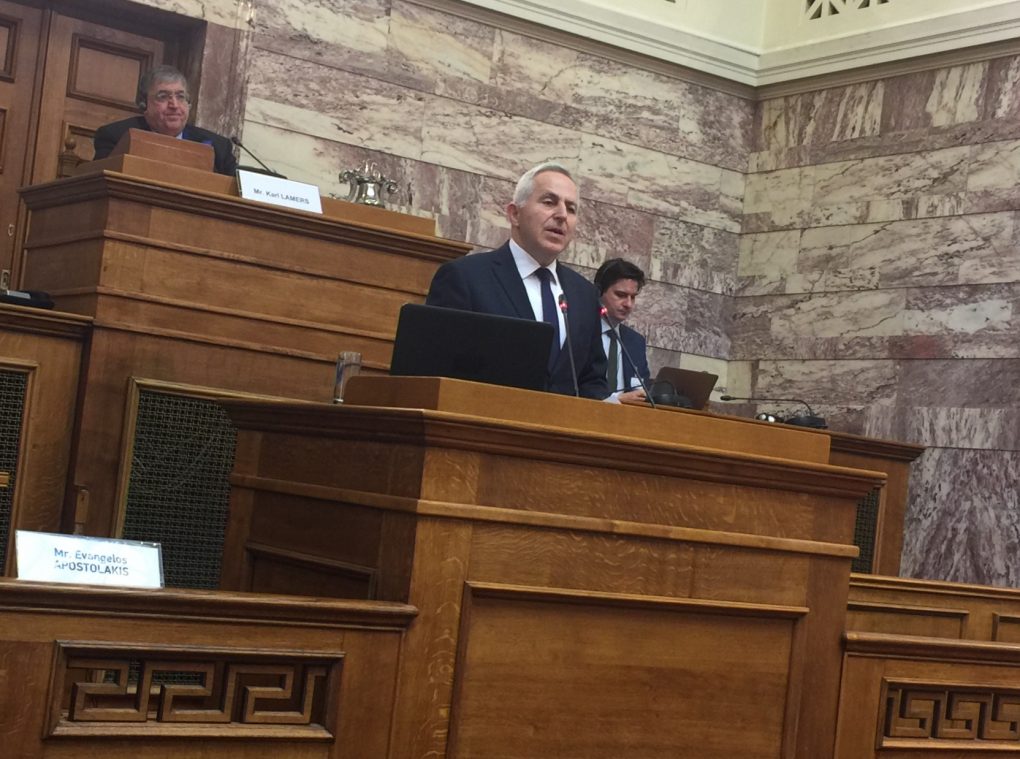
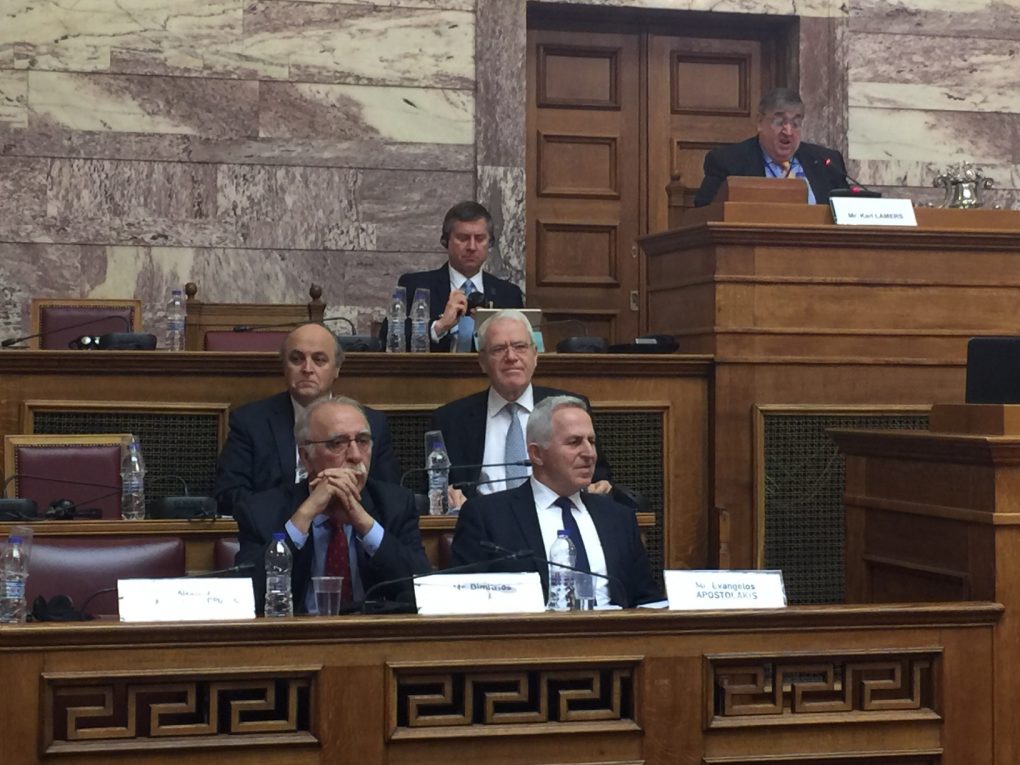
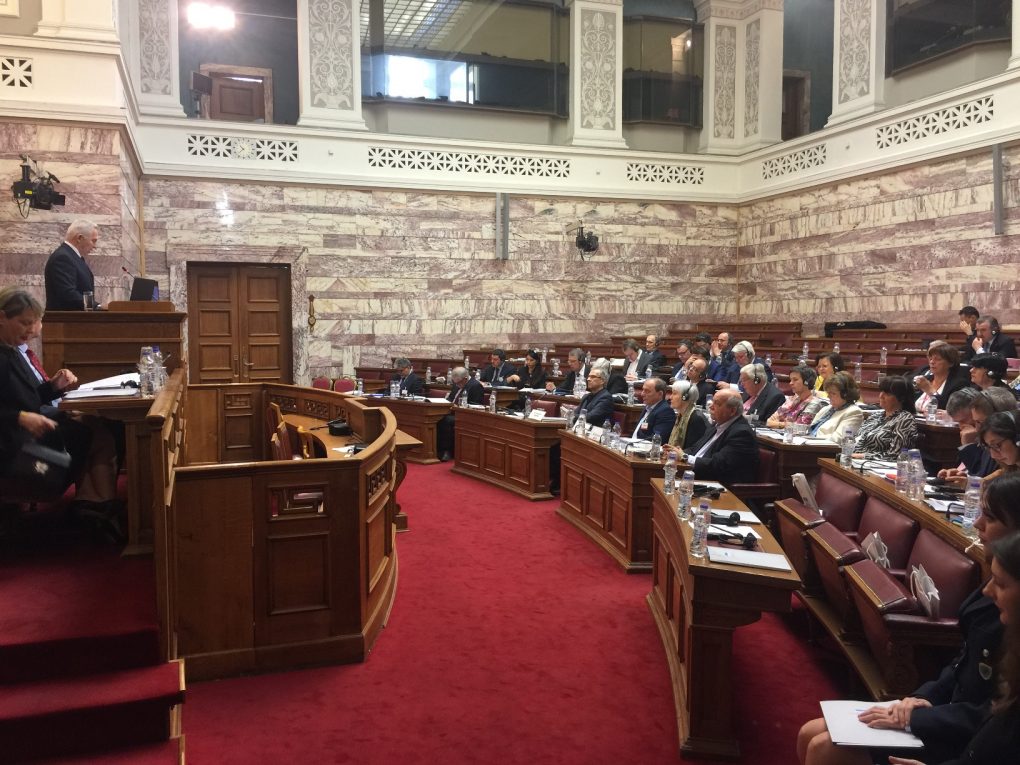
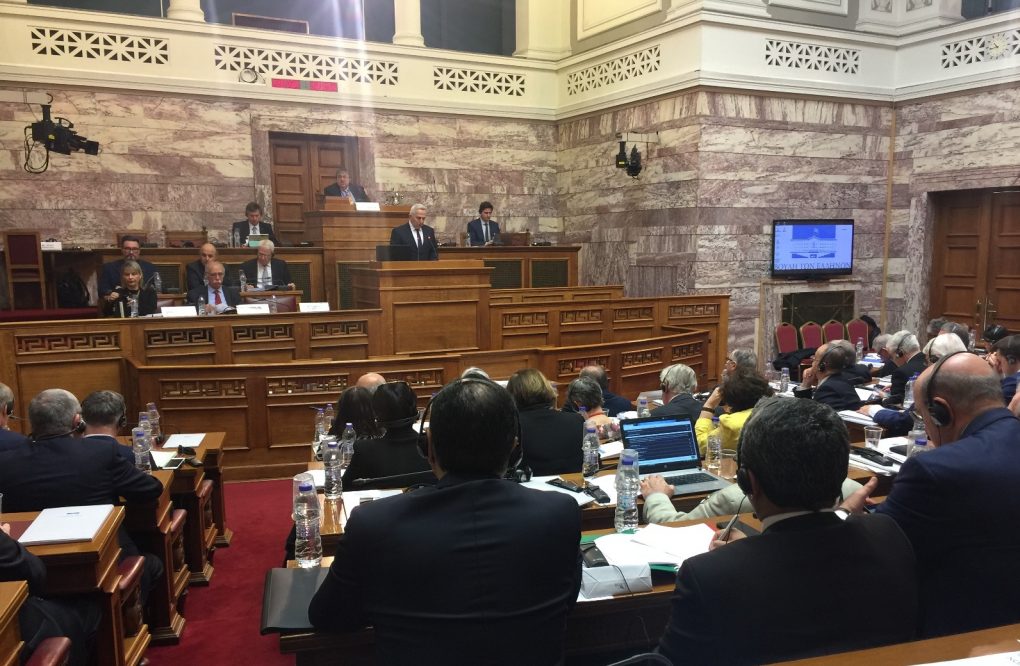
It is a great honor for me to be here today, at the Hellenic Parliament, within the framework of updating the Subcommittees of the Alliance Parliamentary Assembly on issues of mutual interest.
Ladies and Gentlemen,
Greece, due to its geostrategic location in the Southeastern Europe and Eastern Mediterranean Sea, is situated in a rapidly evolving and demanding environment with many challenges of global geostrategic and economic importance.
At the same time, being a NATO and an EU member-state, Greece has to deal with regional security issues, which make up what we call today “the grid of new security challenges”, such as: the international terrorism, cyber attacks, the energy security and the refugee crisis.
The latter constitutes one of the major security challenges that our Country faces. As of 2015, Greece has been the access point of more than one (1) million refugees, who were seeking entry into Europe through Turkish routes. In 2016, we regarded the involvement of the Armed Forces as imperative and crucial, maintaining at the same time their institutional role, in cooperation with the Ministry of Interior and the newly established Ministry of Immigration Policy, within the framework of a cohesive governmental response policy.
In February 2016, NATO intervened vigorously with the “Activity in the Aegean Sea”, assisting with the reduction of refugee flows from the Turkish territory to the Greek islands. At the same time, it forms a successful example of cooperation between NATO and EU in the operational field, on the basis of the principles of autonomy in decision-making and complementarity.
To address these challenges, we have adopted policies that set peace and security as a priority. The objective is that our Country continues to be a foundation of peace and a pillar of stability, building bridges of cooperation and dialogue with all countries of the wider region and contributing to the development of good-neighborly and interaction relations.
Hence, realizing our role in the contemporary security environment, we implement a defence principled policy that involves:
1. Powerful and effective Armed Forces for the implementation of the defence and deterrence doctrine of the National Defence Policy;
2. Active participation in the security and defence structures of NATO and EU, as well as developing initiatives in this context with the purpose of enhancing security;
3. Fostering dialogue and cooperation with our geopolitical environment, instead of confrontation and conflict, on the basis of International Law and cooperative security.
As a result of the implementation of the above principles, these last years the Armed Forces participate actively in various actions for the purpose of maintaining peace, but also combating terrorism, such as the SNMG-2NATO force, the SEA GUARDIAN operation, the Resolute Support Mission of NATO in Afghanistan, the KFOR Joint Enterprise operation, the ENDURING FREEDOM operation in Iraq, the UNIFIL operation in Lebanon, as well as the support provided to FRONTEX for enhancing security in the European Borders.
Furthermore, as a practical implementation of the Alliance’s interest in the South, Greece supports the formation of the Allied Joint Force Command Headquarters and Regional Hub in Naples – Italy.
At the same time, Greece, within the EU’s Permanent Structured Cooperation (PESCO), participates in 5 projects as a lead Nation and in another 9 as a participating Nation.
Considering the presence and the activity of Russia in the Balkan region, we establish a sustaining interest that is due to Moscow’s strategic ambitions for this specific region, while recently there is an increase in its presence in the economic and mainly energy sector.
In any case, as I have stated in the recent Meeting of NATO Defence Ministers, we strongly believe that the maintenance of the link between Russia and the European security architecture is of particular importance. In this spirit, we are confident that the “twin-track approach” vis-à-vis Russia is still of real value and therefore, the communication channels at strategic level should remain open.
In this context, considering that our country maintains historical and cultural links with Russia and also taking into consideration that Greece is one of the oldest members of NATO and the EU, it may play a positive role in the improvement of the relations between both sides.
Ladies and Gentlemen,
Greece, recognizing its role in the wider region of geopolitical interest, supports its alliance footprint in the South. In particular, the country has selected a firm policy of principles and positions that is based on regional cooperation, with a view to set up a growing group of regional partners with mutual interest in security, stability and development.
In this context, Greece – promoting the Defence Diplomacy – plays a key role in the promotion of synergies and initiatives; it leads multilateral defence settings and serves as a communication channel between countries in the Middle East and the Gulf, such as Cyprus, Israel, Egypt, Jordan, UAE and Qatar, organizing multilateral exercises and conducting summits at ministers’ level. In particular, the tripartite co-operations between Greece – Cyprus – Israel and Greece – Cyprus – Egypt play a decisive role in the promotion of stability and security in the region of the Eastern Mediterranean Sea.
Speaking about the Balkans, please allow me to note that the accession of the North Macedonia to NATO will contribute to the establishment and strengthening of the sense of stability and the enhancement of cooperation and peaceful coexistence in the region.
We are aiming at deepening our cooperation with North Macedonia, because it is to our strategic interest. We have a key role to play, since this country will be required to restructure systematically its Armed Forces, so that the latter would conform with the prerequisite standards and the requirements of the Alliance with regard to interoperability and standardization.
As I have already mentioned during our recent meeting in the margins of the meeting of NATO Defence Ministers to my counterpart in North Macedonia, we are ready to provide Air Space Supervision services that we are already providing to Albania and Montenegro, as well as any other possible support for the smooth integration of the country into the NATO structures.
Our aim is to make our Country the main strategic defence partner of North Macedonia. And we will achieve that.
The above actions strengthen the alliance profile in the sensitive areas of the Balkans, Northern Africa, Eastern Mediterranean Sea and Middle East.
As for our relations with neighboring Turkey, we address its provocative actions in the area of the Aegean Sea, where unfortunately the number of violations of the Greek airspace and territorial waters reach very high levels, always reacting with prudence and strategic composure. Despite the existing problems and the dangerous incidents in the air and at sea that may lead to a serious casualty, on our side we are constantly striving to ease and avoid tensions. In this view and based on the relevant political direction given during the recent meeting between the Prime Minister and the Turkish President, we have agreed with Mr. Akar in the meeting of NATO Defence Ministers on scheduling in the near future a meeting between technical groups from both countries, in order to set out actions in the framework of Confidence Building Measures. I hope that we will soon have tangible results on the decisions that we have made, thus contributing to the building of a relationship, based on the abidance by the International Law.
As for the wider scope of Defence and Deterrence, Greece actively supports NATO’s adaptation process as of 2014. We believe that the NATO Enhanced Forward Presence in the Baltic States and the Tailored Forward Presence in the Black Sea are balanced and have strengthened the Alliance’s deterrent profile. Furthermore, the reorganisation of the Command Structure and the reinforcement of the role of the Forces Structure in satisfying NATO’s level of ambition, are steps towards a positive direction that we support.
Moreover, we support the need to preserve North Atlantic lines of communication between Greece and Northern America. However, we believe that the Mediterranean Sea is still a region of major importance for Europe’s security and the presence of the alliance there should be preserved intact.
At the same time, Greece will not cease pursuing the strengthening of stability of states in the region possessing weak security structures, through the implementation of capacity building defence actions, thus strengthening the defence and security structures in the said states, so that they would become self-sufficient in the address of challenges and threats.
Ladies and Gentlemen,
Greece thinks of its participation in regional and international Security initiatives as of top priority. Consequently, despite the challenges faced in recent years, it responded immediately to the refugee crisis and the war against terrorism, honoring its commitments at NATO, EU and UN level.
Greece will continue to support all NATO adaptation actions, within its possibilities, given that it faces security challenges on a daily basis that require a number of national forces in order to maintain its high state of readiness. At this point, I would like to note that we respect the distribution of burdens in the Alliance, remaining one of the few NATO states that invest more than 2% of the GDP in defence expenditure.
Concluding, I would like to point out that the addressing of contemporary security challenges requires the adherence of all members-states to the mission and the principles of the Alliance. We should always have in mind that NATO constitutes primarily an Alliance of values based on the International Law, where national sovereignty is being respected and no member may impose its will on another.
In any case, it is extremely important that we all contribute, in order to establish gradually a stable and secure international environment free of any destabilisation threats.
Thank you”.