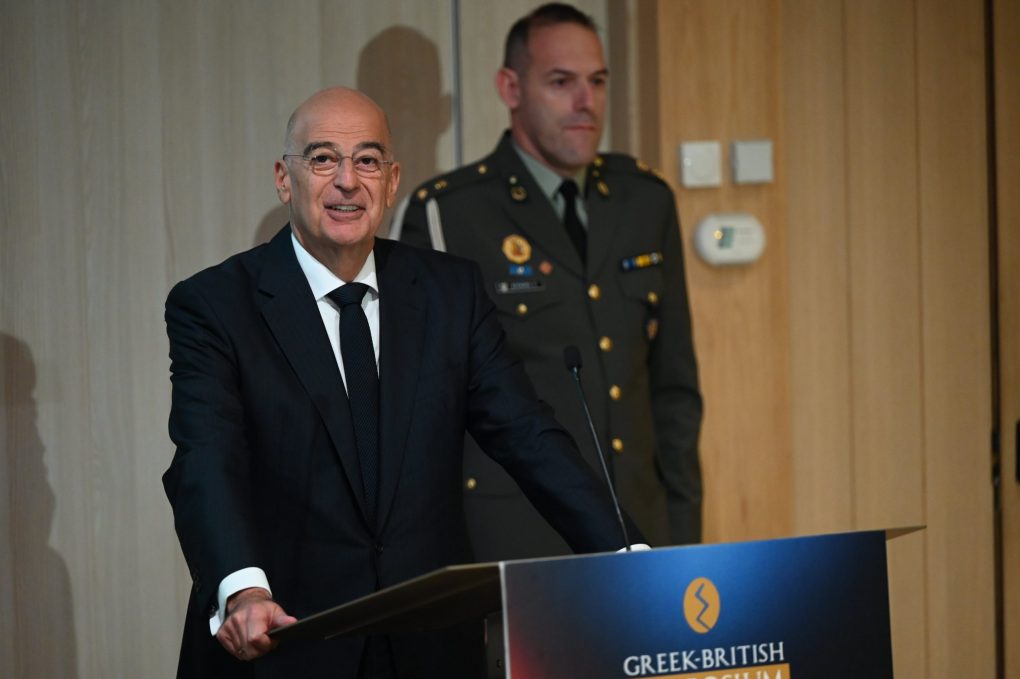
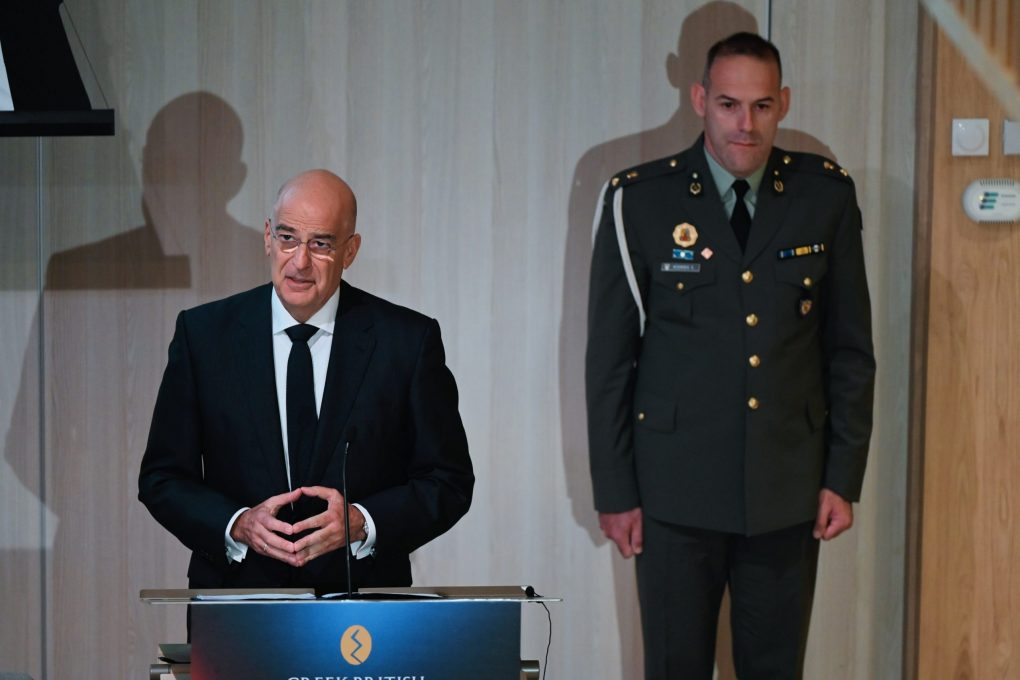
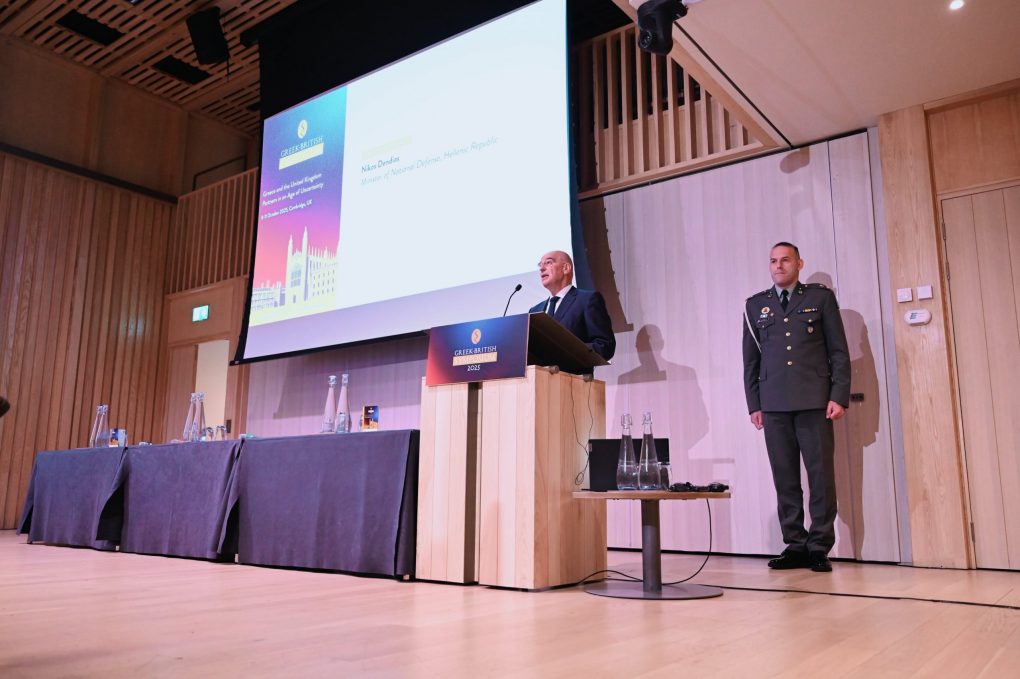
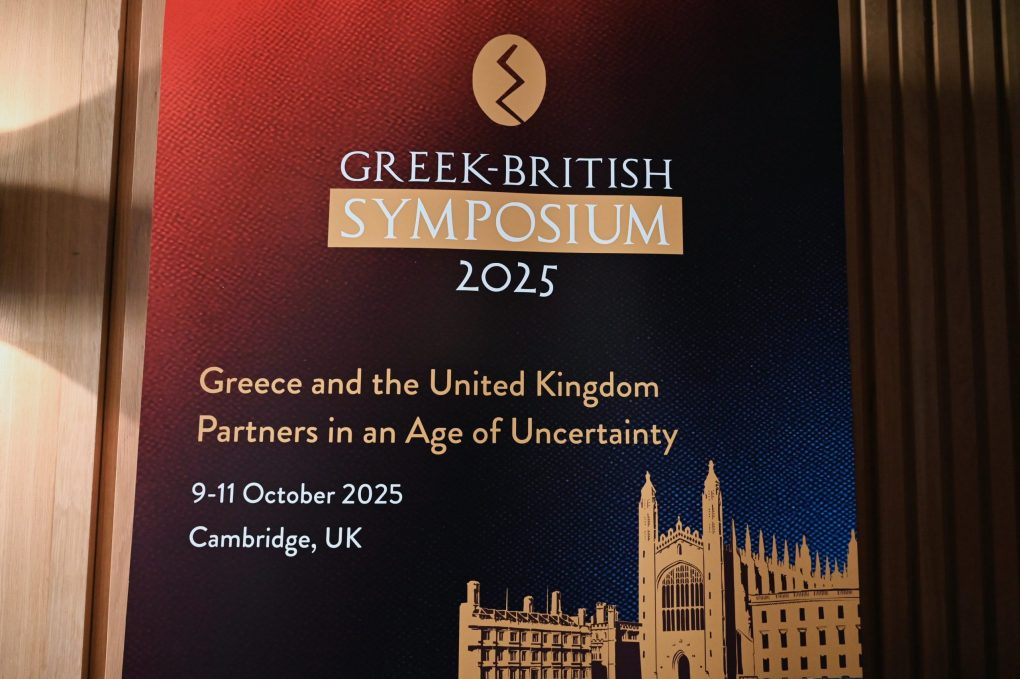
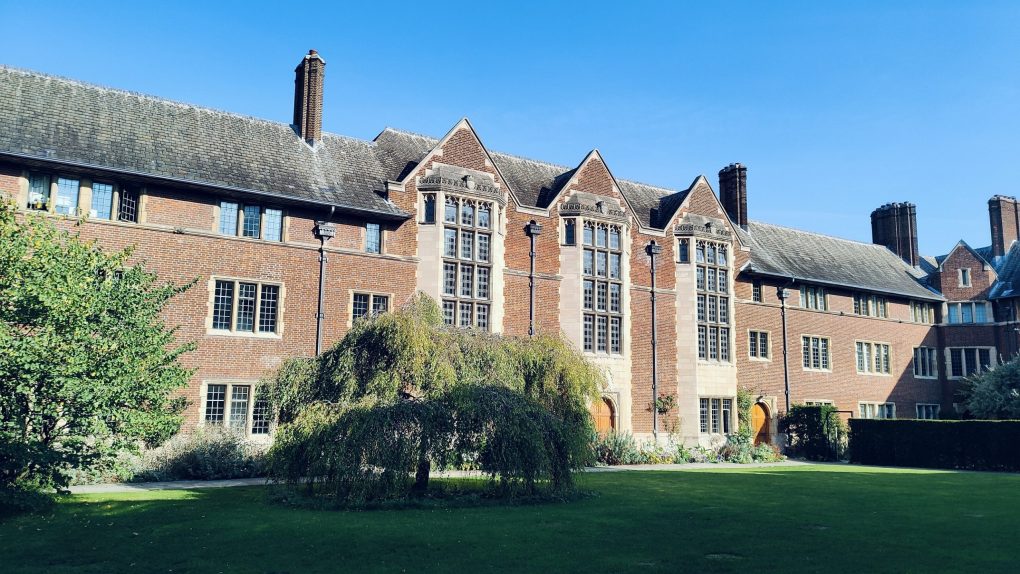
The Minister of National Defence, Nikos Dendias, was the keynote speaker of the inaugurating session today, Friday 10 October 2025, of the 9th Greek – British Symposium, at the Cambridge University (Jesus College), in the United Kingdom, on the subject: “Greece and the United Kingdom – partners in an age of uncertainty”.
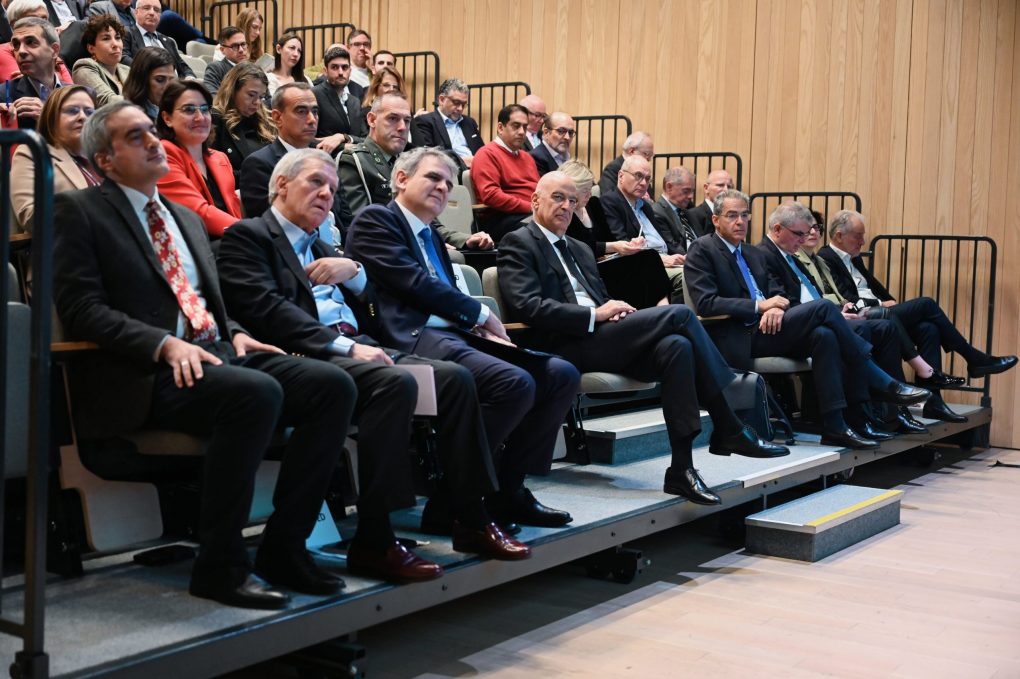
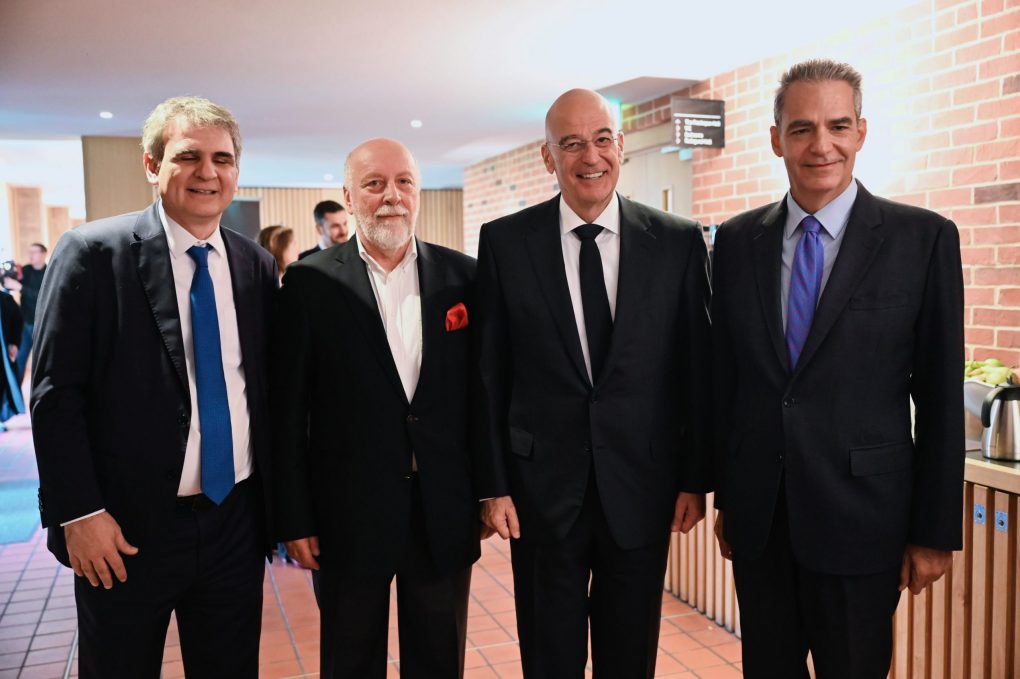
The following individuals attended the speech, among others: the MP and President of the Armaments Programmes and Contracts Committee of the Hellenic Parliament, Angelos Syrigos, the Ambassador of Greece in London Giannis Tsaousis, as well as the Co-Chairman of the Greek-British Symposium Kostas Mitropoulos.
In his speech, Mr Dendias stressed the following:
I would like, first of all, to thank you for being instrumental in organising this event, and for me I have to say it is a great honour to address this symposium on the theme “Greece and the United Kingdom in an Era of Uncertainty.” But I will spend more time on the subtitle: Partners in the Age of Uncertainty. And I will totally agree with this subtitle with one minor but not unimportant change. Because I believe this is a goal to be achieved.
It is not a given. And I have to say that the question is how two countries, bound by history and shared values, can work together to navigate an increasingly unpredictable world. They should share a common view of the world and I will start from there. Describing mostly the Greek viewpoint. We are very proud because, as Ambassador Tsaousis was kind enough to mention before, the frame of agreement between Greece and the United Kingdom bears my signature. And it is not just a typical thing, I strongly believe in this friendship. But it is something we have to work together for.
I will begin from our immediate neighbourhood, Greece’s immediate neighbourhood, the Balkans and the Western Balkans. A region that has experienced the cost of division, of civil war, of woe, and we believe that the stability and European perspective of the Western Balkans should be a top strategic priority. We know, the whole world knows, that if the Balkans are ignored, they could ignite wars.
They could even ignite, as we know from experience, world wars. We believe now that the Balkans are being neglected, especially by the European Union, while at the same time we see foreign actors, Russia, Turkiye, see the Balkans as an arena of geopolitical competition. Therefore, we would like to work more with the United Kingdom to influence the situation in the Western Balkans.
About Ukraine and Russia, I thing that we agree, us and the United Kingdom, that the war in Ukraine has fundamentally reshaped Europe’s security architecture for the foreseeable future.
Of course, it was a wake-up call for Europe—revealing both our strategic complacency and our dependence on the United States for our defence.
Nevertheless, I see here a growing problem. Although we totally agree with the United Kingdom in supporting Ukraine and addressing Russia’s new effort to reshape the map, at the same time Ukraine’s issue is suffocating the European Union and the European Policies. It’s turning them from multidimensional to monothematic. And that cannot be the case. Russia, allow me to say, is not the only bully in town, as the late Ronald Reagan would have said with his alarming sincerity.
Let me now move to the Caucasus. Caucasus is also extremely important. And I am speaking mostly of the Southern Caucasus. It is a volatile region—we just had a war there, three years ago between Armenia and Azerbaijan. The Caucasus is a critical energy corridor, it is a trade route. It affects the Black Sea environment and Russia’s reduced presence and Turkey’s assertive role there is also a challenge. And in that challenge, again I am noting the European Union’s absence. You see discussions between the Azeris and the Armenians, but you don’t see the European Union in any way participating in that dialogue.
Now I would like to speak about our neighbour Turkiye.
I am not going to speak about Turkiye as a Greek Minister of Defence. And I will not touch upon the issues you would expect me to touch upon. The casus belli, the Turkish-Libyan Memorandum etc. I would like to see Turkiye through London’s angle. I think everybody here would agree with me that Turkiye maintains the warmest of relations with Moscow. It is a NATO Member but it has not imposed a single sanction on Russia. Exactly the opposite. Russian capital flows into the Turkish economy.
Yet again, Turkiye is regarded by many NATO capitals, not as a difficult special case but as a vital partner in defence and security matters, which can be totally trusted.
But, I would propose a test to my friends in the United Kingdom. The basic question that I think needs to be answered is if the United Kingdom is sure that London and Ankara share the same viewpoint about the world, the same hopes, the same aspirations. So, here is a test. We have Artificial Intelligence. We could use it to produce two different photos of the world in 20 or 30 years’ time. And please think how similar these two photos would be. The world as London would like it to be in 20 or 30 years and the world as Ankara would like it to be in 20 or 30 years. Again, let us see.
Cyprus, I think you know all about it. I will not spend more time in an unacceptable situation of a divided island, member of the European Union, occupied by another country.
I would move now to the Middle East, (Syria, Libya, Egypt, Sahel, Sub-Saharan Africa), Gaza, Lebanon.
On Gaza, let us hope that the Trump plan could finally produce a lasting ceasefire and hopefully later a lasting peace.
On Syria, we have another challenge there. Syria is calmer now but not particularly democratic. The persecution of ethnic and religious groups such as the Alawites, the Christians, the Druzes, the survival of extremism, the very limited Democratic experiment cannot allow us to think that Syria is on its way to normality. The influence of third actors in Syria, especially Turkiye, could cause a great concern for us. There are rumours, for example, about a possible maritime delimitation between Syria and Turkiye against International Law and International Law of the Sea. That would create an additional problem in the region.
From Greece’s side, what we are trying to do is help as much as we can Lebanon and especially the Lebanese Armed Forces, because we believe that Lebanon can eventually become a success story. And that the Lebanese Armed Forces are the only functioning institution in the land. So, we help them with material, we just sent them armed vehicles, we sent them helicopters and we are trying to do our best to help them function in this country.
Libya, as we know, is a failed state after the operation against Gaddafi. Nobody was in love with Gaddafi but we managed to create something worse than Gaddafi. And what do we do know? Let us also look at the situation in Egypt, but the alternative is much worse. The alternative is the Muslim Brotherhood. We believe that, and I hope that the United Kingdom shares that view, that Sisi’s presence is the best option. But generally, what alarms us a lot is that the EU does not show any particular interest for Northern Africa and even more for the Sub-Saharan Africa and the Sahel. Let’s go to history, because history teaches us lessons. The Romans fought many nasty wars in order to be able to control Northern Africa. Scipio the African, you all know him. Why did they do that? They did that because they understood, at the time, something that the EU does not understand today and I hope that the UK will understand. Europe is not safe if Northern Africa and the Sub-Saharan Africa are not safe. And it is not only at the time of the Roman Empire. The same exactly was the case during the Byzantine Empire. But even very-very later, in World War II.
Before the Allies invaded Sicily and before Operation Overlord, there was Operation Torch to secure Northern Africa. So, how can we go against history today? How can we ignore the obvious? And I believe that the UK again could assist on that front.
Now let me touch briefly upon two different subjects.
Energy: We managed to rely in the past on Russia. And that was a huge mistake. Europe’s energy dependency has been at the centre stage and I have to say that we have to change that. But how are we going to do it. Greece could offer a partial solution. Through the new units around the country especially in Alexandroupolis, Greece could become an energy hub for the Central and Eastern Europe. As again, the Ambassador said, Alexandroupolis is only 750 km from Odessa. It is the closest, the easiest route. And pipelines exist between Greece and the countries of Central and Eastern Europe, because we have to reverse the flow. But my country could be a solution towards the energy dependency from the east. But again, there are countries not particularly happy with that solution.
The other issue we need to discuss together and have a clearer view on, is the role of the United States. We usually use the expression “the elephant in the room”. What we need to see now in the Mediterranean, in the Balkans and in Europe, is the elephant departing from the room. And there is a clear vacuum and that vacuum has to be filled, has to be addressed. And here, the UK–Greece Cooperation could play a role. Because, I would like to be honest with you. Europe is trying to rearm. And huge amounts of money is being announced for this rearming programmes, but it will take many years. Because it is not just equipment. It is not just platforms. There is another missing link. This missing link is culture.
We have forgotten what it means to be able to defend yourself. And in order to reacquire the culture of self-dependency, it will take time. It is not just money. The UK is one of the countries that still has rather small, with all due respect, but important and capable armed forces. If we add that to the existing capabilities that can make a difference.
But, we need very honest dialogue and understanding. Also, UK has unique advantages:
-
A clear geopolitical understanding,
-
Ability to play a role in the Mediterranean and, if I may say so, beyond the Mediterranean,
-
A substantial defence-security cluster and ecosystem with important universities, as this one, which could enhance participation of Europe in the AI revolution and in the huge transformation of the Armed Forces.
It is evident to me that cooperation between our two nations can be of crucial importance in many sectors. In this changing world, no state, however powerful, can confront these challenges alone.
Earlier this week there were two articles. One by the French President Emanuel Macron and another one by my friend, my German counterpart, Boris Pistorius. Both articles shared a common denominator. That Europe was taken by surprise by the Russian invasion of Ukraine. It underestimated the threats of the modern world and now it must try to accelerate its response as time is running out. So, please don’t underestimate the challenges we are facing and let us not make the same mistake twice.
And if I may go back to history, it is telling us one thing that the UK knows very well. That the Mediterranean is not a border. It is a bridge. That has been its historical role. A bridge for trade but also for tension. And we, Greece and the UK, could and should work together in making all our European friends and partners understand that basic reality. Freedom of navigation, upholding the principle of International Law of the Sea. These are subjects that we could see eye to eye.
On Monday, I am visiting the UK Maritime Trade Operations Centre. This is something we should closely cooperate on. To show you very clearly how Europe underestimates the need to employ assets in securing freedom of navigation, I will refer to Operation ASPIDES in the Red Sea. Greece is the main contributor in this operation, which addresses the challenge presented by the Houthis at the Suez Canal, one of the lifelines of Europe.
Only four warships out of hundreds of the EU countries’ operate in the Red Sea. Greece gives 25% of the total of that fleet. I think the UK could help us explain the problem. What is your preference? And I would propose another subject in which we could closely cooperate. I am speaking about a trilateral cooperation. I believe it is time for Greece and the UK to cooperate with another emerging great power. India. We could work together, UK, Greece and India in order to secure lines of navigation and I think it would be extremely important if we managed to bring the Indian Navy from the Red Sea where it operates today, even norther of the Suez Canal in the Mediterranean.
Well I think I have taken lots of your time, but I would like to take two more minutes to explain what we are doing in the Hellenic Armed Forces under the title “Agenda 2030”. This is a total transformation of Greece’s Armed Forces. Greece is a small country as well, around 11 million, 230 billion euros GDP. But, yet again, we have oversized armed forces because we are facing a big threat by our neighbour. Our neighbour and the threat is ten times our size, so we have to improvise. By the “Agenda 2030”, we are changing everything in the Hellenic Armed Forces. Literally everything. From the structure, to the weapon systems. But, what is more important is that we are trying to change the culture. An army is not trained to ask questions. An army is trained to obey orders, right? But, unfortunately by just obeying orders, you cannot survive in the modern warfare environment. So, we are trying to teach the Hellenic Armed Forces, apart from obeying orders, to start asking questions. What do I mean by that? We have created, for the first time in our history, an Innovation Directorate within the Armed Forces.
And that Innovation Directorate has the duty to collect the questions that all army units and officers ask on what they would do to address the challenges of the future. Let me give you a very solid and existing example. How do we address a challenge of a swarm of drones? In our case of Bayraktar II and Bayraktar III drones. What would we do in a cost-efficient way? Because, a simple answer would be “launch your missiles against them”. We would go bankrupt in a week. These questions and answers from this Innovation Directorate, as Ambassador Tsaousis mentioned before, are taken by the Hellenic Defence Innovation Centre (ELKAK) and are given to the Greek Defence Ecosystem of Greek Defence Companies and the Ecosystems of trusted Allies and friends which would be willing to share with us knowledge and know-how, instead of just trying to sell existing platforms to us. In this particular case, the ecosystem came back with an answer. And the answer was a system. It is called “Kentavros”.
So, we took this answer, we financed a prototype and we sent this answer to be tested at the islands of the Eastern Aegean. Watching Bayraktars flying over the horizon. And after that was proven a success, we put “Kentavros” on one of our frigates operating against the Houthis in the Red Sea.
“Kentavros” proved us right, because it brought down two Houthi drones that were trying to sink two commercial vessels. “Kentavros” will be employed on all of the ships of the Hellenic Navy and later on in the Army units. That is the kind of system we are trying to create and I think that we have lots to do together. UK’s ecosystem, much bigger and more mature, and with the universities of the UK to address the challenges of modern warfare. Because security is not just about pure military strength. And it is crucial that Greece and the UK expand their cooperation in research, in production, in technology. And funding is there.
The UK provides funding, we provide funding, the EU provides funding, NATO provides funding. Money is not the issue. What we would like to do is to invite the ecosystem of the UK to participate in our “Agenda 2030”. Ladies and gentlemen, I took a lot of your time and thank you for the opportunity. As I said before, I strongly believe in the partnership between the two countries. Strength and shared sacrifice, like in the past, can be directed towards a common vision in the future. We need to be ready and we must not repeat the faults of the past. And if I could ask for something from the UK, then I would ask them to look back at the legacy of their historic Prime Minister, David Lloyd George, for guidance.
Thank you very much”.