

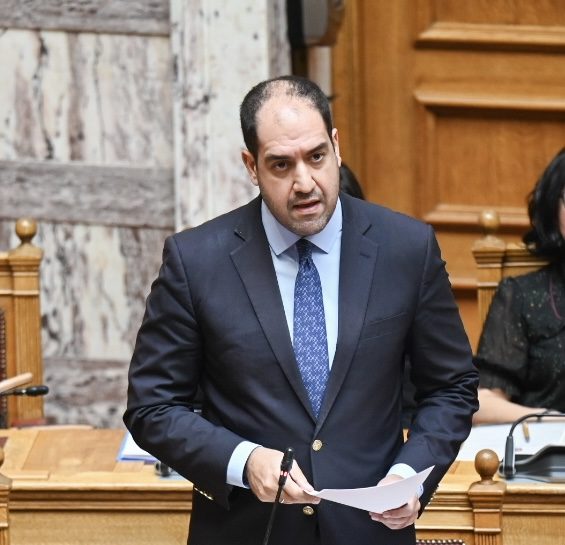
The Deputy Minister of National Defence, Mr. Giannis Kefalogiannis, responded to a question submitted by the PASOK MP, Mr. Michalis Katrinis, before the Hellenic Parliament on Monday 27 January 2025 within the framework of Parliamentary Scrutiny regarding the Armed Forces’ New Structure and the merging of Camps.
Mr. Kefalogiannis stated that “the decision on the reorganization of military structures was made based on a whole new and different philosophy, which seeks to create a modern and flexible scheme that shall be adapted to the modern requirements of the Armed Forces. The image of understaffed and scattered camps throughout the territory implies operational needs from another age. We cannot afford the luxury neither in terms of money nor in terms of number of staff members, to fragment our national military power.
The reform in the context of the New Structure of Forces implies flexible military structures, well-equipped and with greater firepower. In particular, the abolishment of camps and the merging of Units would result in manpower saving, an increase to the staffing of Units situated in critical border regions, a reduction of response time in the event of a crisis, thus an increase to combat power, as well as a reduction of unnecessary financial cost, since the amount to be saved over the course of the decade ahead falls within the range of 1.7 billion euro”.
As regards the land use or the use of the facilities in camps to be abolished, the Deputy Minister reassured that “this will take place in a sustainable and effective way, always in line with legality and the national interest that consists in the citizens’ security and welfare. Besides, our Ministry has responded many times so far and will continue to do so, provided its operational needs allow so, to the requests by local government authorities for the assignment by concession, the use or lease of its immovable property for the benefit of the local community. In any case, the prompt and effective use and management of the Armed Forces’ real estate constitutes a positive rate of return not only for the Armed Forces and their Members, but also for the local community itself, since it will contribute to local economies, by creating new business opportunities and supporting the development in regions where the immovable property is situated”.
Concluding, Mr. Kefalogiannis noted that “the alignment of the Armed Forces with the local society, our unreserved assistance and contribution to the needs of local government authorities and our fellow citizens is an indisputable fact. Besides, the military is also a part of the society at the place where they perform their duties”.