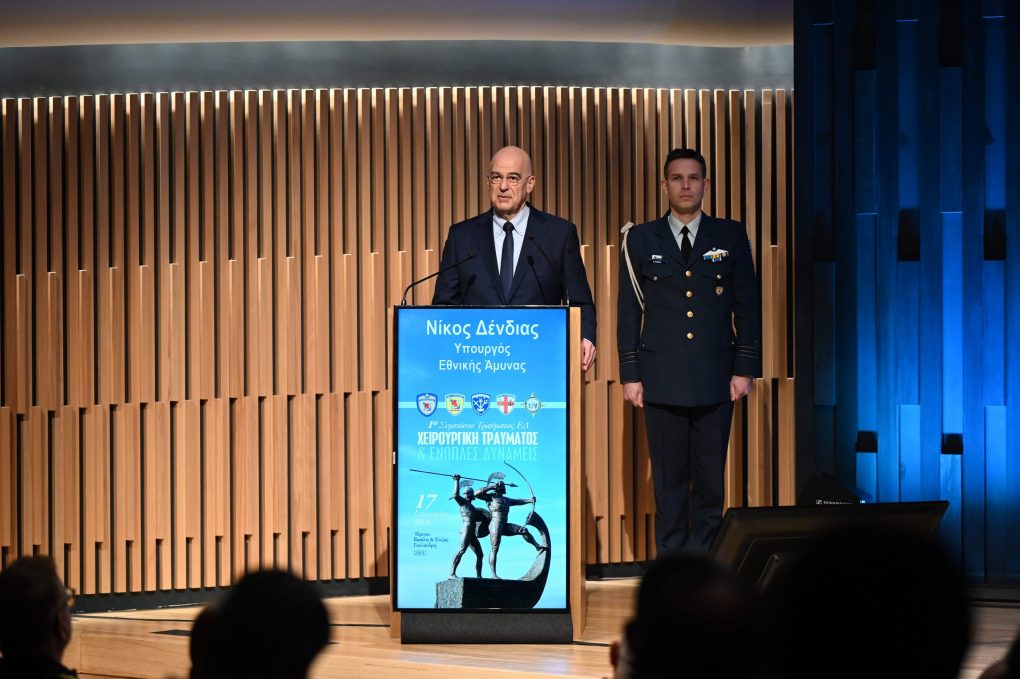
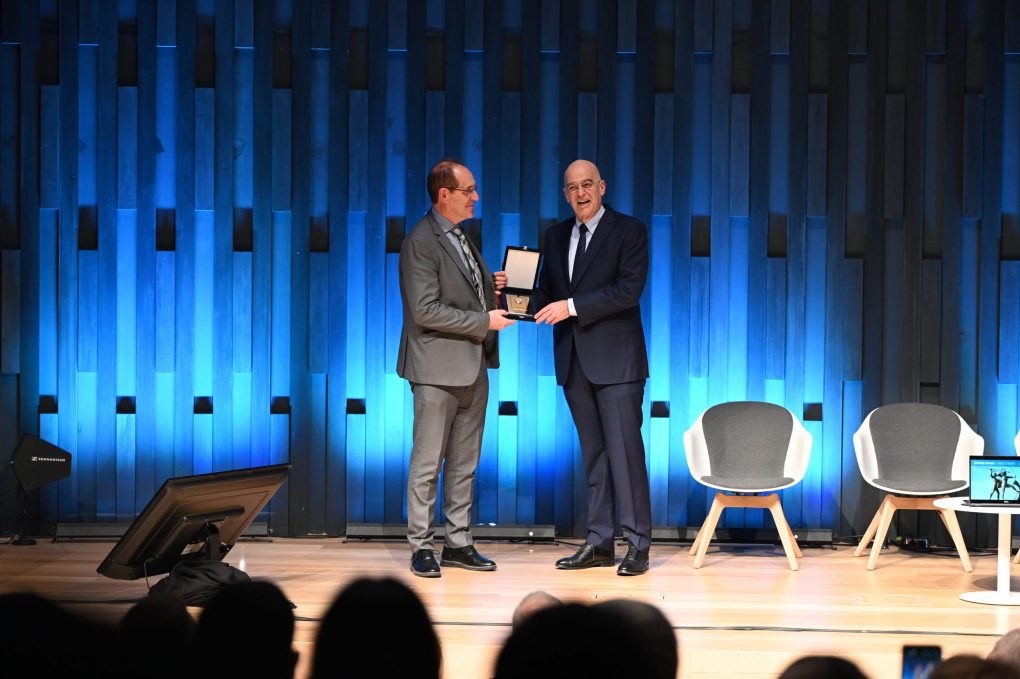
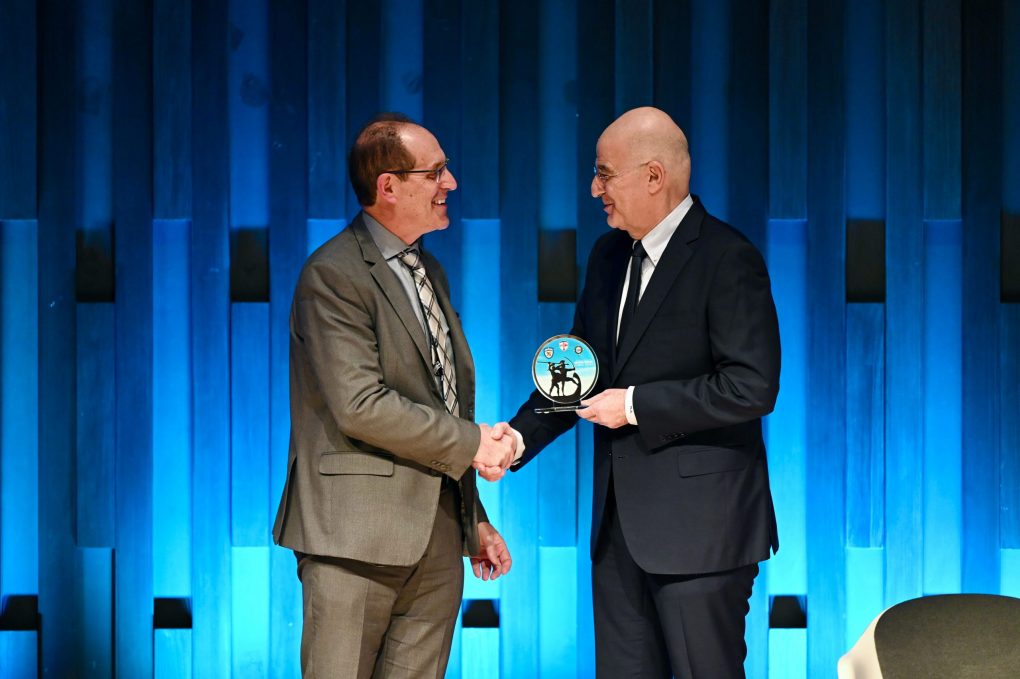
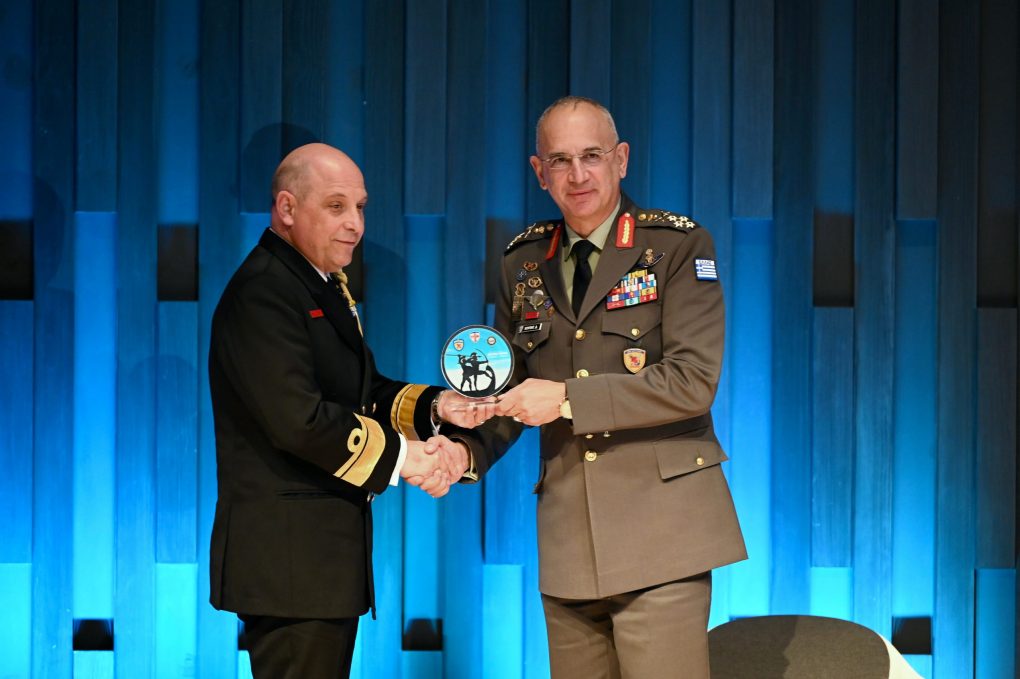
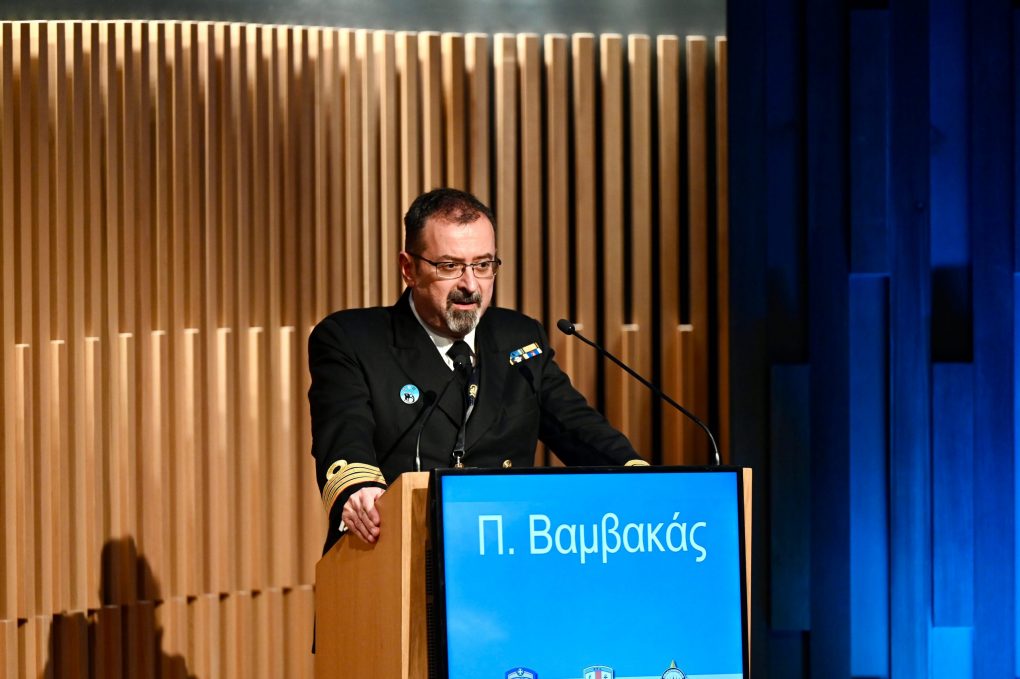
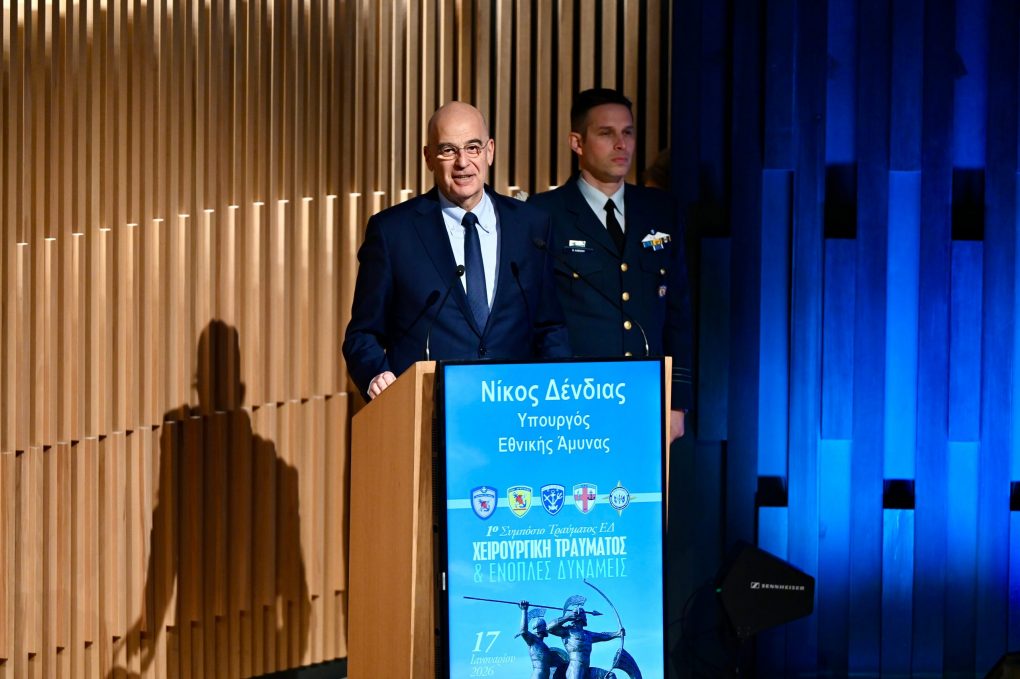
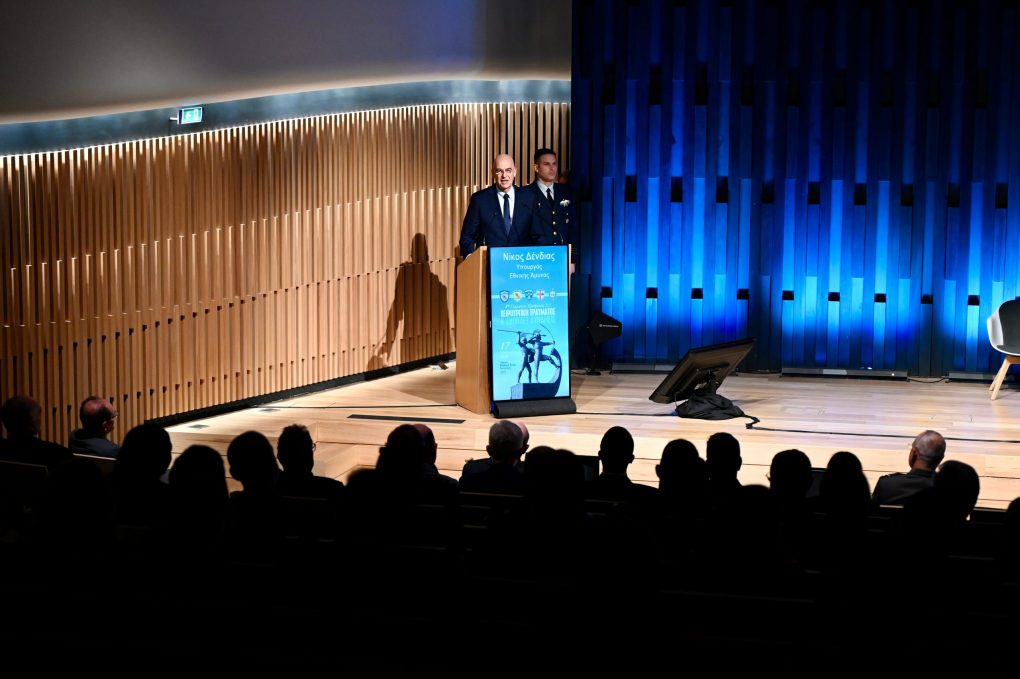
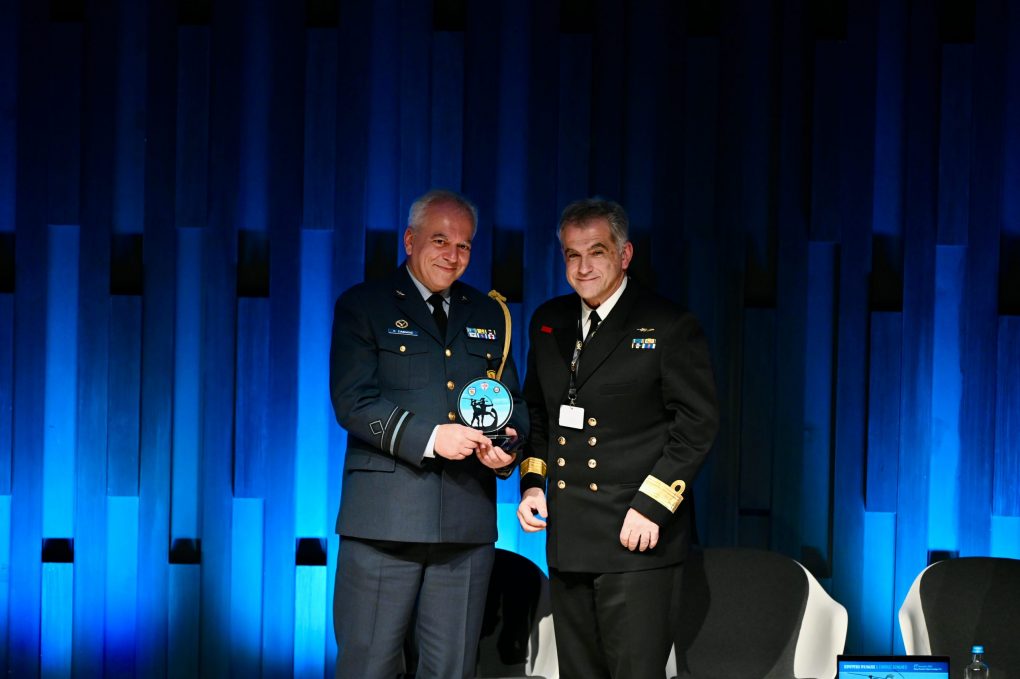
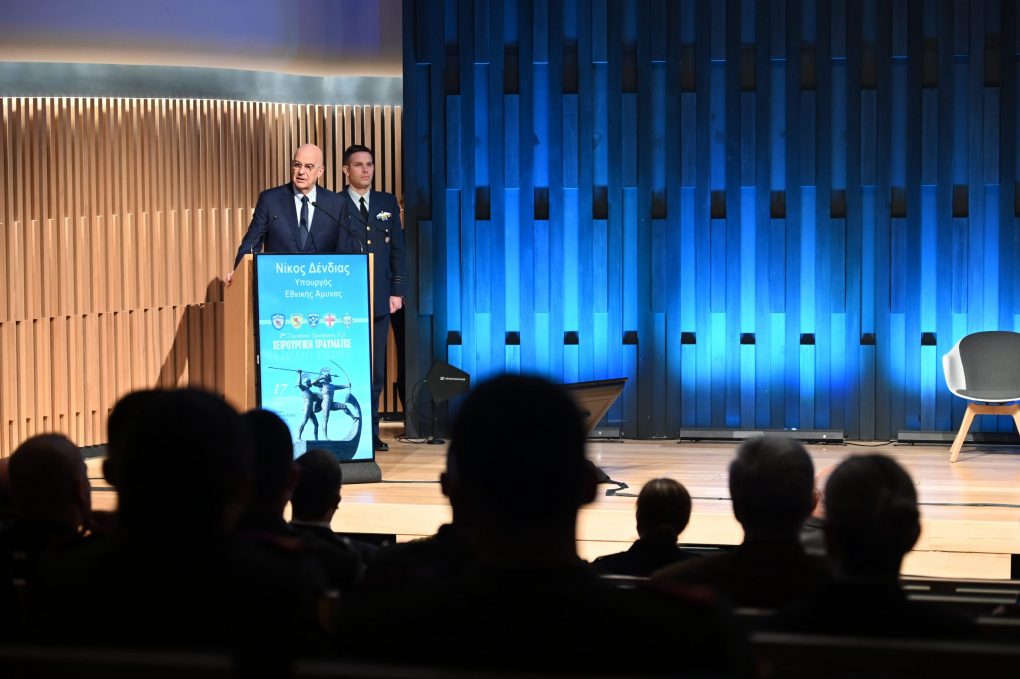
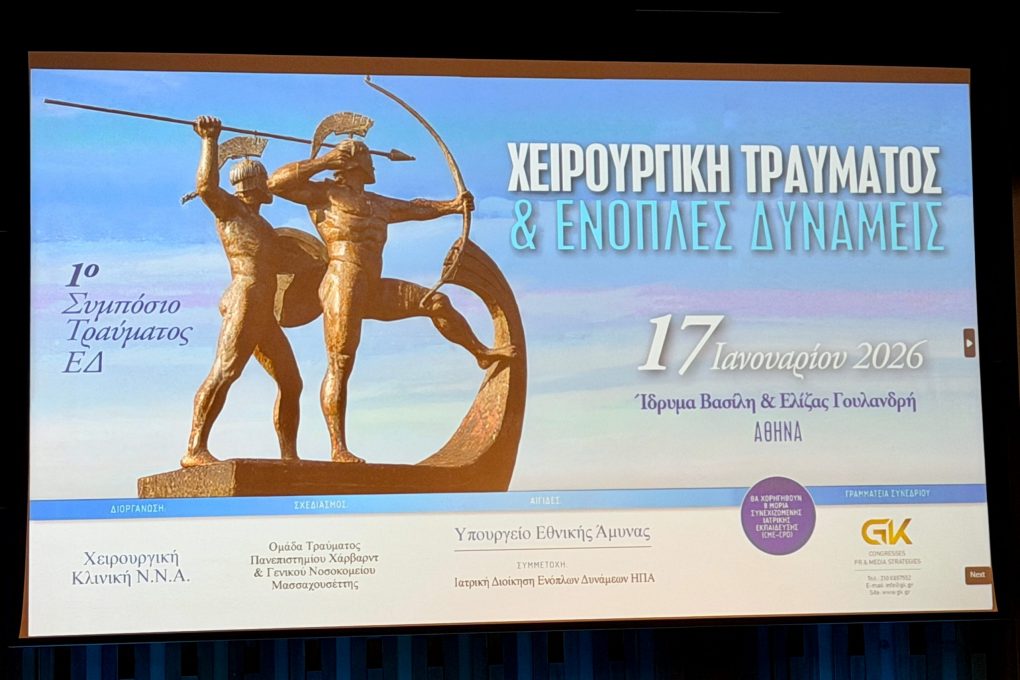
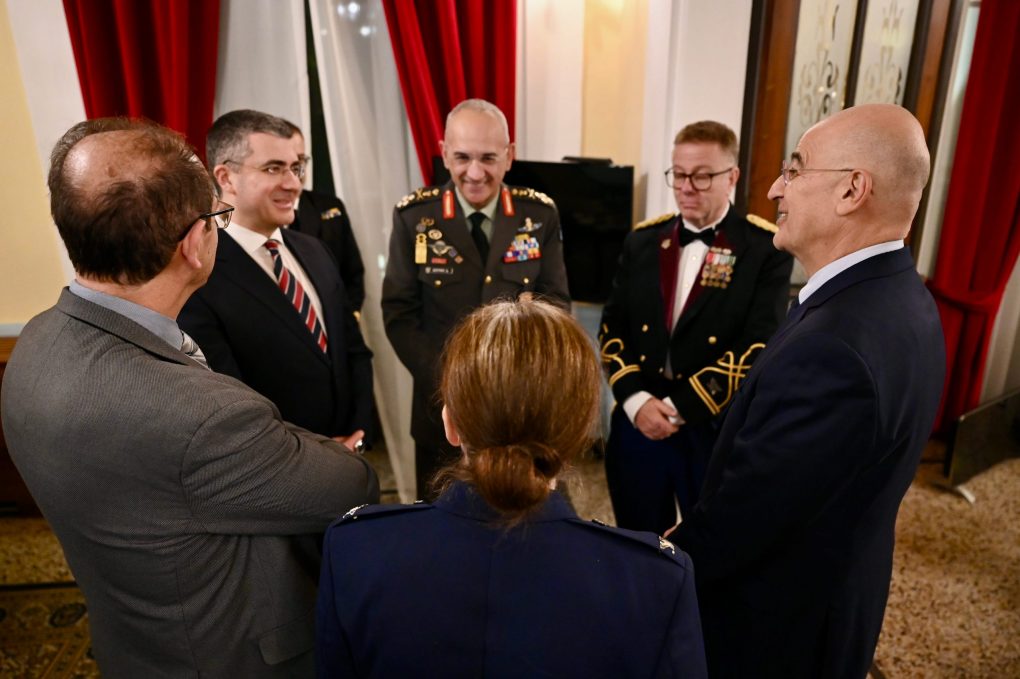
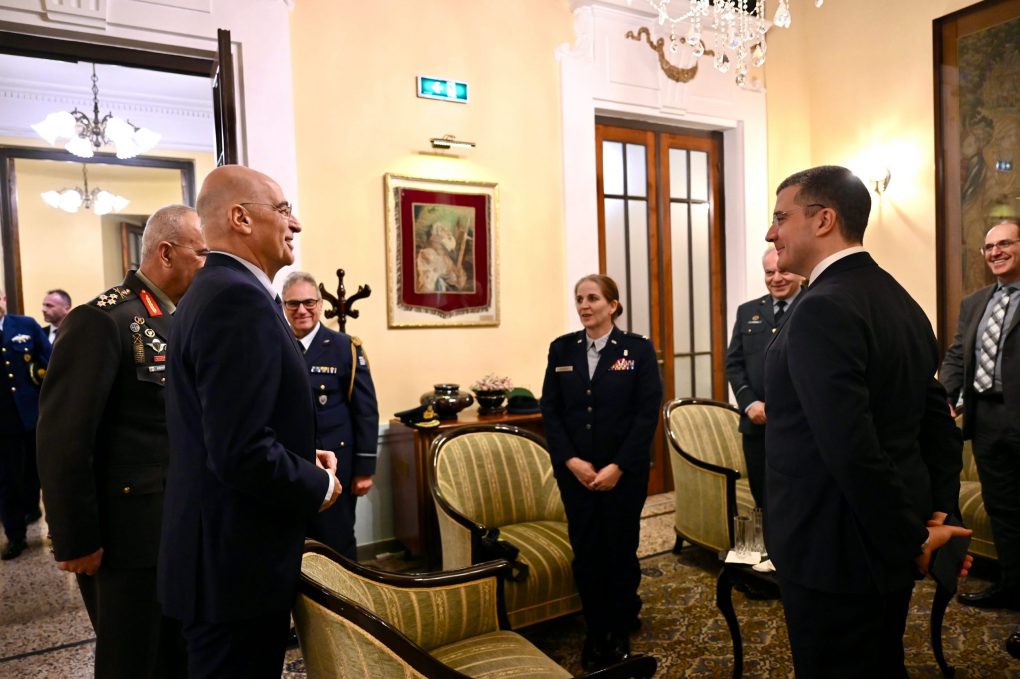
Today, Saturday, 17 January 2026, the Minister of National Defence Nikos Dendias attended the 1st Armed Forces Trauma Symposium, whose topic was “Trauma Surgery and the Armed Forces”, which took place at the Basil & Elise Goulandris Foundation.
The Symposium was organised by the Surgical Clinic of the Athens Naval Hospital, under the Aegis of the Ministry of National Defence, and the participation of the United States Army Medical Command.
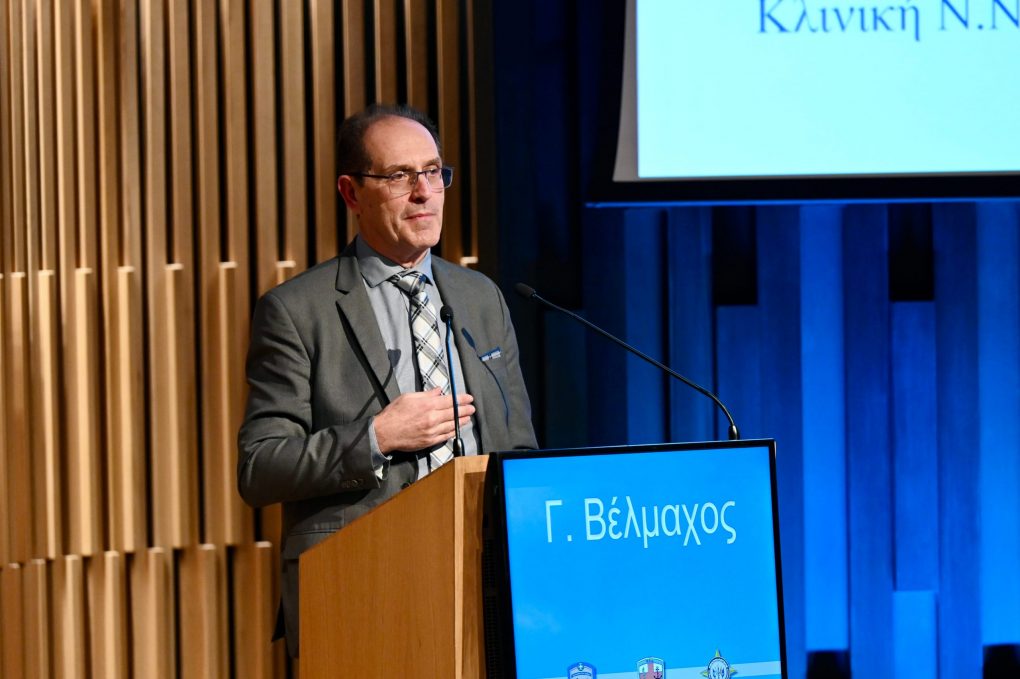
The Chairmen of the Organising Committee of the Conference were the Director of the Surgical Clinic of the Athens Naval Hospital, Navy Captain (Med) Panagiotis Vamvakas, and the Professor of Surgery at the Medical School of the University of Harvard, and Director of Trauma, Emergency Surgery at Massachusetts General, George Velmahos.
With the contribution of experienced partners from the Harvard trauma section and the US Armed Forces, the Symposium concentrated on matters of organisation, operation, management, and strategic objectives of a Trauma System for our country’s Armed Forces.
Also, it was a reference point for the formation of a modern, unified framework of trauma treatment in the Armed Forces, demonstrating the need for the existence and function of specialised Trauma Centres, staffed by appropriately trained personnel, and supported by clear protocols and inter-service cooperation.
Mr Dendias pointed out in his address:
“It is a great honour for me to have the opportunity to be here today, at the Symposium of the Trauma Centre, organised by the Athens Naval Hospital, at the Goulandris Museum, hosting us here.
It is not an exaggeration, though we, when exercising our ministerial duties, usually exaggerate – to state that, from the beginning, from the first year of my term, we had clearly realised the need to upgrade trauma management within the Healthcare System of the Armed Forces.
Not solely as an act of Medical Logistics, but as professor Velmahos stated previously, an element of leverage, of uplifting the morale of the Armed Forces.
And I realise, with great joy, that it is materialising. I can remember, characteristically, how this story began, at a meeting with Mr Velmahos, at a dinner at the Boston Harbour, about two years ago.
I think that what you have achieved, and for which you deserve praise, is the foundation of a common framework of thought and action, and the capability of scientific documentation and operational application of trauma management, thus creating a mental scientific bridge between the United States and our Country, Greece.
Besides, the word exists in both languages, “τραύμα”, “trauma”. If we go back in time, of course, “trauma” is one of the Greek words with a 3,000-year course. It can be found in Herodotus and Homer. It sometimes appears, not as “τραύμα” but as “τρώμα”, written with omega.
It also comes from an ancient Greek word, “τιτρώσκω”, which means to interrupt a process.
Yet, in its modern variant, as a symptom, we must be able to treat it. And, I ought to add, that this is a crucial operational ability, since, from what I understand – being a lawyer, I have no contact with medicine, but that of a patient, but I can understand – that in this case, success, failure, life, death, are determined in a slim period of time, following the occurrence of the incident.
This means that every second counts. It is often the limit between the life and death of our personnel.
Ladies and gentlemen, I am sorry to say it, but this is the conclusion we are all arriving at. The global environment has changed. What we knew applies no more. Hybrid threats, natural disasters, due to climate change, and also emergency situations, and the ever-present accidents in human life, constitute the modern reality, and it is for this very reason that we cannot go back to delays in the effort for trauma treatment, nor can we rest on what we Greeks are proficient at, that is last-minute coordination, which is often not enough.
It is for this very reason that today’s Symposium is so valuable. It does not limit itself to a scientific exchange of views, useful either way, but aims to standardise practices, and establish a common and inter-service culture.
I am confident we can achieve full inter-service work integration across the Army, the Navy, and the Air Force, with absolutely certified procedures, compatible with modern standards. For I also understand that the field trauma requires provision, disciplined actions, and also continual evaluation and improvement.
In this very framework, the so-called “golden hour”, the crucial first 60 minutes from the moment of injury, are those that determine the outcome, depending on the quality of the response.
It is this very thing which, for the Hellenic Armed Forces, is a non-negotiable operational obligation.
Thus, ladies and gentlemen, we are investing in your knowledge in order to cover this need.
The need, at the time when there is no space for indecision, and there is the urgent duty to save human life, to save the life of our personnel, and return them healthy to their family.
I would like, in closing, to cordially express my thanks to the Command, the Personnel of the Athens Naval Hospital, the Organising and Scientific Committee, and all those who were kind enough to participate.
Also, to the not numerous, albeit dedicated team of distinguished doctors from Greece and Harvard, for their invaluable contribution towards the creation of the Trauma Centre at 401 Athens General Military Hospital.
I would like here to state that I expect this Unit to solidify, to manage to thrive, and to manage to be a factor for the provision of services, not only to the Armed Forces, but to the whole of Greek society, demonstrating, in the clearest and most humane manner, what the Armed Forces can offer society, beyond the narrowly conceived necessity of national security, for which there is a constitutional mandate.
Finally, I would like to separately thank Mr Giorgos Velmahos, Professor of Surgery at Harvard University, and Director of Trauma, Emergency Surgery at Massachusetts General.
To thank him for his persistent and patient patriotism. As you know, to achieve something in our Country, persistence is required, but especially patience.
Against every innovation, everything important, everything necessary, there exist, unfortunately, inner factors of resistance. Mr Velmahos, a Professor, who loves his Country, demonstrates exactly that which is needed to subdue yesteryear’s forces of resistance, in order to proceed to the necessary future.
I hope that he will have the opportunity to witness something which is also his own spiritual “child”, the Trauma Centre of the Armed Forces, materialise within the coming days at the 401 Athens General Military Hospital, despite not being a gynaecologist himself, delivering new lives to the world.
However, his wife is a gynaecologist. Therefore, for once he will be able to do what Eirini does. Thank you very much”.
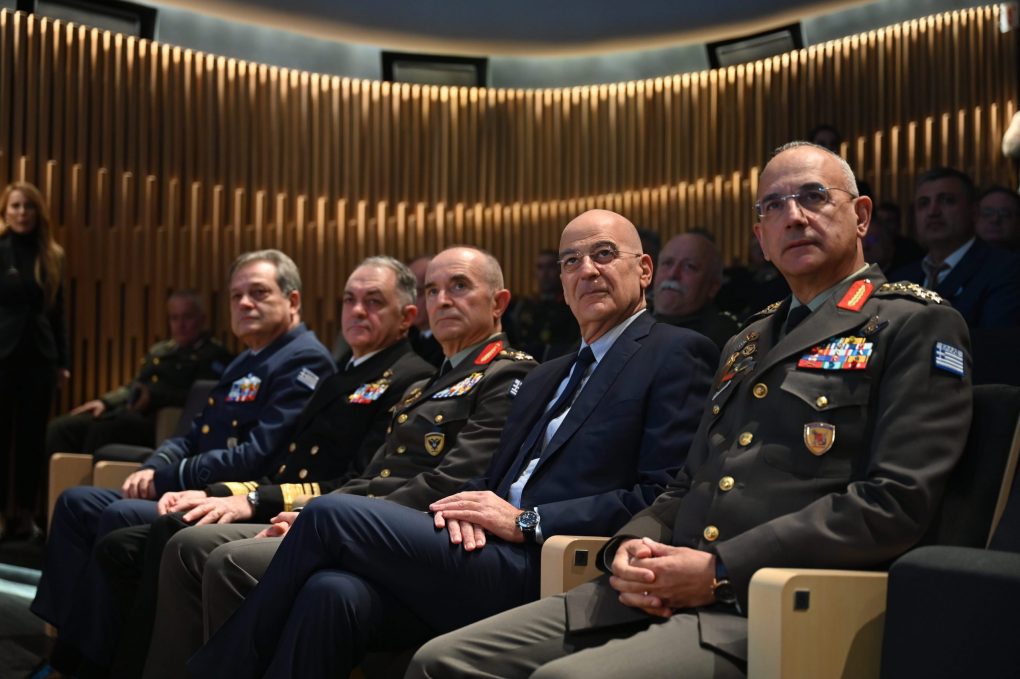
The works of the Symposium were also attended by the Chief/HNDGS, General Dimitrios Choupis, the Chief/HAGS, Lieutenant General Georgios Kostidis, the Chief/HNGS, Vice Admiral Dimitrios – Eleftherios Kataras HN, and the Chief/HAFGS, Lieutenant General (HAF) Dimosthenis Grigoriadis, as well as the Athens Naval Hospital Director, Commodore (Med) Ioannis Stavrianopoulos HN, Directors of Medical Directorates, Directors of Military Hospitals, Officers and NCOs of the Medical Corps of the Armed Forces.
The participants from the USA were, among others, Colonel (ret.) Brian J. Eastridge, Division Chief of Trauma and Emergency Surgery at UT Health San Antonio, and Director for the Military Health System Partnership of the American College of Surgeons, member of the American College of Surgeons, the Surgeon Director of Transplants at Guy’s Hospital, Peter Gogalniceanu, the Trauma Director at Landstuhl Regional Medical Centre, and Member of the American College of Surgeons, Medical Colonel of the United States Air Force, Mary Struever.
Also involved in the Trauma Planning Team of the Ministry of Health, were the Professor of Surgery at the National and Kapodistrian University of Athens at the Attikon Hospital, Pantelis Vasileiou, the Director of the Surgery Clinic at Nafplio Nursing Centre, Ioannis Massalis, and Konstantinos Fortounis, Director of the National Healthcare System at the “Papageorgiou” General Hospital of Thessaloniki.