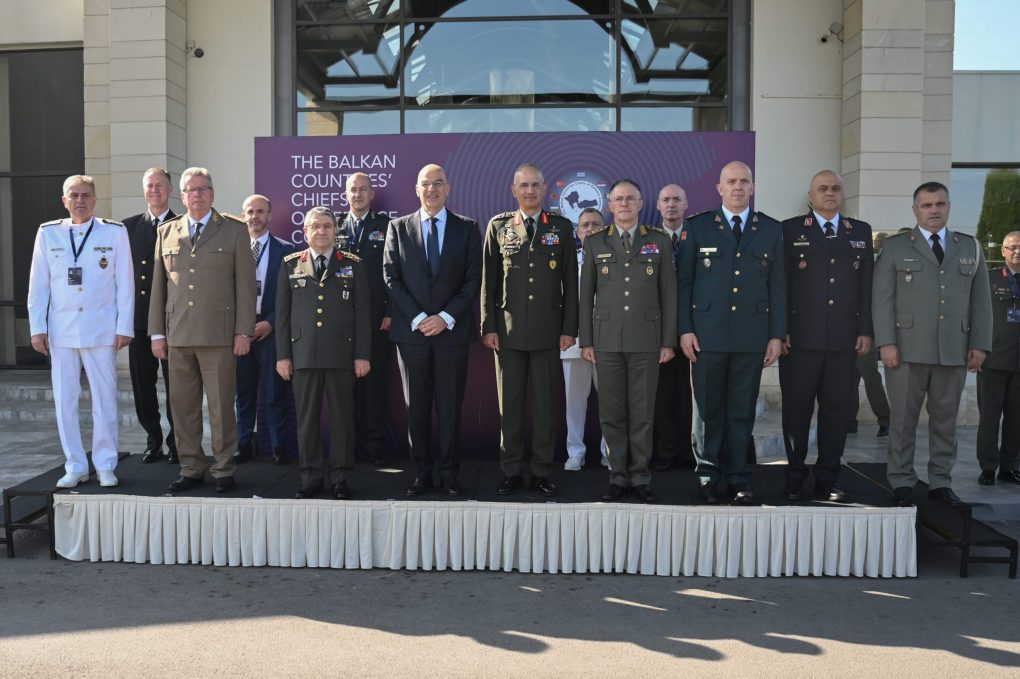
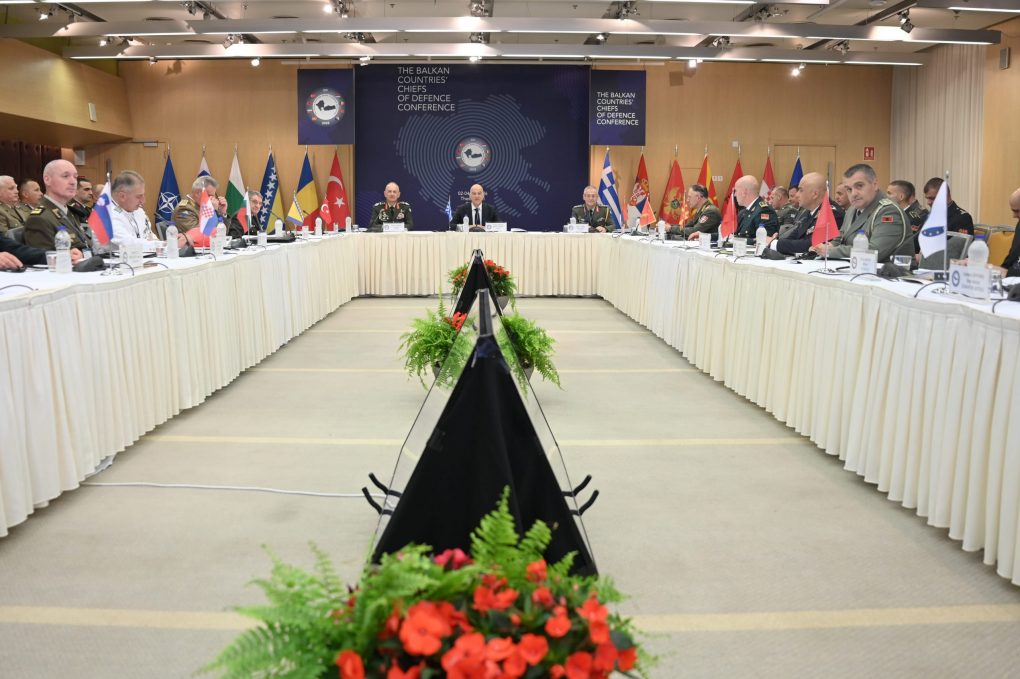
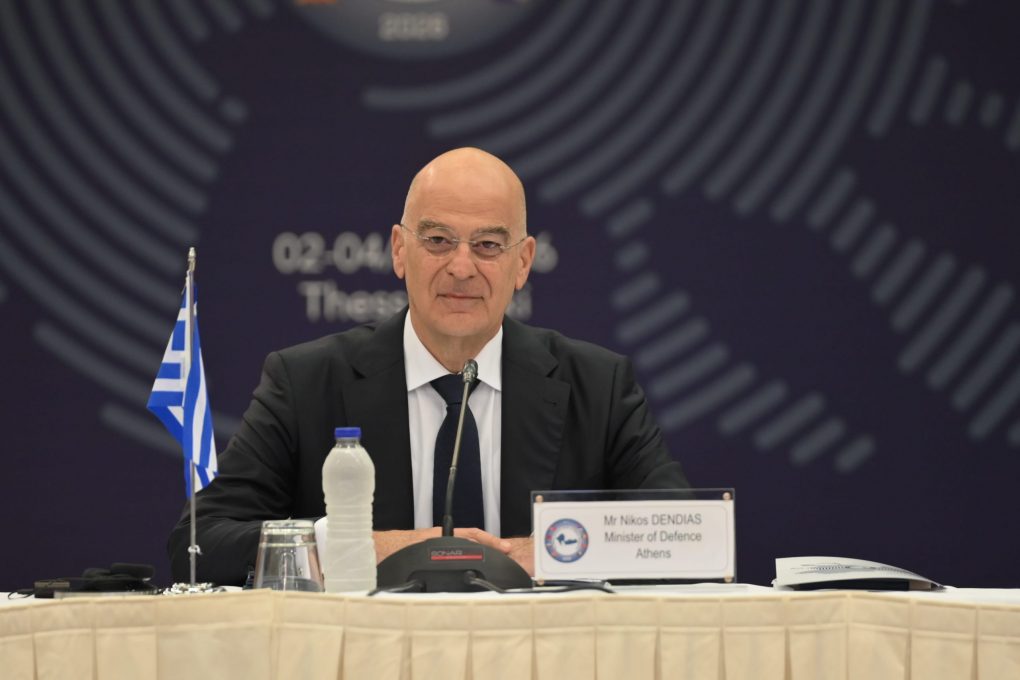
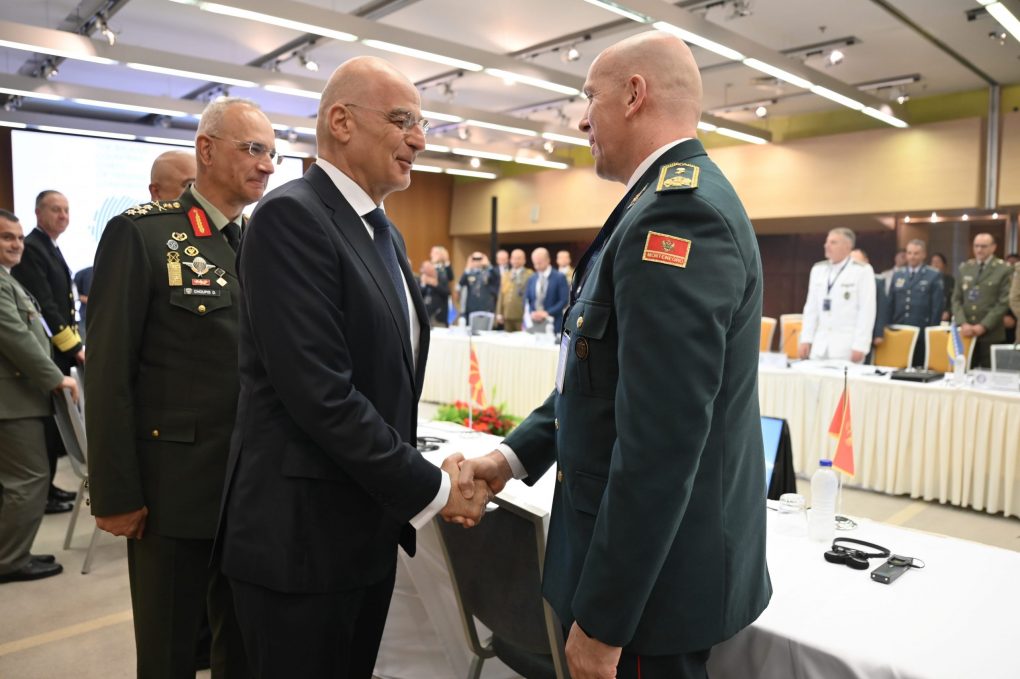
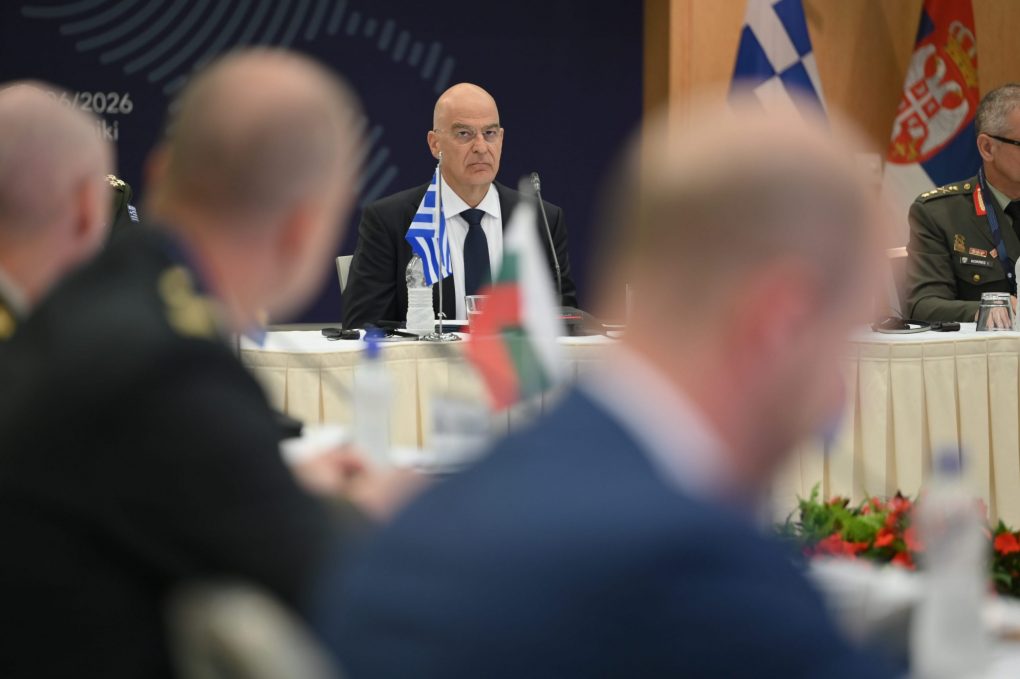
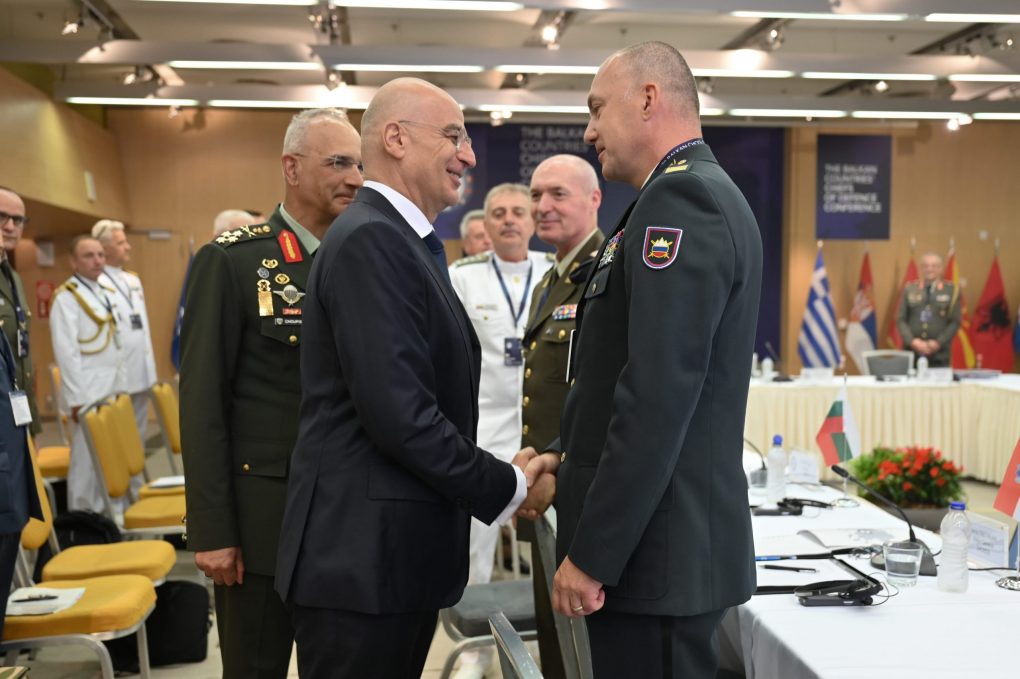
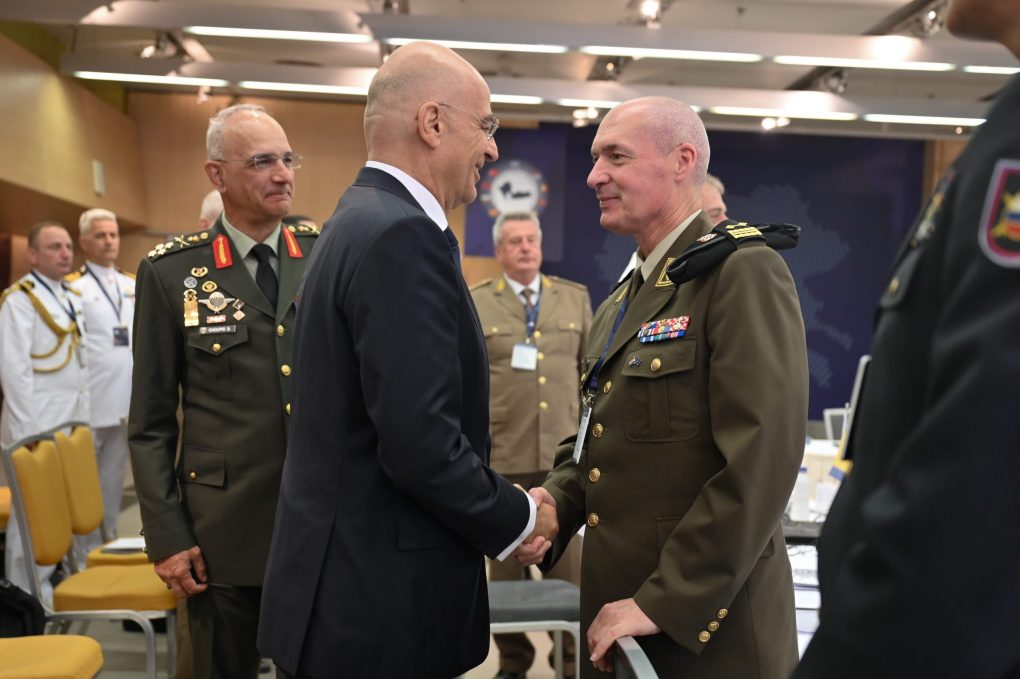
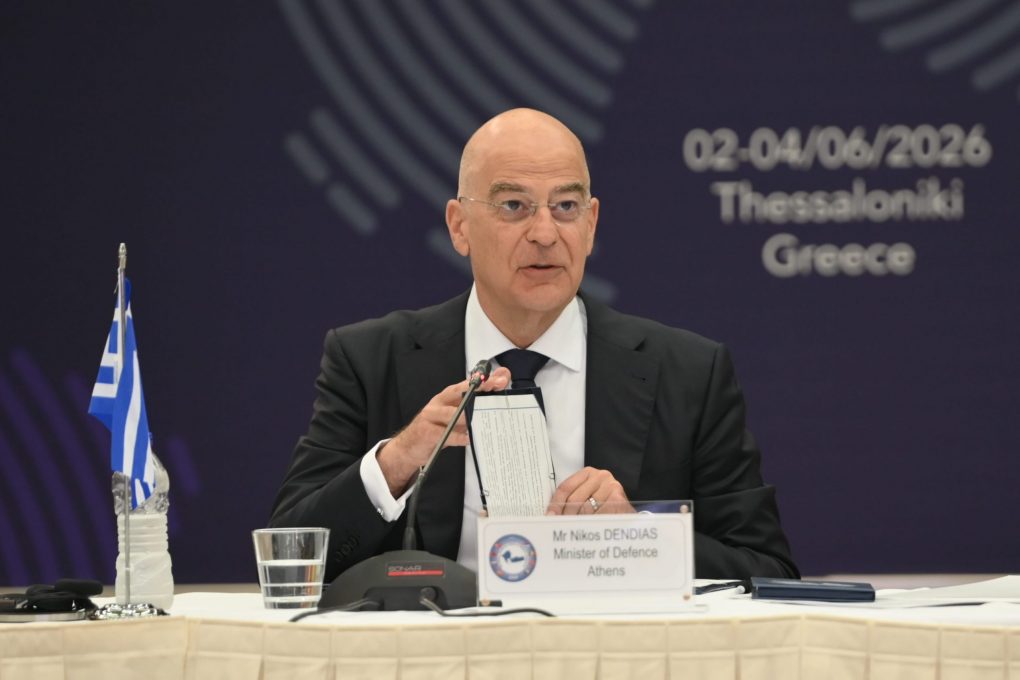
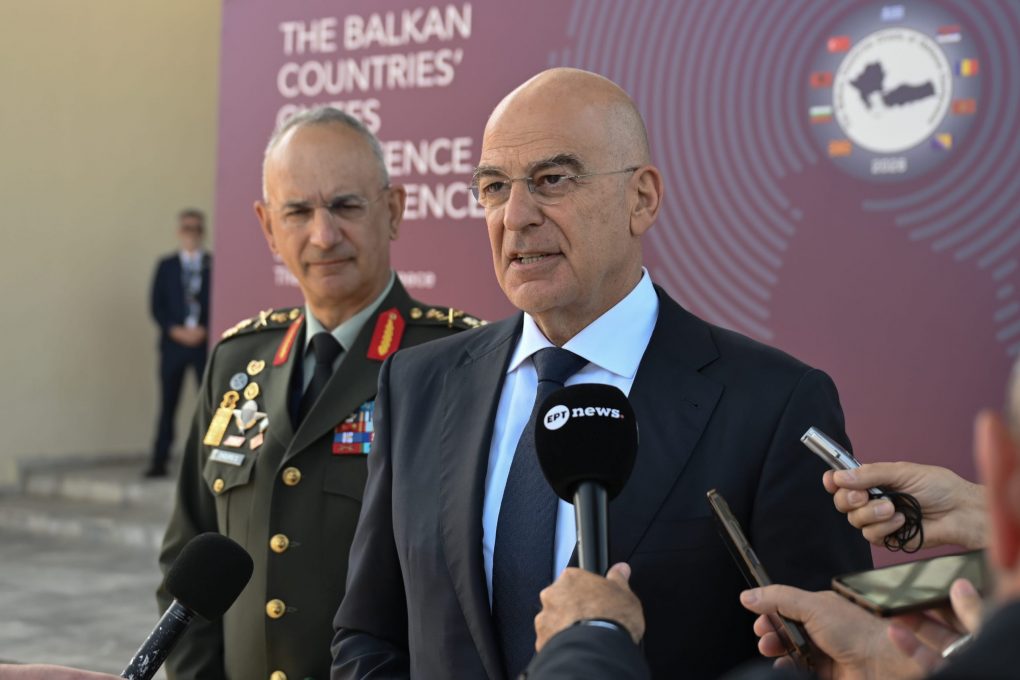
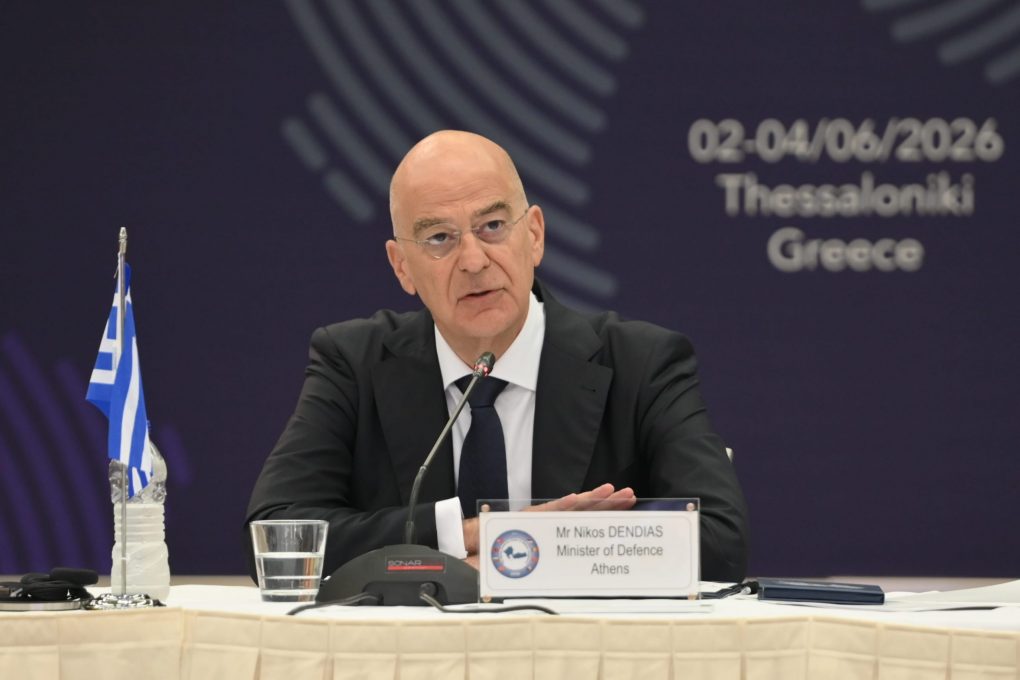
The Minister of National Defence Nikos Dendias attended today, Wednesday 3 June 2026, the 19th Balkan Chiefs of Defence Conference, which is held in Thessaloniki, from 02 to 04 June 2026.
The Conference on “Challenges and Innovation in Civil Protection. Adapting to the New Realities of War”, was also attended by the Chief/HNDGS General Dimitrios Choupis, as well as Chiefs of General Staffs and delegates of the Armed Forces of the Balkan countries.
In particular, the following Chiefs of General Staffs attend the Conference:
-
from Albania, Lieutenant General Arben Kingji
-
from North Macedonia, Major General Sashko Lafchiski
-
from Bosnia-Herzegovina, Lieutenant General Gojko Knežević
-
from Bulgaria, Admiral Emil Eftimov
-
from Montenegro, Brigadier General Miodrag Vuksanovic
-
from Serbia, General Milan Mojsilović
-
from Turkiye, General Selçuk Bayraktaroğlu
Additionally, the following delegates attend the Conference:
-
from Croatia, Lieutenant General Denis Tretinjak
-
from Romania, Colonel (A) Vasile Stănescu
-
From Slovenia, Brigadier General Bostjan Bas.
Moreover, the Commander of the Allied Joint Force Command Naples – JFC Naples Admiral George M. Wikoff, the operational Commander of the European Union Operation EUNAVFOR ASPIDES Rear Admiral (HN) Vassilios Gryparis, and the Director of Innovation, Hybrid and Cyber Division, NATO HQ Dr. Nikos Loutas also attend the Conference, following an invitation.
The programme of the Conference, which is part of the framework of the inter-Balkan cooperation in the fields of Defence, Security, Civil Protection and addressing contemporary threats, includes works of the delegations, bilateral meetings and the signing of a Joint Communiqué.
Nikos Dendias, in his opening speech of the Conference, stated the following:
“It is a distinct honour to be present today at the 19th Balkan Chiefs of Defence Conference.
Nineteen (19) sessions of dialogue stand as confirmation of a fundamental premise: security in the Balkans is not the affair of a single state. It is a collective responsibility.
The Armed Forces of nations that share the same geographical space — notwithstanding their different historical paths, are called upon to seek common ground in the face of challenges that transcend our national borders.
You all know very well that we live in an era of rapid, far-reaching change. Contemporary conflicts are swiftly transforming the assumptions of military defence and deterrence, as well as the resilience of critical national infrastructure.
Technology, unmanned systems, cyber threats, hybrid forms of warfare, and the interconnection of operational domains have fundamentally altered the way we perceive deterrence and operational readiness. Nothing can be taken for granted. Based on this premise, the Armed Forces must also change.
In Greece, through “Agenda 2030”, the largest reform of the Armed Forces in the country’s modern history, we are transforming our structures, capabilities, operational doctrine and, above all, our institutional culture. All this is done with a single purpose: Armed Forces capable of responding to the threats of the new era. Numerical superiority in arms and ammunition no longer ensures dominance, but rather the swift integration and adoption of cutting-edge technology and innovation.
Peace demands right and might, as well as readiness and responsibility. The escalation of regional crises and the re-emergence of revisionist agendas are placing the international security order under direct strain. They are testing International Law against the logic of coercion through force. They remind us that sovereignty presupposes our ability for credible defence.
For the Balkans, the Balkan Peninsula, this reality carries particular weight. Historically, the Balkans, the Balkan Peninsula, constituted the powder keg of Europe. Our region has endured instability, conflicts, ethnic upheaval, and shifts in borders. Thus, our region knows from its own historical experience, that peace is not a given.
We cannot overlook the fact that unresolved issues, such as Kosovo, the Belgrade–Pristina dialogue, and the institutional stability of Bosnia and Herzegovina, continue to demand wisdom, responsibility, respect for international legality, and an unwavering commitment to the stability of the Balkan Peninsula, our common home.
It is for this reason that the positive climate of cooperation which has taken shape must be capitalised upon. Of course, with respect for International Law. With a firm resolve to reduce sources of tension and to advance towards lasting solutions to the longstanding challenges of our region and our times.
This, however, presupposes trust and open channels of communication. Trust between military leaderships. Cooperation between states that understand that the stability of the region demands acts of responsibility. With mutual understanding of the capabilities, the constraints, and the obligations of each country, respecting each country.
It is at precisely this juncture that the operational value of the Balkan Chiefs of Defence Conference becomes apparent.
This Conference constitutes a framework for coordination, cooperation, and the development of a shared operational understanding among our General Staffs. It is not merely a forum for the exchange of views. Its purpose is to shape the practical foundations of common civil-military cooperation.
Without a common assessment of the security environment, and without a clear understanding of contemporary hybrid threats, effective coordination cannot be achieved.
The threats are specific. Terrorism, organised crime, cyber-attacks, the instrumentalisation of migratory flows, multifaceted threats to critical infrastructure. Threats that are not confined by national borders and cannot be addressed through isolated national responses.
Above all, they require a common understanding of the threat, information-sharing, early warning, interoperability of assets and procedures, and the capacity for coordinated response. The Armed Forces of our nations are called upon to adapt with speed, and a clear perception of the new hybrid threats.
In my country Greece, we have a clear understanding of its role. As a European state with a Balkan identity, historical experience, and institutional responsibility. As a country that functions as a bridge for dialogue and as a hub of regional interoperability. For us, for Greece, the stability and prosperity of the Balkan region constitute a vital national interest.
Whatever strengthens one of us, when embedded in a framework of genuine cooperation, strengthens us all. The security of the Balkans is also a European matter.
Greece has long been a staunch supporter of Western Balkans’ EU perspective, as early as in 2003, with the Thessaloniki Agenda, which started here in T Thessaloniki in 2007, if I am not mistaken.
I wish the 19th Balkan Chiefs of Defence Conference productive deliberations, an open and sincere exchange of views, and outcomes with a tangible operational footprint.”
Afterwards, the Minister of National Defence, in a statement to the journalists, noted the following:
“Today, here in Thessaloniki, I had the great joy and honour to address the Conference of Chiefs of General Staffs of the Balkan countries. I would like to start by congratulating the Chief of the Hellenic General Staff General Choupis on the excellent organization, which was confirmed by the remarks made by all the participants.
I would also like to make a more general observation, such meetings at times like this -when the crises are scattered around the planet, when things that cause massive issues are constantly happening- are absolutely critical as channels for communication, channels for de-escalation, and channels for cooperation. Here in the Balkans in particular, a geopolitically critical region, such an event is extremely important for our country. In addition, it reaffirms the firm political direction Greece always has, towards cooperation and understanding between the Balkan countries”.